
Enterprise
Blizzard in deep trouble for supporting China
Update: Blizzard eases sanctions against Blitzchung

The American corporate world is in a state of crisis caused by the tension between China and America. In the middle of this heightened Sino-American corporate war, Hong Kong lies in the middle, eagerly awaiting its democratic victory against Chinese authoritarianism. Because of the immensity of the geopolitical issue, individuals have inevitably expressed their opinions on the matter through public avenues.
Recently, individual opinions are getting in the way of corporate profits, especially for the companies that these individuals represent. From slaps on the wrist to outlandish punitive measures, American companies are putting a clamp on anti-China sentiments. The US is discovering where their favorite companies’ loyalties really lie — with the American people or with the Chinese government.
Blizzard: too cool for Hong Kong
Among these controversial companies, Blizzard Entertainment is fueling a significant portion of the dispute. Last weekend, the company held a Hearthstone tournament in Taiwan. The winner, Blitzchung (real name: Chung Ng Wai), expressed pro-HK opinions during his victory speech: “Liberate Hong Kong, revolution of our age.”
[BREAKING] Hong Kong Hearthstone player @blitzchungHS calls for liberation of his country in post-game interview:https://t.co/3AgQAaPioj
@Matthieist #Hearthstone pic.twitter.com/DnaMSEaM4g
— Inven Global (@InvenGlobal) October 6, 2019
Days later, Blizzard Entertainment issued steep punishments against Blitzchung: stripping him of his prize money and banning him from competitive play for a year. The company has also fired the two broadcasters involved in the interview. Blizzard has deleted the official interview from their accounts.
“I don’t regret saying that stuff. And even now, I don’t regret it at all.” In defense of his actions, Blitzchung has expressed the necessity of his opinions. “I shouldn’t be scared. I hope my act can inspire other gamers like me, to continue to support the movement in Hong Kong,” he told AFP.
According to Blizzard, Blitzchung’s voiced opinion “offends a portion or group of the public, or otherwise damages [Blizzard’s] images,” warranting the fine and the ban. Curiously, the company did not say if the ban results from any Chinese intervention.
#BoycottBlizzard
Since then, Blizzard’s actions have sparked global outrage, accusing the company of political favoritism rather than supporting its customers or representatives. Many individual personalities have boycotted the company’s products including the highly popular MMORPG World of Warcraft and the competitive shooter Overwatch.
My photoshops are nothing if not both lazy and fast, but still.#HongKongProtest #Blizzardboycott pic.twitter.com/nsE1VWl0e3
— Kaipo 🐀 (@Kaipo_Rozwolf) October 8, 2019
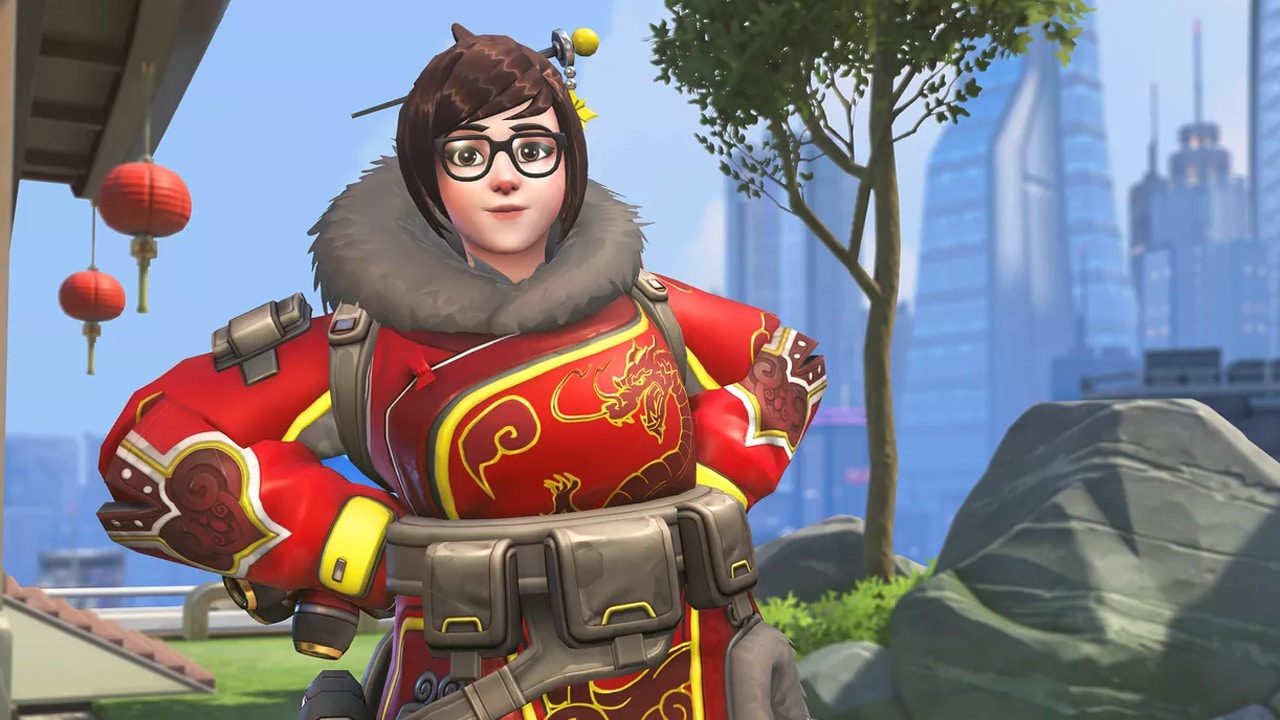
Some Overwatch players have even started using the game’s Chinese character, Mei, as a pro-HK icon. In the game, Mei — and the other characters — are largely apolitical regarding real-world politics. The game is set in a futuristic world with anthropomorphic gorillas and conscious robots. In creating a pro-HK icon, players hope to cause a larger boycott of Blizzard’s products.
Notably, Blizzard’s employees have also expressed dismay over their company’s actions. After the incident, several employees have walked out of their offices in protest. Also, an employee has supposedly taped over Blizzard’s forward-thing motto displayed on the company’s campus: “Think Globally” and “Every Voice Matters.”
Recognize what’s happening here. People who don’t live in #China must either self censor or face dismissal & suspensions. China using access to market as leverage to crush free speech globally. Implications of this will be felt long after everyone in U.S. politics today is gone. https://t.co/Cx3tkWc7r6
— Marco Rubio (@marcorubio) October 8, 2019
The global outrage has already earned the attention of American lawmakers. Floridian Senator Marco Rubio has tweeted his support against Blizzard. “China using access to market as leverage to crush free speech globally,” he said.
Another senator, Ron Wyden from Oregon, has expressed the same sentiments. “Blizzard shows it is willing to humiliate itself to please the Chinese Communist Party. No American company should censor calls for freedom to make a quick buck,” he said.
Blizzard shows it is willing to humiliate itself to please the Chinese Communist Party. No American company should censor calls for freedom to make a quick buck. https://t.co/rJBeXUiwYS
— Ron Wyden (@RonWyden) October 8, 2019
Meanwhile, rivaling game companies have shown support for Blitzchung. Gods Unchained, a card game similar to Hearthstone, has promised to pay the tournament winner the full winnings stripped by Blizzard. Fortnite’s Epic Games has proclaimed that it will never penalize players for expressing their right to free speech.
Companies for China
Besides Blizzard, the NBA is also embroiled in a similar controversy. China has recently blacklisted the Houston Rockets because of a tweet from general manager Daryl Morey. Apple is also in trouble for supporting a pro-HK app and censoring the Taiwanese flag.
Slowly, the world is unraveling the curtain draping over the biggest companies today. Underneath, people are discovering a cruel truth: the persistence of money versus integral values.
Update [10/11/19]: At the end of the day on Friday (US time), Blizzard issued a statement in response to the recent controversies. In the lengthy post, the company has decided to ease up on the penalties issued to both Blitzchung and the shoutcasters. For one, Blitzchung will finally receive his full winnings. Further, Blizzard has reduced the bans to only six months.
Explaining their side, Blizzard has reiterated that the decision was made without Chinese intervention. According to the statement, Blizzard acted to ensure the tournament’s status as an inclusive environment for all gamers.
SEE ALSO: Blizzard is taking their other titles to your mobile





AMD is prepared to lead the industry in its agentic AI era with their high-performance CPU strategy.
As the industry pivots from simple AI models to agentic AI systems that are capable of independent planning and decision-making, the CPU is reclaiming its role as the critical “head coach” of the data center.
This was noted by AMD CEO and Chair Dr. Lisa Su during the AMD Advancing AI event last year. The rise of autonomous agents has transformed inference into a complex and multi-step workflow that demands sophisticated logic and orchestration.
And while high-performance GPUs are necessary to generate insights in real time, the surrounding infrastructure is just as important.
This is where CPUs enter the picture. Their performance and efficiency are more important than ever in the overall performance of modern AI infrastructure.
And AMD delivers an advantage with their offerings. In recently published data, a 5th Gen AMD EPYC CPU-based system is estimated to perform up to 2.1x better per core against an NVIDIA Grace Superchip-based system.
The same system AMD-based system also delivers up to 2.26x uplift on SPECpower, measuring operations per watt.
The x86 CPU architecture gives customers the advantage of a broad, proven software ecosystem that can run existing workloads natively.
This avoids the costly refactoring and code-base duplication often required when switching to Arm-based alternatives.
Looking ahead, AMD is doubling down on the balanced system philosophy. Future architectures such as the “Venice” CPUs will power the “Helios” rack-scale AI design.
By integrating EPYC CPUs with Instinct GPUs and the ROCm software stack, AMD aims to maximize cluster-level performance and lower the total cost of ownership in the agentic era.
What happens when an unstoppable force meets an immovable object? After a year of wrestling through tariffs from the current American administration, Nintendo has decided to sue the United States.
Last year, the Trump administration was trigger-happy with implement tariffs on countries everywhere. Though the controversy mostly circulated around geopolitics, major corporations also found themselves on the receiving end of Trump’s ire. All over the world, the tariffs sparked product delays and price hikes.
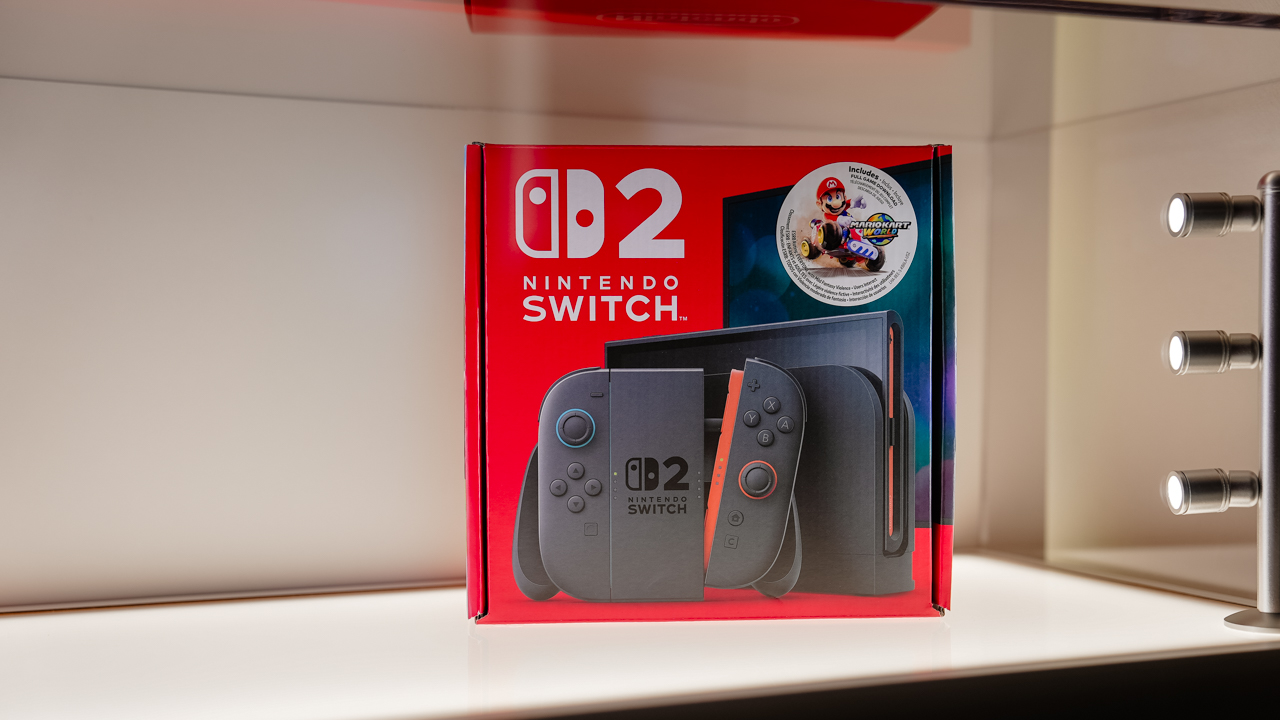
Nintendo is no exception. As a result of the fiasco, the company had to delay the launch of the Switch 2, in anticipation of disruptions caused by the tariffs. First reported by Aftermath, the Japanese gaming giant is now going after the American government over refunds associated with the tariffs.
Now, the tariffs aren’t a big issue anymore. Notably, the Supreme Court scratched off the White House’s implementations that the former found illegal. While a big sigh of relief for future business, corporations like Nintendo have already paid duties and deposits in the past. As a result, Nintendo is now looking for recompense for what they paid before.
Nintendo isn’t the first company to seek restitution over the illegal tariffs. Others, including FedEx and Revlon, are also asking for refunds. However, the Japanese giant is certainly one of the biggest names to cross the government’s path. After all, the company is notoriously litigious over anything it considers as an affront to its business, including small streamers using Pokémon on their broadcasts.
With all its global resources, Nintendo likely won’t just give up without a fight.
SEE ALSO: The Nintendo Switch is now Nintendo’s best-selling console ever
Enterprise
Paramount wins bid for HBO Max, plans to merge streaming apps
It’s all part of the deal to acquire the Warner Bros. library.

Last year ended with the bombshell announcement that Netflix might buy the entire Warner Bros. library. However, after some finagling and a rocky start, Paramount has now emerged as the main suitor for the lucrative library.
At the end of last year, it seemed all but confirmed that the gigantic Warner Bros. library was coming to Netflix as part of a huge buyout deal. This became even clearer when Warner Bros. Discovery rejected Paramount’s initial bid to counter Netflix. However, Paramount recently revised its offer to an astounding US$ 110 billion, or US$ 31 per share, which Warner Bros. Discovery signed off on. Netflix passed on the opportunity for a counteroffer, making Paramount the sole bidder.
Today, Paramount has announced that, if the deal pushes through, they will merge Paramount+ and HBO Max into one streaming service. This means that Paramount’s CBS, Comedy Central, and MTV will be under the same roof as DC, Game of Thrones, Harry Potter, and Mission: Impossible.
The value of the above names alone makes this into one of the most lucrative deals for Paramount. However, it’s not without its drawbacks. The combined entity will reportedly carry US$ 79 billion in net debt for both purchasing Warner Bros. and refinancing the newly purchased property.
Currently, the deal is expected to go through regulatory approval ending in the second half of 2026.





Now Playing: Hoppers

Jackery SolarSaga series: Free power for small devices

UGREEN adds new Nexode Pro power bank, charger to lineup

nubia to launch new Neo 5 series gaming phones on March 28

SHINOBI: Art of Vengeance’s SEGA Villains Stage out on April 3


-

 Reviews5 days ago
POCO X8 Pro Max review: A new beast from the far east
-

 News5 days ago
POCO X8 Pro Series: Price, availability in the Philippines
-
 Laptops2 weeks ago
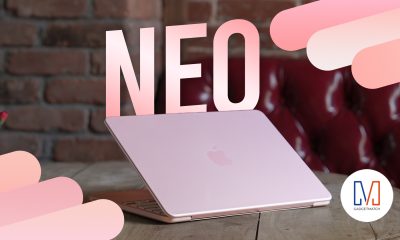
Apple MacBook Neo Review
-

 Computers2 weeks ago
GIGABYTE collaborates with Capcom for RE Requiem custom PC
-

 Apps1 week ago
Google Maps is finally getting a 3D mode
-

 Entertainment2 weeks ago
The internet is thirsting over the One Piece Season 2 cast
-

 Features1 week ago
Galaxy AI on the Samsung Galaxy S26 Ultra
-

 Automotive2 weeks ago
BYD is reportedly considering an F1 team