


Gaming
Step into androids’ shoes in Detroit: Become Human
How ready are we for a world filled with androids?

The year is 2038. Androids — machines with human-like features, not the mobile operating system — walk among us. If it sounds familiar, that’s because this kind of story has been told and retold countless times in books, movies,and television shows like a sci-fi cliché.
However, what makes Quantic Dream’s interactive drama game Detroit: Become Human an outlier, as opposed to its many thematic brethren, is when it is set. In most iterations of the androids and/or robots narrative, they’re set in a distant future. This game takes place in 2038, a time that doesn’t seem too far off (that’s 20 years from now!).
So, think about it: Can a real-life Cyber Life — the company responsible for making these androids — rise up between now and then? It’s not too far-fetched of an idea. As early as now, we’re already worried about artificial intelligence (AI) taking over human jobs, not to mention stories tackling how AI-powered humanoids can take our place in the sack.

Androids line up on a shed to recharge
It’s a future that is both fascinating and terrifying. Sure, we might be ready for the logistical challenges it might pose, but how prepared are we as a society to take on the psychological, moral, and ethical issues that may arise when this future comes?
These potential realities are precisely what the people at Quantic Dream want us to face in this game. At nearly every turn, what you decide to do will lead to a different outcome. This component of the game could have you playing for hours on end. During the briefing, Co-Chief Executive Officer of Quantic Dream and Executive Producer of Detroit: Become Human, Guillaume de Fondaumiére, mentioned that the opening scene “The Hostage” alone already has six potential endings — all of which you can opt to go through.
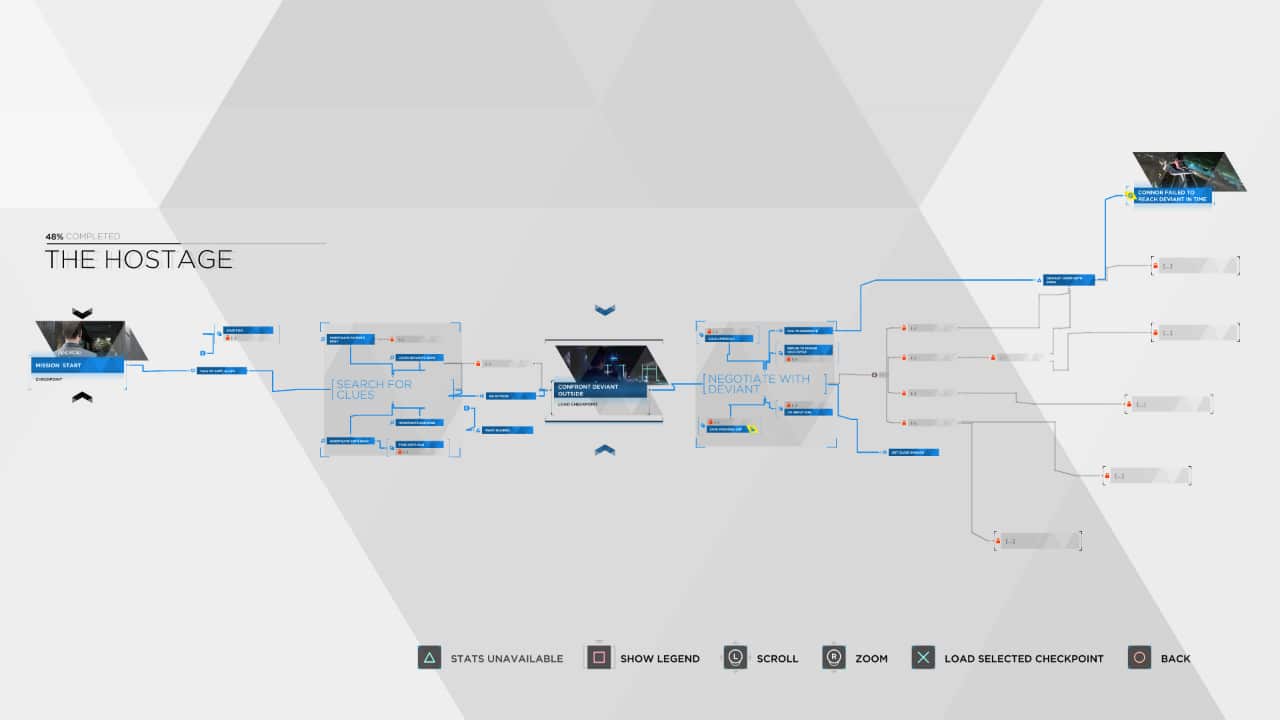
Flowchart of the opening scene “The Hostage”
Multiple narratives
Another thing that makes Detroit: Become Human, in Fondaumiére’s words, “rather unique,” is that it’s not bogged down by a short running time because it’s a game. This allowed them and allows us to explore the many aspects of this potential reality.
“The great thing about Detroit is it can tell a story for 30 to 40 hours. That lets you explore a great number of themes,” said Fondaumiére. “And the other thing is that it’s a game. We give the player the possibility to tell his or her own story.”
This story is told through three perspectives, albeit all through android lenses. First, there’s Kara, a house help android, designed and programmed primarily for housekeeping chores. Then there’s Connor, a Cyber Life agent whose tasks involve helping solve the mystery of why and how certain androids appear to be breaking their programming. Lastly, there’s Markus whose owner is an accomplished but old and ill artist who encourages him to think for himself.

Kara with her light indicator turning yellow which means the situation could be escalating
How did they end up with three characters? Fondaumiére shares that as the story was being written, the game’s director and writer David Cage had more questions about this world that they were building, and it led them to the conclusion that “it didn’t make sense” for all these questions to be asked only through a single perspective.
“Using different characters gave [David] the possibility to get different perspectives and to be able to create the bedrock for these questions to emerge,” said Fondaumiére.

Connor and Lt. Anderson in the car right before examining a crime scene
Fondaumiére broke down the perspectives for each character: “Kara, I guess, we’re touching upon the emotional and social sides of these questions. With Connor, we’re investigating androids. What happens? What makes them become emotional? Sentient? And with Markus we’re centered around the question of freedom. What if, all of a sudden, these androids no longer want to be our slaves? What if they start to question their place in our society? What will they do?”
Markus administers medicine for his old and ill owner

Markus lives with an old, accomplished artist that influenced his views on freedom
Gripping story, stunning visuals
The idea is great and the execution, perhaps, even better. Playing Detroit: Become Human feels like binge-watching a Netflix series but with you at the helm. The cinematography in each shot feels well thought-out, the visuals are so captivating that some moments feel like you’re seeing live action actors. The best part is you’re involved. Every decision you make with each character affects how the people these androids are surrounded by react to you, therefore affecting the events that will transpire next.

Kara’s emotional bond with Alice pushes her to do things beyond her programming
There’s so much emotion that is effectively communicated through the combination of great camera work and fantastic acting. The game hooks you in as effectively as a TV series does and quickly makes you emotionally invested in the plight of the three main characters.
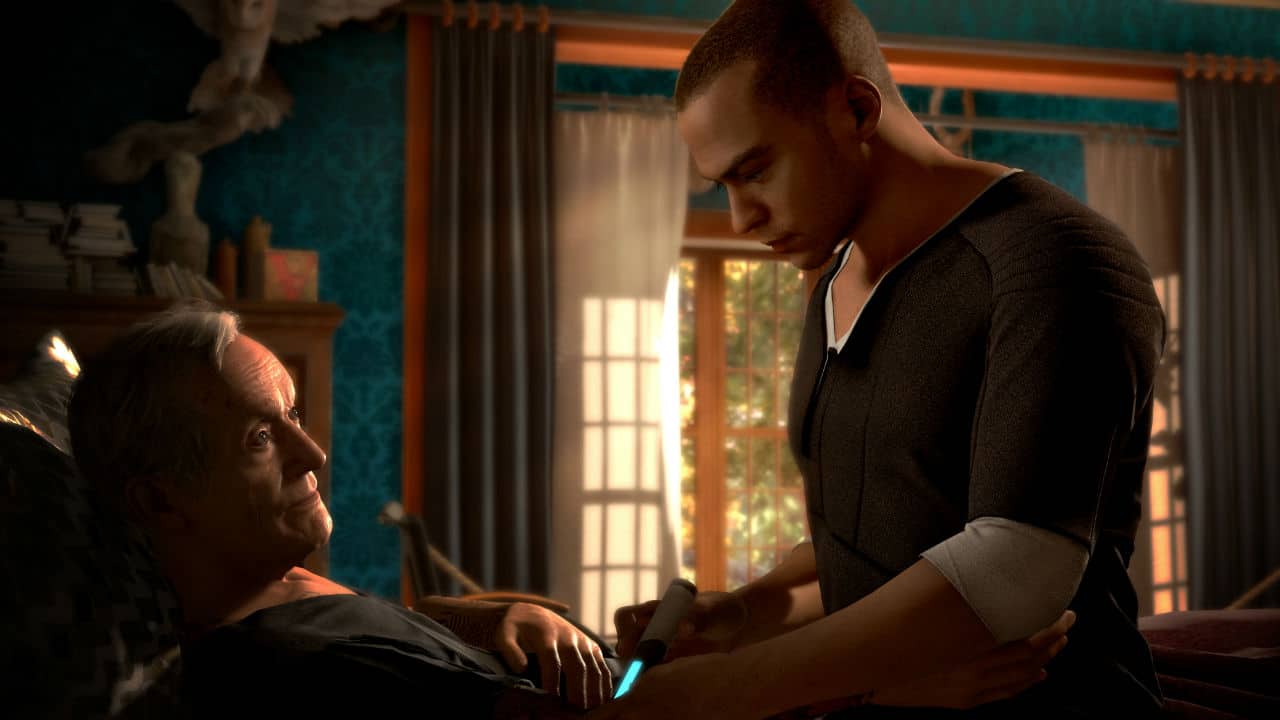
Markus administers medicine for his owner
What Fondaumiére repeatedly emphasized is how Detroit: Become Human is the player’s story, more than anyone else’s.
“Through gameplay, you’re going to ask yourself many questions, and it could change your attitude and how you decide. We give the player the possibility to tell his or her own story.”
Their role, he says, is to “show you the logical consequences.”

Connor is constantly in crime scenes caused by defiant androids
Fondaumiére hopes that after one playthrough, players go back and play again and really track how their initial decisions and the outcome that those produced affected how they played the rest of the game. He wants the players to be able to form their opinion on this potential reality so that when it comes — and he strongly believes that it will — we will all be ready.
Asked if he’s open to owning his own android, Fondaumiére set his answer up by saying how he’s a geek and is constantly fascinated by the advancement in technology, so in two words: “Why not,” adding that getting a few extra hours for himself because he can have someone else run his errands is an idea he can entertain.
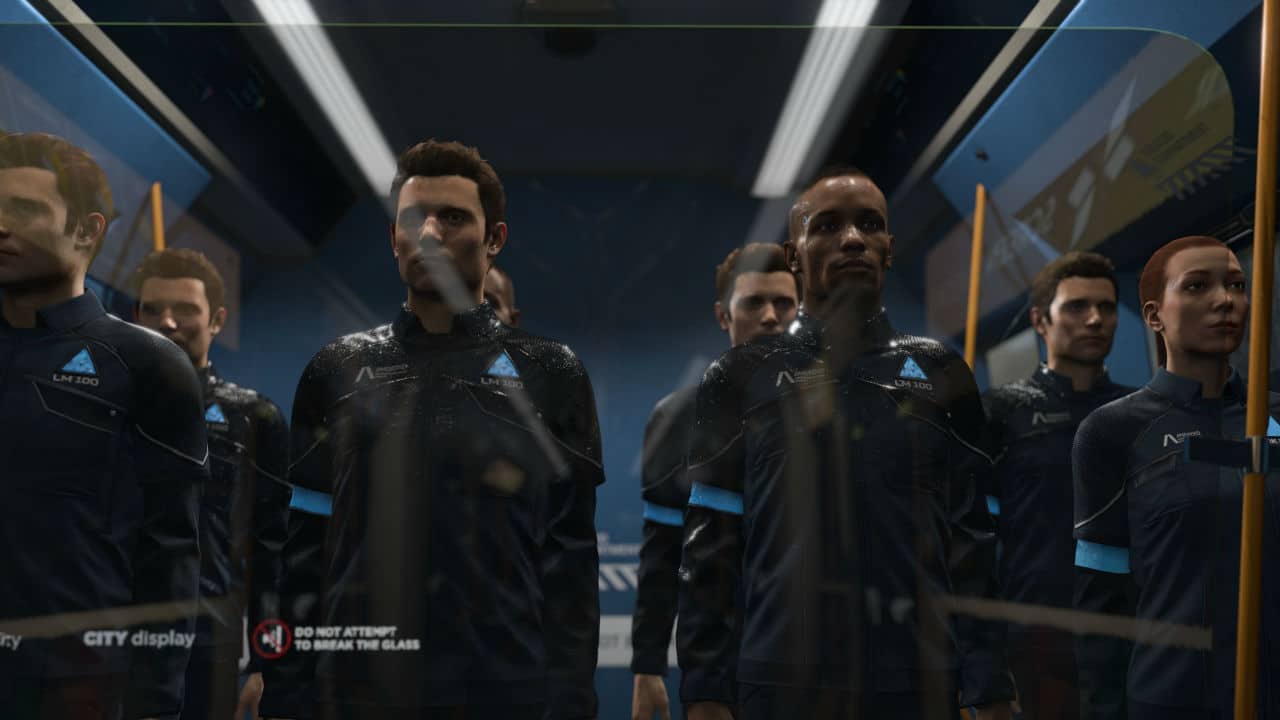
Would you want to own an android?
Detroit: Become Human will be released on May 25, 2018. Pricing are as follows:
Standard Edition:
Philippines — PhP 2,799
Singapore — SG$ 72.90
Malaysia — MYR 229
Indonesia — IDR 729,000
Thailand — THB 1,890
Collector’s Edition: (Includes the full game, digital soundtrack, dynamic theme, and a physical art book)
Philippines — PhP 3,199
Singapore — SG$ 84.90
Malaysia — MYR 259
Indonesia — IDR 849,000
Thailand — THB 2,190







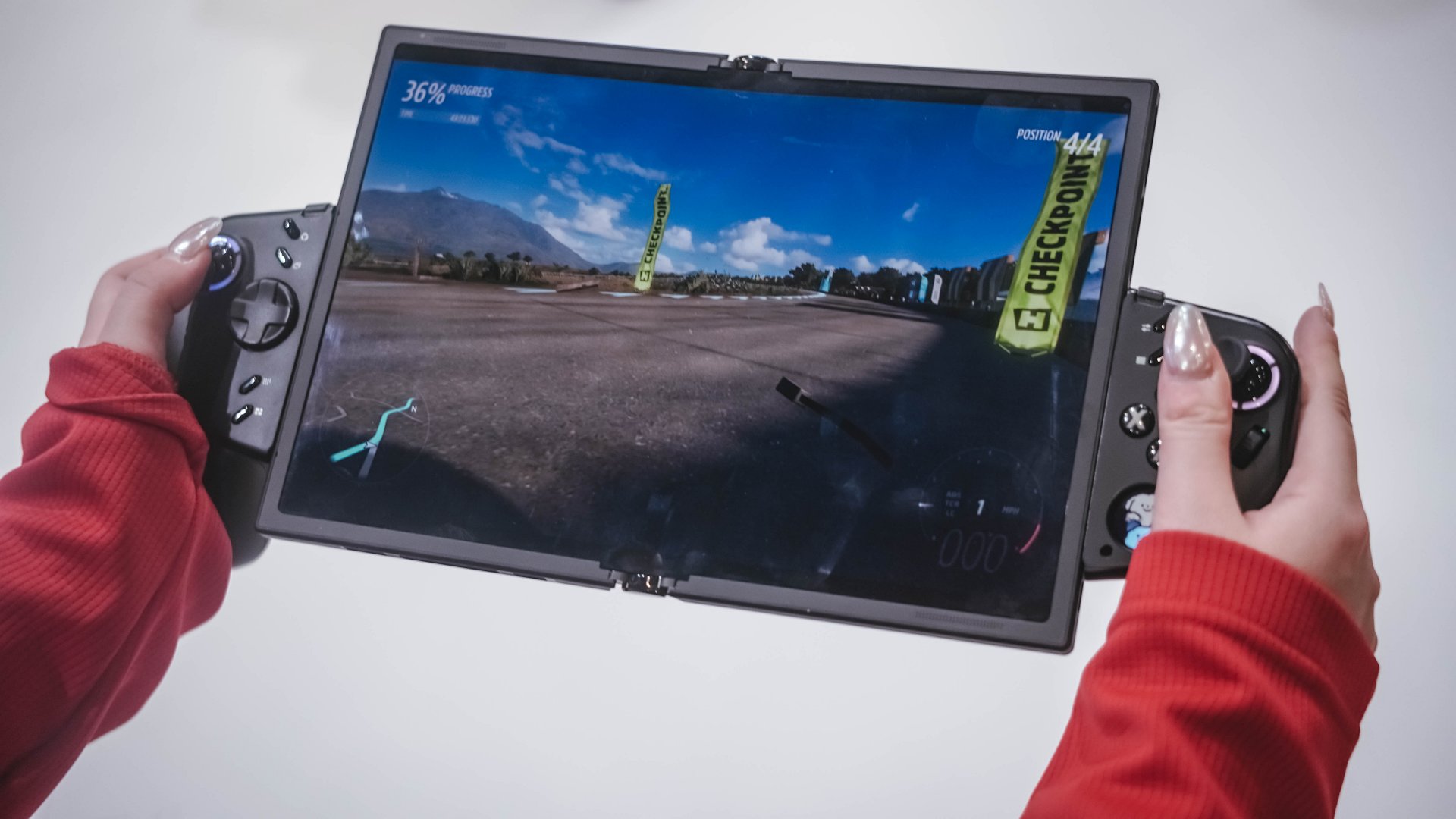
An all-in-one device is a pipe dream for many. Imagine a device that can turn into a tablet, a laptop, a phone, and a console with the flip of a switch. As showcased during MWC 2026, Lenovo wants you to stop imagining. A new concept called the Legion Go Fold is an all-around device you can take with you on travels.
On account of the lineup it’s associated with, the Legion Go Fold is, first and foremost, a handheld gaming console. Normally, it’s a sizable 7.7-inch screen you can attach the Legion Go’s recognizable controllers to.
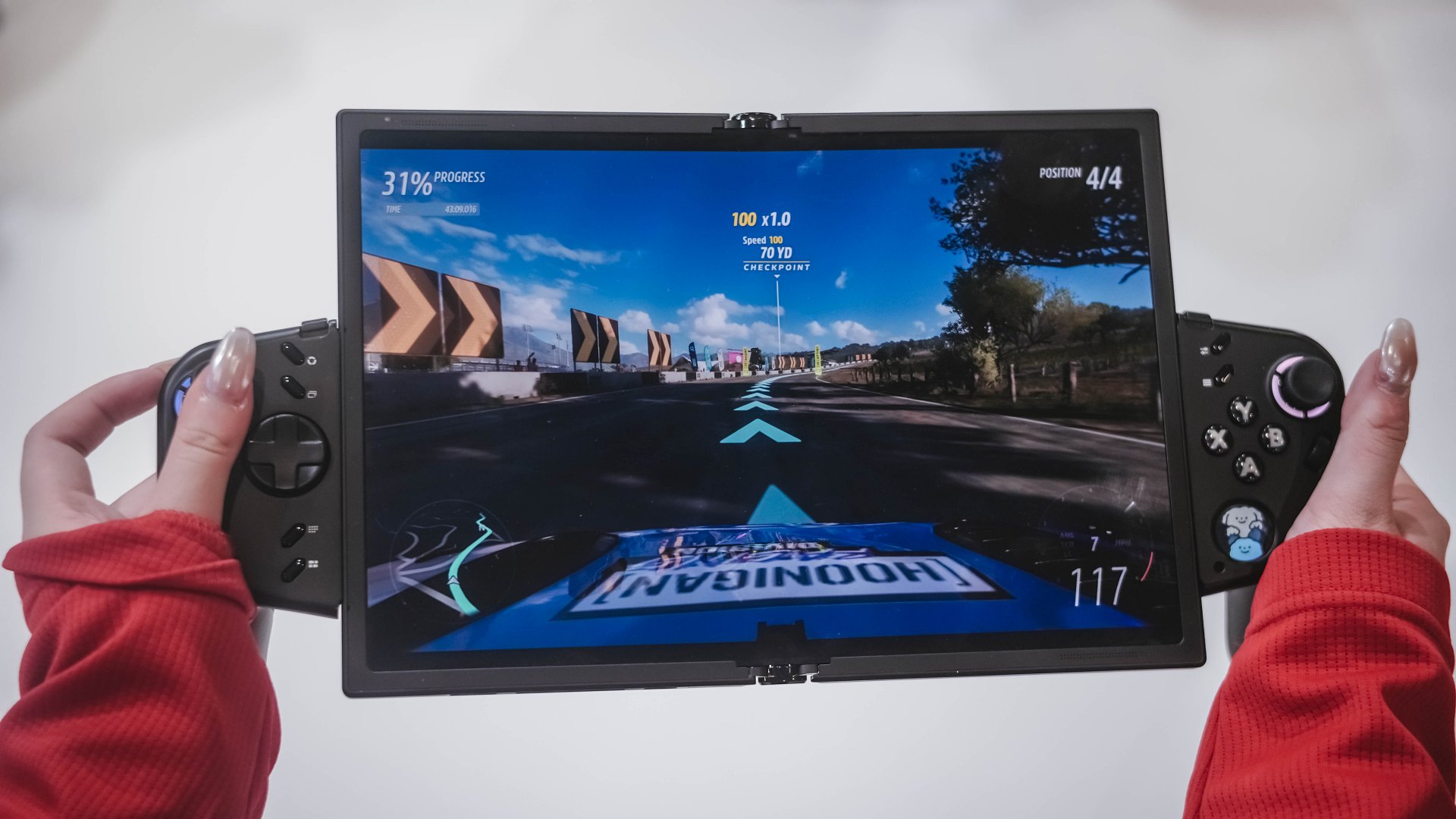
However, as the “Fold” in its name is hinting, the screen can be unfolded into a much larger screen. At its quirkiest, the concept looks like a vertical tablet with controllers attached to either side. Lenovo says that this is best used in split-screen mode where you can split the display between a game and other media such as a walkthrough video.
Alternatively, you can just rotate the screen horizontally and attach the controllers to play with the maxed out 11.6-inch display.

Finally, the Legion Go Fold can be used as a laptop via the detached screen and an included wireless keyboard. Like the other devices in the Legion Go lineup, the right controller can be used as a makeshift mouse.
Because it’s a concept, the Legion Go Fold isn’t close to being released yet. However, it’s a good evolution of what the Legion Go can already do. As we said in previous reviews, the lineup can technically be a work laptop in a pinch. This just makes it easier.
Automotive
Xiaomi Vision Gran Turismo makes global debut at MWC 2026
Tech giant becomes first technology brand in Vision GT program

Xiaomi has unveiled the full-scale concept model of the Xiaomi Vision Gran Turismo or Xiaomi Vision GT at MWC 2026 in Barcelona, Spain. This marks the company’s official entry into the elite Vision Gran Turismo project.
Created for the legendary Gran Turismo franchise, the electric hypercar concept represents the first time a technology company has been invited to participate in the Vision GT program. Xiaomi now joins a select group of global automakers, becoming the 36th brand to take part and the creator of the 51st Vision Gran Turismo concept overall.
The project began at the GT World Series in London, where series producer Kazunori Yamauchi personally invited Xiaomi to design its own Vision GT car. For Xiaomi’s global EV design team, the opportunity meant rethinking hypercar development from a technology-first perspective, blending advanced aerodynamics with AI-driven intelligence.
Sculpted by the wind

At the core of Xiaomi Vision Gran Turismo is aerodynamic balance. Instead of chasing extreme low drag or maximum downforce alone, Xiaomi pursued efficiency between the two.
The concept follows a “Sculpted by the Wind” philosophy. Its teardrop cockpit silhouette, integrated air ducts, and airfoil-shaped structural elements guide airflow seamlessly from front to rear. The body avoids excessive add-ons, relying instead on built-in aerodynamic solutions.

Signature design elements serve dual purposes. Cross-shaped headlights integrate into the airflow system, while the halo-shaped taillight sits within a massive rear air outlet. An Active Wake Control System surrounds the rear with micro-perforations that manage turbulent air using real-time speed and angle data.
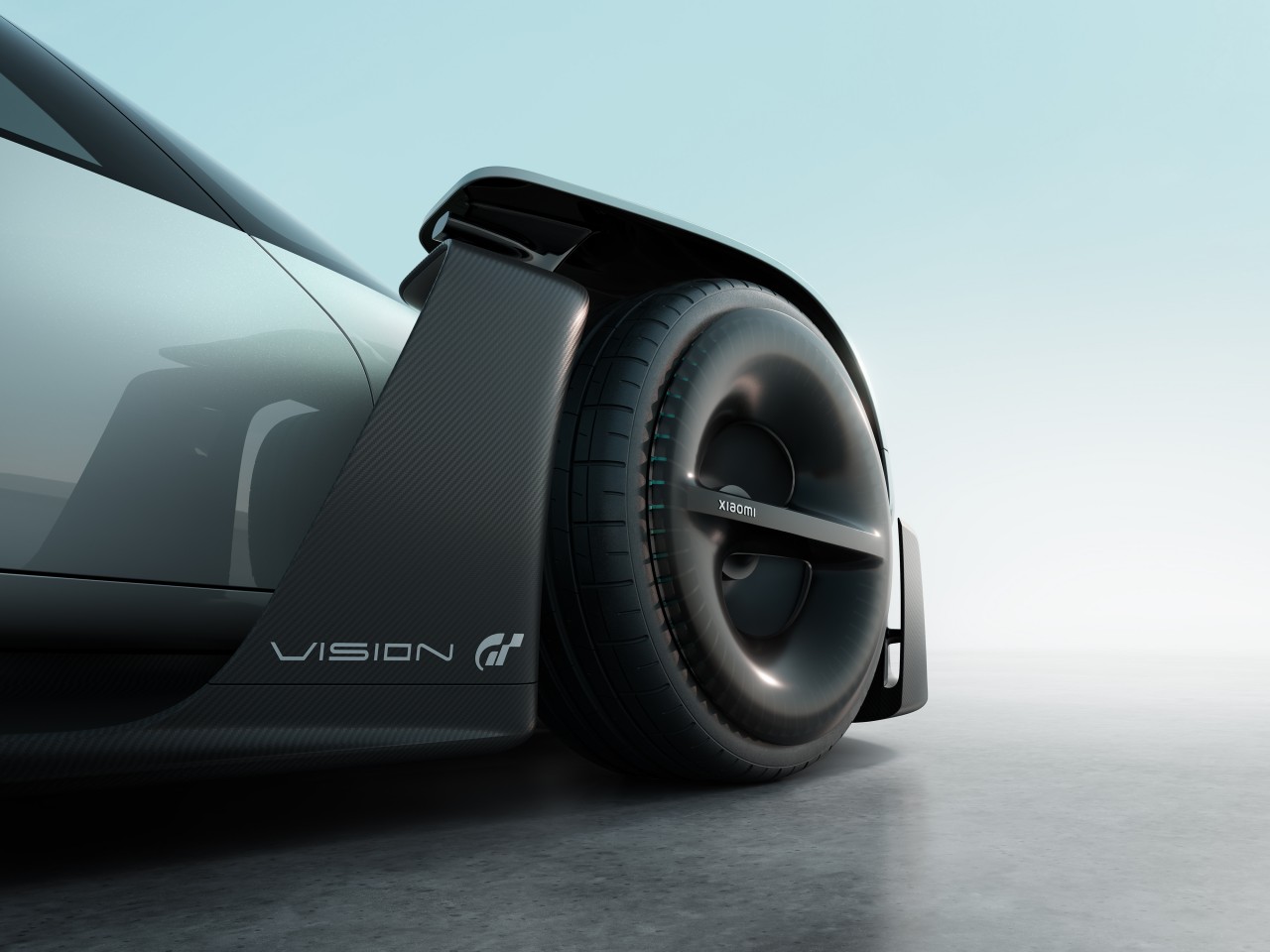
The Accretion Rims feature vortex-style wheel covers that remain visually stationary while the car is in motion, reducing drag from rotating surfaces. Internal turbine fins help cool the brakes during operation.
Through iterative simulation testing, Xiaomi says the concept achieves a drag coefficient of 0.29, downforce of negative 1.2, and an aerodynamic efficiency rating of 4.1 — figures that highlight balance rather than extremes.
A “sofa racer” interior
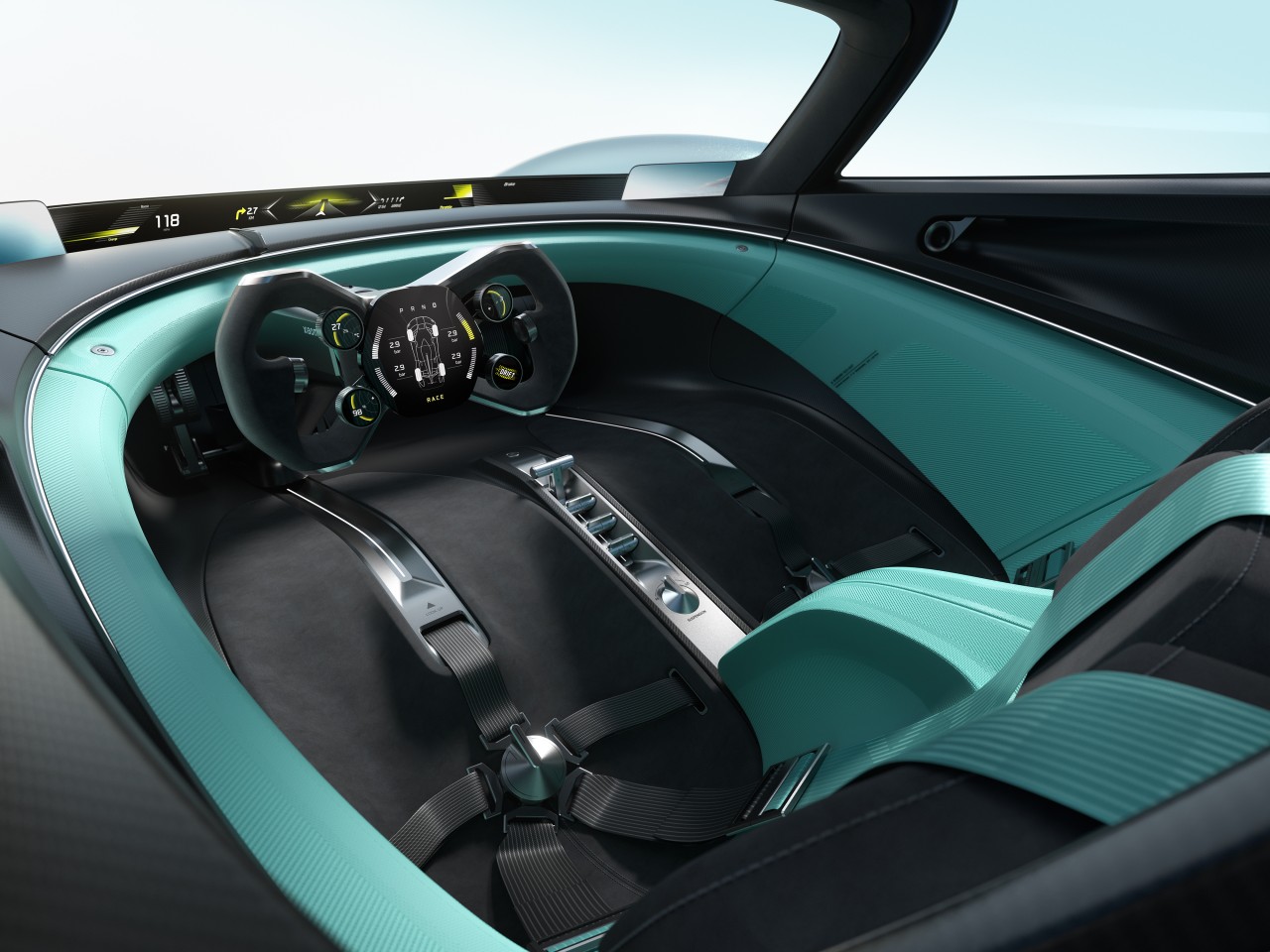
Inside, Xiaomi departs from the rigid, track-focused cabins typical of hypercars. The “Sofa Racer” concept emphasizes comfort without sacrificing control.
A ring-shaped cockpit architecture wraps around the driver, blending dashboard, doors, and seats into one continuous structure. Breathable 3D-knitted fabric materials aim to provide both support and warmth.
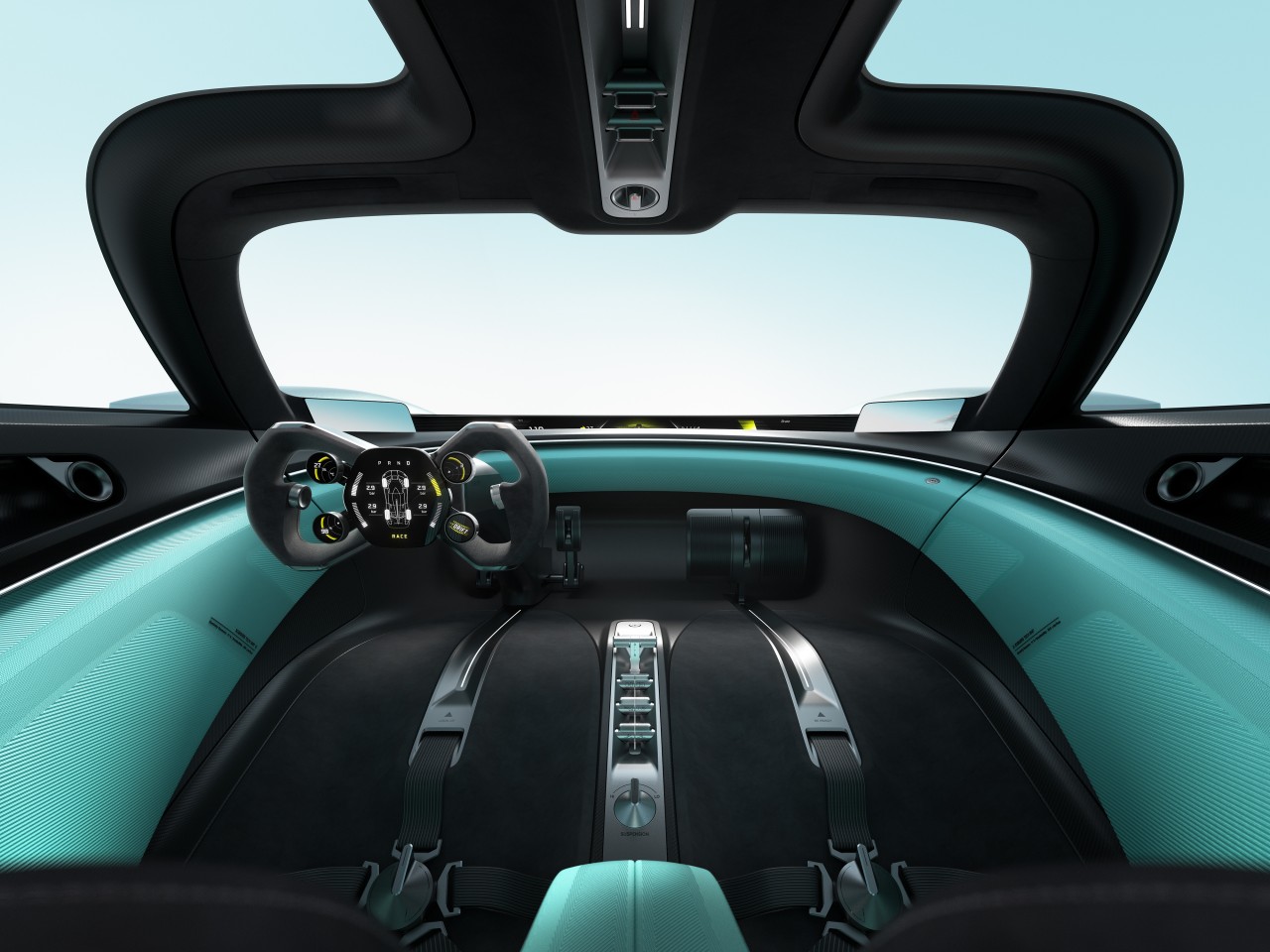
At the center is Xiaomi Pulse, an intelligent assistant integrated into the dashboard. Working alongside Xiaomi HyperVision and the company’s HyperOS platform, the system adapts displays and interactions based on driving mode and environmental data. Physical controls remain tactile and precise, including an infinite-shaped steer-by-wire wheel.

The concept also integrates into Xiaomi’s broader “Human × Car × Home” ecosystem. Powered by XiaoAi AI Assistant and the Xiaomi MiMo foundational model, the car connects with personal devices and smart home products, positioning itself as part of a unified digital lifestyle.

Xiaomi has also envisioned a companion driving simulator designed as furniture for the home, extending the Vision Gran Turismo experience beyond the vehicle itself.
Yamauchi praised the project, noting how the design successfully resolves the tension between low drag and high downforce. Further details about the car’s arrival in Gran Turismo 7 will be announced at a later date.
With its Vision Gran Turismo debut, Xiaomi signals a broader ambition: redefining the electric hypercar through AI integration, ecosystem connectivity, and aerodynamic precision.


Resident Evil Requiem is now available worldwide, marking the ninth mainline entry in Capcom’s long-running survival horror franchise.
The game launches today on PlayStation 5, Nintendo Switch 2, Xbox Series X|S, Steam, Epic Games Store, and GeForce NOW. Set 30 years after the Raccoon City Incident, the story returns players to the ruins of a city that defined the series’ legacy.
This time, players follow two protagonists: newcomer Grace Ashcroft, an FBI intelligence analyst investigating a string of mysterious deaths tied to her mother’s murder, and returning fan favorite Leon S. Kennedy. As their paths converge at the center of a new outbreak, both must confront the lingering trauma of Raccoon City and uncover the truth behind the incident that changed the world.
First-person or third-person
For the first time in the series, players can freely switch between first-person and third-person perspectives, blending immersive horror with more dynamic action. Multiple difficulty settings are available, including a Casual mode with aim assist and a Standard (Classic) mode that reintroduces the Ink Ribbon save system while playing as Grace.
Editions available
Resident Evil Requiem is available in Standard and Deluxe editions. The Deluxe edition includes five costumes, four weapon skins, two screen filters, two charms, and additional bonus content. A Premium Steelbook Edition bundles the Deluxe content with a limited-edition lenticular card, available while supplies last.
Capcom is also celebrating the launch with a slate of collaborations and collectibles. These include a themed Nintendo Switch 2 Pro Controller, the franchise’s first-ever amiibo figures of Grace and Leon arriving July 30, 2026, limited-edition watches designed with Hamilton, a one-of-a-kind Porsche Cayenne Turbo GT created as Leon’s in-game vehicle, and 1/6 scale collectible figures launching this fall.
Resident Evil Symphony of Legacy
To mark the series’ 30th anniversary, the Resident Evil Symphony of Legacy orchestral concert series will tour Japan, North America, and Europe later this year. Meanwhile, Resident Evil 7 biohazard Gold Edition and Resident Evil Village Gold Edition also arrive on Nintendo Switch 2 today, alongside a Generation Pack bundle exclusive to the platform.
With a return to Raccoon City and a new chapter in survival horror underway, Resident Evil Requiem ushers in what Capcom calls a new era for the iconic franchise.







One Piece: Into the Grand Line unveils final trailer ahead of premiere

AMD announces Ryzen AI 400, AI 400 PRO series at MWC 2026

ASUS launches 2026’s Zenbook S16, Zenbook 14

Apple accidentally revealed something called the MacBook Neo

Apple unveils Studio Display and all-new Studio Display XDR

Xiaomi 17 Ultra is now available outside China

TECNO will showcase the CAMON 50 and POVA 8 series at MWC 2026

PlayStation, LE SSERAFIM Chaewon team for the ‘Love of Play’ campaign

The art of being in and behind the frame

HUAWEI MatePad 11.5 S 2026: The better-than-ever 4-in-1 productivity tablet


-
 News4 days ago
Xiaomi 17 Ultra is now available outside China
-

 Camera Walkthrough2 weeks ago
OPPO Reno15 Pro: Camera Review
-

 Cameras2 weeks ago
Osmo Pocket 4 makes a surprising appearance in public
-

 News2 weeks ago
HUAWEI launches Mate X7, MatePad 11.5 S 2026, FreeClip 2
-

 News2 weeks ago
iPhone 17 Pro Max is somehow the most traded-in phone today
-

 Events2 weeks ago
Capcom to hold Resident Evil Requiem launch event in Jakarta
-
 Gaming2 weeks ago
Pokémon FireRed and LeafGreen are coming to the Switch
-

 News2 weeks ago
vivo V70 launched globally, introduces 4K 60fps, OriginOS 6, more