
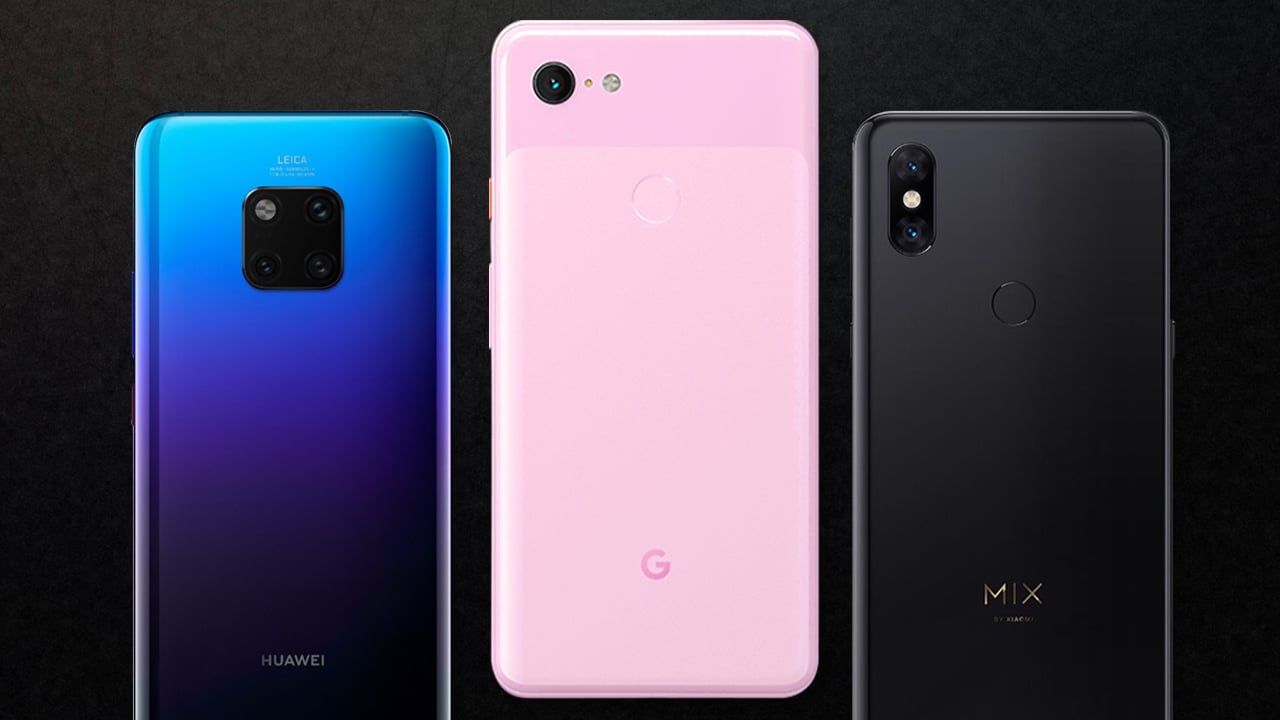


While we agree that the best smartphone is the one we have in our pockets, we can’t help but want more out of our gadgets, or simply something else.
In this feature, we expose our daily drivers and which smartphones we’d rather use. Whether they be fictional or real yet unavailable, these are our true GadgetMatches.

Daily driver: Huawei Mate 20
Prefers: Xiaomi Mi MIX 3
In 2018, you can pick up any flagship and expect it to work superbly for your daily needs. So as we end the year, there’s been one phone that does exactly that but also brings an exciting extra feature: the sliding pop-up camera of the Xiaomi Mi MIX 3. I don’t take a lot of selfies so I won’t necessarily need to slide out those front facing selfie cameras for what it’s actually there for. But I’m not gonna lie, the added feature of being able to fidget with it is something that makes me super curious about wanting the phone on the daily.

Daily drivers: iPhone XS and Honor 10
Prefers: Xiaomi Mi MIX 3
While I’m completely happy with my current daily drivers, I still find myself wanting to use a phone that’s not yet widely available in the world. I was lucky enough to test the Xiaomi Mi MIX 3 while I was in Beijing and boy did I want to take it home! It’s essentially a Mi MIX 2S in a sliding form-factor, and with much-improved cameras. I just wish it also came in white like its predecessor.

Daily driver: LG G7 ThinQ
Prefers: OnePlus 6T… but with an ultra wide-angle camera 😜
One of the underrated mobile phones to be released this year is the LG G7 ThinQ. Despite its mouthful name, it’s a pretty good all-around device. Aside from its fun-to-use ultra-wide-angle camera though, everything about the phone is just so-so. That’s why I’d love to go back to using a OnePlus phone, especially the latest model, the 6T. I love everything about the OnePlus 6T — its display, performance, build, and software. Wouldn’t it be nice to also equip it with a wide-angle shooter? The secondary camera of the 6T is rather redundant to the main sensor, so I’m hoping OnePlus would consider adding one soon.

Daily driver: Not Pink Pixel 3
Prefers: An actual pink Pixel 3 🤬
I can’t let go of phones from the Pixel line simply because I trust their cameras most. I don’t just want good selfies, I want an actual phone that I can take in place of cameras. That being said, it really wouldn’t have killed Google if they made an actual pink phone instead of teasing me with this half-baked maybe pink device.

Daily drivers: Galaxy Note 9 and Mate 10 Pro
Prefers: A tougher and more robust flagship smartphone
I love how smartphones today are so feature-packed that they can be used for leisure and productivity on the go. If I’m not out raiding legendaries in Pokémon Go, I’d be out shooting with a camera and my smartphone. Thing is, I’m the kind of user who doesn’t put a case on his smartphone simply because I think feeling the material and its texture are part of the phone’s experience — that plus it bulks up the phone. But today’s high-end phones scratch easily with everyday handling so having a tougher protective glass would really be a good addition. Maybe for Gorilla Glass 10?

Daily drivers: Pixel 3 and Mate 20 Pro
Prefers: Razer Phone 2
I must say, using the Pixel 3 and Mate 20 Pro together is a match made in tech heaven. I get the latest Android updates and compact dimensions of the former, as well as the versatile cameras and incredible battery life of the latter. And yet, what I really want is a smartphone that simply games. It’s been a Razer Phone 2 versus ROG Phone type of year, but my money is on Razer’s side. Sticking to the 16:9 screen ratio and front-facing speakers has become invaluable for mobile gaming, which is something I’ve gotten more into lately.

Daily drivers: Huawei P20 Pro and LG V40 ThinQ
Prefers: Huawei Mate 20 Pro
I’ve been in love with Huawei’s P series ever since they collaborated with Leica. It’s been a great travel companion that perfectly captures postcard- and instagram-worthy photos. But sometimes, I’d wish they add a wide-angle feature — something that I like from the LG V40 ThinQ. This is why I prefer the Mate 20 Pro. It’s packed with three versatile rear shooters that can handle any adventure I go on.
Daily drivers: Xiaomi Mi 8 Pro and Pocophone F1
Prefers: The Xiaomi Mi 8 with the Huawei Mate 20 Pro’s cameras
I’m generally happy with the Xiaomi Mi 8. It’s a great performer and I think it’s the absolute sweet spot for me in terms of size. While its cameras are pretty good, they just aren’t at the level of the Mate 20 Pro’s which are great under any lighting condition. Since this fantasy phone isn’t happening any time soon, I’m content with the Xiaomi Mi 8 Pro. It’s a great multitasking machine plus I really enjoy MIUI!





News
Xiaomi 18 Pro series is launching globally, Xiaomi confirms
Xiaomi’s phone with two screens is finally going global.

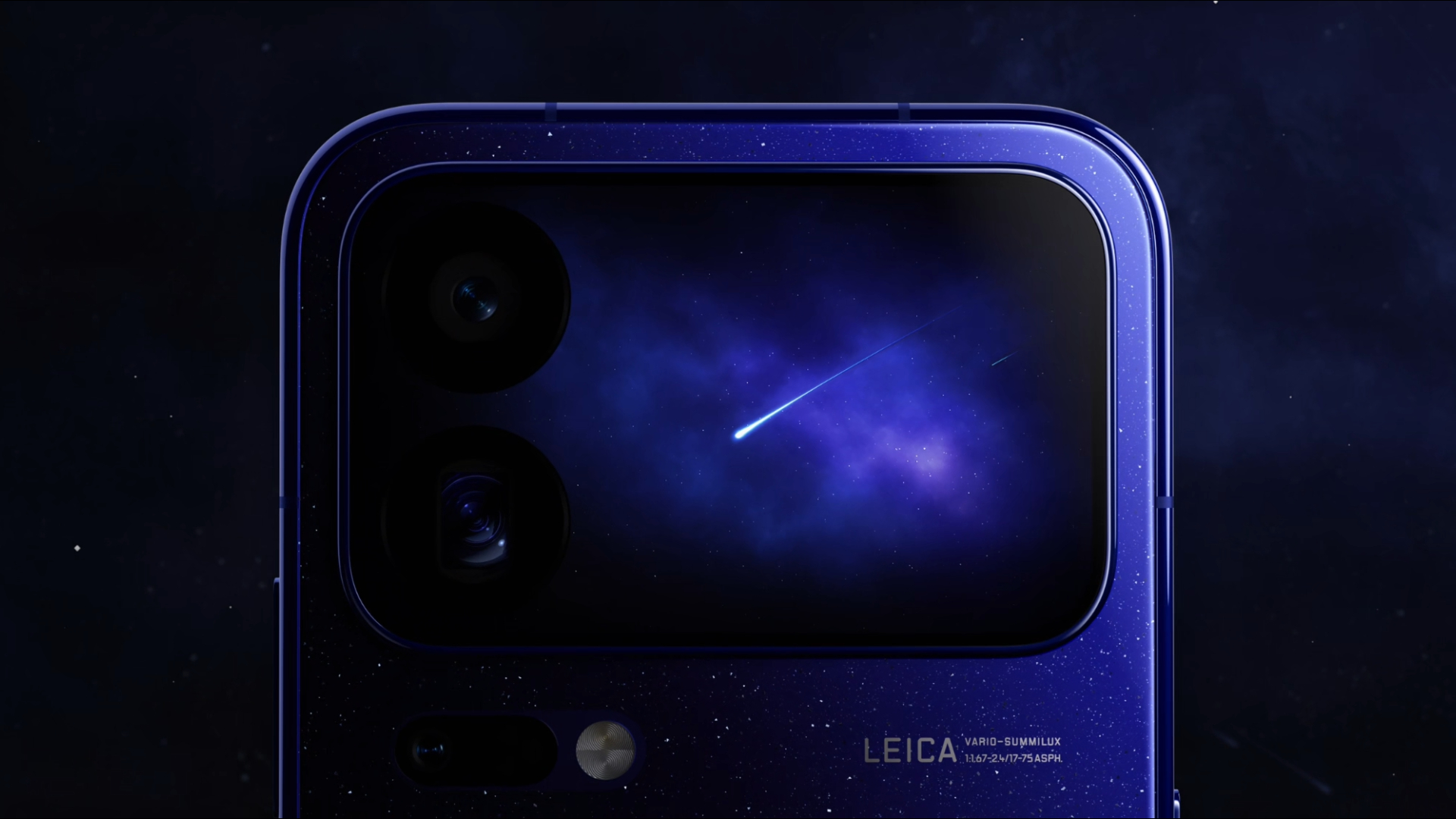
As you can probably read from our reviews, we were impressed with the Xiaomi 17 series. Like previous years, the Chinese brand knows how to make impressive flagships. Unfortunately, despite our raving, the world didn’t get the complete flagship experience because the Xiaomi 17 Pro and Pro Max were exclusive for Chinese users. This year, however, the Xiaomi 18 Pro and Pro Max will finally grace the entire world with their presence.
Recently, Xiaomi unveiled the Xiaomi 18 Pro duo. Normally, the launch of the Pro series doesn’t make waves outside of China because of the exclusive release. However, soon after the series’ debut, Xiaomi CMO Xu Fei officially confirmed that the duo will make a global debut sometime this year.
Now, the launch of the two smartphones should catch your eye. While the regular Xiaomi 18 series belongs to the more traditional form factors for smartphones, the two Pro models feature a smaller 2.7-inch (or a 2.9-inch) LTPO AMOLED rear screen, adding that extra bit of spice even if the phone is facing downwards. Other than that, the series comes with up to a Snapdragon 8 Elite Extreme Gen 6 chipset, up to 16GB of RAM, and up to 1TB of storage. It also features a trio of rear cameras including a 200-megapixel main sensor, a 200-megapixel periscope lens, and a 50-megapixel ultrawide sensor. In front, it has a 50-megapixel selfie shooter. Finally, the series goes up to an 8500mAh battery.
To be clear, there is a chance that the global version won’t match these specs. Regardless, it’s surely an impressive phone when it does launch elsewhere.
News
Power Mac Center SM Aura is now an Apple Premium Partner store
With a new protection plan dubbed as “1Protect” for your precious new iPhones

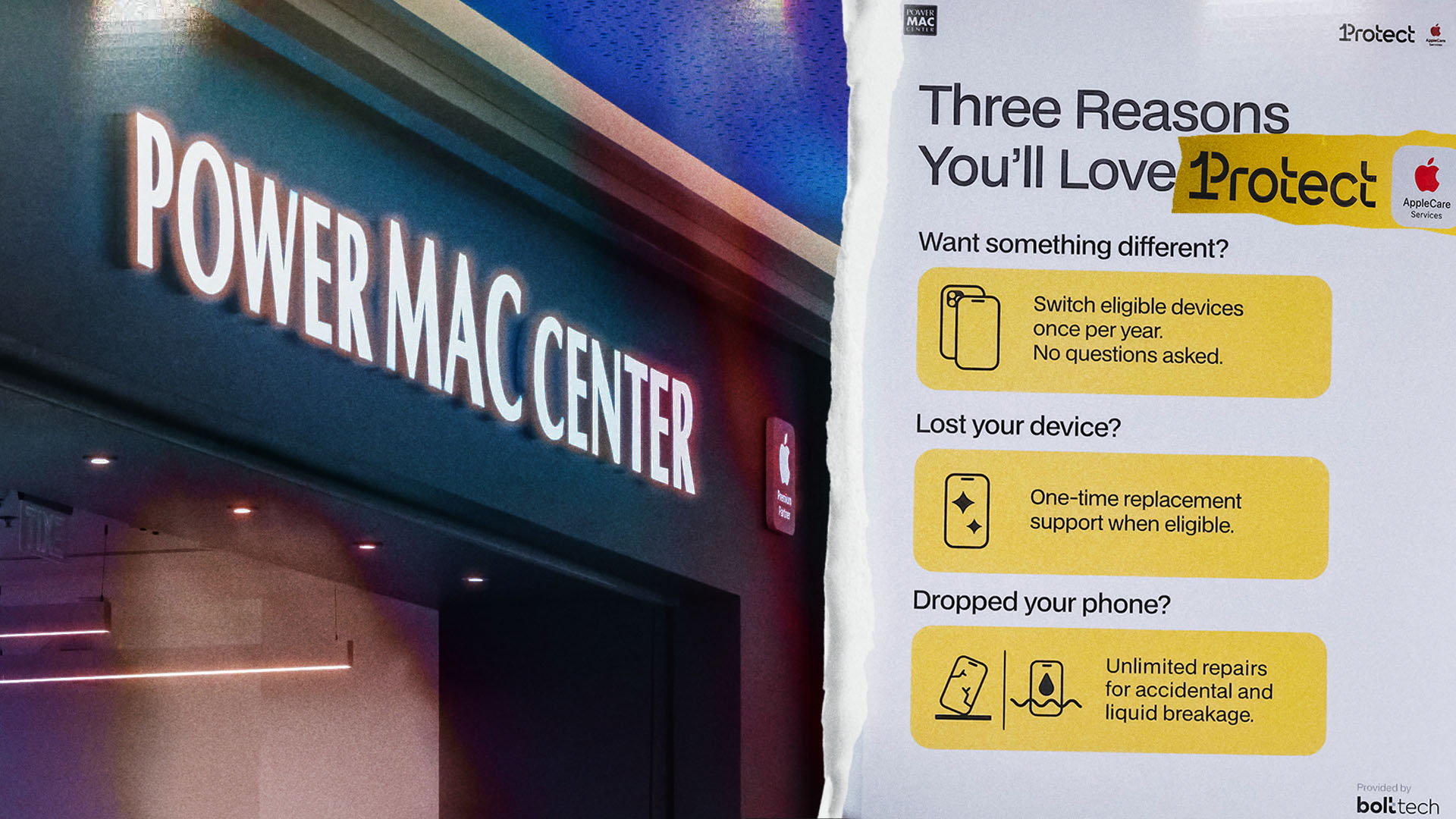
Power Mac Center has upgraded its SM Aura branch into an Apple Premium Partner (APP) store. The “APP” designation is the highest tier for reseller stores worldwide.
Originally opened in 2014, the redesigned store now houses its retail space, training center, and a service center in one.

The new space also puts more emphasis on learning. Free group demos will be held every Friday to Sunday. These will cover topics such as iPad creativity, or camera features, personalization, and Continuity for the latest iPhone series.
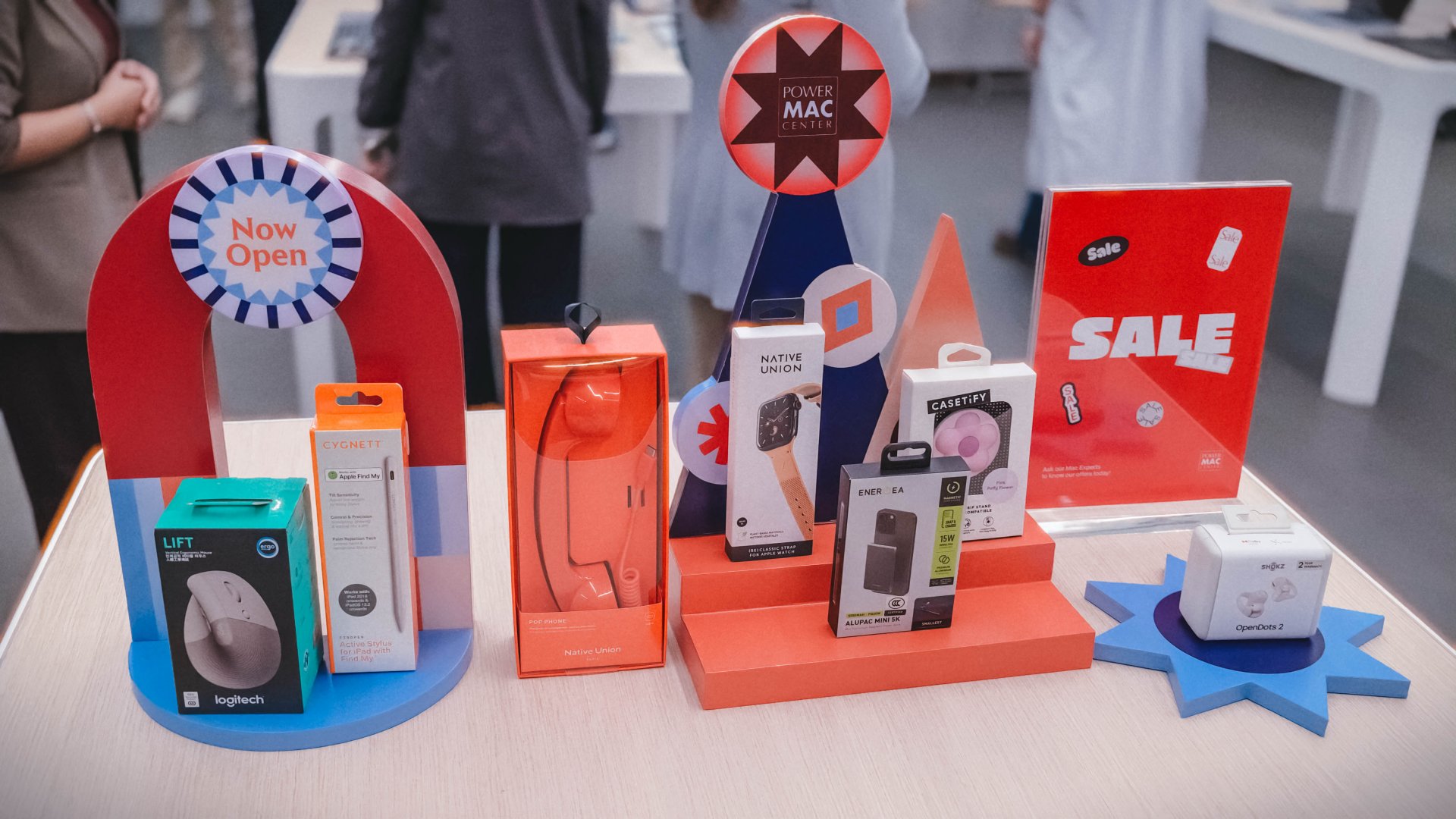
To celebrate the opening, customers can also score discounts on select Apple devices and accessories until September 27, 2026.
Deals include up to:
- ₱PhP 36,000 off MacBook Pros
- PhP 19,500 off iPads
- PhP 3000 off Apple Watches; and
- PhP 11,000 off iPhone models
There are also service discounts until September 25. Plus, new iPhones purchases here are also covered with 1Protect coverage options.
ICYMI, it’s a partnership between PMC and Bolttech. It’s basically a new way to protect your precious new iPhones.
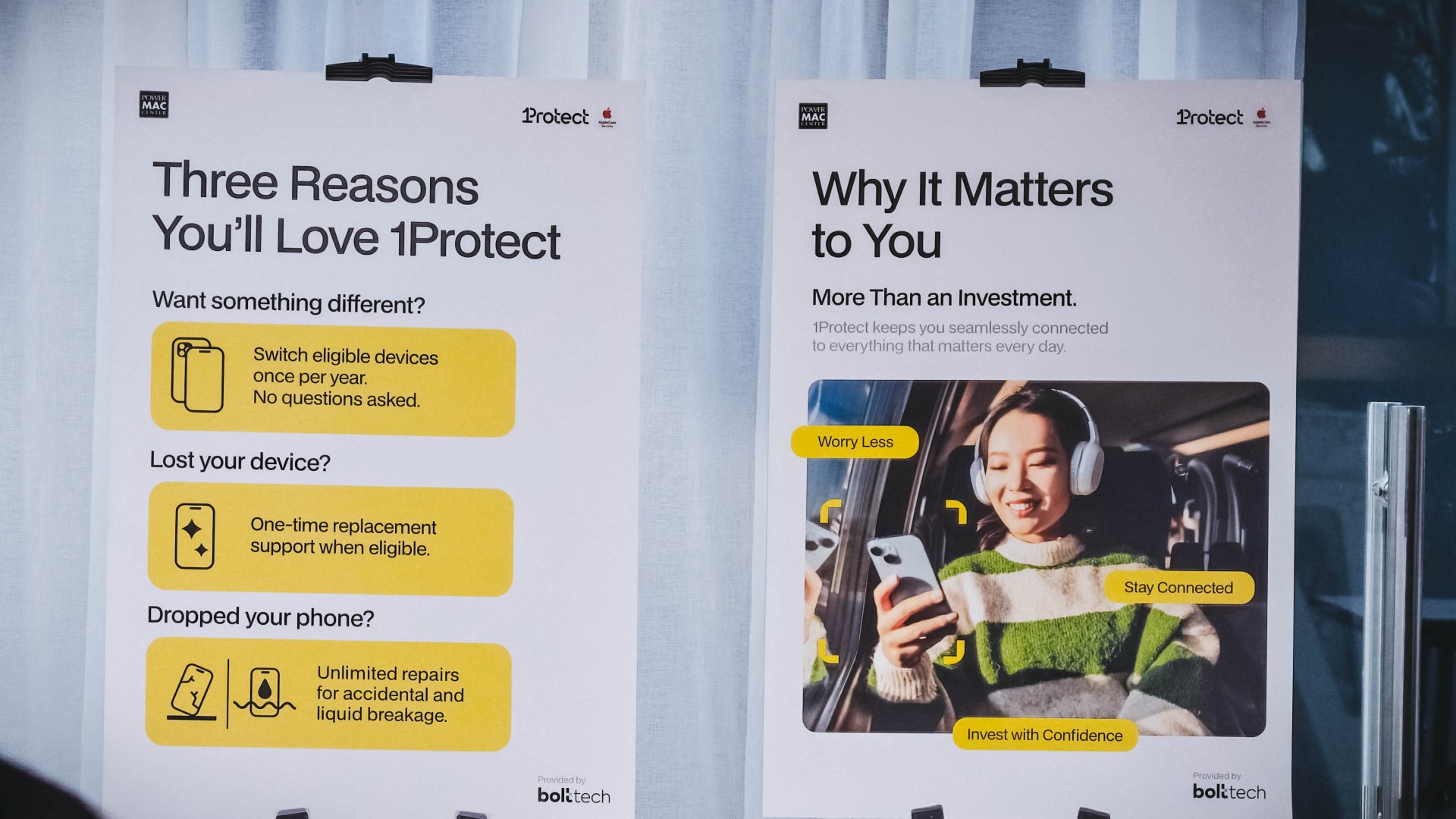
Your regular one-year warranty does not cover accidental drops and water damage. Purchasing this new coverage plan (good for one year) gives you an unlimited dose of that.
Parts are guaranteed original and is an official part of AppleCare Services.
This protection program also covers one-time unwarranted exchanges (or change of mind returns) from micro scratches to color options. It will even replace your iPhone (of the same model and configuration) if it was stolen once.

There’s also the 1 Infinite loyalty program. Members can earn points from purchases and redeem them for devices, accessories, services, and training.
The Power Mac Center SM Aura APP store is located on Level 2 and is open daily from 10AM to 10PM.

The stage is set for next year’s smartphones. Both MediaTek and Qualcomm have unleased their upcoming flagship chipsets for the coming generation. If you’re looking for the Qualcomm side of things, go here. But if you’re looking for MediaTek, then you’re in the right place.
The Dimensity 9600 Pro adopts the 2nm process mode, which makes MediaTek one of the first companies to use it. The chip itself features a 2+3+3 All Big Core CPU. Specifically, it has two C2-Ultra cores going up to 4.55GHz, three C2-Pro cores going up to 4.35GHz, and three C2-Pro ones going up to 3.1GHz. This configuration can reportedly achieve 17 percent better single-core performance and 15 percent higher multi-core performance.
Besides all that power inherently built in, the chipset also has the G2-Ultra NX GPU. This GPU can deliver 27 percent higher peak performance, 24 percent lower power consumption, 18 percent faster raytracing, and gaming at up to 185 frames per second.
Finally, the chipset has the Imagiq 1290 ISP. With this engine, the processor can handle 60fps motion capture and 4K240 direct-output ultra-slow-motion video.
Alongside the Dimensity 9600 Pro, MediaTek is also launching the Dimensity 9600M, a slightly more lightweight option of the Pro that deliver flagship level performance to more users outside of that price point.
Smartphones that will come with the Dimensity 9600 Pro and 9600M will launch sometime in the fourth quarter.
SEE ALSO: MediaTek unveils Dimensity 9500s, 8500 mobile processors


DJI Lito X1 review: Is this the best lightweight drone for creators?
Making a strong case as a travel companion and a capable B-cam!


REDMI Note 17 Pro Max review: A new breed born from AI greed
Welcome to the new normal


Marvel’s Wolverine review: When the claws come out
A brutal, cinematic superhero adventure

Xiaomi 18 Pro series is launching globally, Xiaomi confirms

Google Photos can now censor your kid’s face better

CRISIS CORE -FINAL FANTASY VII- REUNION physical edition now available for Switch 2

Smart launches AI.Smart, an affordable AI workspace

A Discord ban won’t save your kids

realme 16T 5G with 8000mAh battery, IP69 Pro rating launches in PH

HUAWEI Pura X View is 2026’s first WIDE slab-type smartphone

REDMI reveals the refreshed Note 17 and Note 17 Pro series

REDMI Note 17 Series: Price, availability in Singapore

The CAMON Slim 5G is TECNO’s latest ultra-slim smartphone


-
 News4 days ago
vivo X500 Series launches with major imaging upgrades
-
 Hands-On2 weeks ago
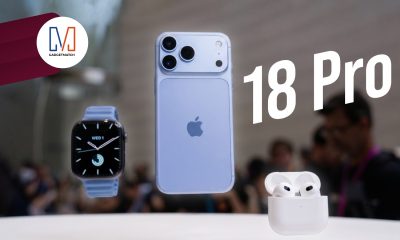
Apple iPhone 18 Pro Series Hands-on
-

 Gaming2 weeks ago
BlizzCon 2026 announces World of Warcraft: Forever and Diablo V
-

 Singapore6 days ago
Epson Lifestudio Grand Plus EH-LS970B with 4K projection, more launches
-
Reviews1 week ago
REDMI Note 17 Pro Max review: A new breed born from AI greed
-

 First Look2 weeks ago
First Look: Apple iPhone Duo
-

 News3 days ago
OPPO Find X10 Pro Max is the first phone with a triple 200MP camera system
-

 Gaming1 week ago
Valve unveils price of the Steam Frame