
News
Google Pixel 4, Pixel 4 XL still great for photos, now with 90Hz panel
All leaks mostly confirmed


The Google Pixel 4 and Pixel 4XL are now official confirming most of the leaks that came out leading up to its launch. So what’s different, what improved, and what stayed the same? We’ll go through all of that right now.
No fancy waterfall displays, just thoughtful design
Google appears to be taking plenty of cues from Apple in the design department in the sense that not much has changed. Looking at the device up front, you might mistake it for the Pixel 2XL. That’s because Google is doing away with the notch but it’s keeping the thick bezel for a reason that we’ll get to later on.
On the back, the most notable difference is the square holding its dual camera setup. Yes, just two. One main shooter and another one that’s “roughly 2x telephoto.” Google says, “While wide angle can be fun, telephoto is more important.”
The back is also moving away from the two-toned design we’ve grown to associate with the Pixel. In its place is a solid glass back with only a single color and a frosted matte coating.
The power button is still a different color from the rest of the phone depending on the variant you choose.
Still the best camera on a smartphone?
Plenty of people are eagerly waiting for the Pixel just to see well they will fair in the camera department. Based on the latest numbers by DxOMark, the Huawei Mate 30 Pro currently holds the crown but that might be quickly taken away soon.
The hardware on the Pixel 4 are as follows: 12.2MP main camera with f/1.7 aperture, plus a 16MP f/2.4 telephoto zoom lens that supports hybrid zoom. But the Pixel has always been more than just hardware.
The true crowning glory of the Pixel cameras is Google’s computational photography. And that applies even on the telephoto lens. It combines both the 2x telephoto lens along with Super-Res Zoom to produce high quality, zoomed in images.
There’s now also what Google is calling Live HDR+. It basically means the HDR application happens real-time. Basically, whatever you see right before you take a shot is the photo that you should expect to come it.
That same feature allows Double Exposure — separate slides for highlights and shadows on Pixel 4 before you take your shot.
Computational photography also lends a huge hand in white balancing along with a wider range for portrait mode, and improved night sight.
That front-camera setup
Again, just like on the iPhone, there’s now a lot going on in that thick forehead bezel.
It’s not home to a bunch of new sensors that work together towards a more secure face recognition suite. There’s the selfie camera, a pair of IR cameras, flood illuminators, and DOT projectors.
Google says it’s the first smartphone equipped with a radar. It enables Motion Sense which Google claims is the fastest and most secure face unlock feature on a smartphone. It also allows you to control the Pixel 4 without touching it — similar to the Air Gestures that Samsung first tried a few years back.
Overall equipped with better hardware
Displays with high refresh rate might be a growing trend and the Pixel doesn’t want to be left behind. The phone is equipped with a 90Hz panel, similar to the one on the most recent OnePlus smartphones.
The rest of the device also gets a spec bump. Powering the Pixel 4 is Qualcomm Snapdragon 855 SoC along with 6GB of RAM and either 64GB or 128GB of storage. Nothing to write home about as the numbers pale in comparison to other flagships in 2019. But, again like the iPhone, the Pixel isn’t exactly about the numbers.
You might also be happy to know that both the Pixel 4 and Pixel 4 XL have an IP68 rating.
Pricing and availability
The Google Pixel 4 starts at US$ 799 and will start shipping on October 24. It will come in three colors: Just Black, Clearly White, and Oh So Orange. It will be available through all major US carriers.






News
Smart opens pre-orders for Samsung Galaxy S26 series
Get the devices for as low as PhP 2,433 a month

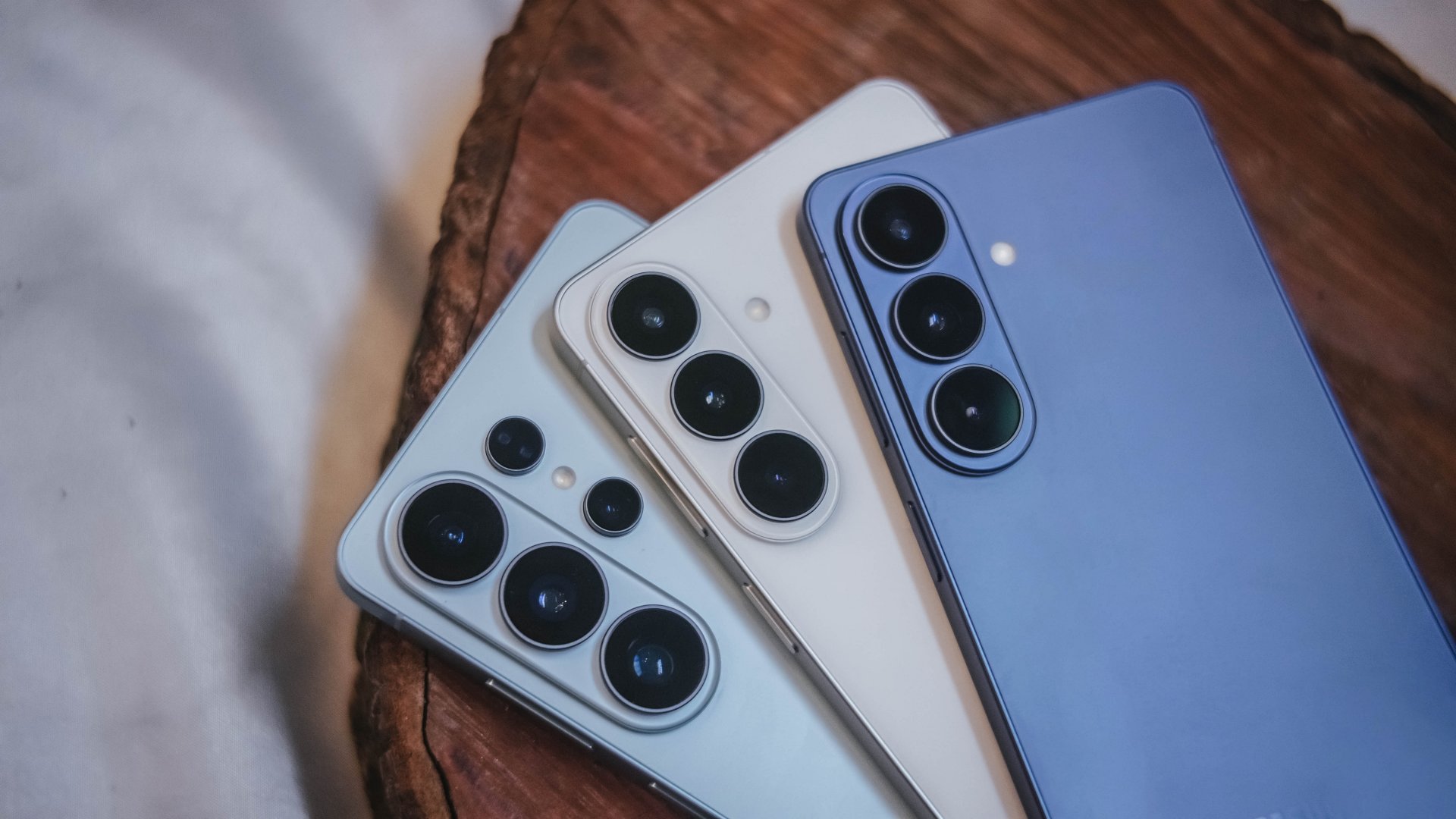
Smart has officially opened pre-orders for the Samsung Galaxy S26 series.
The newly-launched lineup includes the Galaxy S26, S26+, and S26 Ultra.
These new flagship devices are being offered across Smart Postpaid, Smart Infinity, and Smart Prepaid bundles with various storage and installment options.
As part of Smart’s pre-order offer, customers can get double the storage when they avail of an S26 series device with Smart Postpaid Plans+ 999 as soon as possible.
This plan includes 12 months of unlimited 5G, 20GB of data per month, and unlimited all-net calls and texts, aside from Smart Postpaid perks.
In addition, the first 26 customers to pre-order via the Smart Online Store will get a free Samsung Galaxy Tab A9.
Moreover, those who pay via straight payment or 0% credit card installment will get double data for postpaid plans.
Here are the pricing details for each model:
- Galaxy S26 (512GB): PhP 52,500 or PhP 2,433/mo (24 months)
- Galaxy S26+ (512GB): PhP 64,900 or PhP 3,008/mo
- Galaxy S26 Ultra (512GB): PhP 73,200 or PhP 3,388/mo
- Galaxy S26 Ultra (1TB): PhP 94,800 or PhP 4,392/mo
For premium users, the Smart Infinity Plans (3500, 5000, 8000, and 9500) provide unlimited data and exclusive perks such as:
- a dedicated Relationship Manager
- 24/7 hotline support
- worldwide concierge services
Particularly, the new SIM-Only Plan 9500 also allows for one primary and two supplementary line under a single account.
For more on the Samsung Galaxy S26 series, read here: Samsung Galaxy S26 series: Chasing usability, not specs
MWC 2026
TECNO resurrects modular phones with this new concept
Lets you snap on extra cameras, longer power, and more


Just like the brand’s ethos, TECNO really stops at nothing. From the last tri-foldable concept of 2025, they are also resurrecting the modular phone design — a once imagined “future of mobile phones.”
Dubbed as the Modular Magnetic Interconnection Technology, it could re-shape the way we think about smartphones from 2026 and beyond.
Thinnest modular concept
Just like motorola’s defunct Moto Z line with moto mods from almost ten years ago, TECNO’s modular system uses magnetic attachment plus pogo-pin connectors for power delivery. Data transfers wirelessly (via Wi-Fi, Bluetooth, and even 5G mmWave), so everything pairs almost instantly when you snap a module into place.
The brand says this is its answer to growing AI and performance demands — that without making phones thicker and bulkier.
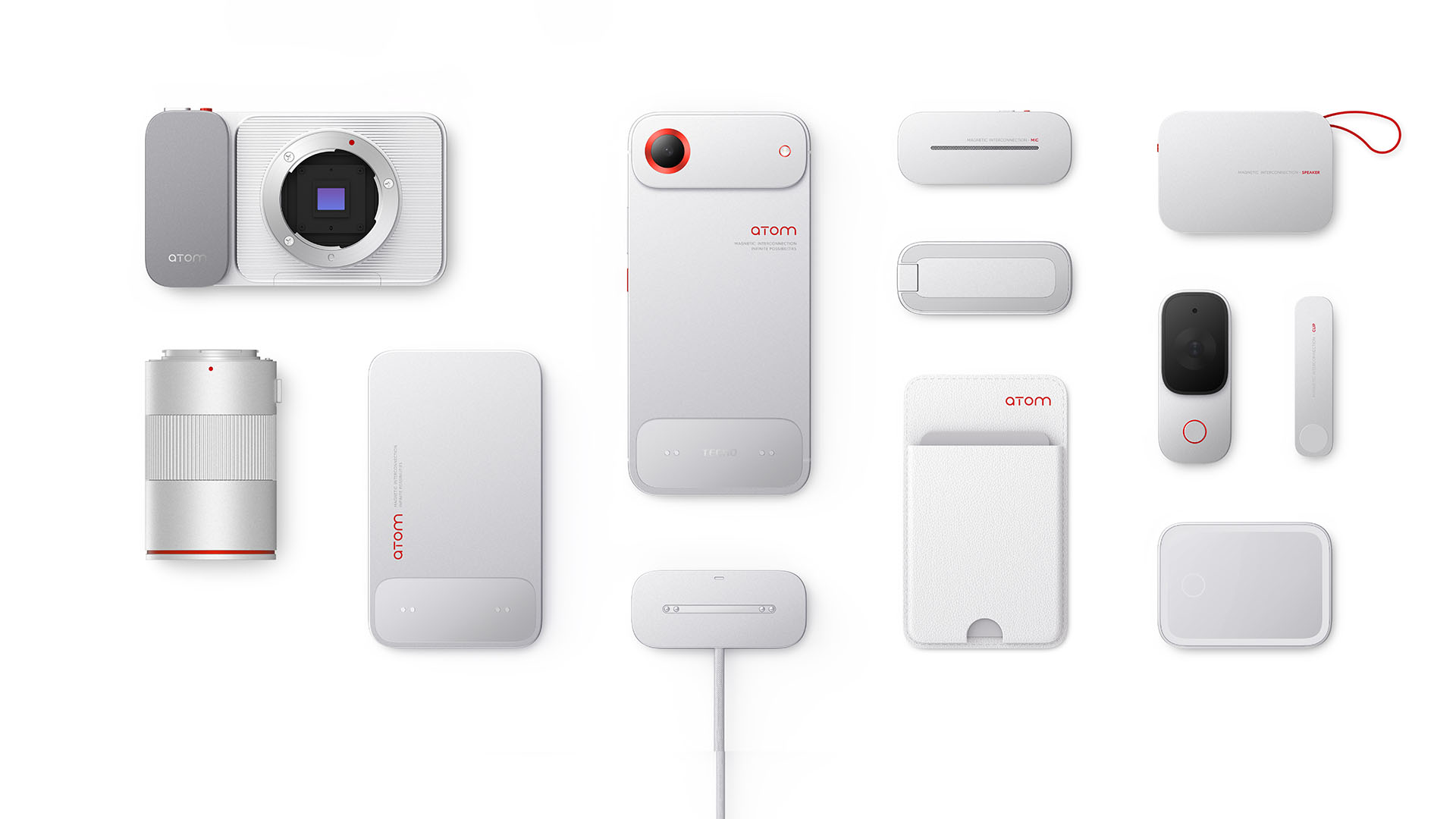
Surprisingly, it’s oh-so thin as well! The base phone is just 4.9mm. Meanwhile, the modular Power Bank is 4.5mm. When combined, it’s still comparable to thickness of conventional smartphones.
TECNO will showcase around ten (10) modules in this concept ecosystem. Some of those include a power bank, action camera, even a telephoto lens module wasn’t missed out.
That particular module can work as a standalone imaging system. All while using the phone’s display as a viewfinder with low-latency preview.
Moreover, TECNO is presenting two flavors for this concept:
-
ATOM edition — Clean silver aluminum with subtle red accents
-
MODA edition — A bolder, geek-inspired look
Both keep the glass back and modular alignment zones, which subtly guide where accessories snap into place.
MWC-ready
As mentioned, this is just a concept, not a retail-ready device (just yet). But, the bigger picture is clear: TECNO went back to the drawing board by re-thinking the former modular ecosystem of the yesteryears.

This new modular concept could eventually support AI tools, storage expansion, and lifestyle accessories in the long run. If you’re heading to Barcelona, Spain for MWC 2026 (March 2-5, 2026), you can visit TECNO’s booth at Hall 7, Stand 7A40.
Samsung has announced the Galaxy S26 Series, introducing refinements across design, performance, and AI-driven features.
The lineup consists of three models: Galaxy S26 Ultra (6.9-inch Dynamic AMOLED 2X), Galaxy S26+ (6.7-inch Dynamic AMOLED 2X), and Galaxy S26 (6.3-inch Dynamic AMOLED 2X). All models support 1-120Hz adaptive refresh rates, with the Ultra offering S Pen compatibility.
The S26 Ultra leads with a Snapdragon 8 Elite Gen 5 for Galaxy processor (3nm), while the S26 and S26+ use Samsung’s Exynos 2600 (2nm). Memory configurations reach up to 16GB RAM on the Ultra, with storage options up to 1TB.
Battery capacities remain consistent with previous generations: 5,000mAh on the Ultra, 4,900mAh on the Plus, and 4,300mAh on the base model. Charging improves on the Ultra with Super Fast Charging 3.0 (60W), capable of reaching approximately 75 percent in 30 minutes. Wireless charging and PowerShare functionality remain available.
Camera systems focus on computational improvements. The Ultra retains a 200MP main sensor with enhanced AI processing, stabilization, and Nightography optimizations. Generative editing tools and Audio Eraser features expand multimedia capabilities, including third-party app support for noise reduction.
Privacy Display and Private Album introduce additional privacy controls. Privacy Display restricts viewing angles at the pixel level and can be customized per app, addressing concerns about screen visibility in public spaces.
Design refinements emphasize cohesion. All models share a unified corner radius and updated material choices aimed at improving durability and heat dissipation. The Ultra is slimmer and lighter than its predecessor.
Pre-order, pricing, and availability in the Philippines
Pre-orders open February 26, 2026, with official availability following in March. Promotional offers include storage upgrades, discounts on accessories, and trade-in incentives.
Pricing in the Philippines starts at PHP58,990 for the Galaxy S26 (256GB), PHP74,990 for the Galaxy S26+ (256GB), and PHP86,990 for the Galaxy S26 Ultra (256GB). Higher storage tiers reach PHP121,990 for the 1TB Ultra variant.
Samsung positions the S26 Series as an evolution rather than a revolution — emphasizing usability, AI integration, and incremental refinement.
Samsung Galaxy S26 Series – Specs
| Feature | Galaxy S26 Ultra | Galaxy S26+ | Galaxy S26 |
| Display | 6.9″ Dynamic AMOLED 2X
|
6.7″ Dynamic AMOLED 2X
|
6.3″ Dynamic AMOLED 2X
|
| Rear Camera: Ultra Wide | 50MP, F1.9, 0.7 µm | 12MP, F2.2, 1.4 µm | 12MP, F2.2, 1.4 µm |
| Rear Camera: Wide | 200MP, F1.4, 0.6 µm | 50MP, F1.8, 1.0 µm | 50MP, F1.8, 1.0 µm |
| Optical Quality 2x | |||
| Rear Camera: Telephoto 1 | 10MP, F2.4, 1.12 µm | 10MP, F2.4, 1.0 µm | 10MP, F2.4, 1.0 µm |
| 3x optical zoom | |||
| Rear Camera: Telephoto 2 | 50MP, F2.9, 0.7 µm
|
— | — |
| Front Camera | 12MP, F2.2, 1.12 µm | 12MP, F2.2, 1.12 µm | 12MP, F2.2, 1.12 µm |
| Processor | Snapdragon® 8 Elite Gen 5 for Galaxy (3 nm) | Exynos 2600 (2 nm)* | Exynos 2600 (2 nm)* |
| Memory (RAM) | 12GB / 16GB | 12GB | 12GB |
| Storage | 256GB / 512GB / 1TB | 256GB / 512GB | 128GB / 256GB / 512GB |
| (Micro SD: N/A) | |||
| Battery | 5,000 mAh | 4,900 mAh | 4,300 mAh |
|
|||
| Dimensions | 78.1 x 163.6 x 7.9 mm
214 g (Sub6/mmWave) |
75.8 x 158.4 x 7.3 mm
190 g (Sub6/mmWave) |
71.7 x 149.6 x 7.2 mm
167 g (Sub6) |
| Colors | Standard: Cobalt Violet (Hero), Sky Blue, Black, White
Online: Silver Shadow, Pink Gold |
Standard: Cobalt Violet (Hero), Sky Blue, Black, White
Online: Silver Shadow, Pink Gold |
Standard: Cobalt Violet (Hero), Sky Blue, Black, White
Online: Silver Shadow, Pink Gold |


Now Playing: Iron Lung
The premise will leave you wanting for more.


Infinix NOTE Edge: Stellar at street photography
Despite trailing in other specs, the Infinix NOTE Edge was built for point-and-shoot photography.


OPPO Reno15 Pro: Camera Review
Why is this even considered a "Reno"?

Smart opens pre-orders for Samsung Galaxy S26 series
Now Playing: Iron Lung

TECNO resurrects modular phones with this new concept

Privacy Display | Galaxy S26 Ultra

Audio Eraser now works on third-party apps | Galaxy S26 Ultra

Breaking up with Adobe Photoshop after 20 years

TECNO will showcase the CAMON 50 and POVA 8 series at MWC 2026

PlayStation, LE SSERAFIM Chaewon team for the ‘Love of Play’ campaign

VinFast updates battery subscription policy for large upfront savings

Xiaomi SU7 Ultra makes Gran Turismo 7 debut


-

 Reviews2 weeks ago
The art of being in and behind the frame
-

 Gaming2 weeks ago
New Resident Evil Requiem trailer teases a return to the RPD
-

 Accessories2 weeks ago
Apple AirTag 2 Review
-
 First Look1 week ago
Match Pulse: Infinix NOTE 60 Pro
-

 Cameras1 week ago
Osmo Pocket 4 makes a surprising appearance in public
-

 Entertainment2 weeks ago
Jason Momoa will star in upcoming Helldivers film adaptation
-
Camera Walkthrough6 days ago
OPPO Reno15 Pro: Camera Review
-

 Gaming2 weeks ago
Star Wars: Galactic Racer shows off new gameplay at State of Play