
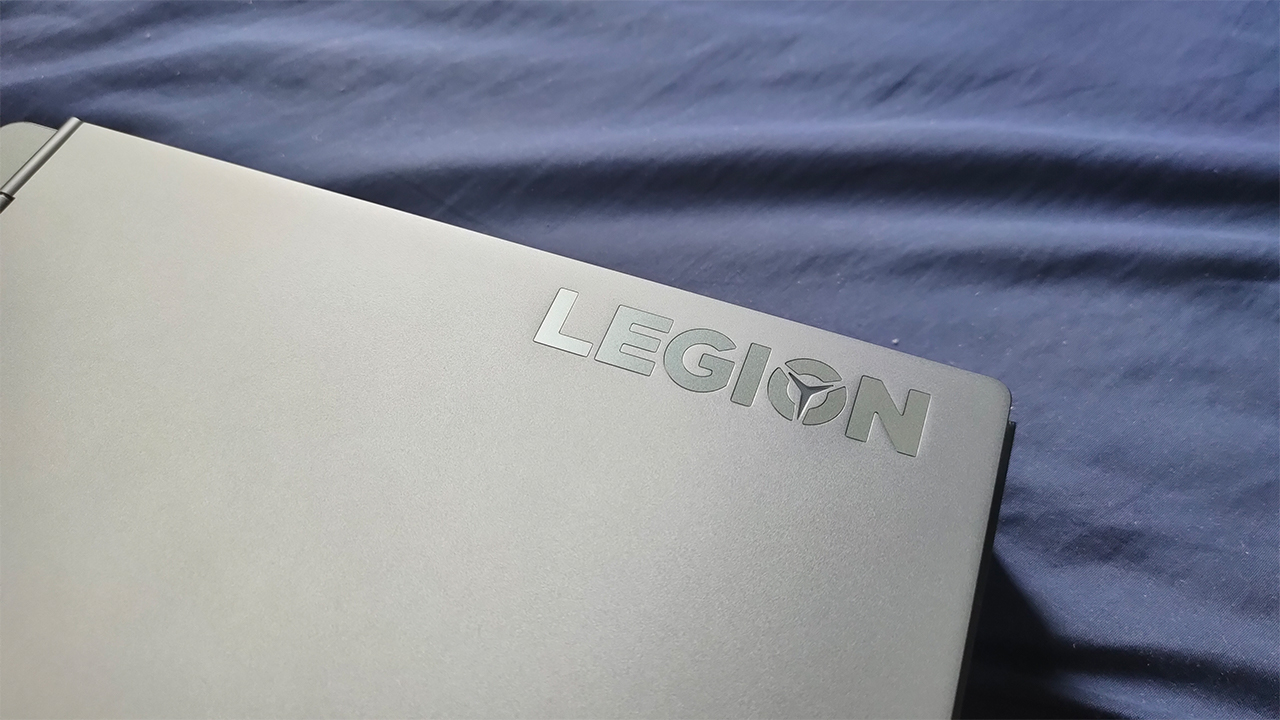


A few months ago, I took a look at the Lenovo Legion 7i, which was one of Legion’s top gaming laptops when it was released. In my opinion, it had the hardware to rival its contemporaries — even in the RGB department, but some things got in the way. A few months later, a slimmer option arrived into the market.
The Lenovo Legion Slim 7i, on paper, doesn’t particularly change a lot of things from its bulkier counterpart. It still comes in a similar build design, roughly the same set of hardware (with a GPU change), and less RGB. Even on this device, there are less ports to plug in your peripherals and it has the same cooling setup.
So, is this laptop really any different? For starters, here’s what you’re getting with the Legion Slim 7i:
It has a 15.6-inch FHD, anti-glare display with a 144Hz refresh rate

It comes with an NVIDIA RTX 2060 Max-Q inside
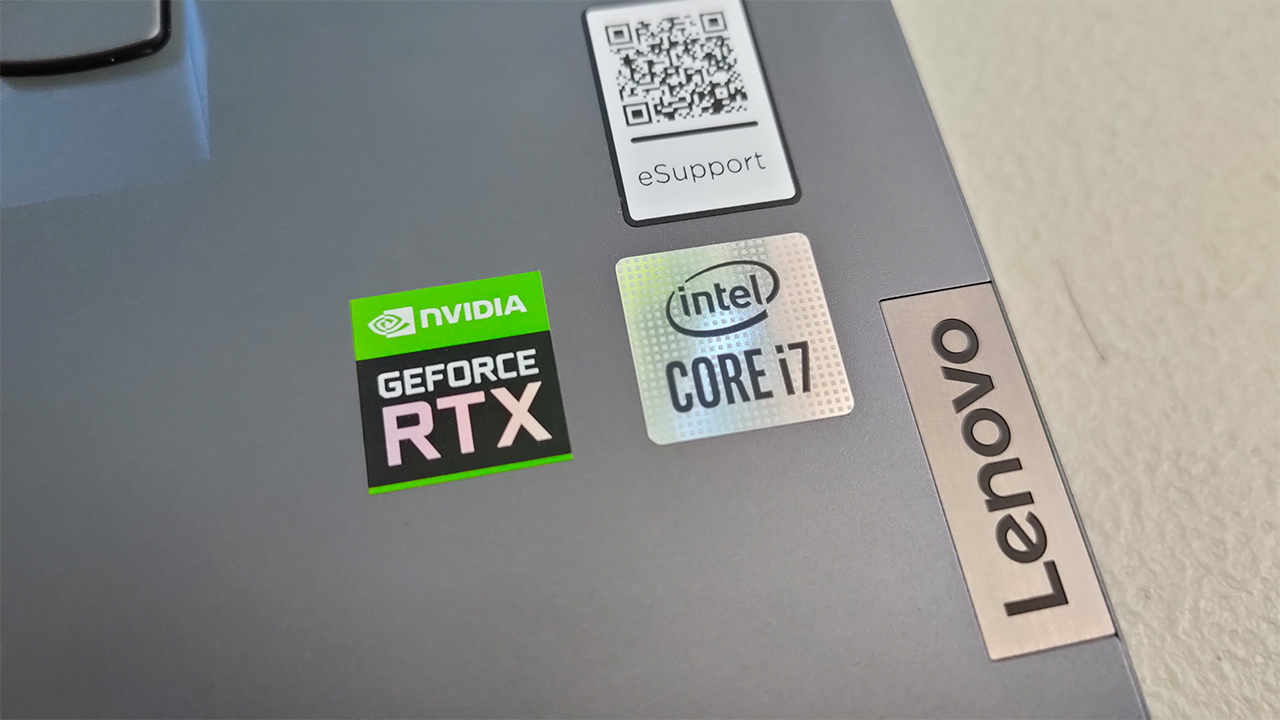
The device features a full-size RGB-backlit keyboard
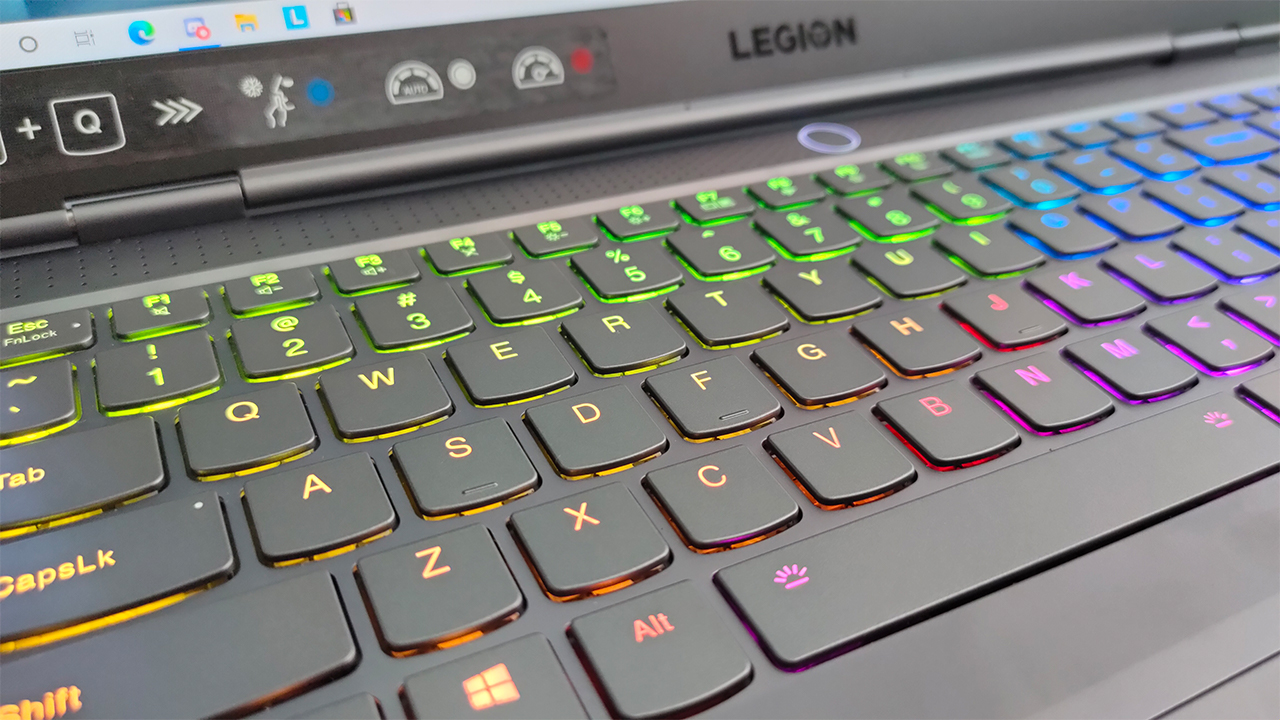
It only comes in a Metal Gray colorway
Handy-dandy performance for the chill times
This device comes with a 10th generation, Intel Core i7-H processor inside, with 16GB of RAM to boot. For every other thing you can possibly do with this device, it obviously stacks up pretty well. From social media browsing and doing some presentations to watching True Beauty and playing games casually, it just worked smoothly.

As far as photo and video editing goes, the NVIDIA RTX 2060 Max-Q helps out quite a lot. Along with a 144Hz refresh rate, anti-glare display, I was able to take the work outdoors without having to reach for shade. Render times were just around how I expected them to, clocking in at around 40-50 minutes for 5 minutes of gameplay.
Now that I’m looking back at how the Legion 7i was, I couldn’t see or feel any difference in this regard — and that’s a good thing. Even in a much slimmer chassis and less RGB, the hardware held up pretty well for anything you throw at it. Honestly, it’s something I love to see when brands scale it down without sacrificing performance.
Gaming performance meant for competition
Much like the Legion 7i, this is a gaming machine after all, and the hardware certainly had its work cut out for it. While I threw some casual games in there, I also wanted to see how well it handles competitive titles especially for 2021. Surely, the Legion Slim 7i didn’t disappoint even with an RTX 2060 Max-Q:
| Title and Settings | Avg. Frame Rate |
| VALORANT (Max. Settings) | 223 FPS |
| Fortnite: Battle Royale (Epic w/ DLSS) | 103 FPS |
| Apex Legends (High) | 99 FPS |
| Star Wars Battlefront II (Max. Settings) | 95 FPS |
| Counter-Strike: Global Offensive (Max. Settings) | 255 FPS |
| Cyberpunk 2077 (High, DLSS at Quality, RTX on) | 42 FPS |
Now to be fair, I wasn’t expecting full 60 FPS when trying to run Cyberpunk 2077 on this GPU. However, with RTX on, it was a great lighting experience to have through and through. For the rest of the games, I honestly felt no drops in frame rates even with longer play times. If there were any drops, it’s probably my internet’s fault.
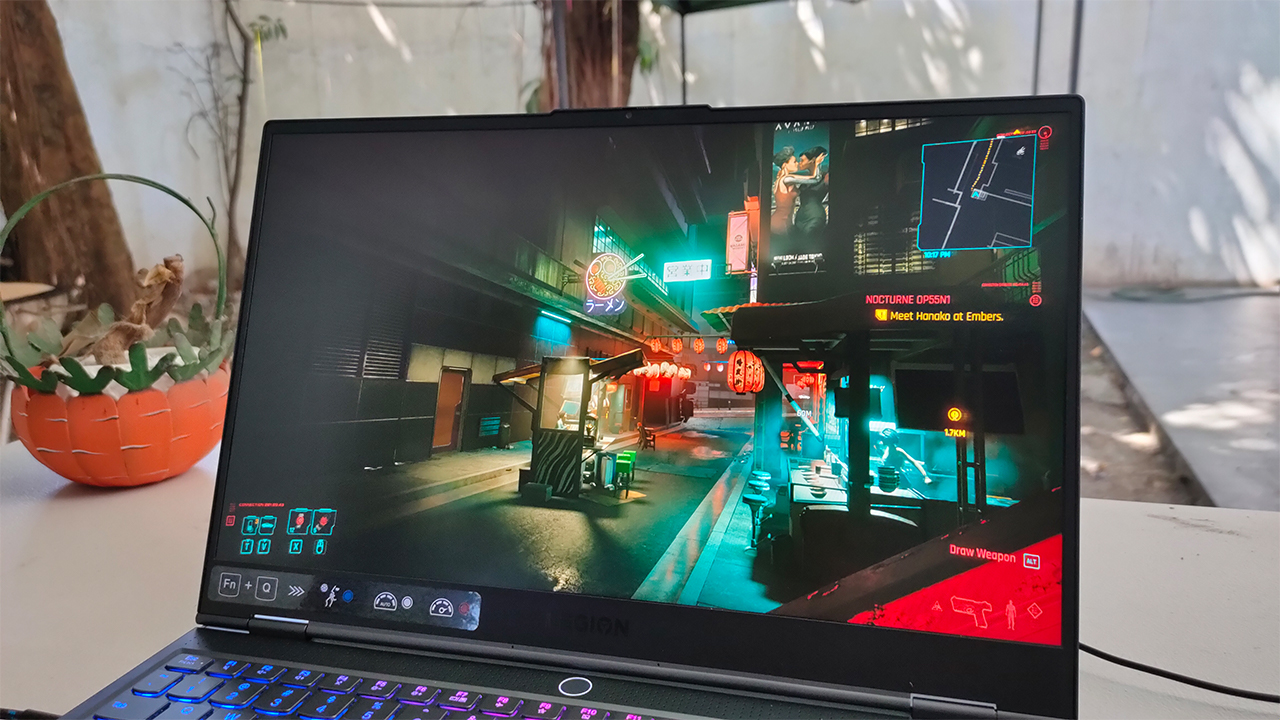
For more competitive titles, it brings a ton of power to the table. I’m seeing above 200 FPS for games like VALORANT, CS:GO, and even Rocket League (given the frame rate cap at 259 FPS). I felt that this device surely provides the performance necessary for Esports players to compete at a high level.
Improved cooling in some areas
Another improvement I noticed between the Legion 7i and Legion Slim 7i was in how the device remained cooled down. Unlike the Legion 7i, this device doesn’t come with a Vapor Chamber cooling system. Instead, it makes use of Lenovo’s Coldfront cooling system with the four exhaust points at the rear end of the laptop.
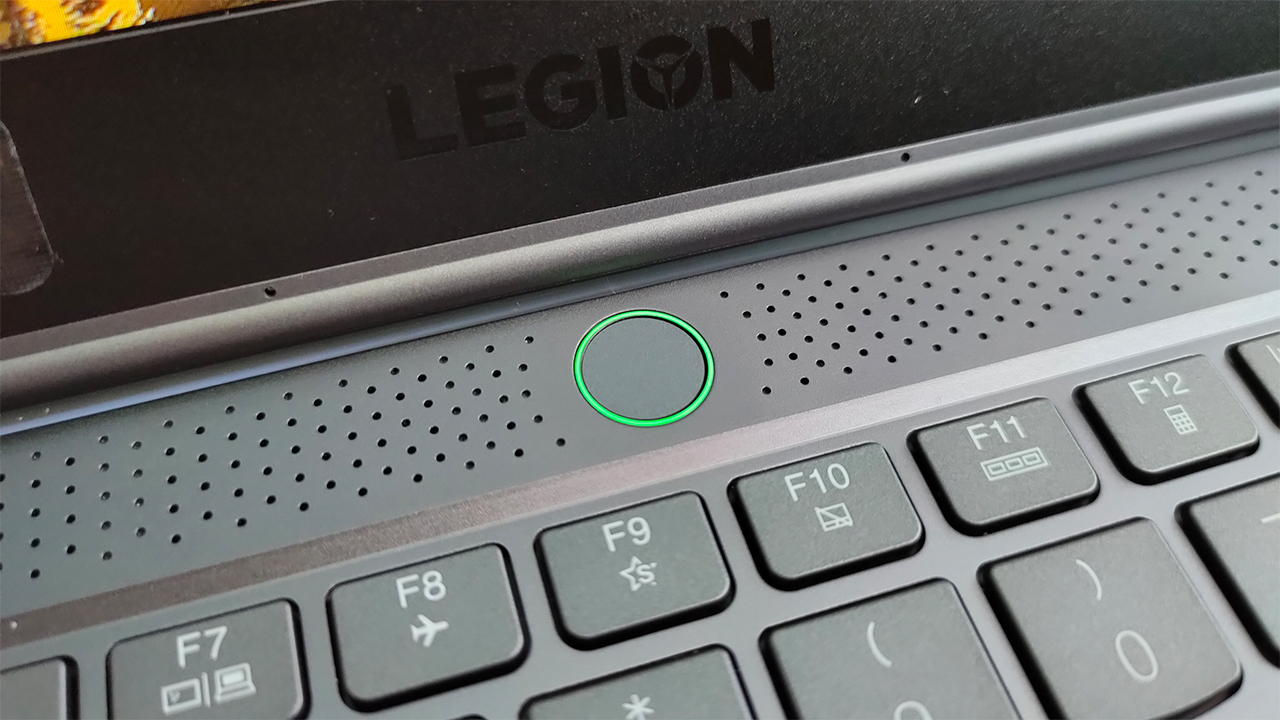
Power button with an LED indicator for different fan modes; usually, the first part that feels a ton of heat during gameplay
Throughout my entire usage of the device, I still felt some uncomfortable levels of heat when playing for longer hours. However, it takes a little longer to warm up unlike the Legion 7i, which is a big improvement all things considered. Plus, it cools down a little faster after you exit the game so you can proceed with work as you please.
However, it doesn’t necessarily reduce the amount of noise the fans produce under Performance Mode. In fact, during gameplay, I felt the fans blasting out more air on this device than the Legion 7i. So, I honestly believe it would have helped to ship this device with a dedicated set of headphones to cancel out the noise. Trust me, the fan noise is a little distracting.
Alas, performance that doesn’t last long
Of course, one of the expected disappointments with gaming laptops involves the battery life. With the Legion Slim 7i, I got about six hours using it normally — you know, social media, Netflix, and just gaming on it casually. When you game full time (and you want frame rates above 60 FPS), I was looking at about an hour and 45 minutes before it lost all power.
Charging the laptop didn’t take too long, as it took me about an hour and 35 minutes with Rapid Charge on. Obviously, the upside here is that you can get back to your work or your game quickly. Still, with such an abysmal battery life, I’d rather bring the charging brick around.
Is this your GadgetMatch?
For PhP 99,995, the Lenovo Legion Slim 7i poses nothing spectacularly different from its bulkier predecessor. It manages to provide highly effective and flexible performance for work and play. Plus, it manages to remain a little cooler than the bulkier Legion 7i. If you think it’s a bad thing that it’s not that different, it isn’t.

Of course, there are things that would drive you away from this gaming device like the short battery life. I could even argue that the loud fans blasting out air is a nuisance when trying to play well. Looking past these, however, you still get a gaming device that’s certainly worth your hard-earned money
It isn’t as flashy, nor as colorful, but the Legion Slim 7i gives you power in a lighter form factor. How light can this device go? Apparently, just light enough but just as powerful!








The trifecta is complete. Almost a year after announcing their new hardware, Valve has finally unveiled the price tag of the Steam Frame, complementing the Steam Machine and Steam Controller revealed a few months ago.
Whereas the Steam Machine is a console of its own, the Steam Frame is a traditional VR headset with a pair of controllers for both hands. Unfortunately, despite being in a different segment, the headset is not immune to the rising prices of technology. The Steam Frame will start at US$ 1,059 for a 256GB model and can go up to US$ 1,299 for the 1TB model. On the plus side, each box will come Half-Life: Alyx packaged along with the headset.
Here’s a more detailed rundown of what you’re getting. The Steam Frame will ship with the Snapdragon 8 Gen 3 chipset, paired with 16GB of RAM. Each eye comes with a 2160 x 2160 LCD screen, putting out images at up t0 a 144Hz experimental refresh rate. As mentioned above, the headset will start with 256GB of storage but can go up to 2TB. It will come packaged with SteamOS 3 and a rechargeable 21.6Wh battery.
This might be a hard buy for some. The industry currently has more affordable options, for one. Also, virtual reality isn’t the most thriving segment of gaming today.
If you’re still decided on buying one, however, Valve is using its lottery system. Interested customers can sign up from now until September 17. The company will then randomize the purchasing order. Those who draw the first ones in the lottery can get a purchase email as soon as September 18. Meanwhile, anyone who registers after September 17 will automatically be put at the back of the queue.
SEE ALSO: Valve announces its own console called the Steam Machine
Gaming
BlizzCon 2026 announces World of Warcraft: Forever and Diablo V
StarCraft, Overwatch, Hearthstone, and more also get news


Blizzard Entertainment kicked off BlizzCon 2026 with a packed Opening Ceremony featuring new games, major expansions, updates, and other announcements across its biggest franchises.
Blizzard Entertainment President Johanna Faries opened the event at the Anaheim Convention Center, celebrating the community behind the company’s games and the teams that bring its worlds to life.
World of Warcraft: Forever and Diablo V
The biggest announcement was World of Warcraft: Forever, a new World of Warcraft experience launching November 5 AEDT, with its beta beginning September 18 AEST. The new experience will feature three zones, more than 1,000 quests, nine dungeons, two raids, and a new Skyborne race.
Blizzard also officially announced Diablo V, marking the next era of the franchise. The game is set to launch in North America in Spring 2029, with Sanctuary having fallen and Diablo having won.
StarCraft is also returning with a new story-driven, open-world shooter. The game is currently planned for a Spring 2030 release in North America.
Beyond games, Blizzard revealed that an animated series set in the Diablo universe is in development with Netflix. The company says this is only the beginning of its plans to expand its universes beyond gaming.
For Warcraft III Reforged, the new Forsaken Kingdom campaign is available today. It marks the Warcraft RTS series’ first new storyline in more than 23 years and explores the fall of Lordaeron and the origins of the Undercity. The accompanying 3.0 update also brings graphical improvements and a revamped World Editor.
Heroes of the Storm is adding Xal’atath as its newest Hero. She arrives in the Nexus on September 29 AEST, with her PTR release scheduled for September 15 AEST.
Existing games updates
Meanwhile, Diablo IV is preparing for its next major content drop. Season of Hell’s Legacy begins September 16 AEST and celebrates the franchise’s 30-year history with the return of the Prime Evils and Deckard Cain, alongside themed rewards and gear.
The legendary Amazon class will also arrive in the first half of 2027 as part of Diablo IV’s first class pack. The Diablo IV: Age of Hatred Collection is additionally coming to Nintendo Switch 2 on September 16 AEST with cross-platform play and cross-progression.
For World of Warcraft, Blizzard teased the next major update for Midnight. Eclipse (12.2) will see Xal’atath move closer to her goal of claiming Azeroth’s Worldsoul. Blizzard also offered another look at The Last Titan, the next expansion in the Worldsoul Saga and a major culmination of more than two decades of Warcraft storytelling. More information is coming early next year.
Overwatch is getting a major update with Season 5. The season introduces new Support Hero Doctrine, reworks for Sombra and Roadhog, and the new Watchpoint: Grimsvötn map. It will also conclude The Reign of Talon, Overwatch’s first year-long narrative arc.
LE SSERAFIM & YOASABI
BlizzCon also featured performances from YOASOBI and LE SSERAFIM. YOASOBI will perform during the first-ever esports halftime show at BlizzCon, while LE SSERAFIM will return to the Main Stage to close the weekend. A new LE SSERAFIM in-game collaboration is available now, with another Overwatch Spotlight scheduled for February 2027.
Finally, Hearthstone is getting its first new class in more than six years. The Monk arrives in 2027, while the upcoming Reign of the Black Empire expansion takes players back to the earliest age of Azeroth. It introduces the Assemble keyword, which combines two cards into a new one. Battlegrounds is also adding Aberrations as a new minion type.
BlizzCon 2026 is now underway, with Blizzard promising more announcements and details throughout the weekend.
Gaming
Just Dance: Decades of Hits to launch on October 13
All-new Just Dance experience that brings every generation together

Just Dance: Decades of Hits will launch on modern consoles on October 13, Ubisoft has announced.
This will offer fans of the franchise a new experience across eras of music. The game will be available on PlayStation5 , Xbox Series X|S, and Nintendo Switch on the launch date.
Nintendo Switch 2 users, meanwhile, will be able to enjoy the title by November 10, 2026.
Just Dance: Decades of Hits brings together every generation to one dance floor with 25 iconic songs across six different decades:
- Mamma Mia by ABBA
- Uptown Girl by Billy Joel
- It’s Tricky by Run-DMC
- No Scrubs by TLC
- Wannabe by Spice Girls
- Bye Bye Bye by *NSYNC
- Feel Good Inc. by Gorillaz
- Turn Down for What by DJ Snake and Lil Jon
- Danza Kuduro by Don Omar feat. Lucenzo
- Manchild by Sabrina Carpenter
- NUEVAYoL by Bad Bunny
- And more!

Bringing every generation together
Songs, visuals, and an all-new Adventure Mode are all designed to immerse players in the spirit that made each decade unforgettable.
From the funky ’70s disco floors and the electrifying ’80s rock scene to the glossy 2000s pop and beyond, travel through time and share the joy of rediscovering iconic moments with friends and family.
In Adventure Mode, follow Lyra, Dr. Gigavolt’s daughter, in a playful journey through time to rescue her father.
Explore the decades through six themed worlds, enjoy fun mini activities, and unlock exclusive rewards.

For unpredictable, chaotic fun where the rules change every round, players can jump into Party Mode. Or they can get moving with the Workout Mode, which tracks calories burned with each dance.
Up to six players can dance locally in the game, with no extra accessories needed.
In addition those who own Just Dance: Decades of Hits as well as Just Dance 2023-2026 editions will be able access all their songs in one place on the same console without having to switch games or separate menus.
This also includes songs from purchased Music Packs and songs available through an active Just Dance+ subscription.


DJI Lito X1 review: Is this the best lightweight drone for creators?
Making a strong case as a travel companion and a capable B-cam!


REDMI Note 17 Pro Max review: A new breed born from AI greed
Welcome to the new normal


Marvel’s Wolverine review: When the claws come out
A brutal, cinematic superhero adventure

Epson Lifestudio Grand Plus EH-LS970B with 4K projection, more launches

Jackery Explorer 300D: Power and portability in one

Nike’s Alphafly 4 is built for the part of the marathon ~that actually hurts~

SEGA, Netflix announce Crazy Taxi film adaptation

Smart launches LiveSmart App for exclusive deals

TECNO MEGAPAD 2 review: Eyes on the size

realme 16T 5G with 8000mAh battery, IP69 Pro rating launches in PH

HUAWEI Pura X View is 2026’s first WIDE slab-type smartphone

REDMI reveals the refreshed Note 17 and Note 17 Pro series

REDMI Note 17 Series: Price, availability in Singapore


-
 News2 weeks ago
HUAWEI Pura X View is 2026’s first WIDE slab-type smartphone
-

 News2 weeks ago
The CAMON Slim 5G is TECNO’s latest ultra-slim smartphone
-

 News1 week ago
iPhone 18 Pro series: Price, availability in the Philippines
-

 Singapore1 week ago
iPhone 18 Pro series: Price, availability in Singapore
-

 News1 week ago
iPhone Duo: Price, availability in the Philippines
-
 News2 weeks ago
HUAWEI Mate XT 2 tri-fold launches with Kirin 9050 Pro
-

 News1 week ago
vivo introduces refurbished versions of X300 FE, X300 Ultra for less
-

 News1 week ago
iPhone Duo: Price, availability in Singapore