
Gaming
Like a Dragon: Pirate Yakuza in Hawaii sounds like a true pirate game
Launching February 21


Way back when, Assassin’s Creed IV: Black Flag redefined the time-travelling RPG franchise. Instead of the same RPG formula, Black Flag created a memorable pirate adventure that could (and did) stand on its own. Soon, typical of another franchise that continuously redefines itself, the Like a Dragon series is about to embark on its own pirate adventure.
We’ve known about Like a Dragon: Pirate Yakuza in Hawaii for a while now. The upcoming title promises a spinoff adventure following Goro Majima, one of the most iconic characters in the entire series. However, we didn’t know much about where the series is taking us next.

Today, Sega has released more information about the upcoming game. Though it seems difficult to believe, Like a Dragon: Pirate Yakuza in Hawaii is truly a pirate game. Players will take control of the ship Goromaru, along with Captain Majima and his Goro Pirates.
Besides the main story, players will hunt hidden treasures and take down bounties across the seas. Each area will have its vicious pirate crew. To help take them down, players can customize and bolster the Goromaru with more equipment and firepower.
It’s not all fun and games, though. After waking up without his memory in a strange beach, Goro Majima finds himself in a battle against mad pirates including one modeled after wrestler Samoa Joe. The story also continues where the previous title, Infinite Wealth, left off.
Like a Dragon: Pirate Yakuza in Hawaii launches on February 21 for PlayStation 5, PlayStation 4, Xbox Series X|S, Xbox One, and PC.
SEE ALSO: Sega reveals story of Like a Dragon: Pirate Yakuza in Hawaii






Rougelites are a dime a dozen these days, but that doesn’t lessen my fascination with the genre. It’s often easy, can be played in short bursts and scratches that “just one run” itch.
The latest to join the fray is Bandai Namco’s Towa and the Guardians of the Sacred Tree. At first glance it sticks to the genre’s familiar loop, but it brings its own twist with a two-character combat system and a narrative where the looping mechanic of the genre actually means something.
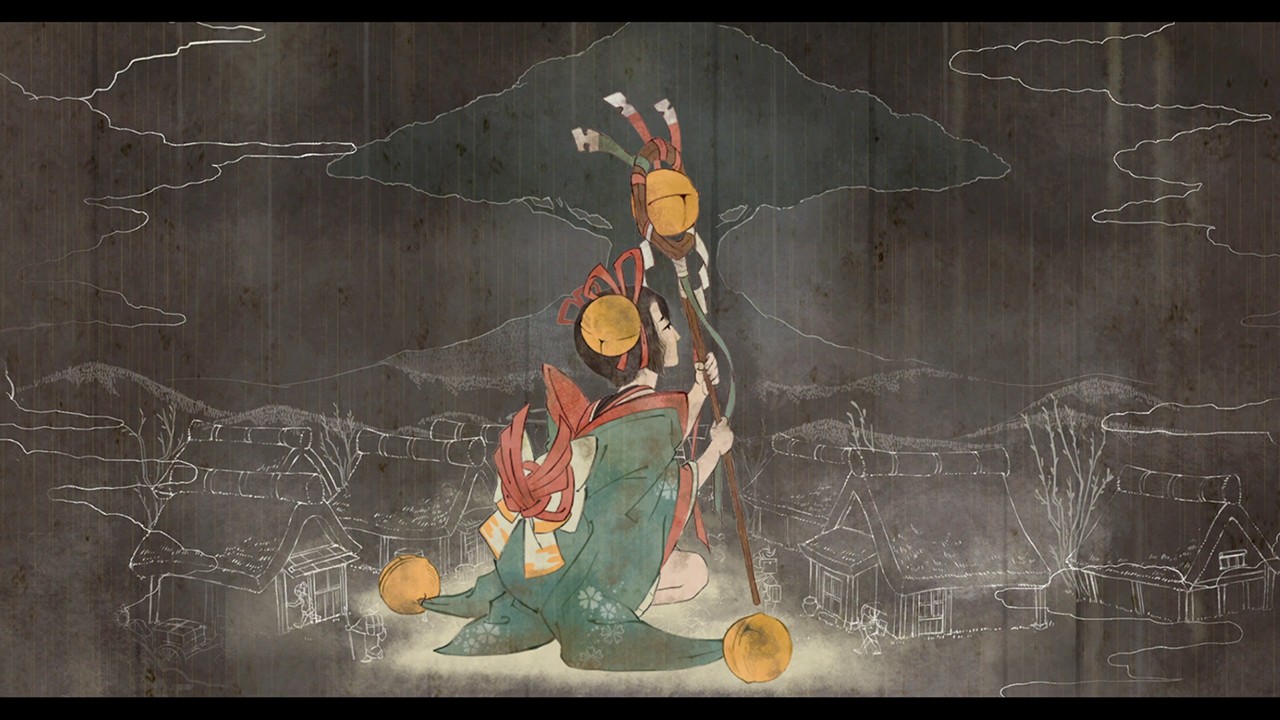
A tale of Time and Steel
The setup
The premise is simple: evil god Magatsu has risen and seeks to consume the world in dark miasma with his monstrous minions, the Magaori.
It’s up to Towa, the priestess of Shinju Village, and her power to manipulate time to stop Magatsu’s corruption from spreading. She does this with the aid of her Prayer Children – a group of guardians loyal to Towa.
But as the opening scene will show you, Magatsu banished the Prayer Children to the end of time, leaving Towa alone in Shinju Village.

Thanks to her powers, however, she can still reach them across planes, slowly reuniting her Guardians in a desperate effort to gather mana, defeat the Magaori, and ultimately confront Magatsu’s powerful subordinates, the Magatsu-Hi.
This separation defines how you experience the game. You play as Towa during the tutorials and when roaming around the village to do daily tasks like forging swords or constructing buildings.
Village life

Outside of combat, Shinju Village serves as a cozy little hub. Each building has a purpose: visiting the dojo to increase stats, stopping by the shrine to enhance Grace Jewels, heading to the blacksmith to forge new swords in a Cooking Mama-style mini-game, or checking in with shopkeepers for items and discounts.
There’s even fishing, which isn’t relaxing as much as productive, since it earns points you can trade for items.
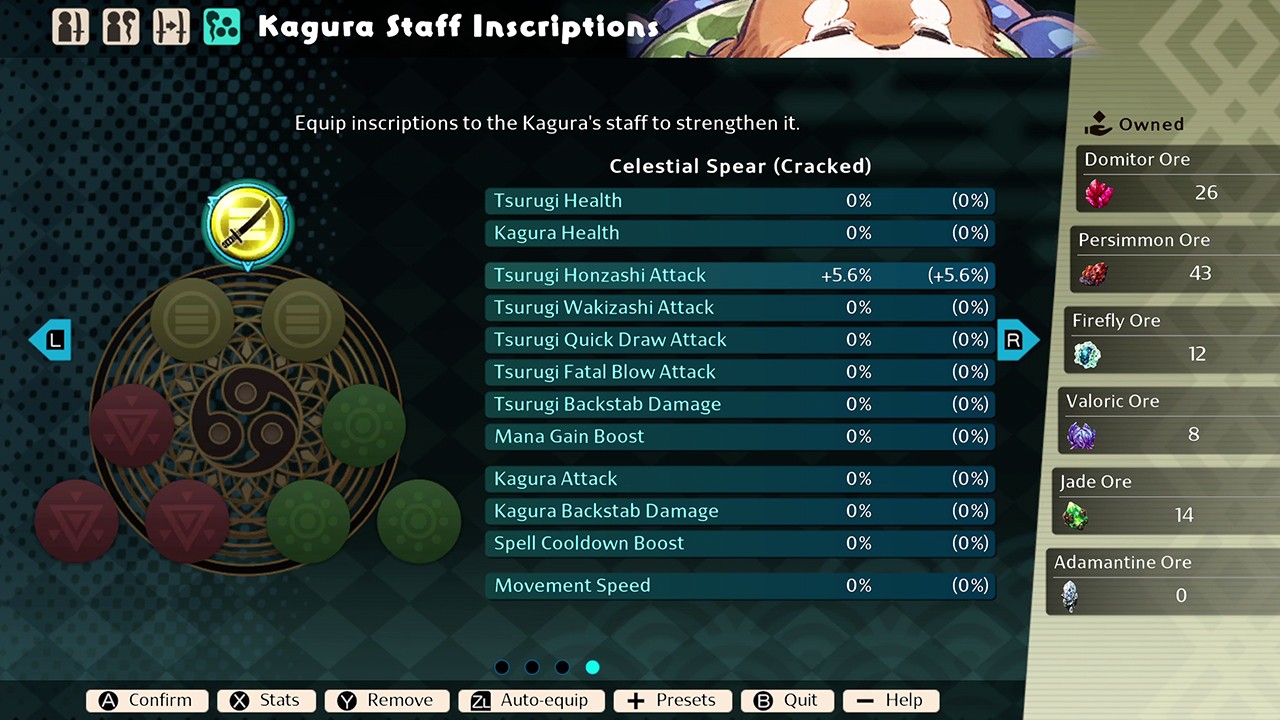
What I appreciate is that the game respects your time: if you don’t feel like running back and forth around the village, you can easily access and upgrade stats directly through the menu.
Into the outlands
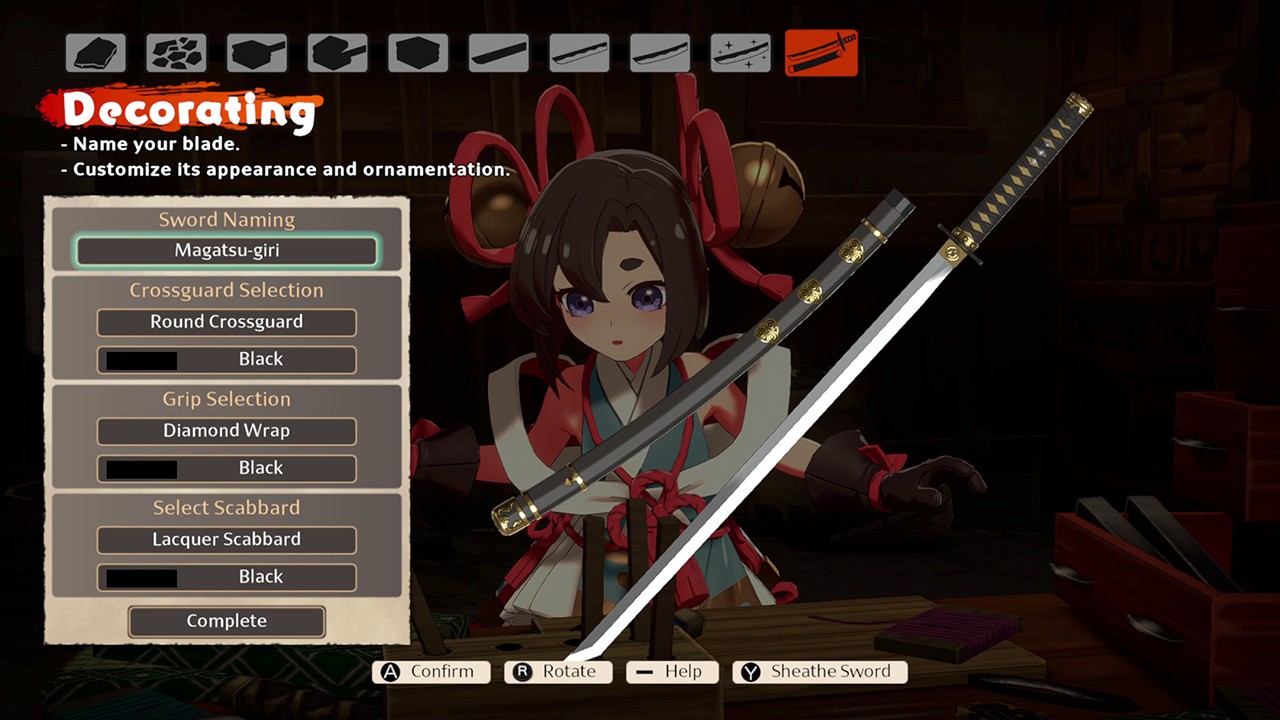
Runs are held in the corrupted lands, which Towa cannot enter. Instead, she channels the Guardians into battle, and you’ll need to choose two at a time — one as a Tsurugi, a sword-wielding attacker, and the other as a Kagura, a magical staff user who supports with elemental spells.
Each character has their own set of abilities, both as a Tsurugi and as a Kagura.
Interestingly, doing a run or loop isn’t as simple as it seems, especially when you fail. In Towa, every attempt is explained as another timeline and another chance for the Guardians to confront corruption.
Defeating bosses directly shifts Shinju Village’s timeline forward, unlocking new conversations, upgrades, and buildings while failures are recorded as part of time.
Back to combat. The Tsurugi is your main attacker and wields two swords, while the Kagura offers ranged or support magic.
Once one of the Tsurugi’s weapon breaks, damage output is halved until you swap it out. You can also employ your Kagura’s spells for cover and buffs.

Graces are also a big part of doing a run. These are card-like buffs that add stat boosts or new effects, and you get them after clearing each combat room. Stack enough of one type, and you unlock Divine Graces – rare versions, or high-level cards with useful buffs.
Some rooms offer food stalls for healing or stat boosts, merchants selling temporary upgrades, or camp sites to swap spells and restore health.
Eventually, you’ll end up confronting the Magatsu-Hi. Win, and you’ll purify the land while bringing a Prayer Child back to Towa’s side.
Meet the Prayer Guardians
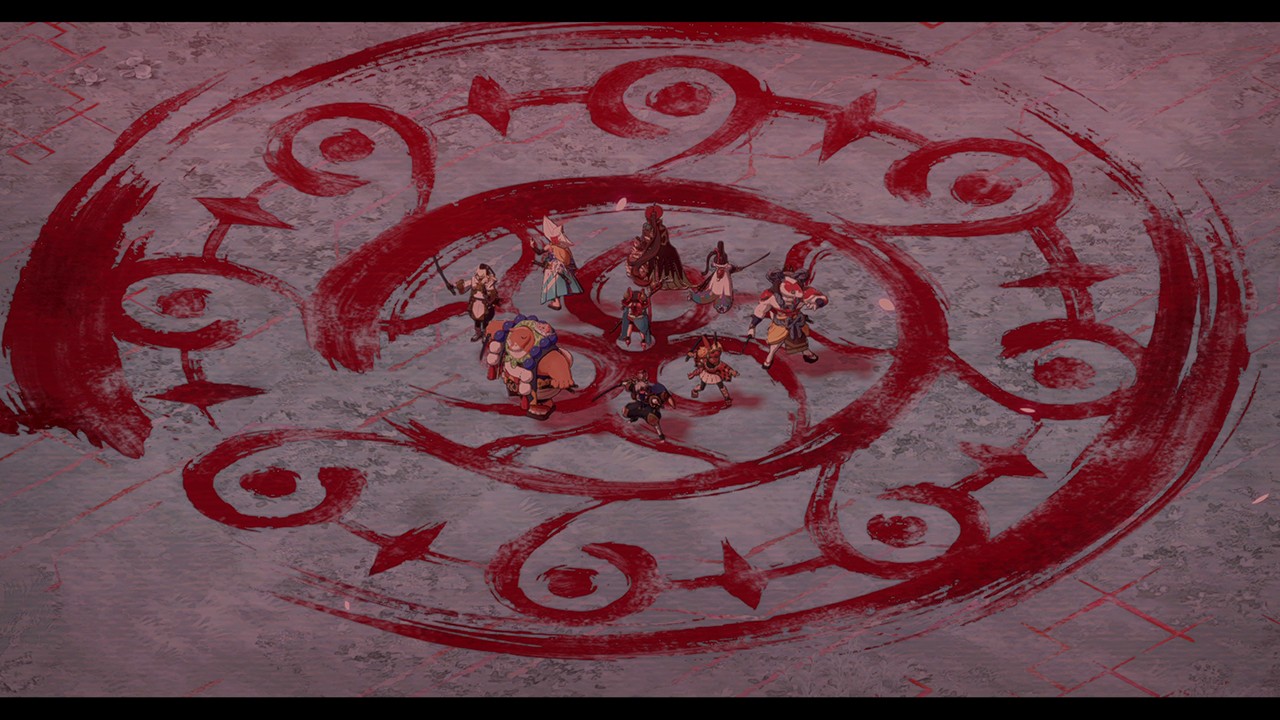
Towa is the headline name and character, but you’ll be spending just as much or more time with the Prayer Guardians. Since they were banished, they will initially only hang out at The Outlands away from the village.
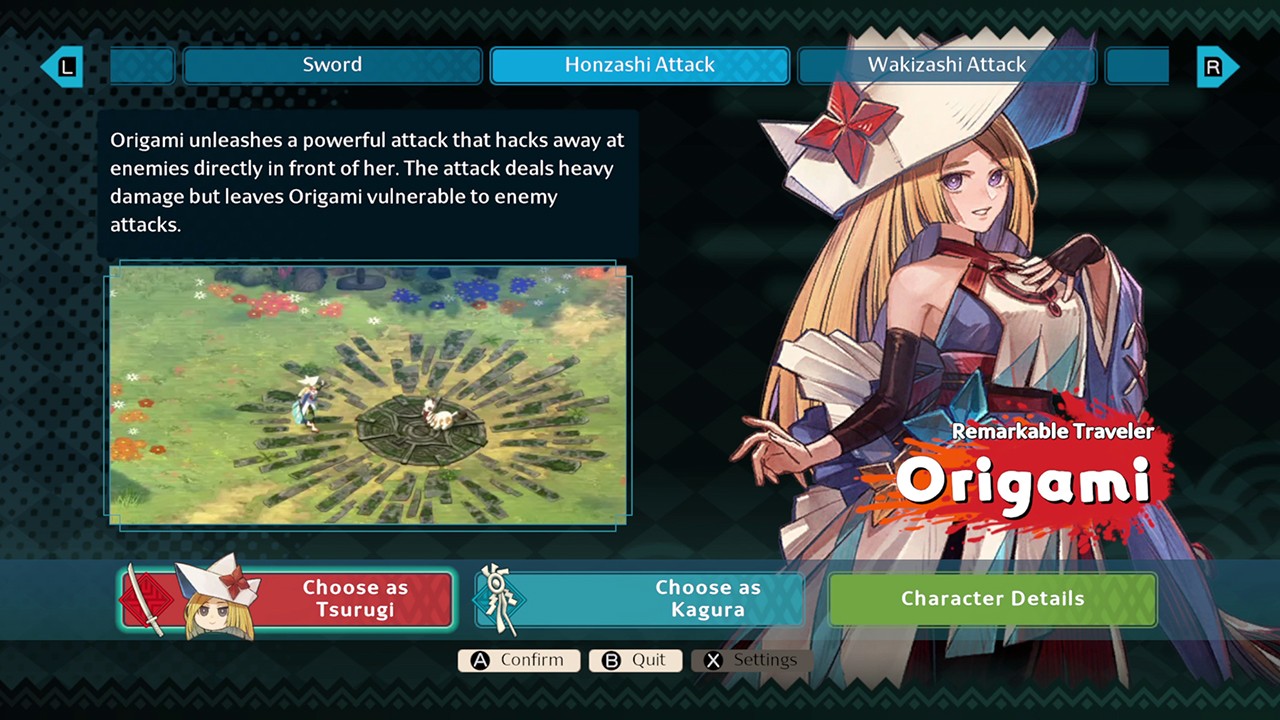
Here you can check on their stats, abilities, and equipment before you head out to the corrupted lands. Each guardian has their own set of abilities and spells though some share the same abilities.
Here’s a quick look at the gang you’ll be relying on:
- Rekka – A fiery samurai warrior, powerful in combat with strong combos, but a bit of a klutz in daily life.
- Nishiki – A pious, muscle-bound koi-fish warrior who ironically can’t swim. He’s mobile and fights with water waves and lightning orbs.
- Shigin – A composed fighter whose style relies on precision. His boomerang-like weapon makes positioning and efficient dashing essential.
- Origami – A mysterious but sharp guardian whose fighting style leans on agility and magic
- Mutsumi – A balanced pick for offense and defense.
- Korou – Smaller in stature, specializing in mobility-based tactics.
- Akazu – Steady and dependable, offering solid support in battle.
- Banpuku – His fighting style is chaotic and spin-heavy, making him a whirlwind on the battlefield.
Thrown into the loop
A crash course in chaos
After enjoying the gorgeous opening scene with art I’d want to make my desktop wallpaper, I quickly realized the game doesn’t waste time with handholding.
Instead, the prologue throws you right into a dungeon run with Rekka and Tohu as Tsurugi and Kagura, respectively. It’s a crash course that runs you through the basics of a run, so it pays to listen and read carefully.

If you’re like me, you dismissed it and treated this game as a hack-and-slash, which, I’ll find out later on, is not ideal at all.
After all the tutorials and introductions, you’ll find yourself exploring the cozy Shiju Village with Tohu. It’s an absolutely adorable setting – warm, cozy tones, relaxing music, and delightfully designed NPCs made me wish there was more to do here.
You almost forget that the Prayer Children are still waiting to be rescued.
First real run

As mentioned, Shinju village is where you’ll spend a lot of time between runs: forging swords at the blacksmith, boosting stats at the dojo, enhancing Graces at the shrine, enjoying food, funding new buildings, or checking in at the residence and troubadour.
Now, once you’re all ready and equipped, the next step is to head out to The Outlands.
For my first, I picked Banpuku as my Tsurugi (because just look how fluffy and adorable he is) and Rekka as my Kagura, since she was familiar from the tutorials
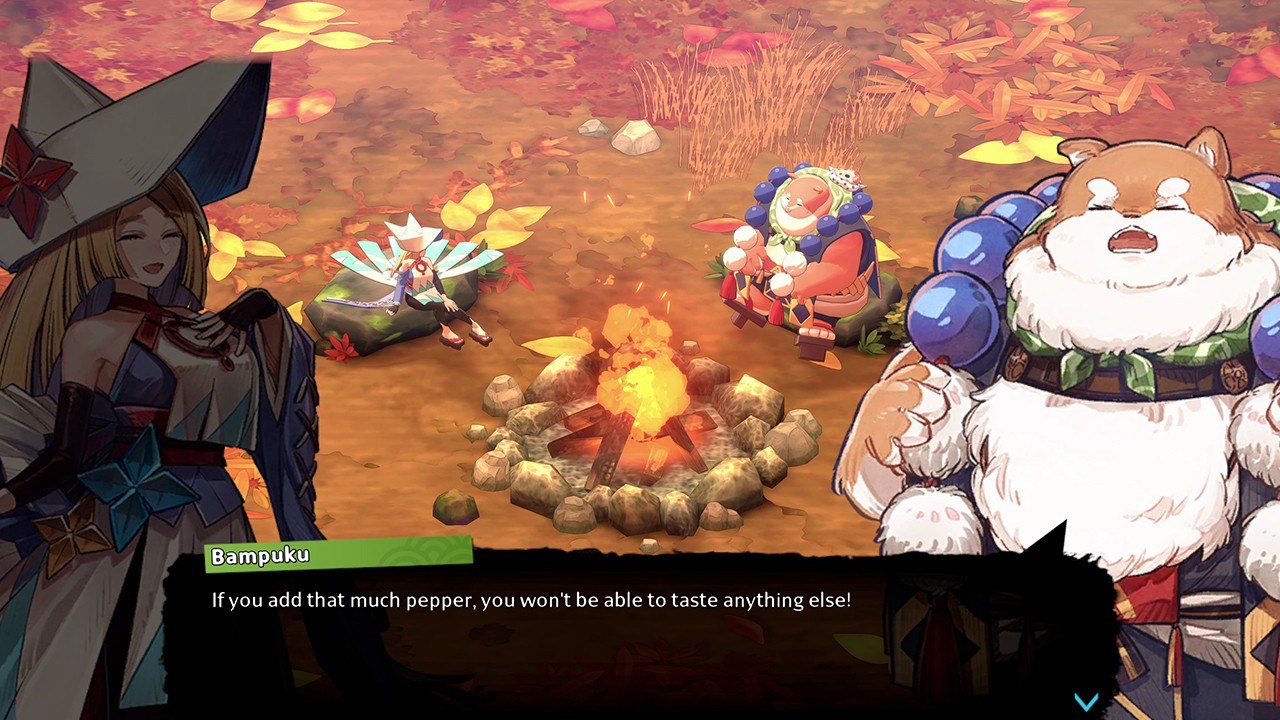
Now, combat with Banpuku was chaotic. His main move is a full-on, directional spinning attack that has him jetting back and forth across the battlefield. He’s surprisingly easy to use though, in my opinion, since his AOE attacks make short work of hordes.
As support, I equipped Rekka with spells to negate damage as well as a strong meteor spell to help clear rooms faster.
I’ll admit, I got so comfortable with Banpuku that I didn’t want to switch. But that goes against the heart of Towa’s mix-and-match design.
I later tried out Shigin as my Tsurugi and it showed me how strategic positioning could change everything. It was completely the opposite of Banpuku’s style, where I could just tank my way through enemies.
I then realized that Towa isn’t as hack-and-slash a game as I initially expected it to be, but a game that rewards thoughtful play as well.
Lessons in failure
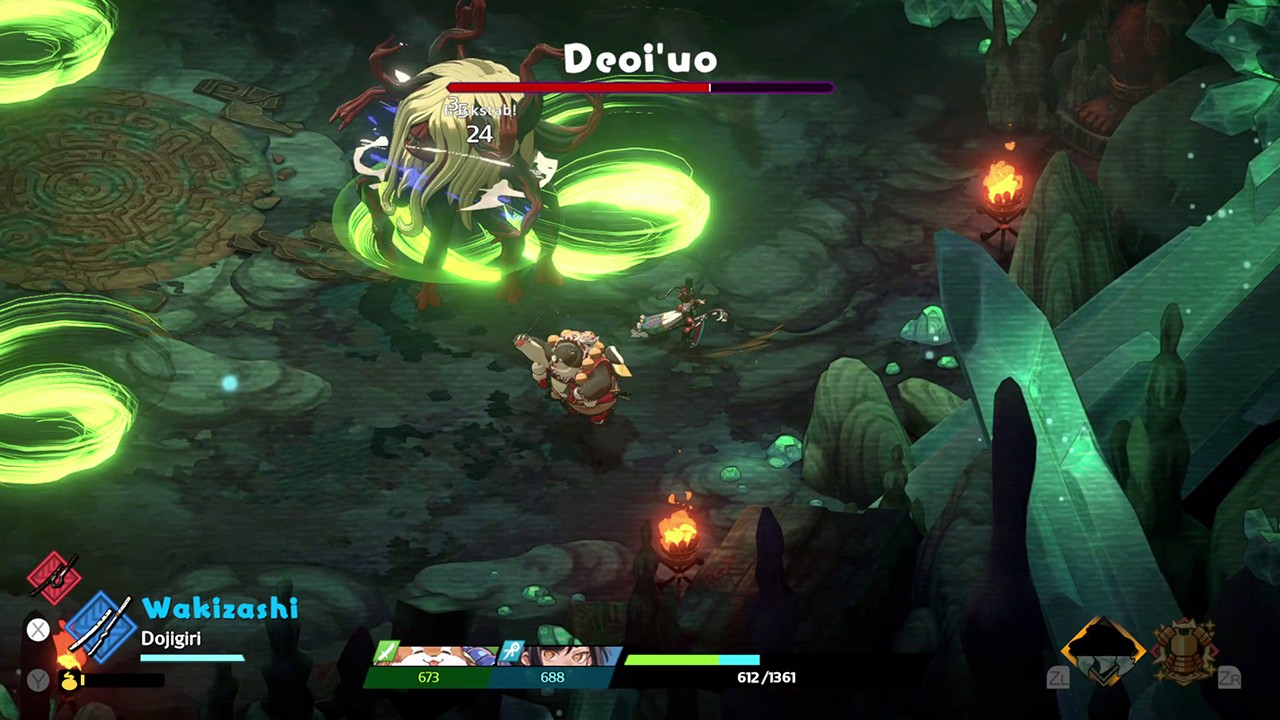
Honestly, my first few moments with Toha weren’t all smooth sailing. Knowing that I only had a few days before I had to publish this article, I rushed into my first dungeon without completely understanding Graces or resource management. I also didn’t spend too much time refining my movements or being more observant of patterns.
By the time I faced the first Magatsu-hi, I was limping along with barely any health. Needless to say, I was demolished in just a few minutes.
As roguelites go, failure is part of the loop. You can either try again or retreat to Shinju Village with whatever loot you’ve managed to scrape together. It took me a few more tries to really get how essential dashes, Graces, and positioning are, especially for characters like Shigin.
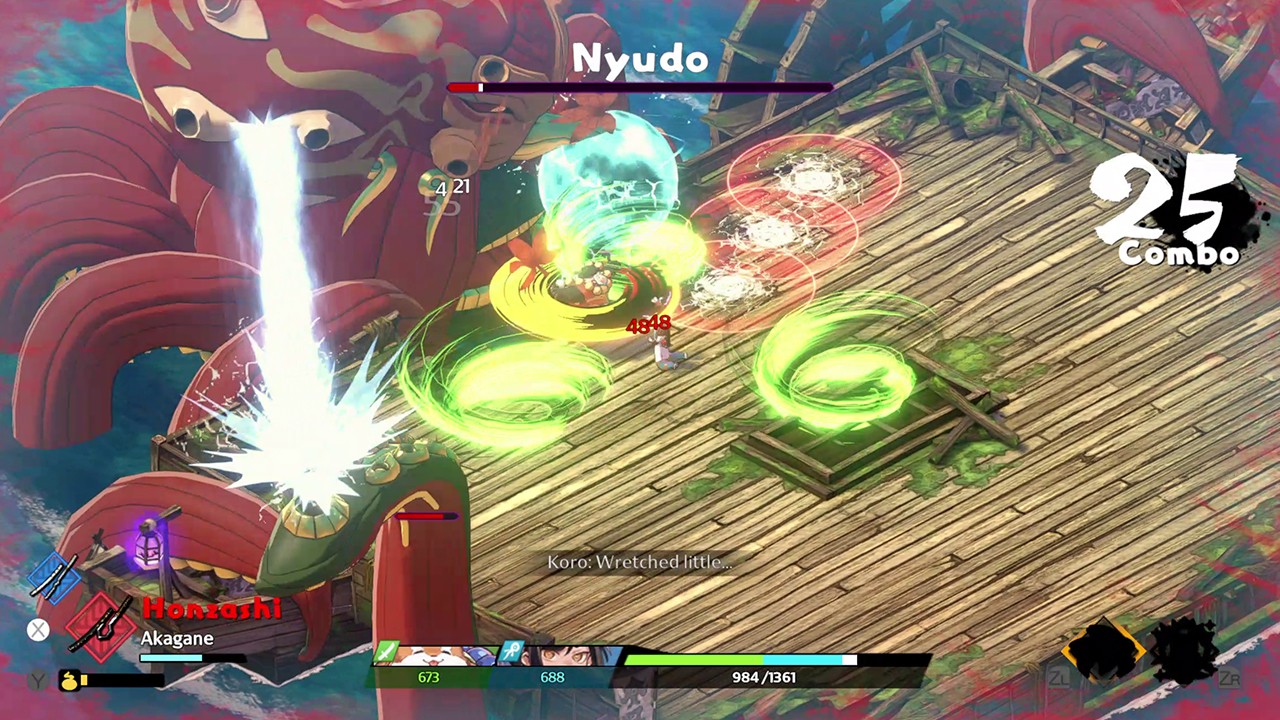
In one of my runs, I went into a boss fight overconfident, thinking I could just brute-force my way through. That recklessness came with consequences, however, as my health started dwindling way too fast.
I then switched to being strategic and being patient with patterns. I wanted to see if being careful really is the recipe for victory
True enough, even with just a pinch of health left, I whittled the Magtsu-hi’s health down to a fraction. I just needed to land one more hit. But then, my controller died, and so did I.
At least it’s proof: strategy trumps brawn
Lessons learned the hard way

If you’ve just picked up the game or are doing some prep work before you do, let me share some tips I’ve picked up along the way:
Experiment early and don’t stick to just one duo. Try out different Tsurugi and Kagura combinations so you can get a feel for their strengths and playstyles. Rekka, Shigin, Mutsumi, and Origami are great early Tsurugi choices, while Akazu, Nishiki, Korou, and Banpuku shine as Kaguras
Talk to everyone in Shinju Village. NPCs with thought bubbles over their heads always have something useful to say. Conversations progress stories and give rewards.
Spend your ore wisely. Between runs, use ore to upgrade your Guardians at the dojo, construct new buildings with the carpenters, and enhance Grace Jewels at the Shrine. Don’t ignore shop sales either – if something’s discounted, it’d be wise to pick it up.
Go fishing. Fishing Points can be exchanged for items like Inscriptions which give you powerful buffs.
Keep an eye on durability. Once lost, your damage is halved and this can be felt in battle. Listen for the breaking sound or character cues and swap weapons before they snap mid-fight
Prioritize dashes and health. Adding more dashes early on gives you survivability, while boosting your Kagura’s health frees up your Tsurugi to focus on attack damage
Stack Graces when doing runs. When you find a Grace you like, commit to it and pick cards to help level it up. You’ll eventually unlock Divine Graces – extremely powerful variants that can turn the tide in your favor.
Is Towa and the Guardians of the Sacred Tree your GameMatch?
My playtime with Towa and the Guardians of the Sacred Tree hasn’t been long, but if you’re a fan of the genre, then there’s no denying you should check it out — definitely a swipe right!
Its main appeal, at least for me, is that it’s a gorgeous game. The mix of 2D and 3D art, painterly backgrounds, and cute character designs is enough to draw a player in.
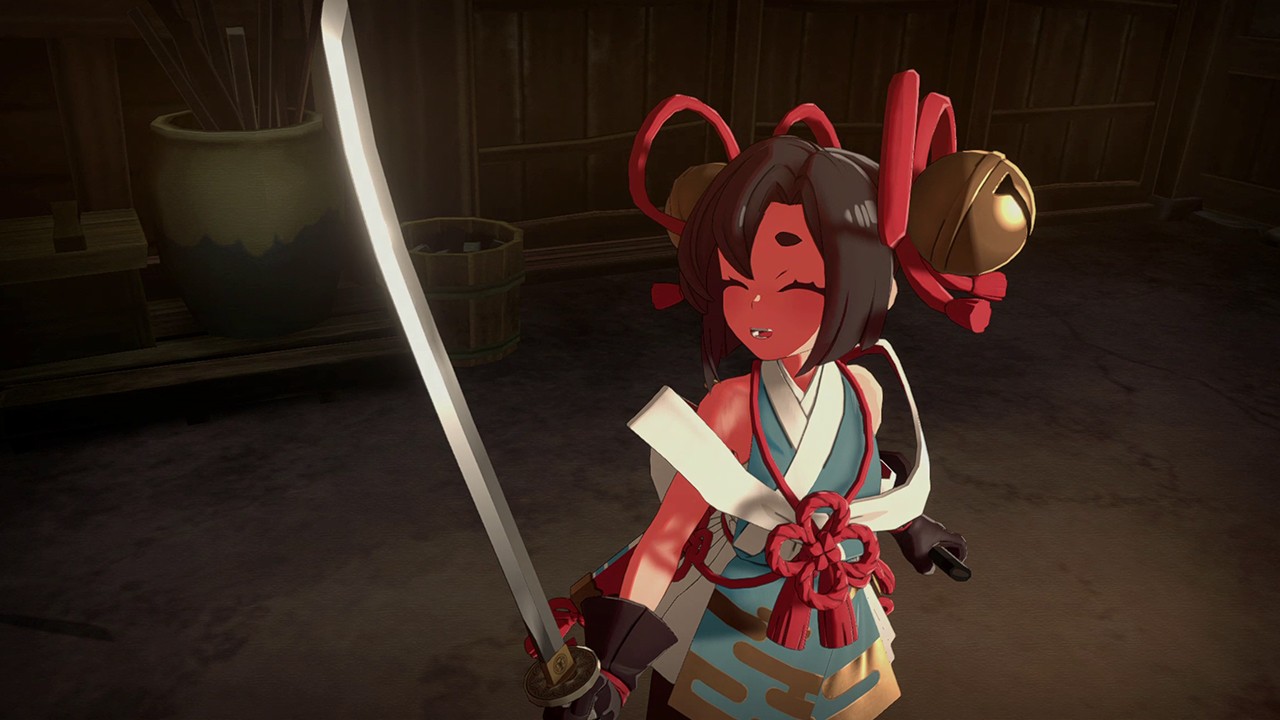
Admittedly, combat can be clunky; attacks don’t always land with the satisfying weight you’d expect, and controlling both Tsurugi and Kagura in solo play can get confusing or overwhelming.
I ended up mostly just focusing on my Tsurugi and keeping that character alive more than the Kagura. I’d like to think local co-op would make combat more efficient but that’s something I still have to test.
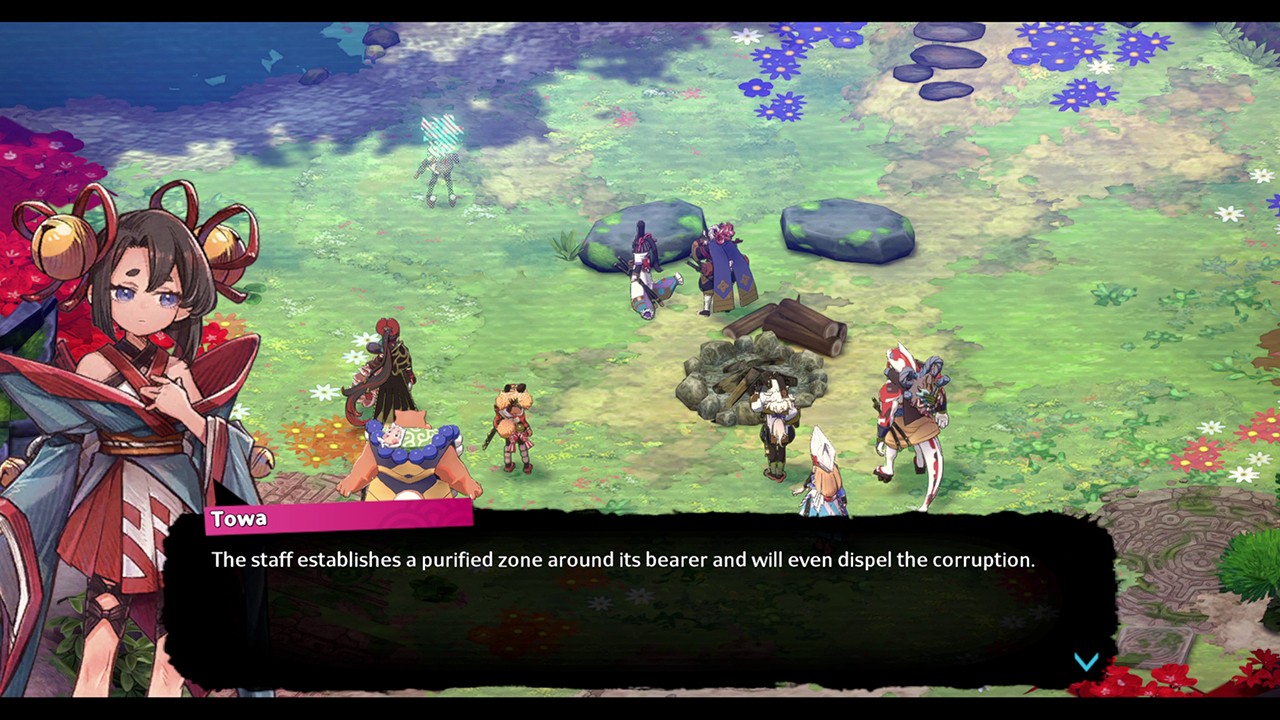
Eventually, you’ll also realize that a few Guardians feel too similar in their basic combos.
Despite a few rough edges, though, Towa and the Guardians of the Sacred Tree feels like a worthy addition to the roguelite genre and is one that balances system depth with emotional storytelling well enough to make it absolutely worth keeping on your radar.

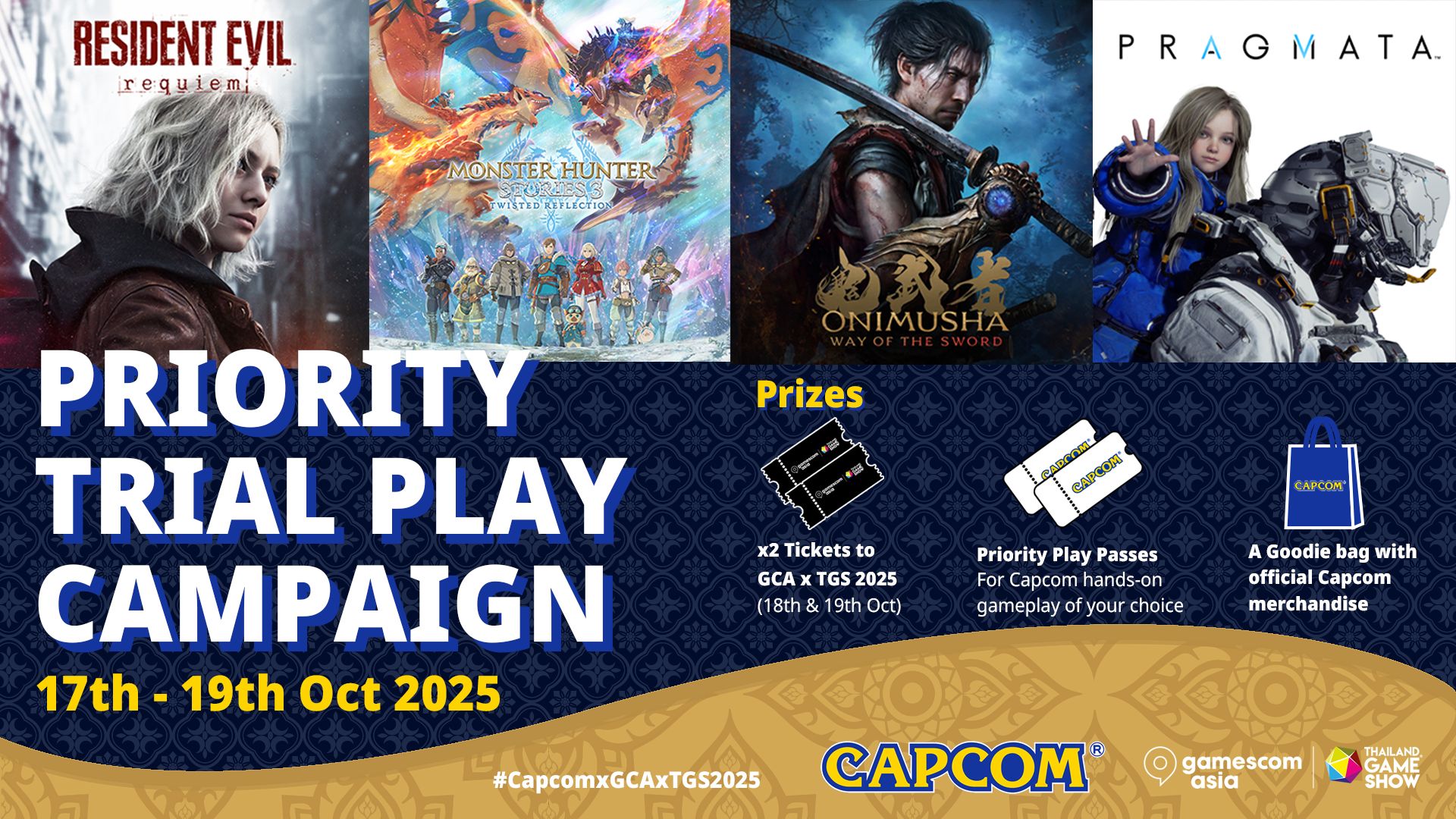
Capcom has officially unveiled its lineup of activities for gamescom asia x Thailand Game Show 2025.
The Japanese video game company is headed to the event from October 16 to 19, where it will bring hands-on demos for various titles.
That includes Resident Evil Requiem, Monster Hunter Stories 3: Twisted Reflection, Onimusha: Way of the Sword, and PRAGMATA.
Ahead of the gamescom asia x Thailand Game Show, Capcom has rolled out a Priority Trial Play Campaign.
This offers fans a chance to secure special access to Capcom’s booth experiences in the form of a Priority Trial Pass. There will also be event tickets and official merchandise.
This means the winners can skip the queue for hands-on gameplay for their chosen Capcom title or titles.
Capcom plans to employ a numbered ticket queue system for public days to ensure a smooth experience specifically for Resident Evil Requiem and Monster Hunter Stories 3: Twisted Reflection.
Winners of the Priority Trial Pass will be able to play all aforementioned demo titles. Capcom will choose the five most passionate fan entries. Mechanics are available here.
Beyond that, visitors can win special prizes by participating in the Snap & Share campaign.
They simply have to take a photo at the Capcom booth and post it on social media. Don’t forget to tag @capcomth or @capcomsg, and use the hashtag #CapcomxGCAxTGS2025.
Prizes include:
- Resident Evil Requiem Sticker Set
- Monster Hunter Stories 3: Twisted Reflection Art Tapestry
- Onimusha: Way of the Sword Reusable Shopping Bag
- PRAGMATA Sticker Set
- Monster Hunter Chibi Style Muffler Towel
- Street Fighter 6 Die-Cut Stickers Set
- Capcom Original Postcard
Gaming
Assassin’s Creed Shadows: Claws of Awaji is just more of the same
A new island, a new faction, and a new weapon
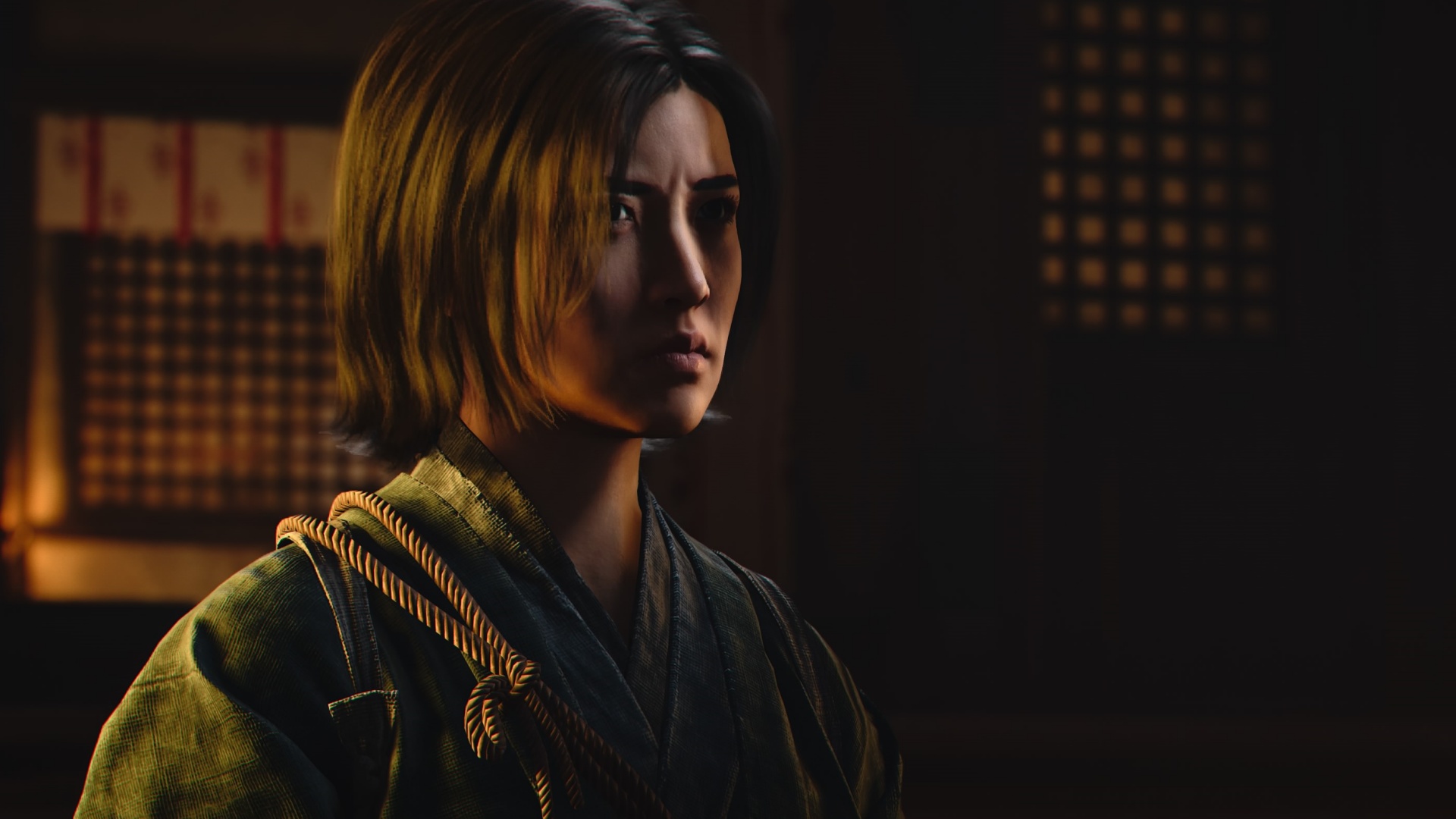
Assassin’s Creed Shadows brought new life into the aging franchise by revitalizing actual assassinations, instead of bombarding players with continuous RPG progression. Of course, it’s not without its faults. Today, the Japan-themed title is getting one more shot to correct some of its errant ways through its new DLC, Claws of Awaji.
Previously on…
Claws of Awaji continues where the main game left off. After defeating the shinbakufu threat on the main island, Naoe receives a new lead that might lead to her long-lost mother, the assassin Fujibayashi Tsuyu. The lead takes her to the smaller island of Awaji, a territory controlled by the shadowy Sanzoku Ippa.
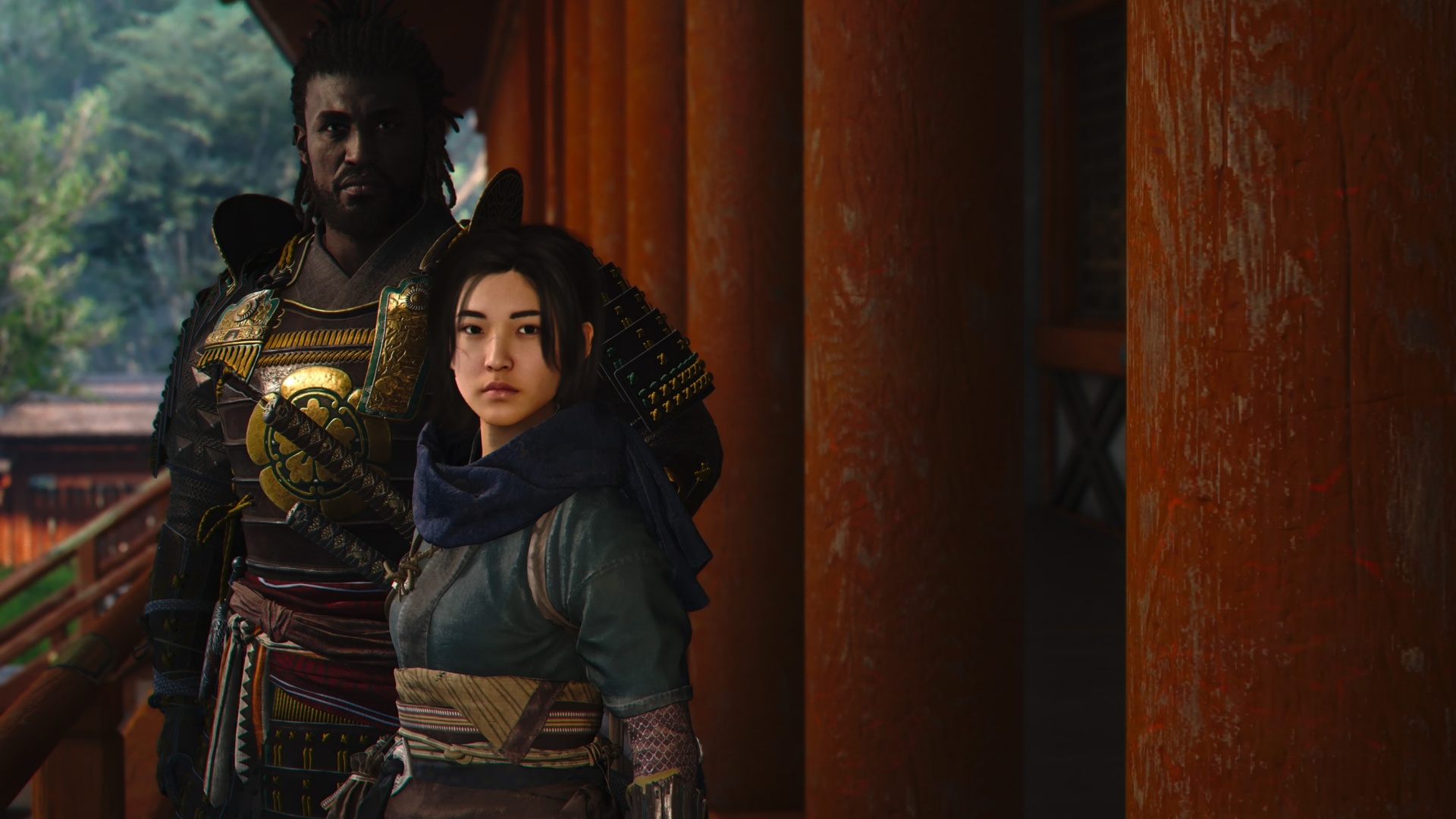
At least some questions were answered
On paper, Claws of Awaji feels like a more personal story for Naoe. After all, it’s a quest to find her missing mother. Very quickly, the DLC establishes that Tsuyu was imprisoned by Kimura Yukari, the leader of the Sanzoku Ippa. Naoe and Yasuke rescue her after only a few missions into the DL, thereby reestablishing her as the leader of the Assassins in Awaji.
However, the supposedly heartfelt reunion ends up in… well, not much, really. For most of the DLC, Tsuyu is too injured to be of much help, despite her status as a legendary assassin. She doesn’t have an intense conversation with Naoe about her upbringing, even as they butt heads on how to liberate Awaji. She doesn’t have a properly epic scene to show off her prowess as a legend. Despite her legacy, Tsuyu feels more of a boss to report to, rather than someone to deeply care about.
But I guess it’s nice to have that loose end tied.
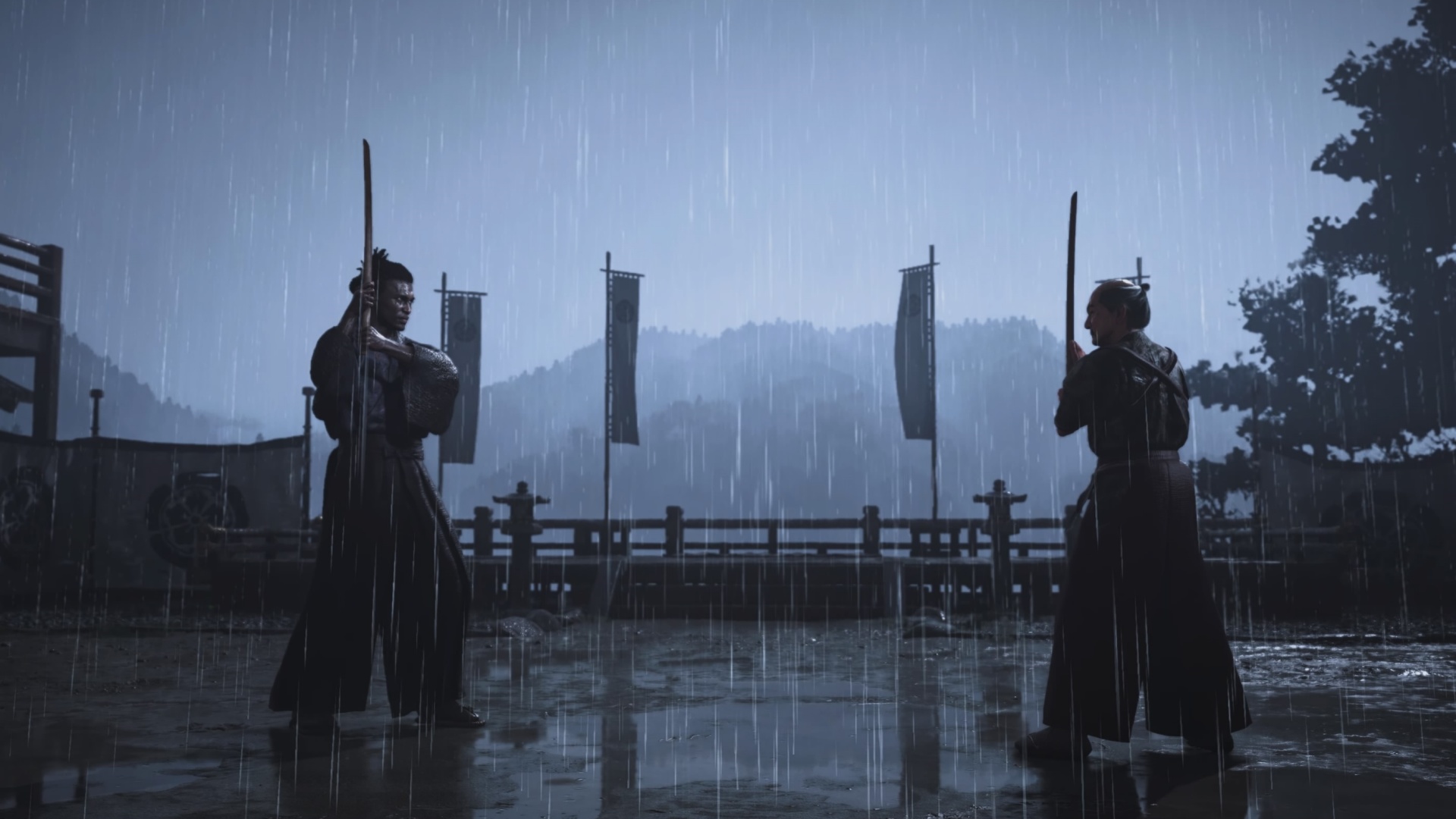
Awaji is more ferocious
Part of the DLC’s premise is to make Naoe and Yasuke feel more like the hunted, rather than the hunters, in a more hostile Awaji. Because the Ippa relies on clandestine operations, the island’s threats now include shinobis masquerading as innocent NPCs and literal death traps on the road.
At first, the environmental threat felt refreshing. Awaji looked more dynamic. However, after the tenth time of getting ambushed by just walking through a town, it got repetitive and annoying. Most of the time afterwards, I just ran through town and blatantly telegraphed ambushes to skip the interactions.

A more threatening faction
Despite how annoying the hazards got, the Ippa does feel more threatening than the shinbakufu. That’s because each member is an actual threat, rather than hapless politicians roped into a scandal. Two of its four members are villains who rely on deception and subterfuge. Another is a brutish warlord.
It also helps that each of these three got a unique boss fight. One of them can even fit in a Metal Gear Solid game, rather than an Assassin’s Creed. For all my issues with the DLC, these boss fights were a highlight.
However, the game still repeats a flaw that was prevalent in the main game. Despite being a threatening faction, the four members of the Ippa are in the same scene only once in the entire game. Once again, you tackle each member separately, but none of them comments when you take down a member. Rather than an overall narrative, Claws of Awaji feels like a collection of short stories, albeit ones with cleverly built fights each time.
Introducing the bo
The next biggest introduction for the DLC is a heavy staff called the bo. It’s a new weapon that Naoe can wield to club enemies to death.
Thankfully, the bo isn’t exclusive to Claws of Awaji. Even if you don’t own the DLC, you can get access to the weapon via a mission in the main game.
Gameplay-wise, the bo is different from others because of how it uses stances to respond to enemy attacks. I’d say that the new weapon is interesting enough to warrant a try. However, the DLC is too short to allow the bo to properly marinate. In the end, I still chose the katana as my main.
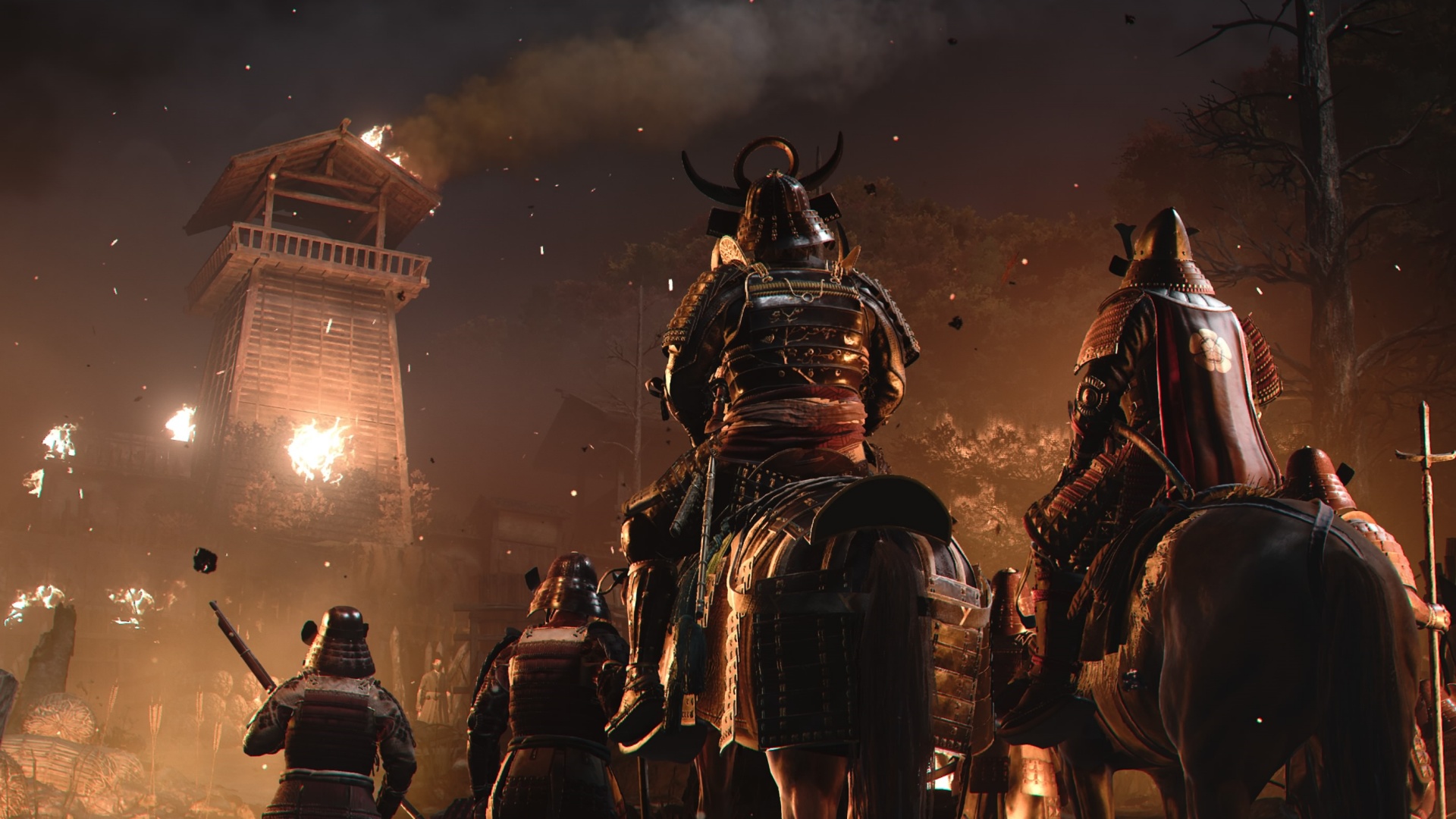
Short and sweet
Claws of Awaji is mercifully short and sweet. Ubisoft estimates that the DLC will take ten hours on average to complete. Personally, I finished the story and explored the island in less time.
As someone who’s done with Shadows, Claws of Awaji is written in just the right length to hearken back to a good game. It’s not a drastic reinvention, like Ubisoft’s wackier DLCs, but it will give you more of the same. And that’s fine. If you loved Shadows, the DLC extends that experience just a little bit more.
On its own, however, one has to wonder whether Ubisoft planned more for Awaji. If the DLC turned into a full sequel, maybe we would have gotten a more emotional story for Naoe and her mom, a larger island to let the Ippa reign free, and a more fleshed out system for the bo.




Apple iPhone Air Review

Towa and the Guardians of the Sacred Tree: Thrown into the loop

GameSir has a special G7 Pro WUCHANG: Fallen Feathers Edition

Capcom unveils Priority Trial Play campaign for gamescom asia x TGS 2025

Assassin’s Creed Shadows: Claws of Awaji is just more of the same

Philippines is top Nano Banana trend user on Gemini

‘Hinokami Chronicles 2’ is great before AND after watching ‘Infinity Castle’

Sony PH offers limited-time LinkBuds Fit x Hatsune Miku bundle

Google Pixel 10 Series: First Look

ROG Xbox Ally X first look at gamescom 2025


-
 News2 weeks ago
Philippines is top Nano Banana trend user on Gemini
-

 News2 weeks ago
Samsung Galaxy S25 FE, Tab S11 now official
-

 Gaming2 weeks ago
Lenovo Legion Go 2 is now official
-

 Reviews2 weeks ago
HUAWEI FreeBuds SE4 review: Solid sound and ANC on a budget
-

 Accessories2 weeks ago
More essential Samsung devices coming to the Philippines
-

 Features2 weeks ago
GadgetSnaps: TECNO Slim in Shanghai
-

 News2 weeks ago
Infinix GT 30 launching globally on September 11
-

 Gaming2 weeks ago
NBA 2K26 review: Pick and pop maestro