
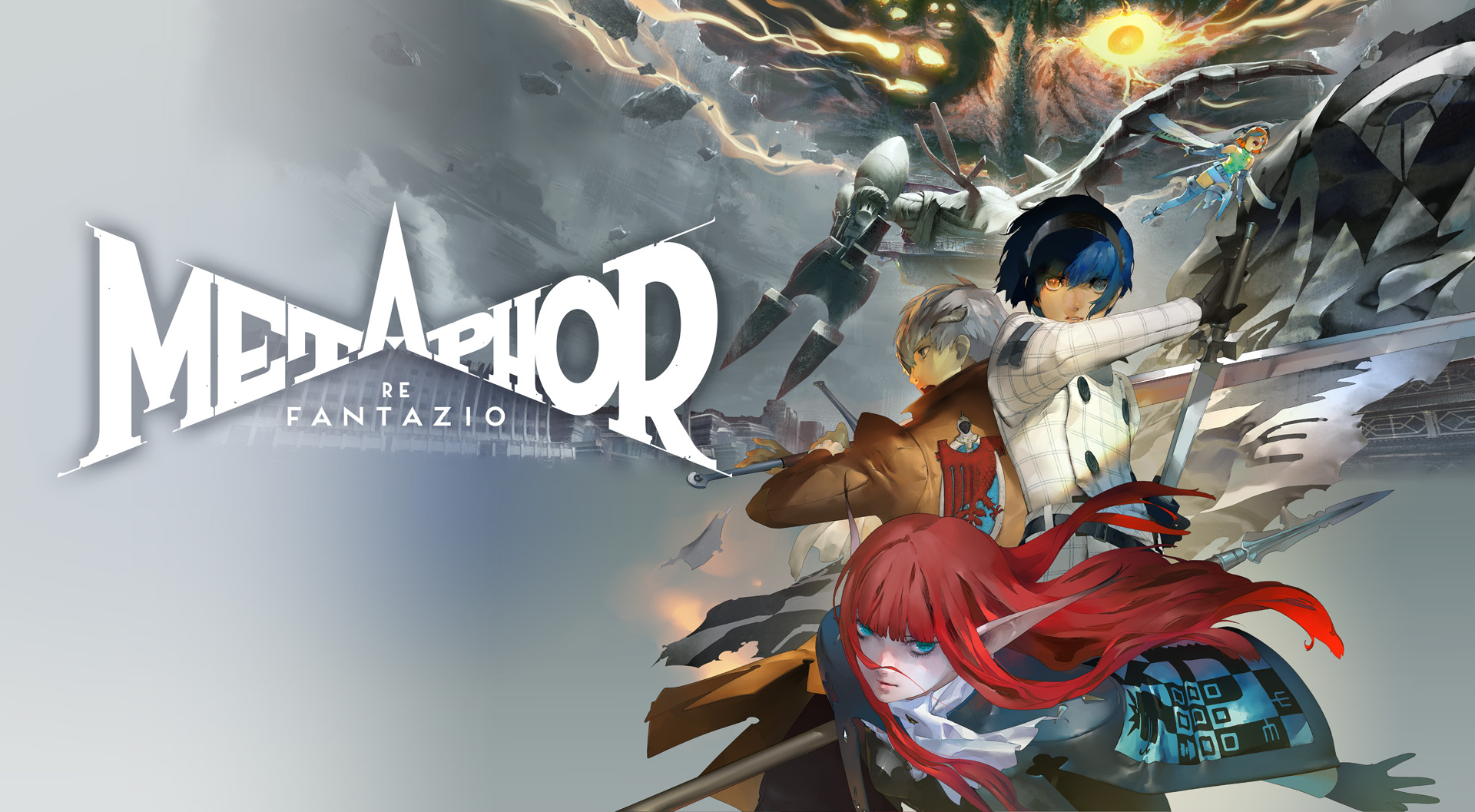

Persona 5 was the game that got me back into gaming outside of the NBA 2K franchise. It felt like a modern take of the late 90s and early 2000s JRPGs that I grew attached to. When I learned that Metaphor: ReFantazio was being developed largely by the same team responsible for the game that brought us the Phantom Thieves, I knew I had to play it.
After spending time with the game, I can say with absolute certainty that it definitely hit that JRPG sweet spot. However, it took a while to get there.
Getting through the early hours
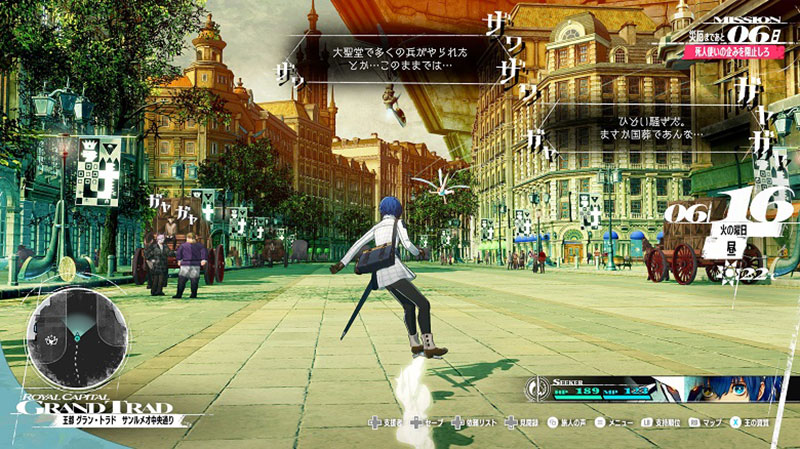
Unlike Persona 5, I wasn’t immediately taken by Metaphor: ReFantazio. That can be attributed to many factors both in-game and in real life.
When the former came out, I was at a very different place in my life. I was certainly yearning for a game and actually had some time and mental space to really immerse myself. Fast forward to seven years later and Metaphor came at a time when I’m more jaded and saddled with more things cluttering my head.
At first, I thought it was just my general disposition that’s preventing me from being completely taken by the game’s early hours. Turns out, it wasn’t just me.
I’d say the first three hours, which are available on the demo, are a bit of a slog. It’s a lengthy tutorial that, while integrated into the story, still took a while to take off.
Even the intense moments revealing a big turning point at the start of the story, while grand, still felt predictable.
However, it only gets better from here. As of writing, the game currently has a Metacritic score of 94 and has had glowing reviews. I’m happy to report that if you can power through the early hours, you’re in for an epic tale, a grand adventure, and a journey that will make you feel nostalgic about JRPGs from a couple of decades ago and beyond.
Euchronia and its fractured people
It’s hard to discuss any bits of the story without touching even minor spoiler territory, so there’s your warning.
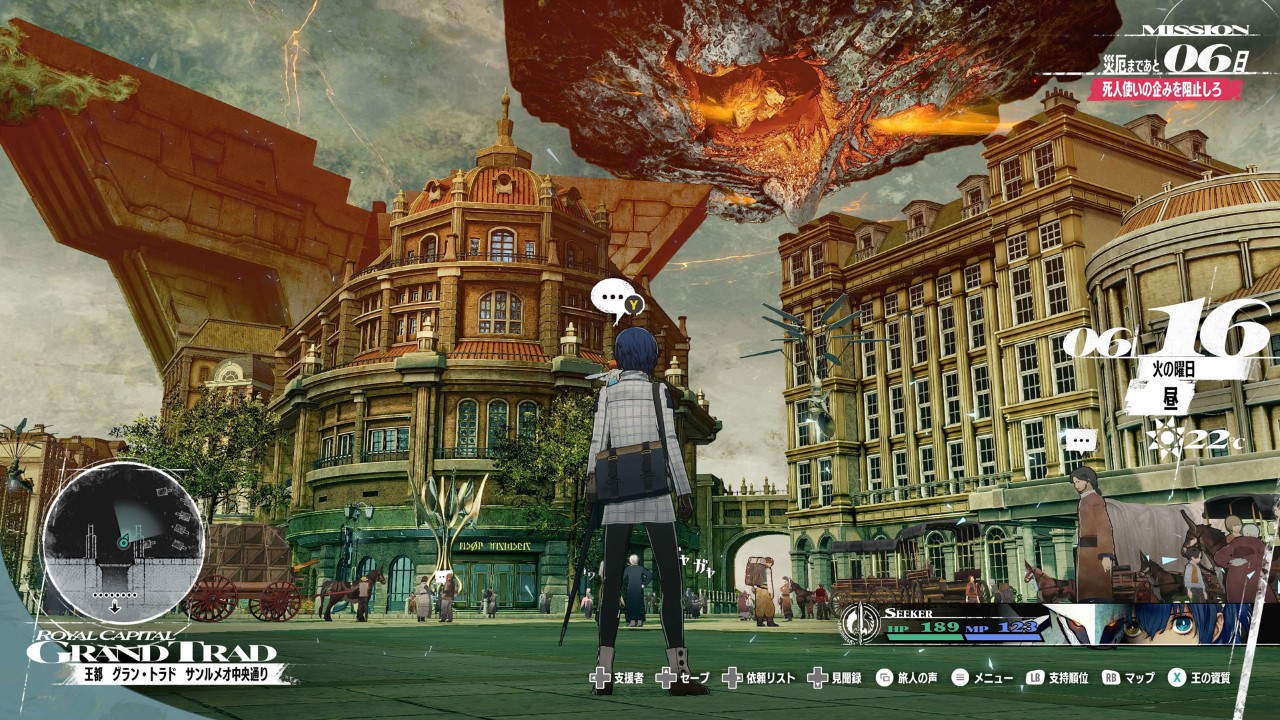
Metaphor: ReFantazio is set in the United Kingdom of Euchronia. It’s a kingdom filled with various tribes or clans easily distinguishable through many of their physical features. The ruling class has horns, there are tribes that wear masks all the time, there are those with beast-like ears, and more.
The protagonist belongs to the tribe most looked down upon. So much so that the ruling class deems your mere presence to bring some form of misfortune.
The game begins with the Kingdom being shaken up following the death of their king. What does the protagonist have to do with this? Well, after a string of events, you end up becoming a candidate, among many others, to take the throne by virtue of the king’s magic.
That’s the abridged version and there’s plenty of story that takes place in between. However, it’s that situation that forms the many mechanics of the game.
To say it’s an uphill climb is an understatement. Especially since the majority of the people of Euchronia are extremely racist. Nope, I’m not going to dance around it since the game flat out shows you that anyway.
Persona-like

With Persona 5 being the last Atlus game I played all the way to completion and enjoyed thoroughly; I was immediately familiar with some mechanics of the Metaphor: ReFantazio.
The two games share a Calendar progression. This means you have to plan your activities well in order to level-up the many other aspects of the game all while keeping in mind the next big event that’s marked on the calendar.
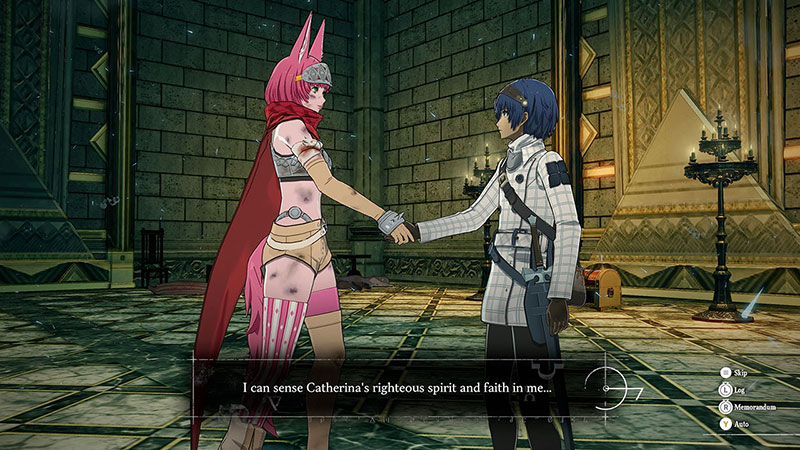
Many of the activities include increasing your Virtues, Bonds with characters, and more. Virtues are ideal traits that a king possesses. There’s also a parallel mechanic in Persona called Social Stats. Leveling these up allows you to unlock conversations and quests that otherwise you would have no access to. Some of these conversations lead to increasing Bonds with other characters.
Bonds are like the Social Links in Persona. Increasing Bonds means gaining skills and abilities that will be useful in battle. You increase bonds by spending time with members of your party and other close confidantes.
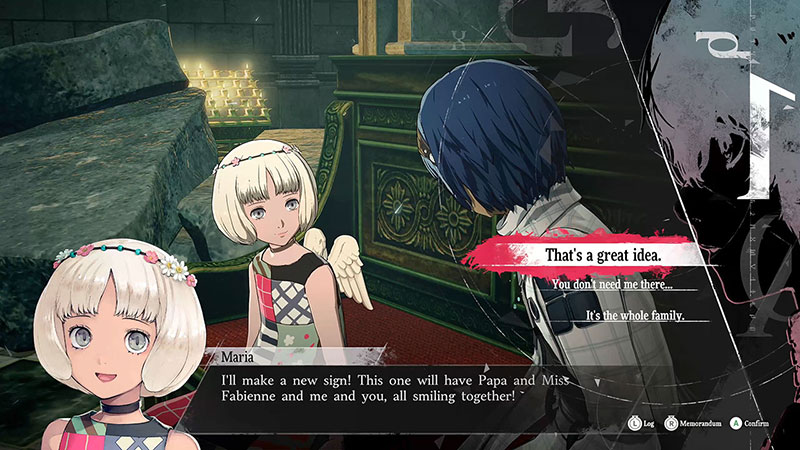
The beautiful thing about the game is how all of these mechanics play into each other. So, even though it feels like you have limited time until the next big event in the calendar, there’s literally no wasted actions as every single one contributes to leveling up in one aspect or another.
That doesn’t mean you shouldn’t be strategic with your time. You definitely still need to pick and choose wisely to fully optimize your playthrough. But for the most part, just doing any of the activities will yield mostly good results.
Melee and turn-based combat
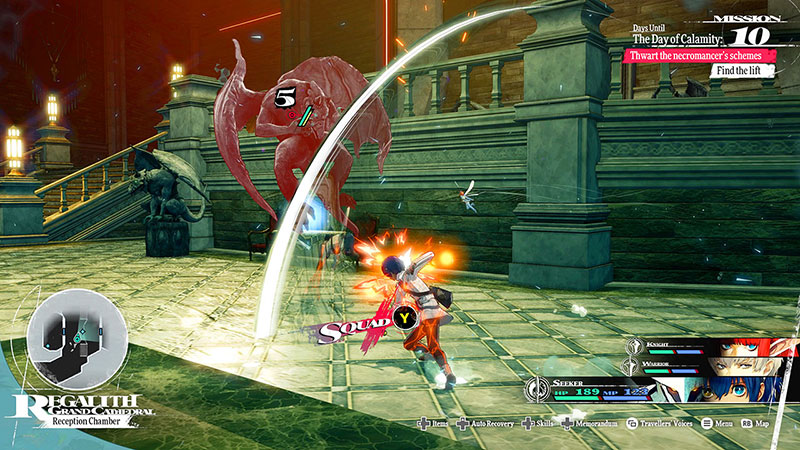
Other than being a game from the Persona team, the thing that got me curious the most about Metaphor: ReFantazio is its combat. The first time it appeared on my radar, it was said to have a good mix of action and turn-based combat. I wasn’t sure what to expect but what we’re getting, I suppose, is generally an okay mix.
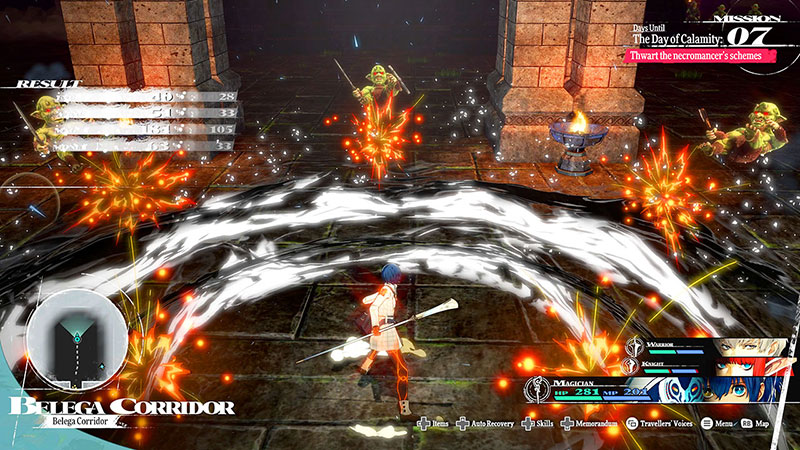
In the overworld as you’re exploring a stage or dungeon, you encounter enemies on the prowl. Before approaching, you can hit the Left shoulder button to assess how strong they are in relation to your current level.

Anyone below your level can be eliminated in melee combat. Meanwhile, enemies at your level or stronger than you can be stunned. You then press a button to enter into turn-based combat.
If you were able to deal damage to an enemy stronger or at your level, you enter turn-based combat with an advantage. It can be anything from the enemies being stunned, taking the first turns, or one of your party members launching an attack before your official turn starts to deal extra damage.
Hit’em with your best shot
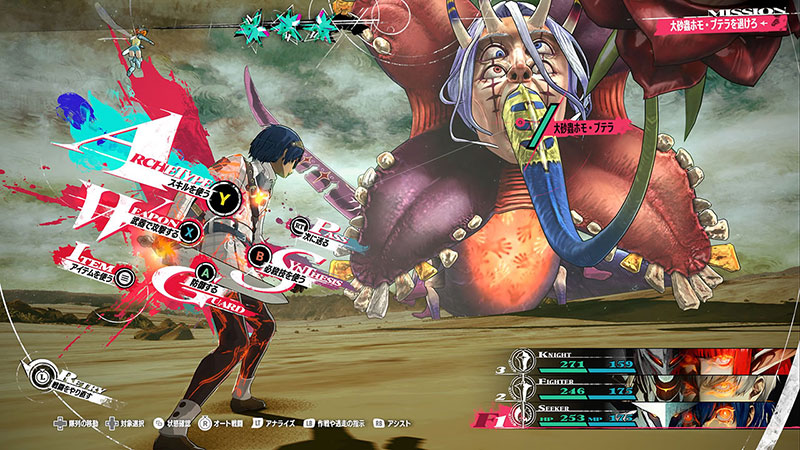
To keep turn-based combat at a high pace, players are encouraged to end the combat as swiftly as possible. This can be done by exploiting your enemy’s weakness. One way of doing this is by experimenting with different attacks first to log the enemy’s stats and weaknesses, and then pressing L3 or the left thumbstick to start the fight over and deal with your opponent expeditiously.
In this manner, it shares much in common with Persona 5, and from what I hear, other modern Atlus games. This helps you keep the game moving and not feel slowed down by turn-based combat which I believe is the reason why most people are not exactly enthusiastic about it.
I loved this approach in Persona 5 and I love it even more here in Metaphor: ReFantazio. There are more nuances to combat but I’ll leave it to you to learn them as you play along.
Archetypes
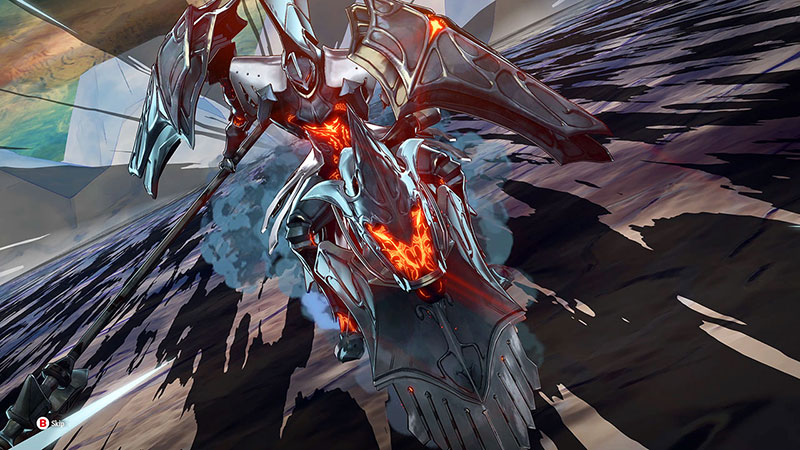
Combat is even more elevated through Archetypes. If we’re choosing parallels, you can say the Archetypes are the Personas in this game. Although, not quite the exact same.
Archetypes function more like job classes which you can shuffle between party members. I say job classes because the Archetypes do share those names. Some of these that you can unlock are Warrior, Knight, Mage, Healer, and more. Anyone familiar with JRPGs or even just RPGs in general will be familiar with those terms and what they bring to the table.
Each character has their own Archetype. But through the mysterious figure named More, your characters are able to learn multiple Archetypes as soon as they are unlocked. You do need a resource called Magla (MAG) to do any of these.
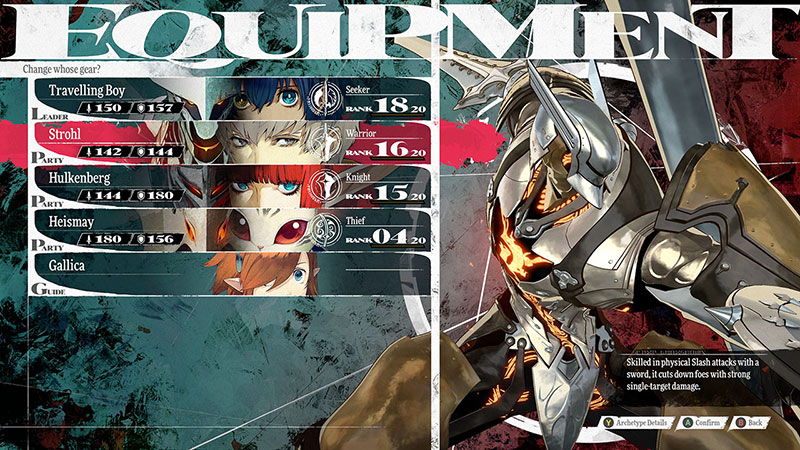
You gain Magla (MAG) only through battle at first but more options unlock later on in the game. With MAG you can play around with characters and the Archetypes. You can have an Archetype learn a skill from another archetype, and Synthesize Archetypes.
A lot of these mechanics are similar to how you’d handle personas. But here, you’re able to have different characters carry different personas to be most effective depending on the enemies you’re about to face.
Each Archetype has abilities of their own, but in battle they can also pair with other characters’ Archetypes for Synergy attacks that consume more MP or HP but also usually deal more damage or have stronger effects.
Figuring out which Archetypes work best with which character along with making sure you’re equipped with the right ones for a dungeon crawl is part of the whole fun in strategizing for combat.
Audiovisual spectacle
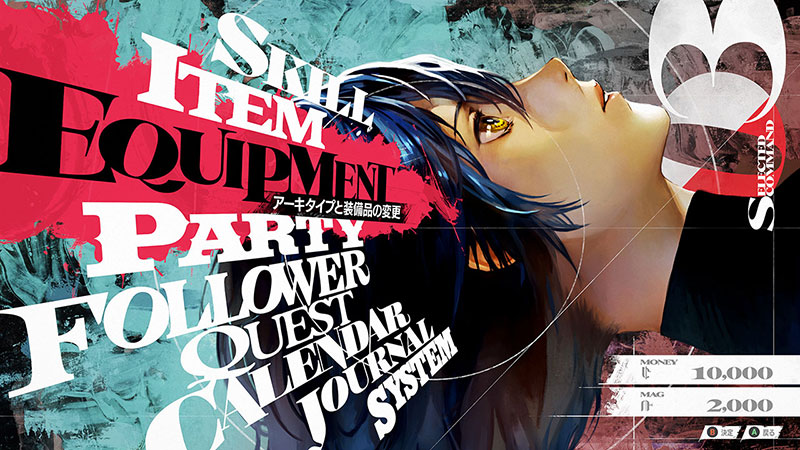
As expected from Atlus, the Metaphor: ReFantazio is an Audiovisual spectacle. Sticking to a cel-shaded, anime-like art style means the developers can also spend a lot of time adding plenty of pizzazz to other parts of the game.
The menu screen, for instance, is dripping with style. Sure, it can seem a lot to take in at first glance. But you’ll soon get used to it and appreciate the art style more as you play along.
In place of the jazzy tracks of Persona 5 are epic orchestral tunes that completely match the vibe of Metaphor’s fantasy world. They’re perfect during high-tension story moments as well as during battle. Although, I did find them out of place in certain parts of the game.
Overall though, Metaphor: ReFantazio is a feast for both the eyes and ears.
Is Metaphor: ReFantazio your GameMatch?
Metaphor: ReFantazio is a must-play for any JPRG fan. It features a refinement of many mechanics that Atlus has implemented over the years in their games in a brand new fantasy world.
The upwards of 60 hours you’ll need to complete the game might turn-off some. But we strongly believe its gameplay loop and overall presentation offer more than enough to keep you engaged until the credits roll.
Metaphor: ReFantazio is out now on PlayStation 5, PC via Steam, and Xbox Series X | S. This game was reviewed on a PS5 with a code provided by the publisher.




Gaming
Project Helix is Xbox’s next console, and it plays PC games
It might be as powerful as a modern PC.


Among all the platforms in today’s generation of consoles, the Xbox has to be biggest loser. Compared to the PlayStation 5 and the Switch 2, the Xbox Series X|S isn’t as memorable. To rectify its position in the rankings, Xbox is heavily teasing its next console codenamed Project Helix.
As was hinted before, Xbox is trying something different with its next-generation console. Rather than just a simple iteration over the current-generation console, the upcoming one will reportedly double as a PC. Today, the company itself has confirmed that this is the case for Project Helix.
Through a post on X, Xbox CEO Asha Sharma said that the console will “lead in performance and play your Xbox and PC games.”
Great start to the morning with Team Xbox, where we talked about our commitment to the return of Xbox including Project Helix, the code name for our next generation console.
Project Helix will lead in performance and play your Xbox and PC games. Looking forward to chatting about… pic.twitter.com/Xx5rpVnAZI
— Asha (@asha_shar) March 5, 2026
There are two things to unpack here. Firstly, Project Helix will aim to bridge the perilous divide between console players and PC players. Unlike the past, there will be a way to play both platforms on both devices… except for games exclusive to the PlayStation and the Switch, that is.
Secondly, a “lead in performance” seems to indicate that this isn’t just a mini-PC. Most recently, Valve announced the Steam Machine. Though it offers a convenient way to play Steam games in one device, it doesn’t have the best specs. Project Helix, if Sharma’s words are to be believed, might be as powerful as a modern PC.
Xbox won’t wait long before revealing more details about the console. Sharma, who only recently started her post as CEO, will be at next week’s Game Developers Conference to explain Project Helix more.
SEE ALSO: AMD teases next-gen Xbox coming in 2027
Gaming
Ubisoft confirms Assassin’s Creed: Black Flag remake
It’s officially called Assassin’s Creed: Black Flag Resynced.
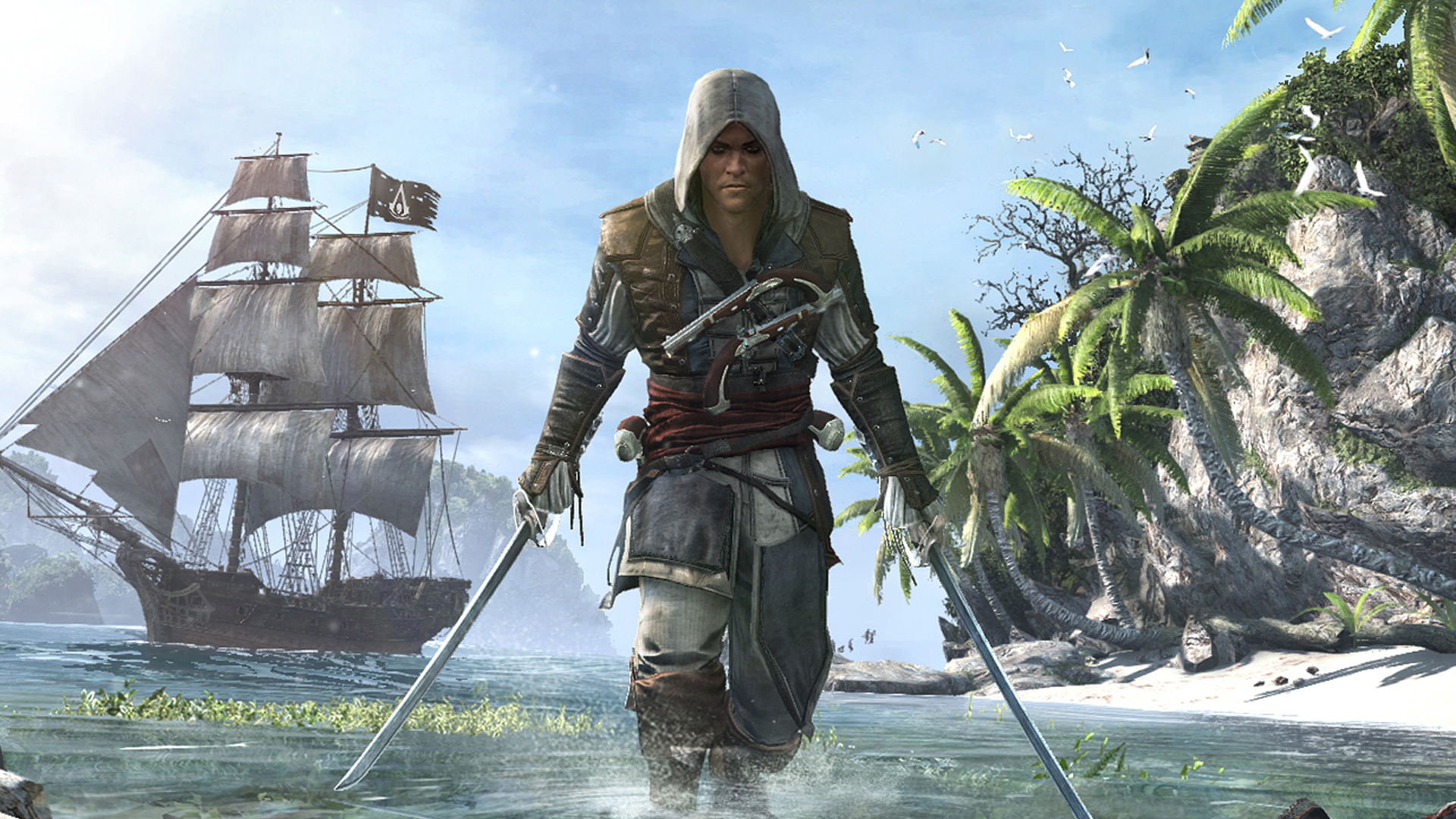
If you ask an Assassin’s Creed fan what their favorite game of the series is, Assassin’s Creed: Black Flag will likely be one of the top contenders. Because of its reputation, gamers are constantly asking for a remake of the popular pirate simulator. Now, the dream is finally here. Ubisoft has confirmed that a remake, called Assassin’s Creed: Black Flag Resynced, is coming.
Released in 2013, Assassin’s Creed: Black Flag saw the journey of Edward Kenway, a vagabond pirate haplessly thrust into life as part of the Assassin Brotherhood against his will. The critically acclaimed game was something that all gamers have been clamoring for since Sid Meier’s Pirates: a true pirate simulator. It was no surprise that the game got as popular as it did.
Today, through an official roadmap shared by the company, Ubisoft has confirmed that Assassin’s Creed: Black Flag Resynced is real, and it might launch later this year. The company also released the first concept art for the remake.
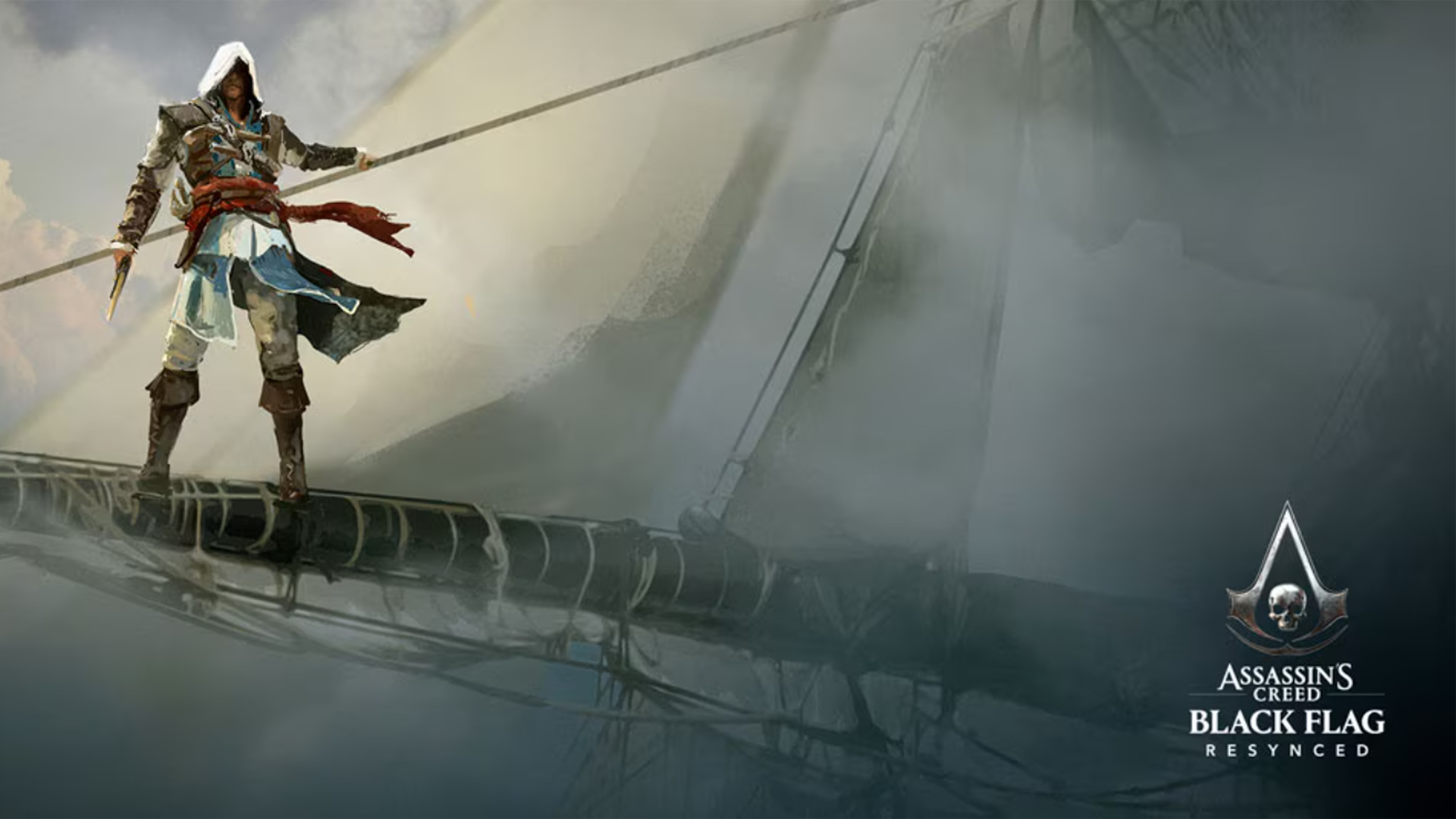
Currently, there’s no official word as to how Ubisoft is remaking the game. At the very least, we can expect significant graphical upgrades to put it up to par with the modern games. We wouldn’t be opposed to more stories and missions too.
Now, though the Black Flag remake is already a big deal, the same roadmap also emphasizes that Codename Hexe, the next mainline title, is still coming. Ubisoft hasn’t confirmed the actual timeline yet, but the game will depict “a pivotal moment in history.” With post-launch development for the ongoing Shadows winding down, efforts to launch Codename Hexe should be ramping up soon.
SEE ALSO: Assassin’s Creed Shadows gets Attack on Titan-themed content
Gaming
PlayStation will stop releasing its games on PC
A new reports suggests that Sony is going back to console exclusives.
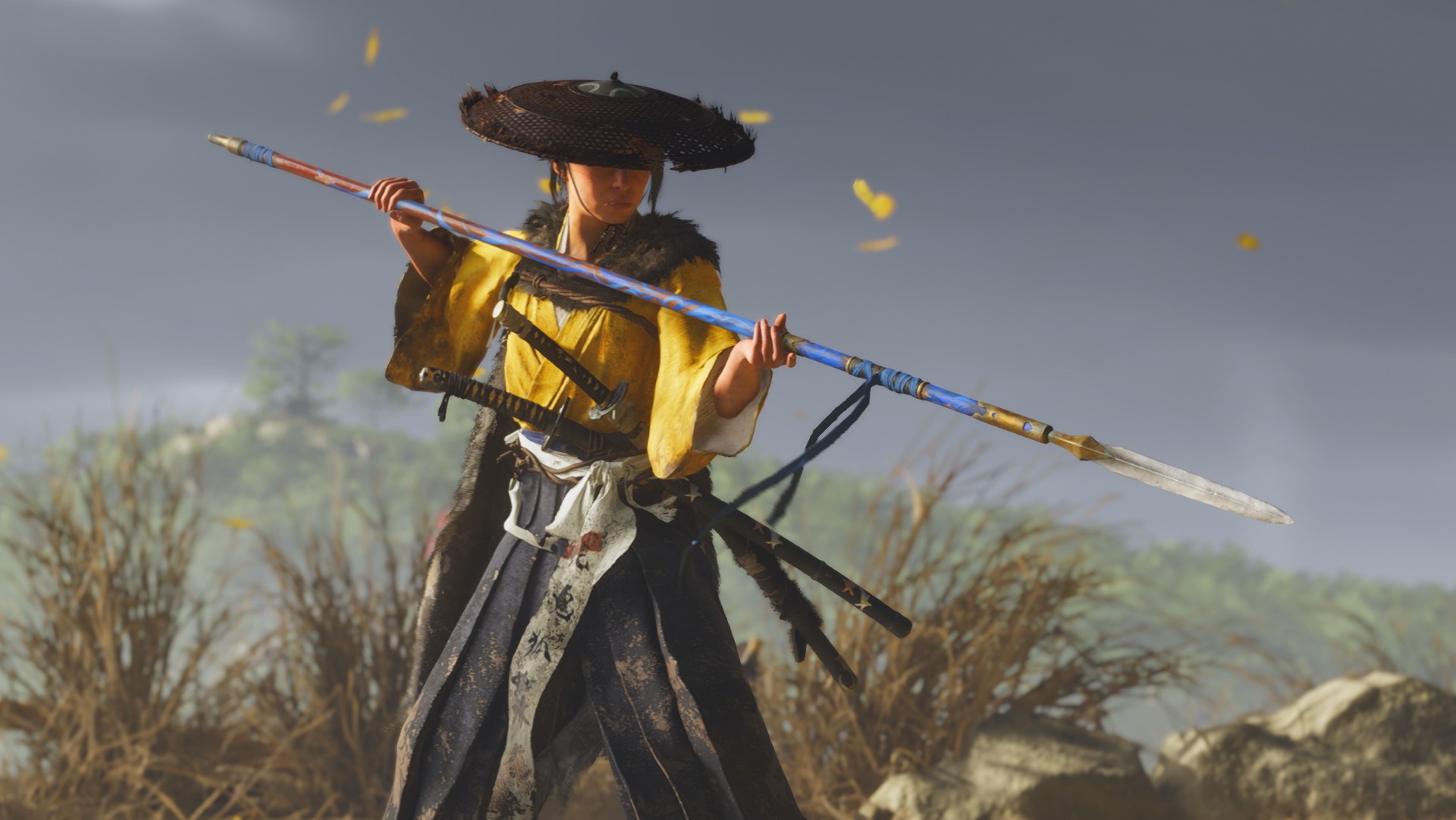
PC-only gamers have been eating well for the past few years. The formerly exclusive PlayStation library opened its gates and released worthy ports for PC. Unfortunately, Sony is putting an end to this short-lived era of openness to PC gamers. According to a new report, the company is once again making first-party PlayStation games exclusive to the console.
During the pandemic, Sony started releasing its critically acclaimed first-party games on PC. The new wave saw gamers get the ability to play titles such as Horizon Zero Dawn, The Last of Us, Marvel’s Spider-Man, and God of War on another platform. Even now, players are still eagerly awaiting the PC launch of Death Stranding 2, due out later this year.
However, as reported by Bloomberg’s Jason Schreier, Sony has just had a change of heart and will no longer release any more games on the PC, beyond those already confirmed for future launches.
This will mean that last year’s Ghost of Yotei and the upcoming Saros will remain PlayStation exclusives for the foreseeable future.
It’s a big change to Sony’s direction. However, it’s not without its precedents. For one, Microsoft has started to compete in the non-exclusive market. The company is already set to launch Fable and Forza Horizon 6 on other platforms, including PC and PlayStation, concurrently with the Xbox launch. To compare, PlayStation still waits a long time before launching exclusive games on PC.
Also, now that rumors have begun to speak of a fabled PlayStation 6, Sony might want to keep things close to its chest for now. After all, selling the console might be its top priority for now.
SEE ALSO: PlayStation 6 reportedly delayed to 2029 because of RAM shortage



OPPO Reno15 F 5G hands-on

Project Helix is Xbox’s next console, and it plays PC games

Nothing adds color to its wearables with the Headphone (a)

Nothing launches the Phone (4a) series

HMD is developing an AI assistant for the elderly

Xiaomi 17 Ultra is now available outside China

TECNO will showcase the CAMON 50 and POVA 8 series at MWC 2026

The art of being in and behind the frame

HUAWEI MatePad 11.5 S 2026: The better-than-ever 4-in-1 productivity tablet

TECNO MEGABOOK K16s 13th review: No-frills beneath those grills


-
 News6 days ago
Xiaomi 17 Ultra is now available outside China
-

 Camera Walkthrough2 weeks ago
OPPO Reno15 Pro: Camera Review
-
 MWC 20265 days ago
TECNO showcases cool concepts at MWC 2026
-

 MWC 20261 week ago
TECNO resurrects modular phones with this new concept
-

 Reviews6 days ago
Xiaomi Pad 8 review: Slab that slaps!
-

 MWC 20263 days ago
TECNO launches the all-new CAMON 50 series
-

 Events2 weeks ago
Capcom to hold Resident Evil Requiem launch event in Jakarta
-

 Reviews6 days ago
Forget the Phone: Xiaomi 17 Ultra Is A CAMERA!