
News
Motorola debuts G Stylus and G Power budget smartphones


For many years Motorola has offered some of the best budget phones in the US and it hopes to continue the trend with the launch of two new devices today, the Moto G Power and the Moto G Stylus.
The company says both phones are meant to punch above their weight in terms of battery life, image quality, and overall entertainment experience while maintaining a sub $300 price tag.
I got to spend some time with both phones at Motorola’s Headquarters in Chicago earlier this week. Both phones offer more than what you pay for them – are well built, with better displays than on the previous models, have better cameras, and come with enough features to keep those who don’t want to break the bank on an Android smartphone happy.
Moto G Stylus
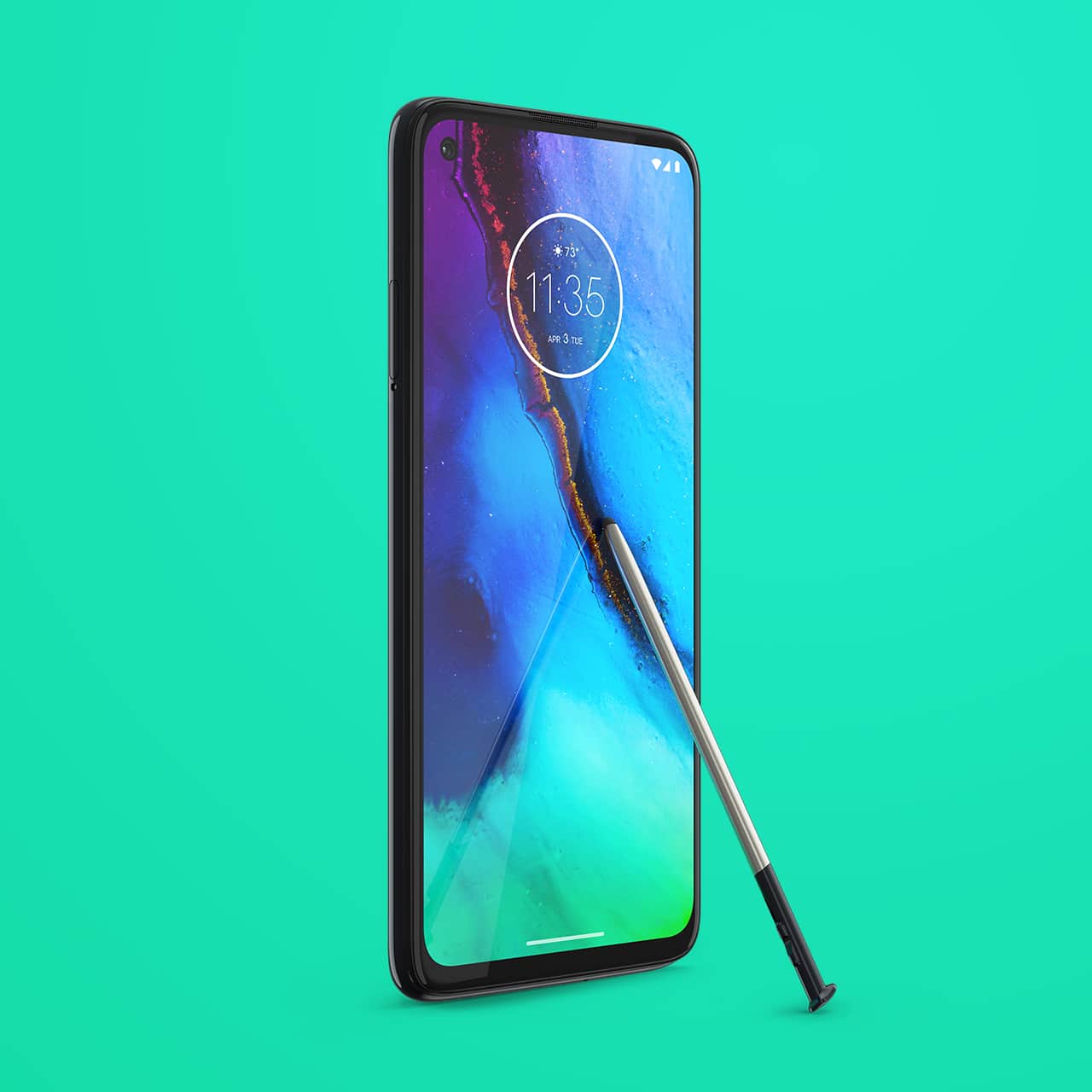
The Moto G Stylus is Motorola’s first smartphone to come with a bundled stylus for taking notes, a unique offering in its price range. The only other smartphone with a stylus is Samsung’s Galaxy Note 10 which retails for $700 more. At CES 2020, Samsung also unveiled the mid-range Galaxy Note 10 Light but that phone is currently not available in the US).
The pen on the G Stylus is tucked away on the bottom right hand side of the phone. You pry it out with your fingernail instead of pushing down to eject. The stylus feels sturdy, not plasticky, with a metallic finish. Touch response felt good.
Pulling out the stylus while the display is off automatically launches the phone’s built-in Moto Note app. When on, a customizable toolbar pops up instead.
The phone comes 3 cameras, a 48MP main camera, a Macro Vision Camera, and a 117 degree ultra wide angle action camera dedicated for shooting video. The GoPro-esque ultrawide video camera is the same one we saw on the Moto One Action from last year. One very practical features of this action camera is being able to record horizontal videos while holding the phone vertically.
The cameras come with a host of camera features seen on higher end phones like portrait lighting, spot color, and night mode.
The Moto G Stylus is powered by Qualcomm’s Snapdragon 665 processor and comes with 4GB of RAM and 128GB of storage. Motorola is promising 2 days of battery life thanks to its 4000 mAh battery.
It will retail for $299.99 and is available in Mystic Indigo.
Moto G Power

The Moto G Power, replacing last year’s G7 Power, gets its name from a massive 5000 mAh battery that supposedly should last you up to 3 days on a single charge.
It’s also intended to bring flagship camera smartphone features to midrange price points. The phone has 3 cameras – a 16MP wide angle, an 8MP 118 degree ultra wide angle, and a Macro Vision camera with 5th X zoom.
The G Power run’s Qualcomm Snapdragon 665 processor, and comes with 4GB of RAM and 64GB of storage.
It will retail for $249.99 and will be available in Smoke Black.
Both phones share a similar 6.4” Full HD+ display with a 19:9 aspect ratio.
And come with a close to vanilla implementation of Android based the latest version Android 10. There are a few custom features built in, Moto Experiences they are called, like being able to launch the camera with the flick of a wrist.
New to these models is a feature called Moto Gametime which lets you block notifications whenever you’re engaged in your favorite game, that a call or message doesn’t get in the way of a PUBG victory.
Both phones will be available in spring this year.






Computers
AMD expands Ryzen AI Embedded P100 series lineup
Scalable, efficient AI compute for industrial, edge solutions


AMD has recently announced the expansion of its AMD Ryzen AI Embedded P100 Series processor lineup.
This enables scalable and power-efficient AI compute tailor-built for industrial and AI edge systems. Scenarios include factory automation, physical AI in mobile robotics, and other AI-driven edge applications.
With eight to 12 high-performance Zen 5 cores, AMD ROCm support, and up to 80 total system TOPS, the new x86 embedded APUs deliver up to:
- 2x more CPU core counts
- 8x higher GPU compute
- 36% higher system TOPS
This way, developers and system designers get an expanded and scalable portfolio of power-efficient edge computing solutions. These processors support real-time AI from vision to control and reasoning, as well as offer advanced graphics capabilities.
On a single chip, clients get up to 80 TOPS physical AI acceleration, AMD RDNA 3.5 graphics for real-time visualization, and an NPU based on the AMD XDNA 2 architecture.
Moreover, the processors can withstand industrial temperature ranges (-40° C to 105° C) and can support continuous 24/7 operations for up to 10-year life cycles. That’s along with low-latency and power-efficient AI inference.
Real-life applications include intelligent factories, autonomous robots, and medical imaging devices. For instance, the processors can deliver CPU performance required for real-time inspection and process optimization.
For mobile robots, meanwhile, processors can manage navigation, motion, control, and route planning while the GPU processes multi-camera feeds for spatial awareness.
Furthermore, for 3D health imaging, the processors can enable the powering of 3D imaging for ultrasounds, endoscopes, tissue classification, and tumor detection at the edge. This is done with models like U-Net, nnU-Net, and MONAI.
The processors then accelerate image-to-report workflows with MedSigLIP and support clinical reasoning and Q&A with Med-PaLM 2.


Valve has been embroiled in an odd war as of late. A few weeks ago, the New York Attorney General filed a lawsuit against the gaming company for allegedly encouraging children to gamble through loot boxes primarily found in Counter-Strike 2. Today, Valve is fighting back by declaring how little its loot boxes have to do with gambling.
For years, governments have had a problem with loot boxes. To them, the mechanic makes it too easy for gamers to fall into a gambling addiction. In essence, loot boxes are earnable packs that contain a single or a number of random items that the player can use for their game. Most of the time, these items are purely cosmetic and don’t give a gameplay advantage.
Like Blizzard before it, Valve is also defending its loot boxes as non-essential to how players engage with their games. “There is no disadvantage to a player not spending money,” their statement reads.
Additionally, Valve says that their loot boxes are no different from Pokémon cards and Labubu blind boxes. As such, the company is also defending their users’ right to transfer obtained items to other users, as with two players trading cards or Pop Mart figurines.
Now, these items have monetary value in the market. In the same way, a rare Counter-Strike 2 skin can fetch thousands of dollars. However, Valve says that they are already proactive in shutting down accounts made only to gamble and avoiding pro-gambling businesses.
Valve is capping off its statement by saying that the NYAG is forcing the company to collect more information from its users, especially those using VPNs to prevent being located in New York. The company says that it will continue to protect user data, despite the demand.
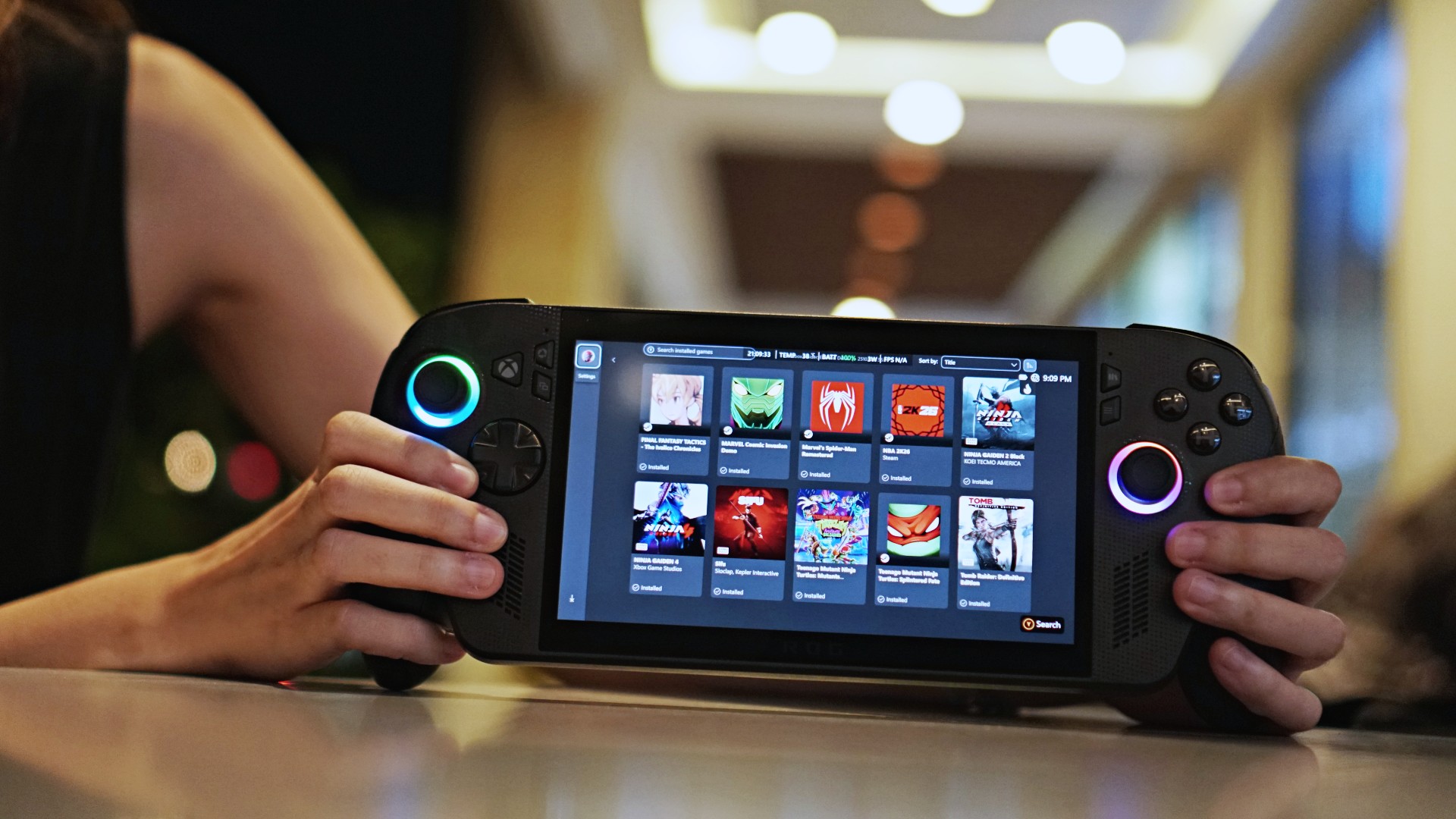
What is an Xbox? For the past year and a half, Microsoft will tell you that anything can be an Xbox. Now, with Project Helix on the horizon, Xbox wants to bring the idea of playing anywhere to the next level. Microsoft will start rolling out its new Xbox Mode to PCs in April.
Since the very first device out in the market, handheld consoles have changed how people play games. Naturally, a lot can already be said about the portability and the convenience of its hardware. But the software needs a special shoutout, too.
Though they are essentially PCs at heart, these consoles are built explicitly for gaming. Fiddling around with Windows isn’t ideal. Instead, they have special software that can collate all of a user’s games into one hub.
The new Xbox Mode, adapted from the ROG Xbox Ally X’s Xbox Full Screen Experience, will do just that but on an actual PC. As announced via an official blog post, Xbox will release the new mode to Windows 11 devices in April, starting with select markets. Like the software used in handheld consoles, Xbox Mode should include all the available games from the Game Pass, Steam, and the Epic Games Store.
Right now, the feature will likely go up against Steam’s Big Picture Mode, which does the same thing but only for Steam titles. However, it should also transition neatly to Project Helix. Xbox is now ramping up the development of its next-generation console codenamed Project Helix. The upcoming machine will be a high-end PC and a gaming console rolled into one, making it perfect for Xbox Mode.
SEE ALSO: Project Helix is Xbox’s next console, and it plays PC games


LG announces new Top Load Washing Machines

AMD expands Ryzen AI Embedded P100 series lineup

The internet is thirsting over the One Piece Season 2 cast

Valve is embroiled in a lawsuit with New York over loot boxes

Microsoft is launching Xbox Mode to Windows 11 PCs


-

 News2 weeks ago
Xiaomi 17 Ultra is now available outside China
-

 MWC 20261 week ago
TECNO showcases cool concepts at MWC 2026
-

 MWC 20261 week ago
Infinix NOTE 60 Ultra makes a motorsport-inspired debut
-

 MWC 20261 week ago
TECNO launches the all-new CAMON 50 series
-

 MWC 20262 weeks ago
TECNO resurrects modular phones with this new concept
-

 Reviews1 week ago
TECNO CAMON 50 Ultra review: End of an era?
-

 Reviews2 weeks ago
Xiaomi Pad 8 review: Slab that slaps!
-

 Reviews2 weeks ago
Forget the Phone: Xiaomi 17 Ultra Is A CAMERA!