
Gaming
MSI GS65 Stealth Thin Review: The company’s best yet?
A very unassuming gaming laptop


Taiwanese company MSI welcomed the year by introducing a fresh lineup of gaming laptops sporting the new 8th-gen Intel processors. One of these beasts is the GS65 Stealth Thin.
It carries the title as the world’s first laptop equipped with 144Hz display in a slim 4.9mm frame and enjoys performance perks from NVIDIA’s Max-Q design.
On paper, the GS65 has all the muscle power to be the ultimate gaming laptop. We put it to the test, so join us to see how it holds up as an everyday device for both work and play.
Let’s kick things off with its design.
The GS65 doesn’t offer anything flashy at first glance
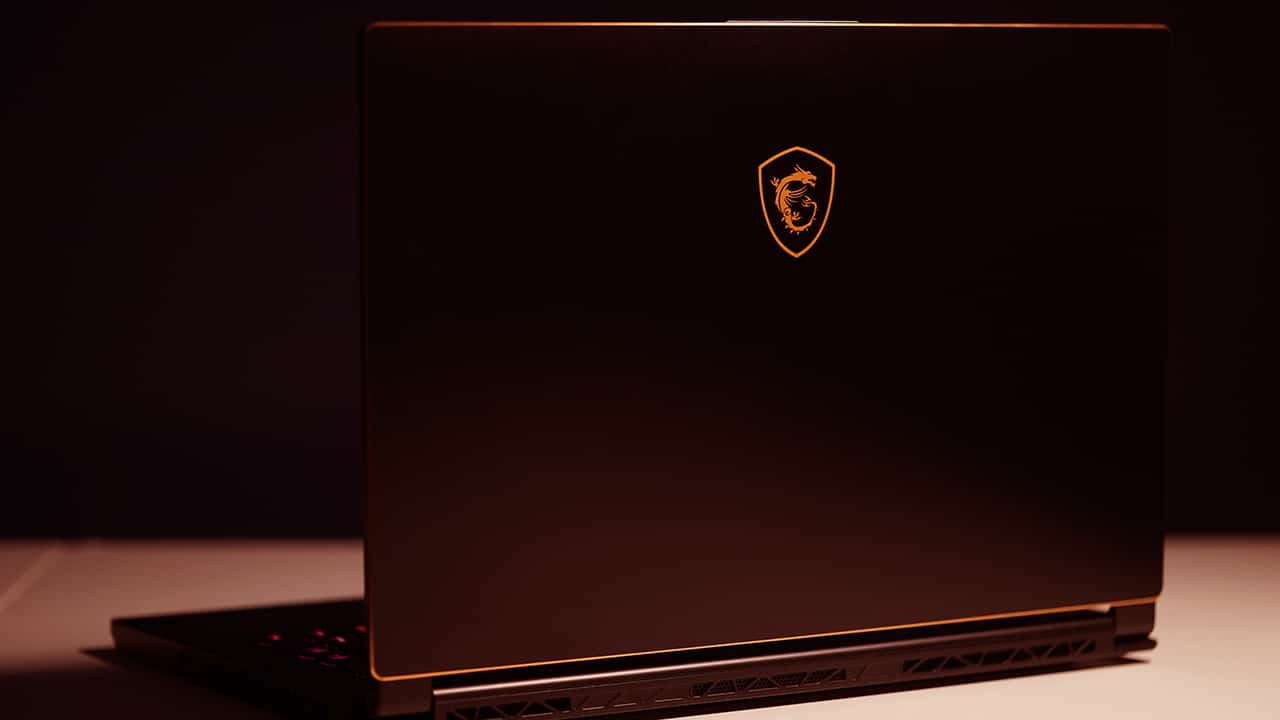
It has a minimalist approach with its black coating
It has gold edges

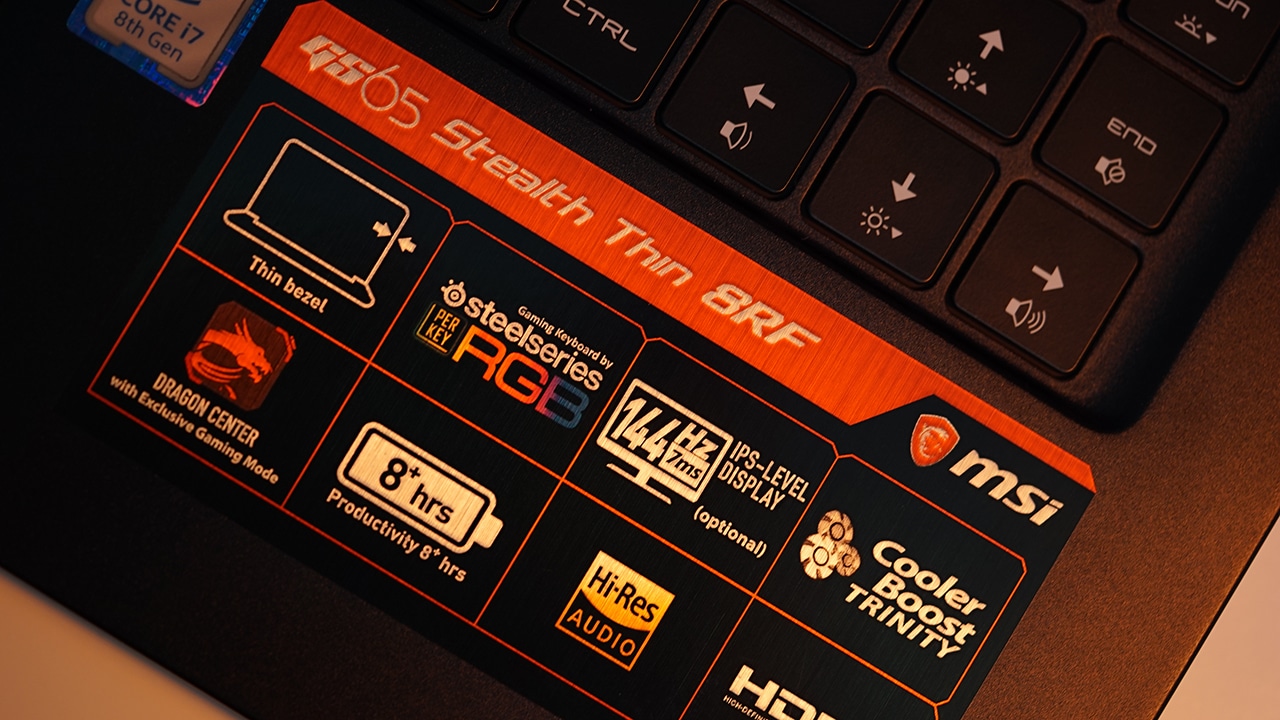
MSI does away with the usual red highlights for the GS65
Bezels are impressively thin

It boasts 4.9mm thin bezels with an 82 percent screen-to-body ratio
A fingerprint scanner is built in but isn’t activated yet

It’s still coming through an update
Here’s a webcam placement done right

Even with slim bezels, MSI was still able to put the webcam up top unlike on other laptops
There’s a stylish yet functional hinge

Small details like this hinge look good and serve a purpose
It’s nicely thin and light

Bringing it around is easy thanks to its light and thin form factor
Sides are lined up with ports…

USB 3.1, Thunderbolt 3, Mini DisplayPort, HDMI, charging port
One thing to note, though: Since the company made the GS65 lightweight, they used mostly plastic for the chassis. The trade-off is a flex in the panel near the power button. It’s also the same case for the palm rest that has a slight creak which could get bothersome in the long run.
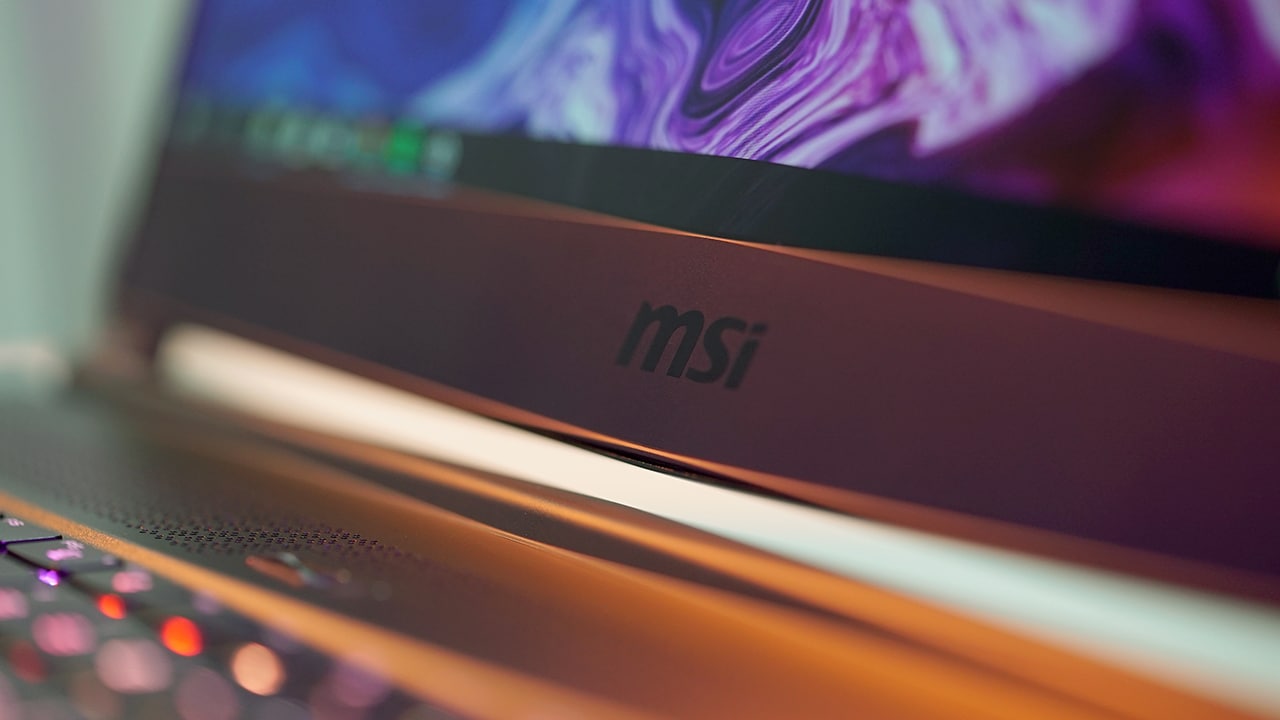
Also, if we would nitpick, we could still see a chin with the company’s logo. Even then, it’s still not an eyesore to the general aesthetics of the laptop.
Great for multimedia
The Stealth Thin touts a 15.6-inch display which is just the right size for productivity and gaming on the go. Undoubtedly, what makes the display look really appealing are the thin bezels that go with it. It just shows how the company wasted no space and maximized this area.

As mentioned earlier, the screen has a refresh rate of 144Hz and is coupled with a 7ms response time. This translates to really fluid movement, especially while playing games. It could even make or break a match.
In terms of quality, the sharpness of details adds to the overall immersion. Colors are lively and vivid without going overboard so that’s always a good thing. When outdoors, bright glares aren’t much of a problem thanks to the display’s finish.
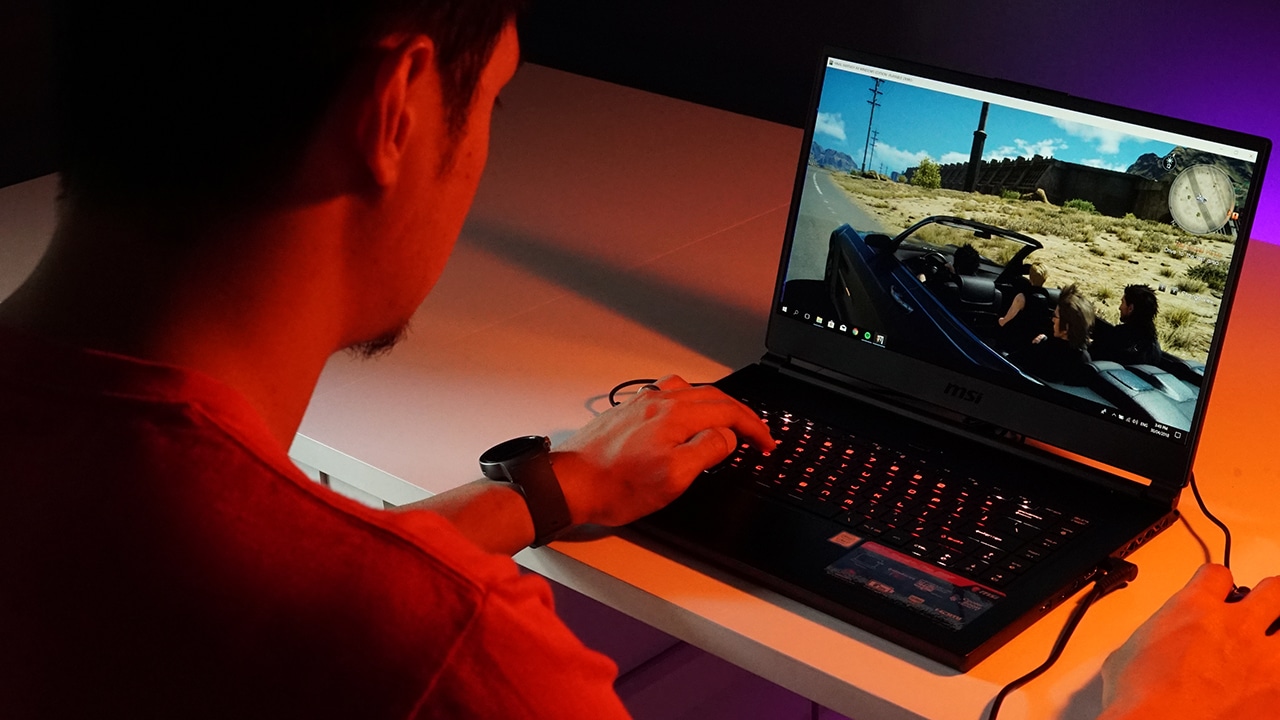
Speakers are placed underneath, which I have mixed feelings about. Playing games or listening to music while on a table has louder than average volume and it’s all fun. Transferring to a couch or any surface with cloth, however, makes sound muffled and the volume gets greatly reduced.
Of course, audio performance is more immersive when using dedicated headphones. It also supports hi-res audio so that’s another perk when you go for the Stealth Thin.
A very customizable keyboard
The keys are made in partnership with Steel Series and it cements the idea that MSI wants its users to really enjoy using the laptop.

Where these keys shine is in lights customization. Keys that light up aren’t new, but the Stealth Thin boasts per-key RGB lighting that users can tweak.
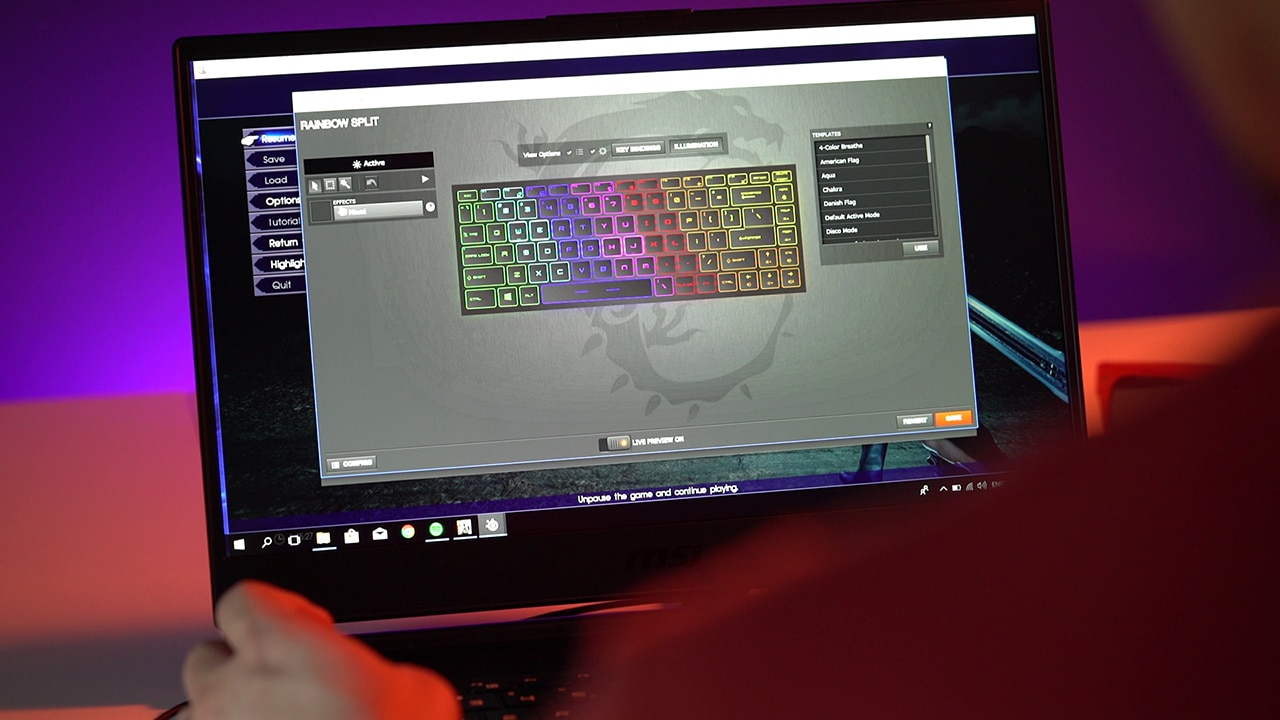
Additionally, even the behavior of lights can be altered to suit your current mood. You can have it sweeping or just a regular glow, among others. The font style is also a bit different here, and it’s a good kind of different which goes well with the overall look of the laptop.

Gamers comfortable with a full-sized mechanical keyboard might be thrown off with the GS65’s short travel keys, but these are a joy to type on and aren’t that bad for FPS games.
Interesting things under the hood
Running the show is a new Intel Core i7-8750H chipset with six cores and 16GB of RAM. From those alone, you know this portable rig isn’t just made for computing grades in Microsoft Excel.
Top those off with NVIDIA’s GeForce GTX 1070 graphics with Max-Q tech and you get a machine that doesn’t hold back when more processing power is required of it.
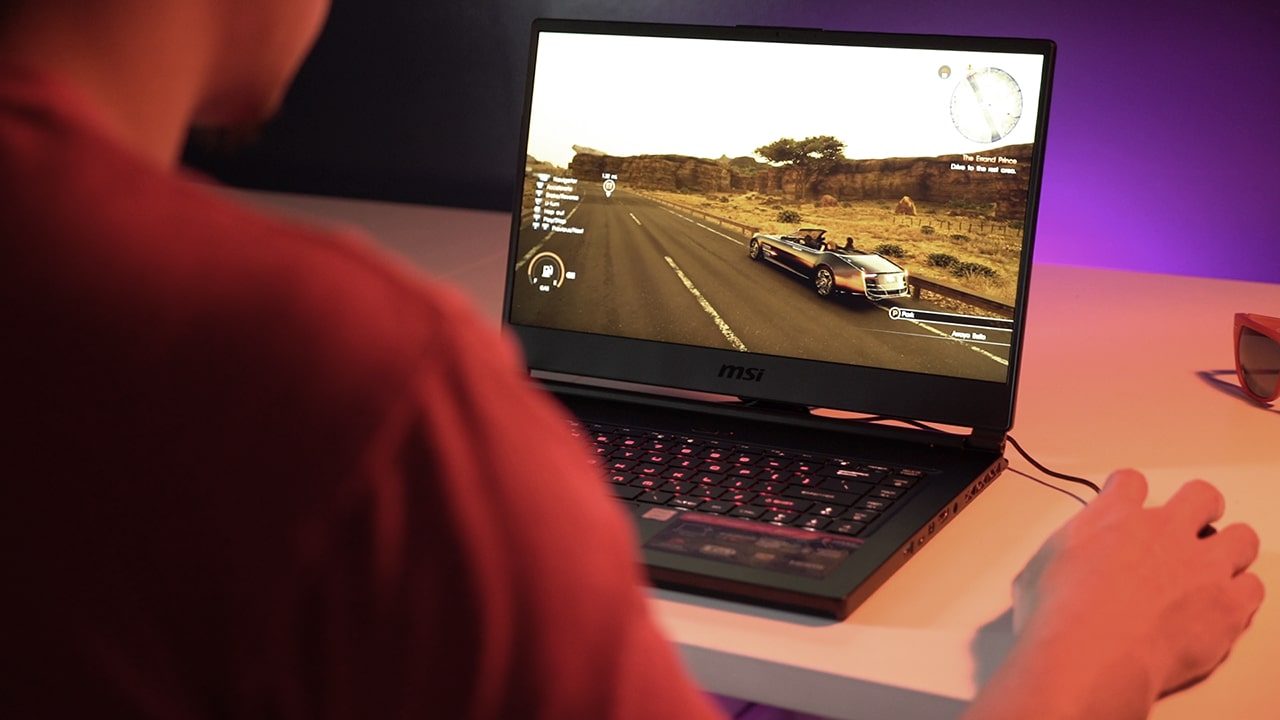
I have been using the Stealth Thin for both work and play — editing videos for GadgetMatch and exploring the land of Eos in Final Fantasy XV. The laptop hasn’t backed down while doing either.
Even without G-Sync embedded in its display, the 144Hz refresh rate made the graphics smooth and screen tearing was nonexistent throughout my time with it. Its underside gets warm but NVIDIA’s efficient Max-Q made it possible to achieve such performance while keeping things relatively cool for the chassis.
As for the battery, the GS65 is pretty much like most gaming laptops — lasting an average of less than three hours with constant usage. What’s interesting, though, is that the power brick is now smaller than usual so it’s easier to bring around.
Is this your GadgetMatch?
There’s a lot to love about the Stealth Thin. There’s the minimalist exterior with elegant gold highlights, 144Hz display with attractively slim bezels, fully customizable keys, and internals that beg to be unleashed. This laptop is basically a combo of great design, powerful specs, and an enjoyable experience all in one portable package.
There are some drawbacks, of course. We’re not fans of how the inside panels bend and creak, and the hit-and-miss performance of its external speakers. Still, if you can look past those, we think this is one of MSI best gaming laptops yet.

The MSI GS65 Stealth Thin is available for pre-order in the Philippines for PhP 134,995 or US$ 2,612 for the GTX 1060 model with a 256GB SSD. There’s also a GTX 1070 variant (our review unit) with a 512GB SSD which retails for PhP 169,995 or US$ 3,289 when converted.
It’s cheaper in the US with a starting price of US$ 1,799. For what it offers, the GS65 is actually affordable compared to others in its league.









The trifecta is complete. Almost a year after announcing their new hardware, Valve has finally unveiled the price tag of the Steam Frame, complementing the Steam Machine and Steam Controller revealed a few months ago.
Whereas the Steam Machine is a console of its own, the Steam Frame is a traditional VR headset with a pair of controllers for both hands. Unfortunately, despite being in a different segment, the headset is not immune to the rising prices of technology. The Steam Frame will start at US$ 1,059 for a 256GB model and can go up to US$ 1,299 for the 1TB model. On the plus side, each box will come Half-Life: Alyx packaged along with the headset.
Here’s a more detailed rundown of what you’re getting. The Steam Frame will ship with the Snapdragon 8 Gen 3 chipset, paired with 16GB of RAM. Each eye comes with a 2160 x 2160 LCD screen, putting out images at up t0 a 144Hz experimental refresh rate. As mentioned above, the headset will start with 256GB of storage but can go up to 2TB. It will come packaged with SteamOS 3 and a rechargeable 21.6Wh battery.
This might be a hard buy for some. The industry currently has more affordable options, for one. Also, virtual reality isn’t the most thriving segment of gaming today.
If you’re still decided on buying one, however, Valve is using its lottery system. Interested customers can sign up from now until September 17. The company will then randomize the purchasing order. Those who draw the first ones in the lottery can get a purchase email as soon as September 18. Meanwhile, anyone who registers after September 17 will automatically be put at the back of the queue.
SEE ALSO: Valve announces its own console called the Steam Machine
Gaming
BlizzCon 2026 announces World of Warcraft: Forever and Diablo V
StarCraft, Overwatch, Hearthstone, and more also get news


Blizzard Entertainment kicked off BlizzCon 2026 with a packed Opening Ceremony featuring new games, major expansions, updates, and other announcements across its biggest franchises.
Blizzard Entertainment President Johanna Faries opened the event at the Anaheim Convention Center, celebrating the community behind the company’s games and the teams that bring its worlds to life.
World of Warcraft: Forever and Diablo V
The biggest announcement was World of Warcraft: Forever, a new World of Warcraft experience launching November 5 AEDT, with its beta beginning September 18 AEST. The new experience will feature three zones, more than 1,000 quests, nine dungeons, two raids, and a new Skyborne race.
Blizzard also officially announced Diablo V, marking the next era of the franchise. The game is set to launch in North America in Spring 2029, with Sanctuary having fallen and Diablo having won.
StarCraft is also returning with a new story-driven, open-world shooter. The game is currently planned for a Spring 2030 release in North America.
Beyond games, Blizzard revealed that an animated series set in the Diablo universe is in development with Netflix. The company says this is only the beginning of its plans to expand its universes beyond gaming.
For Warcraft III Reforged, the new Forsaken Kingdom campaign is available today. It marks the Warcraft RTS series’ first new storyline in more than 23 years and explores the fall of Lordaeron and the origins of the Undercity. The accompanying 3.0 update also brings graphical improvements and a revamped World Editor.
Heroes of the Storm is adding Xal’atath as its newest Hero. She arrives in the Nexus on September 29 AEST, with her PTR release scheduled for September 15 AEST.
Existing games updates
Meanwhile, Diablo IV is preparing for its next major content drop. Season of Hell’s Legacy begins September 16 AEST and celebrates the franchise’s 30-year history with the return of the Prime Evils and Deckard Cain, alongside themed rewards and gear.
The legendary Amazon class will also arrive in the first half of 2027 as part of Diablo IV’s first class pack. The Diablo IV: Age of Hatred Collection is additionally coming to Nintendo Switch 2 on September 16 AEST with cross-platform play and cross-progression.
For World of Warcraft, Blizzard teased the next major update for Midnight. Eclipse (12.2) will see Xal’atath move closer to her goal of claiming Azeroth’s Worldsoul. Blizzard also offered another look at The Last Titan, the next expansion in the Worldsoul Saga and a major culmination of more than two decades of Warcraft storytelling. More information is coming early next year.
Overwatch is getting a major update with Season 5. The season introduces new Support Hero Doctrine, reworks for Sombra and Roadhog, and the new Watchpoint: Grimsvötn map. It will also conclude The Reign of Talon, Overwatch’s first year-long narrative arc.
LE SSERAFIM & YOASABI
BlizzCon also featured performances from YOASOBI and LE SSERAFIM. YOASOBI will perform during the first-ever esports halftime show at BlizzCon, while LE SSERAFIM will return to the Main Stage to close the weekend. A new LE SSERAFIM in-game collaboration is available now, with another Overwatch Spotlight scheduled for February 2027.
Finally, Hearthstone is getting its first new class in more than six years. The Monk arrives in 2027, while the upcoming Reign of the Black Empire expansion takes players back to the earliest age of Azeroth. It introduces the Assemble keyword, which combines two cards into a new one. Battlegrounds is also adding Aberrations as a new minion type.
BlizzCon 2026 is now underway, with Blizzard promising more announcements and details throughout the weekend.
Gaming
Just Dance: Decades of Hits to launch on October 13
All-new Just Dance experience that brings every generation together

Just Dance: Decades of Hits will launch on modern consoles on October 13, Ubisoft has announced.
This will offer fans of the franchise a new experience across eras of music. The game will be available on PlayStation5 , Xbox Series X|S, and Nintendo Switch on the launch date.
Nintendo Switch 2 users, meanwhile, will be able to enjoy the title by November 10, 2026.
Just Dance: Decades of Hits brings together every generation to one dance floor with 25 iconic songs across six different decades:
- Mamma Mia by ABBA
- Uptown Girl by Billy Joel
- It’s Tricky by Run-DMC
- No Scrubs by TLC
- Wannabe by Spice Girls
- Bye Bye Bye by *NSYNC
- Feel Good Inc. by Gorillaz
- Turn Down for What by DJ Snake and Lil Jon
- Danza Kuduro by Don Omar feat. Lucenzo
- Manchild by Sabrina Carpenter
- NUEVAYoL by Bad Bunny
- And more!

Bringing every generation together
Songs, visuals, and an all-new Adventure Mode are all designed to immerse players in the spirit that made each decade unforgettable.
From the funky ’70s disco floors and the electrifying ’80s rock scene to the glossy 2000s pop and beyond, travel through time and share the joy of rediscovering iconic moments with friends and family.
In Adventure Mode, follow Lyra, Dr. Gigavolt’s daughter, in a playful journey through time to rescue her father.
Explore the decades through six themed worlds, enjoy fun mini activities, and unlock exclusive rewards.

For unpredictable, chaotic fun where the rules change every round, players can jump into Party Mode. Or they can get moving with the Workout Mode, which tracks calories burned with each dance.
Up to six players can dance locally in the game, with no extra accessories needed.
In addition those who own Just Dance: Decades of Hits as well as Just Dance 2023-2026 editions will be able access all their songs in one place on the same console without having to switch games or separate menus.
This also includes songs from purchased Music Packs and songs available through an active Just Dance+ subscription.


DJI Lito X1 review: Is this the best lightweight drone for creators?
Making a strong case as a travel companion and a capable B-cam!


REDMI Note 17 Pro Max review: A new breed born from AI greed
Welcome to the new normal


Marvel’s Wolverine review: When the claws come out
A brutal, cinematic superhero adventure

Epson Lifestudio Grand Plus EH-LS970B with 4K projection, more launches

Jackery Explorer 300D: Power and portability in one

Nike’s Alphafly 4 is built for the part of the marathon ~that actually hurts~

SEGA, Netflix announce Crazy Taxi film adaptation

Smart launches LiveSmart App for exclusive deals

TECNO MEGAPAD 2 review: Eyes on the size

realme 16T 5G with 8000mAh battery, IP69 Pro rating launches in PH

HUAWEI Pura X View is 2026’s first WIDE slab-type smartphone

REDMI reveals the refreshed Note 17 and Note 17 Pro series

REDMI Note 17 Series: Price, availability in Singapore


-
 News2 weeks ago
HUAWEI Pura X View is 2026’s first WIDE slab-type smartphone
-

 News2 weeks ago
The CAMON Slim 5G is TECNO’s latest ultra-slim smartphone
-

 News2 weeks ago
iPhone 18 Pro series: Price, availability in the Philippines
-

 Singapore2 weeks ago
iPhone 18 Pro series: Price, availability in Singapore
-

 News2 weeks ago
iPhone Duo: Price, availability in the Philippines
-
 News2 weeks ago
HUAWEI Mate XT 2 tri-fold launches with Kirin 9050 Pro
-

 News2 weeks ago
vivo introduces refurbished versions of X300 FE, X300 Ultra for less
-

 News2 weeks ago
iPhone Duo: Price, availability in Singapore