






Phones. TVs. Wireless Earbuds. OnePlus has been keen on expanding its universe of devices and their latest device continues this mission — the OnePlus Watch.
OnePlus says it’s made sure to give it a more timeless aesthetic and I’ve gotta agree it’s a pretty good looking watch. It feels solid and premium.
The company says the case of each watch sold is hand polished — so that the arc of the case is as smooth as can be. It’s a 46mm round watch face — with 2.5D glass — for a more seamless transition onto its frame.
It’s an AMOLED Panel. The material is stainless steel with a gossy greyish finish. On its underside, what feels like plastic, is cool to the touch.
The watch comes with only one watch band — black silicone. You fasten with this hook and tuck under to secure. But the straps follow the standard quick release system so you can easily replace them with something third party.
First impressions: It feels well built, is comfy when worn, and doesn’t feel too big even with my small wrists.
OnePlus custom Watch OS
The OnePlus Watch runs OnePlus’ own custom watch OS, not Google’s Wear OS.
Navigation is pretty basic. There’s a button that brings up all the available apps. Another press brings you home.
Another button is the customizable function key. Set to workouts by default but can be set to another app — like the stop watch. To go back you swipe to the right just like on Android.
From the home screen you swipe up to view recent notifications and down to view some quick settings. It’s pretty basic in its current state. But hopefully it gets better over time.

What can it do?
On the most basic level the OnePlus Watch is an optional way to keep track of notifications without having to look at your phone.
So for example if a text message comes in, you can have a notification it show up on your watch too. From there you can decide if you need to pull out your phone to reply.
You can also use the watch to make and answer phone calls as long as your phone is nearby. And nope the watch does not come with a cellular model.
Listening to music
The OnePlus watch comes with 4GB of storage — 2GB of which is actually usable.
Getting music on your phone is a manual process. You’ll need an MP3 on your device. Then from the Health App click add music — it’s a long process. I wish there were a quicker way to do this. Once the music is your watch you can just pair most Bluetooth earbuds and listen to your mp3 from your watch without your phone.
I used my OnePlus Buds Z — but had to pair them manually. Hopefully in the future, if the interest here is an ecosystem of devices that works together, you shouldn’t have to pair them if they’re already paired with your smartphone.
Control your TV
In markets where the OnePlus TV is sold, you can also use the OnePlus Watch as a remote for your OnePlus TV.I don’t have one so I can’t really show that to you. But I’m told that 30 minutes after your watch detects that you’re asleep it turns the TV off also.
Fitness Companion
The OnePlus Watch can automatically detect and track up to 110+ workout types. To manually start a workout you can just press on this button over here and pick your desired workout. It’s got built-in GPS to track your walks or runs.
It’s also IP68 water and dust resistant, so not only can you sweat with it, run in the rain or and rinse it off. You can also use it to track your swims.
Health Tracker
In terms of health related features — this is no Apple Watch. The OnePlus Watch provides merely the basics: Sleep and Stress Tracking, a Heart Rate Monitor, and Blood Oxygen Sensor.
Here is a complete list of sensors on the watch:
- Accelerometer
- Gyroscope
- Geomagnetic sensor
- Barometer
- Blood oxygen sensor
- Optical heart rate sensor
- Ambient light sensor
- Capacitance sensor
Battery
The OnePlus Watch comes with a 402mAh battery that’s rated to last up to 14 days on a single charge with average use and a week with heavier use.
If you were to go for a long run with GPS on continuously you’d have to run for a full day for the battery to die on you. This cradle comes in the box but no AC adapter is included.
OnePlus recommends a 5V=1A adapter so most chargers you have lying around will be more than enough. Speaking of the cradle — charging is via these two POGO pins. And not via the Qi wireless charging standard.
So is the OnePlus Watch your GadgetMatch?
Well, first let’s take a look at pricing — the watch will retail for US$ 159 dollars and will be available online starting April 14th.
Considering what else is in the market today, that’s a really competitive price. That said, while it’s already a good looking, solidly built watch that can do all the basics well.
I think in its current iteration the OnePlus Watch needs further refining. I feel like navigation could be better, haptics definitely needs some work, and things like having to manually sync your contacts and music is a chore.
If you’re a OnePlus user looking for a great companion smartwatch, for its asking price, it might be worth a look see.




Accessories
Apple is reportedly working on its own gaming controllers
It might launch under the Beats brand.

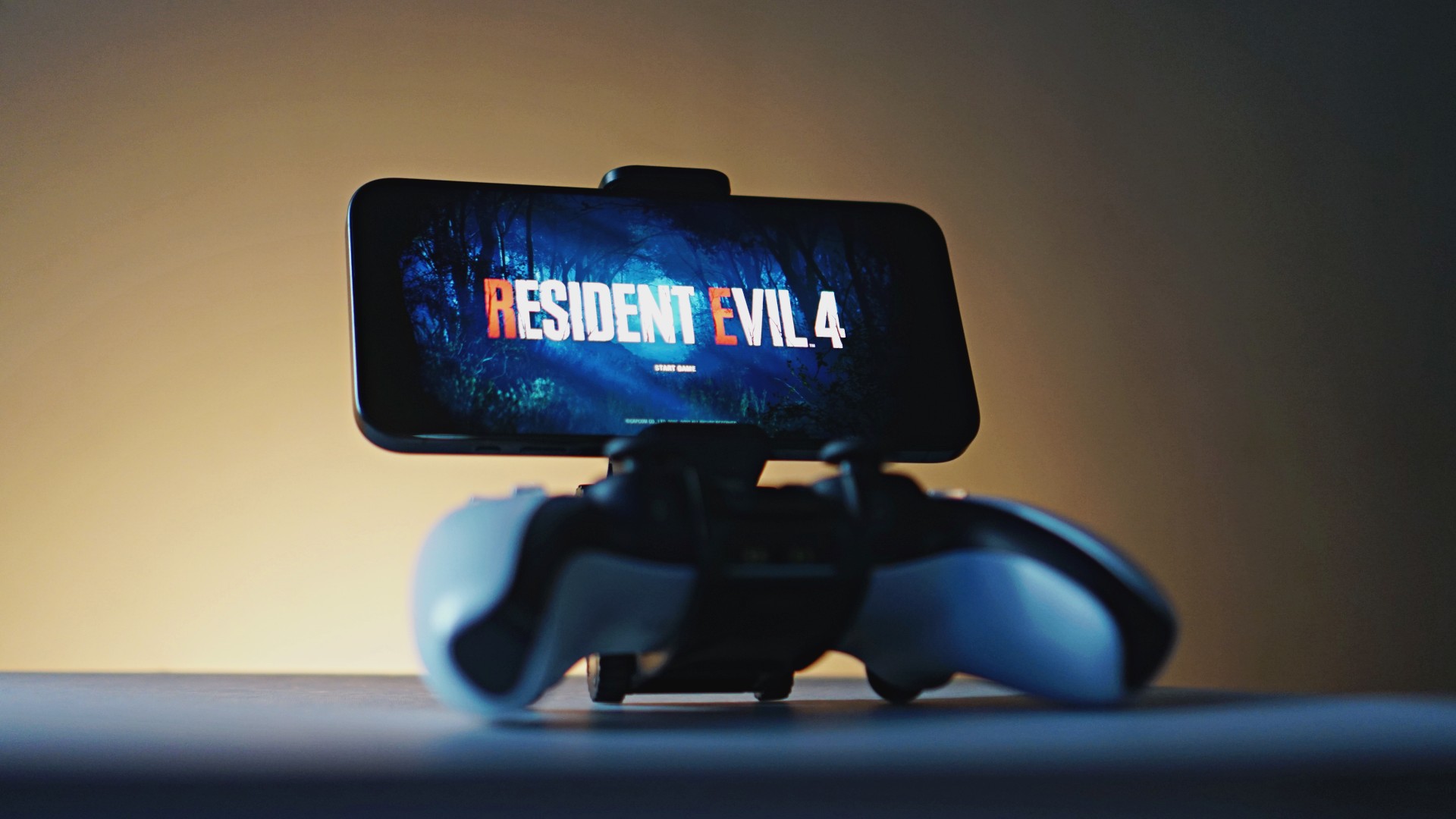
Last week, the iPhone Duo changed how you look at the ubiquitous smartphone. Foldables are in, and Apple is right there with it. But the company isn’t stopping with the foldable segment. Apple is reportedly working on its own branded game controllers.
According to Bloomberg, Apple has been working on a controller since last year. Further, a piece of code linked to macOS 27.4, spotted by MacRumors, includes references to two unknown gaming controllers.
Because Apple just concluded its huge event this month, it will likely be a while before we see confirmation of this controller. And it could be anything. Of course, because the Duo is fresh on our minds, the easiest answer is a mobile controller than can maximize the foldable’s ability to stand by itself. It could also use Apple’s larger screens like the iPad, the MacBook, or the Mac. Some even speculate that this could be Apple’s stronger push into the gaming market.
Outside of the actual hardware, the reports are also claiming that the controller will arrive by way of Beats, rather than from Apple itself. At first, the branding comes off as a surprise, but then again, Beats hasn’t really evolved past an audio brand in a long, long time. Is it time to revitalize Beats as something more than just a peddler of headphones?
SEE ALSO: First Look: Apple iPhone Duo
Accessories
New AGON gaming monitor features up to 1000Hz refresh rate
New level of speed, flexibility for competitive gaming

AGON by AOC has released the new AGON Pro AGP277QK dual-mode gaming monitor for the competitive segment.
This new offering features up to 1000Hz refresh rate at HD and 540Hz at QHD so gamers have the flexibility to prioritize either clarity or speed.
The 27-inch IPS gaming monitor comes with NVIDIA G-SYNC, synchronizing the monitor’s refresh rate with the GPU to help minimize screen tearing, stuttering, and input lag.
This is combined with 0.3ms MPRT and 1ms GtG response times for fast-moving action that is sharp and responsive, giving competitive players a clear visual advantage.
Moreover, the AGON Pro AGP277QK features VESA DisplayHDR 400 certification for enhanced contrast and more vivid, lifelike visuals.
Delta E < 1 color accuracy also provides precise color reproduction not just for gaming but even other scenarios like content creation.
For even smoother high frame-rate gameplay, MBR Sync combines motion blur reduction with variable refresh rate (VRR) technology. This helps maintain clarity during rapid movements.
The monitor also includes Low Input Lag, customizable Light FX ambient RGB lighting, Gaming Mode presets, and Shadow Control.
The display comes with HDMI 2.1 and DisplayPort 2.1 connectivity, along with a height-adjustable stand and G-Menu support.

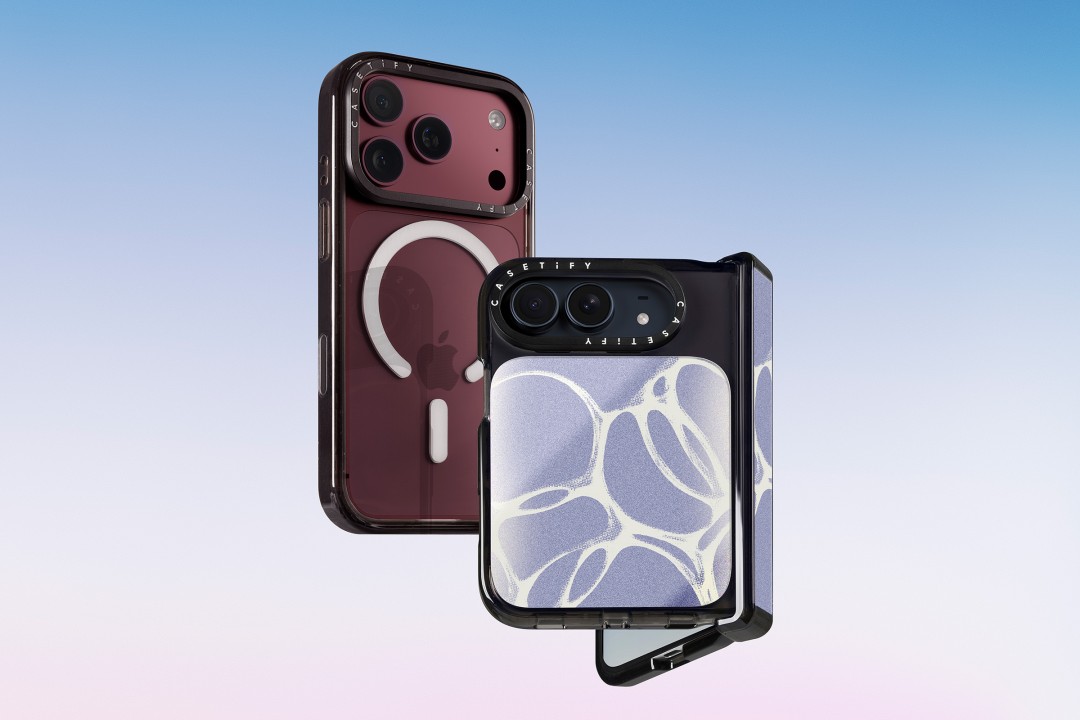
CASETiFY is launching a new collection of cases and accessories for the iPhone 18 series, updating some of its most popular designs with refined finishes, new protection features, and expanded customization options.
Impact Case
The collection is led by the Impact Case, CASETiFY’s best-selling case with more than 19 million units sold worldwide. It uses an internal EcoShock™ design and Duo-Lock by CASETiFY™ bonding for impact absorption and dispersion. The case is tested for drops of up to 8.2 feet and 4x Military Standard 810G. It also features a scratch-resistant Glaze finish, raised bezel, precision-engineered camera control button, and MagSafe and wireless charging compatibility.
The Ultra Impact Case builds on the same family with redesigned, more rounded corners and reinforced structures with internal air cells. It is tested for drops of up to 11.5 feet and 6x Military Standard 810G. It also has a slimmer profile, multiple design options, and MagSafe compatibility.
Both cases are available in Ring Stand variants. These feature a built-in metal camera ring stand that adjusts up to 150 degrees, with a screwless hinge designed for durability and stable hands-free viewing. Select models are also available with Glitter and Mirror finishes.
Ripple Case
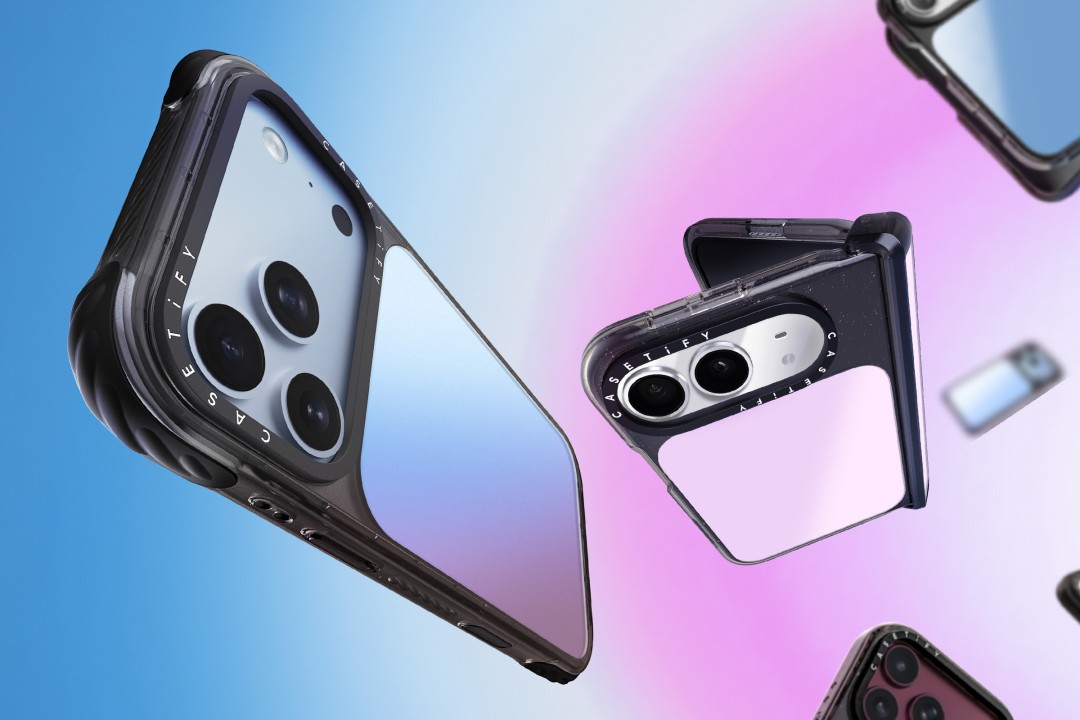
CASETiFY is also bringing its Ripple Case to the iPhone 18 lineup. The soft-touch silicone case features rippled edges and puffed corners, with protection tested for drops of up to 6.6 feet and 3x Military Standard 810G. New colorways include Banana, Dusty Blue, Blush Pink, and Fig, alongside Black and White.
For users who want more protection, the Bounce Case offers CASETiFY’s highest level of drop protection in the collection. Its Expanded Bounce Corners, TesseLock™ design, and enhanced Duo-Lock bonding support drop protection of up to 21.3 feet and 7x Military Standard 810G.
Alloy Ripple Case
The lineup also includes the Alloy Ripple Case, which reworks the Ripple’s sculptural design in aluminum with an EcoShock™ design and Duo-Lock bonding. It is tested for drops of up to 8.2 feet and 4x Military Standard 810G. The Cloud Case uses a quilted soft-touch design with pillowy bumpers and up to 6.6 feet of drop protection.
Beyond cases, CASETiFY is expanding its accessories with the Ripple Wallet, Grip Stands, Loop Grips, Jelly Wristlets, Bow Charm Wristlets, and other charm-compatible straps. The iPhone 18 cases range from USD 50 to USD 90 , while accessories range from USD 25 to $USD 45.
The collection is available beginning September 10 through CASETiFY. The company is also preparing a case lineup for the upcoming iPhone Duo, with its waitlist already live.


DJI Lito X1 review: Is this the best lightweight drone for creators?
Making a strong case as a travel companion and a capable B-cam!


REDMI Note 17 Pro Max review: A new breed born from AI greed
Welcome to the new normal


Marvel’s Wolverine review: When the claws come out
A brutal, cinematic superhero adventure

Smart launches LiveSmart App for exclusive deals
DJI Lito X1 review: Is this the best lightweight drone for creators?

Now Playing: Resident Evil

HONOR, Fidesmo partner for contactless payments across Europe, Middle East

Ford revs up Truck Month with extended 5-star care offers

TECNO MEGAPAD 2 review: Eyes on the size

realme 16T 5G with 8000mAh battery, IP69 Pro rating launches in PH

HUAWEI Pura X View is 2026’s first WIDE slab-type smartphone

REDMI reveals the refreshed Note 17 and Note 17 Pro series

REDMI Note 17 Series: Price, availability in Singapore

-
 News2 weeks ago
HUAWEI Pura X View is 2026’s first WIDE slab-type smartphone
-

 News2 weeks ago
The CAMON Slim 5G is TECNO’s latest ultra-slim smartphone
-
 News1 week ago
iPhone 18 Pro series: Price, availability in the Philippines
-

 IFA 20262 weeks ago
TECNO’s POVA 8 Pro gets a stealthy makeover
-

 Automotive2 weeks ago
Ford’s new Everest lineup brings V6 engine to the top, tech down the line
-
 Singapore1 week ago
iPhone 18 Pro series: Price, availability in Singapore
-

 Gaming2 weeks ago
Now Playing: Elden Ring Tarnished Edition
-

 Philippines2 weeks ago
Smart cuts 5G Home WiFi price