
News
POCO F8 Series: Price, availability in PH
POCO’s premium smartphones have arrived

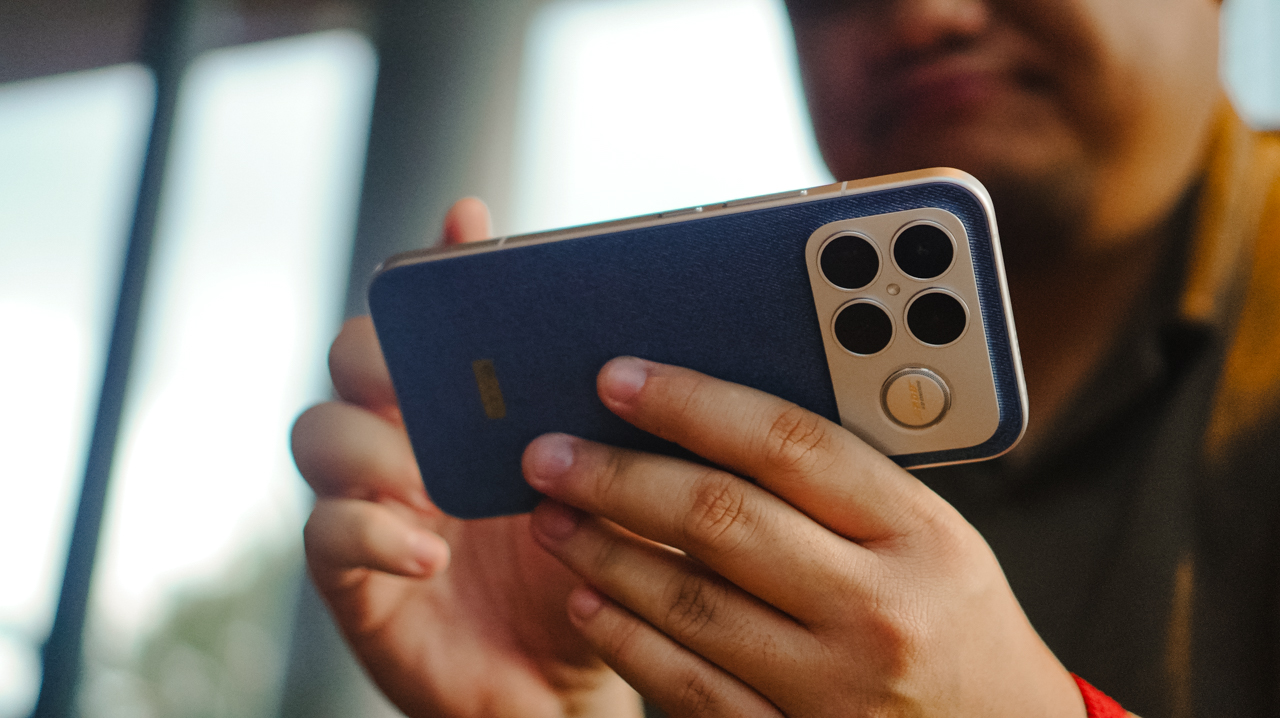
The POCO F8 Series is now official, with the brand unveiling the dual flagship devices via a global launch event in Bali, Indonesia.
The new smartphones are available in the POCO F8 Ultra and POCO F8 Pro variants; POCO has already made both variants available in the Philippines, for the following prices:
POCO F8 Ultra — Denim Blue, Black (Lazada exclusive)
- 12GB+256GB: PhP 39,999 (early bird: PhP 34,999)
- 16GB+512GB: PhP 42,999 (early bird: PhP 37,999)
POCO F8 Pro — Titanium Silver, Blue, Black
- 12GB+256GB: PhP 29,999 (early bird: PhP 26,299)
- 16GB+512GB: PhP 31,999 (early bird: PhP 28,299)
The early bird prices above are available for purchases made from November 26 to December 9. Customers can also score limited PhP 500 vouchers for the F8 Pro.
The launch marks POCO’s entry into the premium flagship segment — the brand’s boldest step yet while maintaining its mantra of value through high-performance technology.
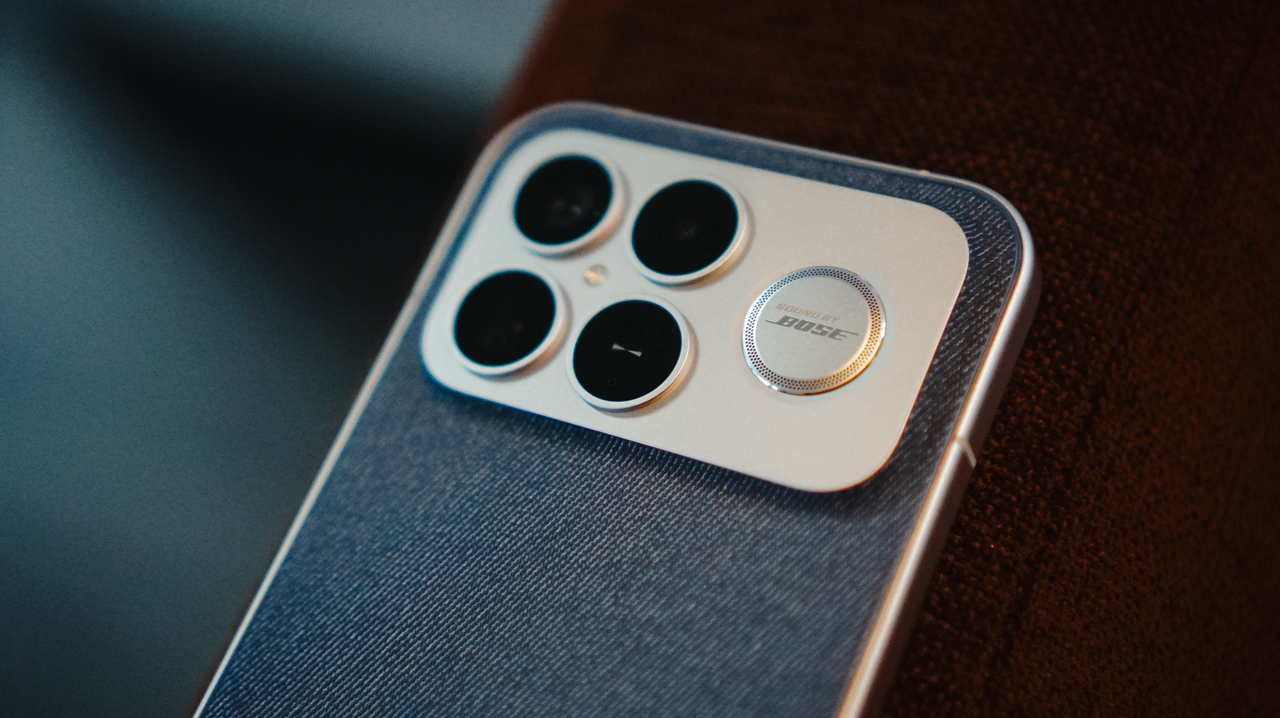
During the event, POCO also formally announced its partnership with audio company Bose, bringing Sound by Bose technology to both F8 smartphones.
Ultimate flagship statement
The series headliner, the POCO F8 Ultra defines what a next-generation flagship should be. It is powered by a Snapdragon 8 Elite Gen 5 processor and an upgraded VisionBoost D8 chipset.
This dual-chipset architecture unlocks the device’s full performance potential. Users can expect Smart Frame Rate up to 120fps, Super Resolution up to 1.5K, and Game HDR.
Meanwhile, the POCO F8 Pro runs on the Snapdragon 8 Elite mobile platform.
Both phones introduce AI Super Resolution through a new GEX module, specifically optimized for five titles, including Call of Duty: Mobile and Honkai: Star Rail.
Speaking of gaming, WildBoost Optimization also fine-tunes CPU and GPU load distribution for lower power consumption and less heat.
All of these are complemented by LiquidCool Technology which features a 3D dual-channel, dual-layer IceLoop system.
Both F8 series devices run on Xiaomi HyperOS 3 for intelligence and connectivity. Features include Xiaomi HyperIsland, Xiaomi HyperConnect for cross-device interconnectivity, and Xiaomi HyperAI for advanced tools for productivity.
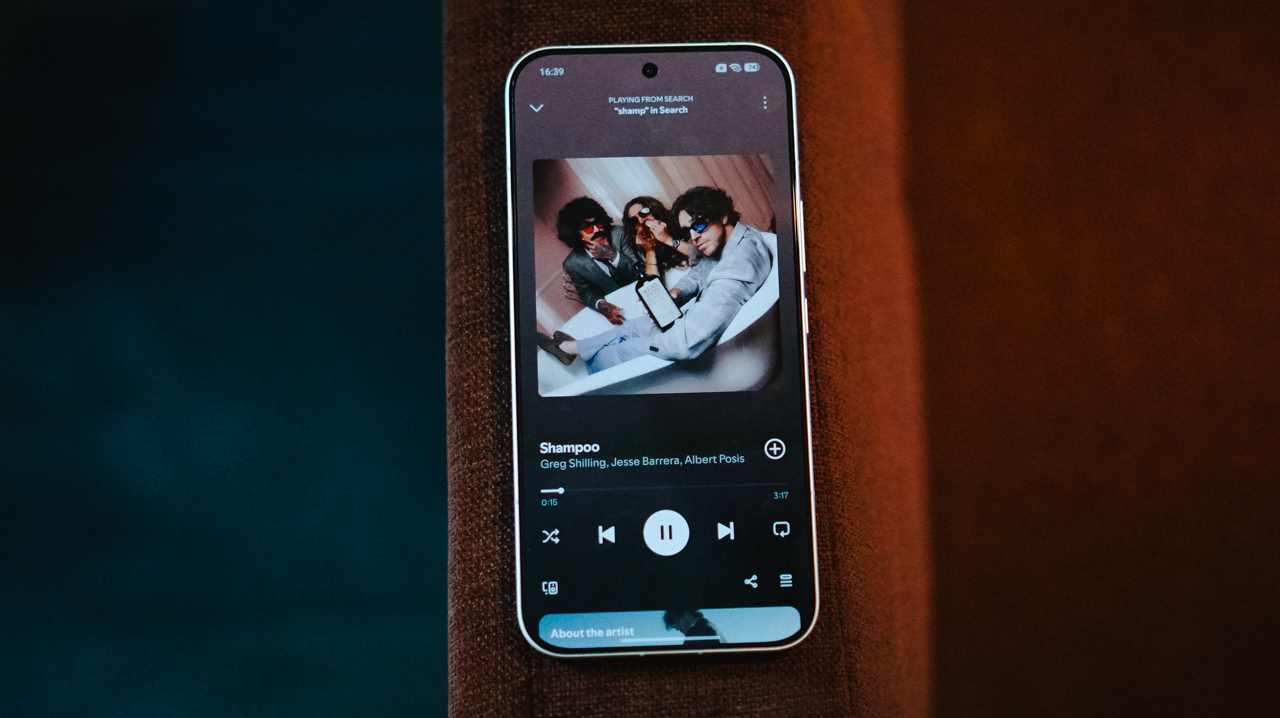
Shampoo by Greg Shilling, Jesse Barrera, and Albert Posis
Mobile audio experience redefined
Meanwhile, Bose helped develop a premium triple-speaker acoustic system for the F8 Ultra to enable rich bass, detailed sound, clear vocals, and an immersive soundstage.
On the visuals side, the F8 Ultra debuts the POCO HyperRGB display. Unlike traditional 2K OLED displays, the 6.9-inch panel adopts a full RGB subpixel structure where red-green-blue subpixels are fully used.
This system allows for 19.5% lower power consumption compared to the POCO F7 Ultra. On the other hand, the F8 Pro has a 6.59-inch display with the same features for up to 22.3% lower power consumption.
Ultra-grade photography
Bringing pro-level photography to the segment as well, the POCO F8 Ultra features a 50MP Light Fusion 950 sensor with OIS.
With a large 1/1.31-inch sensor, the main camera has 43% better light sensitivity. The system also reduces lens flare and glare, with its 1G+6P lens setup and precise multi-coating process.
Software enhancements include 1440p ultra-clear dynamic shots with EIS and HDR enhancement.
The F8 Ultra likewise comes with a 50MP 5x periscope telephoto lens for up to 5x optical zoom, 10x in-sensor zoom, and up to 20x Ultra Zoom.
Rounding out the triple 50MP camera setup is a 50MP ultra-wide shooter. In front, meanwhile, is a 32MP selfie camera.
Not to be left behind, the POCO F8 Pro has a 50MP 2.5x telephoto camera and a 50MP Light Fusion 800 main camera with OIS.
New POCO Pads also released
In addition to the new POCO F8 Series, POCO has also launched two new tablets: the POCO Pad X1 and POCO Pad M1.
The Pad X1 is powered by a Snapdragon 7+ Gen 3 and delivers stable 120fps in the most demanding scenarios.
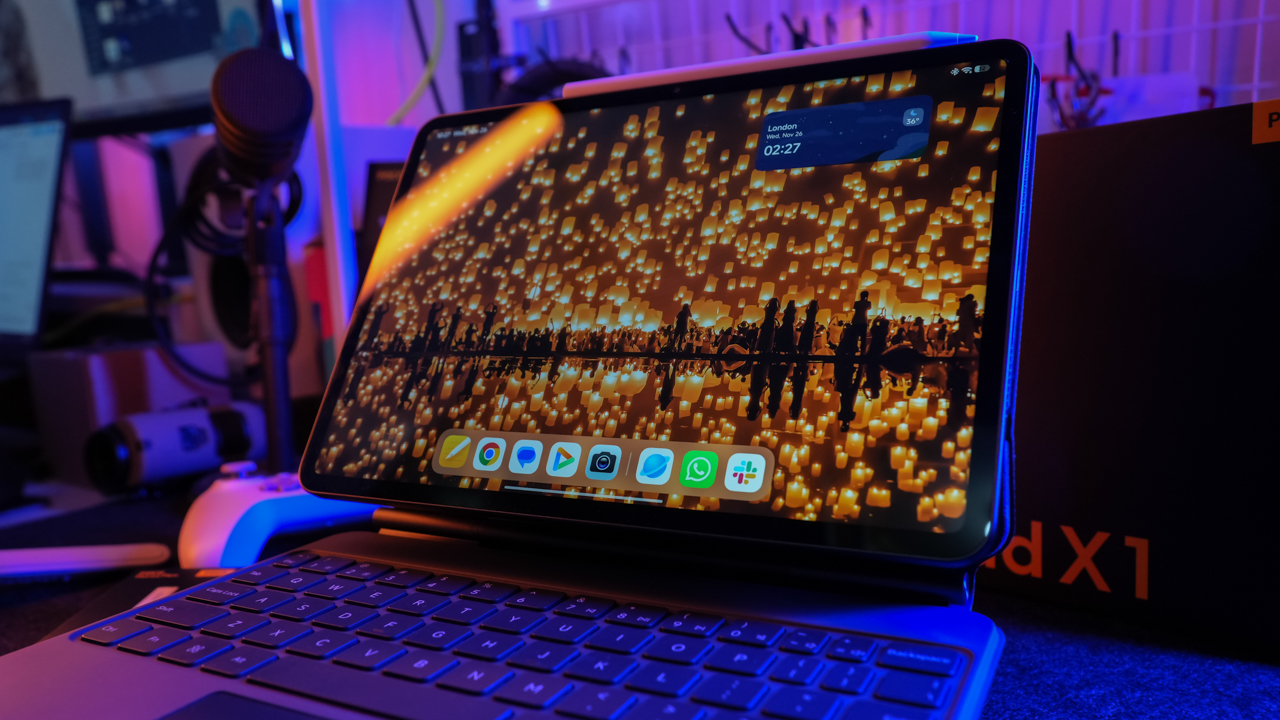
It has an 11.2-inch 3.2K display with up to 144Hz refresh rate and a 8850mAh battery with 45W turbo charging. The quad speakers are fine-tuned with Dolby Atmos and supports 200% volume boost.
For a larger screen, the POCO Pad M1 has a 12.1-inch 2.5K display with up to 120Hz refresh rate. It likewise has a quad-speaker system with Dolby Atmos, and a massive 12000mAh battery.
This slate is powered by a Snapdragon 7s Gen 4 and runs on Xiaomi HyperOS as well.






Entertainment
Max vs 100 will feature Max Verstappen race against 100 go-karters
The live event will stream at midnight on September 17.


As a child, one of my favorite thought experiments is to imagine who would win in a fight between my favorite characters at the time and a number of other random beings. For example, will Superman prevail against 100 Magnetos? Those are the ways I kept my young mind occupied. Now, as a former child, I still do the same thing but with more realistic people, like imagining if Steph Curry can win against 100 high schoolers. This week, ESPN and Disney+ are making one of those imaginary fights real: Formula 1 legend Max Verstappen versus 100 go-karters.
In an upcoming live event streaming exclusively on Disney+, Max vs 100 will pit the four-time world champion against 100 go-karters from everywhere in pop culture. This gaggle of 100 will include popular content creators such as Twitch streamer ExtraEmily, car photographer Larry Chen, and NBA shooting coach Chris Matthews.
All 101 drivers will race around one of the most iconic tracks in Formula 1 history, Silverstone in England. The track will be reconfigured to match the special race.
Of course, this is more than just a parade of go-karts. Max Verstappen will start at the back of the grid, meaning he has to overtake all 100 racers to win. Now, the Dutch driver is no stranger to winning from the back. In 2024, he won the Sao Paulo Grand Prix despite starting from P17 (out of 20 racers). Max vs 100, though familiar for the driver, presents a different challenge. Can he overtake 100 times to win the race?
Max vs 100 will stream live through Disney+ on September 17, 12:00am PHT.
Apps
Apple’s best feature to cure motion sickness is finally on Android
Google copies a good page from Apple’s playbook.
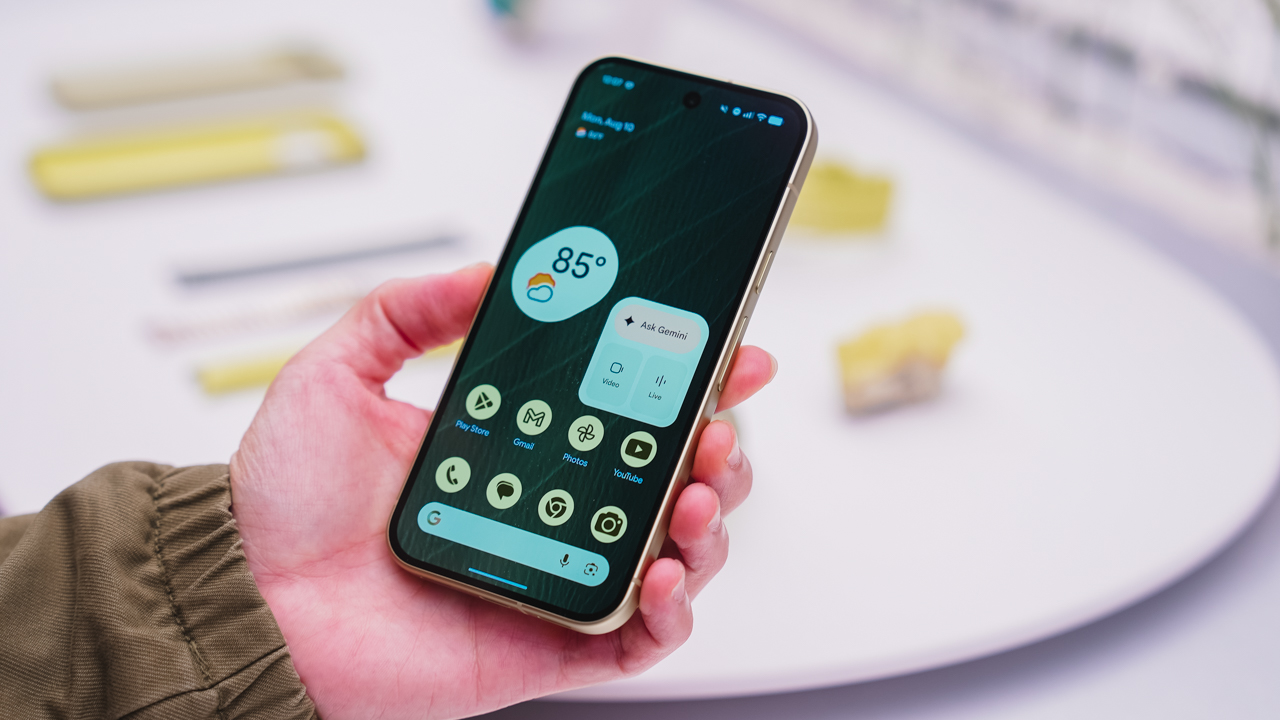
As an Android user, I’ve been jealous of iPhone users for a while now, but it’s not for the reason you might think. See, I’m ridiculously prone to motion sickness when I’m not driving. So, when I discovered that Apple has a software-based cure called Vehicle Motion Cues, I wanted it immediately. Now, Android does have third-party apps that do the same thing, but they’re not as good as a fully native version. Well, those dark, nauseating days are about to come to an end. Android 17 is finally getting a similar tool called Motion assist.
Before that, let’s rewind for a bit. What do these features do? How can they cure motion sickness?
Whenever you open Vehicle Motion Cues or Motion assist, the interface spawns a series of dots on the screen. These dots respond to movement. For example, if the vehicle turns to the left, the dots also go to the left, mimicking the movement. Without cues like this, the stationary nature of the screen clashes with our brain’s perception of movement. The disparity creates that feeling of nausea. Basically, our eyes are desperately trying to focus on the static screen, but our brains are telling us that we should be seeing motion. Having moving dots reorients our brain and places the phone inside our perception of movement.
Now, you can enable the same feature on your Android 17 device through Settings > All services > Motion assist under Personal & device safety. You can also set it so that the feature turns on automatically when the phone detects that you’re in a moving vehicle. Finally, you can also tweak the shape, color, and opacity of these dots.
Android 17’s Motion assist is rolling out now to compatible devices.
SEE ALSO: These are the best Android 17 features (if you hate AI)

The trifecta is complete. Almost a year after announcing their new hardware, Valve has finally unveiled the price tag of the Steam Frame, complementing the Steam Machine and Steam Controller revealed a few months ago.
Whereas the Steam Machine is a console of its own, the Steam Frame is a traditional VR headset with a pair of controllers for both hands. Unfortunately, despite being in a different segment, the headset is not immune to the rising prices of technology. The Steam Frame will start at US$ 1,059 for a 256GB model and can go up to US$ 1,299 for the 1TB model. On the plus side, each box will come Half-Life: Alyx packaged along with the headset.
Here’s a more detailed rundown of what you’re getting. The Steam Frame will ship with the Snapdragon 8 Gen 3 chipset, paired with 16GB of RAM. Each eye comes with a 2160 x 2160 LCD screen, putting out images at up t0 a 144Hz experimental refresh rate. As mentioned above, the headset will start with 256GB of storage but can go up to 2TB. It will come packaged with SteamOS 3 and a rechargeable 21.6Wh battery.
This might be a hard buy for some. The industry currently has more affordable options, for one. Also, virtual reality isn’t the most thriving segment of gaming today.
If you’re still decided on buying one, however, Valve is using its lottery system. Interested customers can sign up from now until September 17. The company will then randomize the purchasing order. Those who draw the first ones in the lottery can get a purchase email as soon as September 18. Meanwhile, anyone who registers after September 17 will automatically be put at the back of the queue.
SEE ALSO: Valve announces its own console called the Steam Machine


Marvel’s Wolverine review: When the claws come out
A brutal, cinematic superhero adventure

Setting your bedsheets ablaze with the Lovense Solace Pro
The closest proxy I could find where I'm guilty as sin


Now Playing: Elden Ring Tarnished Edition
Is the Switch 2 port worth the price?

Max vs 100 will feature Max Verstappen race against 100 go-karters

Apple’s best feature to cure motion sickness is finally on Android

Valve unveils price of the Steam Frame

Match Pulse: Passport-sized foldables

Burgundy is the new Black!

TECNO MEGAPAD 2 review: Eyes on the size

realme 16T 5G with 8000mAh battery, IP69 Pro rating launches in PH

HUAWEI Pura X View is 2026’s first WIDE slab-type smartphone

REDMI reveals the refreshed Note 17 and Note 17 Pro series

REDMI Note 17 Series focuses on long-term reliability


-
 News1 week ago
HUAWEI Pura X View is 2026’s first WIDE slab-type smartphone
-

 News1 week ago
The CAMON Slim 5G is TECNO’s latest ultra-slim smartphone
-
 Cameras2 weeks ago
DJI Osmo 360 II review: Going all-in on the ecosystem
-

 IFA 20262 weeks ago
TECNO MEGABOOK T15 360 unveiled at IFA 2026
-

 Gaming2 weeks ago
NBA 2K27 review: A two-way All-Star
-

 News6 days ago
iPhone 18 Pro series: Price, availability in the Philippines
-

 IFA 20262 weeks ago
TECNO’s POVA 8 Pro gets a stealthy makeover
-

 Automotive1 week ago
Ford’s new Everest lineup brings V6 engine to the top, tech down the line