
News
Razer launches smart glasses with TWS audio, blue-light filter
They’re called the Anzu smart glasses

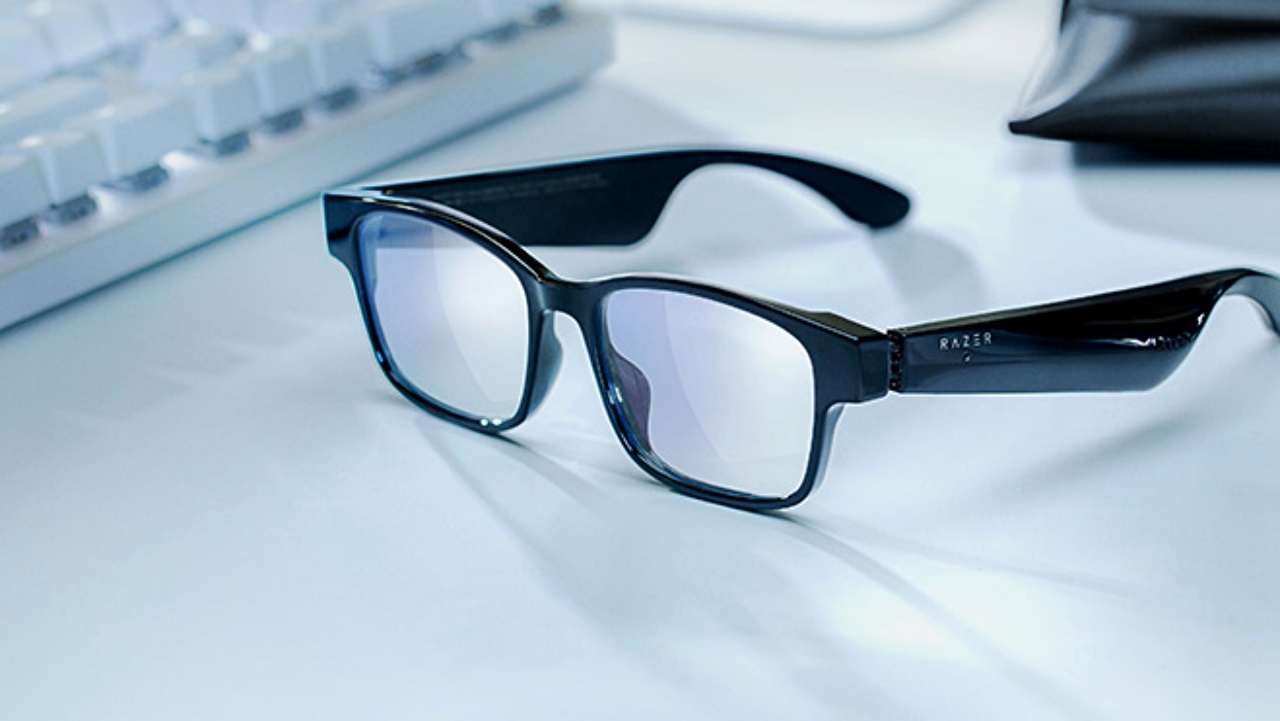
Wearables have become a close part of our life, and the most commonly found application is fitness tracking. Instead, Razer is going for niche segments, whose demand is only going to rise. Called the Anzu, they’re smart glasses that extend a voice assistant very close to your brain, literally.
The company’s first eyewear product combines blue-light filtering lenses with touch controls and open-ear audio for a very unique wearable. In-line with most smart glasses, the new Anzu works by integrating audio speakers into the glasses’ frame.

In terms of specifications, the Anzu smart glasses have built-in speakers with 16mm drivers in the temples. And you can summon Google Assistant via a touch-based gesture. Thanks to customized Bluetooth 5.1, an omnidirectional mic, and built-in speakers, the glasses promise a “smooth, stutter-free sound” and a hands-free experience for more than five hours at a time.
The glasses will be bundled with two sets of lenses that will include a clear pair with 35 percent protection against blue light and a pair of sunglass lenses offering 99 percent UV protection. Naturally, you can also opt for prescription sunglasses. White-light protection is essential in a work-from-home setup since it arrests harmful light from our display screens.
The glasses come with IPX4 water resistance. There are status indicators on the inner side of the temples, along with the microphones. The left and right speakers work independently; hence there are charging pin connectors on each of the temple areas.
“Razer Anzu has the juice to power through your day to support use during long work or gaming sessions,” the company boasted in a release. “When folded up and not in use, power is conserved by shutting off to achieve nearly two weeks of standby power.”
The Razer Anzu will cost US$ 199 and will be available in two designs, one rectangular and another with round frames.





Gaming
Nintendo’s latest toy is Super Mario Wonder’s Talking Flower
It tells the time and jokes around randomly throughout the day.


Late in 2024, Nintendo announced the Alarmo, the quirkiest alarm clock we would’ve grabbed immediately if alarm clocks were still a big thing. Today, the company has announced its next clock-like toy: the Talking Flower from Super Mario Wonder.
To me, the Talking Flower was a welcome addition to the franchise’s burgeoning cast of characters. The occasionally appearing character delivered timely quips that broke the monotony of the level’s music or provided meaningful tips.
However, there is a good number of players who find the flower irritating and mute the character altogether. If you’re part of this group, then Nintendo’s latest clock isn’t for you.
The new Talking Flower doesn’t have its own clock display. It only has a speaker, but it can announce the hour “mostly accurately,” according to Nintendo.
It’s an odd product. The brand wants the flower to be glitchy. Besides being “mostly accurate” with the time, it can also randomly blurt out alerts in one of its handful of available languages, outside of what the user set.
Further, it can comment on the weather and play music. It can also say “words of encouragement and silly quips” randomly throughout the day. The Talking Flower certainly has the spirit of the character it’s modeled after.
As for input buttons, it only has a single button. One press makes it say something outside of its scheduled prompts. Holding the button for two seconds silences the thing.
The Talking Flower will ship out on March 12. It will sell for US$ 34.99.
SEE ALSO: This Nintendo Alarmo clock looks absolutely adorable
Gaming
You can now race as teams in Mario Kart World’s Knockout Tour
The free update is rolling out now.

Mario Kart World needs little to no improvements. The latest entry in the legendary racing franchise introduced players to the open-world format. Taking advantage of that new format, the game also has a unique new mode called the Knockout Tour. Today, Mario Kart World is getting a surprising-but-welcome update which adds a team option to the survival mode.
In stark contrast to Mario Kart’s usual gameplay, Knockout Tour introduces a battle royale element to the game. The mode strings together a series of races seamlessly leading from on to the next via the open-world format. Players are eliminated for placing at or near the bottom after every leg, eventually leading to a three-way race to finish first.
Prior to today’s announcement, players race for themselves. But now, via a free update, players can now compete in two teams of twelve, three teams of eight, or four teams of six. They must still survive individually, but points are now collated based on teams.
The number of points derives from finishing position. Finishing in P1, for example, will bag the player a total of 50 points for that leg. Meanwhile, eliminated players get only a single point. At the end of the entire tour, everyone’s points are tallied up, and the win is awarded to the team with the most points.
The new mode can be raced locally or online. If the pool lacks players to round out the teams, the game will provide AI opponents.
The update is rolling out now and is for free.
SEE ALSO: I played Mario Kart World and it was a full-throttle race to the finish
Gaming
Forza Horizon 6 launches on May 19
The title features the series’ largest map ever and 550 available cars.
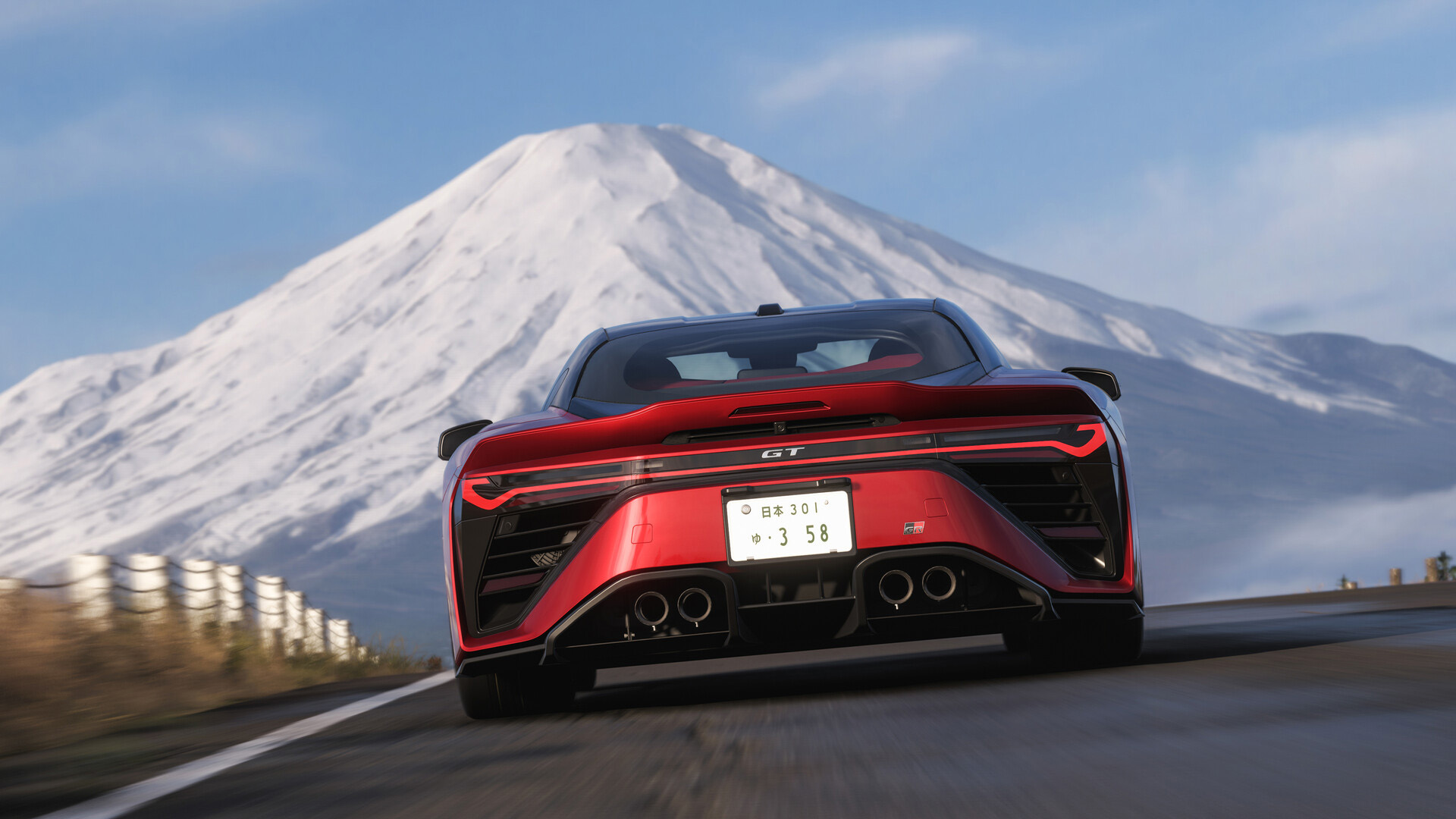
Following Mario Kart World’s switch to an open-world format, the gauntlet has been thrown for casual racing sims to keep up with Nintendo’s racing series. The Forza Horizon series, which hovers closer to arcade-like gameplay over technical racing titles, is next in line to build this year’s racing game via the upcoming Forza Horizon 6.
The new racing title was announced back in September during the Tokyo Game Show. Apropos to where it was announced, Forza Horizon 6 will finally take its fans to Japan. At the time, the announcement teaser shared nothing about gameplay, but there might not be a lot of surprises anyway.
Today, we finally found out whether Playground Games and Turn 10 Studios have something up their sleeves for this iteration. In a new showcase, the studio confirmed that the title will have its largest map to date with different biomes and seasonality. Normally, a larger map sounds groan-inducing, especially with so many bloated open worlds these days, but a car-based open-world game sounds like heaven.
For gameplay, players will start off as a visitor to the iconic Horizon Festival, which will take over Japan. By racing others with starter cars, they can earn access to faster cars, other parts of the map, and trickier races.
Right from the start, players will have access to 550 cars. They can install liveries on the windows now. As always, there are garages now, but there’s also a massive buildable area called The Estate. For the first time, players can put up buildings for their customizable area.
There’s so much to be excited for this time around. Forza Horizon 6 will launch for Xbox Series X|S and PC on May 19. The PlayStation 5 version will also launch later this year.
SEE ALSO: Forza Horizon 6 will be set in Japan


Now playing: Final Fantasy VII Remake INTERGRADE on Switch 2
Final Fantasy VII Remake, handheld again


HONOR X9d 5G review: Tougher, more long-lasting and optimized
Beyond all the marketing, it's a compelling all-around smartphone that actually works well


Redmi Note 15 Pro+ 5G review: The midrange fashion piece
Work-ready and style-friendly!

How a low-impact workout can turn your resolution into a habit

Nintendo’s latest toy is Super Mario Wonder’s Talking Flower

You can now race as teams in Mario Kart World’s Knockout Tour
Now playing: Final Fantasy VII Remake INTERGRADE on Switch 2

Forza Horizon 6 launches on May 19

Razer teams up with BLACKPINK for limited-edition gear

HONOR X9d 5G launches in the Philippines: Price, preorder, availability

HONOR WIN headlines the first 10,000mAh smartphone with built-in fan

Xiaomi 17 Ultra debuts as 2025’s last full-fledged flagship

OPPO A6 Pro: Adequate tool, no definitive punch


-

 Reviews1 week ago
POCO M8 Pro review: Goin’ loco over this POCO
-

 News5 days ago
Infinix NOTE Edge debuts: High-end features for accessible pricing
-
Reviews1 week ago
Redmi Note 15 Pro+ 5G review: The midrange fashion piece
-

 Reviews1 week ago
Mijia Smart Audio Glasses review: Immerse yourself in the music
-

 CES 20262 weeks ago
Anker, eufy, soundcore unveil next-gen products at CES 2026
-

 CES 20262 weeks ago
Best of CES 2026: AI Everything!
-

 Features1 week ago
Can the REDMI Note 15 Pro+ 5G Survive?
-
 News1 week ago
REDMI Note 15 Series unveiled: Price, availability in the Philippines