
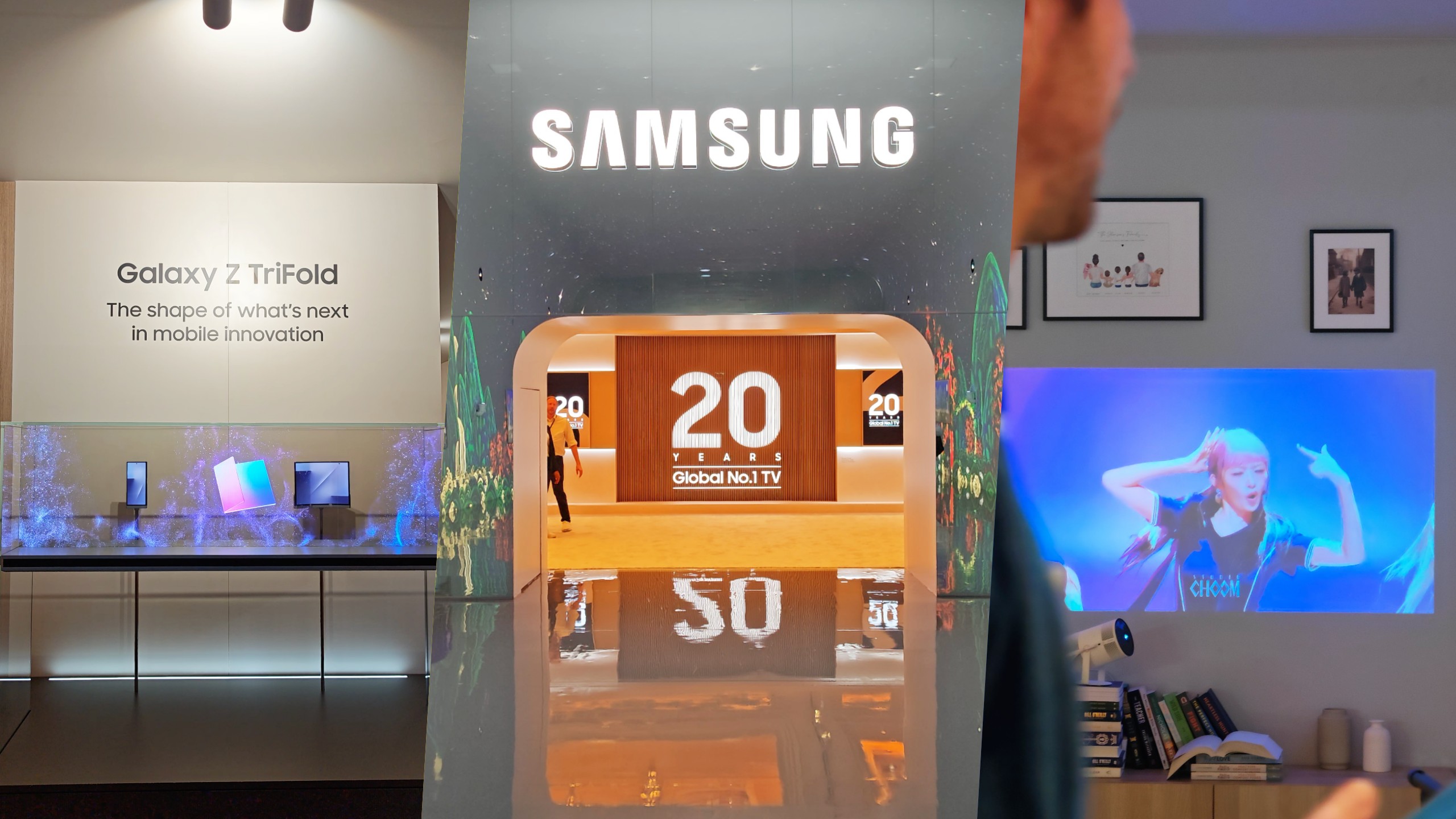
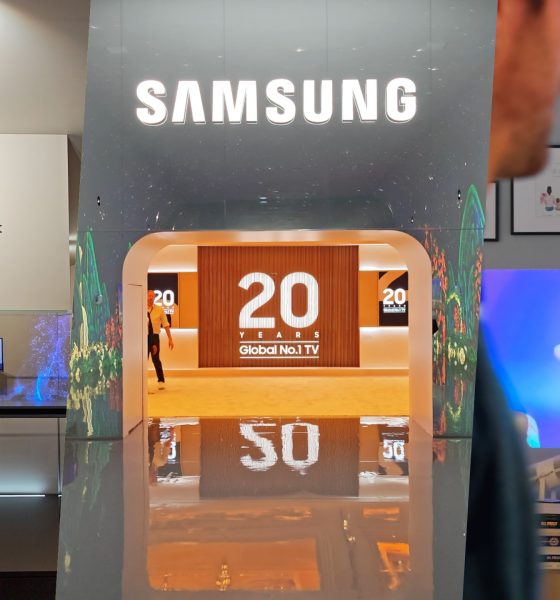

CES has always been about showing what’s possible with technology. At Samsung’s First Look session for CES 2026, the company leaned into that idea—not by unveiling a single hero product, but by showing how its entire ecosystem can work as one.
Samsung showcased plenty of familiar hardware. Robot vacuums. Washer-dryer combos. The Frame TVs. Even the attention-grabbing Galaxy Z Trifold made an appearance. But the real focus wasn’t any one device.
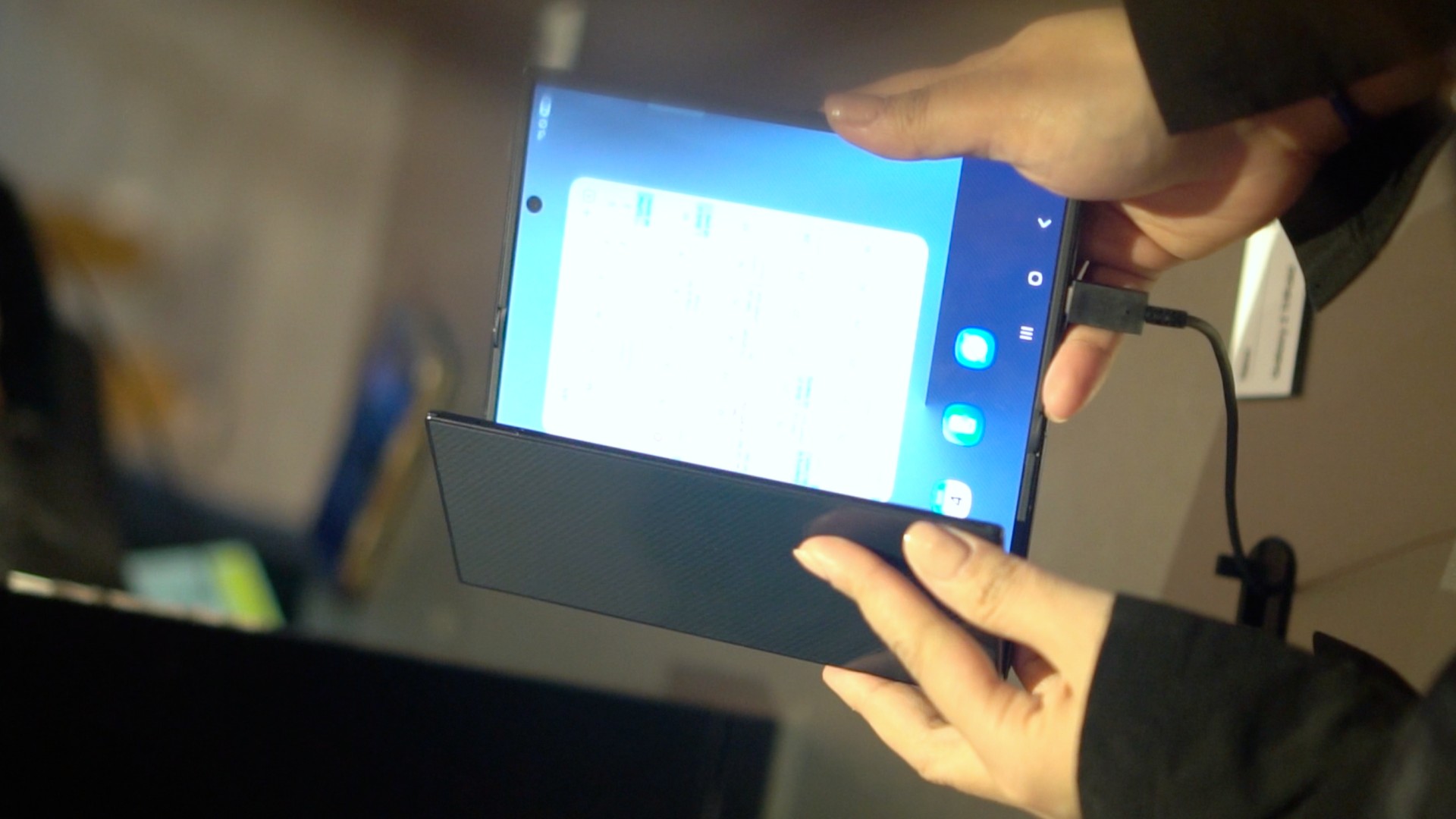
It was how all of these products connect end-to-end—and how easily they can be controlled through a Samsung Galaxy phone or watch.
This is what Samsung now calls its vision of being a “companion to AI living,” and at CES 2026, it was less about futuristic promises and more about everyday flow.
AI as an ecosystem, not a feature
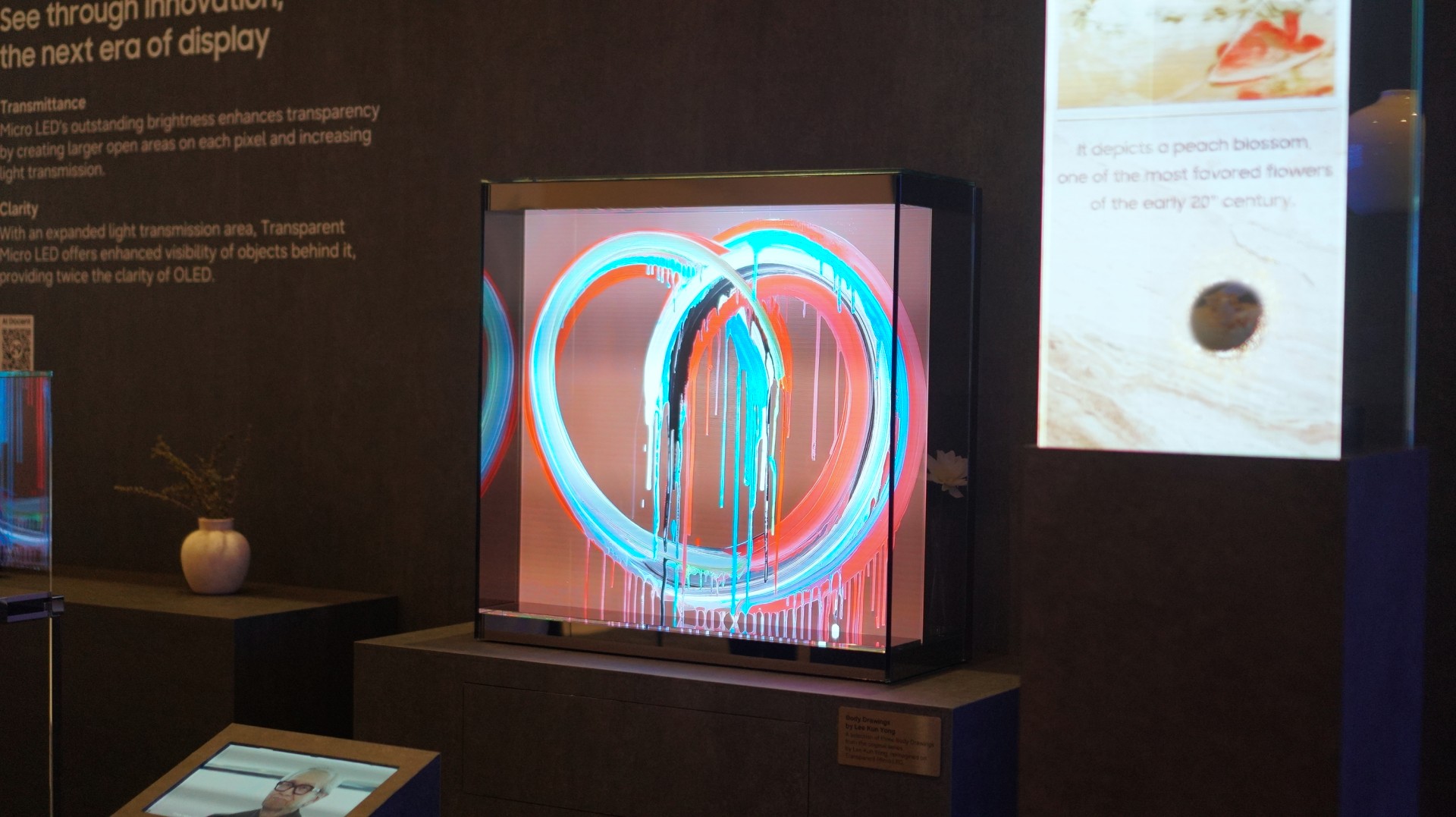
At The First Look, Samsung framed AI not as a checkbox feature, but as a foundation that runs across mobile, displays, home appliances, and services. The idea is simple: devices shouldn’t feel like separate tools. They should behave like one system that understands routines, preferences, and context.
That theme carried across the exhibition floor, where displays showed how TVs talk to kitchen appliances, how wearables feed into home routines, and how SmartThings quietly connects it all in the background.
Samsung executives positioned this scale as the company’s advantage. With hundreds of millions of connected SmartThings users worldwide, the ecosystem has enough real-world data to move AI from reactive to assistive—and, eventually, proactive.
The TV becomes an active companion

On the display side, Samsung’s vision pushes TVs beyond passive viewing. The company introduced Vision AI Companion, a system designed to guide what you watch, listen to, and even eat—based on what’s on screen and what’s happening around you.
At the center of the showcase was the massive 130-inch Micro RGB display, a statement piece that set the tone for Samsung’s 2026 TV lineup. But more interesting than its size or picture quality was how Samsung wants users to interact with their screens.

From adjusting sound levels during sports broadcasts to pulling up recipes inspired by a cooking show, the TV becomes a hub for lifestyle decisions. Those recommendations can then be sent directly to other devices—like kitchen appliances or mobile screens—without breaking the flow.
Samsung also confirmed that its 2026 TVs will support seven years of Tizen OS upgrades, positioning the TV as a long-term platform rather than a disposable display.
When appliances start doing the thinking
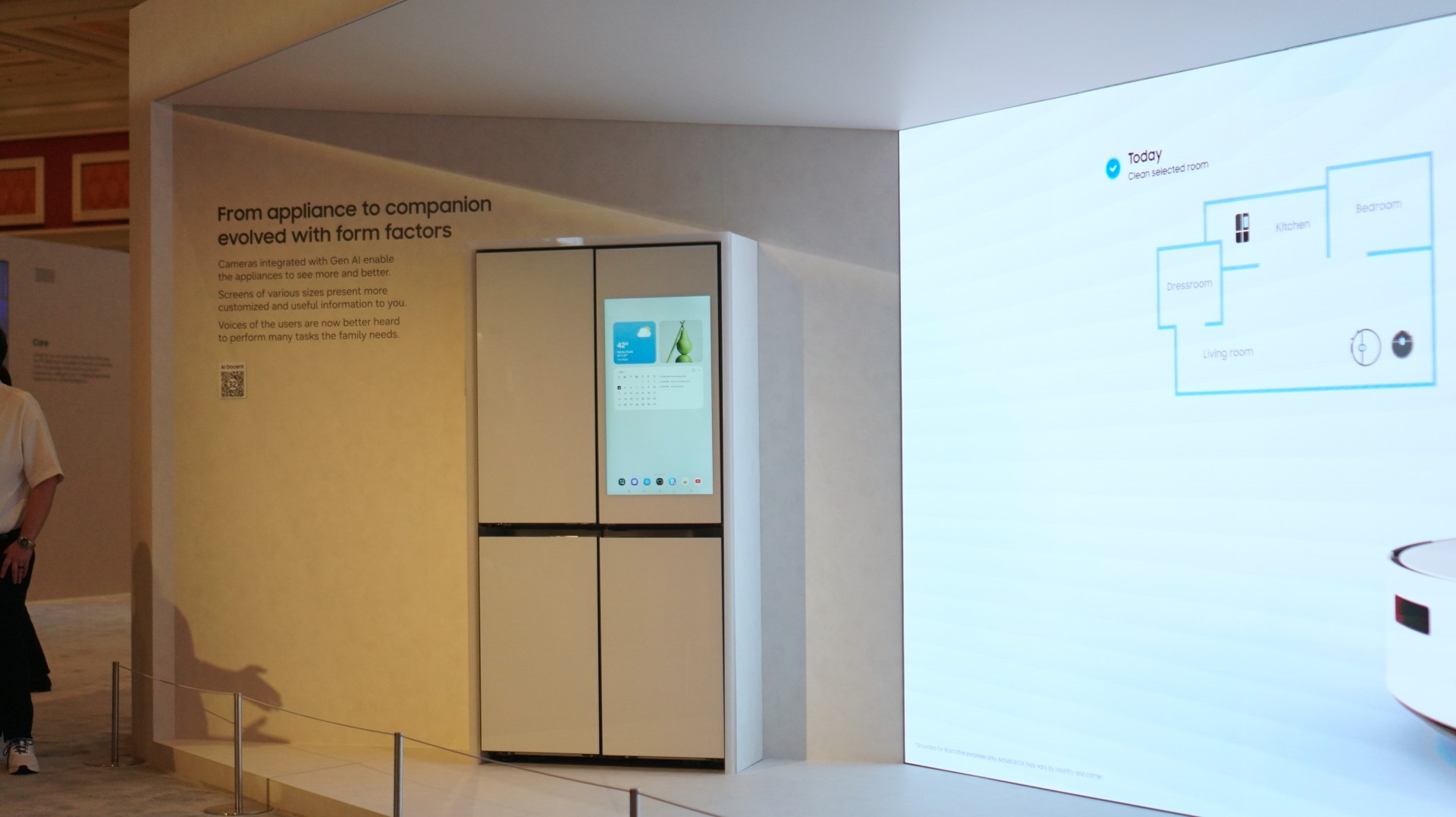
In the home, Samsung’s AI push focused on reducing friction in daily chores. The upgraded Family Hub refrigerator now uses AI Vision powered by Google Gemini to better track food items as they go in and out, making meal planning more automatic.
Features like “What’s for Today?” turn the fridge into a decision-maker, suggesting meals based on what’s available—or offering something random when you’re tired of choosing. Those recipes can then be sent to connected cooking appliances, creating a surprisingly smooth loop from planning to execution.
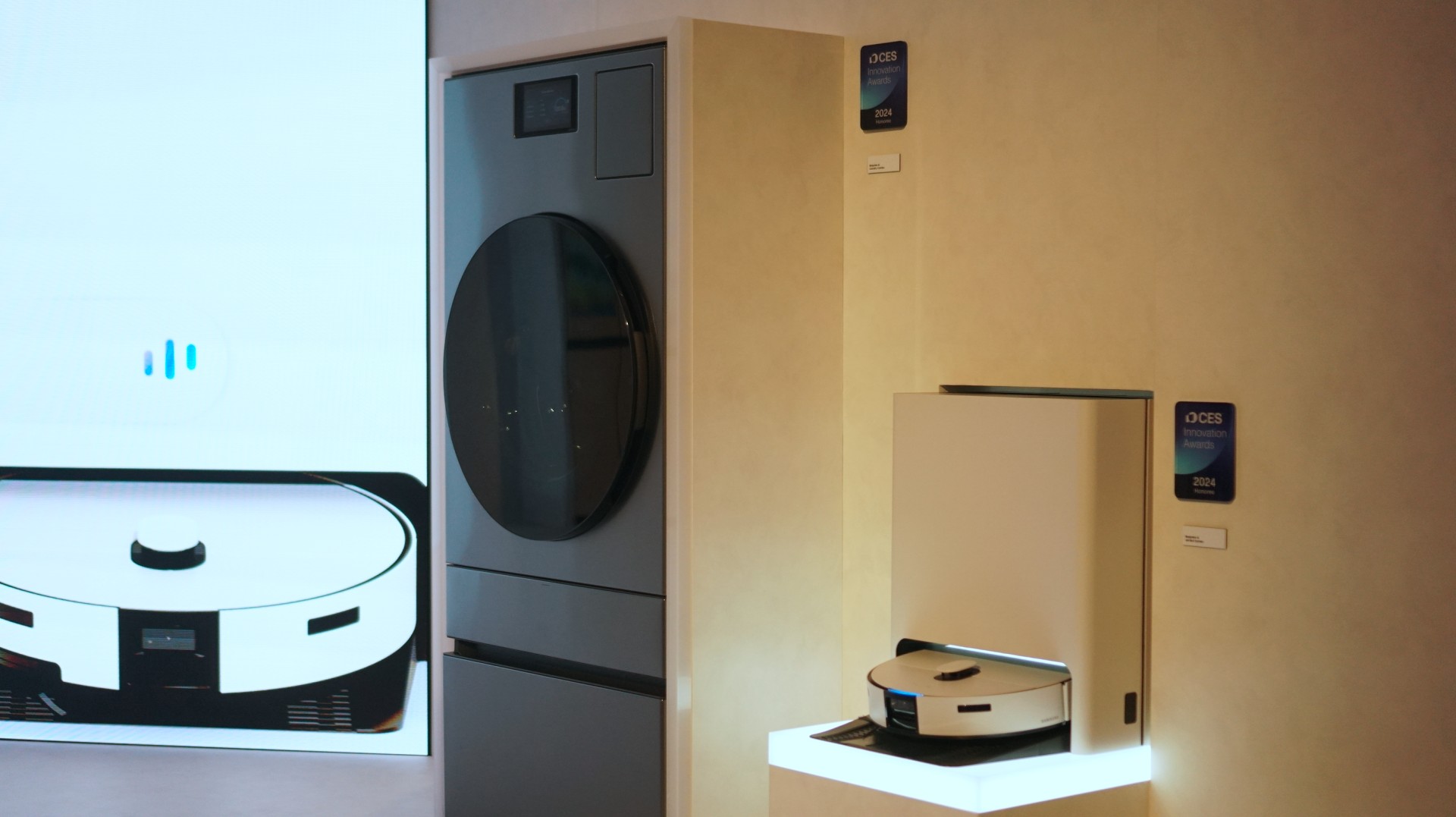
Laundry and cleaning also got similar treatment. The Bespoke AI Laundry Combo removes the need to transfer loads, while the AirDresser tackles wrinkles with minimal effort. Even the robot vacuum now doubles as a home monitor, capable of recognizing spills, navigating intelligently, and responding to conversational voice commands.
It’s all designed to make the background tasks of daily life fade into the background even more.
From reactive care to proactive wellness

Samsung also outlined a longer-term vision for health, where phones, wearables, and home devices work together to spot patterns before they become problems.
The company highlighted future plans around personalized exercise and sleep coaching, nutrition suggestions tied to what’s in your fridge, and early detection of potential health concerns. If something looks off, the system could alert users and connect them with healthcare providers through integrated platforms.
It’s an ambitious shift—from reacting to health issues to preventing them—and one that leans heavily on trust, data security, and accuracy.
Security as the quiet backbone

Underpinning the entire ecosystem is Samsung Knox and Knox Matrix, which the company positions as essential to making AI feel personal without feeling invasive. As AI models evolve, Samsung says its security systems are evolving alongside them, focusing on protecting data not just in use, but also during training and processing.
It’s a necessary reassurance, especially as AI becomes more embedded in private spaces like homes, kitchens, and bedrooms.
Tech, culture, and the Samsung brand

Ahn Hyo Seop at Samsung’s First Look event for CES 2026
The event also leaned into culture as part of the experience. Actor Ahn Hyo Seop (KPop Demon Hunters, Business Proposal) appeared as Samsung’s TV ambassador, while K-pop elements were woven throughout the exhibition. Several displays featured the Studio Choom performance of IVE’s “XOXZ.” One of their members — Jang Wonyoung — is a long-time Samsung Galaxy ambassador.
It was a reminder that Samsung’s vision of AI living isn’t just about efficiency—it’s also about entertainment, identity, and how technology fits into modern lifestyles.
A quieter, more confident CES message

At CES 2026, Samsung didn’t try to win attention with one loud announcement. Instead, it presented a calmer, more cohesive idea: that the future of AI isn’t a single breakthrough device, but a network of products that understand each other—and, ideally, you.
If Samsung can make that ecosystem feel as seamless in real homes as it did on the CES floor, “AI living” might finally start to feel less like a buzzword and more like a daily convenience.




THE Michael Josh just got back from the Consumer Electronics Show (CES) in Las Vegas — the annual tech event that attracts all the biggest tech brands.
One of which is none other than ASUS, Taiwan’s biggest computing giant. They have launched the first wave of Windows laptops for 2026. There’s a full lineup — models for everyday folks, creators, and gamers.
However, we are focusing on these Zenbooks favorites the show: the updated 2026 Zenbook DUO and Zenbook A14, as well as a bigger Zenbook A16 model.
Eager to know more about them? Here’s our Spotlight on the three power-packed ASUS Zenbooks at CES 2026.
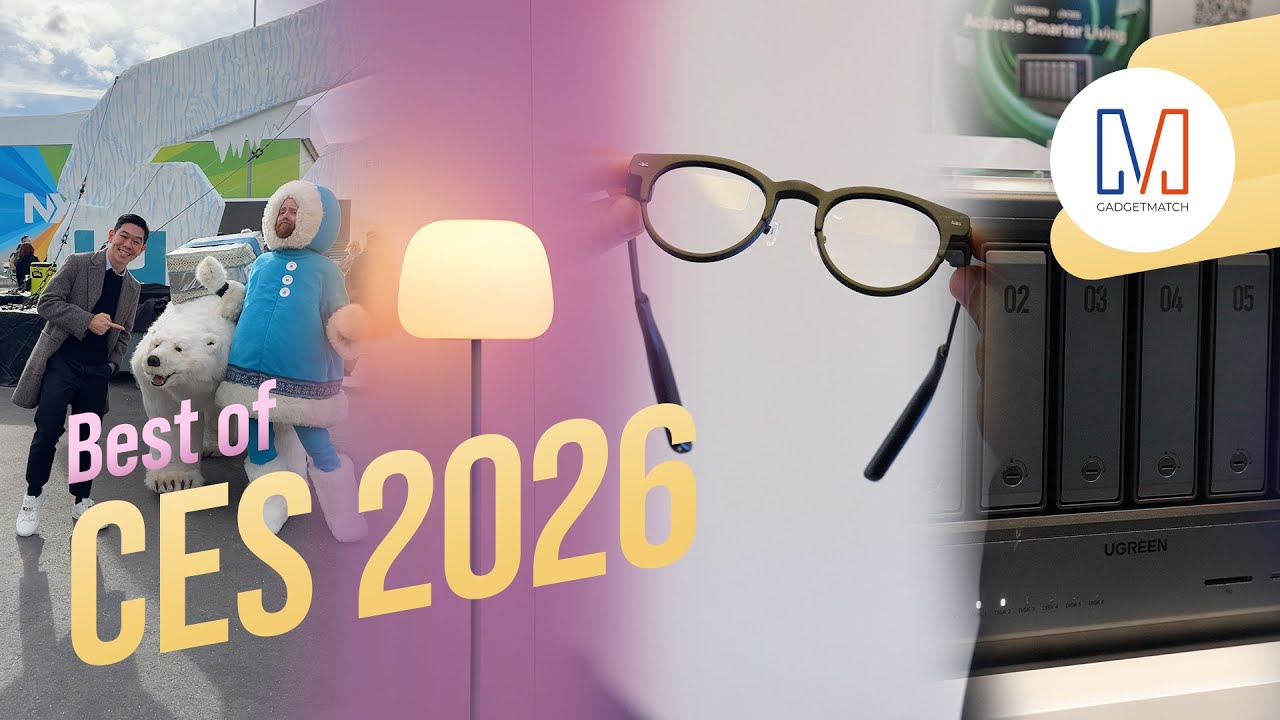
AI, displays of many different kinds, and a whole bunch of cool gadgets — that’s what CES is all about.
And just like we do every year, we’re in Las Vegas to check them out.
Head over to our Best of CES 2026 video to find out which gadgets made the cut.
MemoMind https://bit.ly/4qOJ9jq
XGIMI at CES https://bit.ly/49zE4oa
Euhomy https://bit.ly/3N89T01
Pre-order IceLeopard: https://bit.ly/3Nd1cl2
Govee’s new products in 2026 https://bit.ly/goveeces2026
UGREEN NAS iDX! Reserve with $30 and save up to $1040: https://nas.us.ugreen.com/CLeXc6
UGREEN’s new products in 2026: https://official.ugreen.com/PPcJvF
CES 2026
Anker, eufy, soundcore unveil next-gen products at CES 2026
Lineup includes Innovation Awards honorees

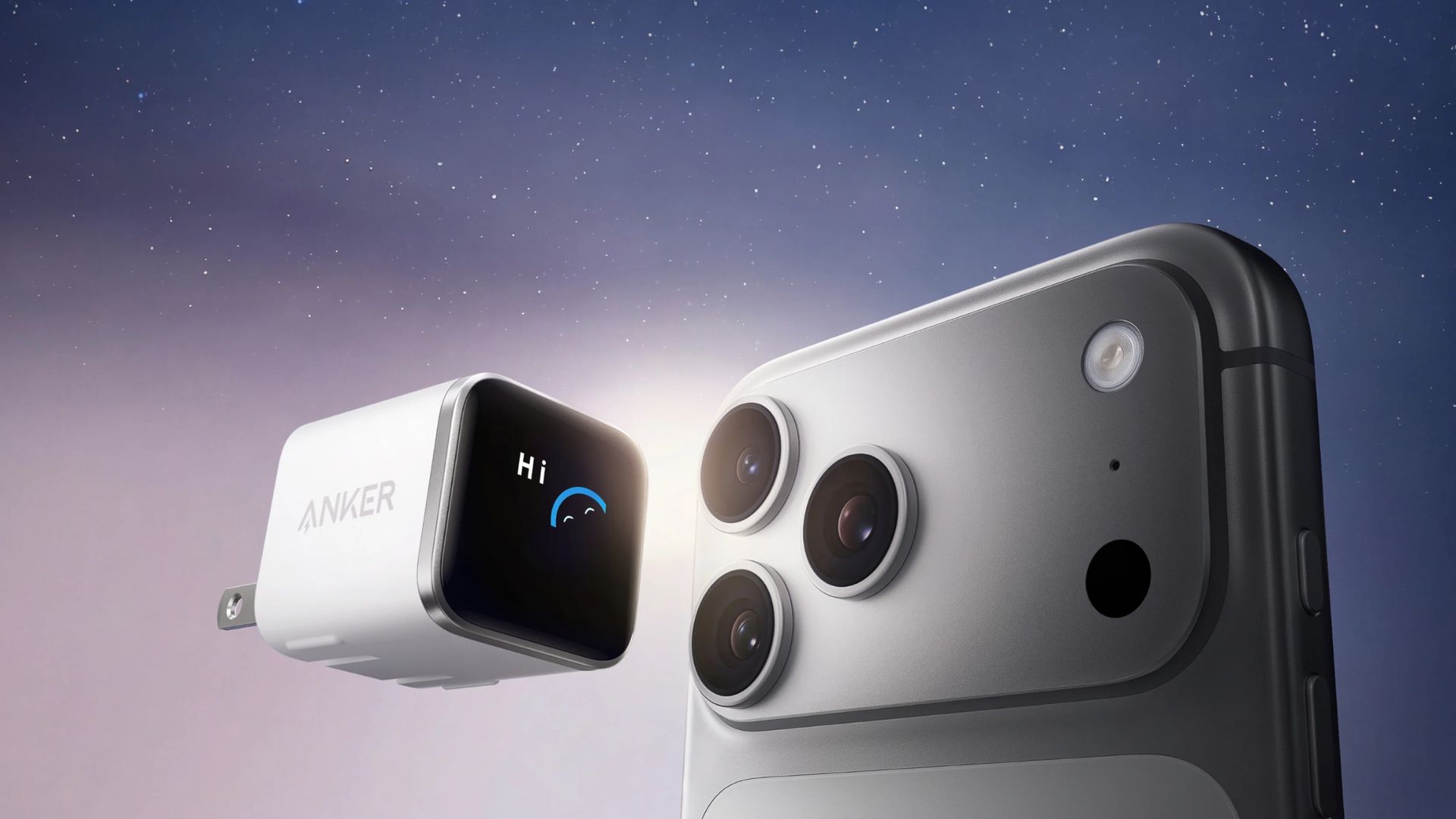
Anker Innovations released a full slate of next-generation products at CES 2026, including the latest offerings under their brands Anker, eufy, and soundcore.
Key products that the company premiered at the event include these CES 2026 Innovation Award honorees:
- Anker Prime Charger (160W, 3 Ports, Smart Display)
- Anker SOLIX C1000 Gen 2
- eufy Robot Vacuum Omni S2
- soundcore AeroFIt 2 Pro
The Anker brand focused on introducing a next-generation portfolio of charging solutions. These come with smarter device recognition, speed, and efficiency, as well as smarter visual interfaces, faster Qi2 25W wireless performance, and AnkerSense View and ActiveShield 5.0.
Leading the lineup is the Anker Nano Charger which identifies the iPhone model in seconds. It packs 45W fast charging in a compact design, and features TÜV–Certified Care Mode.
This model is priced at US$ 39.99 and will be available in late January.
There’s also the Anker Prime Wireless Charging Station, delivering up to Qi2 25W high-speed wireless charging for iPhones in a compact, 3-in-1 foldable design. Its Airflow cooling system ensures stable, efficient charging for multiple devices.
This offering is priced at US$ 149.99 and will be available in Q1 2026.
In addition, there’s the Anker Nano Docking Station which is a 13-in-1 tool with a Triple Display and built-in 6-in-1 removable hub. It delivers up to 4K resolution on a single display, up to 100W upstream charging, and 10Gbps data transfer.
This specific product is now available for US$ 149.99.
Anker also previewed the Anker SOLIX E10 smart hybrid whole-home backup solution.
eufy
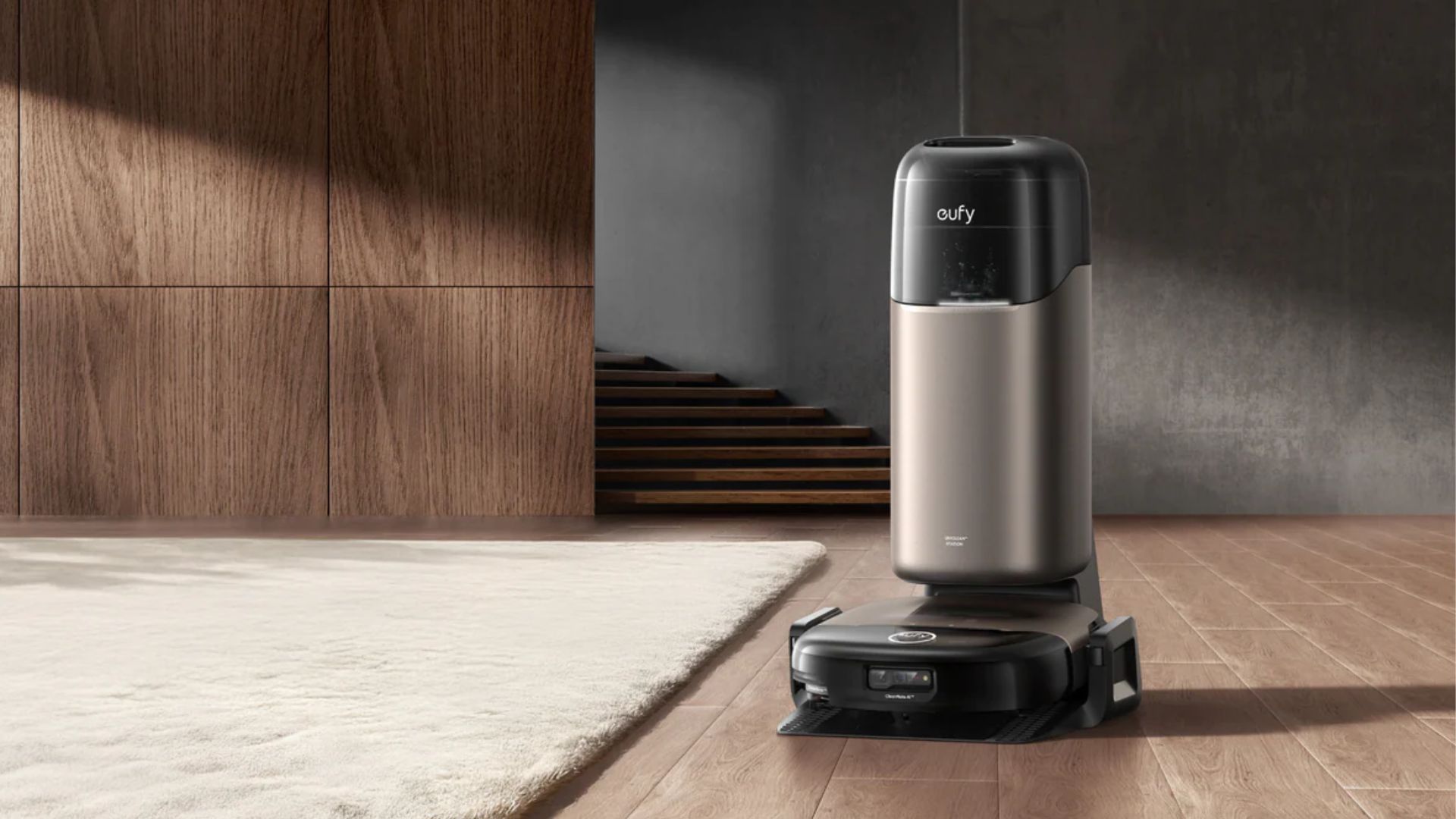
On the other hand, the eufy Robot Vacuum Omni S2 comes with the brand’s HydroJet mopping tech and a long-lasting 30kPa AeroTurbo suction.
The S2 introduces CleanMind AI, which can identify floor types and room layouts to automatically adjust cleaning mode, suction, scrubbing force, and even wheel height.
The smart home cleaning solution generates a hypochlorous acid and ozone water solution right in the water tank as well. Plus, with a built-in air freshener, three interchangeable scents release fresh fragrance to areas.
The product officially launches on January 20 for US$ 1,599.99 via Amazon and the eufy website.
Other products under eufy that were launched include:
- eufy Bottle Washer S1 Pro: US$ 469.99, available from February 9
- eufy Video Doorbell S4: US$ 279.99, available Q1 2026
- eufy Solar Wall Light Cam S4: US$ 199.99, Q1 2026
- eufy Smart Lock E40: US$ 299.99, Q1 2026
soundcore

Lastly, soundcore has launched the AeroFit 2 Pro, the first dual-form earbuds that enable both open-ear listening and active noise cancellation in a single design.
The earbuds support two distinct modes: Open-Ear Form and ANC Form. Users can switch from these modes, depending on the situation.
It is now available on soundcore.com for US$ 179.99.
The brand also unveiled the Sleep A30 Special, which features a triple noise reduction system. It combines ANC, passive isolation, and adaptive snore-masking technology to reduce disruptions across multiple frequency ranges.
This offering is in collaboration with Calm, supporting free sleep stories directly through the soundcore app.
It is priced at US$ 199.99 and is now available for preorder.
Other offerings include:
- soundcore Boom Go 3i speaker: US$ 79.99, available between early February to mid-March 2026
- soundcore Nebula P1i projector: US$ 369, available early 2026
- soundcore Nebula X1 Pro theater station: US$ 4,999
- Nebula X1 Pro with 200-inch inflatable screen bundle: US$ 6,998, available Spring 2026

JBL Sense Pro review
My daily driver met a loud and capable rival in this quest for a superior training companion.

Shokz OpenFit Pro: Somewhere between awareness and focus
Find your balance

Why this 180-degree gimbal projector is a “small win” for solo living
At $200, the XGODY N6 Pro transformed my one-bedroom apartment into a sanctuary of independence
JBL Sense Pro review

LE SSERAFIM Chaewon flexes Galaxy S26 Ultra Privacy Display

Power Mac Center opens 1st branch in Boracay

Samsung develops QuantumBlack: Low-reflection, high-durability QD-OLED film

vivo X300 Ultra wants to beat the iPhone 17 Pro Max in pro video


-
 Reviews2 weeks ago
POCO X8 Pro Max review: A new beast from the far east
-

 News2 weeks ago
POCO X8 Pro Series: Price, availability in the Philippines
-

 Reviews2 weeks ago
POCO X8 Pro Iron Man Edition review: Midrange phone in superhero armor
-
 Philippines2 weeks ago
The HONOR X8d is serviceable
-
 News2 weeks ago
POCO X8 Pro Series launches in Singapore with early bird prices
-

 Gaming1 week ago
WWE 2K26 lets you live out all the fantasy matches you could want
-
 News2 weeks ago
POCO introduces X8 Pro Series with Dimensity 9500s
-

 Reviews1 week ago
Galaxy Buds4 Pro review: I thought I was done with in-ears