
Gaming
Senua’s Saga: Hellblade 2 comes face to face with past demons
Finding new meaning in suffering

Imagine yourself rising from the dead with an insatiable thirst for revenge, only to carry a curse of a literal thousand voices upon returning. To deal with the burden of having an entire community of souls scream in your head about how you failed them, how they’re guiding you to where you need to be — it’s just all too much for any regular human being.
Hellblade introduced us to such a character in Senua, who was willing to go through hell and back for a person she loved. In a near twist of fate, she was consumed by darkness and the souls of her entire clan lost in her thoughts. However, she had learned to accept her reality. She hoped that this newfound power would lead her to a bigger purpose ahead.
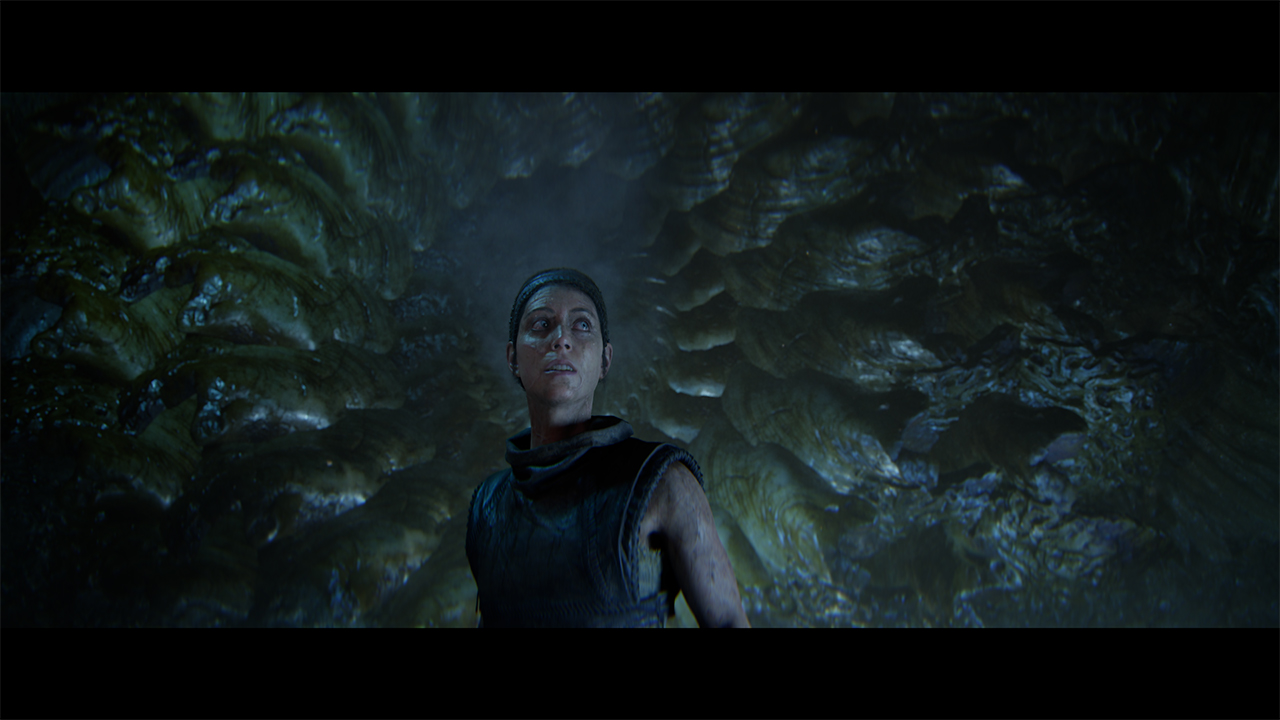
I had zero expectations heading into Senua’s Saga: Hellblade 2 other than what the title screen would show me. Honestly, I saw that ominous image with a face and just thought of how horrifying this game was going to be. I didn’t realize that there was a whole lot more to this journey than I thought.
A foiled revenge plot
I didn’t get to play the first game in the series. So, the fact that the game starts off with a recap was great. Admittedly, I was still trying to sort out a lot of the details since it happened within 10-15 minutes of me playing. Still, I got caught up to what was happening pretty fast, especially to the aftermath of Senua’s actions after Hellblade.
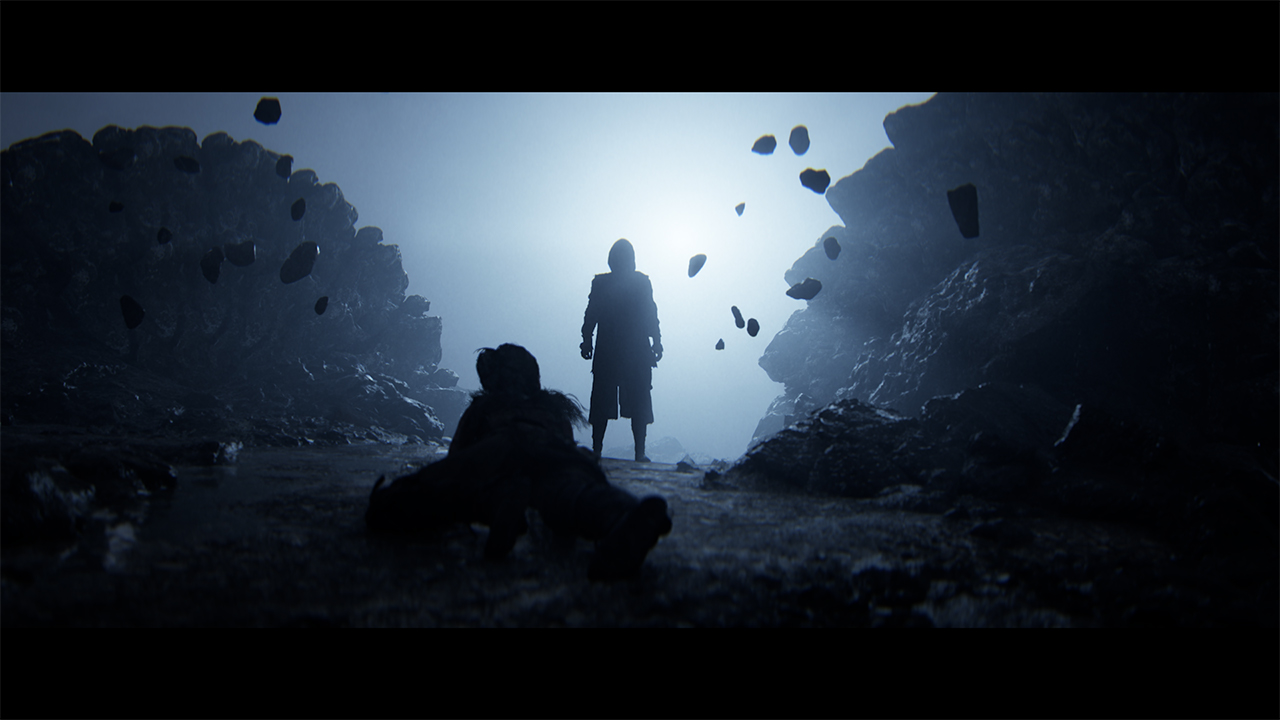
The story begins as Senua finds herself washed ashore on an island she’s completely unaware of. In an attempt to get some clarity, she is met with the shadow of her past, reminding her of who she is and her place in the world. Her plan of revenge is falling apart, and to make it worse, the voices in her head just won’t stop talking. At the end of the opening sequence, she comes face to face with the man that took her in as a slave, and she is roaring to strike.
And then, the moment to strike was cut short because other things came into play.
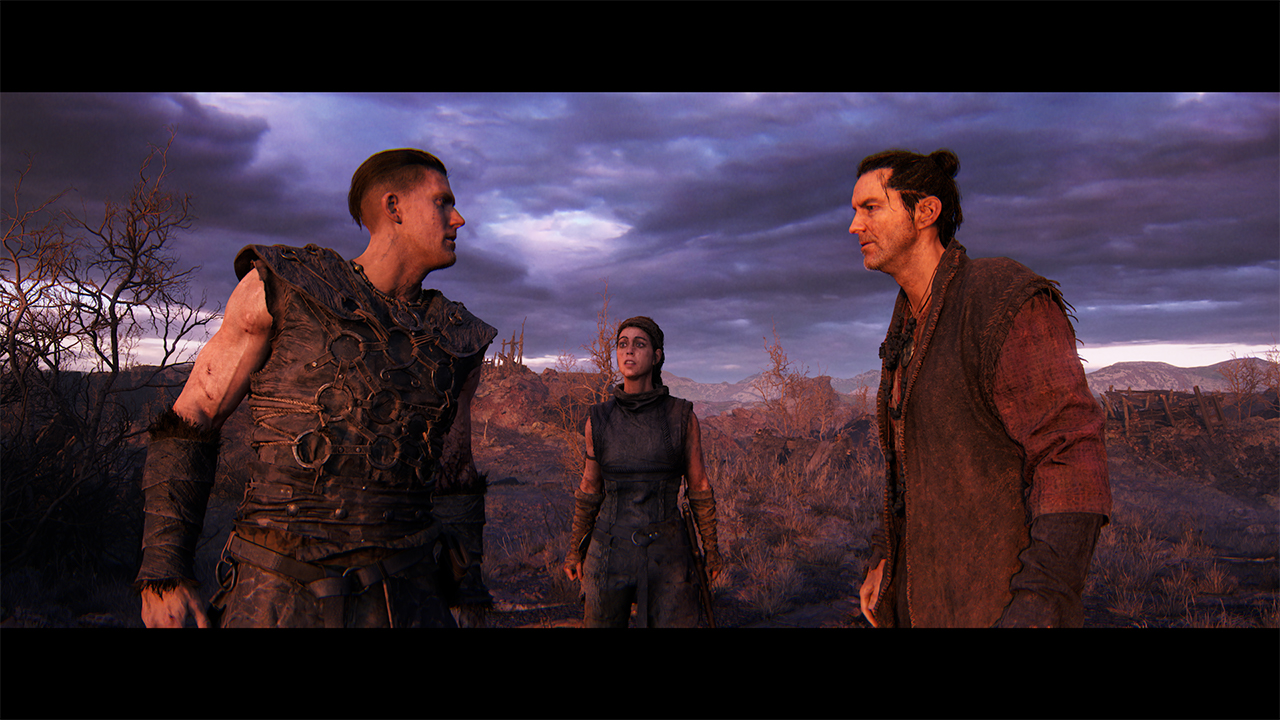
One of the things I noted about the story was that it took such a short time to just get everything patted down. I didn’t feel like I got sidetracked way too many times. Every little detail made sense to what Senua will eventually do for the rest of the game. I can’t say much else about the story that would spoil things. But it does get good the deeper you go into the island.
Heaven and hell in full glory
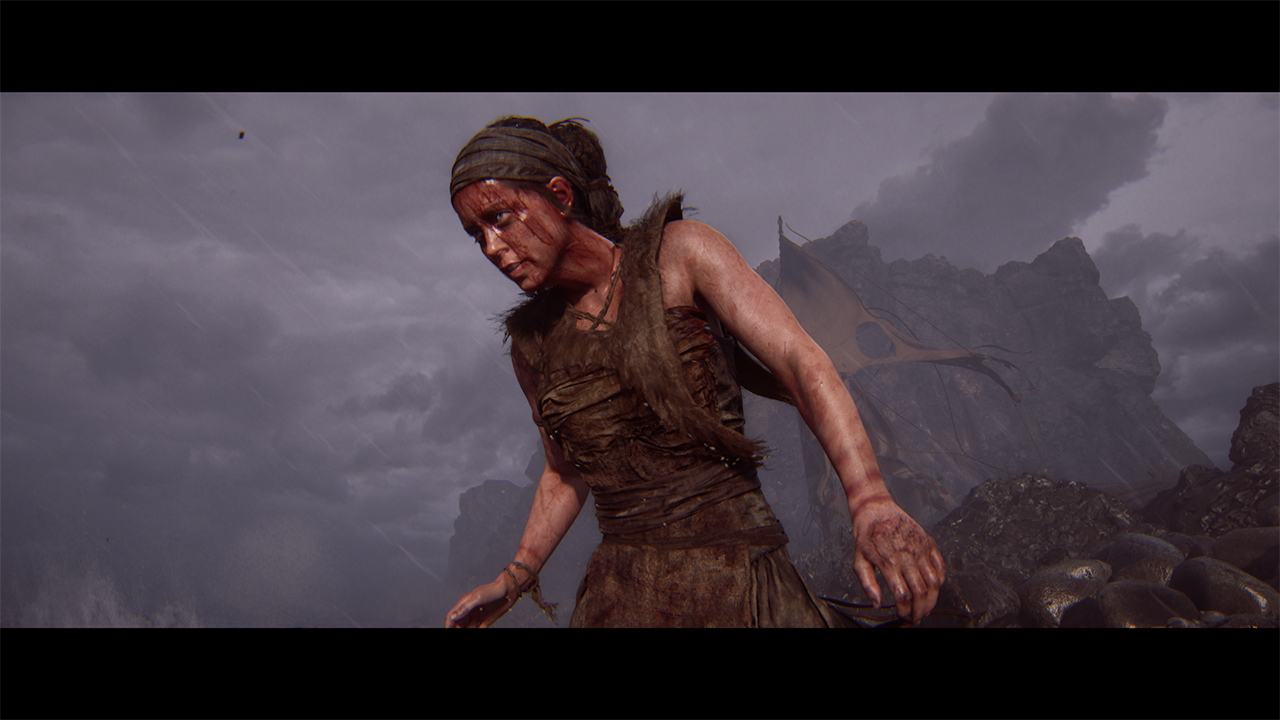
Speaking of said island, on the Xbox Series X, the entire overworld is absolutely stunning. Yes, even the desolate areas in the game. A lot of the areas in-game popped out during the day scenes. They received proper lighting when things got dark most of the time. Even in a game with a not-so-open world map, every little detail was given enough thought.
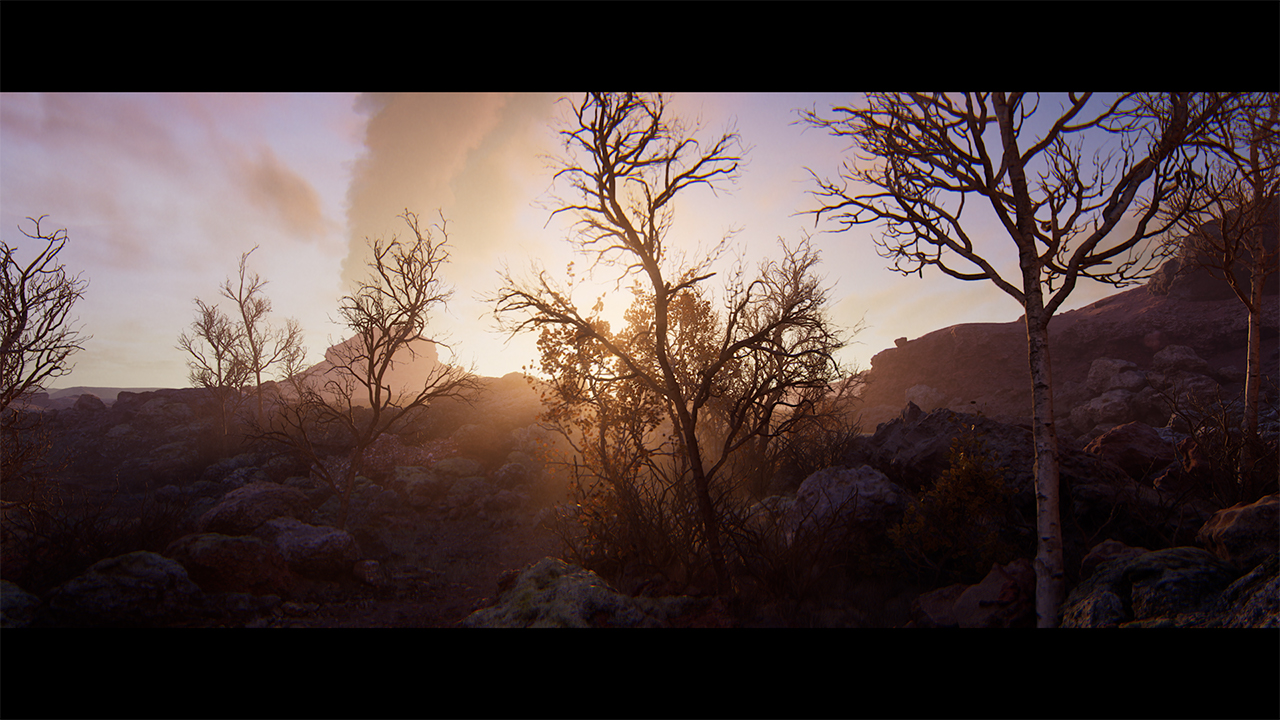
This one area in particular with Senua exploring the fauna through the Hiddenfolk stages was a prime example of how the developers went all out with it, design-wise. Honestly, the colors were stunning and the elements you interact with on the overworld mixed well. When I went into Photo Mode to grab this, I just took time to get as many shots in this area.
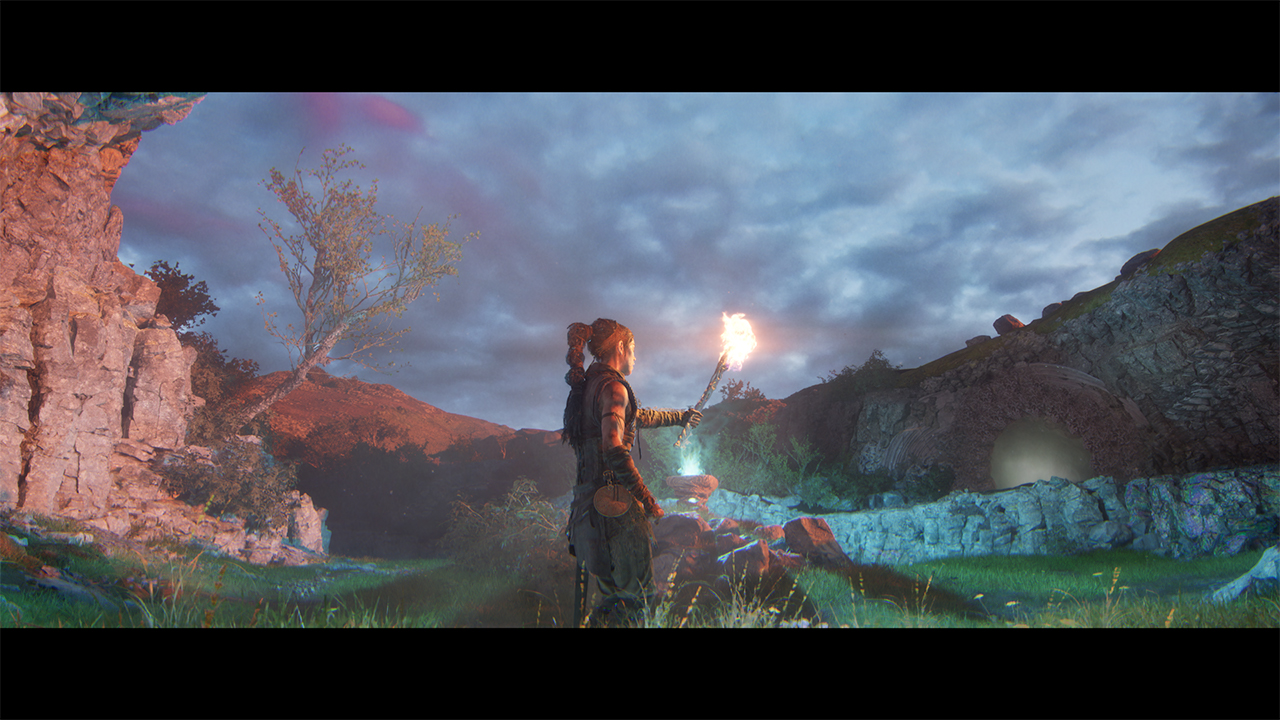
Also, I have to applaud Ninja Theory for actually having a Photo Mode that you can use even in the cutscenes to capture some amazing highlights and sceneries! I wish everyone else did it like this, instead of just giving it to live gameplay.
Puzzled minds with extreme overthinking
A core mechanic of the Hellblade games involves the player solving a series of puzzles at critical moments in Senua’s journey. Even in Senua’s Saga: Hellblade 2, the puzzle solving continues with multiple visual cues to guide you on what elements you need for each puzzle. These added another dimension to the whole experience for me, plus it even increased my stress levels too.
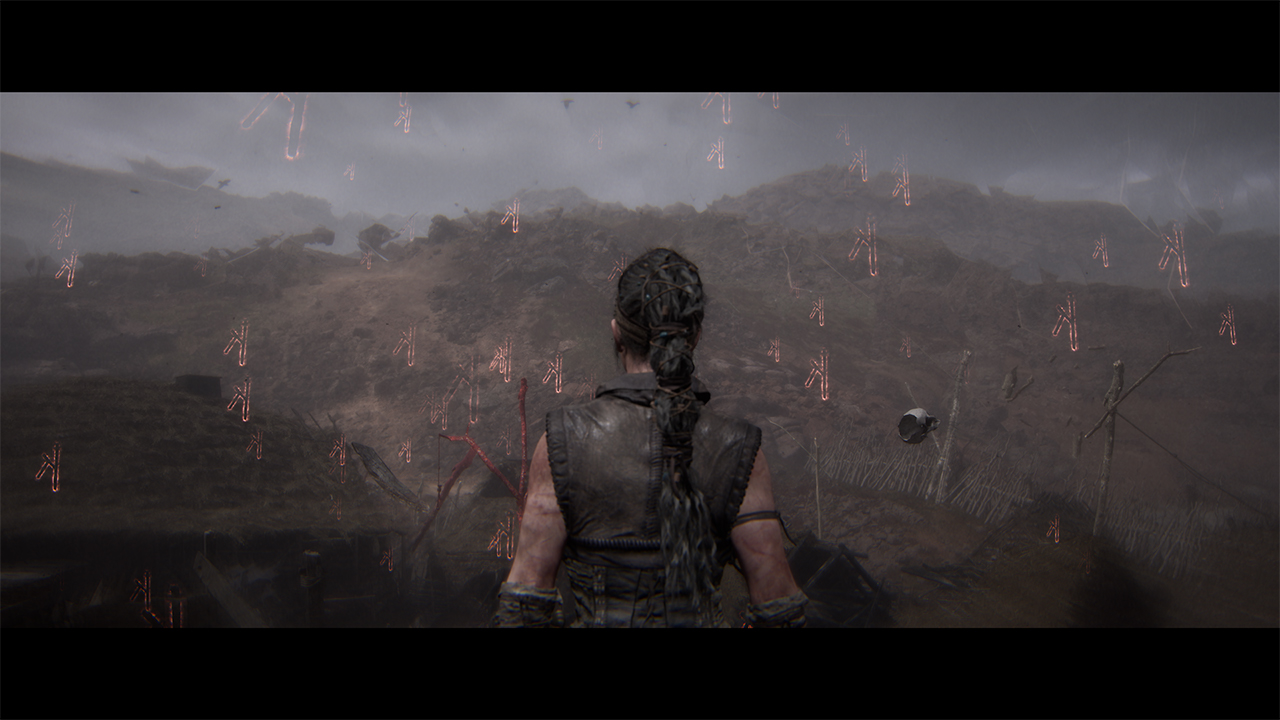
As you progress deeper into the game, the puzzles actually become more challenging and hard to crack. It forces you to explore the entire area. There are moments in which the game tells you you’re on the right track. That’s when you rely on Senua’s focus abilities. Also, the voices in your head can come in handy. There are times that they even tell you that you’ve been stuck in a spot you’ve already visited.
It’s overthinking at its finest, but at least you don’t have to juggle that while fighting hordes of enemies and there’s no time pressure.
Fighting your demons, literally
Combat in this game is different from what I’m used to, especially in semi-open world games with multiple enemies rushing you. Unlike other games wherein being aggressive is the name of the game, Senua’s Saga has a timing approach to it with visual cues. Essentially, you just have to know when light and heavy attacks come in, block or dodge accordingly, then fight back.
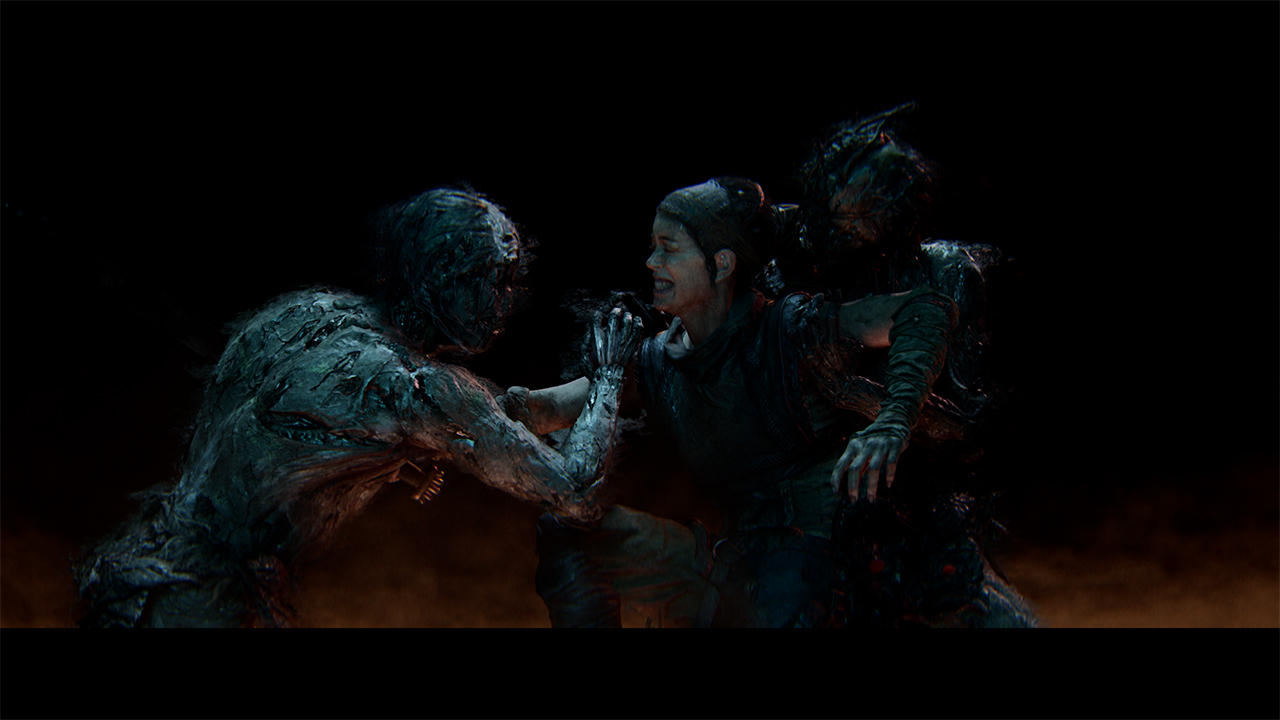
It took a while to master the timings of some enemies. It was nearly impossible to stay alive in most fights. Once you have it down to a tee, every fight scene feels less of a hassle to deal with. However, the enemies also get harder and have added gimmicks like breathing fire to stop you. Dying isn’t an option either because each death results in resetting every fight scene.
To aid you in your battles, the trusty Focus mechanic also acts as a timely boost by simply stopping time. This was super helpful to get you to do multiple attacks. It cuts the battle time and take down stronger enemies.
Confronting your past
Senua’s Saga: Hellblade 2 is a rollercoaster of emotions and controller-button mashing that was simple enough to go through every step of the way. The linear storyline with great overworld visuals and equally solid gameplay mechanics just suits this type of game well. As somebody who didn’t even get to play the first game, this was definitely something new and unexpected.
If anything, I felt that this game had too much going for it. For some people, this may not be their cup of tea. For one, the story, while linear in progression, can feel a bit rushed especially when building character relationships all throughout. Second, combat mechanics can take a while to get used to, especially on the timings of enemy attacks. These aren’t total dealbreakers in the grand scheme of things, but they do make the game a little bit frustrating.
Overall, the game is simple as it should be. But fair warning: this game has too many voices for you to listen to. If you’re not a fan of that, you can definitely tune them out and focus on the demons you have to slay!


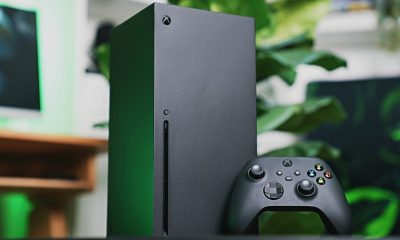




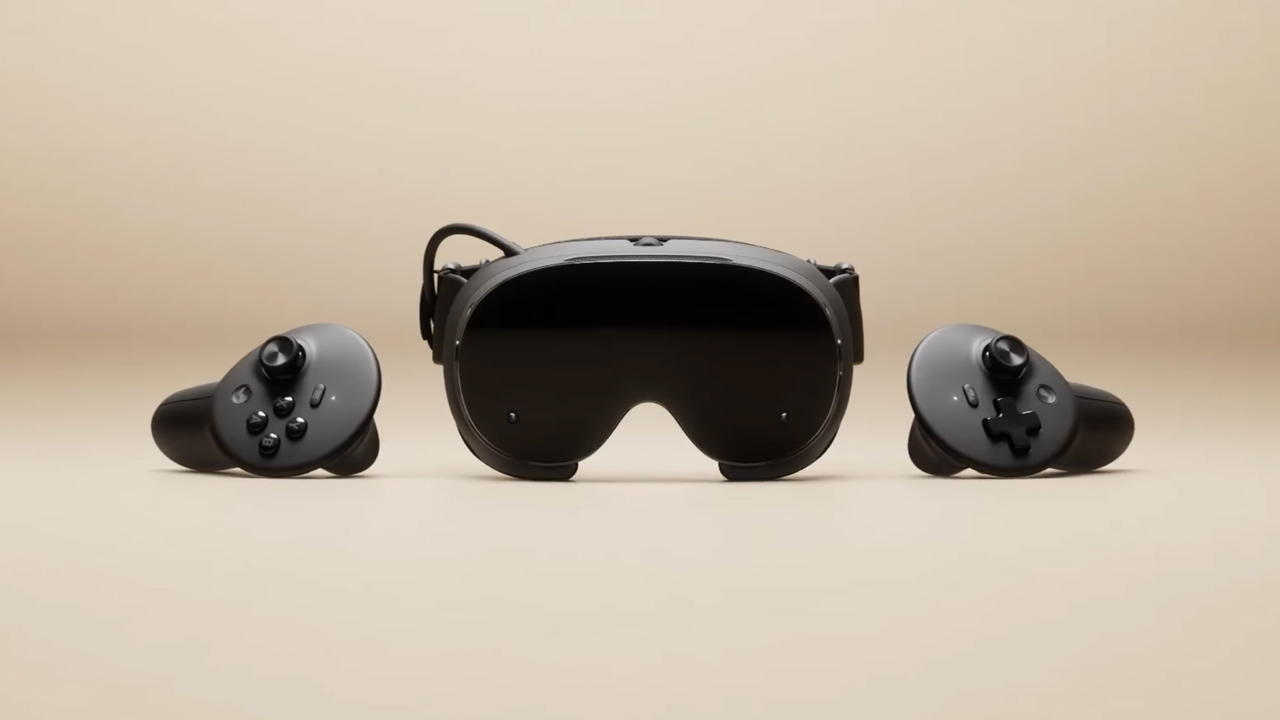
The trifecta is complete. Almost a year after announcing their new hardware, Valve has finally unveiled the price tag of the Steam Frame, complementing the Steam Machine and Steam Controller revealed a few months ago.
Whereas the Steam Machine is a console of its own, the Steam Frame is a traditional VR headset with a pair of controllers for both hands. Unfortunately, despite being in a different segment, the headset is not immune to the rising prices of technology. The Steam Frame will start at US$ 1,059 for a 256GB model and can go up to US$ 1,299 for the 1TB model. On the plus side, each box will come Half-Life: Alyx packaged along with the headset.
Here’s a more detailed rundown of what you’re getting. The Steam Frame will ship with the Snapdragon 8 Gen 3 chipset, paired with 16GB of RAM. Each eye comes with a 2160 x 2160 LCD screen, putting out images at up t0 a 144Hz experimental refresh rate. As mentioned above, the headset will start with 256GB of storage but can go up to 2TB. It will come packaged with SteamOS 3 and a rechargeable 21.6Wh battery.
This might be a hard buy for some. The industry currently has more affordable options, for one. Also, virtual reality isn’t the most thriving segment of gaming today.
If you’re still decided on buying one, however, Valve is using its lottery system. Interested customers can sign up from now until September 17. The company will then randomize the purchasing order. Those who draw the first ones in the lottery can get a purchase email as soon as September 18. Meanwhile, anyone who registers after September 17 will automatically be put at the back of the queue.
SEE ALSO: Valve announces its own console called the Steam Machine
Gaming
BlizzCon 2026 announces World of Warcraft: Forever and Diablo V
StarCraft, Overwatch, Hearthstone, and more also get news

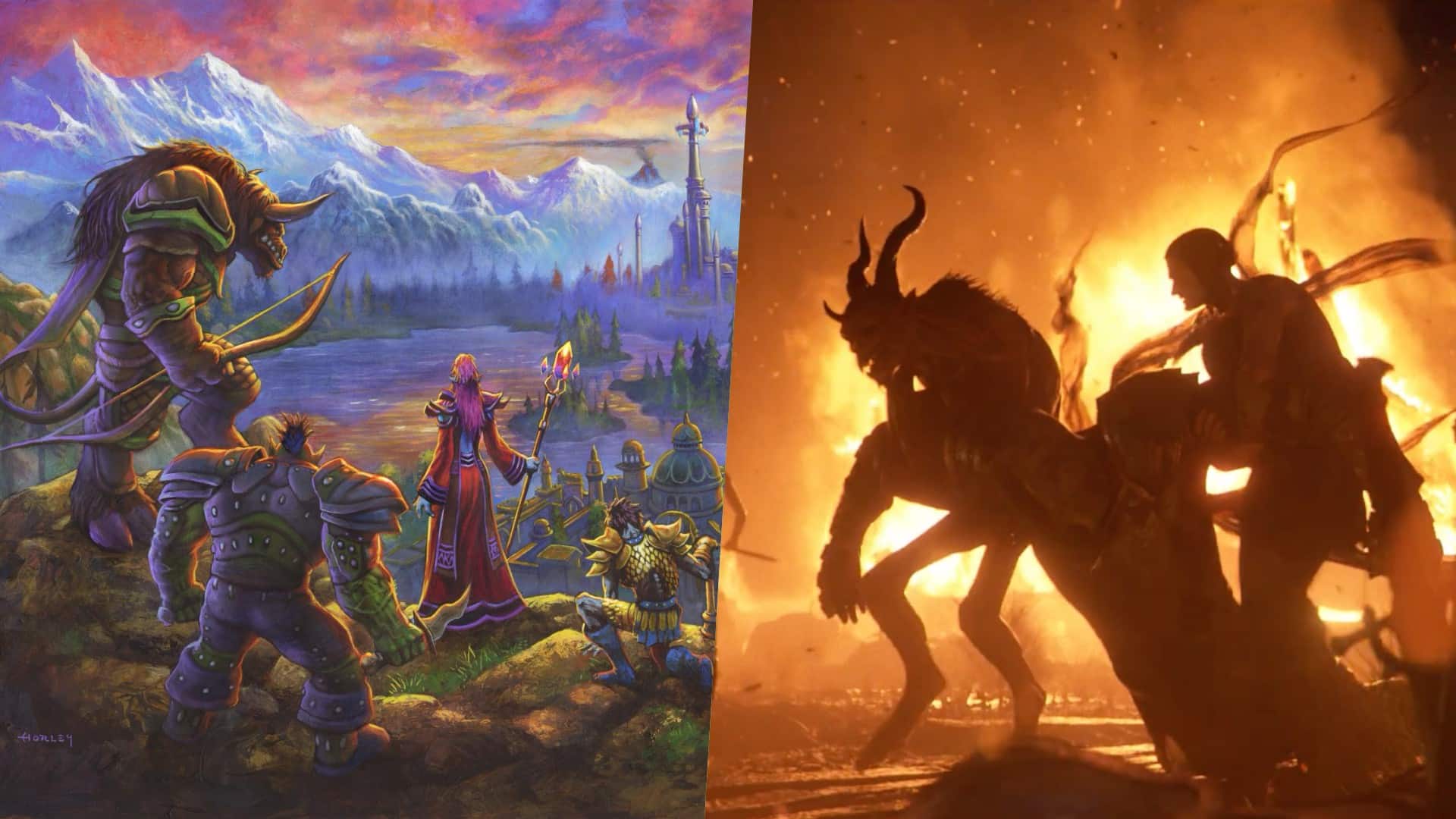
Blizzard Entertainment kicked off BlizzCon 2026 with a packed Opening Ceremony featuring new games, major expansions, updates, and other announcements across its biggest franchises.
Blizzard Entertainment President Johanna Faries opened the event at the Anaheim Convention Center, celebrating the community behind the company’s games and the teams that bring its worlds to life.
World of Warcraft: Forever and Diablo V
The biggest announcement was World of Warcraft: Forever, a new World of Warcraft experience launching November 5 AEDT, with its beta beginning September 18 AEST. The new experience will feature three zones, more than 1,000 quests, nine dungeons, two raids, and a new Skyborne race.
Blizzard also officially announced Diablo V, marking the next era of the franchise. The game is set to launch in North America in Spring 2029, with Sanctuary having fallen and Diablo having won.
StarCraft is also returning with a new story-driven, open-world shooter. The game is currently planned for a Spring 2030 release in North America.
Beyond games, Blizzard revealed that an animated series set in the Diablo universe is in development with Netflix. The company says this is only the beginning of its plans to expand its universes beyond gaming.
For Warcraft III Reforged, the new Forsaken Kingdom campaign is available today. It marks the Warcraft RTS series’ first new storyline in more than 23 years and explores the fall of Lordaeron and the origins of the Undercity. The accompanying 3.0 update also brings graphical improvements and a revamped World Editor.
Heroes of the Storm is adding Xal’atath as its newest Hero. She arrives in the Nexus on September 29 AEST, with her PTR release scheduled for September 15 AEST.
Existing games updates
Meanwhile, Diablo IV is preparing for its next major content drop. Season of Hell’s Legacy begins September 16 AEST and celebrates the franchise’s 30-year history with the return of the Prime Evils and Deckard Cain, alongside themed rewards and gear.
The legendary Amazon class will also arrive in the first half of 2027 as part of Diablo IV’s first class pack. The Diablo IV: Age of Hatred Collection is additionally coming to Nintendo Switch 2 on September 16 AEST with cross-platform play and cross-progression.
For World of Warcraft, Blizzard teased the next major update for Midnight. Eclipse (12.2) will see Xal’atath move closer to her goal of claiming Azeroth’s Worldsoul. Blizzard also offered another look at The Last Titan, the next expansion in the Worldsoul Saga and a major culmination of more than two decades of Warcraft storytelling. More information is coming early next year.
Overwatch is getting a major update with Season 5. The season introduces new Support Hero Doctrine, reworks for Sombra and Roadhog, and the new Watchpoint: Grimsvötn map. It will also conclude The Reign of Talon, Overwatch’s first year-long narrative arc.
LE SSERAFIM & YOASABI
BlizzCon also featured performances from YOASOBI and LE SSERAFIM. YOASOBI will perform during the first-ever esports halftime show at BlizzCon, while LE SSERAFIM will return to the Main Stage to close the weekend. A new LE SSERAFIM in-game collaboration is available now, with another Overwatch Spotlight scheduled for February 2027.
Finally, Hearthstone is getting its first new class in more than six years. The Monk arrives in 2027, while the upcoming Reign of the Black Empire expansion takes players back to the earliest age of Azeroth. It introduces the Assemble keyword, which combines two cards into a new one. Battlegrounds is also adding Aberrations as a new minion type.
BlizzCon 2026 is now underway, with Blizzard promising more announcements and details throughout the weekend.
Gaming
Just Dance: Decades of Hits to launch on October 13
All-new Just Dance experience that brings every generation together
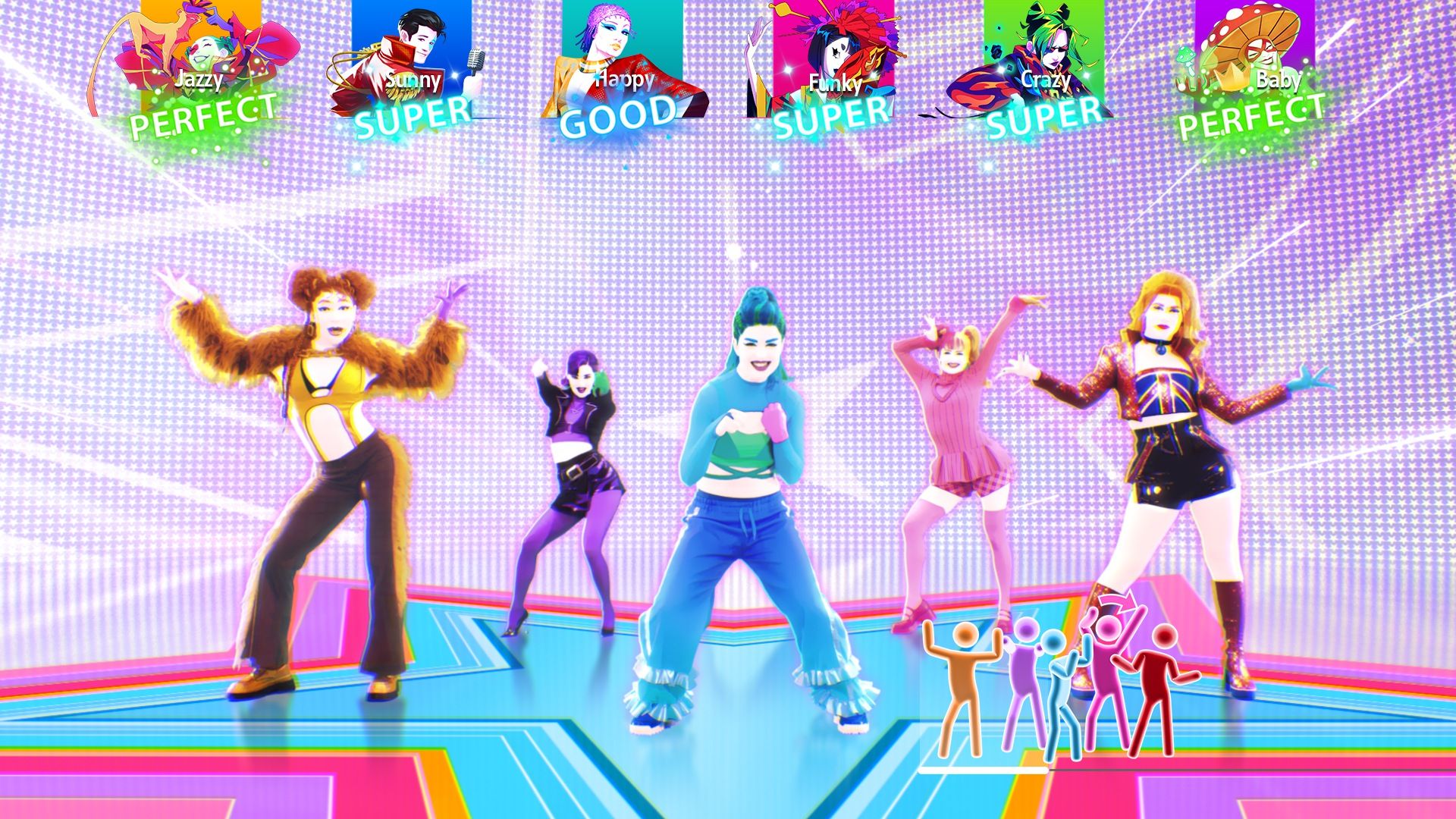
Just Dance: Decades of Hits will launch on modern consoles on October 13, Ubisoft has announced.
This will offer fans of the franchise a new experience across eras of music. The game will be available on PlayStation5 , Xbox Series X|S, and Nintendo Switch on the launch date.
Nintendo Switch 2 users, meanwhile, will be able to enjoy the title by November 10, 2026.
Just Dance: Decades of Hits brings together every generation to one dance floor with 25 iconic songs across six different decades:
- Mamma Mia by ABBA
- Uptown Girl by Billy Joel
- It’s Tricky by Run-DMC
- No Scrubs by TLC
- Wannabe by Spice Girls
- Bye Bye Bye by *NSYNC
- Feel Good Inc. by Gorillaz
- Turn Down for What by DJ Snake and Lil Jon
- Danza Kuduro by Don Omar feat. Lucenzo
- Manchild by Sabrina Carpenter
- NUEVAYoL by Bad Bunny
- And more!

Bringing every generation together
Songs, visuals, and an all-new Adventure Mode are all designed to immerse players in the spirit that made each decade unforgettable.
From the funky ’70s disco floors and the electrifying ’80s rock scene to the glossy 2000s pop and beyond, travel through time and share the joy of rediscovering iconic moments with friends and family.
In Adventure Mode, follow Lyra, Dr. Gigavolt’s daughter, in a playful journey through time to rescue her father.
Explore the decades through six themed worlds, enjoy fun mini activities, and unlock exclusive rewards.

For unpredictable, chaotic fun where the rules change every round, players can jump into Party Mode. Or they can get moving with the Workout Mode, which tracks calories burned with each dance.
Up to six players can dance locally in the game, with no extra accessories needed.
In addition those who own Just Dance: Decades of Hits as well as Just Dance 2023-2026 editions will be able access all their songs in one place on the same console without having to switch games or separate menus.
This also includes songs from purchased Music Packs and songs available through an active Just Dance+ subscription.


DJI Lito X1 review: Is this the best lightweight drone for creators?
Making a strong case as a travel companion and a capable B-cam!


REDMI Note 17 Pro Max review: A new breed born from AI greed
Welcome to the new normal


Marvel’s Wolverine review: When the claws come out
A brutal, cinematic superhero adventure

Epson Lifestudio Grand Plus EH-LS970B with 4K projection, more launches

Jackery Explorer 300D: Power and portability in one

Nike’s Alphafly 4 is built for the part of the marathon ~that actually hurts~

SEGA, Netflix announce Crazy Taxi film adaptation

Smart launches LiveSmart App for exclusive deals

TECNO MEGAPAD 2 review: Eyes on the size

realme 16T 5G with 8000mAh battery, IP69 Pro rating launches in PH

HUAWEI Pura X View is 2026’s first WIDE slab-type smartphone

REDMI reveals the refreshed Note 17 and Note 17 Pro series

REDMI Note 17 Series: Price, availability in Singapore


-
 News2 weeks ago
HUAWEI Pura X View is 2026’s first WIDE slab-type smartphone
-

 News2 weeks ago
The CAMON Slim 5G is TECNO’s latest ultra-slim smartphone
-

 News2 weeks ago
iPhone 18 Pro series: Price, availability in the Philippines
-

 Singapore2 weeks ago
iPhone 18 Pro series: Price, availability in Singapore
-

 News2 weeks ago
iPhone Duo: Price, availability in the Philippines
-
 News2 weeks ago
HUAWEI Mate XT 2 tri-fold launches with Kirin 9050 Pro
-

 News2 weeks ago
vivo introduces refurbished versions of X300 FE, X300 Ultra for less
-

 News2 weeks ago
iPhone Duo: Price, availability in Singapore