
Enterprise
Trump is now targeting Tencent Games
Investigating Epic Games and Riot Games


Today, the Trump administration finally administered a coup de grâce against TikTok and WeChat. The government has effectively blocked the popular platforms from app stores nationwide. Now, they are setting their sights on another target. Trump is now targeting Tencent Games.
According to Bloomberg, the Trump administration has officially asked League of Legends’s Riot Studios and Fortnite’s Epic Games for their ties to Tencent Games. Notably, the Chinese Tencent Games owns Riot Games, plus a minority stake in Epic Games.

The Committee on Foreign Investment inquired “about their security protocols in handling Americans’ personal data.” Both League of Legends and Fortnite are still two of the most popular multiplayer games today. Naturally, millions of Americans play these games every day.
Of course, it’s no surprise that the American government is now pursuing Tencent Games for their alleged Chinese ties. WeChat’s ban, in fact, stems from its ties to Tencent. At the time of WeChat’s first involvement in the ongoing ban, pundits also speculated on the eventual attack against Tencent’s other properties. Now, it’s materializing.
At this point, no one knows if Trump’s latest attack will go anywhere. The administration is likely still handling the successful attack against TikTok and WeChat.






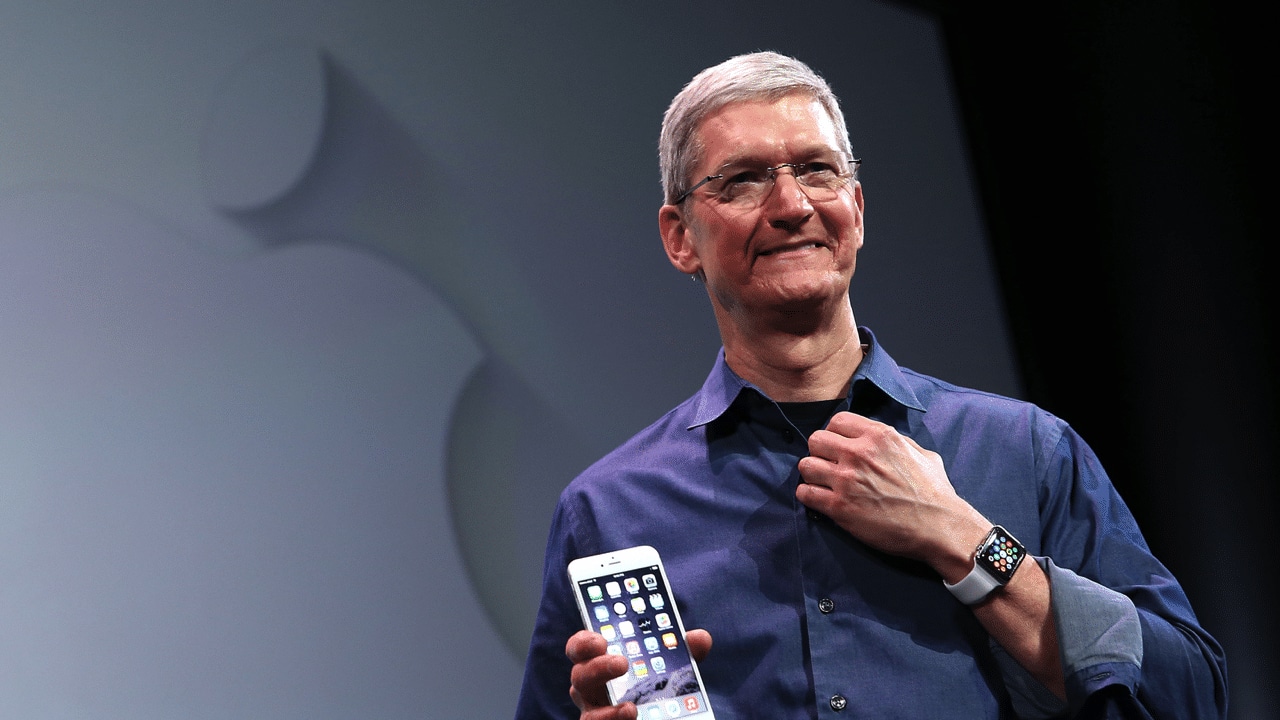
Did you know that it’s been almost 15 years since Tim Cook took the reins of Apple? The brand’s stalwart fans can definitely thank Cook for Apple’s impressive success today. That said, nothing lasts forever, especially as one reaches the age of 65. Tim Cook, after bringing Apple to almost US$ 4 trillion in valuation, might soon step down as the company’s CEO.
When he took over as CEO, Cook had the unfortunate challenge of following Steve Jobs. But, as we can see now, the CEO was more than up for the task, leading the company to new heights. Cook, however, will soon enter his twilight years. This November, the CEO turns 65. Cook’s retirement now becomes a question of “when” and “who’s next.”
According to Bloomberg’s Mark Gurman, the transition might come soon. A few of the company’s executives have started to leave the company. This year, COO Jeff Williams stepped down and will soon leave the company. Importantly, Williams was once seen as next in line for the throne.
Others are expected to follow Williams, eventually leading to Cook’s own retirement. Cook’s 65th birthday isn’t a sure deadline, but the talks should start. When Cook does retire from his CEO duties, it’s expected that he’ll transition instead into a new role as chairman, similar to Amazon’s Jeff Bezos.
Gurman also notes that the current heir, after Williams’s departure, is now the company’s hardware engineering boss, John Ternus. Importantly, this means that Apple might finally enter a new era outside of smartphones. As popular as the iPhone is, the company has struggled entering new facets of technology, including the middling Vision Pro. Ternus, as opposed to a more business-oriented leader, might steer Apple into those new frontiers.
SEE ALSO: Apple iPhone Air Review

It didn’t take long for Nothing to establish itself in the smartphone industry. The brand even felt confident to launch a more affordable sub-brand called CMF by Nothing. Now, Nothing is ready to let its baby boy grow up. CMF by Nothing is branching off into its own independent brand soon.
As reported by TechCrunch, Nothing has confirmed that CMF will become an independent subsidiary soon. The brand is partnering with an Indian company called Optiemus to establish a headquarters for manufacturing and research in India.
The choice of market isn’t surprising. Compared to the original brand, CMF by Nothing caters more to the budget-conscious crowd while upholding Nothing’s penchant for quirky designs. The affordable segment continues to be a big hit in India. Nothing, as a brand, is also popular in the country.
It’s an impressive story for CMF. The small brand started only around two years ago in 2023. Since then, it launched earbuds, smartwatches, and smartphones — all of which appeal to the budget-conscious. By branching off on its own, the brand has a chance to establish its own identity apart from its parent company.
Though CMF’s independence is certainly a quick one, the phenomenon isn’t uncommon. Various companies have also done the same with their own sub-brands. For example, HONOR, POCO, and realme have spun off from Huawei, Xiaomi, and OPPO, respectively.
SEE ALSO: CMF Phone 2 Pro review: Only a small step from its predecessor
Enterprise
DITO wants you to stop worrying about data, WiFi, and dropped calls
Here’s how DITO is changing the way we connect


DITO Telecommunity is pushing forward with a bold message: fast, reliable, and accessible connectivity should already be the norm.
At its recent Kaya DITO campaign launch in BGC, the country’s fastest-growing telco showed how its ecosystem of services is built to meet the digital aspirations of every Filipino.
Prepaid that doesn’t waste your data
DITO’s Level-Up Packs were designed to take the stress out of prepaid.
With ViLTE tech, subscribers get unlimited HD video calls between DITO users, plus unli mobile calls, bundled Viber, Prime Video, and flexible data that lasts longer.
Postpaid that actually makes sense
With DITO FlexPlan 888, postpaid is made practical. For less than a thousand pesos a month, subscribers can choose SIM-only or device-bundled plans with generous data inclusions.
It proves that having a premium postpaid experience doesn’t have to break the bank.
WiFi that keeps the whole household connected
DITO WoWFi Pro 365 makes home internet simple. Think of it as a worry-free, year-long unlimited connection with no complicated installations and constant top-ups.
Just reliable WiFi for work, study, and streaming when you need it.
Everything you need in one app
The DITO App is one of the most complete telco apps available, giving subscribers full control of their digital life.
From buying SIMs and load to managing accounts, rewards, and even OTT apps, the experience is built around convenience. Add 24/7 support and exclusive perks, and the app becomes a one-stop hub for all things DITO.
True 5G built differently
Unlike other networks built on old systems, DITO made the call early to go all-in on 5G Standalone.
That means faster speeds, lower latency, and a network that can keep up with how Filipinos live today.
Opensignal has already recognized DITO as the Philippines’ fastest network, proving that the foundation they built is paying off.


Samsung Galaxy S25 FE review: Closer to flagship than ever
Thoughtfully refined


The HONOR MagicPad 3 is an almost perfect premium pad partner
Ever-reliable for work, chill, and play BUT with some catch


DJI Osmo Nano review
Fits perfectly into a life that never stays still

vivo Unveils OriginOS globally

Apple Vision Pro gets M5 chip upgrade

Apple introduces the powerful new iPad Pro M5

Apple unveils new 14-inch MacBook Pro M5

Apple unleashes M5 chip, the next big leap in AI

Xiaomi 17 Pro Max takes a jab at Apple’s iPhone 17 Pro Max

Redmi 15C review: Big features on a small budget

Logitech adds comfort and speed to 2025 keyboard, mice lineup

The Xiaomi Pad Mini is discounted until October 13

Xiaomi 15T Pro review: Big battery, clean shots, smooth performance

This is the BRIGHTEST 4K Projector In Its Class!

Unboxing: Ghost of Yotei Collector’s Edition

Unboxing the latest Apple Watch × Hermès

Lenovo Yoga 7i Aura Edition: Ten generations of foldable goodness

21-Day Battery, Pro Sports Tracking: HUAWEI WATCH GT 6 Series
-
 Tablets2 weeks ago
The Xiaomi Pad Mini is discounted until October 13
-

 Reviews2 weeks ago
vivo X200 Pro review: 200+ Days After
-
 Deals2 weeks ago
The new Lenovo Legion Tab comes with a free GameSir G8+ this month
-

 Laptops2 weeks ago
The Lenovo Yoga 7i Aura Edition gets it right after ten generations
-
Reviews4 days ago
The HONOR MagicPad 3 is an almost perfect premium pad partner
-
Cameras4 days ago
DJI Osmo Nano review
-

 Gaming2 weeks ago
Digimon Story Time Stranger: Back to the digital past
-

 News2 weeks ago
realme 15T also releasing on October 8