
Gaming
Digimon Story Time Stranger: Back to the digital past
A (personally) nostalgic Digimon return

I came into Digimon Story Time Stranger already excited. Trailers and previews gave me flashes of a Digimon game I once played during a summer at my relatives’ house. I spent every waking moment of those two weeks trying to beat it — though I never did.
I don’t even remember which Digimon World title it was, but I was hooked. My aunt used to call me out for playing before I’d even had breakfast. That memory stayed with me, and this new entry in the franchise instantly felt like a chance to relive it.
I’ve had less time than I’d like with the game since getting the review code, so think of this more as a review-in-progress. But I’ve played enough to know it’s worth talking about.
Time travel and the inferno
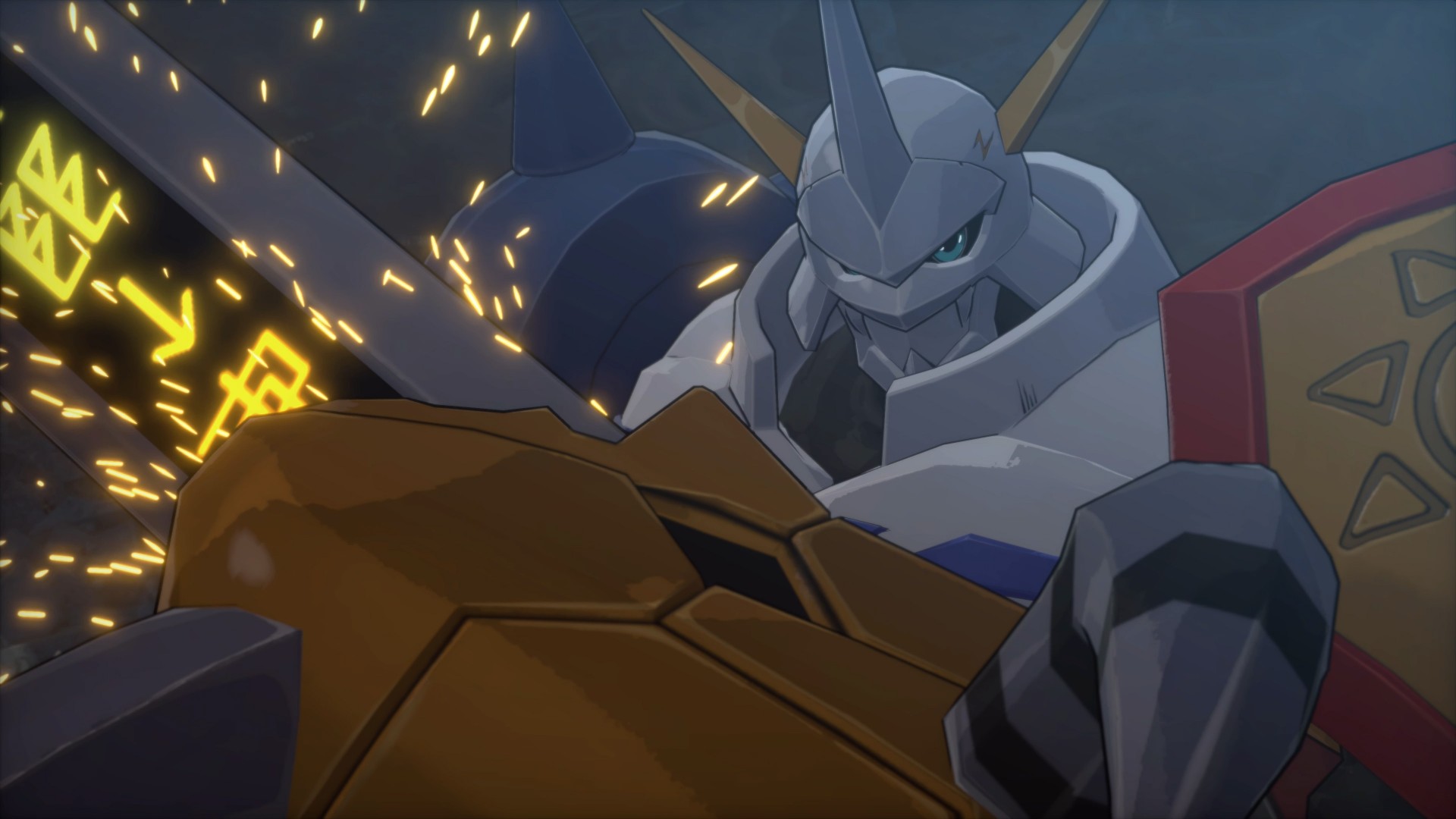
The story sends your protagonist eight years into the past. Your role is to unravel the events that led to the “Shinjuku Inferno,” a catastrophe that left the world in ruins.
Not rolling credits yet actually helps here since it keeps things spoiler-free. What I can say is that there’s enough happening in the early hours to keep you intrigued. Things ramp up gradually. The mystery of what caused the Inferno pushes you along, and the more you progress, the more you want to connect the dots.
The characters I’ve encountered so far didn’t immediately latch on to me. I couldn’t fully identify with or feel invested in them. That does dampen how eager I am to move forward with their arcs, but it doesn’t take away from the pull of the central mystery. The looming Inferno itself is strong enough to keep you curious.
The joy of collecting

The monster-collecting gameplay loop is the real hook here — it’s addicting and built for completionists.
You begin by picking your first Digimon partner. From there, the system opens up. Every time you battle a Digimon, you add to your scan percentage of that species. At 100% you can convert it into a new companion, but waiting until you’ve scanned 200% guarantees you’ll get the Digimon at its max possible stats.
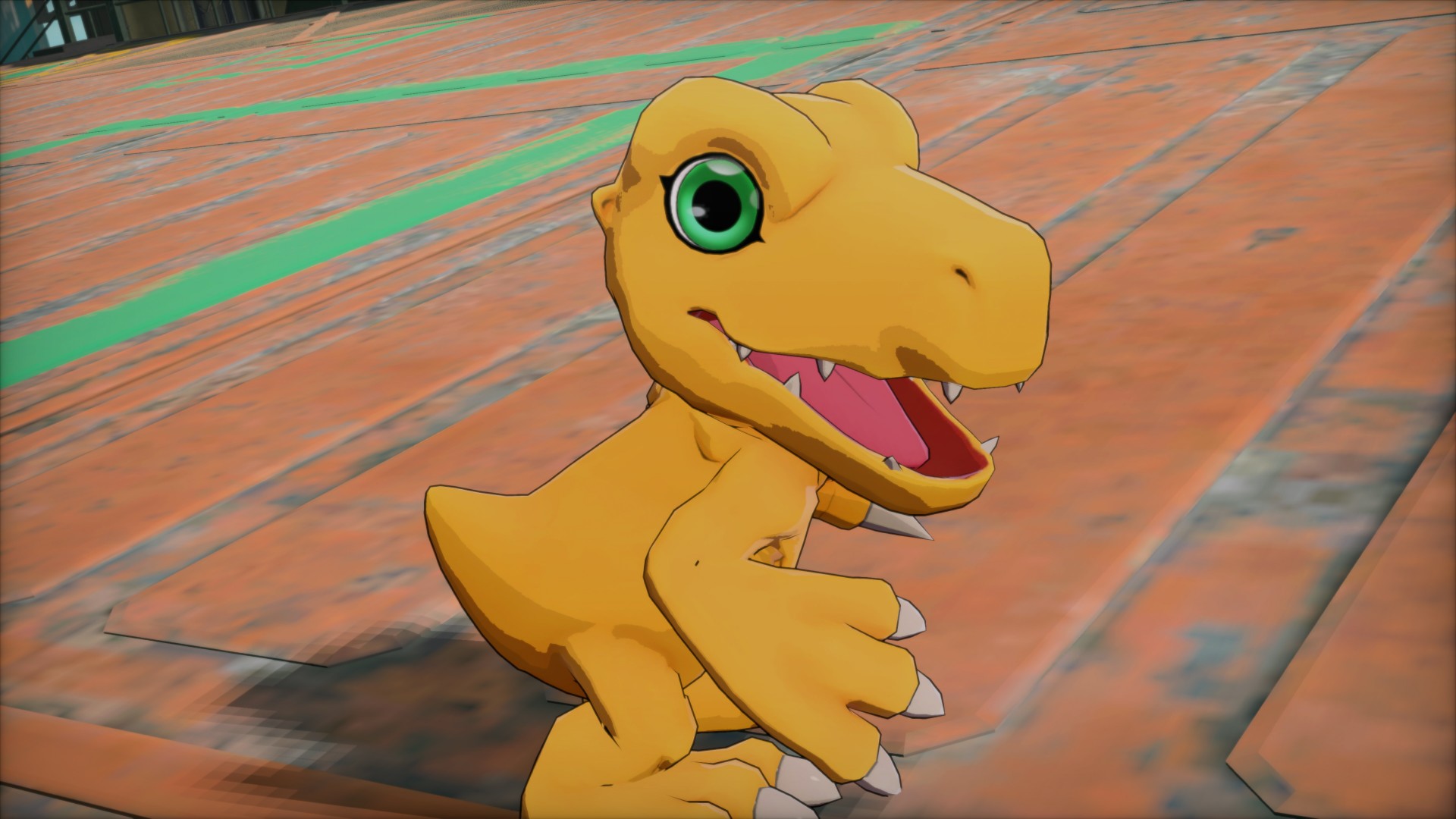
Digivolution is the next big mechanic. Each Digimon has multiple evolution paths that depend on its stats and level. For example, a Koromon can evolve into Agumon, Guilmon, Dracomon, and more. This branching evolution system encourages experimentation. You can also go backward through de-Digivolution, which not only helps with strategic flexibility but also lets you work toward completing your full Digimon compendium.
If your roster starts to get crowded, you can fuse duplicates to enhance another Digimon or break them down into digital currency. It’s another loop that feeds back into progression.
With over 450 Digimon available, there’s more than enough here for players who love collecting, refining, and tweaking their party until it’s perfect. The loop is layered and rewarding — not just about “catching them all,” but about shaping the collection into something uniquely yours.
Strategy meets nostalgia

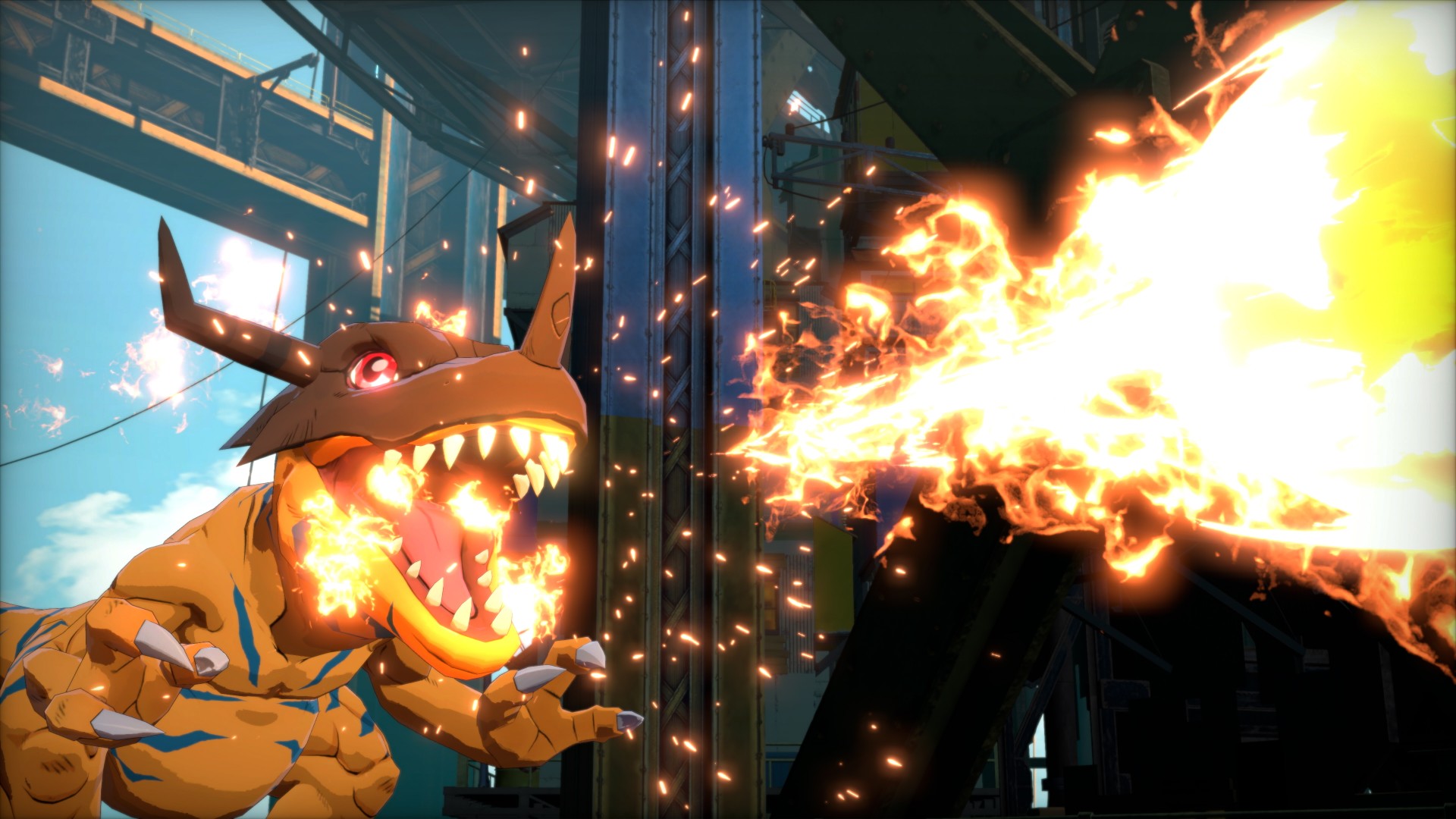
Combat in Digimon Story Time Stranger doesn’t try to be revolutionary, but it’s polished and layered enough to feel engaging. If you’ve played JRPGs from the late ‘90s and early 2000s, this will feel instantly familiar.
Dungeons are where you’ll encounter hostile Digimon. By pressing R2 (on PS5), you can attack first to gain the upper hand. If your party completely overpowers the enemy, you’ll defeat them instantly. Otherwise, you’ll be pulled into the turn-based battle arena.
The backbone of combat is the type triangle: Data beats Vaccine, Vaccine beats Virus, Virus beats Data. On top of that, elemental affinities add another wrinkle to keep you on your toes.
Your bond level with your Digimon plays a big role too. The closer you are to them, the more likely they are to perform quick follow-up attacks. These little assists can swing momentum in your favor and give combat a more dynamic flow.
There are also quality-of-life touches that stand out. You can swap party members mid-battle without losing a turn, which makes tactical adjustments painless. And with a flick of the right analog stick, you can speed up combat animations — a small feature that makes grinding far more bearable.
The system feels like a culmination of mechanics you might have seen in Persona 5 and Shin Megami Tensei. It’s not redefining the genre, but it knows what works and sharpens it in smart ways.
A Saturday morning cartoon come to life

What struck me most about Time Stranger is that it feels like playing a Saturday morning cartoon. From the colors to the tone to the music, the whole package captures that vibe.
The anime-inspired visuals are sharp and bright, with Digimon designs that pop. I also had a personal chuckle at the protagonist customization options — the red-haired male and short-haired female were exactly how I might’ve designed them myself.
The soundtrack deserves mention too. It changes with each location, sometimes even from room to room in the same house. Every track is thoughtfully matched to the scene and the mood.
There’s also optional DLC music. The pricing feels a little steep, but seeing Butter-fly from Digimon Adventure included was almost enough to convince me. It’s one of my all-time favorite anime songs, and hearing it in the game would push the nostalgia factor even higher.
Is Digimon Story Time Stranger your GameMatch?
Playing Digimon Story Time Stranger has felt like reliving that summer memory — the excitement of discovery, the satisfaction of raising Digimon, and the pull of wanting to see what comes next.
It isn’t trying to reinvent anything, and that’s part of its charm. Instead, it offers a polished, nostalgia-driven JRPG that rewards the time you sink into it. The story pulls you in even without a standout cast. The monster-collecting systems are rich and addictive. The combat strikes a balance between old-school comfort and modern convenience.
For me, it became a welcome contrast. I had just come from another game’s bloody revenge quest, yet I felt just as thrilled hopping into this time-traveling, monster-collecting adventure. One scratched my itch for grit. The other gave me wonder and comfort.
If you ever spent a summer glued to a Digimon game, this will take you back instantly. And if you’re new to the franchise, there’s more than enough depth here to keep you invested.
Verdict: It’s a Swipe Right.





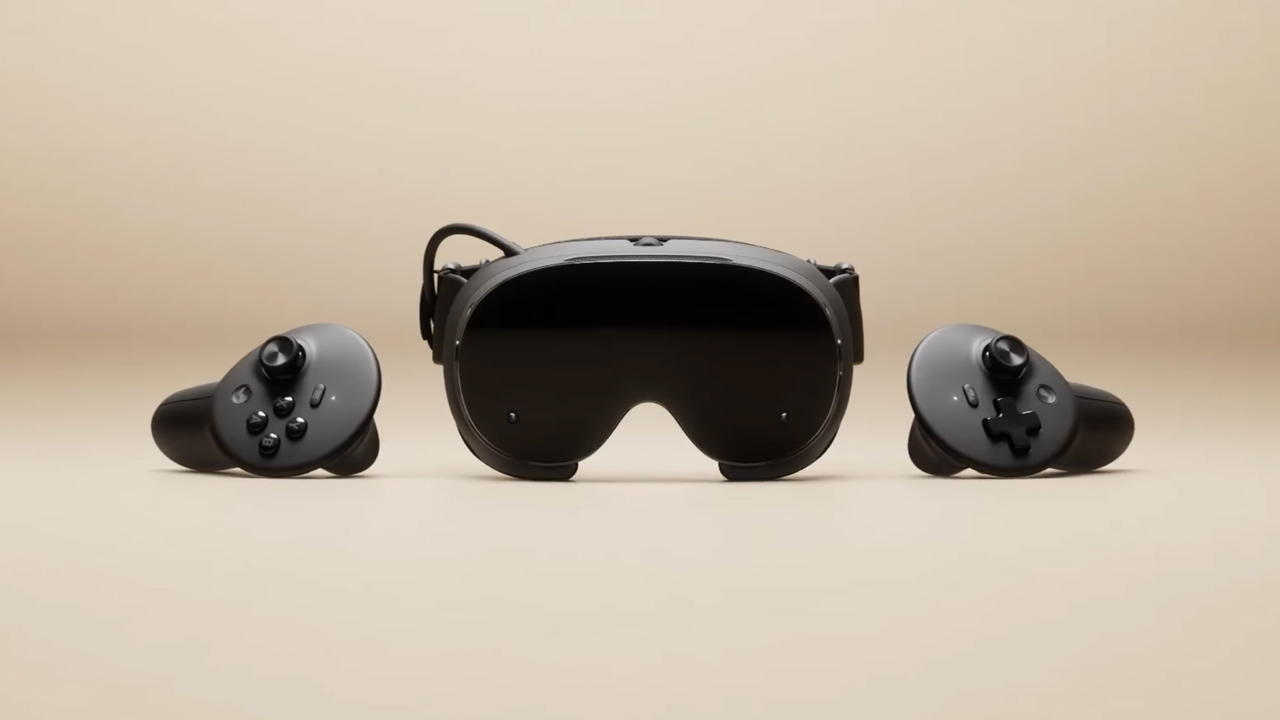
The trifecta is complete. Almost a year after announcing their new hardware, Valve has finally unveiled the price tag of the Steam Frame, complementing the Steam Machine and Steam Controller revealed a few months ago.
Whereas the Steam Machine is a console of its own, the Steam Frame is a traditional VR headset with a pair of controllers for both hands. Unfortunately, despite being in a different segment, the headset is not immune to the rising prices of technology. The Steam Frame will start at US$ 1,059 for a 256GB model and can go up to US$ 1,299 for the 1TB model. On the plus side, each box will come Half-Life: Alyx packaged along with the headset.
Here’s a more detailed rundown of what you’re getting. The Steam Frame will ship with the Snapdragon 8 Gen 3 chipset, paired with 16GB of RAM. Each eye comes with a 2160 x 2160 LCD screen, putting out images at up t0 a 144Hz experimental refresh rate. As mentioned above, the headset will start with 256GB of storage but can go up to 2TB. It will come packaged with SteamOS 3 and a rechargeable 21.6Wh battery.
This might be a hard buy for some. The industry currently has more affordable options, for one. Also, virtual reality isn’t the most thriving segment of gaming today.
If you’re still decided on buying one, however, Valve is using its lottery system. Interested customers can sign up from now until September 17. The company will then randomize the purchasing order. Those who draw the first ones in the lottery can get a purchase email as soon as September 18. Meanwhile, anyone who registers after September 17 will automatically be put at the back of the queue.
SEE ALSO: Valve announces its own console called the Steam Machine
Gaming
BlizzCon 2026 announces World of Warcraft: Forever and Diablo V
StarCraft, Overwatch, Hearthstone, and more also get news

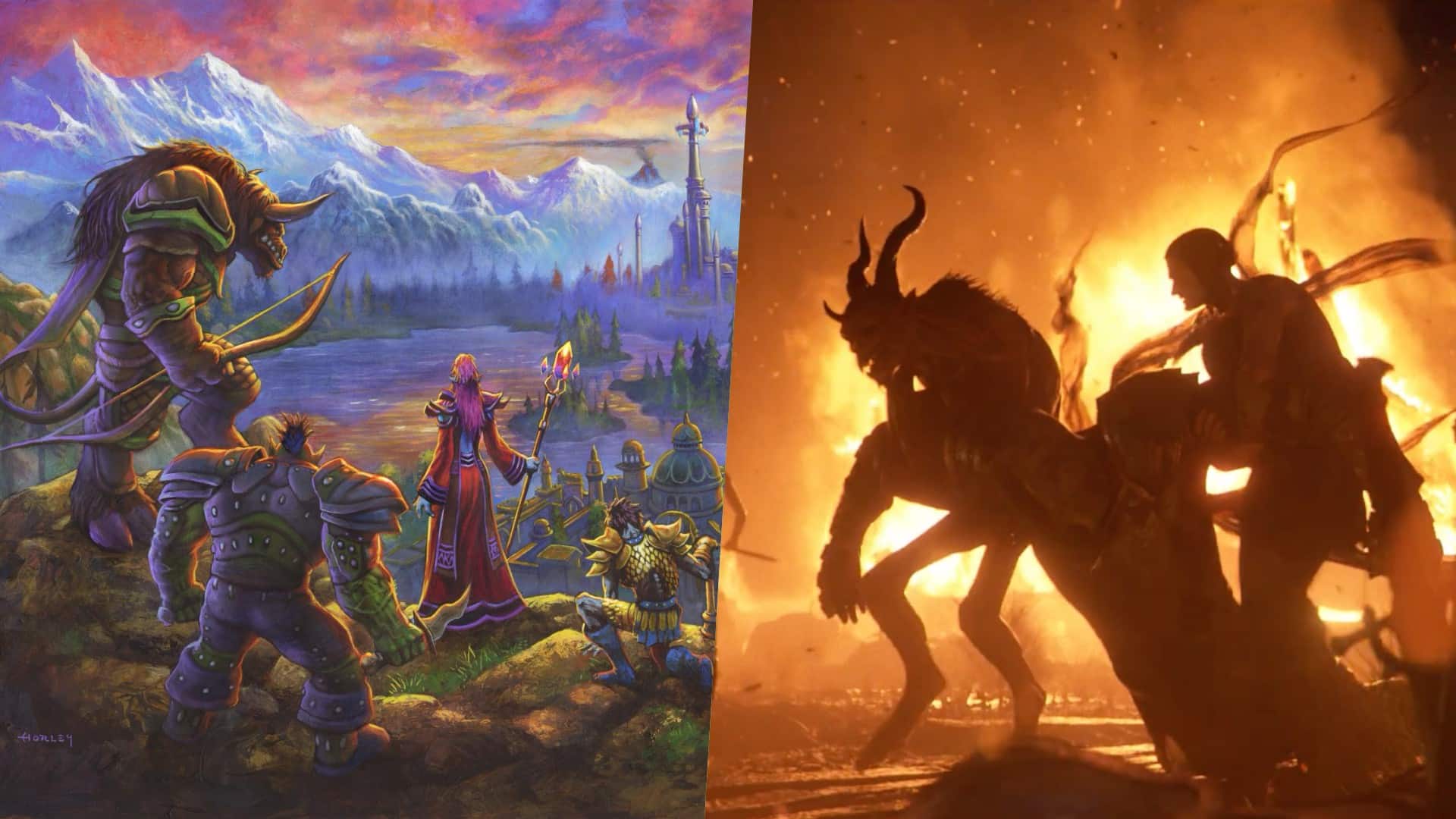
Blizzard Entertainment kicked off BlizzCon 2026 with a packed Opening Ceremony featuring new games, major expansions, updates, and other announcements across its biggest franchises.
Blizzard Entertainment President Johanna Faries opened the event at the Anaheim Convention Center, celebrating the community behind the company’s games and the teams that bring its worlds to life.
World of Warcraft: Forever and Diablo V
The biggest announcement was World of Warcraft: Forever, a new World of Warcraft experience launching November 5 AEDT, with its beta beginning September 18 AEST. The new experience will feature three zones, more than 1,000 quests, nine dungeons, two raids, and a new Skyborne race.
Blizzard also officially announced Diablo V, marking the next era of the franchise. The game is set to launch in North America in Spring 2029, with Sanctuary having fallen and Diablo having won.
StarCraft is also returning with a new story-driven, open-world shooter. The game is currently planned for a Spring 2030 release in North America.
Beyond games, Blizzard revealed that an animated series set in the Diablo universe is in development with Netflix. The company says this is only the beginning of its plans to expand its universes beyond gaming.
For Warcraft III Reforged, the new Forsaken Kingdom campaign is available today. It marks the Warcraft RTS series’ first new storyline in more than 23 years and explores the fall of Lordaeron and the origins of the Undercity. The accompanying 3.0 update also brings graphical improvements and a revamped World Editor.
Heroes of the Storm is adding Xal’atath as its newest Hero. She arrives in the Nexus on September 29 AEST, with her PTR release scheduled for September 15 AEST.
Existing games updates
Meanwhile, Diablo IV is preparing for its next major content drop. Season of Hell’s Legacy begins September 16 AEST and celebrates the franchise’s 30-year history with the return of the Prime Evils and Deckard Cain, alongside themed rewards and gear.
The legendary Amazon class will also arrive in the first half of 2027 as part of Diablo IV’s first class pack. The Diablo IV: Age of Hatred Collection is additionally coming to Nintendo Switch 2 on September 16 AEST with cross-platform play and cross-progression.
For World of Warcraft, Blizzard teased the next major update for Midnight. Eclipse (12.2) will see Xal’atath move closer to her goal of claiming Azeroth’s Worldsoul. Blizzard also offered another look at The Last Titan, the next expansion in the Worldsoul Saga and a major culmination of more than two decades of Warcraft storytelling. More information is coming early next year.
Overwatch is getting a major update with Season 5. The season introduces new Support Hero Doctrine, reworks for Sombra and Roadhog, and the new Watchpoint: Grimsvötn map. It will also conclude The Reign of Talon, Overwatch’s first year-long narrative arc.
LE SSERAFIM & YOASABI
BlizzCon also featured performances from YOASOBI and LE SSERAFIM. YOASOBI will perform during the first-ever esports halftime show at BlizzCon, while LE SSERAFIM will return to the Main Stage to close the weekend. A new LE SSERAFIM in-game collaboration is available now, with another Overwatch Spotlight scheduled for February 2027.
Finally, Hearthstone is getting its first new class in more than six years. The Monk arrives in 2027, while the upcoming Reign of the Black Empire expansion takes players back to the earliest age of Azeroth. It introduces the Assemble keyword, which combines two cards into a new one. Battlegrounds is also adding Aberrations as a new minion type.
BlizzCon 2026 is now underway, with Blizzard promising more announcements and details throughout the weekend.
Gaming
Xbox saves Kojima’s PHYSINT after PlayStation drops support
PlayStation says the separation was mutual, but Kojima hints otherwise.


Things aren’t going well in the PlayStation camp. After two months of frankly questionable decisions, the company adds another to the pile by dropping support for Hideo Kojima’s PHYSINT.
For a while now, Kojima and PlayStation were in a very productive relationship with the Death Stranding duology, a critically acclaimed collection of titles for the platform. When things looked like they were going well, Kojima announced PHYSINT, an espionage-themed game which reminded fans way too much of Metal Gear Solid.
If you were investing in a PlayStation 5 to play Kojima’s latest thriller, you might want to move your chips elsewhere now. PlayStation has just dropped support for the espionage game, meaning PHYSINT will no longer be a first-party title for the platform.
Though PlayStation claims that the decision came after “careful consideration,” Kojima himself has said that the move was “unexpected,” going against PlayStation’s assurance of a mutual separation.
Very quickly, Xbox has announced that their platform will support PHYSINT instead. It’s a big get for the competing brand because Xbox Game Studios is already supporting OD, Kojima’s other upcoming horror project starring Sophia Lillis.
Unfortunately, it’s difficult to say more. As is tradition, Kojima will not explain much more about his upcoming titles. In fact, OD’s trailer barely says anything. One thing’s for sure, though: we’re all in for quite a ride.


DJI Lito X1 review: Is this the best lightweight drone for creators?
Making a strong case as a travel companion and a capable B-cam!


REDMI Note 17 Pro Max review: A new breed born from AI greed
Welcome to the new normal


Marvel’s Wolverine review: When the claws come out
A brutal, cinematic superhero adventure

Jackery Explorer 300D: Power and portability in one

Nike’s Alphafly 4 is built for the part of the marathon ~that actually hurts~

SEGA, Netflix announce Crazy Taxi film adaptation

Smart launches LiveSmart App for exclusive deals
DJI Lito X1 review: Is this the best lightweight drone for creators?

TECNO MEGAPAD 2 review: Eyes on the size

realme 16T 5G with 8000mAh battery, IP69 Pro rating launches in PH

HUAWEI Pura X View is 2026’s first WIDE slab-type smartphone

REDMI reveals the refreshed Note 17 and Note 17 Pro series

REDMI Note 17 Series: Price, availability in Singapore


-
 News2 weeks ago
HUAWEI Pura X View is 2026’s first WIDE slab-type smartphone
-

 News2 weeks ago
The CAMON Slim 5G is TECNO’s latest ultra-slim smartphone
-

 News1 week ago
iPhone 18 Pro series: Price, availability in the Philippines
-

 Automotive2 weeks ago
Ford’s new Everest lineup brings V6 engine to the top, tech down the line
-

 Singapore1 week ago
iPhone 18 Pro series: Price, availability in Singapore
-

 News1 week ago
iPhone Duo: Price, availability in the Philippines
-

 IFA 20262 weeks ago
XGIMI announces AURA 3 Series 4K 120Hz UST projectors
-

 Philippines2 weeks ago
Smart cuts 5G Home WiFi price