
Enterprise
US revoked Huawei’s remaining licenses
Including Intel’s


Throughout the Trump presidency, Huawei has seesawed between near-extinction and salvation, between bans and temporary pardons. However, in the final days of his reign, Trump is seemingly intent on burning as much bridges as it can. Despite previously granted applications, the U.S. government has revoked Huawei’s remaining licenses, including Intel’s.
Late last year, Intel finally received one of the coveted operating licenses from the government. Amid the expansive ban against Huawei, the chipmaker gained permission to continue doing business with the Chinese company. The company joined a select group which reportedly includes Samsung and Qualcomm. After all, the government promised licenses once companies started applying.
Unfortunately, the government’s sudden turnaround is no surprise. A few days ago, Trump also blacklisted Xiaomi, dumping the company in the same mire as Huawei. Given the events of the past few weeks, the Trump administration is apparently hellbent on causing as much damage as possible.
According to Reuters, eight licenses were revoked from four companies. Besides Intel, memory chip maker Kioxia, formerly known under Toshiba, is reportedly part of the list. Additionally, the government intends to deny several applications in the coming days.
On the bright side, the Trump administration only has a few days left at the time of this writing. Though incoming president Joe Biden’s China-related policies are still an unknown, they will likely be less hostile than Trump’s ongoing policies.
SEE ALSO: Huawei buys 90 patents from BlackBerry







Computers
Lenovo accelerates production-ready enterprise AI with NVIDIA
From AI inferencing to gigawatt-scale AI factories


Lenovo has unveiled new Lenovo Hybrid AI Advantage with NVIDIA solutions designed to accelerate AI adoption, reduce time-to-first-token (TTFT), and deliver measurable business results across personal, enterprise, and cloud environments.
Building on the inferencing acceleration introduced at Lenovo Tech World, this next phase of Hybrid AI execution expands the solutions with device to data center to gigawatt-scale AI cloud deployments.
This enables real-time decision-making, operational efficiency, and intelligent automation across industries at global scale. The solutions boost productivity, agility, and innovation by enabling faster AI deployment.
The development comes as AI is seen moving from training models powering real-time decisions. Lenovo is prepared to address the demand for validated hybrid AI platforms built for production-scale inferencing, as organizations will need infrastructure to support such.
In fact, Lenovo’s Hybrid AI Advantage with NVIDIA are now delivering ROI in less than six months. The new inferencing-optimized ThinkSystem and ThinkEdge servers are being utilized for real-time inferencing across retail, manufacturing, healthcare, sports, and smart city scenarios.
The expanded portfolio includes:
- two Lenovo Hybrid AI platforms, featuring NVIDIA RTX PRO 6000 Blackwell Server Edition and Blackwell Ultra
- Hybrid AI inferencing starter platform with RTX PRO 4500 Blackwell Server Edition
- Lenovo ThinkAgile HX650a with Nutanix Enterprise AI and Nutanix Kubernetes Platform
- Lenovo Hybrid AI platforms with Cloudian
Bringing inferencing directly to professionals
Lenovo and NVIDIA are bringing AI from development environments to real-world production at a global scale. This is thanks to new Lenovo AI inferencing platforms with NVIDIA Dynamo and NVIDIA NIM.
Meanwhile, Lenovo AI Cloud gigafactory platforms are powered by NVIDIA Vera Rubin NVL72. Industry-specific agentic AI solutions are also built with NVIDIA Blueprints and software.
For consumers, there’s next-generation NVIDIA RTX Pro Blackwell-powered mobile and desktop workstations. These will be rolled out across the ThinkPad P14s Gen 7, ThinkPad P16s Gen 5, and ThinkPad P1 Gen 1 lineups.
ThinkStation P5 Gen 2 desktops, meanwhile, will get up to two RTX PRO 6000 Blackwell Max-Q GPUs. They will also have support for NVIDIA OpenShell.
For gigawatt-scale scenarios, the next-gen Vera Rubin platform accelerates deployment for hyperscale and sovereign AI cloud providers.
These fully liquid-cooled, rack-scale AI systems are engineered for faster deployment and dramatically improved token economics. They can achieve up to 10x higher throughput and up to 10x lower cost per token.
Automotive
How the Ford Ranger is powering community resilience
Through machine and technology, Ford Philanthropy is helping Gawad Kalinga bridge the gap for remote communities.


Strong communities aren’t just built with bricks and mortar. They are sustained by the hands that reach out and the wheels that get them there.
For Gawad Kalinga (GK), reaching the most isolated provinces in the Philippines is often the biggest hurdle to delivering hope.
To bridge this gap, Ford Philanthropy and Ford Philippines recently handed over the keys to a brand-new Ford Ranger Sport 4×4.
During the launch of the “Ford Building Together” initiative at the GK Headquarters in Mandaluyong, the Ranger was introduced as a vital partner for GK’s nationwide relief operations.
The Ranger provides the performance and off-road capability needed when every second counts.
More than a mission
“Strong communities are built through strong partnerships,” said Mary Culler, President of Ford Philanthropy.
Alongside Pedro Simoes, Managing Director of Ford Philippines, Culler highlighted how this initiative unites dealers, employees, and owners.
It’s a collective effort to scale the heart of what Ford does: moving people forward.
Through Operation Walang Iwanan, Ford has already equipped disaster response hubs across six regions with essential tech: from Starlink mini-satellites and EcoFlow solar power to water filtration systems.
Between 2024 and 2025, these tools supported over 11,500 individuals through fires and natural disasters.
Investing in the everyday

The impact stretches into the daily moments of community life. Since 2015, Ford’s partnership with GK has reached 15,000 patients through medical missions. They also trained 1,100 health champions.
Through the Kusina ng Kalinga program, children receive the nutrition they need to stay focused in school. Meanwhile, the new READ program provides 12 weeks of literacy support for students in Caloocan.
Even food security is getting a tech-driven boost. Ford has renewed its collaboration with Scholars of Sustenance Philippines, using mobility to rescue surplus food. It is then redistributed to families experiencing hunger in Nueva Vizcaya.
In the end, technology lives inside these real moments. By combining grassroots action with reliable mobility, Ford and Gawad Kalinga are ensuring that no community is ever truly out of reach.

AMD is prepared to lead the industry in its agentic AI era with their high-performance CPU strategy.
As the industry pivots from simple AI models to agentic AI systems that are capable of independent planning and decision-making, the CPU is reclaiming its role as the critical “head coach” of the data center.
This was noted by AMD CEO and Chair Dr. Lisa Su during the AMD Advancing AI event last year. The rise of autonomous agents has transformed inference into a complex and multi-step workflow that demands sophisticated logic and orchestration.
And while high-performance GPUs are necessary to generate insights in real time, the surrounding infrastructure is just as important.
This is where CPUs enter the picture. Their performance and efficiency are more important than ever in the overall performance of modern AI infrastructure.
And AMD delivers an advantage with their offerings. In recently published data, a 5th Gen AMD EPYC CPU-based system is estimated to perform up to 2.1x better per core against an NVIDIA Grace Superchip-based system.
The same system AMD-based system also delivers up to 2.26x uplift on SPECpower, measuring operations per watt.
The x86 CPU architecture gives customers the advantage of a broad, proven software ecosystem that can run existing workloads natively.
This avoids the costly refactoring and code-base duplication often required when switching to Arm-based alternatives.
Looking ahead, AMD is doubling down on the balanced system philosophy. Future architectures such as the “Venice” CPUs will power the “Helios” rack-scale AI design.
By integrating EPYC CPUs with Instinct GPUs and the ROCm software stack, AMD aims to maximize cluster-level performance and lower the total cost of ownership in the agentic era.


Shokz OpenFit Pro: Somewhere between awareness and focus
Find your balance
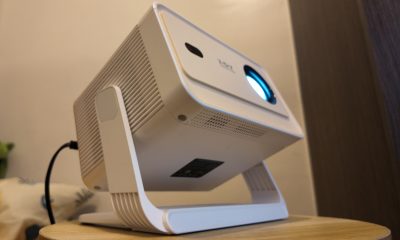

Why this 180-degree gimbal projector is a “small win” for solo living
At $200, the XGODY N6 Pro transformed my one-bedroom apartment into a sanctuary of independence


Nothing Phone (4a) + (4a) Pro review
Is "different" actually better?

vivo X300 Ultra wants to beat the iPhone 17 Pro Max in pro video
Shokz OpenFit Pro: Somewhere between awareness and focus

Nintendo might be working on an Ocarina of Time remake

Global tech leaders to convene in Singapore for GITEX AI Asia 2026

Fujifilm Philippines introduces instax Mini Evo Cinema, Mini Link+


-

 Reviews2 weeks ago
POCO X8 Pro Max review: A new beast from the far east
-

 News2 weeks ago
POCO X8 Pro Series: Price, availability in the Philippines
-

 Reviews2 weeks ago
POCO X8 Pro Iron Man Edition review: Midrange phone in superhero armor
-
 Automotive2 weeks ago
VinFast extends free unlimited charging in 3 markets amid rising fuel prices
-

 Philippines2 weeks ago
The HONOR X8d is serviceable
-

 News2 weeks ago
POCO X8 Pro Series launches in Singapore with early bird prices
-

 Gaming1 week ago
WWE 2K26 lets you live out all the fantasy matches you could want
-

 News2 weeks ago
POCO introduces X8 Pro Series with Dimensity 9500s