
News
ASUS ZenFone 4 launches with Pro, Selfie, and Max models


ASUS hasn’t shied away from teasing its next-generation ZenFone 4 lineup for the past few weeks, but all that build-up ends now. The ZenFone 4 series is finally here, bringing with it several variants for all sorts of markets.
We’re currently looking at a total of six officially named ZenFone 4 models: the midrange ZenFone 4, a high-end ZenFone 4 Pro, two selfie-centric phones in the ZenFone 4 Selfie and Selfie Pro, the ZenFone 4 Max that was quietly launched in Russia last month, and an additional ZenFone 4 Max Pro.
Those don’t include the minor variations some of these models possess. Already confused? Let’s break them down:
ASUS ZenFone 4

Despite being the torch bearer of the new lineup, the ZenFone 4 is in fact a midrange smartphone. That’s because it makes use of one of Qualcomm’s new efficiency-first processors — either the Snapdragon 660 or 630. So yes, there are two versions under its name, but the one equipped with the Snapdragon 660 will be slightly faster.
The rest of the specifications are what you’d expect from a phone of this caliber: a 5.5-inch Full HD LCD, up to 6GB of memory and 64GB of storage, and 3300mAh battery. What makes this special compared to the ZenFone 3 is its dual-camera system, wherein in the secondary 8-megapixel sensor delivers wider-angled shots compared to the primary’s 12-megapixel shooter. There’s another, single 8-megapixel camera on the front.
Pricing starts at US$ 399.
ASUS ZenFone 4 Pro

As the top-of-the-line model, the ZenFone 4 Pro has something the others don’t: Qualcomm’s best processor to date, the Snapdragon 835. That’s a big deal, because that puts this phone in line with the likes of the Sony Xperia XZ Premium, HTC U11, and OnePlus 5 — that’s seriously good company to be associated with.
Another special feature is the 16-megapixel secondary camera at the back that’s capable of 2X optical zoom. Combined with the optically stabilized 12-megapixel shooter and 8-megapixel selfie cam, we’ve got all bases covered. Sealing the deal are the 5.5-inch Full HD AMOLED, 6GB of memory, 128GB of storage, and 3600mAh battery.
As expected, it’s the costliest of the bunch. We’re looking at a price tag of US$ 599.
ASUS ZenFone 4 Selfie

ASUS has finally brought its Selfie series back after total absence from the ZenFone 3 line. Like the aforementioned models, the 5.5-inch ZenFone 4 Selfie has a pair of side-by-side cameras — except this time, they’re in front.
The main selfie shooter offers a large 20-megapixel resolution, while the secondary lens provides wide 120-degree photos to fit more people into a shot. There’s a front-facing LED flash, as well, and its 16-megapixel rear camera is on its own, but should be enough for daily grinds. A lower-end Snapdragon 430 chip powers the phone, along with 4GB of memory, 64GB of storage, and a 3000mAh battery.
You can purchase one for US$ 279.
ASUS ZenFone 4 Selfie Pro

If the ZenFone 4 Selfie isn’t enough to satisfy your vanity, you may opt for the more capable 5.5-inch Selfie Pro. It has a faster Snapdragon 625 processor and DuoPixel front-facing camera technology that combines two 12-megapixel images into a higher-resolution 24-megapixel photo. Wide-angled selfies with the second camera are also possible, and beside it is another LED flash.
Other than that, the Selfie Pro is similar to its non-Pro counterpart. You get the same 16-megapixel rear camera, 4GB of memory, 64GB storage, and 3000mAh battery. In addition, there’ll be a bright red color option available, while the ZenFone 4 Selfie will settle for more basic pink and teal choices.
It’ll retail for US$ 379.
ASUS ZenFone 4 Max and Max Pro

Finally, we have the most budget-friendly of the set, the ZenFone 4 Max. Like its super-popular predecessor, the ZenFone 3 Max, the newer model prioritizes battery life with a 5000mAh capacity. Different this time, however, is the inclusion of a dual-camera setup at the back, which is rare at this price point.
One rear camera is 13 megapixels, while the other handles 120-degree wide-angle shots. The front-facing camera is less special with a single 8-megapixel shooter, but interestingly, there’s a LED flash beside it, as well. Keeping the electronics going is a Snapdragon 430 chipset with 3GB of memory and 32GB of storage under a 5.5-inch HD 720p LCD.
Take note that there’s also a ZenFone 4 Max Pro with a slightly higher-resolution 16-megapixel rear camera. Aside from that, it’s nearly identical to the regular ZenFone 4 Max.
Pricing and availability for all handsets will be added as soon as we get them.
SEE ALSO: ASUS ZenFone AR review
[irp posts=”15440″ name=”ASUS ZenFone AR review”]





News
Is the Pixel 11 copying a feature from Nothing?
A new ad is hinting at something like the Glyph interface.

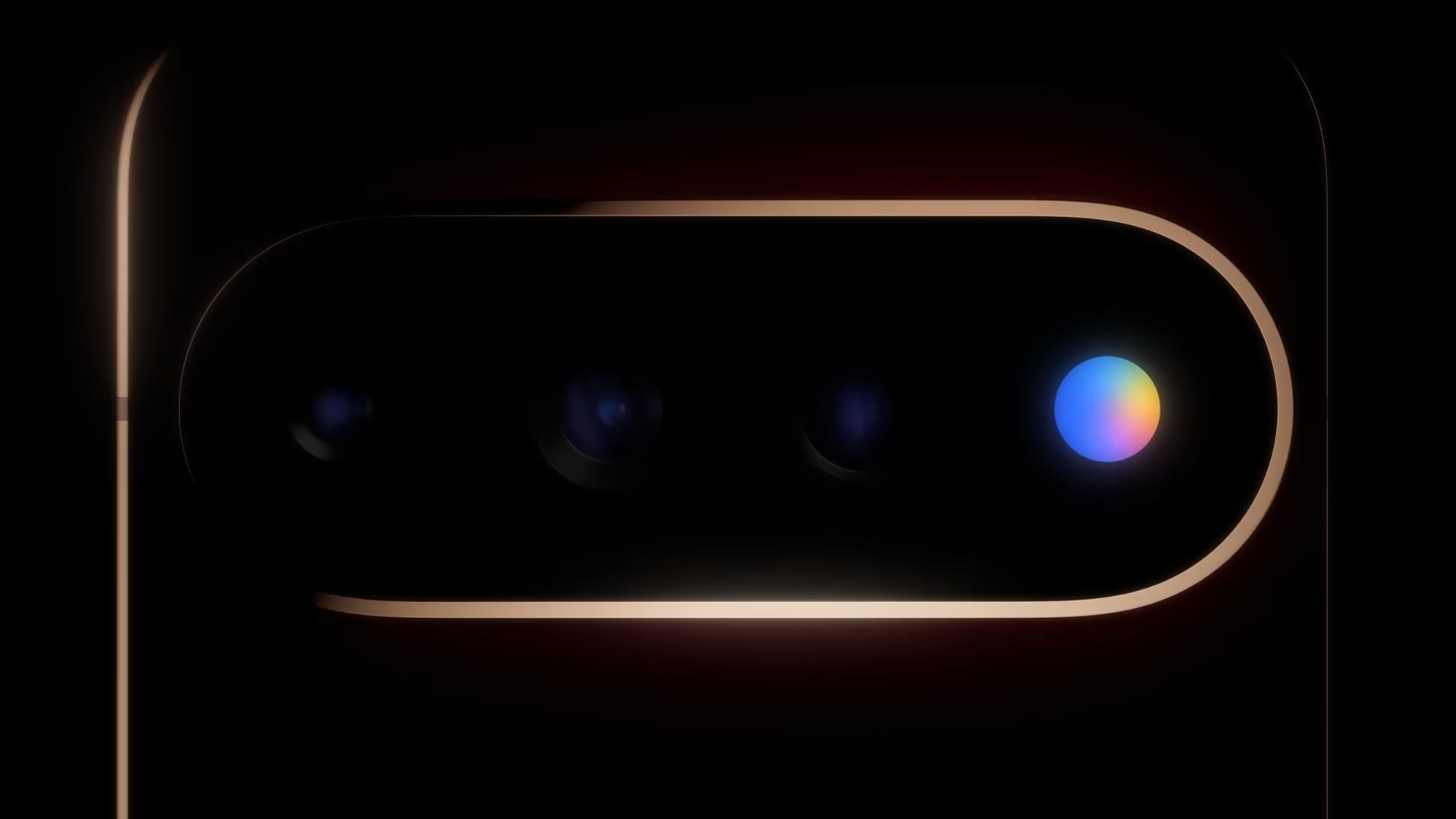
August 12 cannot come soon enough. On that date, Google is set to launch the upcoming Pixel 11 series. There isn’t much to indicate that the brand is changing the formula this year. Now, a rampant rumor, now seemingly confirmed by Google’s own ad, is hinting that a popular feature from Nothing is making its way to the Pixel.
Besides the transparent rear, Nothing prides itself with numerous iterations of the Glyph interface, a lighting system that serves as customized notifications for your phone. It’s mostly a novelty, but the feature is a unique take in a smartphone market plagued with too much sameness. It looks like Google wants to take a page from that same notebook.
For a while now, it’s been rumored that Google is adopting a version of the feature for the Pixel 11 series. The so-called Pixel Glow will reportedly add a light-based notification feature. Now, Google itself has seemingly confirmed the rumors.
In a new ad, titled “The Obvious Next Move,” Google is teasing a new feature coming to the flagship series. Though the ad leaves the feature untitled and without a description, it’s clear that it’s a circular glowing thing similar to Nothing’s take. The glowing thing is right on the Pixel’s iconic camera bar, just like Nothing.
But again, Google didn’t name the feature. However, if it helps, the ad says that we already use the Pixel for Gmail, Maps, Search, Calendar, and Docs, so the next evolution is whatever is depicted in this ad. August 12 really cannot come soon enough.
News
HONOR debuts refreshed brand identity ahead of Robot Phone launch
New imaging engine announced; HONOR, ARRI team up to bring cinematic workflow to mobile creation


Ahead of the launch of its Robot Phone, HONOR has revealed a refreshed brand identity, including a new logo and the slogan “Dare to Be.”
The brand new logo represents breaking through an endless circle, as mentioned on the description in HONOR’s posts.
It’s about forging a path unlike any other, and continuously innovating instead of settling. This way, it also represents HONOR’s long-term vision for the AI era and its ambition to build an intelligent ecosystem that extends beyond smartphones.
The HONOR Robot Phone is set to launch in China on August 12. It will officially bring an entirely new form factor for smartphones, designed to redefine the relationship between AI and mobile devices.
More recently in Hengdian, China, HONOR hosted the HONOR Imaging Technology Launch where the company introduced its latest mobile imaging technologies.
During the event, HONOR introduced the Optics-Intelligence Evolution principle behind its imaging strategy.
It also showcased its HONOR AiMAGE chip-device-cloud imaging engine, and announced a joint imaging technology lab with ARRI.
New AiMAGE imaging engine
Instead of only focusing on camera specifications, HONOR is building a more complete mobile imaging technology system across professional image capture, AI-powered processing, cinematic color science, and creator-focused workflows.
To support such workflows, HONOR has built a chip-device-cloud AiMAGE imaging engine. This connects the full imaging chain from physical capture to intelligent creation.
HONOR is developing a self-developed Transformer-based native AI ISP to reconstruct the image processing pipeline from the ground up.
This works alongside a next-generation pixel array and EVS sensor technology, designed to improve original image capture.
On the device side, HONOR is combining physical imaging hardware with real-time algorithms. As with the upcoming HONOR Robot Phone, there’s a titanium alloy three-axis gimbal, precision sensing hardware optical technologies, and real-time image processing algorithms.
Lastly, on the cloud side, HONOR is expanding imaging capabilities through RAW-domain image enhancement, spatial imaging technologies, and Imaging Agent tools.
ARRI image science, professional workflows for mobile creation

Furthermore, the partnership with ARRI enables HONOR to integrate selected elements of professional cinema workflow into mobile imaging.
This includes ARRI LogC3, ARRI Wide Gamut 3, and ARRI Looks. These bring a more professional color and workflow foundation to the Robot Phone.
Unlike simple filters, LogC3 and Looks are part of a professional imaging workflow. The former is designed to preserve more brightness and color information for post-production.
Meanwhile, Wide Gamut 3 provides broader color space. ARRI Looks, on the other hand, helps creators apply controlled cinematic styles.
Together, these add-ons support a workflow that gives creators greater flexibility from capture to editing, while helping mobile footage retain more creative information.
To deepen the connection, HONOR and ARRI have also announced a joint imaging technology lab.
This will focus on three key areas:
- sensor-level optics and dynamic range;
- end-to-end cinema industry workflow from capture to post-production; and
- imaging realism and aesthetic standards in the AI era
Entertainment
UNDERTALE: The Determination Symphony hits Makati in October
Determination arrives in October.

For so small of a game, UNDERTALE quickly made it into the gaming world’s hall of fame. Despite being only a decade old, the small title has had a major influence for modern-day gamers because of its unique gameplay, its lo-fi art, and, of course, its catchy soundtrack. If you’re a fan of UNDERTALE’s soundtrack, a unique concert experience is headed your way.
On October 17, Film Concerts PH, in partnership with SOHO Live, is hosting UNDERTALE: The Determination Symphony at the Proscenium Theater in Rockwell, Makati.
The concert will be performed by the Filharmonika Orchestra and conducted by Thanapol Setabrahmana. Personally curated by creator Toby Fox and developed by Lambert Jackson with Materia Music, the concert experience showcases the game’s most recognizable tunes laid over gameplay footage playing simultaneously. Plus, for the world tour, the experience will have expanded scoring.
In the game, you play as a small child stuck in the mysterious Underground filled with interesting characters and monsters. Unlike traditional RPGs, UNDERTALE asks players to choose between building relationships and chasing after wins. It’s a unique experience that’s defined by whether you chose to make friends or fought your way to the top. It teaches players to value different ways to solve problems, all while showering them with its one-of-a-kind humor.
Pre-sales for the concert, exclusively for members of the Film Concerts PH community, start on August 4. Public sales, however, will start on August 11 via Ticketmelon.
SEE ALSO: The hunt begins: The Witcher in Concert hits Manila with surprises in tow


realme C100: Enduring and durable in spite of entry-level realities
Enough power but needs more agility


The ASUS ExpertBook Ultra wins you over
The laptop sneaks up on you


Nexal Watch Sport review: A rugged watch for small budgets
I couldn't believe that watches this good could come for this cheap.

Is the Pixel 11 copying a feature from Nothing?

HONOR debuts refreshed brand identity ahead of Robot Phone launch

OBSBOT’s Meet Flip is your next best pocketable 4K webcam

Now Playing: Spider-Man: Brand New Day

NBA 2K27 gameplay trailer showcases new dunk mechanics, Rucker Park, and more


-

 News2 weeks ago
Samsung releases teaser with Spider-Man: Brand New Day Easter eggs
-

 Wearables1 week ago
Garmin launches its first screenless fitness band
-

 Automotive2 weeks ago
Mercedes-Benz celebrates 140th anniversary at the Presidential Car Museum
-

 Hands-On7 days ago
Hands-on: Samsung Galaxy Z Fold8, Flip8, Ultra
-

 Accessories6 days ago
CASETiFY revives Spider-Man collection for Brand New Day
-

 Cameras1 week ago
Sony announces new FX5 full-frame camera
-

 Gaming2 weeks ago
Street Fighter 6’s first Filipina fighter arrives August 3
-

 Gaming1 week ago
Call of Duty, Aston Martin unveil Dreadnought for Modern Warfare 4