
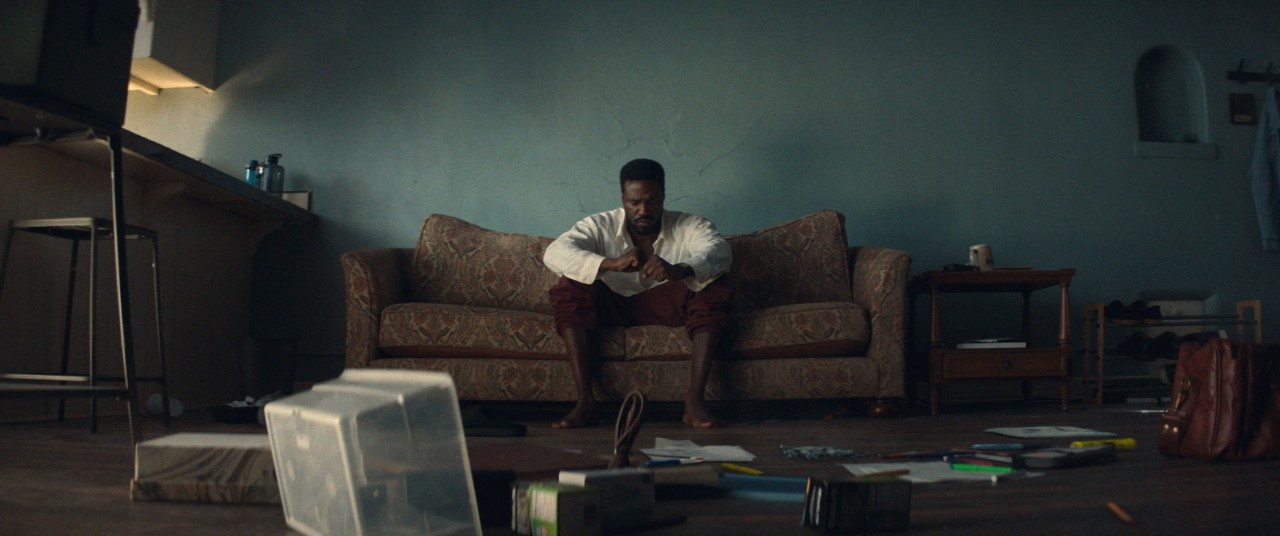
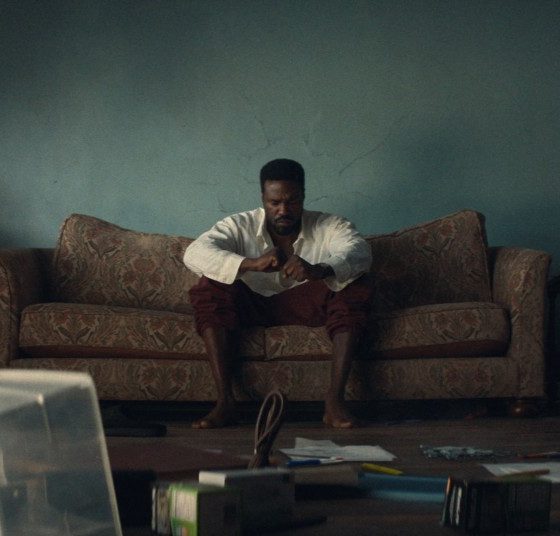

I just want to feel really excited again about the MCU — not cautiously optimistic all the time.
Somewhere along the way, keeping up with Marvel TV on Disney+ started to feel more like obligation than anticipation. So much so that I skipped Agatha All Along without much thought. Wonder Man was headed down the same path. Another Marvel Spotlight project I assumed I could safely ignore.
Then a weekend plan didn’t push through. I suddenly had time. And after coming off a personal binge streak that included The Copenhagen Test on HBO Max and Steal on Prime Video in the weeks prior, I pressed play on Wonder Man without much expectation.
That might have been the best way to watch it.
What I got was a pleasant surprise. Not a reinvention of the MCU. Not a must-watch cultural moment. Just a grounded, character-driven show that reminded me why this universe can still work when it stops trying so hard to be loud.
Simon Williams and the problem with overthinking
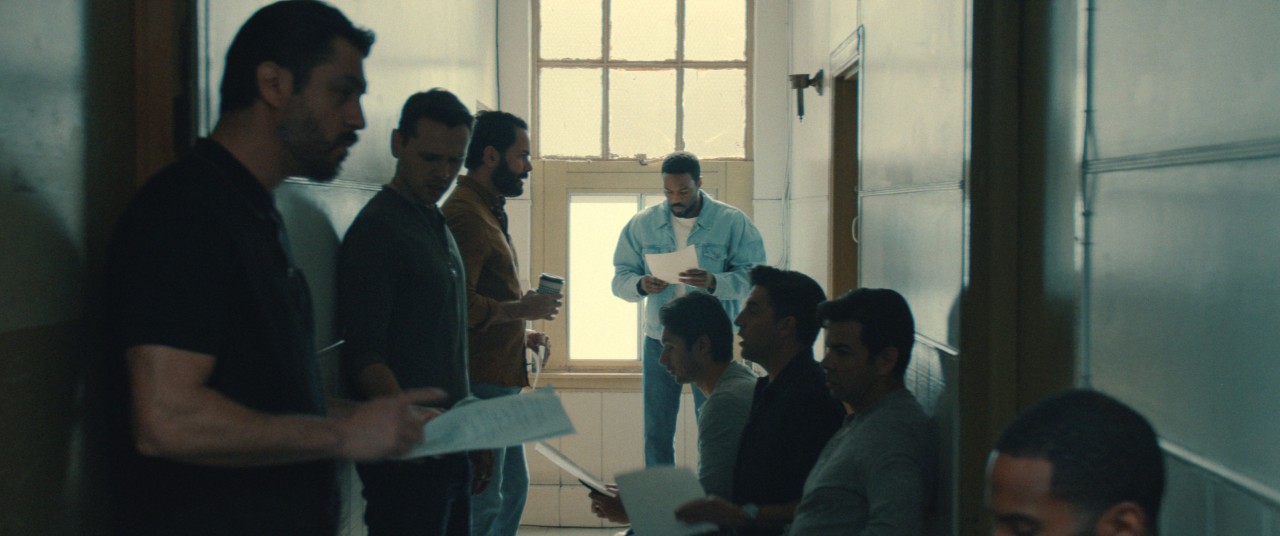
(Center) Simon Williams/Wonder Man (Yahya Adbul-Mateen II) in Marvel Television’s WONDER MAN, exclusively on Disney+. Photo courtesy of Marvel Television. © 2025 MARVEL.
Simon Williams is introduced doing something deceptively simple: rehearsing.
He’s given a scene. He offers notes. Thoughtful ones, at first. Then more. And more. Until the production team’s patience wears thin. In that moment, Simon isn’t framed as misunderstood genius. He’s framed as difficult. A little exhausting. And kind of a pain to work with.
Simon’s biggest obstacle isn’t a villain or a grand conspiracy. It’s his inability to get out of his own head. He intellectualizes emotion. He wants specificity where instinct would do. And he tries to control the performance instead of trusting it.
What Wonder Man does right is that this flaw doesn’t disappear after one heartfelt conversation. It keeps coming up. Again and again. Sometimes he improves. Sometimes he backslides. Often, he doesn’t even realize he’s doing it.
Character development arcs don’t happen in an instant. That’s why they’re arcs to begin with. The show understands that, and it lets Simon’s growth feel gradual, uneven, and frustrating in the way real personal change usually is.
The Doorman and the cost of power
Episode four, titled The Doorman, is where the show quietly proves how smart it can be.
It’s a largely self-contained story that explains why superpowered individuals are barred from acting in the first place. What could have been a throwaway rule becomes a fully realized backstory. We see the incident, understand the fallout, and feel the ripple effects.
And suddenly, the ban isn’t arbitrary. It’s policy born from consequence.
This episode does more than justify a plot device. It adds another layer to a world where superpowers exist alongside unions, contracts, and liability insurance. It reminds you that in the MCU, enhanced individuals don’t just fight aliens. They disrupt industries, create legal gray areas, and leave scars.
The Doorman doesn’t rely on spectacle. It relies on context. And in doing so, it deepens the stakes of Simon’s struggle in a way that feels earned.
Watching as a casual fan
I’ll be upfront: I don’t know Wonder Man from the comics.
I came into this with general MCU familiarity and nothing else. No expectations about power sets. No attachment to comic lore. And honestly, that worked in the show’s favor.
If there are deep comic references here, they never get in the way of the story being told. Wonder Man plays just fine as a character piece first and a Marvel project second, which makes it easier to recommend to anyone who doesn’t feel like doing homework.
Trevor Slattery, recontextualized
There’s something quietly poetic about Trevor Slattery’s role in this story.
Here’s a man who gained notoriety by pretending to be powerful. Now, he’s mentoring an actor who is powerful but trying to hide it.
Trevor, of course, is best known for the controversial Mandarin twist in Iron Man 3. At the time, many fans felt shortchanged. Over the years, the MCU slowly reframed that decision, most notably in Shang-Chi and the Legend of the Ten Rings, where Trevor was given consequence and context.
Wonder Man might be where the character finally feels fully at home.
Bringing Trevor back not as a punchline but as a mentor is a clever use of a once-maligned character. He understands performance and deception. He understands what it means to survive by playing a role. By the end of the show, he’s not just tolerable — he’s genuinely endearing.
An unlikely pairing that works
Much of Wonder Man plays like a low-key buddy comedy.
Trevor is a seasoned actor who’s already been burned by the superpowered reality of this world. Simon is an enhanced individual trying desperately to live a normal creative life within it. Their banter carries the show. Their conversations feel lived-in rather than scripted for punchlines.
Trevor’s advice to Simon is simple: get out of your head. Be in the moment. Stop hiding who you are.
But the show wisely doesn’t let those words land all at once. They take time. Fail. And repeat. Somewhere along the way, Trevor himself changes too. What begins as a deal with the Department of Damage Control slowly turns into genuine concern for Simon’s growth, even if it costs Trevor his easy way out.
That shift sells the relationship.
Grounding the MCU, one small story at a time
Stories like this help ground a universe where an alien once snapped half of existence away, only for time travel to undo the damage in Avengers: Endgame.
There’s no undo button here.
Whether the stakes are multiversal or minute, actions have consequences. Consequences that can’t be erased — only learned from, in the hope that the next decision leads to a better outcome. Wonder Man lives in that space. It doesn’t try to escalate. It tries to observe. That restraint is refreshing.
Where it stumbles
For all its strengths, Wonder Man does feel like it’s missing an episode.
Simon’s eventual control over his emotions — and by extension, his abilities — is implied more than it’s shown. The pieces are there, but a few connective scenes feel absent. One more episode focused squarely on that internal breakthrough could have made the arc feel more complete.
It doesn’t ruin the experience, but it’s noticeable.
A quiet reminder of why this can still work
Ultimately, Wonder Man isn’t about saving the world. It’s about learning to stop shrinking yourself in it.
It’s about being present. About embracing your strengths instead of hiding from them. About letting yourself exist without constantly managing how you’re perceived.
I didn’t go into this expecting to care. I came out glad that I did.
And for the first time in a while, it reminded me that the MCU can still surprise me — not by being bigger, but by being smaller.





Entertainment
The new LG OLED evo AI G6 is trusted by Hollywood professionals
New TV features 12-bit processing, peak brightness, anti-reflective screen

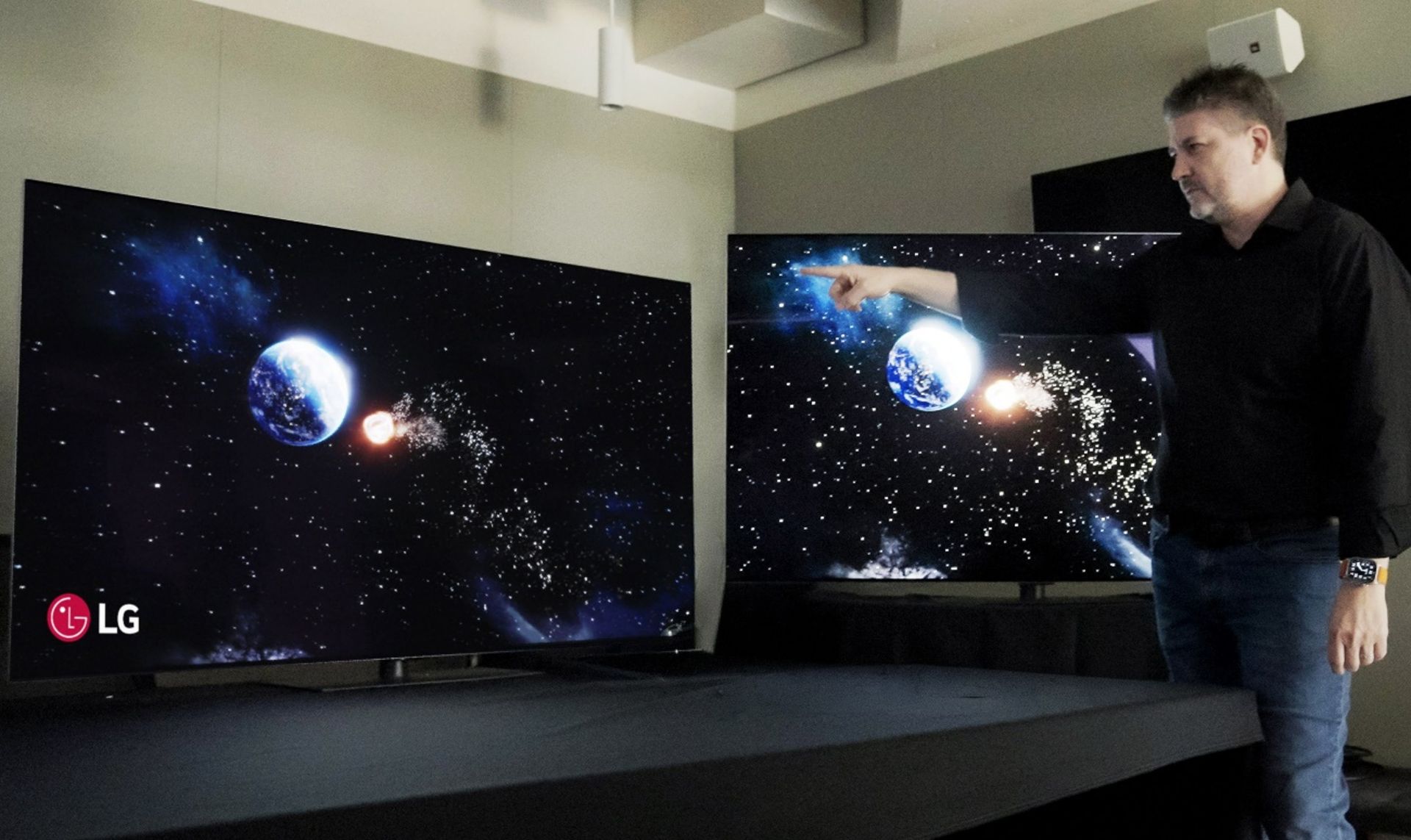
LG Electronics recently hosted an exclusive industry showcase at Los Angeles-based post-production company Picture Shop, giving Hollywood’s top technical minds a first look at the new LG OLED evo AI G6.
The event gathered esteemed cinematic experts, including veteran color scientist Joshua Pines (Blade Runner, The Revenant). He was joined by cinematographer and Johanna Coelho and colorist Tony D’Amore from the award-winning series The Pitt.
Together, the esteemed guests evaluated the consumer display to check whether it truly respects a filmmaker’s original creative intent.
The LG OLED evo AI G6 introduces Hyper Radiant Color Technology, paired with Brightness Booster Ultra.
Together, the features push screen brightness pushing screen brightness up to 3.9 times higher than conventional models.
Additionally, driven by the new α (Alpha) 11 AI Processor Gen3, the television balances these piercing highlights while preserving true blacks and micro-details within deep shadows.
A major talking point for the panel of experts was the G6’s upgraded 12-bit internal video processing pipeline, a significant jump from traditional 10-bit systems.
This architectural upgrade completely eliminates color banding and digital noise across subtle gradations, achieving an image quality profile that reliably mirrors high-end studio reference monitors.
Furthermore, the screen halves ambient light reflection compared to previous generations, earning it an official “Reflection-Free Premium” certification from a global validation body.


When Superman premiered last year, it was carrying over a decade’s worth of baggage from the ultra-gritty Snyderverse. It held the promise of a fresh superhero world that emphasizes fun. Now, Supergirl is no different. Whereas Superman was tasked with restarting a dying cinematic universe, Supergirl wants to prove that the former wasn’t just a one-hit wonder, and it does exactly that amid a few struggles.
Though David Corenswet’s Superman does make quite a few cameos in the film, Supergirl is about Clark Kent’s titular cousin. It’s also based on the award-winning book, Supergirl: Woman of Tomorrow, written by Tom King.

Celebrating her 23rd birthday, Kara Zor-El travels to planets with a red sun, the only places where she can get drunk as a Kryptonian. In one planet, she meets Ruthye Marye Knoll, who, after seeing Supergirl’s resilience, asks Kara to hunt Krem, the leader of the Brigands who killed her whole family. Kara initially refuses, but when Krem poisons Krypto, her dog, she goes off on her own to find the Brigand.
A classic tale of revenge
As with the original book, Supergirl is a tale of reluctant revenge instigated by a child desperate for it and a more mature mentor who knows better. Despite Kara’s nihilistic tendencies, she believes that revenge isn’t the right path for Ruthye.
It’s your standard fare of a revenge tale, somewhat bordering on a classic Western. In essence, it follows much of the structure of the original book. There are, however, some interesting changes, which may or may not be helpful to the story.

By switching to a more traditional plot structure, Supergirl trades away the book’s fleshed out relationship between Kara and Ruthye. Though Kara still cares for her young protégé, Ruthye has unfortunately been reduced to a fiery platitude, telling people who she is and how much she wants to kill Krem. At one point, Kara even makes fun of her little speech.
Krem, on the other hand, feels much more ferocious. Though the book’s Krem was evil in his own right, he was more of a mundane type of evil, just-an-average-Joe evil. The movie’s Krem is the type you wouldn’t want to meet in a dark alley. He looks like he took a few too many steroids.
On the one hand, these changes make for a smoother film. Though the movie starts off slow, it eventually rolls towards a superhero-level fight at the end. On the other, it loses the message of the original story about the complexities of revenge.
On James Gunn’s universe
Normally, it’s a compliment to have a movie comparable to a James Gunn movie. There is another side to the coin, though.
Despite being tagged as fundamentally different from the tone of Superman, it’s clear that Supergirl was influenced by Gunn’s vision. There are jokes, random aliens, and a liberal use of older songs. On a micro level, it just doesn’t hit as hard as a Gunn flick, though.
For one, in a Gunn movie, each unnamed alien has so much character that you’d hardly believe that they’re just extras. In Supergirl, background characters, even those with speaking roles, don’t lift up from the screen. They just blend into the background. Likewise, the Brigands, despite how much eviler their actions are, don’t look like anything beyond generic sci-fi villains.
On a larger scale, keeping up with Gunn’s vision makes sense. Supergirl’s take on Kara’s story complements Superman’s story so well. Kara’s origin, explored in the film, contrasts with Clark’s. Ultimately, it helps turn Clark and Kara into fully fleshed out characters, rather than the tired stereotypes of Mr. Goody Two Shoes and his apathetic sidekick.
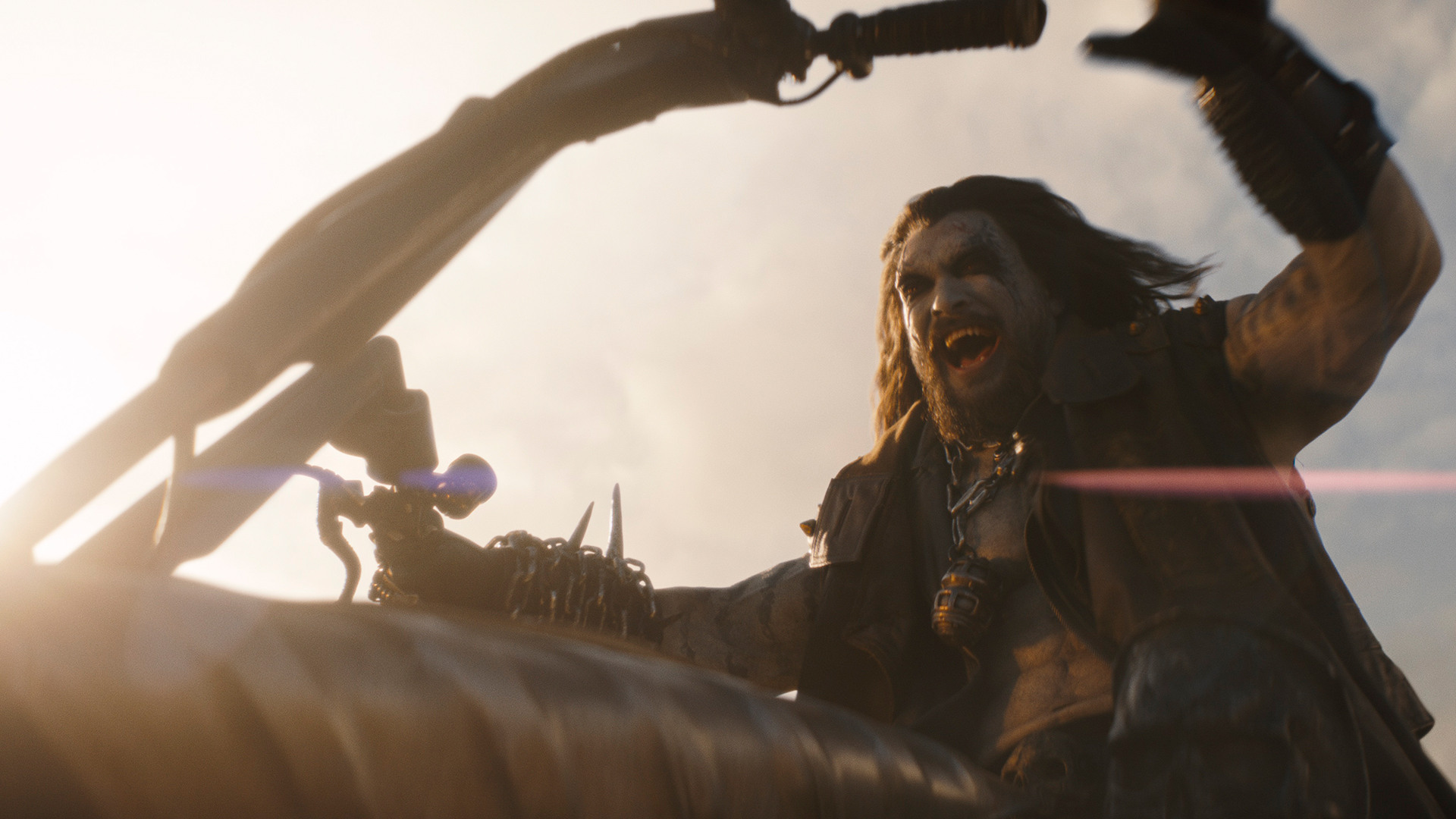
It also helps that Lobo, played by Jason Momoa, adds an interestingly cosmic element to the universe’s growing cast of characters. Finally spreading his wings away from Aquaman, Momoa has finally found a role perfect for him. He steals all the scenes that he’s in.
Should you watch Supergirl?
Supergirl is not on the same level as Superman. While the latter is Gunn at his absolute best, the former is a Gunn-esque film that drops the original story’s message in favor of a plot friendlier to the big screen.
That doesn’t mean that it’s a bad movie. In fact, it does well to expand the lore started by the first film. Supergirl is still a worthy, albeit smaller, addition to the growing DCU oeuvre.

Global K-pop sensation LE SSERAFIM is returning to BlizzCon.
Blizzard Entertainment has announced that the five-member girl group will perform as the closing musical act at BlizzCon 2026. LE SSERAFIM will take the Main Stage on Sunday, September 13 (PT), bringing fans another live performance after its BlizzCon debut in 2023.
The appearance also comes ahead of the group’s upcoming U.S. tour. Blizzard teased that the performance will make it a “Perfect Night” for fans attending the convention at the Anaheim Convention Center.
View this post on Instagram
LE SSERAFIM returns to Blizzard
LE SSERAFIM debuted in 2022 under SOURCE MUSIC, a label of HYBE. The group is composed of Sakura Miyawaki, Kim Chaewon, Huh Yunjin, Kazuha Nakamura, and Hong Eunchae.
The group’s name is an anagram of “I’m Fearless,” reflecting the confidence that has defined its music since debut.
This won’t be LE SSERAFIM’s first crossover with Blizzard. The group previously collaborated with Overwatch 2, bringing themed cosmetics and a special event to the hero shooter.

BlizzCon 2026 is sold out
BlizzCon is Blizzard Entertainment’s annual community celebration. It brings together fans of World of Warcraft, Diablo IV, Overwatch 2, and other Blizzard franchises for game announcements, developer panels, esports, cosplay, and hands-on experiences.
Passes for BlizzCon 2026 have already sold out. However, Blizzard says tickets may still become available through the Tixr public resale marketplace.
Fans can learn more about LE SSERAFIM’s appearance on Blizzard’s official blog.



vivo X300 Ultra review: A “Whole Different Animal”
Got the beast (finally) unleashed!


The realme P4 Power: realme’s midrange power play?
A power bank and a phone — and more


HONOR Watch 6 Review: Less guessing, more knowing
Beyond educated guesses

Sony brings 1000X THE COLLEXION to the Philippines

Everyone’s angry at PlayStation’s new no-disc policy, and this is why

Xbox might get rid of physical discs too

ASUS launches the ExpertBook Ultra

PlayStation goes all-digital in 2028

TECNO’s POVA 8 5G is both futuristic and future-ready

realme launches P4 Series 5G, including Power with 10,001mAh battery

Buyer’s Guide: Xiaomi Pad 8 Series

HONOR Magic V6 review: The best version of a book-style foldable?

TECNO’s SPARK 50 Pro is the latest budget smartphone battery beast


-
Reviews2 weeks ago
vivo X300 Ultra review: A “Whole Different Animal”
-
Reviews2 weeks ago
The realme P4 Power: realme’s midrange power play?
-

 Camera Shootouts1 week ago
Camera Shootout: HONOR 600 Pro vs OPPO Reno15 Pro
-

 Cameras3 days ago
DJI Osmo Pocket 4P launches with dual lenses and a 1-inch sensor
-

 News3 days ago
Lenovo says RAM prices are not coming back down again
-

 Accessories2 weeks ago
Father’s Day gift guide: Gadgets for every kind of dad
-

 Singapore1 week ago
Xiaomi opens largest Singapore store yet at VivoCity
-

 Apps1 week ago
HONOR, Xiaomi are working on their own Privacy Displays