
News
BlackBerry has a new security-focused flagship phone


BlackBerry, the innovative maker of mobile phones, is dead. But by the genius of branding and the company’s software expertise, the BlackBerry name will carry on, at least for the time being. To wit, BlackBerry just announced the successor to the DTEK50, which broke cover earlier in the year.
The unimaginatively named DTEK60, like the DTEK50, takes its design cues from an existing Alcatel, or should we say TCL, phone, but ramps up the specs and price considerably from its predecessor. The result is the most powerful handset to bear the BlackBerry logo, though there are faster and cheaper models out there, outside of BlackBerry’s walls.
You can already purchase the DTEK60 from the company’s website for $499. It’s available in France, Germany, Spain, Italy, the Netherlands, the U.S., and the U.K. BlackBerry says it is looking to release the phone to more territories in the “coming weeks.”
[irp posts=”6992″ name=”BlackBerry with Android 7.0 and physical keyboard might be coming”]
For the money, you’re looking at Android Marshmallow; a Qualcomm Snapdragon 820 chipset backed by 4GB of RAM and 32GB of storage; a high-resolution, 21-megapixel camera (and a huge camera bump); a fingerprint scanner; and a 3,000mAh battery that charges over a USB Type-C interface. The hardware itself sports a dual-glass design and a 5.5-inch Quad HD display. It looks like a lovely piece of tech, for sure, even though all the credit must go to TCL.

The DTEK60 has a metal frame and a glass back.
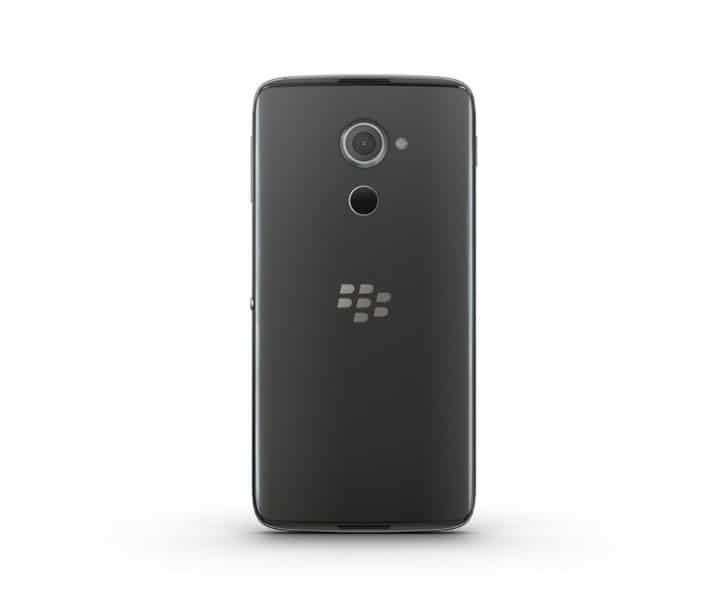
But don’t let the logo fool you; BlackBerry didn’t design this phone.
The software, however, has BlackBerry written all over it. The DTEK60 is billed as one of the “most secure Android smartphones,” all thanks to the additional privacy, security, and enterprise apps that come preinstalled on it. The extra software features are the same as the Priv’s and the DTEK50’s.
As for the brand’s future devices, expect them to be “fully developed” by hardware partners, meaning we’ll probably run into one or more TCL-turned-BlackBerry phones down the line.
[irp posts=”4877″ name=”From Curve, Bold to Priv: 10 of the most memorable BlackBerry devices”]
Source: The Verge




Automotive
Vespa celebrates 80 years with the Edizione Ottantesimo
A limited-edition release that honors eighty years of iconic Italian design.


The Foro Italico looks different when it’s ringed by Vespas, as seen when the iconic landmark hosted the four-day festivities of Vespa Roma 2026 — 80 Years of an Icon.
Mayor Roberto Gualtieri led the ribbon-cutting ceremony, and for four days, the Vespa Village makes the loudest argument anyone has ever made for scooters as cultural objects.
Opening day did not ease into things gently. First, the Istituto Poligrafico e Zecca dello Stato unveiled an official commemorative coin.
Soon after, Poste Italiane marked the occasion with a first-day cancellation ceremony for a special anniversary stamp.
Meanwhile, at the Stadio dei Marmi, curator Giacomo Bretzel opened 80 Years of an Icon – The Exhibition. This photographic account traces the remarkable journey of the vehicle.
Specifically, it shows how a basic scooter graduated from the factory floor to global cultural shorthand. It evolved from simple personal transport into a cinematic protagonist that people now ride across entire continents.

Only 1,946 of them
The number is deliberate. The Vespa Edizione Ottantesimo is limited to exactly 1,946 individually numbered units, one for each year the original rolled out of the Pontedera factory.
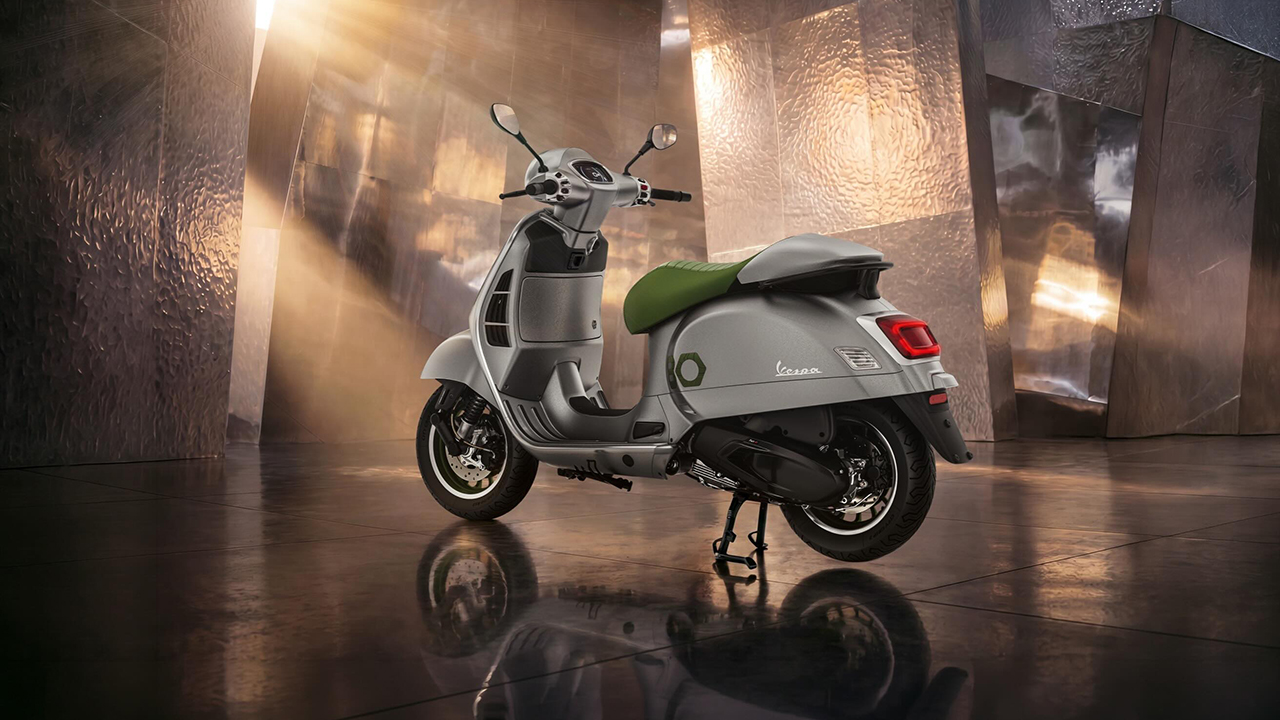
Vespa built it on the GTS 310 platform, which puts 25 horsepower through a single-cylinder 310 hpe engine, making it the most powerful Vespa in current production.
That mechanical upgrade sits inside a design that is genuinely doing something. The finish mimics raw, unprocessed steel. It’s textured and rough in a way that references the original load-bearing body before decades of refinement and lacquer softened everything.
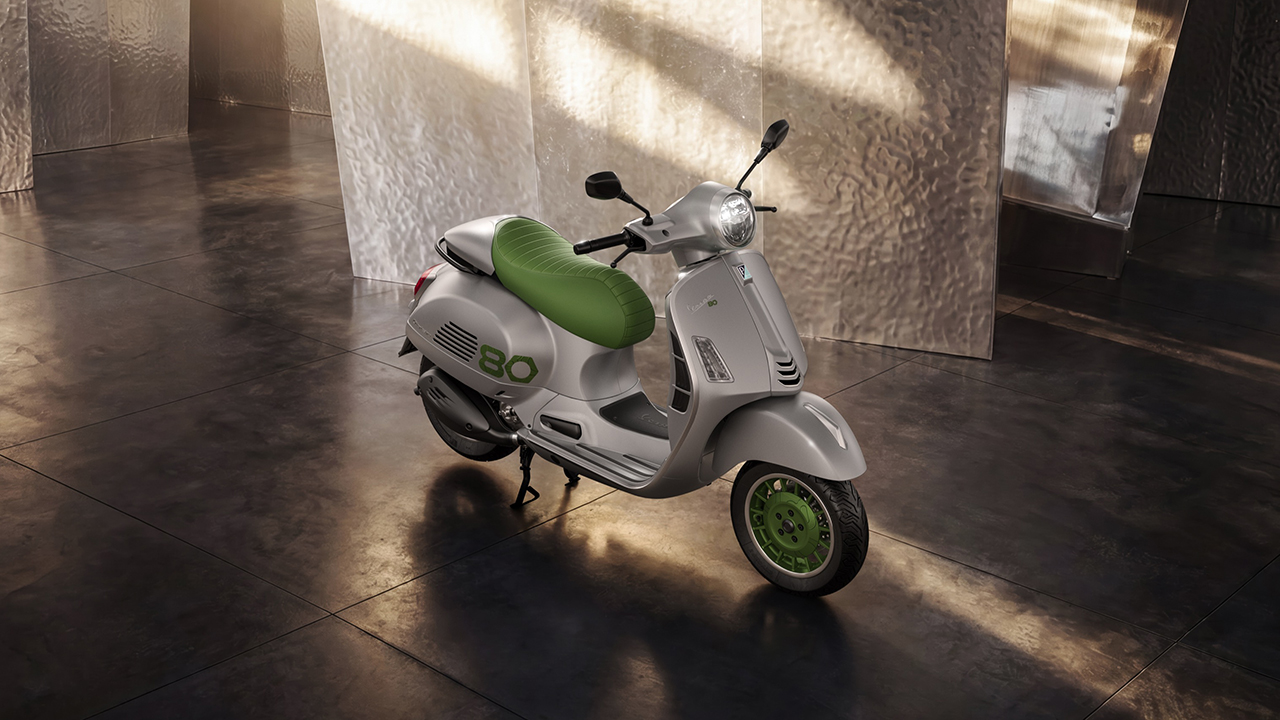
A specific shade of green — pulled from the earliest single-color production models — accents the saddle and wheel rims. The rear seat comes with a removable hard cover that matches the bodywork. A direct callback to vintage racing fairings.
The wheels reinterpret the pressed sheet metal of the 1946 Vespa 98 with a diamond-cut channel finish.
On the side panels, a three-dimensional green numeral 80 sits inside a hexagonal bolt contour. The bolt shape itself highlights how artisans originally built these machines by hand.
A numbered plaque rests inside the under-seat compartment, and a matte grey helmet ships with every unit. None of these design choices are purely decorative. Instead, they each trace a straight line directly back to 1946.
Modern enough to use every day
The Edizione Ottantesimo features electronic traction control and ABS to handle unpredictable city roads. These safety systems adjust your grip before you even have time to react.
Meanwhile, full LED lighting keeps the road perfectly sharp after sunset. Up front, a 5-inch color TFT display runs the intuitive VESPA MIA connectivity system. Consequently, your route and incoming calls surface on the dash without you reaching for your pocket.
Beyond the display, a keyless ignition system allows you to simply unlock the scooter and go. Vespa even considered the smaller details to maximize daily utility. For example, courtesy lights illuminate both the rear shield and the under-seat compartment. This layout ensures you stop fumbling in the dark for your helmet and gear.
Crucially, none of these additions change what a Vespa fundamentally is. The chassis remains narrow enough to split lanes and light enough to park anywhere. Ultimately, these premium updates close the gap between a 1946 icon and a machine you want to ride every morning.
Beyond the Handlebars
To complement the vehicle, each Edizione Ottantesimo ships with an exclusive coffee table book from Assouline. The volume draws from the Piaggio archive to document eight decades of design, film, and travel.
Furthermore, owners can extend the package with premium accessories. Available add-ons include a color-matched 36-liter top box, luggage racks, side bars, and an anti-theft system.

Vespa Roma 2026
Currently, allocations are open online at edizioneottantesimo.vespa.com. Vespa strictly capped the total count at 1,946 units, and that number will not go up.
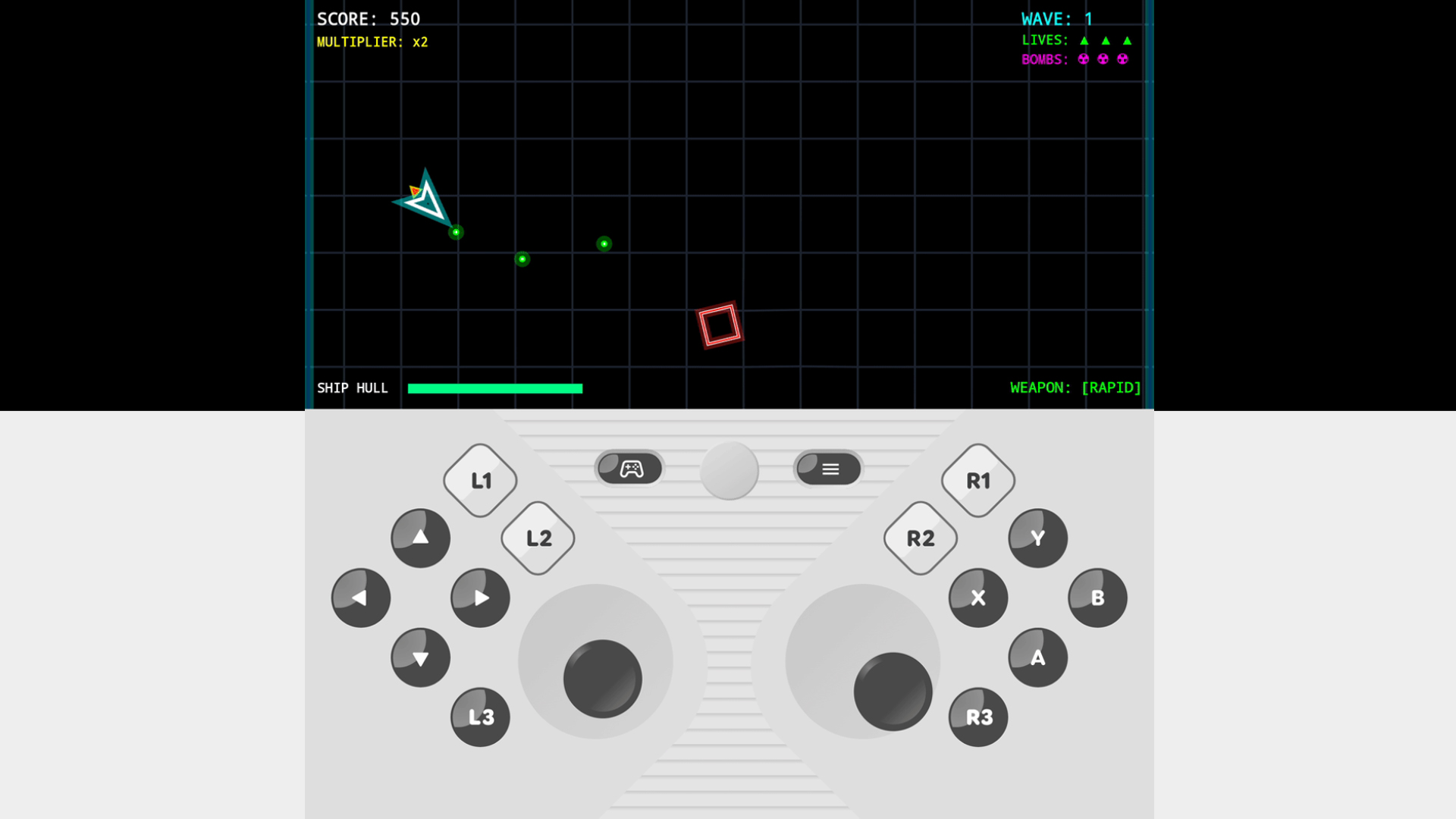
On today’s episode of “We Can’t Believe It Took Them This Long to Add This,” Android is finally introducing a native foldable gaming mode for smartphone with two screens.
Foldable smartphones have been around for a while now. Despite the popularity of the form factor today, they are, ironically, not the best ways to play games. Though they usually have the performance, their designs are hardly conducive to long play sessions. They don’t feel like handheld consoles; they are more like thick slabs without built-in buttons.
Over the weekend, Mishaal Rahman, now working with Google, has unveiled a new foldable gaming mode, which natively turns one of a foldable’s screens into a gamepad.
It’s a complete gamepad, too. The feature adds a D-pad, two thumbsticks, A-B-X-Y action buttons, L1-L3, R1-R3, and Start. Users can manually adjust the layout, the size of the buttons, haptics, and dark mode. The only drawbacks are that the gamepad is currently locked to 50 percent of the screen (or one of the displays) and that you can’t adjust the transparency.
This is a much needed feature. Most mobile games today offer only single-screen gamepads overlapping the whole screen. Some, of course, can utilize the second screen but not natively. Though developers will still need to adapt to the feature, having a native gamepad is a huge boon for regular mobile gamers.
The foldable gaming mode is expected to roll out starting with Android 17 in the coming months.
SEE ALSO: These are the best Android 17 features (if you hate AI)
News
Lenovo says RAM prices are not coming back down again
Don’t expect things to get better even in the next decade.

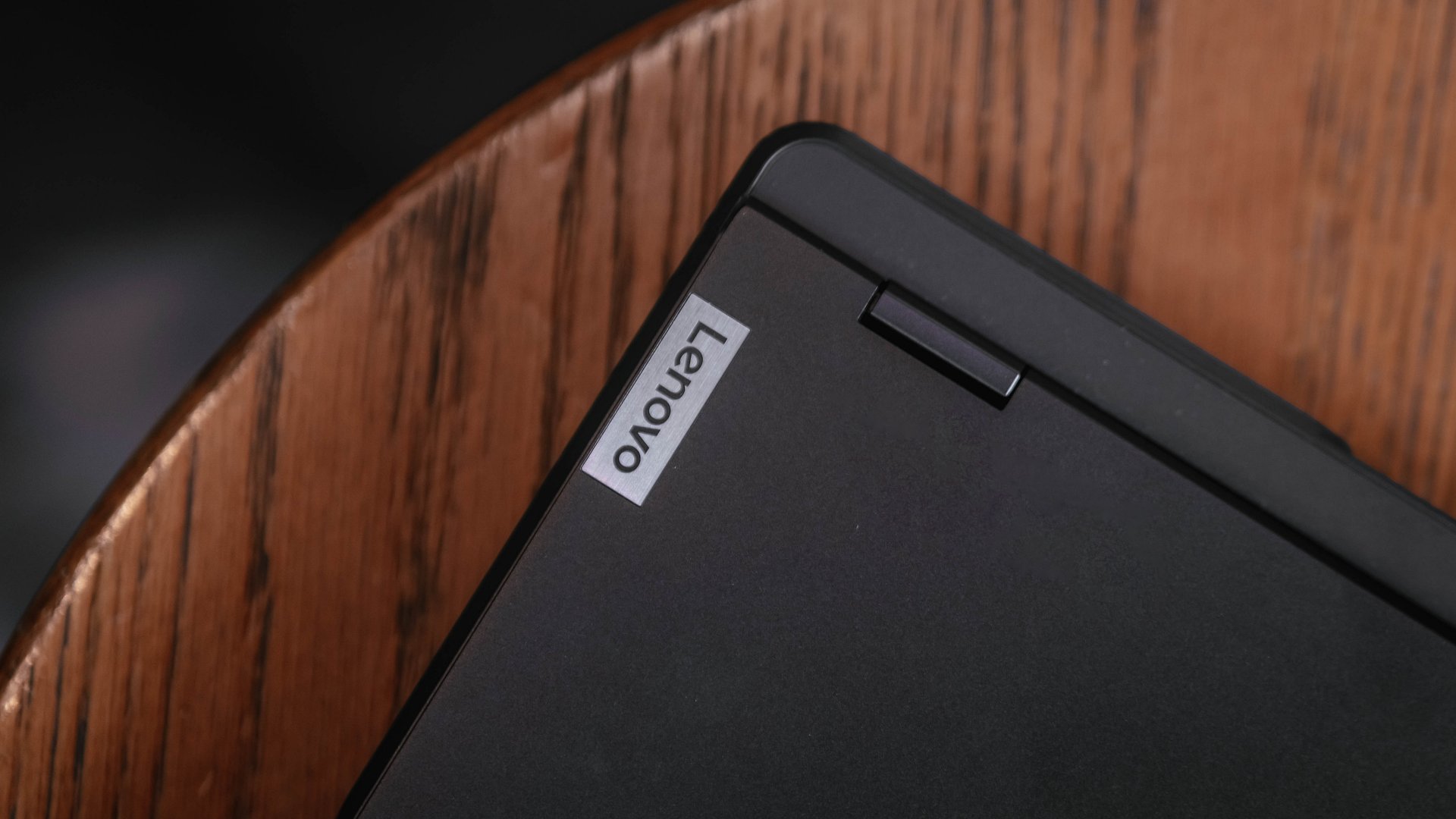
At this point, everyone is just waiting for the price of technology to come down to manageable levels once again. Unfortunately, the bubble might take much longer to pop. According to Lenovo, RAM prices are not coming down any time soon, if at all.
During ISC 2026 (via ComputerBase), Lenovo suggested that the current RAM prices are here to stay. By showing a graph of projected prices going well into the 2030s, the company says that they will no longer reach the relatively low levels we enjoyed a few years ago.
This disparaging trend is still a go, despite ongoing efforts to up production. According to Lenovo, manufacturers, including the company itself, is investing more resources to increase production capacity. However, AI companies are still gobbling up the supply for the supposed demand. Despite manufacturers’ best efforts, an increased supply will hardly affect the situation.
For anyone looking to upgrade their devices today, the prices of a new machine are disheartening, and it’s all thanks to AI. Right now, AI companies (and all other big-name companies who transitioned to AI) are buying up the world’s chips for their precious data centers, causing scarcities to be shouldered by us, the consumers.
Today, various brands have already confirmed that their users should expect price hikes throughout this year. Some, like Apple, have already raised the prices to absurd levels
SEE ALSO: Apple raises the prices of iPad and MacBook lineups


vivo X300 Ultra review: A “Whole Different Animal”
Got the beast (finally) unleashed!


The realme P4 Power: realme’s midrange power play?
A power bank and a phone — and more


HONOR Watch 6 Review: Less guessing, more knowing
Beyond educated guesses

Vespa celebrates 80 years with the Edizione Ottantesimo

Android is finally getting a foldable gaming mode

Lenovo says RAM prices are not coming back down again

The vivo X Fold6 is the first foldable to support teleconverter lens

Now Playing: Supergirl

TECNO’s POVA 8 5G is both futuristic and future-ready

realme launches P4 Series 5G, including Power with 10,001mAh battery

The Xiaomi Watch S5 proves you don’t have to take it off

Buyer’s Guide: Xiaomi Pad 8 Series

HONOR Magic V6 review: The best version of a book-style foldable?


-

 News2 weeks ago
TECNO’s SPARK 50 Pro is the latest budget smartphone battery beast
-
 Buyer's Guide2 weeks ago
Buyer’s Guide: TECNO SPARK 50 Pro vs SPARK 50 5G
-
Reviews1 week ago
vivo X300 Ultra review: A “Whole Different Animal”
-
 News2 weeks ago
Budget smartphone realme C100 Series launches
-
Reviews2 weeks ago
HONOR Watch 6 Review: Less guessing, more knowing
-
Reviews1 week ago
The realme P4 Power: realme’s midrange power play?
-
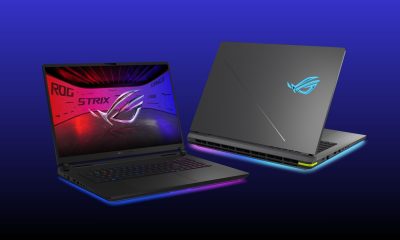
 Laptops2 weeks ago
ROG launches 2026 Strix gaming laptop series
-

 Entertainment2 weeks ago
Samsung brings the Galaxy Z series into Spider-Man: Brand New Day