
Apps
SIM card vulnerability puts your sensitive information at risk
It’s called the SIMjacker

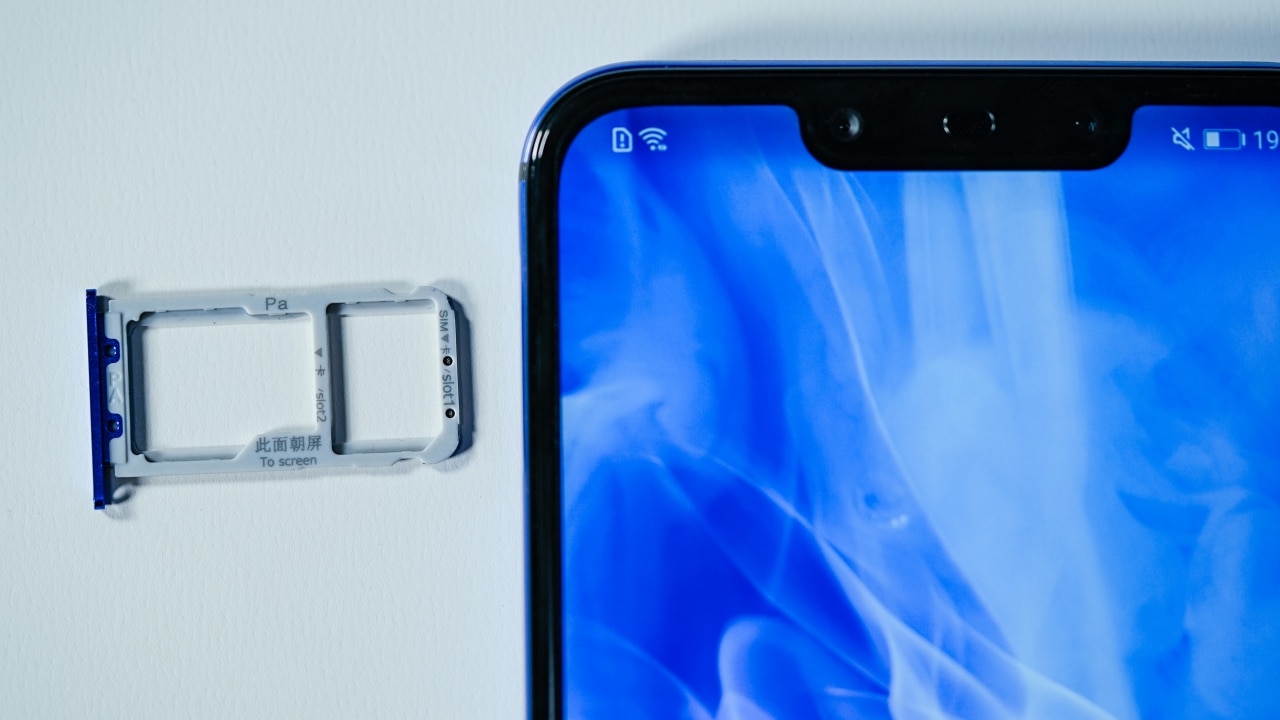
SIM cards are very important. However, a new SIM card vulnerability found out by AdaptiveMobile Security might be putting our information at risk. The Simjacker exploit, which was recently found out and still being investigated on, allows malicious hackers to steal sensitive information from your phone through a SIM card.
Mechanism of attack
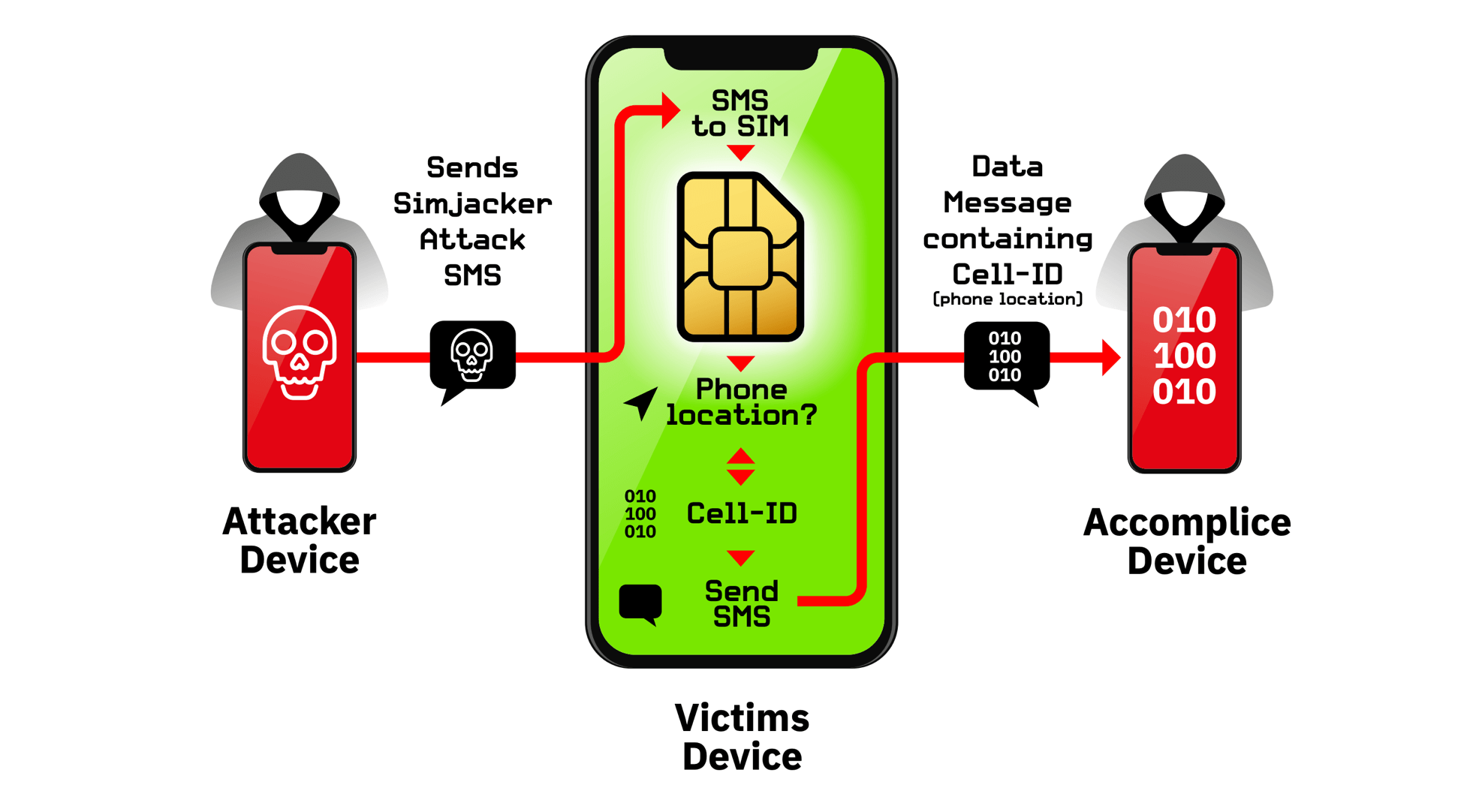
Infographic explaining the attack using Simjacker vulnerability | Photo by Simjacker.com
How does the Simjacker vulnerability work?
First, a hacker sends a malicious code to your phone through SMS. Then, the malicious code is read directly by your SIM card. The code then causes the S@T browser to send sensitive information to an accomplice device through SMS.
According to the report pulished by AdaptiveMobile Security regarding the vulnerability, the S@T browser is found on most SIM cards even though its development was abandoned many years ago. S@T browser was never updated, so it carries the risk of sending sensitive information to hackers when exploited successfully.
Sensitive information retrieved and transmitted by the S@T browser include location and the IMEI of an exploited device. The IMEI is a shorthand for International Mobile Equipment Identity, which is a 15 digit number unique to your smartphone that has some information about your device including its brand and model. As such, hackers can determine your exact location if you have a compromised SIM card, regardless of what device you have.
And the worst part of the attack is that you have no way of knowing that it has already been done since it all happens within the SIM card.
Origin and scope of the attack
The purpose for carrying an attack varies. However, the report traces the origin to an unspecified private company that works with governments to monitor individuals. So, there is a real possibility that it has been used to spy on us. And rightly so, since specific individuals were targeted in a certain country.
The report also warned that over one billion smartphones across all continents could be at risk to the vulnerability — and you could be one of them.
Response to the attack
In response to the discovered vulnerability, industry association SIMalliance has already put up recommendations for network providers to secure their networks. At this point in time, you can’t do anything to secure yourself from the vulnerability, unless you decided to go SIM-free.
But as a general rule of thumb, you shouldn’t just give your smartphone number like a free lunch. It also pays to update your smartphone once in a while, since some updates are designed to secure your phone from these kind of vulnerabilities and attacks.






Apps
Netflix expands its cheaper ad-supported tier to Southeast Asia
This also includes more countries in Europe and South America.

If you don’t care about seeing a deluge of ads on your platforms, you’re an incredibly rare breed these days. That same skill will come in handy for those nicely priced subscription tiers that comes with ads. Netflix, for one, has one of those tiers, and it’s now coming out in more countries.
As is prevalent in other platforms today, an ad-supported subscription tier lowers the price you have to pay every month. The catch, however, is that there will be an occasional sprinkling of ads here and there.
Netflix offers this service, which allows subscribers to get the service for cheap at the expense of their time. Currently, it is limited to only a few major markets in the world. However, the platform is expanding the tier’s reach to more countries in Europe, South America, and Southeast Asia.
Starting in 2027, Netflix’s ad-supported tier will expand to 15 countries: Austria, Belgium, Colombia, Denmark, Indonesia, Ireland, the Netherlands, New Zealand, Norway, Peru, the Philippines, Poland, Sweden, Switzerland, and Thailand.
Netflix says that the ad-supported tier is a popular option for subscribers. Currently, the tier has around 250 million subscribers worldwide. Since some of the new countries have a more budget-conscious attitude when it comes to purchasing services, this number will likely go up after the expansion in 2027.
SEE ALSO: Netflix does the unthinkable: Mayweather-Pacquiao II set for September
Google One is a monthly subscription that gives you at least 200GB of cloud storage for your files and photos. For most people, a Google One subscription starts when Google inevitably tells them that their free storage space is running out and will soon stop backing up files. Starting today, new users might get that warning sooner rather than later as Google tests a lower limit to free storage.
Historically, Google offers users 15GB of free storage as a start. However, especially these days, 15GB can run out rapidly, prompting a Google One upgrade. Still, despite how “little” it is, Google’s free storage is generous compared to its contemporaries.
Now, Google is reportedly going to be more at par with the rest. As spotted on Reddit (via 9to5Google), new users will receive only 5GB of free storage. Based on Wayback Machine, the company changed its policy sometime between February to March.
Notably, 15GB is still available as an option, but users have to link their phone numbers to their accounts first.
According to Google, the policy change is meant to encourage users to upgrade their security. However, critics will point out that it just enables the company to collect more data about their users. Of note, the platform is already pushy about linking phone numbers before the change, but this adds another layer to entice people.
Also, Google confirms that the new policy is only a regional test for now. They have not announced when (or if) the change comes out for real.
SEE ALSO: Gmail now makes it easy to unsubscribe from all marketing emails
Apps
Instagram takes on Snapchat yet again with new Instants feature
Posts disappear after they’re viewed once.
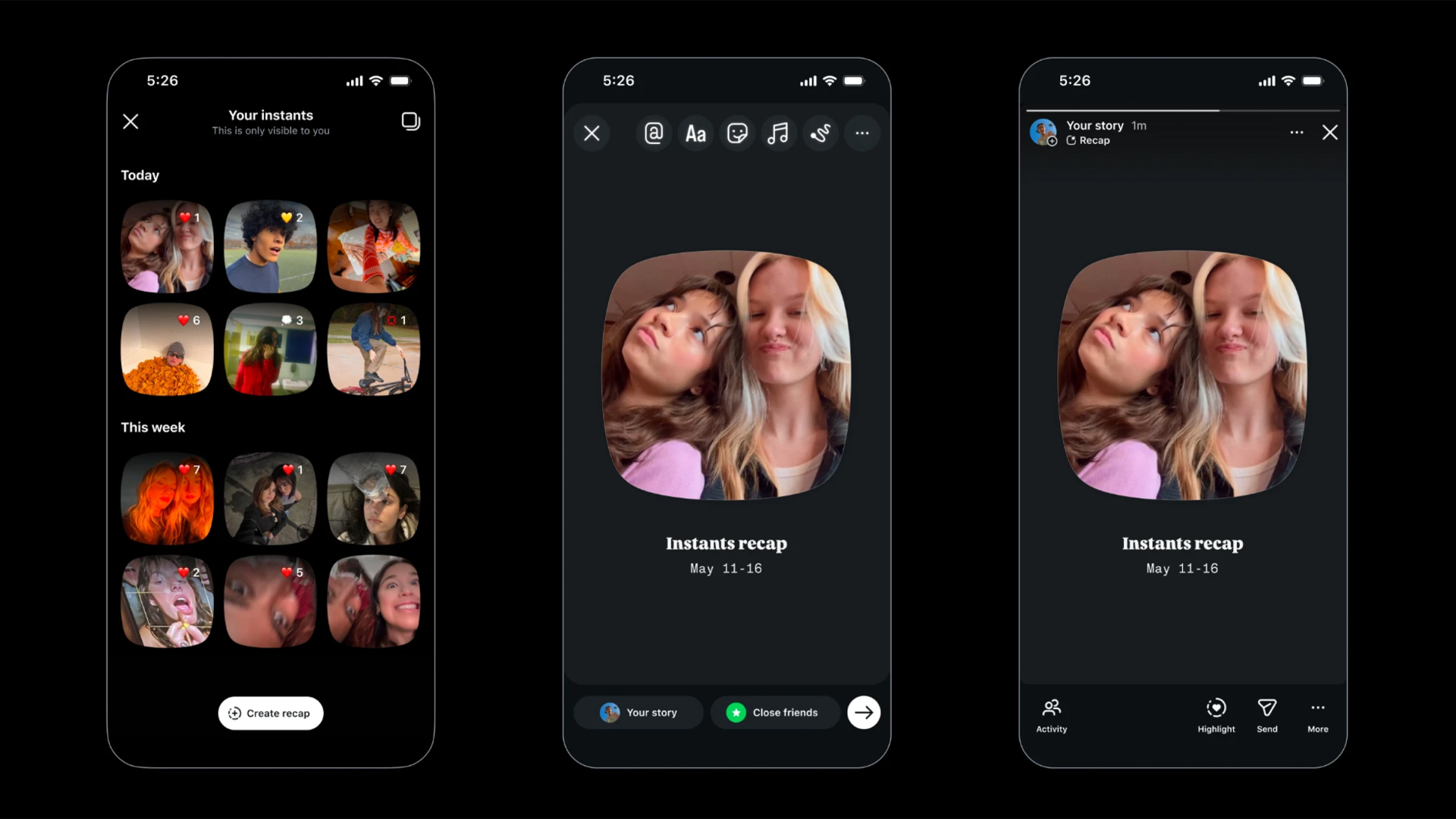
The popularity of Snapchat’s competitors is as fleeting as their disappearing messages. However, despite how volatile the market is, Instagram wants to try again with a new feature (and app) called Instants.
Pardon me if you’ve heard this premise before. Instants is a feature that lets users share disappearing photos. However, unlike the 24 hours allotted for Stories, Instants will disappear right after a friend views them, but they can still react and reply to them.
The idea of Instants is to trim the excess fat from what Instagram is these days. Instagram’s Adam Mosseri admits as much when he said users want as easier way to shoot content.
As such, users won’t have access to Instagram’s editing tools. They also can’t upload pre-shot content from their camera roll. Like its contemporaries like BeReal, the new Instants feature is about living in the moment and sharing exactly what users see.
Despite disappearing after a single view, Instants will be automatically archived, so they can be reuploaded as normal Stories later on.
It isn’t the Wild West, though. Even if it pares down all the extra features, Instants will still use the safety features available to all of Instagram. Users, especially young ones, can mute and block others’ Instants. Likewise, parents will have control over when and how their young children interact with the feature.


Spring reset: Growing more at home with Auk Mini
From kitchen counter experiment to everyday habit


UGREEN MagFlow Air review: Airy Yet Mighty
Slim and light power bank with a strong suit and core


The Infinix GT 50 Pro has the most inspired design for a gaming phone
Liquid cooling that actually shows the liquid cooling.
Spring reset: Growing more at home with Auk Mini

The UGREEN Nexode Air 65W is the only charger I travel with now
UGREEN MagFlow Air review: Airy Yet Mighty
The Infinix GT 50 Pro has the most inspired design for a gaming phone

AMD expands Ryzen PRO 9000 series processor lineup

HONOR 600 review: A taste of more

ASUS Zenbook S14 (2026) review: The perfect portable buddy

The OPPO Find X9 Ultra is Galaxy S26 Ultra’s biggest enemy

OPPO Find X9 Ultra lands in PH: Price, availability, pre-order perks

vivo Y Series launches in Singapore with bigger battery, durability upgrades


-
 Singapore1 week ago
Sony Xperia 1 VIII arrives with AI Camera Assistant, bigger telephoto sensor
-
 Reviews5 days ago
HONOR 600 Pro review
-

 Laptops2 weeks ago
Spotlight: ASUS Zenbook A16
-

 Reviews1 week ago
vivo X300 FE review: Don’t judge the camera by its cutout
-

 Automotive2 weeks ago
VinFast VF MPV 7 positioned as practical choice for families
-

 News2 weeks ago
iPhone 17 is the best-selling phone of 2026 so far
-
 News1 week ago
HONOR Magic8 Pro gets Android 17 Beta 3 support early
-

 Gaming2 weeks ago
Stranger Than Heaven is a Yakuza prequel with Snoop Dogg