

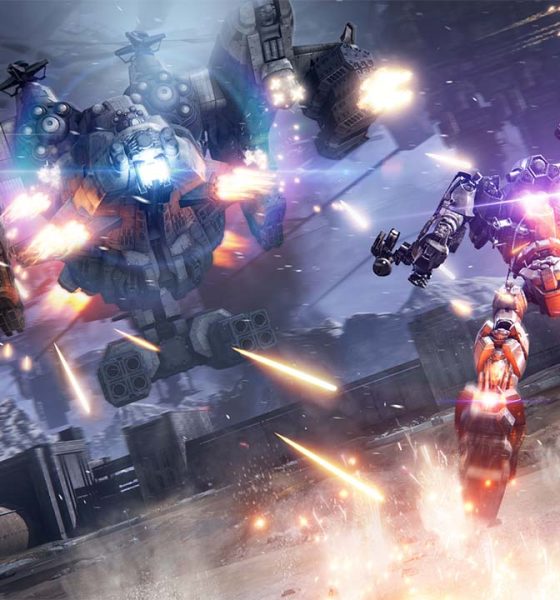

Last year, Elden Ring did wonders for FromSoftware. Formerly known as a niche developer of incredibly difficult games, the studio is now a household name for the RPG genre. Now, buoyed by the popularity of last year’s game, the studio is reaching deep into its bag of old franchises and resurrecting Armored Core, a series that hasn’t seen the light of day since the PlayStation 3. Years since touching the franchise, FromSoftware is back to form with Armored Core VI: Fires of Rubicon.
Before we touch the new mecha game, let’s go back to what made Elden Ring so popular. Unlike the punishing Dark Souls series, Elden Ring offered accessibility to players new to the studio’s difficulty spikes. The game was still hard, of course, but players, once they hit a wall, had the option of finding other things to do and levelling up. Players could have also experimented with stronger builds, rather than endlessly trying with the same kits.
More accessible than Elden Ring
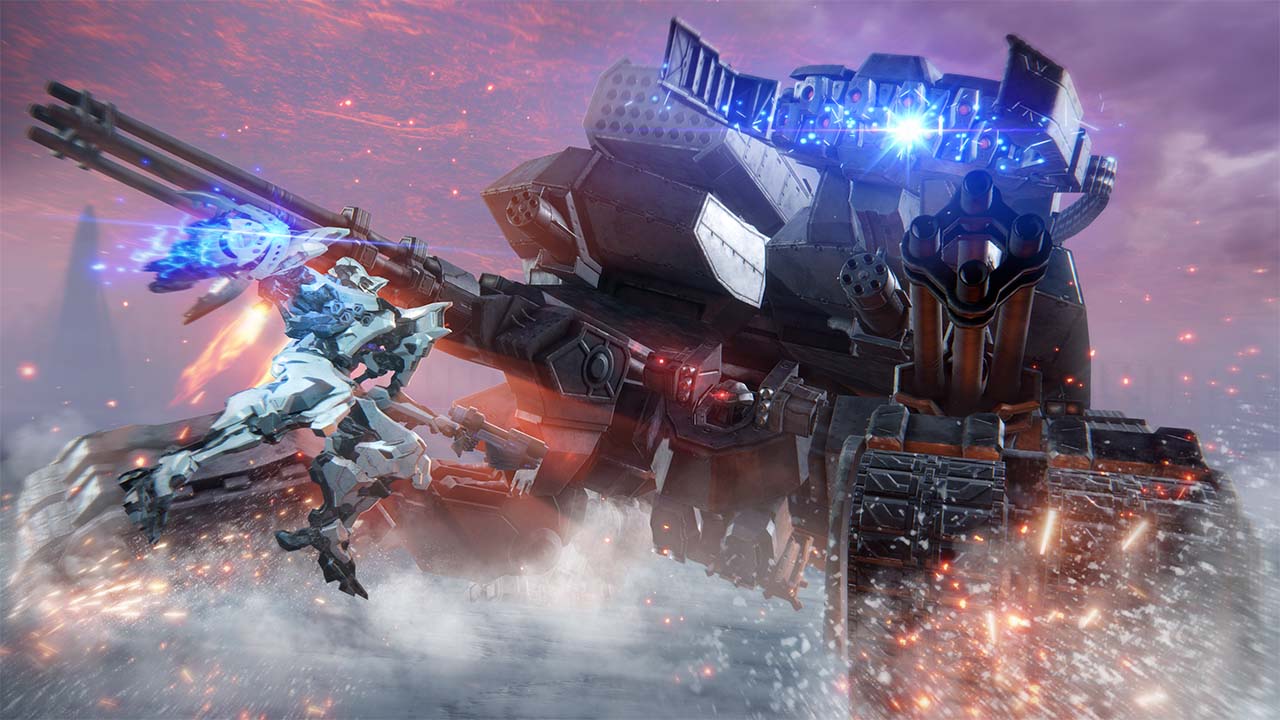
Now, I’d argue that Armored Core VI is much more accessible than Elden Ring. Whereas the latter places skill and build on equal footing, Armored Core VI puts the premium on creating the perfect build. To be clear, it’s still possible to win tough fights with weaker builds through sheer skill. However, the game encourages players to experiment with different builds to appropriately tackle a specific battle. The right build can make a world of difference.
Plus, it’s risk-free. If you bought a mecha part that you don’t eventually like, the game allows you to sell it again for 100 percent of its value. Those sold items will remain in the shop forever, too. Basically, if your net worth can afford the build you’re envisioning, there’s no risk of selling off parts and losing the ability to revert back. The game even allows you to change builds whenever you die.
Unfortunately, having such a relaxed system will naturally lead to meta builds — that is, popular builds publicly considered as the “best” way to beat the game. For example, whenever I was stuck in some sections, the internet would always suggest a combination of double shotguns and double grenade cannons. While the pure damage from that build is apparent, I found myself sticking to my own preferred parts most of the time. Meta builds aren’t the only solution to game, but they are there. That said, if you’re looking for true experimentation, stay away from the internet.

Boss battle after boss battle
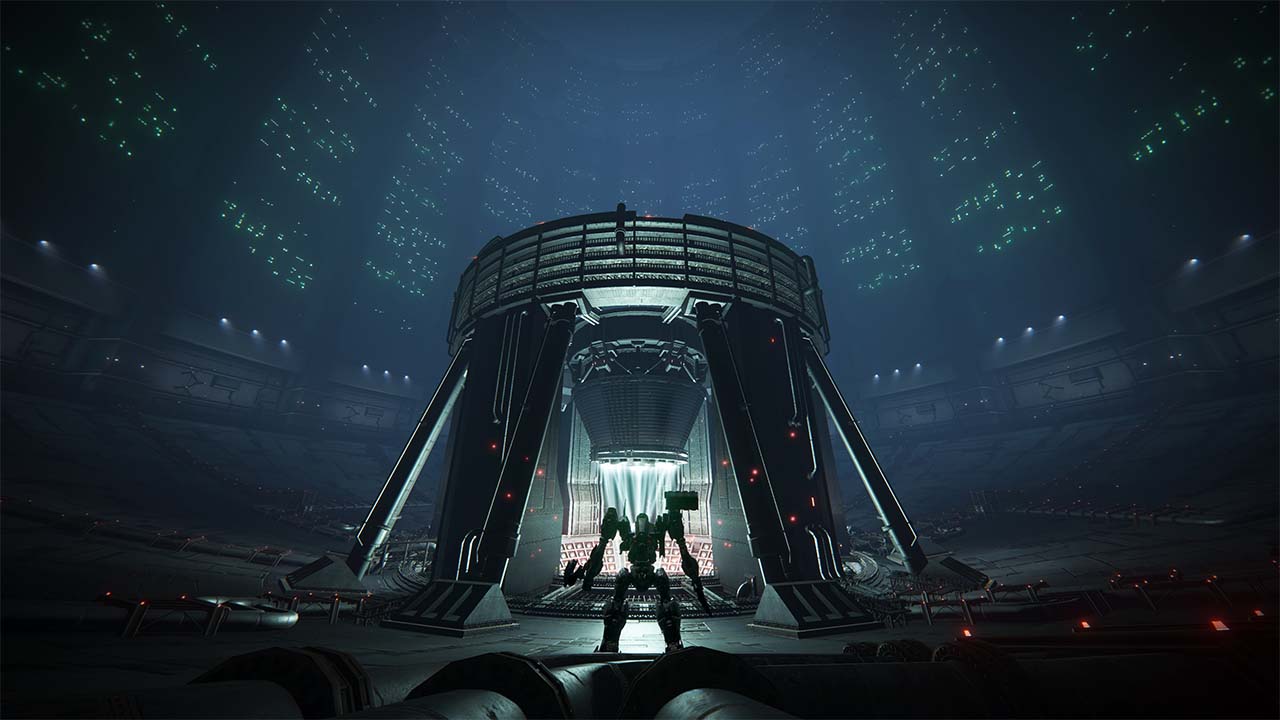
Another thing that makes Armored Core VI much more accessible is how linear the game is. Unlike the open-world nature of Elden Ring, Armored Core VI is brutally direct. It doesn’t even have a hub world. When you open the game, you enter a main menu stylized as a garage. Here, players can embark on missions and customize their mecha.
On the one hand, players don’t have a lot of options when they hit a wall. You’ll have no choice but to tackle the problem head-on. On the other hand, the lack of options also makes for a tighter game. It took me only around 16 hours to beat my first playthrough — a far cry from what FromSoftware is notoriously known for.
That’s not to say that the game is easy, though. While it’s a breeze compared to the developer’s harder games, some sections are downright grueling. However, what kept me playing was how fluid the combat is. Despite the emphasis on builds, there’s an innate satisfaction in figuring out the rhythm to a difficult battle: when to dodge, when to tank damage, when to unleash your biggest move. Dueling against a boss can really open opportunities for those epic moments that a mecha battle can generate.
A lot of the combat focuses on those major boss fights marking the middle or the end of a level. Unfortunately, enemy design outside of those bosses leaves something to be desired. Though the game has minor encounters outside of a boss fight, they are remarkably easy. At best, these enemies are just cannon fodder for you to test out builds. At worst, they are a health tax, chipping away at your mecha before a boss battle.
Short and sweet but not really
As I mentioned above, it only took me 16 hours to beat the first playthrough. For a full-priced game today, is a shorter playthrough time worth the money?
As with every FromSoftware game, Armored Core VI has multiple endings, necessitating multiple playthroughs to completely finish the game. The first playthrough makes this clear by offering decision missions which disappear if other missions are done. Hunting for those different endings isn’t a requirement, and a lot of players call it a day once that first playthrough ends. However, the mecha game does something that other modern FromSoftware games does not.
Instead of just giving players the opportunity to gun for other endings and decisions, Armored Core VI locks a chunk of content behind New Game Plus. The second and third playthroughs feature new missions and altered ones from the first playthrough. Players will fight harder bosses and trickier decisions.
One can certainly argue that locking content behind multiple playthroughs is a cheap way to extend the game. However, there is some satisfaction in bringing stronger mechas into fights that formerly gave us trouble. Plus, multiple playthrough is almost a requirement now for a lot of FromSoftware fans. I’d say that Armored Core’s approach just adds more incentive to something that a lot of fans are going to do anyway.
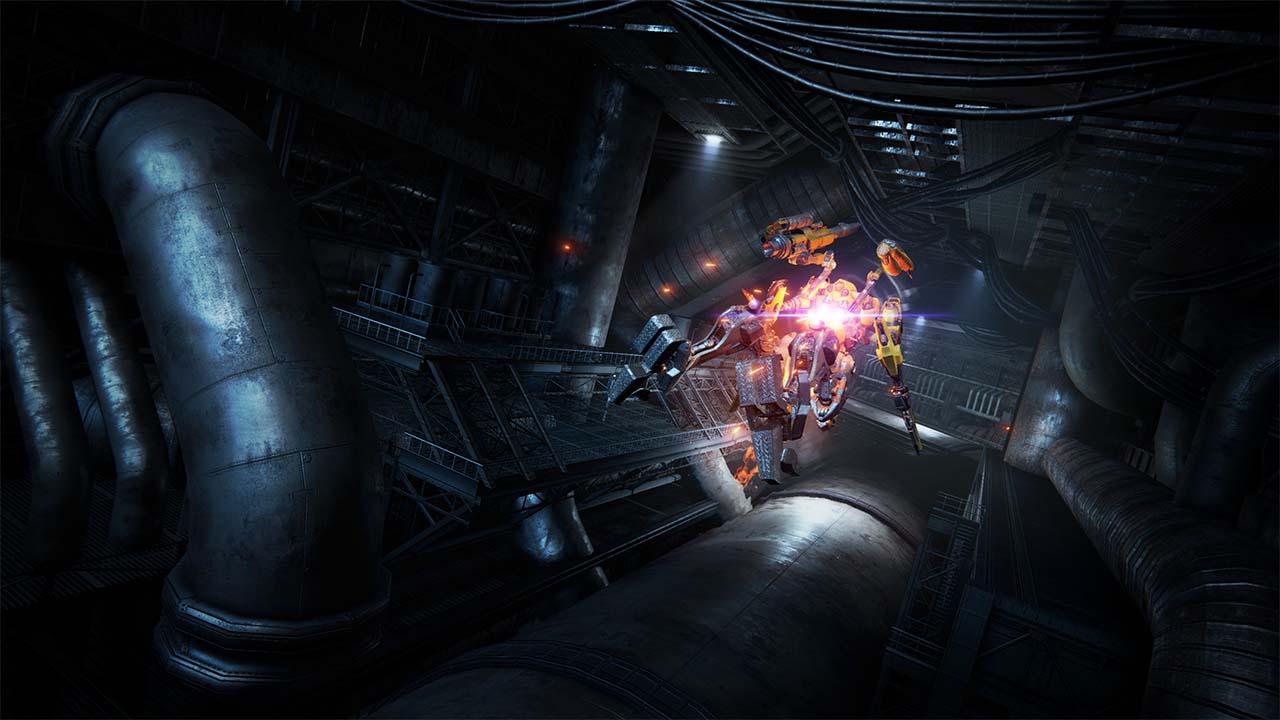
Armored Core VI is not enough to dethrone Elden Ring as a potential game of the year. However, the game’s accessibility and fluid combat are enough to introduce the mecha genre to a new batch of gamers. Outside of comparing the title to other FromSoftware games, Armored Core VI is still a great game for both new and veteran fans of the mecha genre.


Gaming
Horizon Hunters Gathering is an upcoming co-op roguelite spinoff
If you liked Nightreign, you might like this.

Like Valve, the PlayStation’s tentpole franchises are allergic to the number 3. The Last of Us, the ongoing God of War arc, Spider-Man, and Horizon all don’t have a third game yet. These franchises, however, have all gotten rumors of spinoffs. Now, Horizon is getting more than just a rumor; an official co-op spinoff is happening. Say hello to Horizon Hunters Gathering!
Today, Guerilla unveiled Horizon Hunters Gathering, an official co-op roguelite set in the Horizon universe. The game will feature multiple players working to take down difficult enemies, bosses, and dungeons.
The title shares similarities with Elden Ring Nightreign. For one, players can choose between six characters with different roles. The main mode, called Machine Incursion, takes players to a wide map with powerups and roaming monsters. The map then has a shrinking ring that… well, you know what a shrinking ring does.
Horizon Hunters Gathering also has a different game mode called Cauldron Descent. Compared to the Nightreign type of gameplay, Cauldron Descent is a more traditional roguelite mode. Players enter a dangerous dungeon and choose alternate paths that vary in challenges.
Both game modes will be available through an upcoming closed playtest through the PlayStation Beta Program.
Because this is from Guerilla themselves, this is an official game. But it’s far from the only spinoff for the universe. Previously, NCSoft, a South Korean gaming studio, announced Horizon Steel Frontiers, an MMO set in the Horizon universe. Like Horizon Hunters Gathering, Steel Frontiers has an unknown launch date.
SEE ALSO: Horizon Steel Frontiers is an MMO set in the Horizon universe
Gaming
Valve is delaying the launch of the Steam Machine
But it’s still scheduled for the first half of 2026.
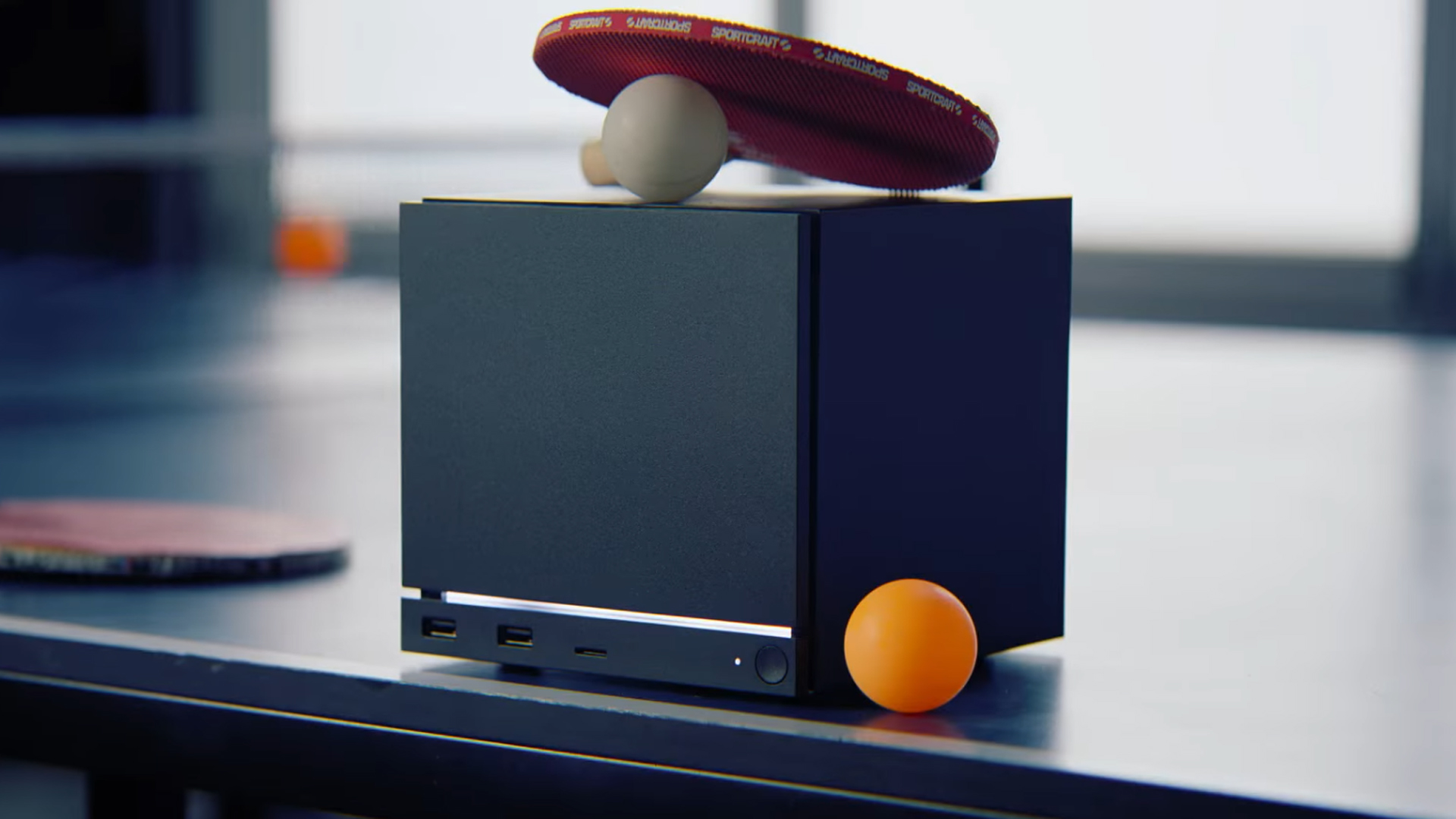
Overshadowed only by the Nintendo Switch 2, the upcoming Steam Machine was one of the most exciting gaming devices announced last year. Unfortunately, especially if you were waiting intently for the console’s launch, Valve is delaying the device by an undisclosed amount of time.
Initially, Valve anticipated a launch for the Steam Machine sometime in the first half of 2026. However, as the calendar rolls on into the second month of the year, the company has yet to announce either a price or a launch date for the console. Valve says that both should be out by now.
In a recent update, the company confirms that ongoing chip shortages have forced a reevaluation of the Steam Machine’s price and shipping date. This also goes for the Steam Controller and the Steam Frame. Valve is going back to the drawing board to figure out what is feasible for the console market.
On the bright side, Valve is still aiming to launch all three devices in the first half of the year. It’s just a matter of determining when that is.
The Steam Machine is just the latest in a growing line of devices affected by the chip shortage. Today, chipmakers are funneling their supplies to the supposed demand for AI servers. Naturally, more infrastructure means less chips reserved for regular consumers.
Also recently, NVIDIA was rumored to skip this year for a new GPU launch because of the AI “boom”. It’s the first time that this has happened in thirty years.
SEE ALSO: Valve announces its own console called the Steam Machine
Yesterday, AMD made the bold claim that the next-generation Xbox is coming next year. In a world drowning in manufactured hype for AI, hearing about GPUs going back to gaming is refreshing. NVIDIA, however, still has its pipelines clogged with artificial intelligence. According to reports, the company will not release new graphics cards this year.
This is unprecedented. A new graphics card is often a highlight for gamers every year. Even in recent times when prices beggar belief, a newly launched chip still generates hype.
Now, for the first time in thirty years, NVIDIA will not launch a new card in a calendar year (via The Information). Like a lot of things happening this year, AI is the culprit.
Buoyed by the dreams of billionaires, GPU companies are busy dedicating their stock of chips for AI servers. Because these servers artificially blew up the demand for GPUs, everything else that needs such a chip is projected to see a price hike this year. This includes smartphones, gaming consoles, and cars. Regular consumers have been left to deal with the aftermath of the imaginary AI boom.
According to The Information, NVIDIA’s current lineup is only partially composed of chips meant for gaming. Only around 8 percent of its revenue came from that segment in the first nine months of last year. In its defense, AI chips are much more profitable right now, but it’s still a big blow against consumers who just want to play games.


My Hero Academia: All’s Justice: A familiar Final War, made playable
Reliving the Final War


nubia V80 Max: Long battery, marginal upgrades, casual budget phone
Upgrades here and there, but is the price increase worth it?


Breaking up with Adobe Photoshop after 20 years
Wedding planning and Apple Creator Studio made me realize it was time

TECNO’s MEGABOOK laptops are now available in the Philippines

Horizon Hunters Gathering is an upcoming co-op roguelite spinoff

Report: HONOR tops global smartphone shipment growth in 2025

Valve is delaying the launch of the Steam Machine

No new NVIDIA GPUs this year, report says

Infinix NOTE Edge debuts: High-end features for accessible pricing

POCO M8 Pro review: Goin’ loco over this POCO

HONOR X9d 5G review: Tougher, more long-lasting and optimized

Redmi Note 15 Pro+ 5G review: The midrange fashion piece

Mijia Smart Audio Glasses review: Immerse yourself in the music


-
Apps1 week ago
Breaking up with Adobe Photoshop after 20 years
-

 Gaming2 weeks ago
New DRAGON BALL game project “AGE 1000” for 2027 announced
-

 Gaming2 weeks ago
Blizzard will host four major game showcases starting this week
-

 Gaming5 days ago
PlayStation, LE SSERAFIM Chaewon team for the ‘Love of Play’ campaign
-

 Automotive1 week ago
VinFast updates battery subscription policy for large upfront savings
-

 Gaming1 week ago
Xiaomi SU7 Ultra makes Gran Turismo 7 debut
-
 Accessories5 days ago
Sony WF-1000XM6 was accidentally leaked online
-
 Computers1 week ago
3D printing made accessible: Bambu Lab moves closer to everyday consumers