
Computers
The HUAWEI MateBook Fold is a foldable tablet and laptop in one
Another odd new foldable by the Chinese giant


From the tri-foldable Mate XT to the flippable hybrid Pura X, it seems like HUAWEI is unstoppable in giving us another breed of foldable in their lineup this 2025.
Meet the HUAWEI MateBook Fold. The company’s first take on a laptop and tablet foldable in one.
Foldable Hybrid
At first glance, the HUAWEI MateBook Fold seems like a regular laptop. However, you’ll see its back design that mimics a book (or large notebook).
For its intended use, the MateBook Fold is opened sideways — like any other usual foldable.

By then, you will greeted by its humongous 18-inch Dual-layer LTPO OLED 3.3K display with a 4:3 aspect ratio.
Notice too how it has slimmer screen bezels all around. Impressively, it delivers a 92% StB (Screen-to-Body) ratio.

But it doesn’t stop there. Fold it in half, it transforms into a 13-inch 3:2 laptop with a virtual keyboard. Albeit, stylus support was never mentioned.
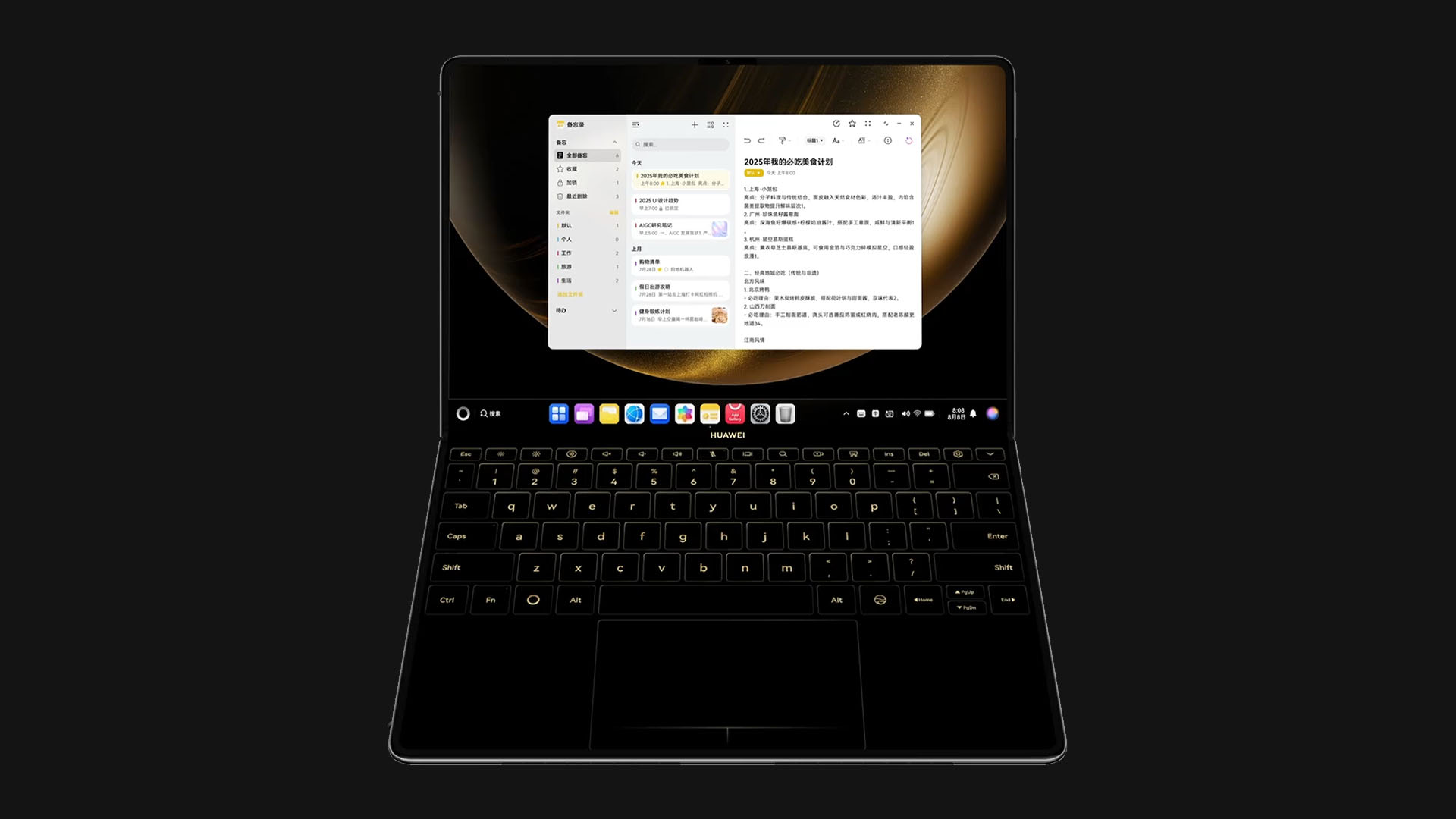
If you’re curious about its display technicalities, well it’s barely mediocre.
You get up to 700 and 1600 nits of maximum brightness (typical and peak HDR), 2,000,000:1 Contrast Ratio in HDR mode, 1440Hz PWM Dimming, and support for DCI-P3 wide color gamut.
Graphics by Vincenz Lee | GadgetMatch
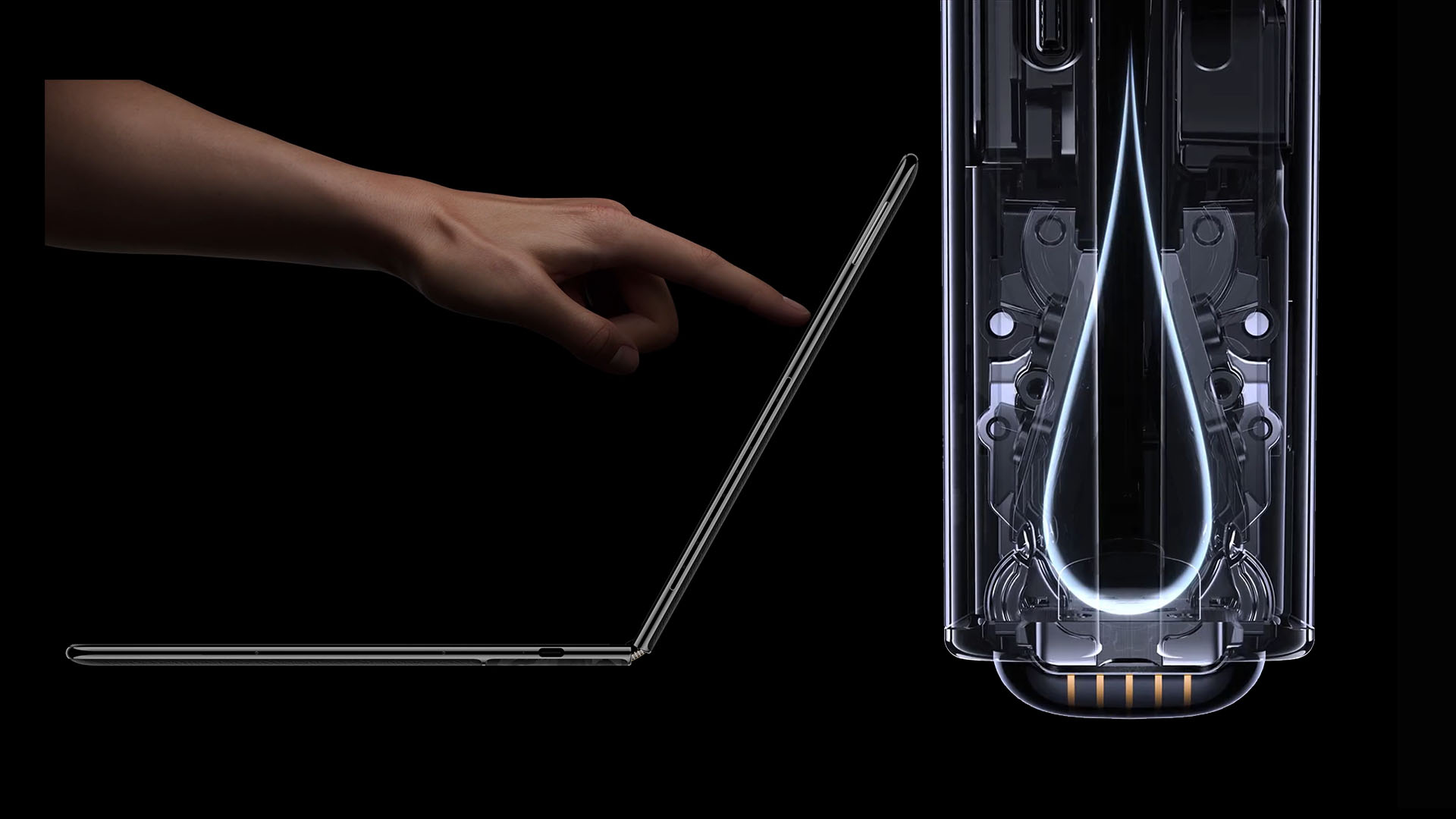
The foldable mechanism is possible thanks to the Xuanwu Water Drop Hinge — that’s also found in the most recent Pura X.
To be precise, its made with high-temperature vacuum die-cast zirconium-based liquid metal for utmost precision and overall smoother operability.
Cutting-Edge Innovation
The HUAWEI MateBook Fold is just one among the very few foldable laptops being offered for consumer consumption.
But, unlike foldable laptops from other brands such as ASUS’ Zenbook 17 Fold OLED and Lenovo’s ThinkPad X1 Fold of the yesteryears, HUAWEI has managed to make the MateBook Fold as thin as 7.3mm when unfolded (14.9mm when closed).

For reference, that’s pretty close to the side dimensions of modern-day flips and folds.
If you’re worried about cooling, the MateBook Fold boasts an ultra-thin PCB and three-layer diamond aluminum structure. It’s said to be as light as a butterfly wing when opened and closed.

Combine that with dual thin aluminum fans and a copper-steel composite 3D VC (Vapor-Cooling) chamber, it gives powerful performance with better heat dissipation despite having an ultra-thin body.
The larger form factor also helps spread heat in larger areas as opposed to smaller foldables and flips.
Endurance talk, it has a 74.69 Wh Li-Po battery inside.
The chipset used was not mentioned in their website. Although some have pointed out that it runs on HUAWEI’s in-house Kirin X90 chipset.

GIF by Vincenz Lee | GadgetMatch
And by that, it also runs along the company’s proprietary HarmonyOS 5 — NOT Microsoft’s Windows or Google’s Android.
That means it has the company’s SoC efficiency as well as better native AI support. Don’t forget all the usual multitasking capabilities already introduced in the previous versions of the OS.
If you are into the HUAWEI Ecosystem, the inclusion of HarmonyOS should not be an issue.
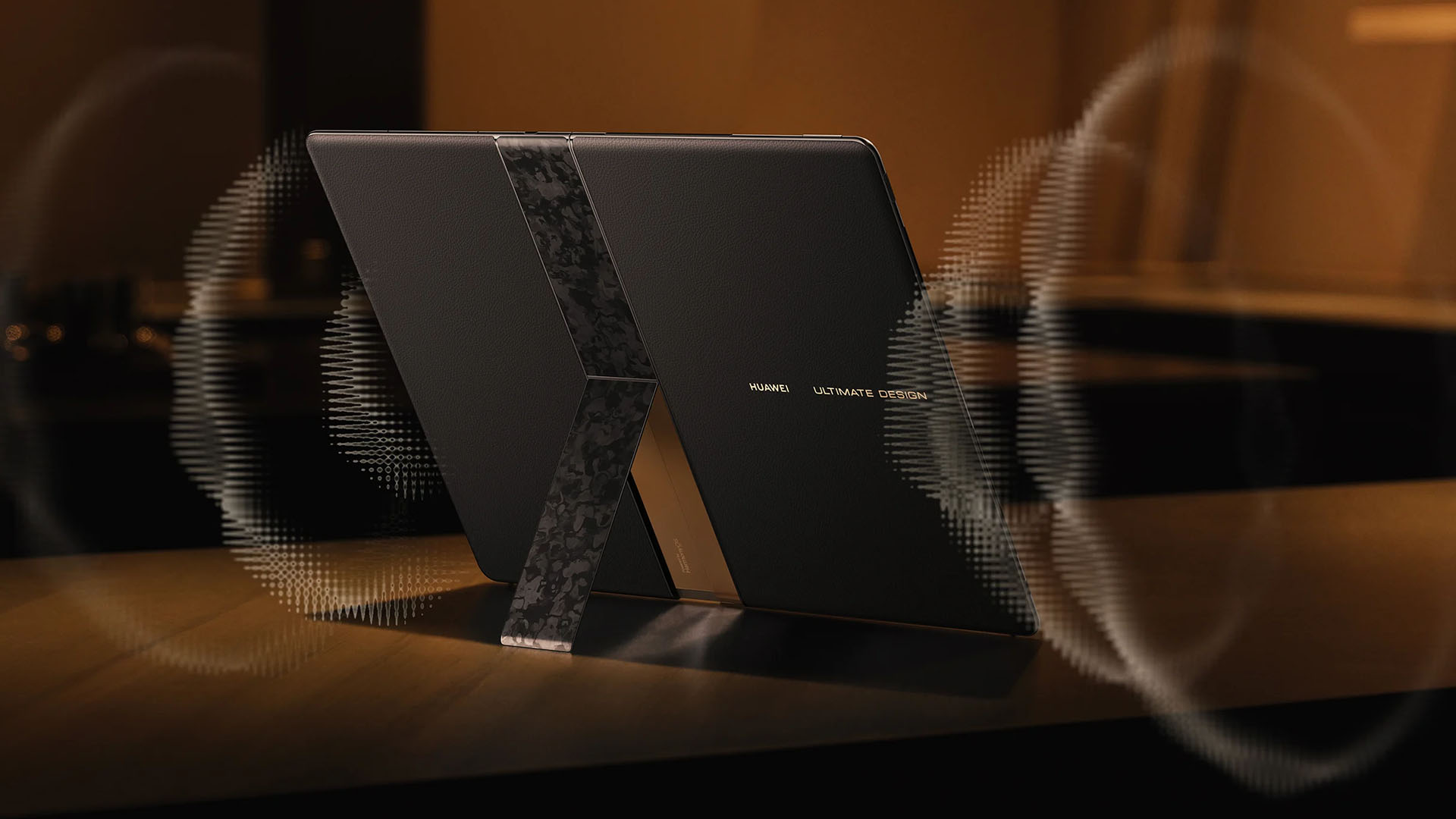
Other notable specs include two USB-C ports (upper and right side), a six-speaker system, quad microphones, fingerprint scanner for biometrics, and an 8MP front camera.
There are also Wi-Fi 6 and Bluetooth 5.2 support.
Pricing and Availability
The HUAWEI MateBook Fold is being sold in China in these two configurations:
- 32 + 1TB = CNY 23,999 (US$ 3340 / EUR 2940 / GBP 2465 / SG$ 4295 / PhP 185,240 / INR 284,840)
- 32 + 2TB = CNY 26,999 (US$ 3760 / EUR 3300 / GBP 2770 / SG$ 4840 / PhP 208,400 / INR 320,450)
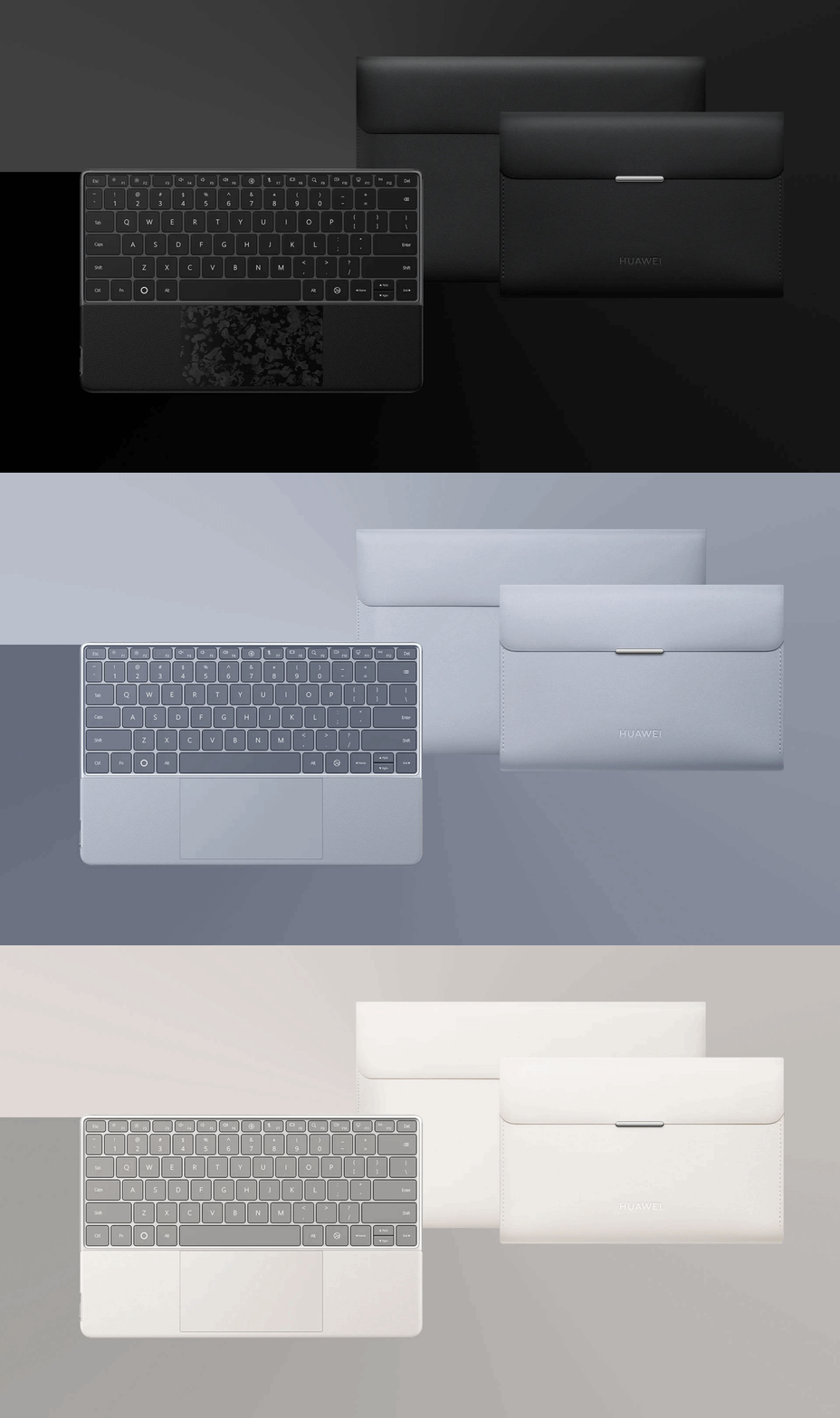
Also, the base model comes in either Cloud Blue or Sky White options. Meanwhile, the larger storage version only comes in the Forged Shadow Black colorway.
Two accessories are also in tow.
GIF by Vincenz Lee | GadgetMatch
There’s the HUAWEI Xingyue Portable Keyboard with an ultra-thin 5mm aluminum alloy body, wrapped in textured leather, and weighs only 290 grams. The keys have a 1.5mm high-key travel with a pressure-sensitive touchpad. It can also last up to 24 days in a single charge.
Moreover, it can be magnetically attached to the back of the foldable, making it compact and portable.

There’s also an Exclusive Storage Bag that’s made with plain leather and is cut and shaped in one piece. The large and small double bag combo can store the unit and accessory separately.
Pre-orders in China are available until June 5, 2025 / Thursday. In-store purchase and availability is open the next day (June 6, 2025 / Friday) at 10:08AM.
Currently, there’s NO word regarding global availability.




Computers
AMD announces Ryzen AI 400, AI 400 PRO series at MWC 2026
Offering support for next-gen AI PCs, Copilot+ experiences

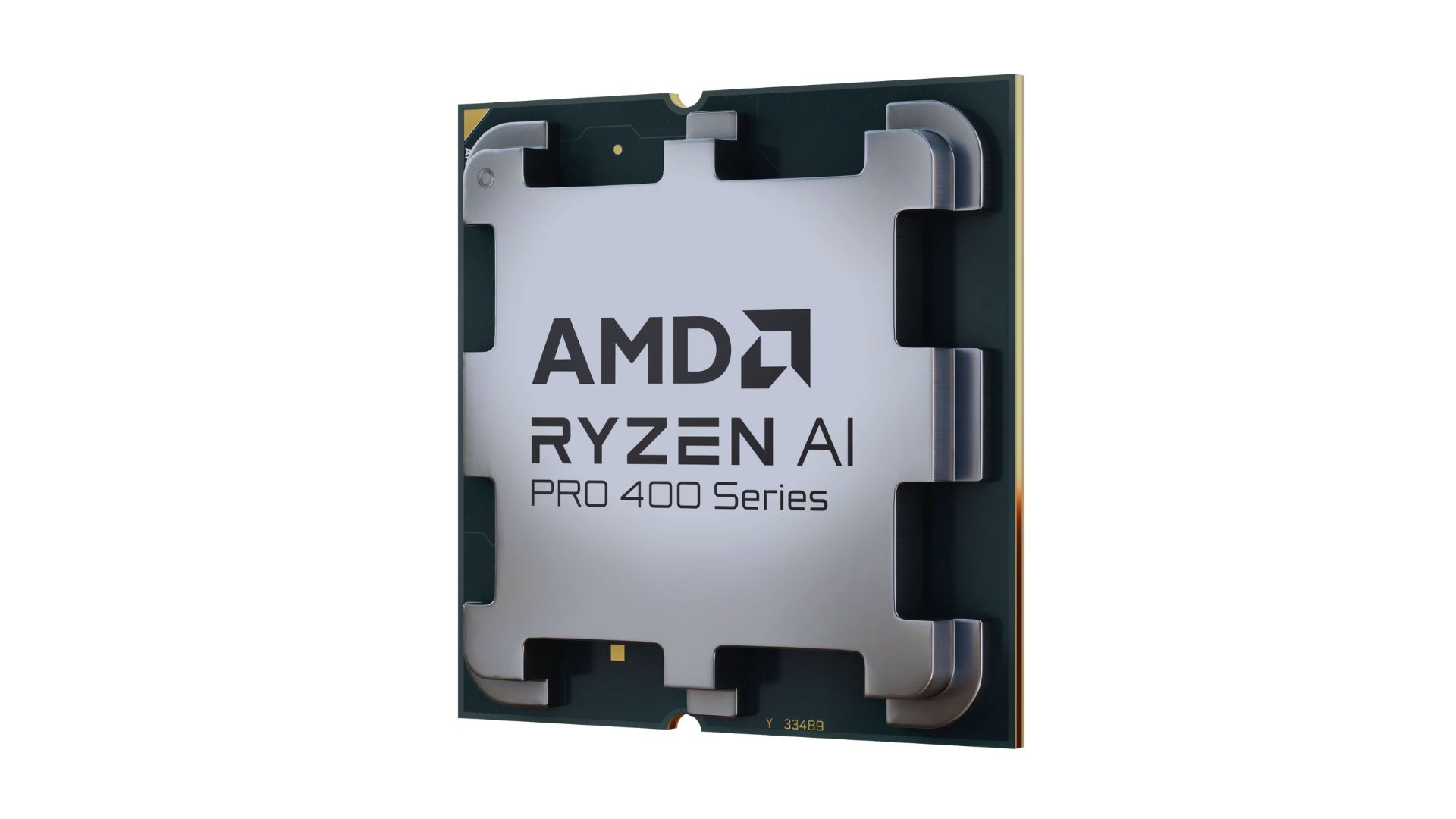
AMD announced new products and initiatives at MWC 2026 Barcelona, headlined by their newest Ryzen AI 400 and Ryzen AI PRO 400 series processors.
These latest processors are built on the AM5 platform and advanced Zen 5 architecture, delivering next-generation experiences for both consumer and commercial scenarios.
The additions enable original equipment manufacturers (OEMs) to offer next-gen AI PCs across high-performance desktops, laptops, and mobile workstations optimized for modern workloads.
Along with dedicated AMD XDNA 2 NPUs and AMD RDNA 3.5 graphics, both series offer up to 60 TOPS of NPU AI compute, exceeding the requirements of Copilot+ PCs.
As such, these enable powerful on-device AI performance, including running LLMs locally and tackling compute-intensive applications for design and engineering.
The Ryzen AI 400 series processors are also the first for next-gen desktop AI PCs to support Copilot+ PC experiences. Featuring an NPU providing up to 50 TOPS of AI compute, these processors enable running AI assistants and productivity tools locally.
In addition, AMD is expanding the Ryzen AI 400 series mobile portfolio to include workstations. Some that are expected to release in Q2 2026 include products from Dell, HP, and Lenovo.
AMD PRO initiative
Furthermore, AMD announced AMD PRO for enterprise-grade security, manageability, and reliability.
This is done through foundational hardware and software designed to simplify IT operations and protect investments over time.
AMD says it will continue to evolve the AMD PRO platform by strengthening both its silicon foundation and software stack.
This will support enterprise IT teams managing distributed AI-enabled PC fleets. Meanwhile, expanded remote management features improve visibility, recovery, and control.

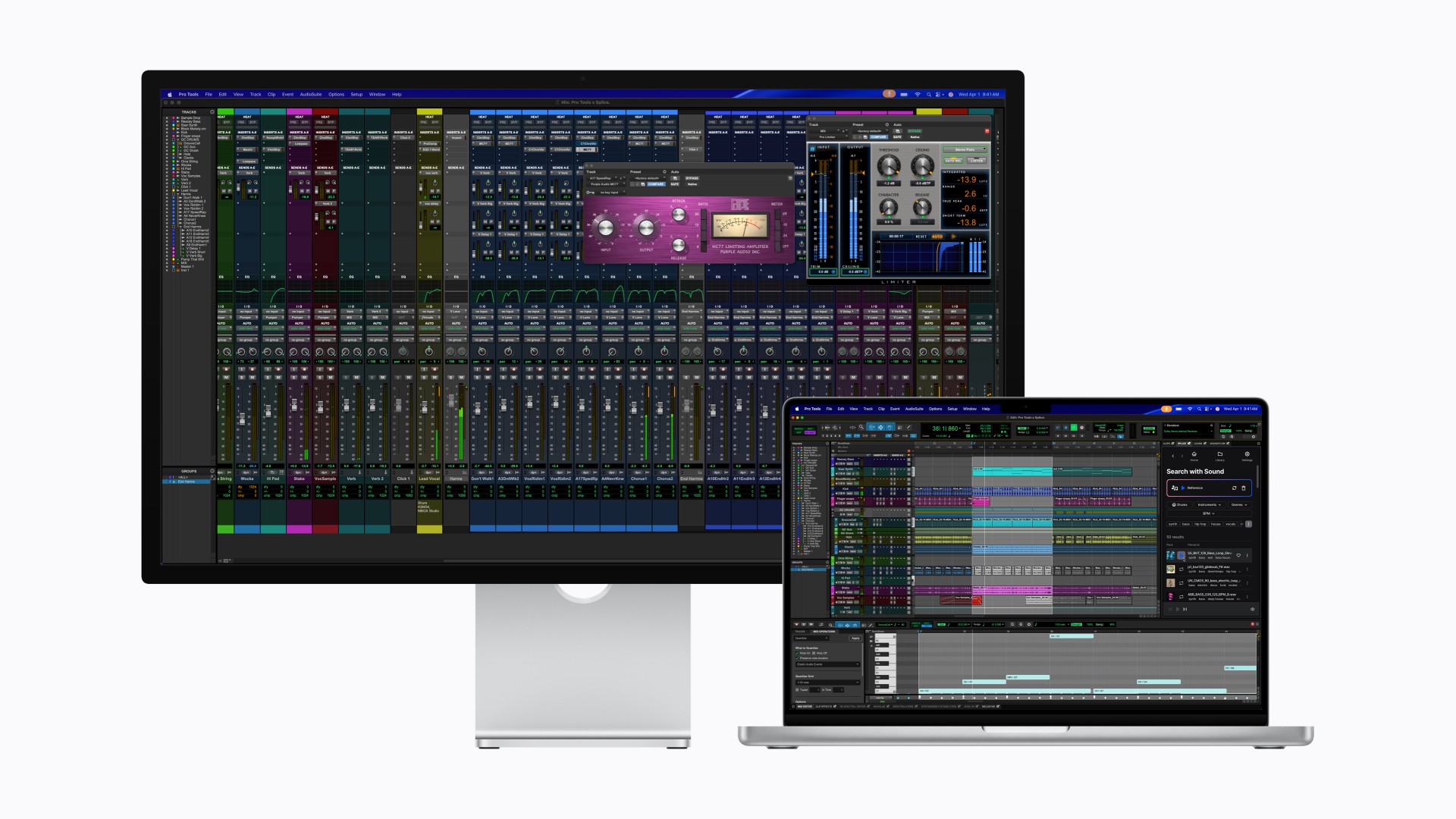
After taking the MacBook Pro to Super Saiyan levels, Apple is now doing the same for the display it pairs with.
With its latest Studio Display family, Apple is splitting the lineup into two clear tiers. The regular Studio Display already feels powered up. The all-new Studio Display XDR transforms.
If this were Dragon Ball Z logic, the Studio Display is Super Saiyan. The Studio Display XDR is Super Saiyan Blue — calmer, more controlled, and operating on an entirely different plane.
A strong base form
The new Studio Display sticks to what already worked: a 27-inch 5K Retina panel with over 14 million pixels, 600 nits of brightness, and P3 wide color. It’s sharp, bright, and more than capable for photo editing, design work, music production, and daily tasks.
Apple upgrades the experience around the screen, too. There’s now a 12MP Center Stage camera with improved image quality and Desk View support. The three-mic array and six-speaker system return, this time with deeper bass and Spatial Audio support.
Connectivity jumps to Thunderbolt 5, allowing users to daisy-chain up to four Studio Displays for nearly 60 million combined pixels. It also delivers up to 96W of charging power for a connected MacBook Pro.
It’s the dependable powered-up form. Strong. Confident. Already more than enough for most creators.
The controlled transformation
Then there’s Studio Display XDR.
This is where Apple goes full Super Saiyan Blue.
The 27-inch 5K Retina XDR panel uses a mini-LED backlight with over 2,000 local dimming zones. It pushes up to 1000 nits of SDR brightness and 2000 nits of peak HDR brightness, alongside a 1,000,000:1 contrast ratio. Highlights hit harder. Blacks stay deep. Blooming stays minimal.
The display also adds Adobe RGB support on top of P3, covering more than 80 percent of Rec. 2020 for HDR workflows. For video editors, colorists, and print professionals, this shifts the XDR from “great display” to “reference-grade tool.”
Motion gets smoother, too. A 120Hz refresh rate with Adaptive Sync dynamically adjusts between 47Hz and 120Hz, reducing latency and making everything from scrubbing timelines to gaming feel more fluid.
Apple even introduces DICOM medical imaging presets and a Medical Imaging Calibrator for diagnostic radiology use in the U.S., pending FDA clearance. It’s a reminder that this panel isn’t just about aesthetics. It’s about precision.
Built for the pro desk
Both displays share the same upgraded 12MP Center Stage camera, studio-quality microphones, six-speaker Spatial Audio system, and Thunderbolt 5 connectivity. The XDR model goes further with up to 140W charging power and additional downstream ports, effectively acting as a high-speed hub.
Pricing and availability
In the U.S.
The new Studio Display starts at $1,599 (U.S.) and $1,499 for education, while the Studio Display XDR begins at $3,299 (U.S.) and $3,199 for education. Both models can be pre-ordered starting tomorrow, March 4, with availability beginning March 11 in select Apple Store locations and authorized resellers.
In Singapore
Pre-orders open on March 9 via apple.com/sg/store and the Apple Store app. Pricing starts at S$2,199 for the Studio Display (S$2,059 for education). The Studio Display XDR begins at S$4,499 (S$4,359 for education).
Optional accessories such as the Magic Keyboard, Magic Trackpad, and Magic Mouse remain available in white and black color options. Apple also offers nano-texture glass and adjustable stand configurations for professional setups.
The message from Apple is consistent: the base Studio Display remains a strong professional companion, while the Studio Display XDR targets workflows demanding reference-grade performance and HDR capability. Pre-orders go live soon, with deliveries and in-store availability following in mid-March.
In the Philippines
Customers can pre-order starting March 4 at apple.com/ph/store.
Studio Display starts at ₱104,999, and ₱97,990 for education. Studio Display XDR replaces Pro Display XDR and starts at ₱219,999, and ₱212,990 for education.
Additional technical specifications, including nano-texture glass and a choice of stand options, are available at apple.com/ph/store.
Magic Keyboard with Touch ID and Numeric Keypad (from ₱10,490), Magic Trackpad (₱6,990), and Magic Mouse (₱5,490) in black or white color options are available at apple.com/ph/store.
Apple has introduced the M5 Pro and M5 Max, chips designed for professionals who need high-performance computing and AI acceleration.
Built on the company’s new Fusion Architecture, the chips combine two dies into a single system on a chip (SoC), integrating a CPU, GPU, Media Engine, unified memory controller, Neural Engine, and Thunderbolt 5 support. This design increases performance and AI capability while maintaining Apple’s focus on efficiency.
The M5 Pro features an 18-core CPU with six super cores and 12 performance cores, delivering up to 30 percent faster performance for demanding workloads compared with the previous generation. The GPU scales to 20 cores and includes Neural Accelerators in each core, boosting AI compute and graphics performance. Unified memory supports up to 64GB with bandwidth reaching 307GB/s, enabling faster data handling in complex professional applications.
The M5 Max expands capabilities further with up to 40 GPU cores and unified memory of up to 128GB. Memory bandwidth reaches 614GB/s, accelerating workflows involving large datasets, 3D rendering, and AI models. According to Apple, the GPU delivers more than four times the peak compute of the prior generation for AI tasks and up to a 20 percent graphics improvement over the M4 Max.
Both chips include a faster 16-core Neural Engine for on-device AI features, support hardware-accelerated media formats such as AV1 and ProRes, and incorporate memory safety protections via Memory Integrity Enforcement. Thunderbolt 5 ports with dedicated controllers enable high-speed connectivity for professional peripherals.
With the M5 Pro and M5 Max, Apple aims to push professional computing forward, particularly for developers, researchers, and creatives who require advanced AI and graphics performance. The new chips will power the latest MacBook Pro lineup, available for pre-order soon with shipments beginning March 11.





Ubisoft confirms Assassin’s Creed: Black Flag remake

PlayStation will stop releasing its games on PC

Infinix NOTE 60 Ultra makes a motorsport-inspired debut

MacBook Neo enters the chat with a $599 starting price

One Piece: Into the Grand Line unveils final trailer ahead of premiere

Xiaomi 17 Ultra is now available outside China

TECNO will showcase the CAMON 50 and POVA 8 series at MWC 2026

The art of being in and behind the frame

HUAWEI MatePad 11.5 S 2026: The better-than-ever 4-in-1 productivity tablet

TECNO MEGABOOK K16s 13th review: No-frills beneath those grills


-
 News5 days ago
Xiaomi 17 Ultra is now available outside China
-

 Camera Walkthrough2 weeks ago
OPPO Reno15 Pro: Camera Review
-

 News2 weeks ago
HUAWEI launches Mate X7, MatePad 11.5 S 2026, FreeClip 2
-

 News2 weeks ago
iPhone 17 Pro Max is somehow the most traded-in phone today
-

 Events2 weeks ago
Capcom to hold Resident Evil Requiem launch event in Jakarta
-
 Gaming2 weeks ago
Pokémon FireRed and LeafGreen are coming to the Switch
-

 MWC 20267 days ago
TECNO resurrects modular phones with this new concept
-

 Reviews5 days ago
Xiaomi Pad 8 review: Slab that slaps!