
Entertainment
Marvel’s Spider-Man, Iron Fist: Now Playing
All about action and some romcom!


The past few weeks have been crazy for the GadgetMatch team, like always. We’re still recovering from the announcements from IFA 2018 and the recent iPhone launch. Of course, to avoid burnouts, we take breaks and keep ourselves entertained. Here’s what’s now playing for GadgetMatch.
Games to play
Marvel’s Spider-Man
Rodneil: There was so much hype surrounding this game and rightfully so, since Insomniac Games is dealing with one of the most loved superheroes of all time. They had to get plenty of things right and they more than delivered. Insomniac was able to capture the very essence of Spider-Man and translate it into a video game that will please both video game fans and Spidey fans who might want to try the game. It’s a lot of fun to play and you feel exactly like the friendly neighborhood Spider-Man swinging across New York.
Movies to see
Bleach (Live Action)
Rodneil: Bleach — both the manga and the anime — was considered one of the top three in its genre during its run. The live action version tackles the Substitute Shinigami arc which is essentially the origin story of how protagonist Kurosaki Ichigo gets the powers of a soul reaper. If you’ve read the manga or saw the anime, you’ll know that this arc flows so seamlessly to the one that follows it that it almost feels like just a single arc. The live action version does a good job of creating some sort of finality in the movie that in case it never gets the green light for a sequel, you wouldn’t mind as much.
If this is your introduction to the Bleach lore, it doesn’t disappoint. For the most part, it’s a faithful adaptation and was translated admirably to a feature film. If you decide to watch the anime because of this, watch only until the end of the Arrancar arc and definitely skip the Bount arc (episodes 64-109). You’re welcome.
To all the boys I’ve loved before
MJ: To all the boys I’ve loved before is the show I’ve been dying to see ever since I heard it’s going to have its film adaptation on Netflix. It’s a feel-good movie that will make you remember what it feels like to have crushes, secret feelings, and writing letters — things that our teenage selves did back then.
Kissing Booth
MJ: What if you made a pact to your best friend that you can’t fall in love with his brother, even if he’s really, really charming (and hot)? Netflix’s Kissing Booth is about a girl falling in love with her best friend’s older brother and in a sudden turn of events, forced to choose between following their friendship’s set of rules or following her heart. It’s a movie about secrets, loyalty, and betrayal, but above all, it’s a romantic comedy to entertain you during your idle hours.
Set It Up
Chay: I’ve been in the mood for feel-good romcoms lately, and Netflix’s Set It Up did not disappoint. Like most romantic comedies, it’s predictable and cheesy, although it did come with a twist I didn’t really expect. I very much appreciate that both protagonists’ personal issues are realistic enough to be relatable to people my age.
TV shows to binge watch
Shingeki No Kyojin (Attack on Titan) Season 3
Rodneil: Attack on Titan was a well-received anime when it first came out and three seasons in, it hasn’t missed a beat. At first it was just about humans taking shelter inside a walled city for protection versus mindless, humongous, man-eating monsters, only to find out later on that the real monsters lie inside the walls lording over the people trying to survive. Season three is still ongoing and it looks like the theme is about uncovering the truth about the Titans.
Insatiable
MJ: Insatiable means impossible to satisfy, which is all about the main character, Patty Bladell, who was once fat and bullied for her appearance, and turned skinny to get revenge by winning pageants and getting a crown. But it doesn’t stop there. It takes a pretty dark turn when the title comes into play, as the show is also about vengeance, bad decisions, and what it means to be really beautiful. To critics, it’s an inconsistent show. But for the audience, we absolutely love it. It’s really, really, fun!
Marvel’s Iron Fist Season 2
Marvin: If you aren’t a fan of Iron Fist’s first season, the second one may change the way you look at the series. It’s less centered around Danny Rand, who many viewed to be the main problem of Season 1. Even though he’s the primary protagonist, his lessened screen time allows other (more interesting) characters to shine. Plus, the fight scenes are way more exciting this time — no longer a low point of an action-filled superhero series.
Albums/Songs/Podcasts to listen to
Momoland (All Songs on Spotify)
Rodneil: I have officially been consumed by this K-pop group. “Bboom Bboom” went viral this year and they followed it up with “Baam.” Both songs are lively and great so I decided to listen to the rest of their songs and I haven’t stopped since. My favorites are “Curious,” “Bingo Game,” “Hug Me,” and “Love Sick.”
“Sana Bumalik” by Sud
Rodneil: The song itself is just okay; it talks about that universal feeling of wanting someone back. To truly appreciate what Sud did here, you first have to watch the music video for their other song called “Sila.” That’s part one of the story they’re trying to tell. While the songs don’t exactly match the narrative of the videos, they do match the mood, and for fans who followed both videos, it’s exciting to see the cast return as we get to see how their story unfolds.
Cities/Places to visit





Anilao
Marvin: Anilao, which is found along the west coast of Batangas in the Philippines, is best known for its incredible diving areas, but little do people realize that it’s a perfect spot for a relaxing getaway, as well. Situated on the tranquil side of the ocean and far away from big cities, its beaches are ideal for long walks and star gazing — not at all for surfing or other extreme water sports. But be warned: It’s a lot easier to find than it is to leave.









Sagada
MJ: Sagada is the best place to visit when you’re on the verge of having a breakdown or you just want to take a break. It’s a quiet, laid-back town situated in the northern mountains of the Philippines. Surrounded by pine trees and fog enveloping the sky and the streets, this place will definitely give you a cozy retreat while wearing your favorite sweater, sipping hot coffee, and doing some soul searching.




Berlin
Chay: My first time in Berlin wasn’t short of both unfortunate mishaps and fun stories to tell. It’s a city that doesn’t forget and whose most popular landmarks tell its history. It offers pockets of charming places here and there, efficient public transport, and good food. Admittedly I had way more doner kebab and Vietnamese food during my stay instead of German sausages.
Now Playing is the GadgetMatch team’s favorite games, movies, TV shows, and more each month. If you’re curious to know what we’re into at the moment, this is what you should check out. So grab your popcorn, get some drinks, and enjoy what’s now playing!







Entertainment
UNDERTALE: The Determination Symphony gets two more shows
Both shows will be held on the next day.


The Philippines has an unquenchable love for game-based concerts (so *wink wink* please bring more of them). Though these concerts do generate a lot of hype, the drawback is that they often sell out way before most fans can grab tickets. If you’re an UNDERTALE fan, that experience might be rocking you right now, as both shows have already sold out. But fear not: UNDERTALE: The Determination Symphony has just opened two more shows.
Late last month, Film Concerts PH, in partnership with SOHO Live, announced UNDERTALE: The Determination Symphony happening on October 17. As expected, both shows, at 3pm and at 7pm, sold out very quickly after sales opened.
Today, the concert experience is opening two more shows on the next day, October 18. Like the original date, the two shows will happen at 3pm and at 7pm, allowing more fans to experience the concert.
The concert will be performed by the Filharmonika Orchestra and conducted by Thanapol Setabrahmana. Personally curated by creator Toby Fox and developed by Lambert Jackson with Materia Music, the concert experience showcases the game’s most recognizable tunes laid over gameplay footage playing simultaneously. Plus, for the world tour, the experience will have expanded scoring.
Tickets are available through Ticketmelon. Both dates will be held at The Proscenium Theater in Makati.
SEE ALSO: UNDERTALE: The Determination Symphony hits Makati in October
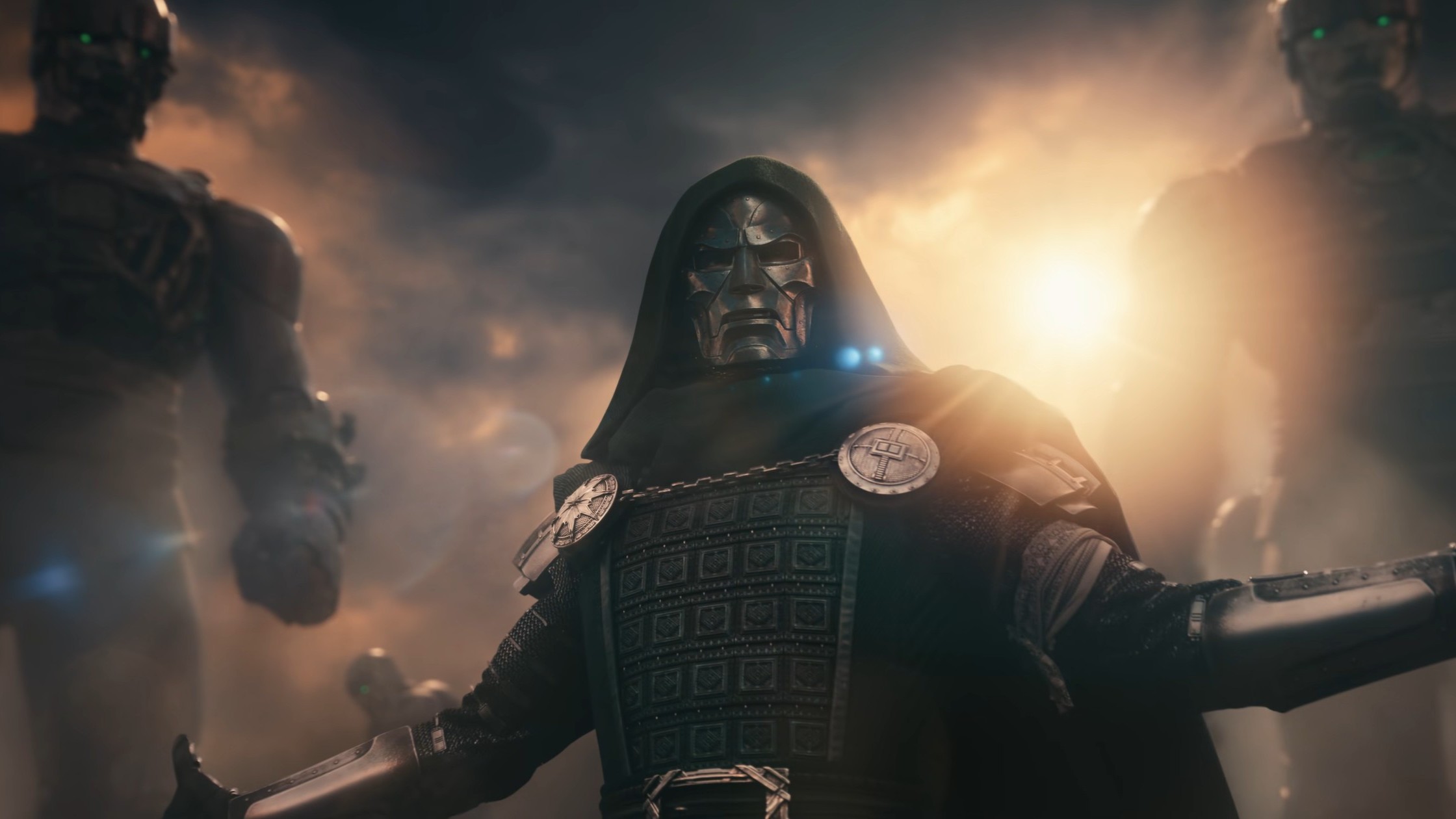
As of today, the entirety of the Marvel Cinematic Universe will take around 650 hours to watch. So, if you wanted to catch up with everything before this December’s Avengers: Doomsday, you would need to allot around 5 hours per day to watch content from Marvel. For a lot of us, that sort of commitment is completely untenable. Thankfully, Marvel has released an official watchlist, paring the list down to something much more manageable.
Before the MCU got as big as it is today, it was fun to do a movie marathon heading into a major Marvel release. For example, when Avengers: Endgame came out, some theaters held continuous marathons lasting a few days. Take note that this was before Marvel officially included every TV show and legacy movie (like the X-Men universe).
Now, heading into Avengers: Doomsday, Marvel will not ask you to devote the rest of your year just for homework. Instead, here’s an official list you can use to catch up:
- X-Men
- X2
- Captain America: The First Avenger
- The Avengers
- Avengers: Infinity War
- Avengers: Endgame
- Loki
- Shang-Chi and the Legend of the Ten Rings
- Spider-Man: No Way Home
- Black Panther: Wakanda Forever
- Captain America: Brave New World
- Deadpool & Wolverine
- Doctor Strange in the Multiverse of Madness
- Thunderbolts
- The Fantastic Four: First Steps
Compared to the extensive list of everything Marvel, this official list is much more manageable, especially since there’s only one show (Loki). It’s also a veritable who’s who of the MCU, so it’s hard to get bored.
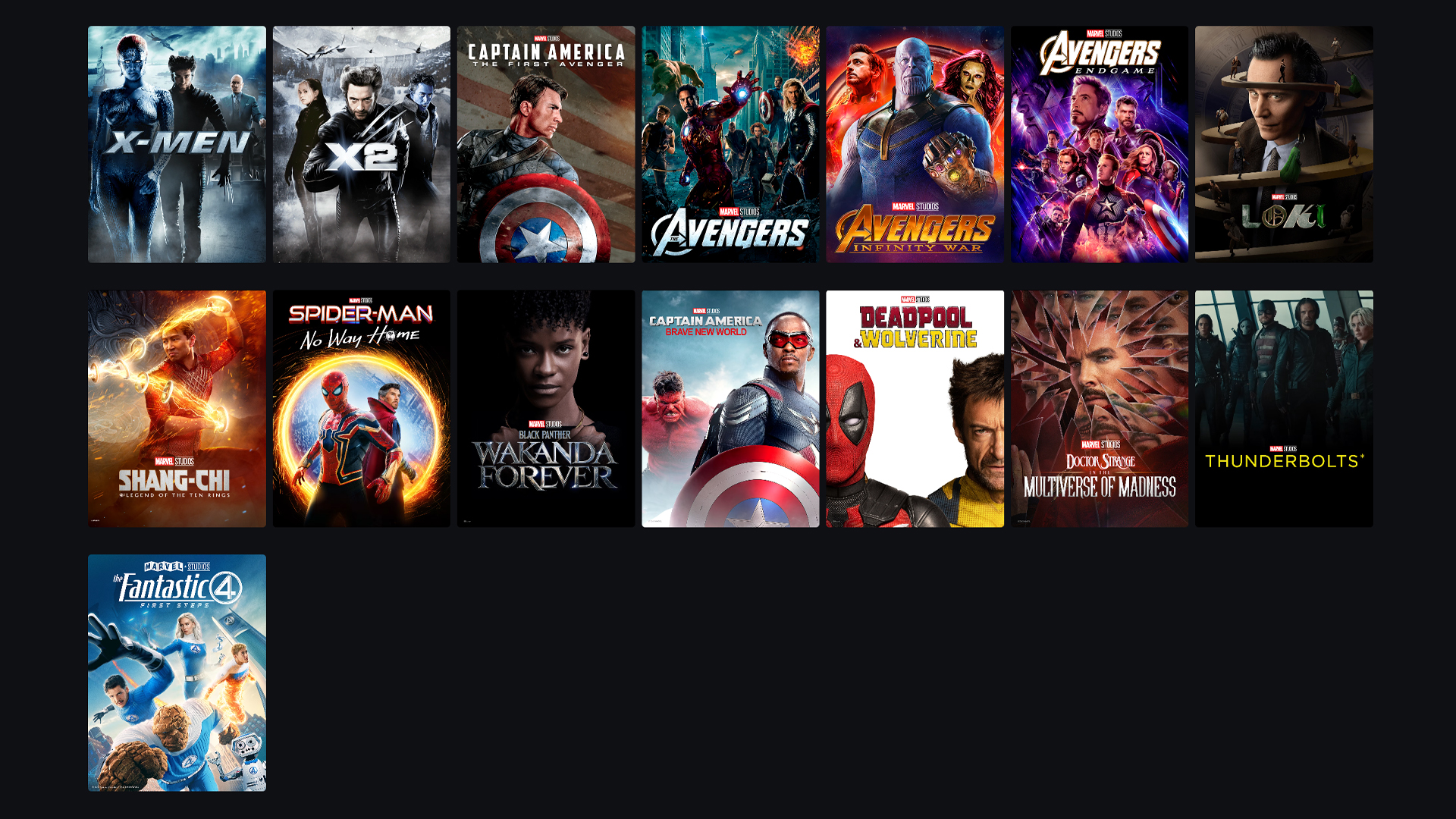
The official list as seen on Disney+
There are, however, a few surprises and spoilers. For one, if you’ve been avoiding the teasers and trailers, the X-Men films might be a shock to you. Likewise, the inclusion of the critically panned Brave New World is interesting.
The exclusions are just as noteworthy, too. Though the two earliest X-Men films are included, the list doesn’t add Days of Future Past, one of the first Marvel films to use time travel. Thor: Love and Thunder isn’t on here, despite Love, Thor’s adopted daughter, appearing in the trailers. Brand New Day is also missing, but that’s likely because the movie isn’t on Disney+ yet.
Avengers: Doomsday premieres in cinemas on December 18. Four months should be enough time to catch up on these titles.
Entertainment
Marvel Studios unveils new X-Men cast
Adam Driver, Inde Navarette, more join Sadie Sink for film set for May 2028

At the D23 Disney fan event, Marvel Studios has officially unveiled the cast of the new X-Men movie, which has been announced for a May 5, 2028 premiere.
Marvel Studios head Kevin Feige and director Jake Schreier were joined onstage by Sadie Sink, who made her debut as Jean Grey in Spider-Man: Brand New Day, for the showcase.
The trio then welcomed Sink’s new co-stars: Kit Connor as Scott Summers/Cyclops, Christopher Abbott as Professor Charles Xavier, Samara Weaving as Emma Frost, Inde Navarrette as Rogue, and Maya Boyd as Storm.
Finally, Adam Driver crashed the panel with one final video surprise, where he revealed that he will be playing a very sinister figure named Nathaniel Milbury, a.k.a. Mister Sinister.
Mister Sinister has been a recurring antagonist throughout various X-Men media, including in Season 2 of the 1992 animated series and in the first season of X-Men ’97.
Now, he will serve as the main villain in the new X-Men film that jumpstarts the Marvel Cinematic Universe’s Mutant Saga.
Given the initial cast, this X-Men reboot will be set in the earlier stages of the team’s lifecycle, taking audiences back to how the school built its foundation for a faithful setup based in the comics. Although within the MCU chronology, it will be set in the present day.
The rebooted X-Men film is now the third confirmed feature film in the post-Multiverse Saga MCU, after Black Panther 3 and Ghost Rider.

Insta360 Luna Ultra review: My new solo coverage camera
Changed my workflow


TECNO MEGAPAD 2 review: Eyes on the size
The MEGA pad for two base users


30 days with the DJI Osmo Pocket 4P
This is the camera that made solo travel filmmaking finally feel possible.

AGIBOT just topped the medal table at the World Humanoid Robot Games

This 19kg LG Washer is built for households that never stop doing laundry

Samsung Display’s QD-OLED panels help demos at gamescom 2026

Facebook, Instagram gets away with $18 billion fine for being too addictive for kids

Apple set to launch new iPhones on September 9

VinFast debuts two-wheeler models, opens 21 e-motorcycle showrooms
TECNO MEGAPAD 2 review: Eyes on the size

REDMI Note 17 Series focuses on long-term reliability

OnePlus officially leaves the United States and Canada

Xiaomi debuts SkyNomad Series featuring new Kunlun platform


-
Reviews5 days ago
TECNO MEGAPAD 2 review: Eyes on the size
-
 Singapore1 week ago
REDMI Note 17 Series focuses on long-term reliability
-

 News1 week ago
realme 16T to come with 8,000mAh battery, 7-year battery health guarantee
-

 Accessories1 week ago
Jackery expands Explorer Series portable power stations
-

 News7 days ago
HUAWEI Pura X View is 2026’s first WIDE slab-type smartphone
-

 Reviews2 weeks ago
Samsung Galaxy Z Fold8 Review
-

 Entertainment2 weeks ago
Box office: Brand New Day set to surpass US$ 2 billion, drives Marvel’s Spider-Man 2 resurgence
-

 Gaming1 week ago
Now Playing: Assassin’s Creed Black Flag Resynced