


The brand new Nike React Infinity Run just went on sale globally earlier this month, and Nike sent us a pair to check out! Nike is pitching this as their solution to help prevent running injuries and you know what? I think it’s actually true.
If you’re a seasoned runner you’ve probably had an injury or two pop up every so often because of a bad landing while you run or numerous other reasons. Nike’s aim with the Infinity Run was to reduce these overuse injuries, and they worked with the British Columbia Sports Medicine Research Foundation to do so.
They had over 226 runners test this shoe against the Nike Structure 22, which is a more traditional motion control shoe, and they found that the runners using the Nike React Infinity Run reduced running injuries by a huge 52% compared to the Structure. Which if you believe the marketing, is a pretty huge deal.

Nike has already made a name for themselves in the running scene with the vaporfly running sneakers. You know those sneakers that were so good that athletes wearing them started breaking records, so the competition tried to get them banned? Thankfully they didn’t get banned and Nike can go on pushing boundaries with their sneakers.
As such the React Infinity Run really stands out in Nike’s lineup of training shoes. First, because of the generous amount of React cushioning, but also because of the entire shape of the shoe, along with a lot of improvements.
There’s a wide midsole, and a shape that helps with its grounded feel. All that comes together to create a performance-minded running sneaker that allows the miles to just fly by.
Look and feel fly
Buying an everyday running shoe can be really stressful. You need something that’s comfortable, yet durable, and able to last intense training cycles and long runs. It turns out, the Nike React Infinity Run is great at all of that.
I was a huge fan of the Epic React Flyknit from 2019., I even bought a pair to check out, so I had high hopes for the React Infinity Run.
You can see I got the really hot Bright Crimson colorway to check out — it’s really hard to photograph and color correct, so here is what Nike’s press photo of the sneaker looks like to give you a better idea.
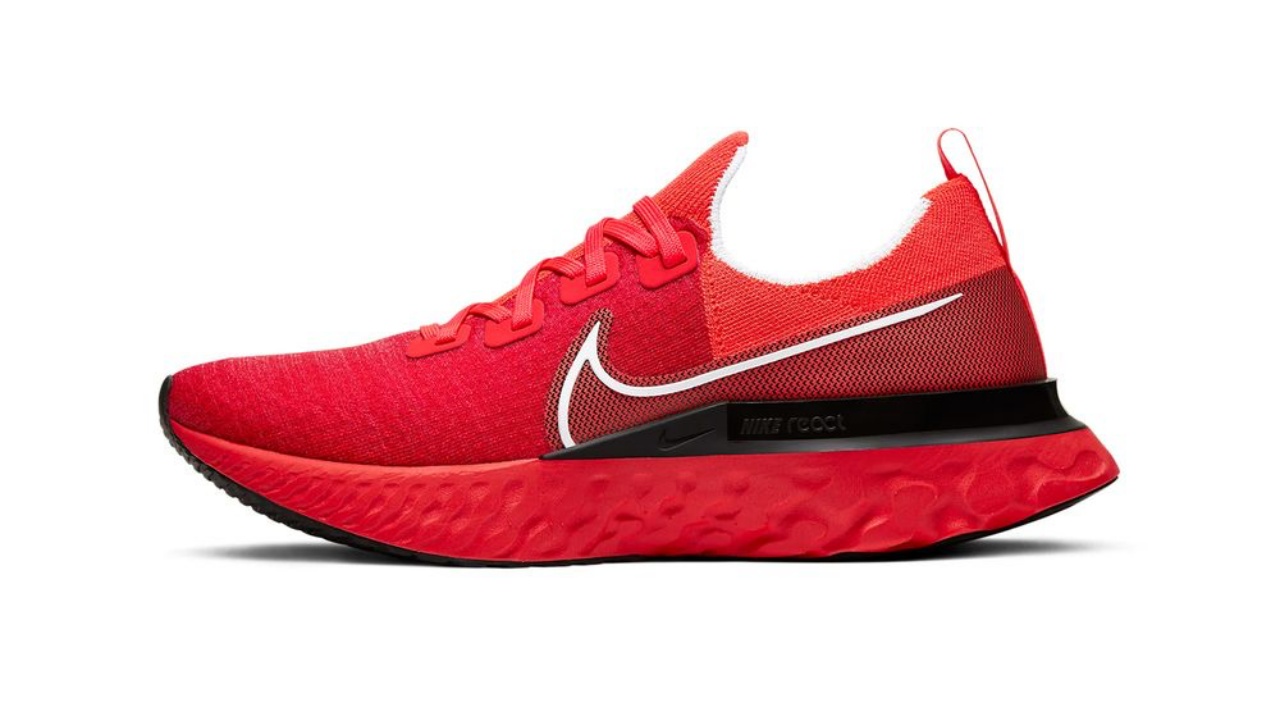
But the Infinity Run also comes in a bunch of other colorways as you’d expect, including an all black version. Though, the standard white and pink version is my favorite.
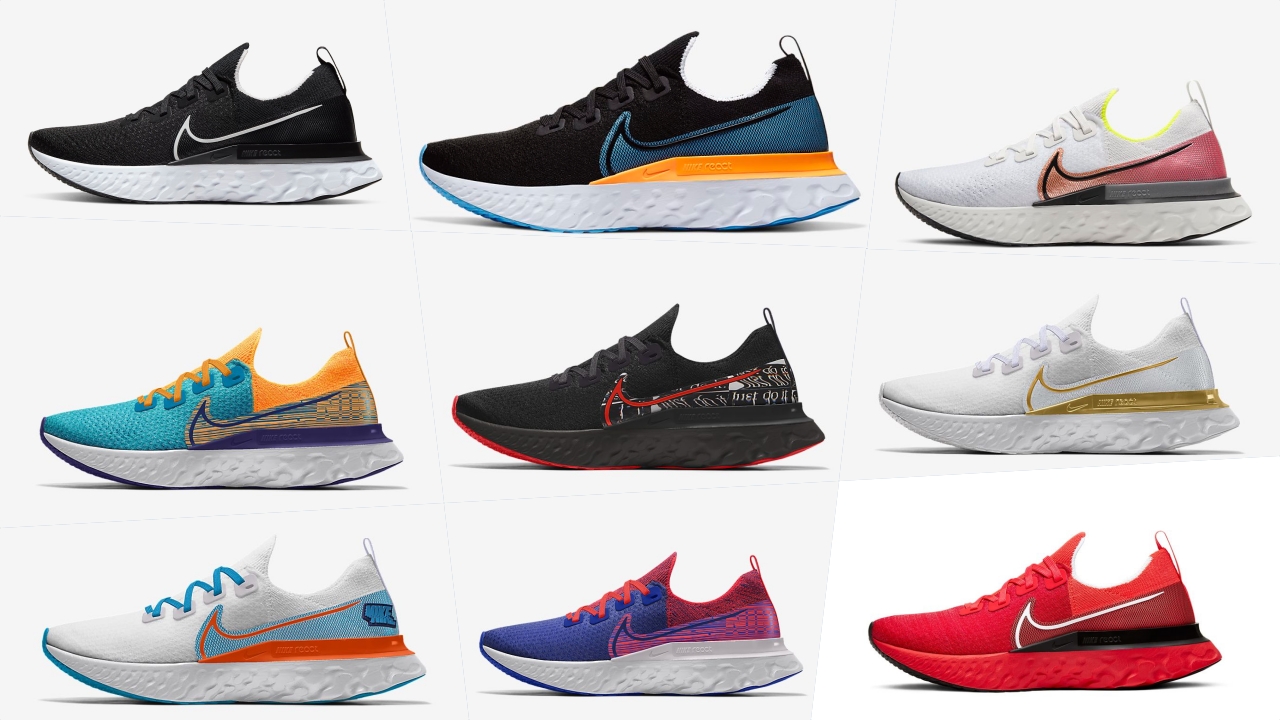
Coming to the shoe itself, the big deal about this running shoe, is the midsole. There’s 24 percent more Nike React foam here vs last year’s Nike Epic React Flyknit 2, and it’s also much wider.
This makes a huge difference in midsole cushioning, with the stack height measuring 30.5 mm in the heel and 21.5 mm in the forefoot. The extra wide base also helps avoid any side-to-side wobbling when you’re running in this shoe.
But the main highlight is the React foam which cushions your every step, and springs back into shape, just like we’ve seen in other React midsole sneakers.
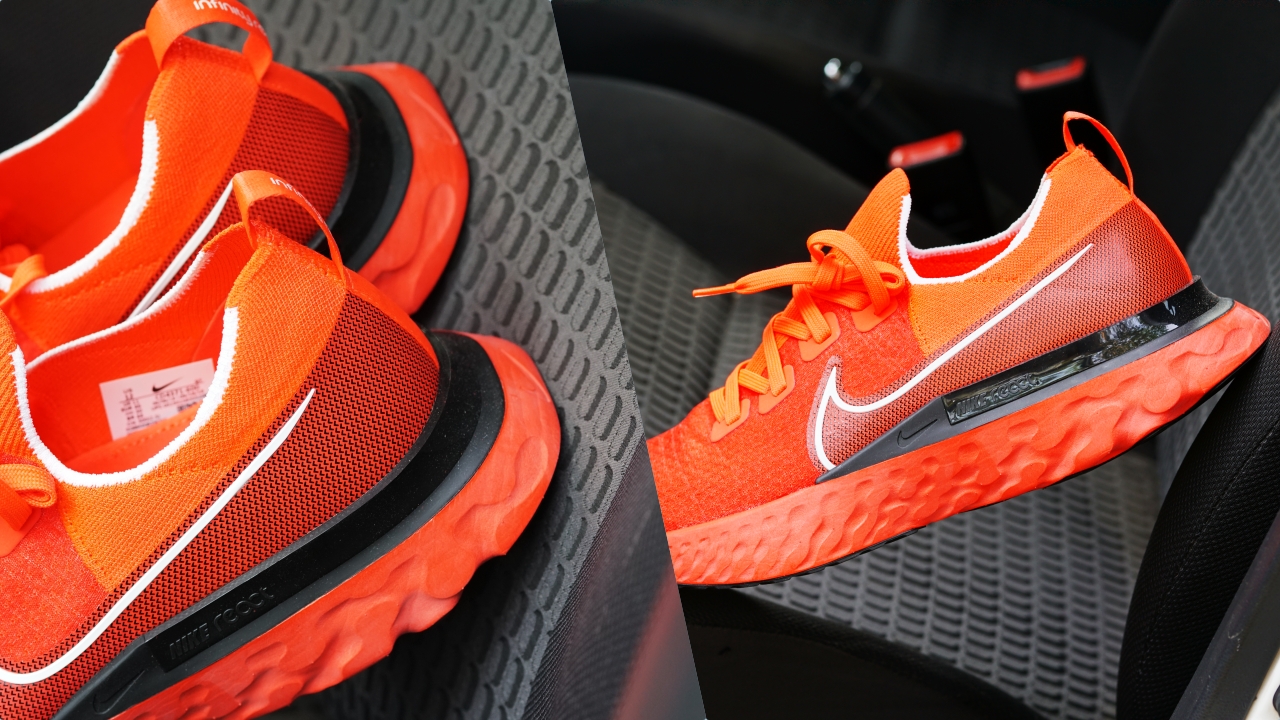
It’s quite different from Adidas Boost, somehow being more cushiony but still having a good amount of energy return — different but similar. I’ll talk more about this in the performance section later on.
Light with great fit
Moving on to the upper, there’s a single-layer Flyknit upper which gives the shoe a really sleek, streamlined look and fit. The Flyknit material used here is slightly stretchy in the forefoot area and has tiny little micro perforation dots for more breathability.
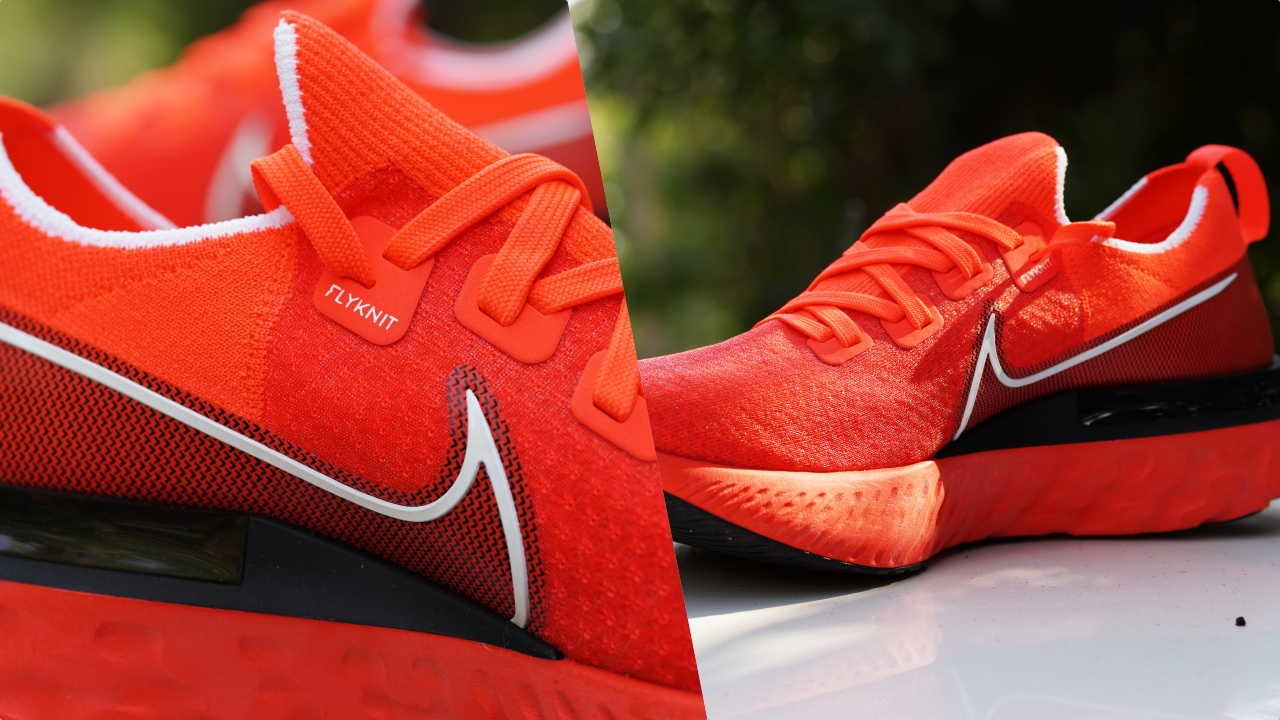
But the best part about the upper for me is the integrated tongue that allows the shoe to have a sock-like feel. Instead of a usual shoe tongue, Nike chose to seamlessly knit stretchy, soft fabric and the elasticity maintains the one-piece construction of the shoe, giving it a really clean silhouette.
At the same time, the material is stretchy enough to accommodate even wide feet so you can go true-to-size. Sometimes running shoes can be too narrow for your forefoot, but here, there’s plenty of room and enough stretch so that it is an appropriate level of snug.
There’s also the secure, minimal lacing system up top to help ensure a nice fit via four eyelets up the center of the shoe.
Coming to the back, Nike wrapped an extra overlay around the back which gives some extra structure in the mid foot area, with a thin heel counter that helps secure your foot.

That being said, there is no extra padding in the ankle collar, which you’ll either love or hate. Instead Nike finished the collar with contrasting stitching. If you wear regular socks this will feel really comfortable, but if you wear no-show socks the sensation of the fabric against your skin might annoy you slightly — so just wear higher socks.
Lastly at the back, there’s a pull tab that helps slip your foot into the shoe, which is much appreciated.
Built for an infinite ride
As we mentioned earlier, the main attraction with the Infinity Run is the React foam midsole which really helps ensure an energetic ride. However, the shape of the shoe itself also plays a major role in how it performs.
Nike created a midsole that is in a rocker shape, similar to the curved shape of the midsole and carbon-fiber plate of the first Nike Vaporfly 4% marathon shoe. This rocker shape means the wearer has an ever so slight forward lean.
Nike says this is to move your natural footstrike to the midfoot or forefoot area, which in theory will create a natural feeling of propulsion as you walk in them. As such it helps move your foot through a really fluid foot strike, and you won’t notice any weirdness as you transition from heel to toe during your runs.
This rocker shape is becoming more and more common in running shoes so it definitely has a bit of performance benefits, especially so on the Infinity Run.
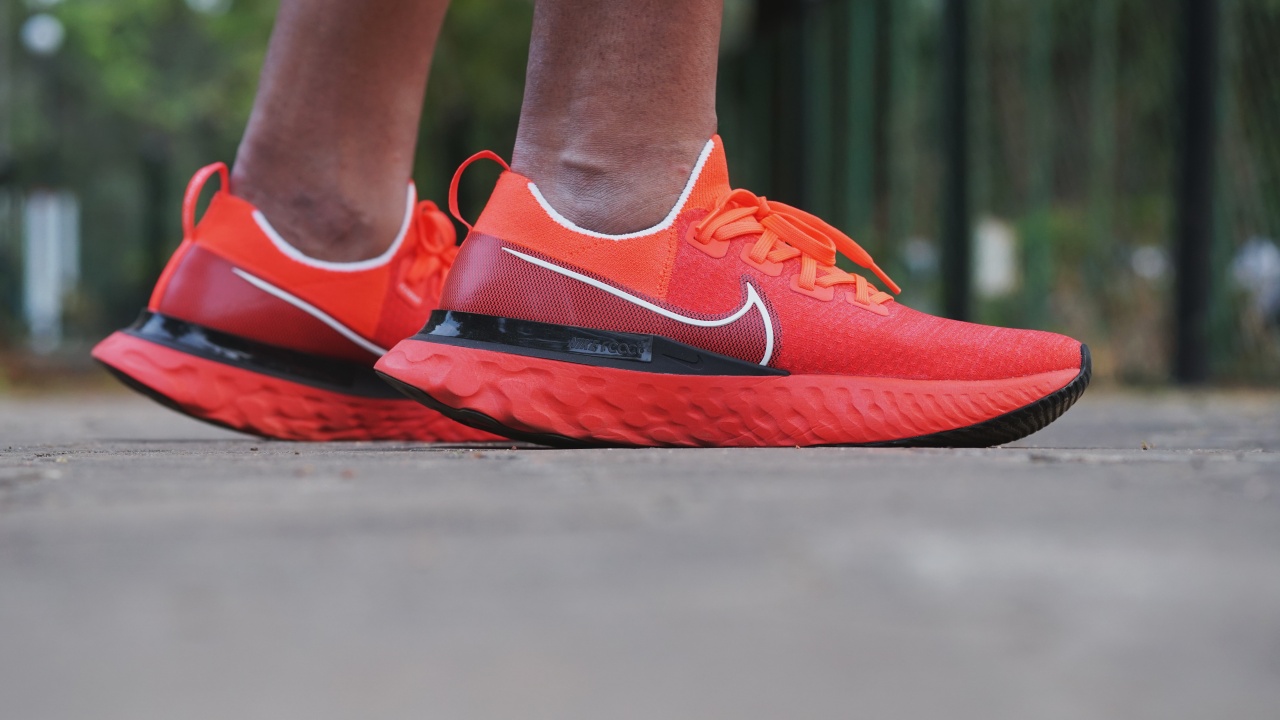
As you take a stride, the shoe rolls smoothly through the transition, with a relatively quick turnover. In addition to all of this, the shoe is also quite lightweight even with all that foam, so it’s surprisingly quite nimble to use.
Plenty of React
The other unique aspect about the midsole here is the width. It’s an interesting shape for sure, especially when you look at the shoe from up top. The midsole flares out from the heel and forefoot area. This creates a foundation that is wider at the bottom and that wide base gives the shoe a lot of stability.
With narrow shoes you sometimes feel like you might accidentally roll your ankle in, but you never have to worry about that in the Infinity Run because the wider base keeps your foot closer to the ground to help with stability.
It’s something that you feel right away when you start walking in these shoes.
The entire midsole is made from the React foam, and it performs just as you’d expect. According to Nike, their React foam is a combination of thermoplastic elastomer (TPE) and ethylene vinyl acetate (EVA), which are common polymers you’d find in most running shoe cushioning midsoles. And this all makes for a midsole that is springy, yet durable, with a nice soft foam cushioning.
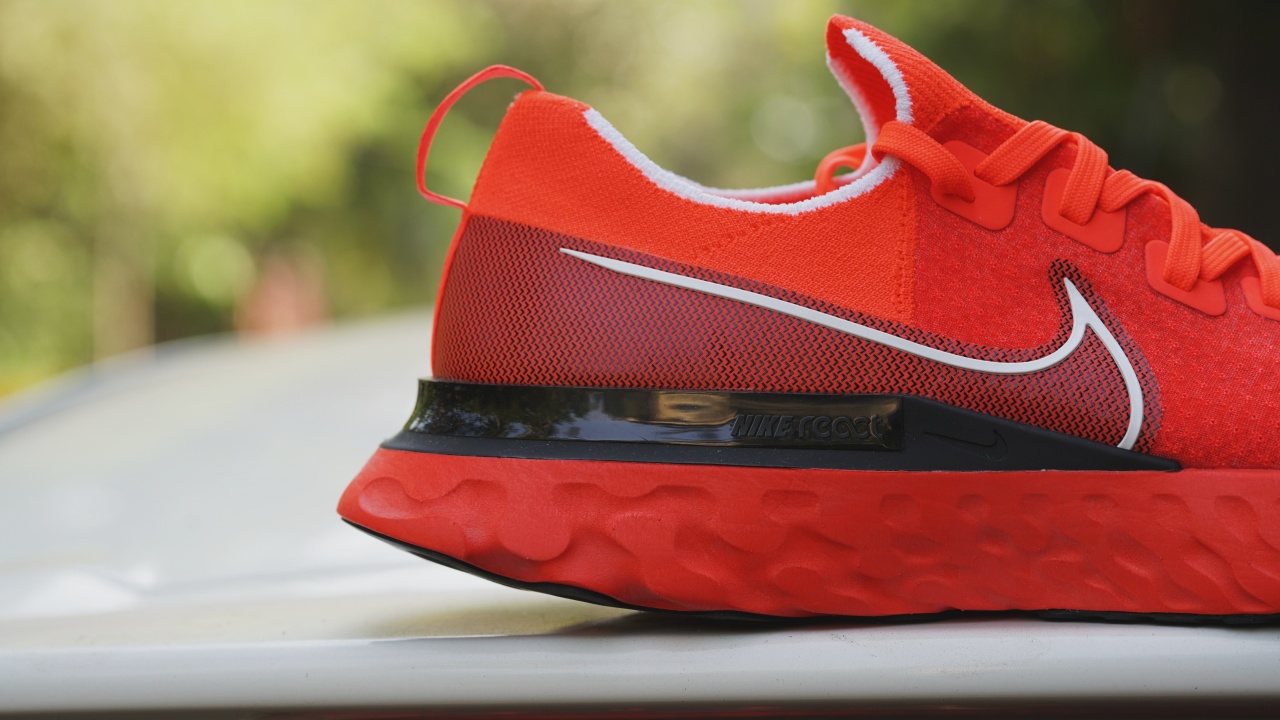
Because of everything that midsole has to offer, coupled with the rocker shape, the Nike React Infinity Run is actually perfect for runs — be it your daily jog in the mornings, an evening run after a long work day, or even if you’re only just starting out. This is one of the best running shoes I’ve tried in a while.
I should point out though that these aren’t really meant for long marathon runs. Nike says the Infinity Run works best with variable training where you vary your training instead of running the same amount of distance at the same pace at the same path every day.
Another thing I should point out is that if you tend to overpronate while running, the Infinity Run really helps keep you neutral and allow that toe-off to be right down the middle. If you’re a neutral runner, it’ll still help control the foot while on a run.
At the end of the day, Nike’s claim about this shoe helping with preventing running injuries seems to be true. If you’re tired of overuse injuries or you’re worried about starting out with running — these are the shoes for you.
Is the Nike React Infinity Run your SneakerMatch?
The Nike React Infinity Run is a shoe that I love for its clean styling and premium level of performance. But honestly, my favorite thing about it is the overall stability.
Nike was spot on with their marketing here. It really is a secure running shoe that’s meant to help prevent injuries and for those of you who are new to running — this might actually help overcome your fear or reluctance towards it.
Nike designed the React Infinity Run for everyday runs, and it definitely excels at that. The rocker shape allows for smooth transitions into and out of each stride, and the stretchy Flyknit upper feels great and can accommodate all types of foot shapes.
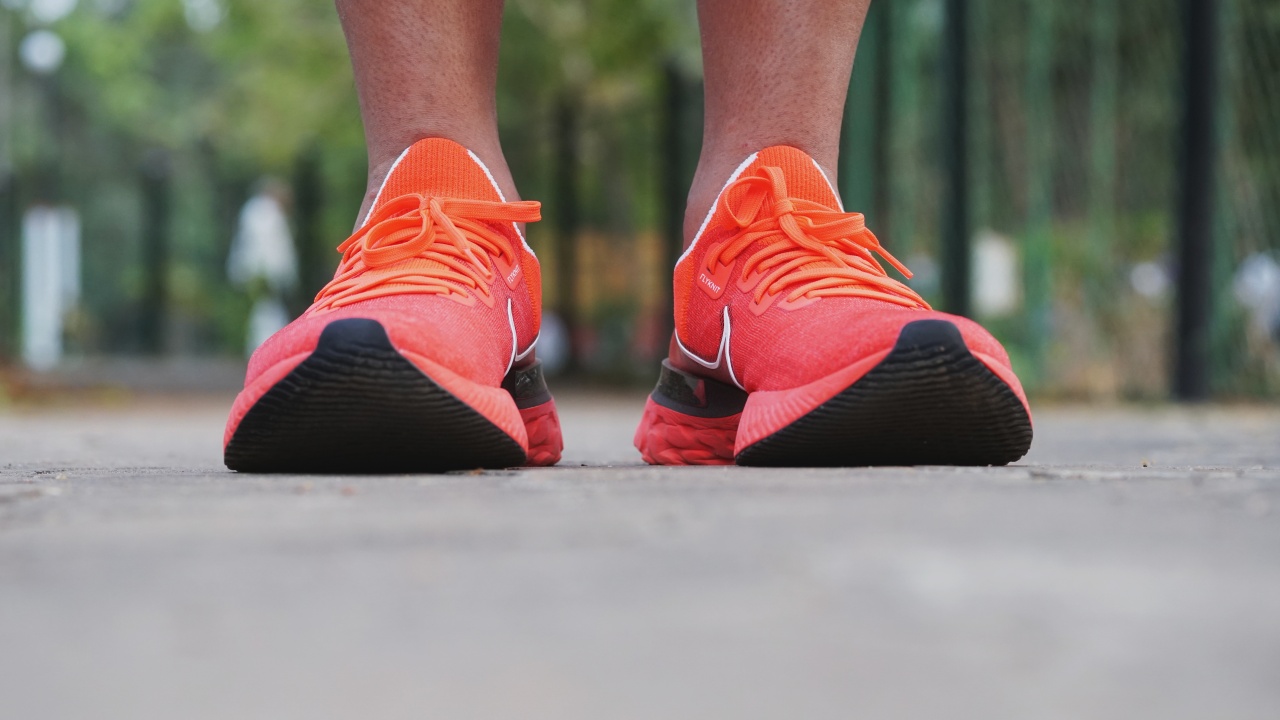
The heel-to-toe transition here was just amazing and it makes you feel faster in your runs, and generally makes running feel easier.
And then of course there’s that amazing bouncy React foam on top of a wide base. There’s more React Foam here than on any Nike shoe ever before. It all makes for a shoe that you’ll want to wear not just on every casual run, but maybe even throughout a normal workday as well, because they’re so comfortable.
Of course, if you’re a long-time runner and want something serious, there’s nothing better than the Nike Vaporfly Next%. If you’re looking for a long distance marathon shoe, well there’s the more secure and durable ASICS GEL Nimbus 22 which I still think is a great shoe. And if you’re leaning more towards the Adidas camp, there’s the Ultraboost 20 which is a decent alternative.
But for everything else, I have to admit, the Nike React Infinity Run is definitely recommended. I think Nike has yet another winner on their hands here, and this is easily going to be my most recommended pair of running sneakers this year!





Lifestyle
JBL Sense Pro review
My daily driver met a loud and capable rival in this quest for a superior training companion.

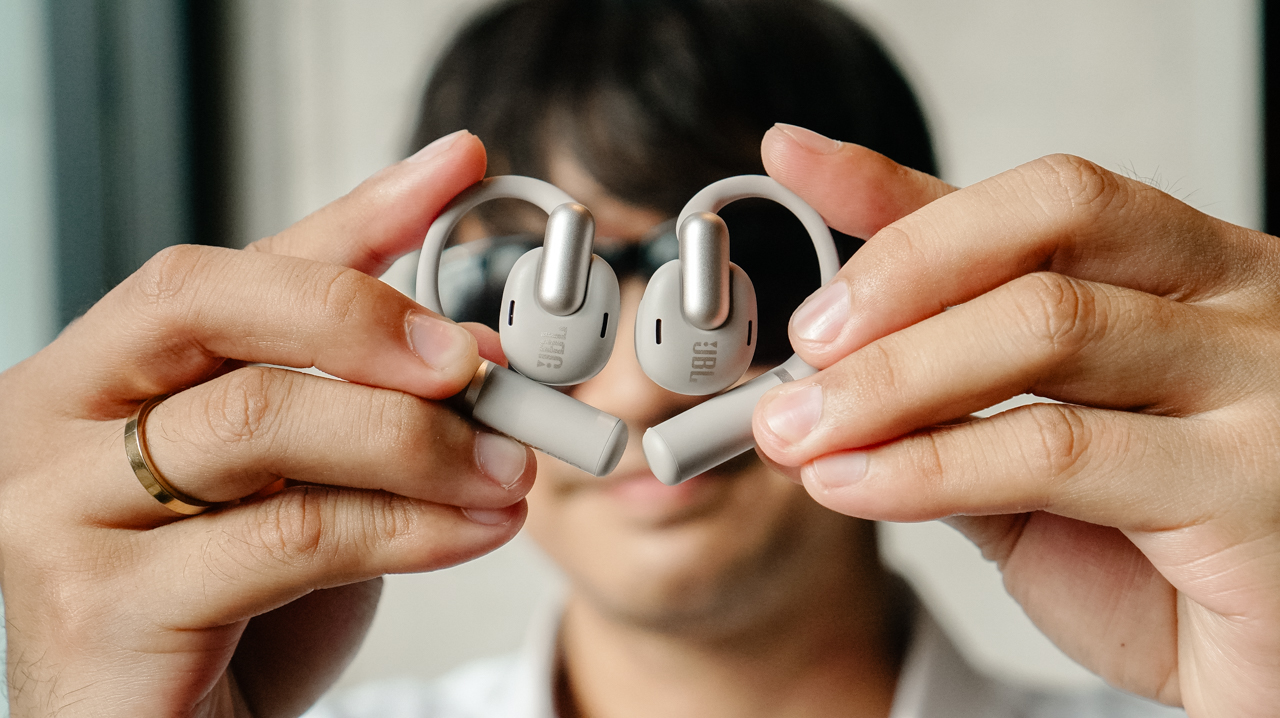
I consider my relationship with my workout gear to be a very serious, long-term commitment.
I’m a creature of habit when a product truly understands my everyday life. For the past year, I have depended on my Shokz OpenFit 2+ as if it were a physical extension of my morning.
When I lost my original pair, I didn’t even browse for alternatives before I secured a replacement. I knew exactly what worked for my ears and my life.
When the JBL Sense Pro arrived, it didn’t feel like a necessity so much as a very expensive curiosity.
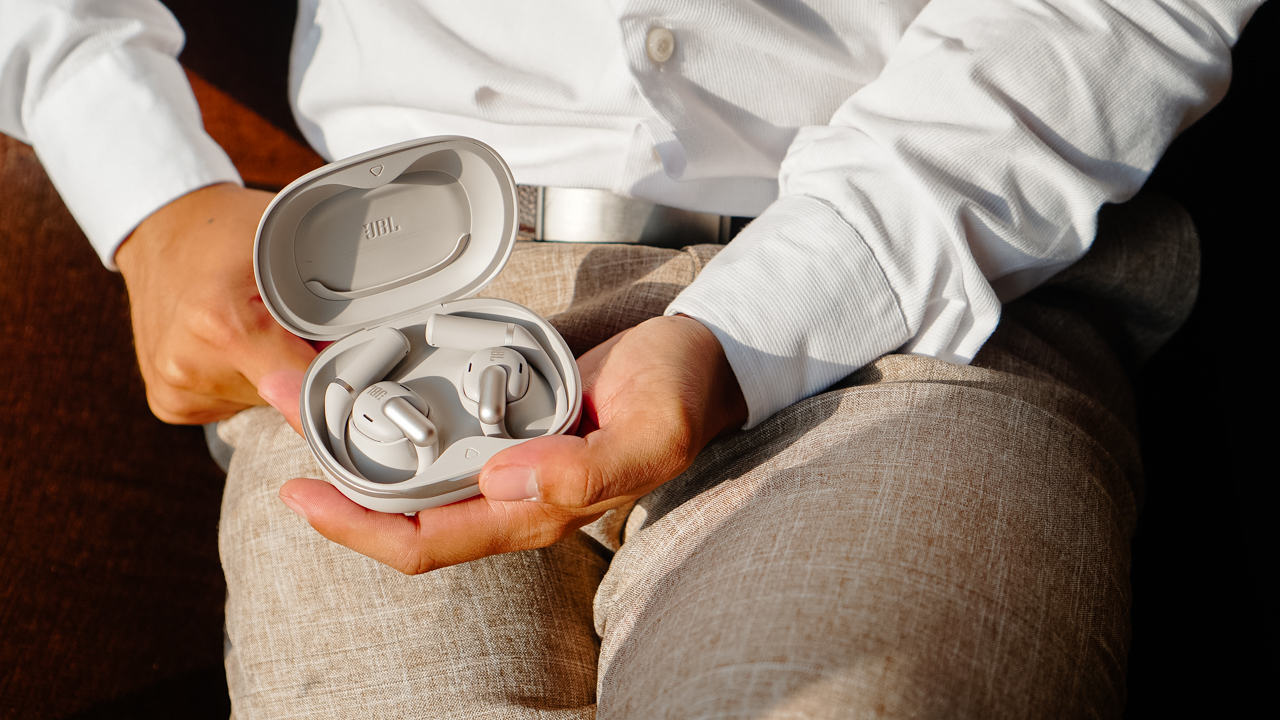
I wanted to see whether the “Pro” label could actually offer more than the weightless comfort I already loved. I decided to treat this as an essential research project into whether my standards could actually be raised.
Weight of a secure fit
I find that gear often reveals its true character at the exact moment I am negotiating with my willpower to finish a final rep.
This is the time when I realize if my earbuds are truly supporting my ambitions or if they are simply getting in the way of my progress.
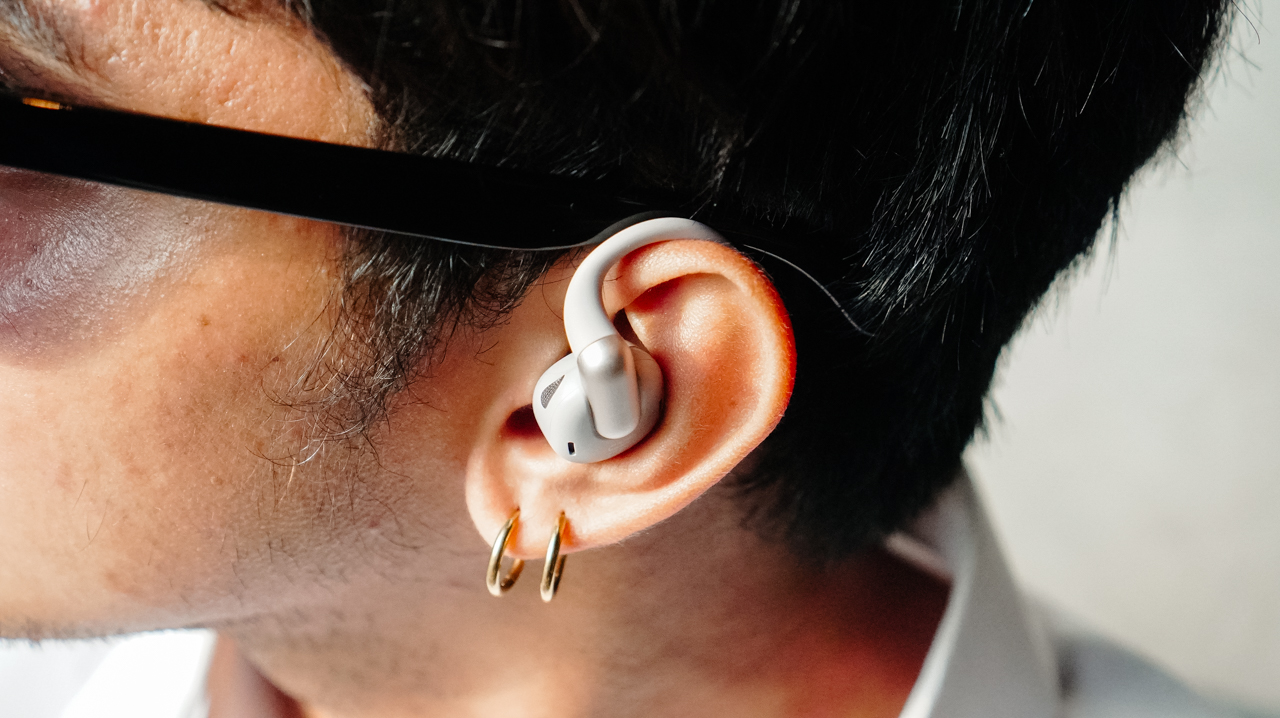
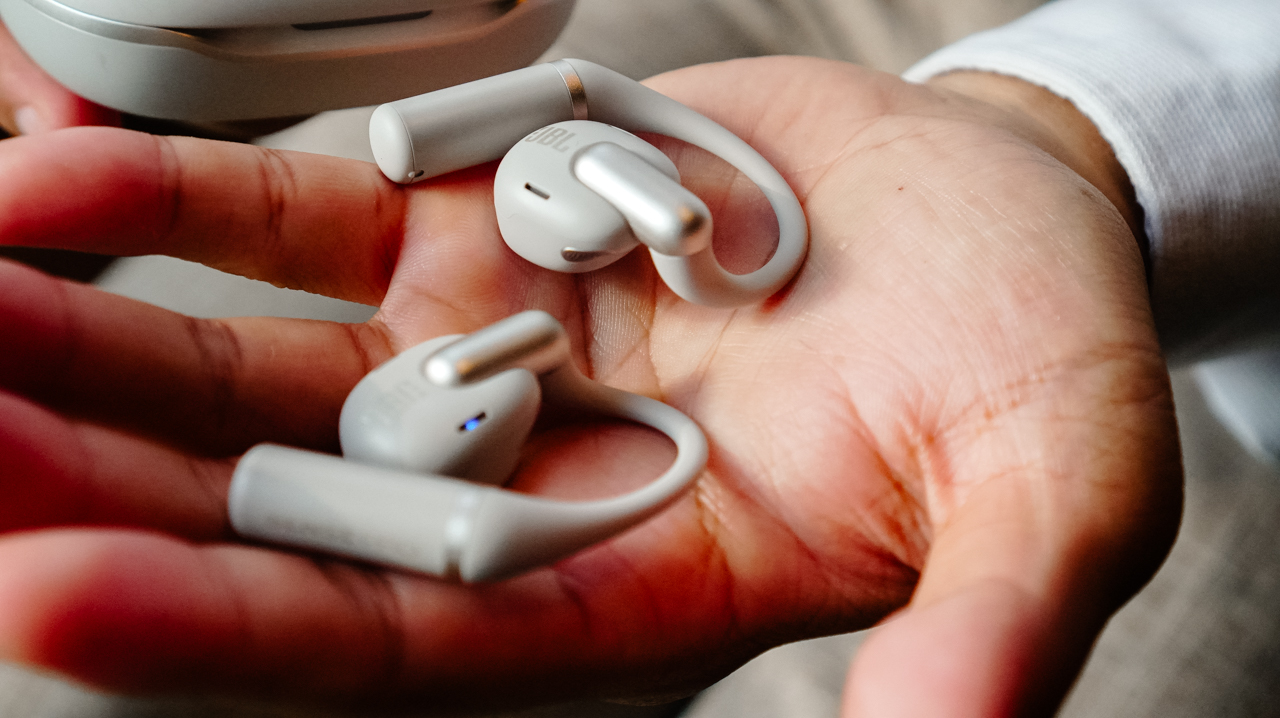
The JBL Sense Pro surprised me with its 20-degree adjustable hinge. During a light warm-up, the fit sits relaxed on my ear and feels remarkably airy.
However, when I transition into high-intensity movements like box jumps or plyometric exercises, I instinctively click the buds closer to my ears to ensure a tight grip.
The titanium memory wire wraps around the ear with a firm security that avoids the suffocating pressure I often feel with standard in-ear buds.
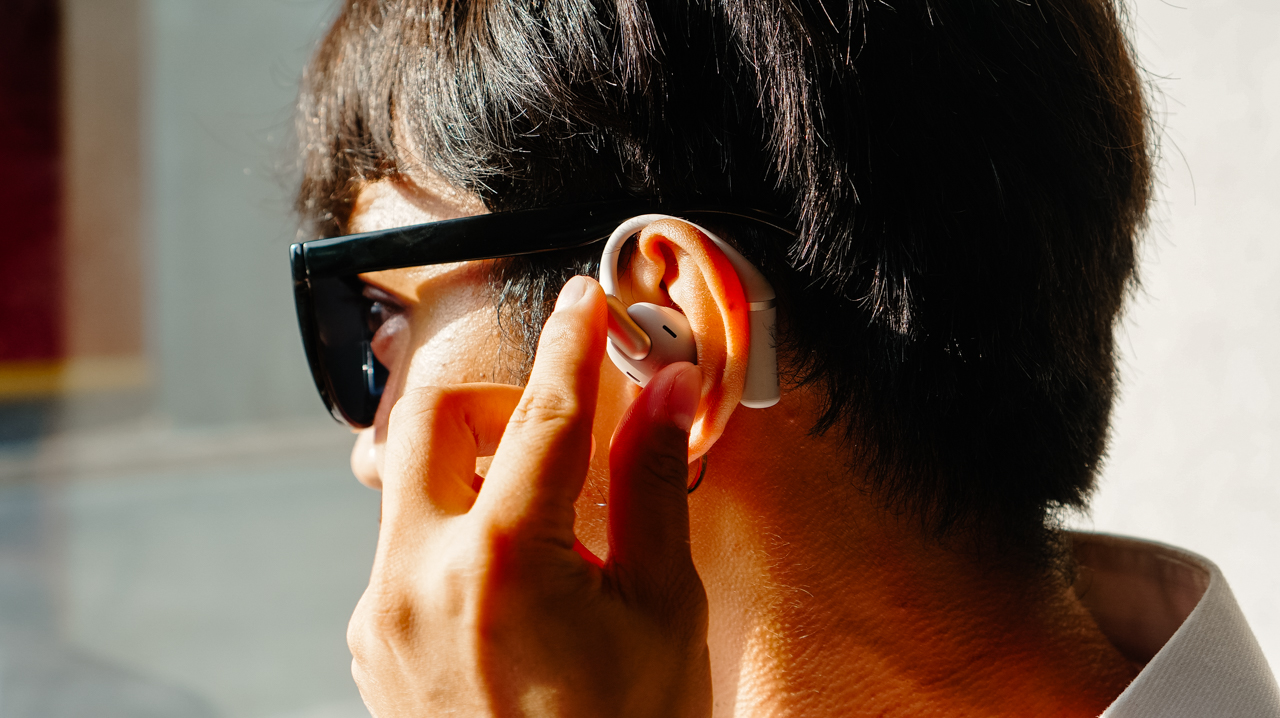
Even with that clever hinge, the presence of the device remains noticeable to me. After an hour of movement, I begin to feel the weight of the buds sitting against my skin.
Unlike my Shokz OpenFit 2+, which disappears even during long sessions, the JBL Sense Pro reminds me that it’s there.
I find myself adjusting the buds in between my sets to keep it snug, which is a small interruption I never experienced with my Shokz or even my previous Xiaomi OpenWear Stereo.
Soundstage for my private performance
Open-ear audio is usually a lesson in compromise where I expect to trade deep bass for environmental awareness.
Most music sounds thin and distant in these designs, which is why I was skeptical of the performance claims.
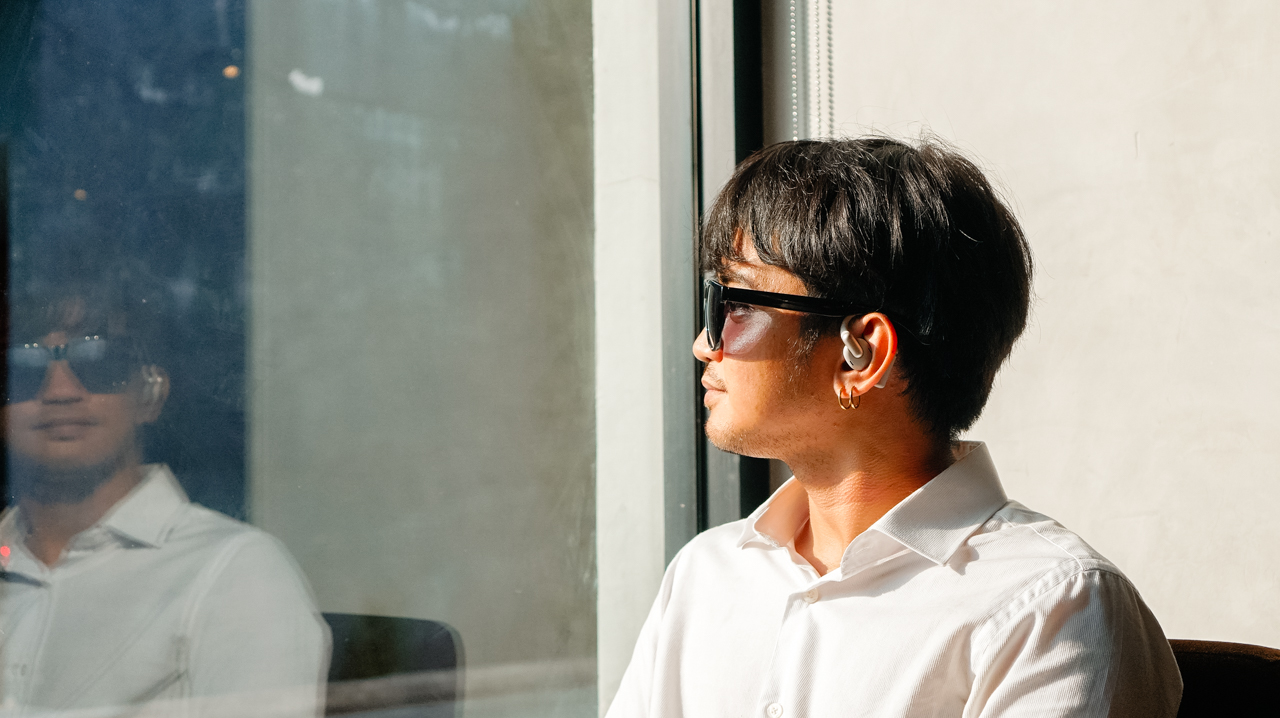
JBL is known for bass, and the 16.2mm drivers combined with LDAC support ensure the sound carries a level of authority I did not expect. The audio feels full and lush even when I am running on a busy street with heavy traffic.
The adaptive bass boost compensates for the wind and noise in real time so my power songs, specifically “Breaking Dishes” by Rihanna, never lose their emotional impact.
I appreciate hearing the full range of a track while remaining completely aware of the world around me.
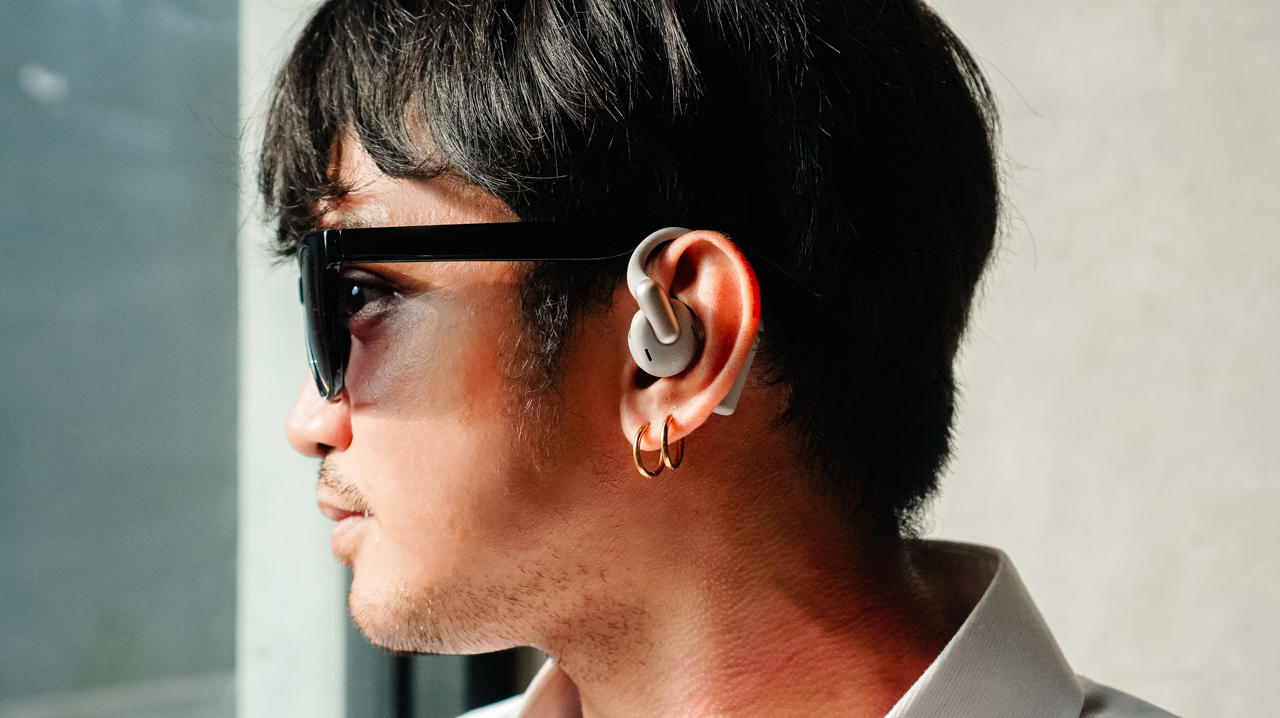
The spatial audio feature turns a standard gym session into something that feels like a professional sports film shooting.
It creates an atmosphere where the music feels like it’s following me from one weight station to the next rather than just playing in my ears.
One thing I did notice is the occasional static during my tests, which served as a tiny reminder that I was dealing with a complex piece of technology rather than a seamless part of my body.
Technology that understands my hustle
The real value of a professional device lives in the features I don’t see… until I actually need them.
For the Sense Pro, the bone vibration sensor is that essential investment. It sounds quite technical until I have to take an urgent client call while I’m huffing and puffing on the treadmill.
Instead of relying on microphones that catch every gust of wind, the sensor reads vibrations from my jaw to ensure my voice remains clear.
My Accounts Team was actually surprised to learn that I was running during our last meeting. They didn’t notice the gym environment at all when I told them I would send the presentation deck after my workout.
The sensor understands my voice even when I am in the middle of a busy setting. That said, its battery life supports my busy schedule without requiring constant attention.
The 38-hour total capacity means I can go an entire week without looking for a charging cable. Meanwhile, the quick-charge feature provides four hours of playback from just ten minutes of charging, which is my ideal safety net for those mornings when I’m rushing out the door.
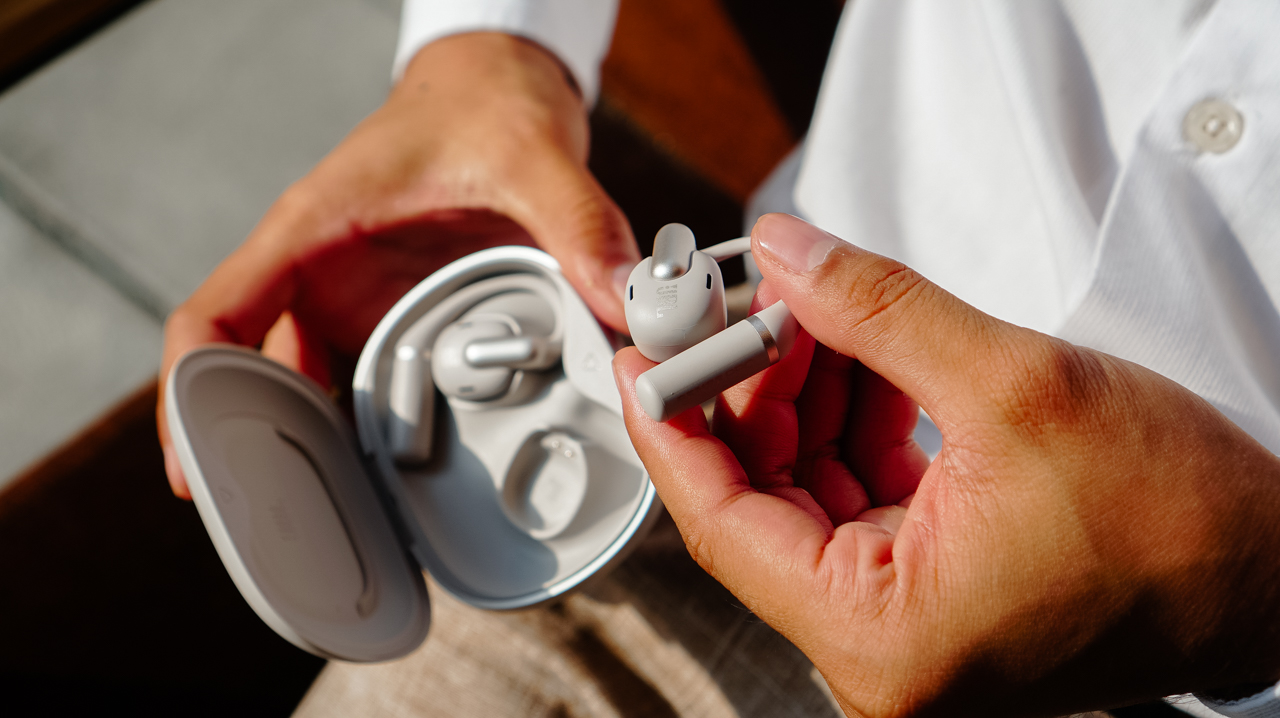
On top of that, I can easily monitor my juice through the JBL Headphones app along with the various settings I like to tweak.
Is this your GadgetMatch?
The JBL Sense Pro is a serious piece of equipment for those who need their audio to perform in loud, chaotic environments.
It offers a richer sound and better call quality than almost anything else I have tried in the open-ear category.
However, it cannot quite match the weightless comfort that makes the Shokz OpenFit 2+ (or the cheaper Xiaomi OpenWear Stereo) so easy to live with day after day.
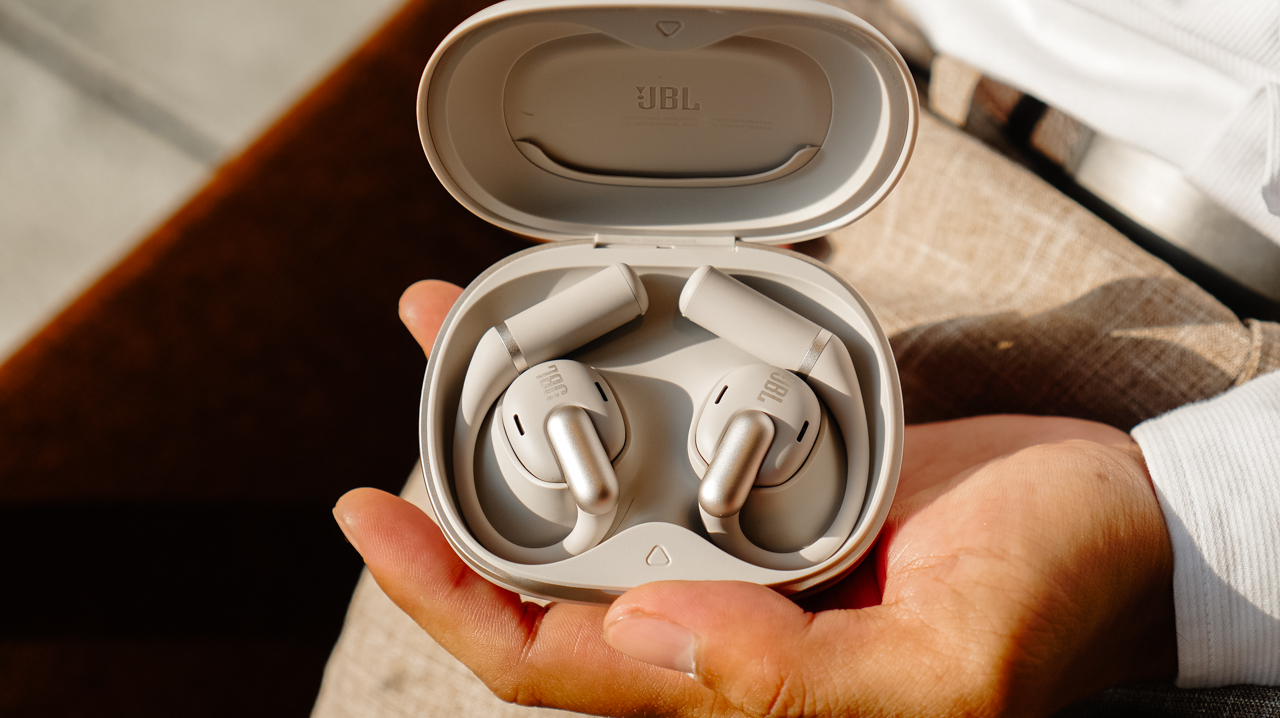
Swipe Right if you prioritize deep, immersive audio and need a secure, adjustable fit for explosive workouts. It’s a good choice if you take frequent professional calls outdoors and want a battery that can keep up with a high-performance lifestyle.
Swipe Left if you have sensitive ears and want a weightless, invisible feel for long hours of wear. If you already own Shokz or Xiaomi’s Open-ear wearables, you might find the JBL feels a bit too present for a routine that you might have already perfected.
The JBL Sense Pro retails for PhP 9,599 and is available in official JBL stores and authorized retailers.
Entertainment
LE SSERAFIM Chaewon flexes Galaxy S26 Ultra Privacy Display
She says the feature is cool

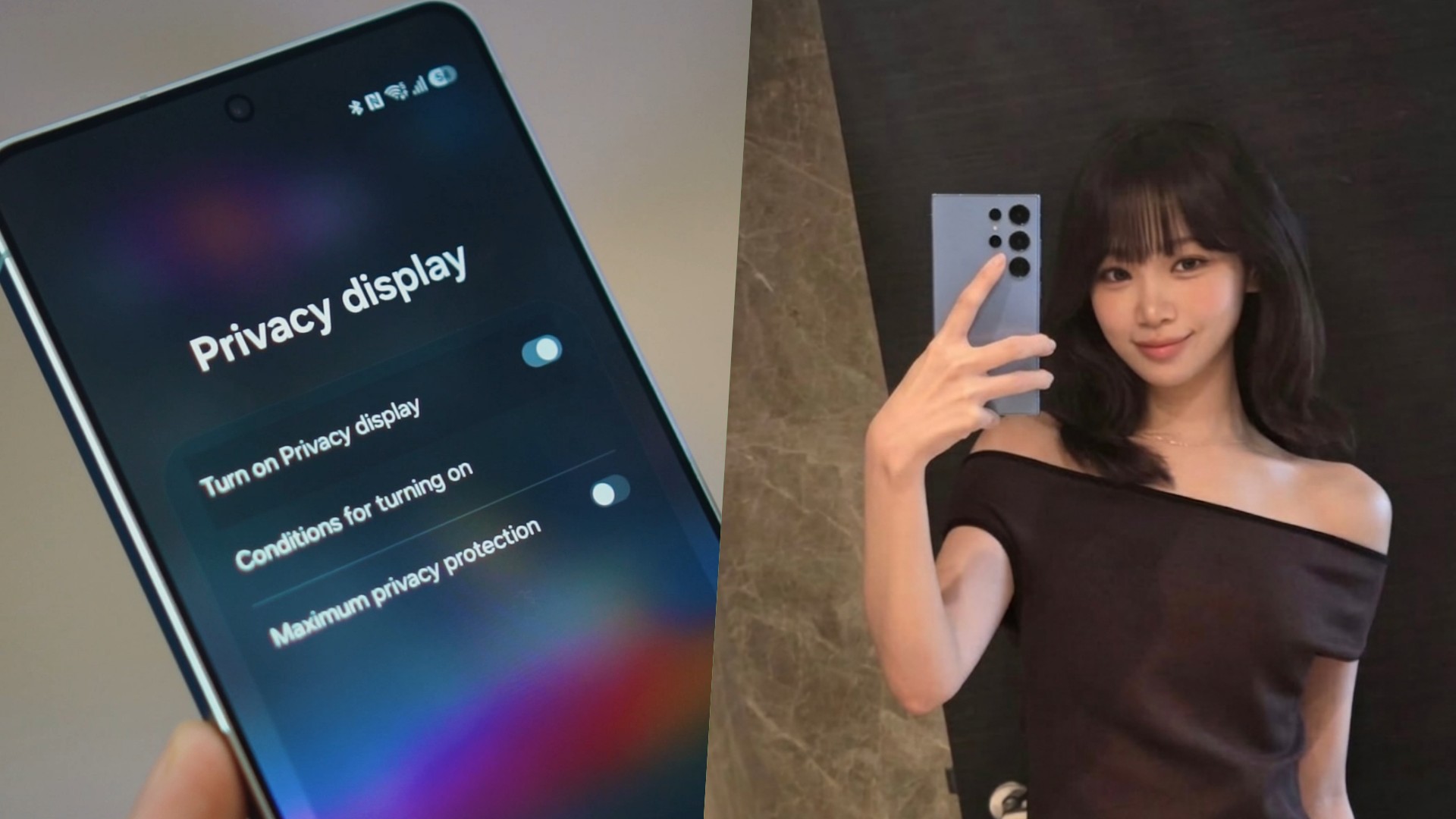
LE SSERAFIM’s Kim Chaewon didn’t set out to show off a feature. But somewhere in the middle of a Weverse live, she ended up doing exactly that. It’s a pretty good flex.
In a clip that’s now making the rounds online, Chaewon shared that she recently switched to the Galaxy S26 Ultra and has been enjoying one specific feature in particular:
“I just changed my phone lately to Galaxy S26 Ultra. And it has a privacy screen feature, right? It’s so cool. You really can’t see anything from the side. I show this to everyone I meet and make them jealous.”
It’s just someone genuinely impressed by a feature — and casually flexing it.
chaewon talking about how she recently got the Galaxy S26 Ultra and how she’s really been enjoying the privacy screen feature pic.twitter.com/Dfh1Tiz6Mx
— AJ | 不死 (@Lesseraphic) March 30, 2026
A feature that makes sense instantly
The feature Chaewon is referring to is Privacy Display, one of the headline additions on the Galaxy S26 Ultra.
When enabled, it limits the viewing angles of the screen. That way. only the person holding the phone can clearly see what’s on it. Anyone looking from the side gets a dimmed or obscured view.
If you’ve ever used a privacy screen protector, the concept is similar. The difference here is that it’s built directly into the phone and can be toggled on or off, or even set to activate only for specific apps.
It’s a small addition on paper, but one that solves a very real, very common problem — especially if you’re using your phone in public spaces.
Samsung contract renewed?
It’s worth noting that LE SSERAFIM has been using Galaxy smartphones for a while now. That’s likely due to a partnership with Samsung and/or Google.
The music video for their track “Come Over” heavily features the smartphone, along with Google Gemini features integrated into the experience.
Another member, Sakura, also mentioned to fans recently that she has switched phones — from a Galaxy Z Flip to now also using a Galaxy S26 Ultra.
#SAKURA Weverse dm update
: It’s been a while since I changed my phone
Galaxy S26 Ultra
It’s amazing that it’s not a flip for the first time in a while lol: I can’t send selfies…
Because…
It’s a secret🤫
What should I eat for lunchTHE BEGINNING OF COMEBACK MAYBE, NEW OF… pic.twitter.com/Tww7mnklSK
— le sserafim pics (@sserapics) March 23, 2026
Whether this points to a renewed partnership or just continued preference isn’t something officially confirmed. But moments like Chaewon’s certainly keep Galaxy devices in the spotlight.
It’s easy to imagine the same scenario playing out anywhere — on a commute, in a café, or sitting next to someone who’s just a little too curious about what you’re doing on your phone.
It’s also something we’ve explored ourselves.
In one of our reels, we showed a straightforward demo of how Privacy Display works. We tilted the phone to show how the screen becomes unreadable from the side. In another, we leaned into a more playful skit: someone trying (and failing) to peek at what’s on the screen of the person beside them.
View this post on Instagram
The result is the same. From certain angles, the display practically disappears.
The kind of feature you show off
Privacy Display isn’t the flashiest feature on the Galaxy S26 Ultra. But it’s the kind of feature you end up showing people. Not because you have to — but because it’s surprisingly satisfying to see in action.
If Chaewon’s experience is anything to go by, it’s also the kind of feature that makes people just a little bit jealous.
Accessories
Fujifilm Philippines introduces instax Mini Evo Cinema, Mini Link+
It’s time to enter your film+ era and hold onto your favorite moments
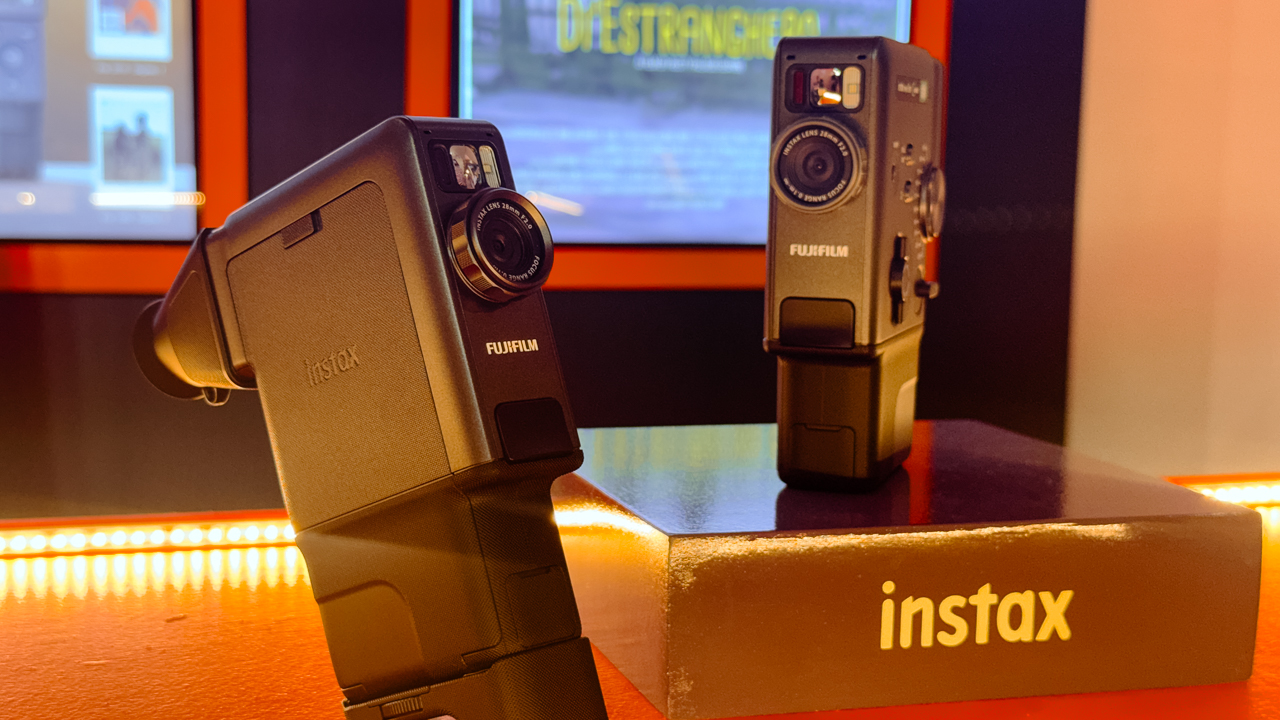
The digital scroll is fine, but Fujifilm Philippines is making a strong case for the tangible.
For a weekend, the Open House World in Makati transformed into a nostalgic playground for the “In Our Film+ Era” pop-up.
The mission was simple: proving that memories feel better when you can actually hold them.
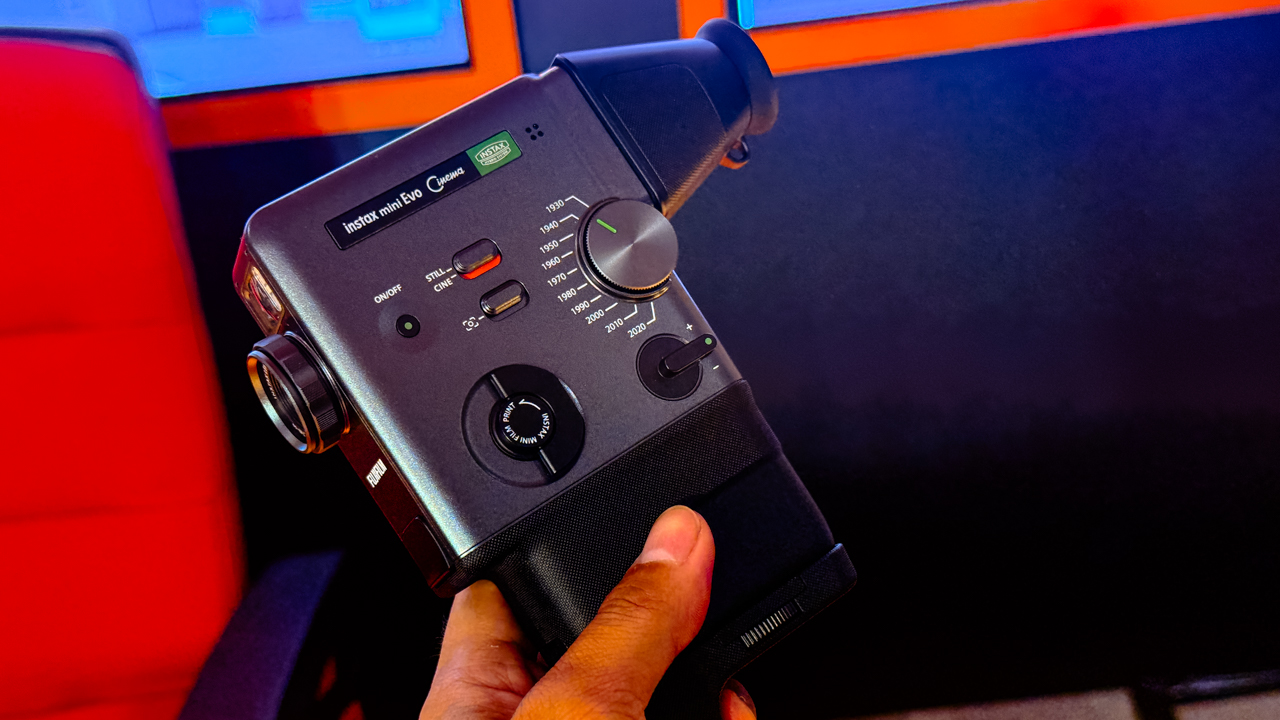
The stars of the show were the new instax Mini Evo Cinema and the instax Mini Link+, two gadgets designed for the artsy geek who wants their life to look as good on paper as it does on a Pinterest board.
Retro meets technology
The instax Mini Evo Cinema, priced at PhP 22,599, is a total vibe-shifter. With its 10 Eras Dial effects, you can toggle through a hundred different creative combinations.
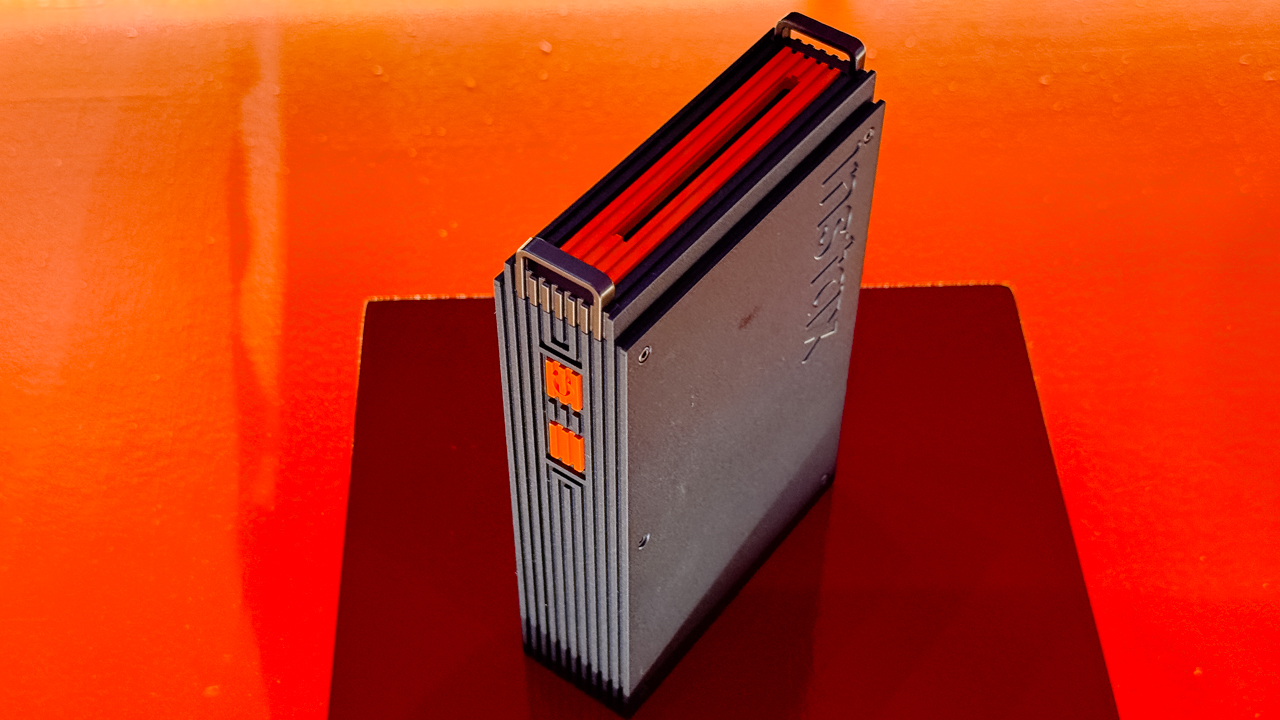
Then there is the instax Mini Link+ for PhP 8,999, built for the maximalists who refuse to let their best shots die in the camera roll.
This smartphone printer adds AR effects and custom designs, turning digital snapshots into high-aesthetic physical keepsakes.
As Masahiro Uehara, President of FUJIFILM Philippines, put it, the goal is to reimagine how people connect with their memories by blending innovation with raw emotion.
More than just a photo op
The weekend functioned as a masterclass in creativity rather than just a product demo.
On the first day, filmmaker Elyandre Dagli showed the crowd how the Mini Evo works as a powerhouse for documentation and storytelling.
The energy continued the next day with Nica Cosio, who led a session on rubber stamp carving and journaling. Cosio showed how the Mini Link+ bridges the gap between digital tech and old-school scrapbooking.
Artists like Soleil Ignacio, Bryan Sochayseng, and Jill Arteche also dropped by to share how these tools fit into their professional creative workflows, proving that “instant” doesn’t have to mean disposable.
Ready to enter your Film+ era?
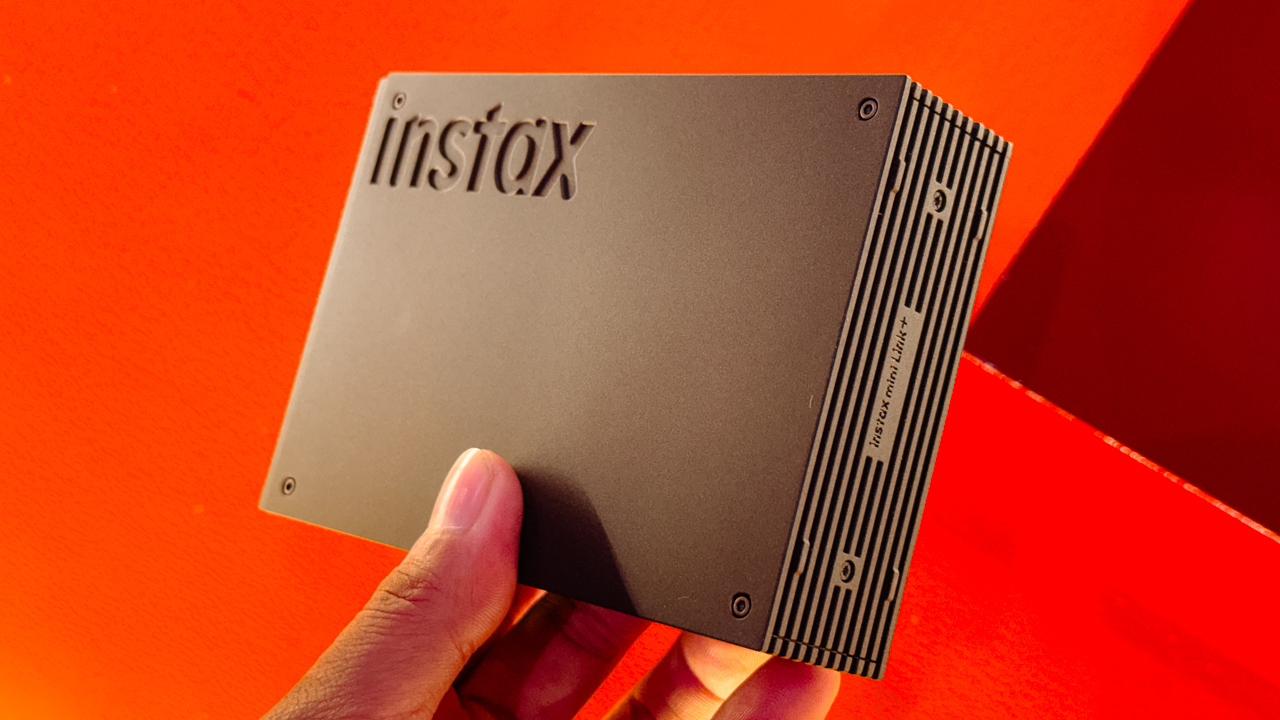
If you missed the pop-up, you haven’t missed the tech. The instax Mini Evo Cinema and instax Mini Link+ are officially hitting authorized FUJIFILM dealers nationwide right now.
It’s time to stop scrolling and start collecting.
For the latest updates, you can follow Team Instax on Facebook and Instagram.

Infinix NOTE 60 Ultra: Not bad for a flagship push
It's definitely got the looks, though.
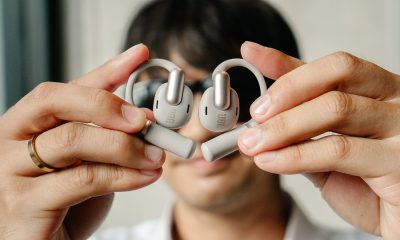

JBL Sense Pro review
My daily driver met a loud and capable rival in this quest for a superior training companion.
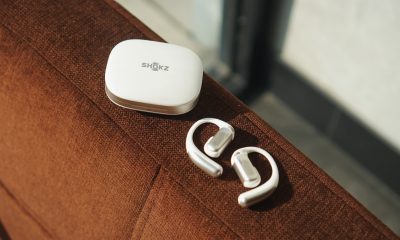

Shokz OpenFit Pro: Somewhere between awareness and focus
Find your balance

Acerpure Chill: Air conditioners for the summer

Match Pulse: TECNO SPARK 50 5G
Infinix NOTE 60 Ultra: Not bad for a flagship push
JBL Sense Pro review

LE SSERAFIM Chaewon flexes Galaxy S26 Ultra Privacy Display


-
 Philippines2 weeks ago
The HONOR X8d is serviceable
-

 Gaming1 week ago
WWE 2K26 lets you live out all the fantasy matches you could want
-

 Reviews1 week ago
Galaxy Buds4 Pro review: I thought I was done with in-ears
-
 Smartphones2 weeks ago
Spotlight: OPPO Find N6
-

 Automotive1 week ago
How the Ford Ranger is powering community resilience
-
 News2 weeks ago
nubia to launch new Neo 5 series gaming phones on March 28
-
 News5 days ago
nubia Neo 5 series launches in the PH, starts below PhP 12K
-
 Drones7 days ago
DJI officially launches the Avata 360 with 8K immersive imaging