
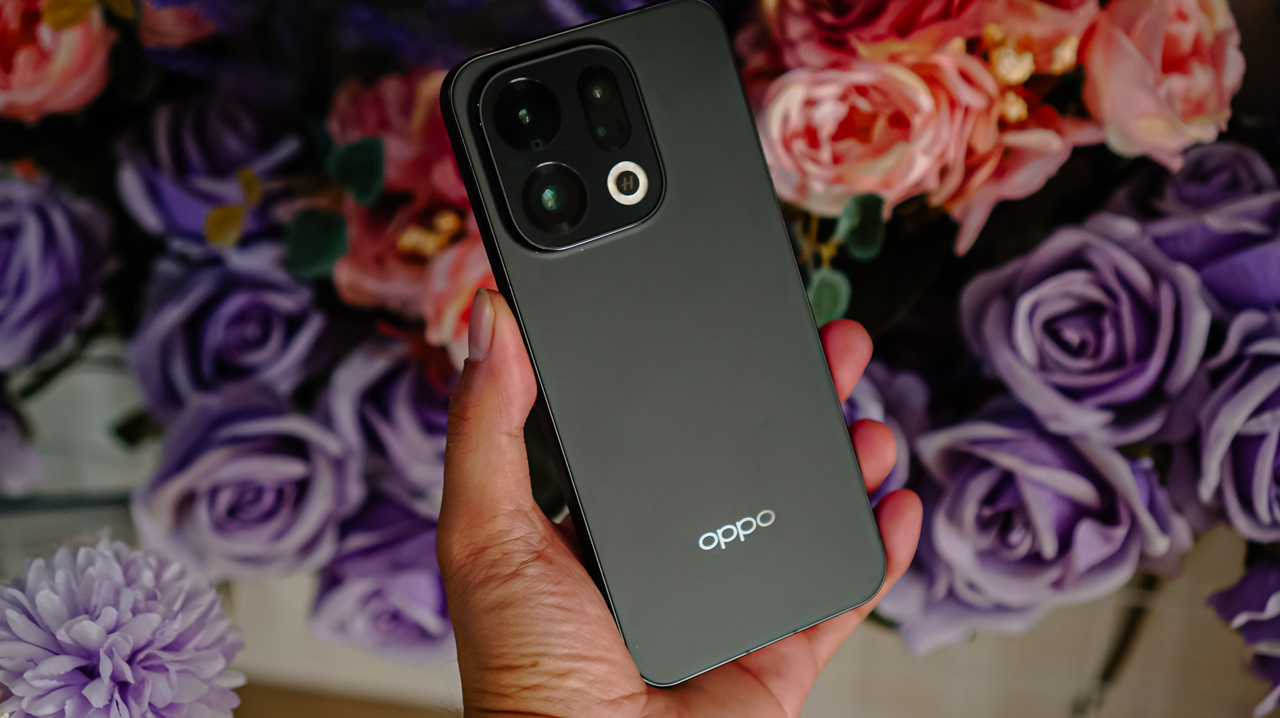

Quality is one of those words we hear all the time, especially in tech. It sounds simple and reassuring, yet no one ever explains what it really means.
Every brand has its own definition, which leaves people unsure about which phone can honestly stay reliable for the next three or four years.
OPPO believes the answer should be clearer, and Apex Guard is their way of creating that clarity.
It’s a full technology suite that looks at quality from every angle. It starts with research and production, continues through hardware and software, and ends with service that actually feels present and dependable.
The idea is simple: a smartphone should not be great only on day one, but it should stay great in every season of your life.

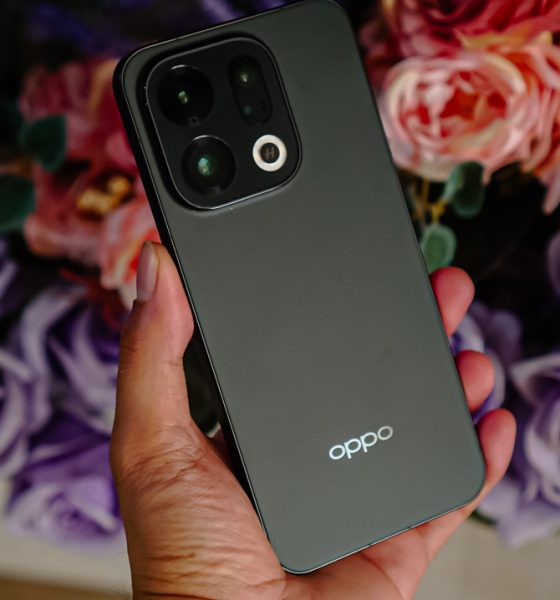
Photo: OPPO Reno14 5G
This belief comes from the way people use their phones today. We take them everywhere. We use them for work, stories, memories, habits, and routines. Our smartphones have become part of the way we move through the world.
OPPO built Apex Guard with that in mind. It’s a commitment to protect the moments that matter and to keep them steady and reliable.
Guarding every moment
People often decide how they feel about a phone the first time they hold it.
That first impression is important, although it is not always the full story. A phone meets the real world soon enough. It gets dropped, rained on, tossed into bags, pockets, gym lockers, or car seats. This is where quality becomes visible.
OPPO designs its phones to keep going through these everyday situations. The Find X series has Armour Shield; the A series has Military-Grade Shock Resistance.

Photo: OPPO A6 Pro
Water protection reaches IPX8, IPX9, and even IP69. More than twenty vulnerable points are reinforced. This protection goes across the lineup, which gives people confidence that their phone can handle busy days and unpredictable moments.
OPPO also tests devices with extreme heat, intense humidity, and freezing temperatures to make sure they perform in environments far beyond the usual.

Performance and experience are part of this protection too. ColorOS focuses on how a phone feels with every tap and swipe. ColorOS 15 introduced Parallel Animations.
ColorOS 16 refines the entire interaction layer. The All-New Luminous Rendering Engine processes animations through a unified pipeline that keeps everything fluid from the home screen to the deepest menu.
Heavy tasks do not break this flow. The All-New Trinity Engine keeps performance stable when notifications appear during a game or when someone records long 4K 60fps videos.
Dynamic Frame Sync adjusts rendering in real time, while Sensor-Offload moves key tasks to the SoC for better heat control. Project Breeze brings this polished experience to more entry-level devices and ensures that smoothness is not exclusive to high-end models.
Guarding over time
A phone is at its most exciting on the first day, but the real test happens later. OPPO wants that excitement to last, which is why the Find X9 Series is built with materials and engineering that slow down the aging process.
The display resists peeling through a temperature-resistant ink layer. Corning Gorilla Glass 7i adds more drop protection. OPPO’s chemical ion exchange strengthens the surface even further.
These efforts helped the Find X9 display earn a Five-Star Overall Drop Resistance certification from SGS.

Photo: OPPO Find X9
The work continues inside the phone. A silicon-carbon battery holds more energy in less space and maintains a longer lifespan. Foldables benefit from the same focus.
For instance, the Find N5 Series uses high-strength steel in its hinge and aircraft-grade glass fiber for flexibility and stability.
The Reno14 Series has an aerospace-grade aluminum frame, while the A6 Pro uses AM04 high-strength aluminum alloy tested to survive more than a thousand bends.
Smoothness also lasts longer. Instant Refresh in ColorOS 16 cleans memory deeply with a single tap and keeps apps running like day one.
Guarding above and beyond
Standards and certifications are important, although they are only one way to measure quality. OPPO follows these standards while also creating higher benchmarks for itself.
Devices are tested using TÜV Rheinland, TÜV SÜD, and SGS validation. More than 180 lab tests examine durability, accuracy, and long-term behavior.
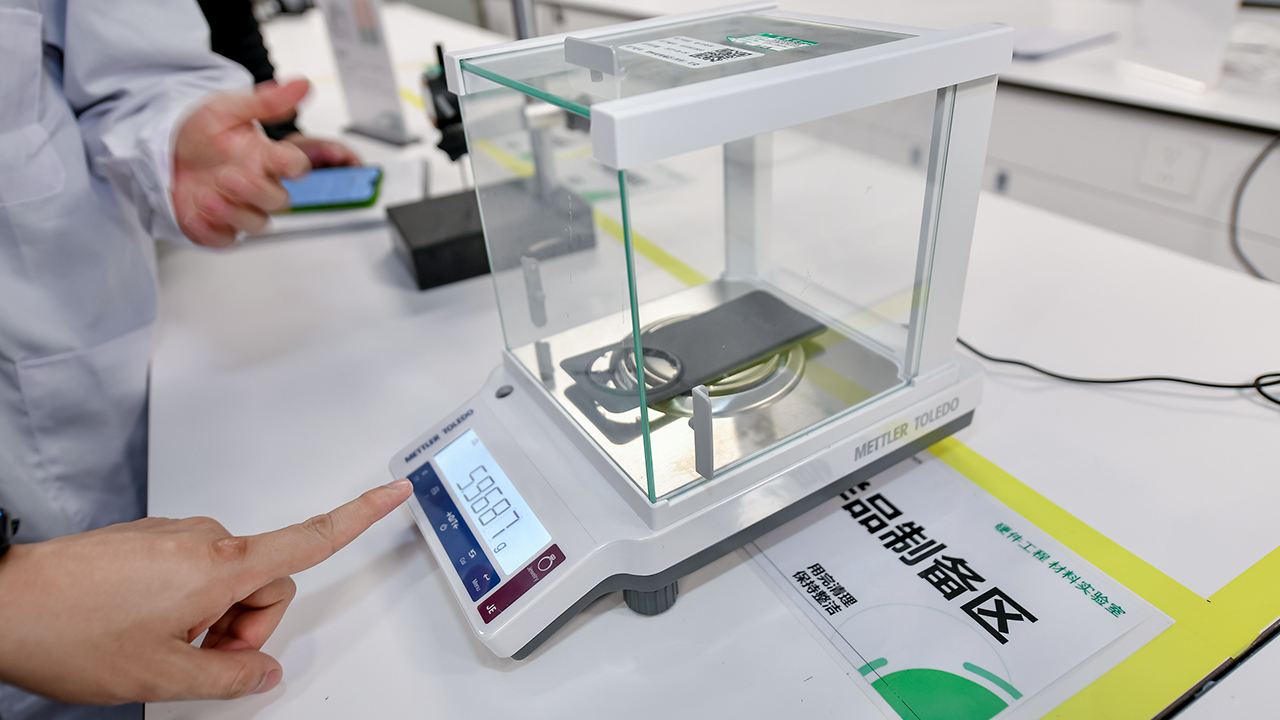
Precision matters at a microscopic level. The Find X9 Series uses a fully automated assembly line that fits more than 1,900 components onto a compact motherboard. Multiple optical inspections verify accuracy down to the micrometer. Software is examined across hundreds of scenarios that go beyond typical third-party checks.
OPPO also simulates 48-, 60-, and 72-month usage cycles through its Endurance Simulation Suite. These tests mimic how people actually use their phones.
Even after years of simulated wear, OPPO devices maintain an aging rate that remains lower than the industry average. OPPO also developed its own 6-Zero smoothness standard, which checks for zero lag, latency, flicker, crashes, mislaunches, and freezes.

Quality continues through after-sales support. OPPO has more than 3,300 service centers across 75 countries with one-hour flash fixes. Strong cloud warehouse systems and direct service operations keep parts and repairs accessible so users always have reliable support.
OPPO wants quality to be a clear promise, and Apex Guard represents this promise in every detail. From that first moment of unboxing to the years that follow, Apex Guard elevates the experience and gives people devices they can trust in all the ways they live.





Computers
Lenovo accelerates production-ready enterprise AI with NVIDIA
From AI inferencing to gigawatt-scale AI factories


Lenovo has unveiled new Lenovo Hybrid AI Advantage with NVIDIA solutions designed to accelerate AI adoption, reduce time-to-first-token (TTFT), and deliver measurable business results across personal, enterprise, and cloud environments.
Building on the inferencing acceleration introduced at Lenovo Tech World, this next phase of Hybrid AI execution expands the solutions with device to data center to gigawatt-scale AI cloud deployments.
This enables real-time decision-making, operational efficiency, and intelligent automation across industries at global scale. The solutions boost productivity, agility, and innovation by enabling faster AI deployment.
The development comes as AI is seen moving from training models powering real-time decisions. Lenovo is prepared to address the demand for validated hybrid AI platforms built for production-scale inferencing, as organizations will need infrastructure to support such.
In fact, Lenovo’s Hybrid AI Advantage with NVIDIA are now delivering ROI in less than six months. The new inferencing-optimized ThinkSystem and ThinkEdge servers are being utilized for real-time inferencing across retail, manufacturing, healthcare, sports, and smart city scenarios.
The expanded portfolio includes:
- two Lenovo Hybrid AI platforms, featuring NVIDIA RTX PRO 6000 Blackwell Server Edition and Blackwell Ultra
- Hybrid AI inferencing starter platform with RTX PRO 4500 Blackwell Server Edition
- Lenovo ThinkAgile HX650a with Nutanix Enterprise AI and Nutanix Kubernetes Platform
- Lenovo Hybrid AI platforms with Cloudian
Bringing inferencing directly to professionals
Lenovo and NVIDIA are bringing AI from development environments to real-world production at a global scale. This is thanks to new Lenovo AI inferencing platforms with NVIDIA Dynamo and NVIDIA NIM.
Meanwhile, Lenovo AI Cloud gigafactory platforms are powered by NVIDIA Vera Rubin NVL72. Industry-specific agentic AI solutions are also built with NVIDIA Blueprints and software.
For consumers, there’s next-generation NVIDIA RTX Pro Blackwell-powered mobile and desktop workstations. These will be rolled out across the ThinkPad P14s Gen 7, ThinkPad P16s Gen 5, and ThinkPad P1 Gen 1 lineups.
ThinkStation P5 Gen 2 desktops, meanwhile, will get up to two RTX PRO 6000 Blackwell Max-Q GPUs. They will also have support for NVIDIA OpenShell.
For gigawatt-scale scenarios, the next-gen Vera Rubin platform accelerates deployment for hyperscale and sovereign AI cloud providers.
These fully liquid-cooled, rack-scale AI systems are engineered for faster deployment and dramatically improved token economics. They can achieve up to 10x higher throughput and up to 10x lower cost per token.
Automotive
How the Ford Ranger is powering community resilience
Through machine and technology, Ford Philanthropy is helping Gawad Kalinga bridge the gap for remote communities.
Strong communities aren’t just built with bricks and mortar. They are sustained by the hands that reach out and the wheels that get them there.
For Gawad Kalinga (GK), reaching the most isolated provinces in the Philippines is often the biggest hurdle to delivering hope.
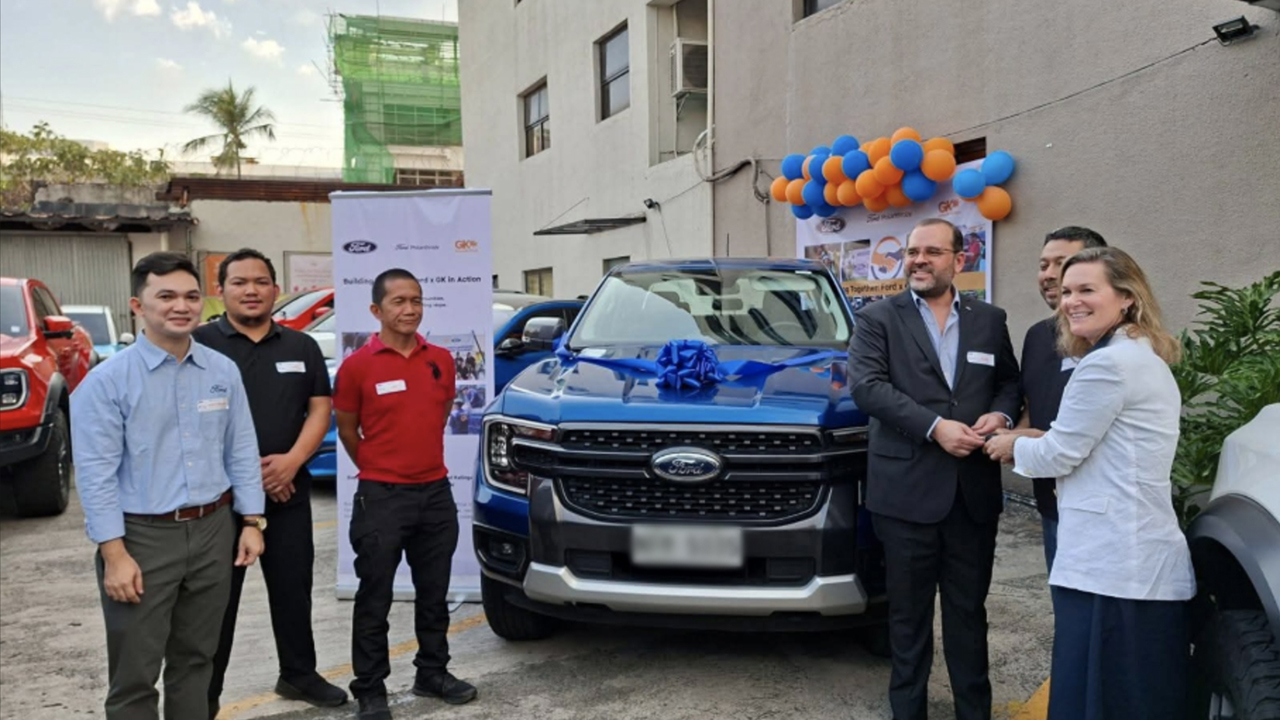
To bridge this gap, Ford Philanthropy and Ford Philippines recently handed over the keys to a brand-new Ford Ranger Sport 4×4.
During the launch of the “Ford Building Together” initiative at the GK Headquarters in Mandaluyong, the Ranger was introduced as a vital partner for GK’s nationwide relief operations.
The Ranger provides the performance and off-road capability needed when every second counts.
More than a mission
“Strong communities are built through strong partnerships,” said Mary Culler, President of Ford Philanthropy.
Alongside Pedro Simoes, Managing Director of Ford Philippines, Culler highlighted how this initiative unites dealers, employees, and owners.
It’s a collective effort to scale the heart of what Ford does: moving people forward.
Through Operation Walang Iwanan, Ford has already equipped disaster response hubs across six regions with essential tech: from Starlink mini-satellites and EcoFlow solar power to water filtration systems.
Between 2024 and 2025, these tools supported over 11,500 individuals through fires and natural disasters.
Investing in the everyday

The impact stretches into the daily moments of community life. Since 2015, Ford’s partnership with GK has reached 15,000 patients through medical missions. They also trained 1,100 health champions.
Through the Kusina ng Kalinga program, children receive the nutrition they need to stay focused in school. Meanwhile, the new READ program provides 12 weeks of literacy support for students in Caloocan.
Even food security is getting a tech-driven boost. Ford has renewed its collaboration with Scholars of Sustenance Philippines, using mobility to rescue surplus food. It is then redistributed to families experiencing hunger in Nueva Vizcaya.
In the end, technology lives inside these real moments. By combining grassroots action with reliable mobility, Ford and Gawad Kalinga are ensuring that no community is ever truly out of reach.

AMD is prepared to lead the industry in its agentic AI era with their high-performance CPU strategy.
As the industry pivots from simple AI models to agentic AI systems that are capable of independent planning and decision-making, the CPU is reclaiming its role as the critical “head coach” of the data center.
This was noted by AMD CEO and Chair Dr. Lisa Su during the AMD Advancing AI event last year. The rise of autonomous agents has transformed inference into a complex and multi-step workflow that demands sophisticated logic and orchestration.
And while high-performance GPUs are necessary to generate insights in real time, the surrounding infrastructure is just as important.
This is where CPUs enter the picture. Their performance and efficiency are more important than ever in the overall performance of modern AI infrastructure.
And AMD delivers an advantage with their offerings. In recently published data, a 5th Gen AMD EPYC CPU-based system is estimated to perform up to 2.1x better per core against an NVIDIA Grace Superchip-based system.
The same system AMD-based system also delivers up to 2.26x uplift on SPECpower, measuring operations per watt.
The x86 CPU architecture gives customers the advantage of a broad, proven software ecosystem that can run existing workloads natively.
This avoids the costly refactoring and code-base duplication often required when switching to Arm-based alternatives.
Looking ahead, AMD is doubling down on the balanced system philosophy. Future architectures such as the “Venice” CPUs will power the “Helios” rack-scale AI design.
By integrating EPYC CPUs with Instinct GPUs and the ROCm software stack, AMD aims to maximize cluster-level performance and lower the total cost of ownership in the agentic era.

Infinix NOTE 60 Ultra: Not bad for a flagship push
It's definitely got the looks, though.


JBL Sense Pro review
My daily driver met a loud and capable rival in this quest for a superior training companion.


Shokz OpenFit Pro: Somewhere between awareness and focus
Find your balance

Homture Magic Frame: Reliving wedding moments you didn’t get to see

Dunk City Dynasty update adds new NBA stars, cosmetics

Acerpure Chill: Air conditioners for the summer

Match Pulse: TECNO SPARK 50 5G
Infinix NOTE 60 Ultra: Not bad for a flagship push


-

 Gaming2 weeks ago
WWE 2K26 lets you live out all the fantasy matches you could want
-

 Smartphones2 weeks ago
Spotlight: OPPO Find N6
-

 Reviews2 weeks ago
Galaxy Buds4 Pro review: I thought I was done with in-ears
-

 Automotive2 weeks ago
How the Ford Ranger is powering community resilience
-

 News6 days ago
nubia Neo 5 series launches in the PH, starts below PhP 12K
-

 Gaming1 week ago
Razer Blade 16 (2026) packs more cores, faster memory
-

 News2 weeks ago
nubia to launch new Neo 5 series gaming phones on March 28
-

 Accessories1 week ago
Razer sharpens its competitive edge with Viper V4 Pro and Gigantus V2 Pro