
News
Pixel 3 and Galaxy Note 9 hailed as best selfie phones by DxOMark
DxOMark now rates selfie cameras


After setting itself as a go-to source for checking which camera, lens, or mobile phone takes the best photos and videos, DxOMark finally jumped to the selfie craze. The new scoring system aptly called DxOMark Selfie will professionally and objectively test the front cameras of smartphones.
For the scoring system of selfies, DxOMark applies its expertise and protocols to over 1,500 photos and more than two hours of video taken by the test device under various real-life and lab environments.

To kickstart this new test category, DxOMark ranked the first 12 phones that were tested. As expected, it’s a mix of the latest flagship phones and a couple of selfie-centric devices. Out of the 12 phones, the Google Pixel 3 and the Samsung Galaxy Note 9 are tied for the top spot with a score of 92.

From left to right: Samsung Galaxy Note 9, Huawei Mate 20 Pro, Apple iPhone XS
DxOMark finds both phones to have excellent front cameras, but they have their differences. The Pixel 3 takes textured and detailed selfies, which makes it susceptible to noise. The Galaxy Note 9, on the other hand, shoots a cleaner photo but sacrifices fine details.
Interestingly, the Mi Mix 3 from Xiaomi takes the next top spot with 84 points. It easily beats Apple’s iPhone XS Max and the Huawei Mate 20 Pro. Speaking of the Mate 20 Pro, it’s surprising to see it lag behind the older Galaxy S9+ and Pixel 2 despite having the best main camera in the business. Even dedicated selfie phone Meitu V6 didn’t fare well with only 59 points.
To read all the new 12 selfie camera reviews, you may head to DxOMark’s website. You can also read more about their selfie testing process to understand how they score these phones objectively.
SEE ALSO: Huawei Mate 20 Pro receives highest DxOMark score yet



Gaming
You can play SNES games on this Nike shoe
The project celebrates the SNES’s 35th anniversary.


Have sneakerheads gone too far? While we’ve seen gaming-related collaborations before, no one has gone so far as to stick an actual console inside a sneaker before. But, then again, there’s a first time for everything. To celebrate the console’s 35th anniversary, a designer has packed a playable Super Nintendo Entertainment System (or SNES) inside a pair of Nike Air Max 90 sneakers.
Most collaborations of the same type usually incorporate inspired visuals onto the shoe. Some, for example, just add a console’s colors into the shoe’s design. The SNES-inspired show goes beyond by adding the console (or a version of it) into the shoe.
Designer Gustavo Bonzanini, who designed the SNES-packed shoe, added a small Raspberry Pi Zero W into the shoe’s tongue. The microcomputer was then programmed to emulate 16-bit games like Super Mario World. It even has the classic RCA cables so you can plug into an old TV for that additional nostalgia.
The one thing it can’t do, however, is have a wired connection to the classic SNES controllers. Instead, Bonzanini customized the controller to have wireless connectivity. It’s a touch of modernity but ultimately adds to how impressive the effort is.
To top it all off, the console-slash-shoe can power gameplay for up to 30 minutes. It’s tiny, but it’s an art project after all.
That said, it’s not for sale. As cool as it is, the SNES Nike is only to celebrate the console’s 35th birthday.
If you really wanted to, it’s not too difficult to play SNES in today’s age. Nintendo even offers the console in its Nintendo Switch Online subscriptions.
SEE ALSO: The rare PlayStation x Nike Air Force 1 Low might come back in 2025
News
Qualcomm unveils the Snapdragon 8 Gen 5
The first phone to have the chip will be the OnePlus 15R.

Back in September, Qualcomm launched the Snapdragon 8 Elite Gen 5. As the “Elite” in its name says, the new processor is meant for a crop of premium smartphones. However, Elite is only part of the entire scenery of the smartphone business. What about the non-Elite version? Today, Qualcomm is finally unveiling the slightly smaller sibling: the Snapdragon 8 Gen 5.
Though it lacks the Elite branding, the Snapdragon 8 Gen 5 is still a powerful chipset. Built with a similarly customized Oryon CPU as the Elite, the new processor tops out at 3.8GHz of performance. It’s a step below its predecessor, but it’s just as good for performance.
In comparative terms, Qualcomm says that the new chipset has 36 percent faster CPU performance and 11 percent better GPU performance, when compared to the Gen 3 chipsets. It’s a slightly dated comparison, but it’s good to know that it’s some way away from the older chips. Overall, though, it’s a bit less than the Elite.
AI is, for the umpteenth time, a buzzword for the chipset with the Hexagon NPU. Qualcomm says that it features Sensing Hub technology, which uses AI to detect the user’s intention to speak.
Right now, most brands have not announced specific smartphone models coming with the new chip. However, OnePlus has already confirmed that the new OnePlus 15R, which launches next month, will rock the chipset. Motorola and vivo have also confirmed unannounced smartphones in the coming weeks.


The POCO F8 Series is now official, with the brand unveiling the dual flagship devices via a global launch event in Bali, Indonesia.
The new smartphones are available in the POCO F8 Ultra and POCO F8 Pro variants; POCO has already made both variants available in the Philippines, for the following prices:
POCO F8 Ultra — Denim Blue, Black (Lazada exclusive)
- 12GB+256GB: PhP 39,999 (early bird: PhP 34,999)
- 16GB+512GB: PhP 42,999 (early bird: PhP 37,999)
POCO F8 Pro — Titanium Silver, Blue, Black
- 12GB+256GB: PhP 29,999 (early bird: PhP 26,299)
- 16GB+512GB: PhP 31,999 (early bird: PhP 28,299)
The early bird prices above are available for purchases made from November 26 to December 9. Customers can also score limited PhP 500 vouchers for the F8 Pro.
The launch marks POCO’s entry into the premium flagship segment — the brand’s boldest step yet while maintaining its mantra of value through high-performance technology.
During the event, POCO also formally announced its partnership with audio company Bose, bringing Sound by Bose technology to both F8 smartphones.
Ultimate flagship statement
The series headliner, the POCO F8 Ultra defines what a next-generation flagship should be. It is powered by a Snapdragon 8 Elite Gen 5 processor and an upgraded VisionBoost D8 chipset.
This dual-chipset architecture unlocks the device’s full performance potential. Users can expect Smart Frame Rate up to 120fps, Super Resolution up to 1.5K, and Game HDR.
Meanwhile, the POCO F8 Pro runs on the Snapdragon 8 Elite mobile platform.
Both phones introduce AI Super Resolution through a new GEX module, specifically optimized for five titles, including Call of Duty: Mobile and Honkai: Star Rail.
Speaking of gaming, WildBoost Optimization also fine-tunes CPU and GPU load distribution for lower power consumption and less heat.
All of these are complemented by LiquidCool Technology which features a 3D dual-channel, dual-layer IceLoop system.
Both F8 series devices run on Xiaomi HyperOS 3 for intelligence and connectivity. Features include Xiaomi HyperIsland, Xiaomi HyperConnect for cross-device interconnectivity, and Xiaomi HyperAI for advanced tools for productivity.
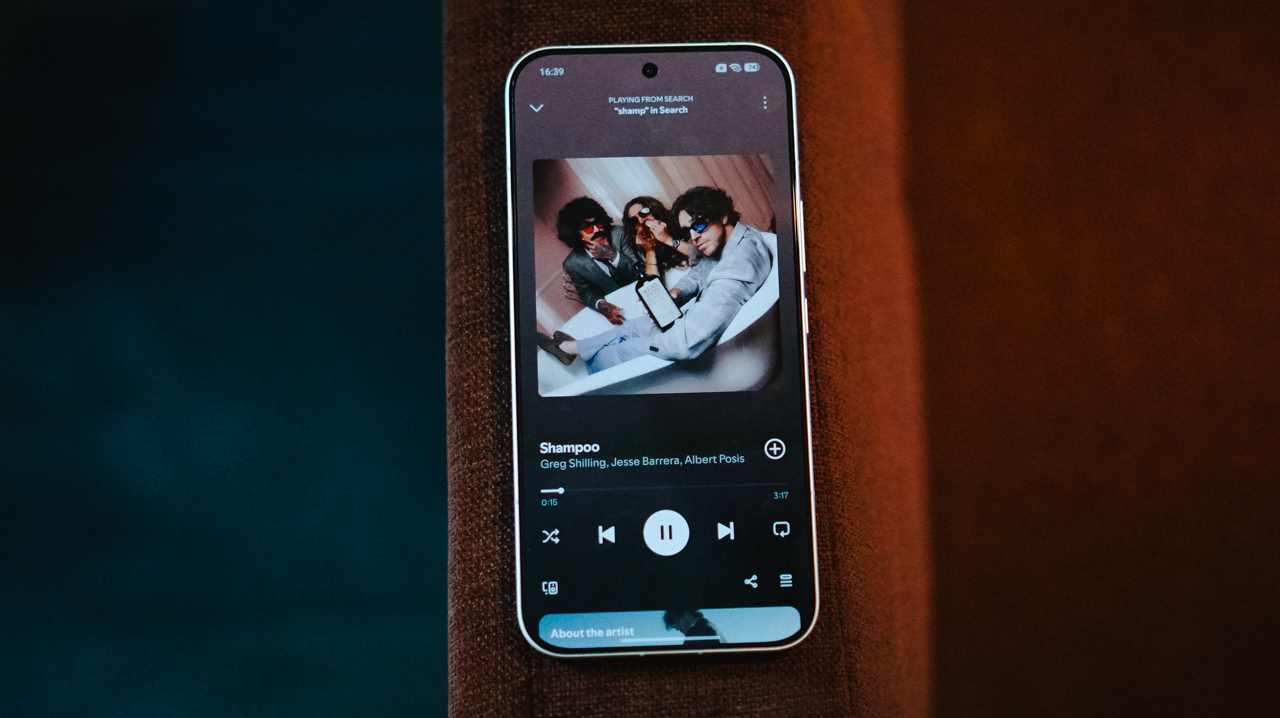
Shampoo by Greg Shilling, Jesse Barrera, and Albert Posis
Mobile audio experience redefined
Meanwhile, Bose helped develop a premium triple-speaker acoustic system for the F8 Ultra to enable rich bass, detailed sound, clear vocals, and an immersive soundstage.
On the visuals side, the F8 Ultra debuts the POCO HyperRGB display. Unlike traditional 2K OLED displays, the 6.9-inch panel adopts a full RGB subpixel structure where red-green-blue subpixels are fully used.
This system allows for 19.5% lower power consumption compared to the POCO F7 Ultra. On the other hand, the F8 Pro has a 6.59-inch display with the same features for up to 22.3% lower power consumption.
Ultra-grade photography
Bringing pro-level photography to the segment as well, the POCO F8 Ultra features a 50MP Light Fusion 950 sensor with OIS.
With a large 1/1.31-inch sensor, the main camera has 43% better light sensitivity. The system also reduces lens flare and glare, with its 1G+6P lens setup and precise multi-coating process.
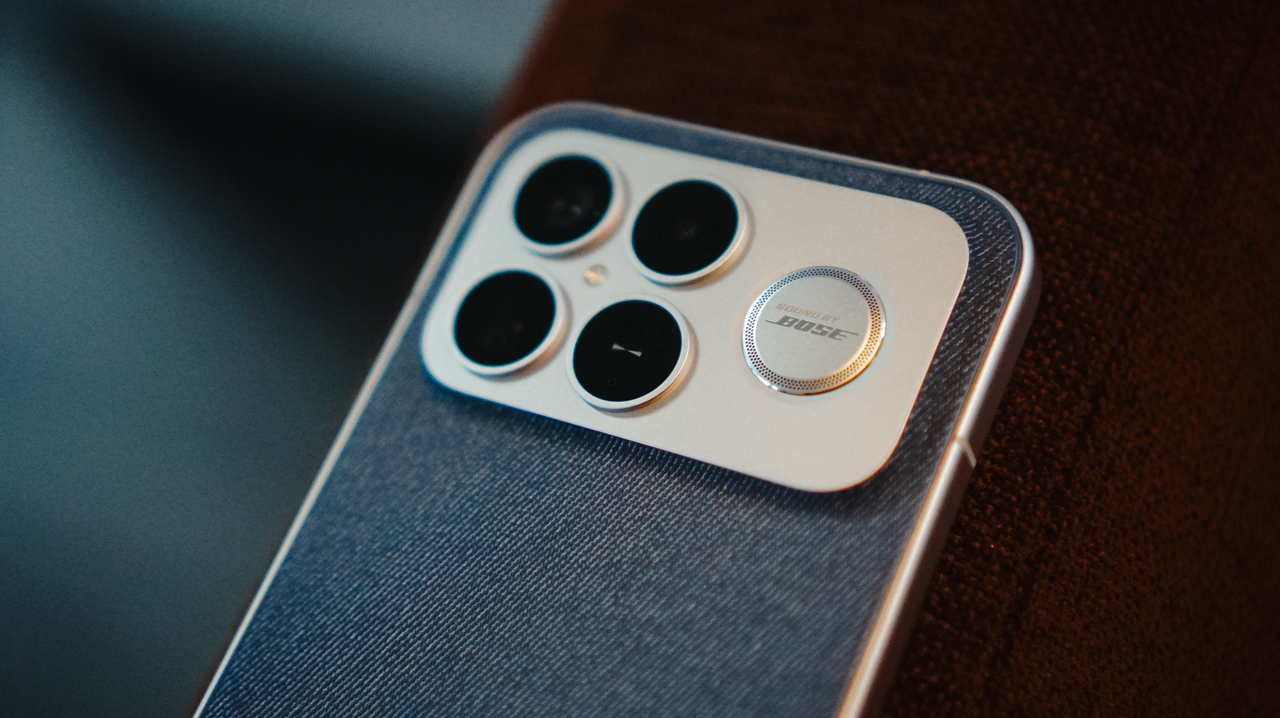
Software enhancements include 1440p ultra-clear dynamic shots with EIS and HDR enhancement.
The F8 Ultra likewise comes with a 50MP 5x periscope telephoto lens for up to 5x optical zoom, 10x in-sensor zoom, and up to 20x Ultra Zoom.
Rounding out the triple 50MP camera setup is a 50MP ultra-wide shooter. In front, meanwhile, is a 32MP selfie camera.
Not to be left behind, the POCO F8 Pro has a 50MP 2.5x telephoto camera and a 50MP Light Fusion 800 main camera with OIS.
New POCO Pads also released
In addition to the new POCO F8 Series, POCO has also launched two new tablets: the POCO Pad X1 and POCO Pad M1.
The Pad X1 is powered by a Snapdragon 7+ Gen 3 and delivers stable 120fps in the most demanding scenarios.
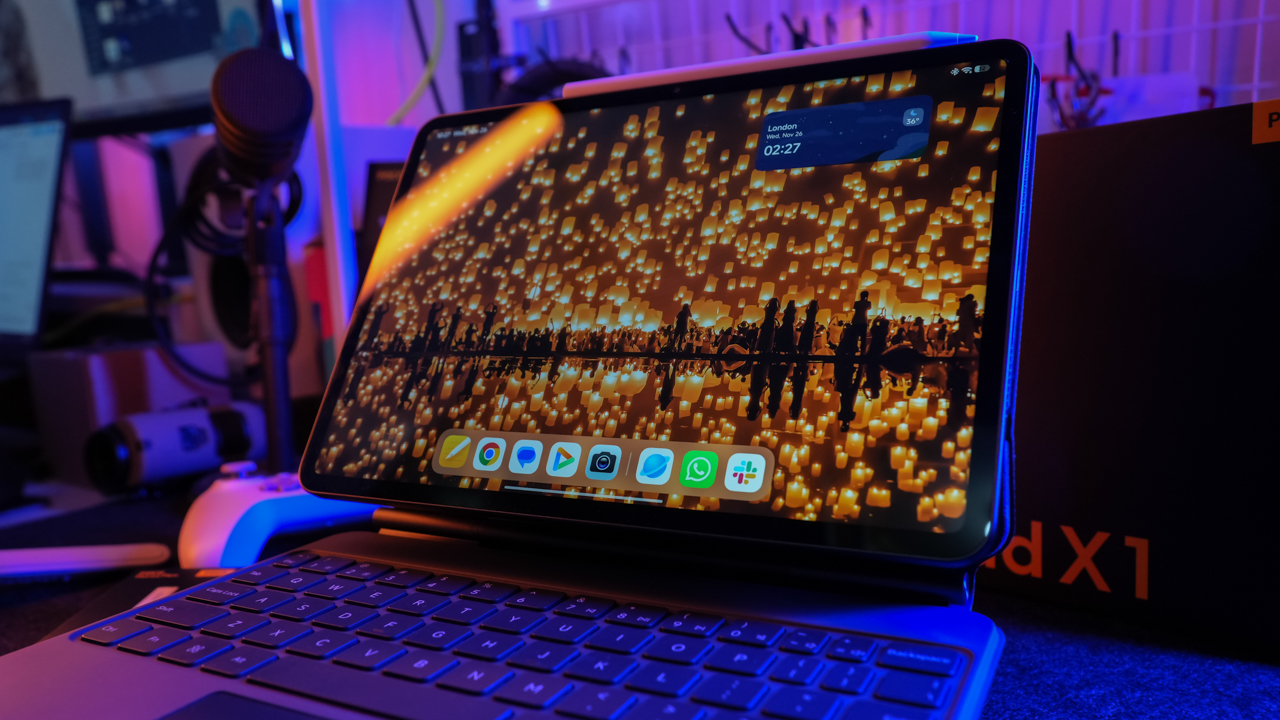
It has an 11.2-inch 3.2K display with up to 144Hz refresh rate and a 8850mAh battery with 45W turbo charging. The quad speakers are fine-tuned with Dolby Atmos and supports 200% volume boost.
For a larger screen, the POCO Pad M1 has a 12.1-inch 2.5K display with up to 120Hz refresh rate. It likewise has a quad-speaker system with Dolby Atmos, and a massive 12000mAh battery.
This slate is powered by a Snapdragon 7s Gen 4 and runs on Xiaomi HyperOS as well.


POCO F8 Pro review: Lightweight, heavy hitter
Delivers mostly on promised premium level smartphone experience


POCO Pad X1 review: A tablet that keeps up with your day
Simply reliable

POCO F8 Ultra review: An Achievable aspirational all-rounder
Flagship within reach

You can play SNES games on this Nike shoe

I finally saw BLACKPINK perform live for the first time

Qualcomm unveils the Snapdragon 8 Gen 5
POCO F8 Pro review: Lightweight, heavy hitter

Turn your cravings into cashback with this new credit card

realme 15 Pro review: A step forward or a step back?

Spotlight: ASUS ProArt P16

I was skeptical about smartphone gimbals, then I tried the DJI Osmo Mobile 8

ROG Xbox Ally X review: A proper sequel

This gaming mouse made me fall in love with working from home again


-

 Gaming2 weeks ago
Red Dead Redemption is coming to PS5, Xbox Series X|S, Switch 2
-

 Reviews1 week ago
realme C85 5G review: Big battery, tough body
-

 Gaming2 weeks ago
REMATCH: Elite Edition out now
-

 Reviews1 week ago
nubia Air Review: The air that’s lighter on your pocket
-

 Gaming1 week ago
Clair Obscur: Expedition 33 bags record-breaking 12 nominations at Game Awards
-

 Entertainment1 week ago
The Legend of Zelda film gets its first official photos
-

 Cameras6 days ago
DJI Osmo Action 6 review: An adventurer’s best friend
-

 News1 week ago
realme C85 with 7000mAh battery, 5G connectivity officially launches