
Enterprise
POCO is launching its own mascot
Made of Mad

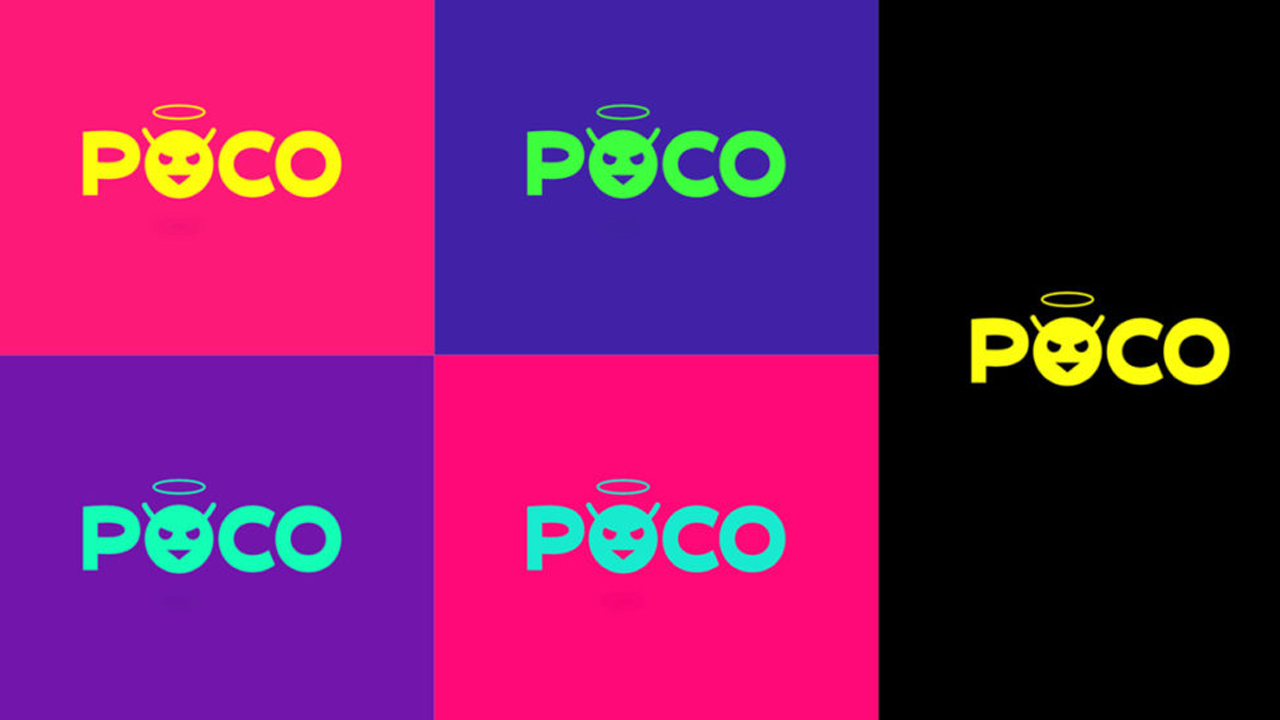
Every Chinese smartphone should have mascots. You’ve seen the ongoing mascot wars between OPPO and vivo. However, there are more mascots than what you’ve seen in malls. For example, realme recently unveiled their new mascot, realmeow, a futuristic cat. Joining the pack, POCO is launching its own mascot, as reported by Android Authority.
Unfortunately, POCO’s new mascot does not have its own name. Instead, the new mascot and logo are just iterations of the devil emoji. According to the company, the new logo connotes madness. Supposedly, no emoji, other than the devil emote, connotes the feeling of madness. And, even then, it often has negative connotations.
With that in mind, the company is adopting the emoji as its own. To do so, it’s attaching a halo to the devilish emoji, perhaps as a way to lighten the devil emoji’s mood. However, if you need more meaning to chew on, POCO has a lot more for you.
As mentioned, the halo divests the devil emoji from its evil connotations. The devilish eyes provide another contrast to the halo. Finally, the triangular mouth supposedly connotes the brand’s sharp wit.
In terms of complexity, POCO’s new logo is remarkably simplistic. It’s just a modified emoji. In fact, if you look at it a certain way, it looks like a bikini.
Currently, the logo and mascot are exclusive to its Indian market. It is also unveiling a new tagline, Made of Mad.
As of late, POCO is on a roll. After starting as a sub-brand of Xiaomi, POCO gained its independence last year.
SEE ALSO: realme unveils new mascot, realmeow







Enterprise
AGIBOT is turning robots into companions for our everyday routines
The era of robots performing cool tricks is over!

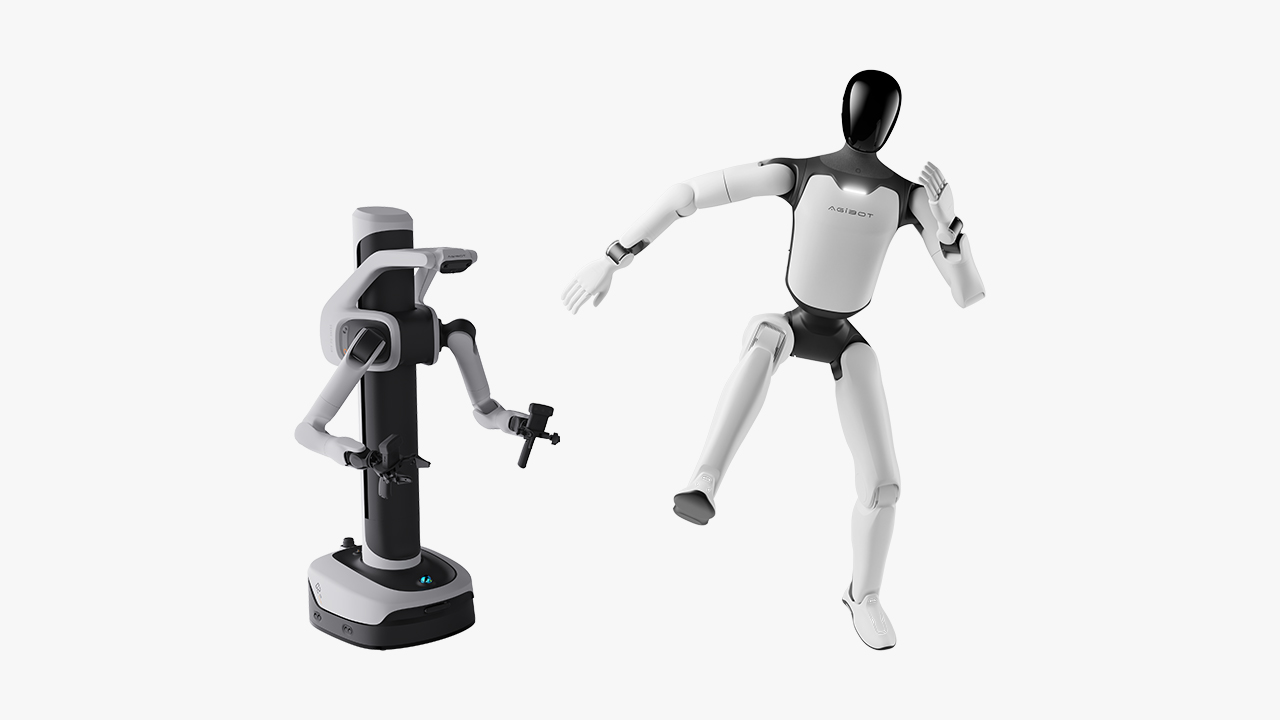
The era of robots performing “cool tricks” is over.
At its 2026 Partner Conference, AGIBOT moved embodied AI out of the lab and into the real world.
y using a “One Robotic Body, Three Intelligences” architecture, the company launched five new robot platforms and eight AI models to make physical AI a normal part of how we live and work.
Engineering for human environments
AGIBOT believes that for a robot to be a good partner, it first needs a body you can actually rely on.
Take the AGIBOT A3, for example. This 173 cm tall humanoid weighs 55 kg, about the same as a teenager. It uses a magnesium and titanium build to stay strong yet light.
It moves smoothly for 10 hours straight, and if the battery runs low, you can swap it out in just 10 seconds to keep the momentum of your day going.
In the workplace, the AGIBOT G2 Air acts as a single-arm helper that works right alongside people. It navigates narrow doorways and tight office spaces with ease.
This robot actually learns while it works; it records its environment and actions in real-time to help its AI get smarter every single day.
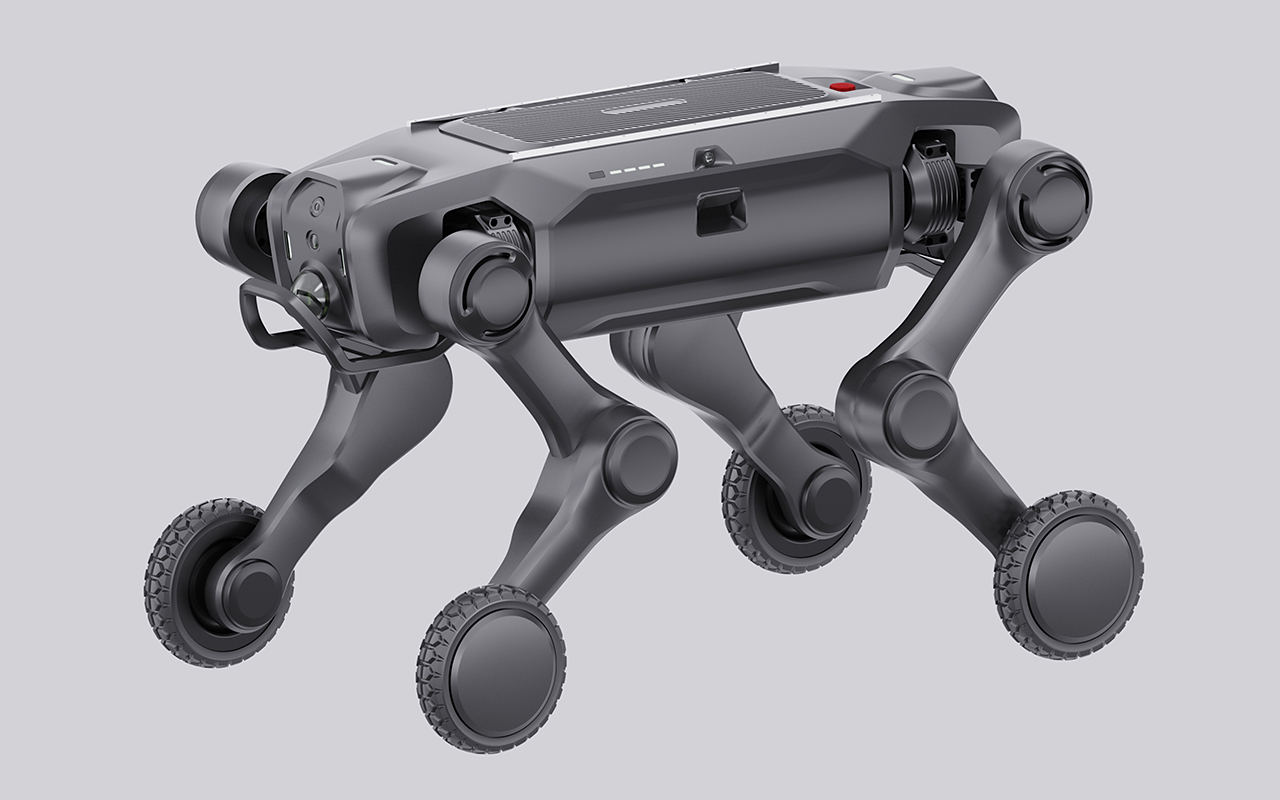
Then there is the D2 Max, the world’s first Level 3 autonomous four-legged robot. It isn’t a toy you control with a remote; it is a partner that explores tough terrain and handles security patrols entirely on its own.
Finally, the OmniHand 3 series brings a human-like touch to these machines. The flagship Ultra-T model mimics almost any hand movement, while the OmniPicker 3 and OmniHand 3 Lite handle the heavy-duty, high-impact jobs that require extra muscle.

8 models driving autonomy
The “brain” of these machines is a closed-loop system that helps them move, think, and talk.
To master movement, the Behavioral Foundation Model (BFM) allows a robot to copy human actions just by watching a short video.
Another model, the GCFM, lets the robot react to your voice or actions in real-time, which makes its movements feel natural instead of stiff.
To tackle complex tasks, AGIBOT uses a massive dataset called AGIBOT WORLD 2026, a library of real-life situations from homes and factories.
This library helps robots plan out long lists of chores without getting confused. They even use a “digital twin” system called Genie Sim 3.0, where robots practice new skills in a virtual world before trying them in the real one.
On top of that, the WITA Omni model helps the robot understand your feelings, allowing it to talk and move like it’s having a true conversation
Scalable deployment
The robots are becoming a part of our daily lives. By using the MEgo system to collect data easily, AGIBOT is making it simpler for these machines to learn how to help us in shops, warehouses, and our own homes.
As these robots start showing up in our lives, the technology feels less like a complicated machine and more like a companion that helps us grow.

Allbirds is an odd shoe company. Though it already enjoyed a cult following in some circles around the world, the brand suddenly expanded its reach everywhere, offering a lighter and more environment-friendly alternative to the usual suspects of the shoe world. Now, getting even odder, Allbirds is ditching the shoes and going barefoot into the world of AI.
It’s one of the oddest transitions in the corporate world. In an official statement, Allbirds has confirmed that it will pivot fully into a “fully integrated GPU-as-a-Service and AI-native cloud solutions provider.” From Allbirds, it will be known as NewBird AI.
It’s not an incredibly abrupt change, though. The shoe brand and its stores won’t disappear overnight. The company will still hold a shareholder vote on May 18. If approved, they will transition into the new brand gradually.
The transition to AI, itself a gremlin of a keyword in today’s financial world, has resulted in the company’s stock value rising up. However, its long-term viability is in question, especially for a company with no experience in a world already drowning in AI.
From last year to today, AI has been the darling child of investors and a plague to consumers. While the former salivates over the short-term gain of AI adoption, the latter ruminates on the technology’s projected effects on the world.
SEE ALSO: Lenovo accelerates production-ready enterprise AI with NVIDIA
Computers
Lenovo accelerates production-ready enterprise AI with NVIDIA
From AI inferencing to gigawatt-scale AI factories

Lenovo has unveiled new Lenovo Hybrid AI Advantage with NVIDIA solutions designed to accelerate AI adoption, reduce time-to-first-token (TTFT), and deliver measurable business results across personal, enterprise, and cloud environments.
Building on the inferencing acceleration introduced at Lenovo Tech World, this next phase of Hybrid AI execution expands the solutions with device to data center to gigawatt-scale AI cloud deployments.
This enables real-time decision-making, operational efficiency, and intelligent automation across industries at global scale. The solutions boost productivity, agility, and innovation by enabling faster AI deployment.
The development comes as AI is seen moving from training models powering real-time decisions. Lenovo is prepared to address the demand for validated hybrid AI platforms built for production-scale inferencing, as organizations will need infrastructure to support such.
In fact, Lenovo’s Hybrid AI Advantage with NVIDIA are now delivering ROI in less than six months. The new inferencing-optimized ThinkSystem and ThinkEdge servers are being utilized for real-time inferencing across retail, manufacturing, healthcare, sports, and smart city scenarios.
The expanded portfolio includes:
- two Lenovo Hybrid AI platforms, featuring NVIDIA RTX PRO 6000 Blackwell Server Edition and Blackwell Ultra
- Hybrid AI inferencing starter platform with RTX PRO 4500 Blackwell Server Edition
- Lenovo ThinkAgile HX650a with Nutanix Enterprise AI and Nutanix Kubernetes Platform
- Lenovo Hybrid AI platforms with Cloudian
Bringing inferencing directly to professionals
Lenovo and NVIDIA are bringing AI from development environments to real-world production at a global scale. This is thanks to new Lenovo AI inferencing platforms with NVIDIA Dynamo and NVIDIA NIM.
Meanwhile, Lenovo AI Cloud gigafactory platforms are powered by NVIDIA Vera Rubin NVL72. Industry-specific agentic AI solutions are also built with NVIDIA Blueprints and software.
For consumers, there’s next-generation NVIDIA RTX Pro Blackwell-powered mobile and desktop workstations. These will be rolled out across the ThinkPad P14s Gen 7, ThinkPad P16s Gen 5, and ThinkPad P1 Gen 1 lineups.
ThinkStation P5 Gen 2 desktops, meanwhile, will get up to two RTX PRO 6000 Blackwell Max-Q GPUs. They will also have support for NVIDIA OpenShell.
For gigawatt-scale scenarios, the next-gen Vera Rubin platform accelerates deployment for hyperscale and sovereign AI cloud providers.
These fully liquid-cooled, rack-scale AI systems are engineered for faster deployment and dramatically improved token economics. They can achieve up to 10x higher throughput and up to 10x lower cost per token.


DJI Osmo Pocket 4 review: A solo creator’s production crew
Now, you can be the director and editor of your own story.


HONOR MagicPad4: A tablet that found its place
Better as a second screen


TECNO POVA Curve 2 review: Munch That Power Crunch!
Unbelievably the slimmest 8000mAh phone you can buy right now

PRAGMATA launches with dual-character sci-fi action

AGIBOT is turning robots into companions for our everyday routines

Luxury you can ride: The Vespa 180cc Collection
DJI Osmo Pocket 4 review: A solo creator’s production crew

Sony announces open-back INZONE H6 Air


-

 Accessories2 weeks ago
GameSir G7 Pro ZZZ Edition: My default PC controller
-

 Reviews1 week ago
Apple iPhone 17e review
-

 Entertainment1 week ago
BINI, KATSEYE among top worldwide Google Searches ahead of Coachella
-

 Gaming1 week ago
PlayStation can now scan you and put you inside a game
-

 Gaming1 week ago
Forza Horizon 6 already hits the mark
-

 Gaming1 week ago
HoYoverse’s first life sim, Petit Planet, opens Stardrift Test sign-ups
-
Reviews2 days ago
HONOR MagicPad4: A tablet that found its place
-

 Features2 weeks ago
GadgetSnaps: Osaka