
News
Here’s why the Samsung Galaxy Flex will cost so much
Hint: it has something to do with the screen


Based on the current rumors, next year’s foldable phones will take the mantle as history’s most expensive smartphones. Currently, Samsung’s upcoming Galaxy Flex is already slated to come with price tags above the US$ 2,000 mark. Even without rumors, the revolutionary form factor will easily break banks because of the new screen alone.
Of course, as with all major purchases, we want to know why we’re paying so much. Finally, we have an insider’s look into what’s ticking inside these foldable screens. Via LetsGoDigital, Korean firm CGS-CIMB Research has broken down the list of materials needed to make the Galaxy Flex. For reference, the report also compares the Galaxy Flex’s breakdown with the iPhone XS Max’s and the Galaxy S9+’s.
According to the report, the Galaxy Flex almost completely uses more expensive components than today’s smartphones.
Naturally, the phone’s foldable display takes the cake. The foldable display costs US$ 218.80 per screen. The amount is almost double the price of the iPhone XS Max’s display. It’s also almost thrice the price of the Galaxy S9+’s display.

Image source: CGS-CIMB Research
As for the rest, the Galaxy Flex’s components are a few more dollars more expensive than its comparisons. The comparison only falters in power management. The iPhone XS Max spent almost two dollars more on power management than the Galaxy Flex.
All in all, the Galaxy Flex costs US$ 636.70. This is a huge leap from contemporary flagships. (The iPhone XS Max costs US$ 390.00; the Galaxy S9+ costs US$ 375.80.)
Because of this massive price increase, Samsung can charge more than today’s flat phones. The report estimates a US$ 1,800 SRP. Arguably, a huge chunk of this price will come from the extensive research done to manufacture the product. Regardless, the bank-breaking price tag is still worlds apart from today’s most expensive smartphones.
According to the report, this awful trend will likely continue. In 2022, the industry is expected to ship 24 million foldable phones, compared to next year’s paltry 3.5 million units. Despite the rush in supply, the price will still stay the same, averaging around US$ 1,300 per unit.





Apps
Firefox ad reunites all your favorite memes from decades ago
The Numa Numa Guy, Annoying Orange, and Chocolate Rain are back!

Before Tung Tung Tung Sahur and Skibidi Toilet, the early internet was populated by charismatic personalities looking to make their presences felt in a land that didn’t have a lot of rules yet. As early users, we danced to “Dragostea din tei,” belted out “Chocolate Rain,” and copied “Shoes” word-for-word. Today, Firefox is bringing all those good memories back for a grand reunion.
In a new ad, the web browser featured ten of the biggest stars of the early internet including the aforementioned Numa Numa Guy, Tay Zonday, and Shoes’ Kelly. You can also see Annoying Orange, Chuck Testa, Overly Attached Girlfriend, Bad Luck Brian, Where the Hell is Matt?, the Apparently Kid, and the Success Kid.
Now, this isn’t just a reunion. The ad has a clear message about today’s most concerning issue: AI. Everything has “built-in AI, always asking, asking, asking,” as the Annoying Orange said.
“They make money by following us, and somehow, I’m the creepy one?” the Overly Attached Girlfriend asked.
All these famous personalities are asking what happened to the internet today. Obviously, the big takeaway is that we should all go back to Firefox.
Compared to other browsers, Firefox has a lot of built-in features that offer a lot of control for users. For one, it has its own VPN for privacy. Secondly, reflecting the ad’s message against AI, the browser has a toggle to minimize AI features.
SEE ALSO: Google illegally destroys 250,000 trees for a single AI data center
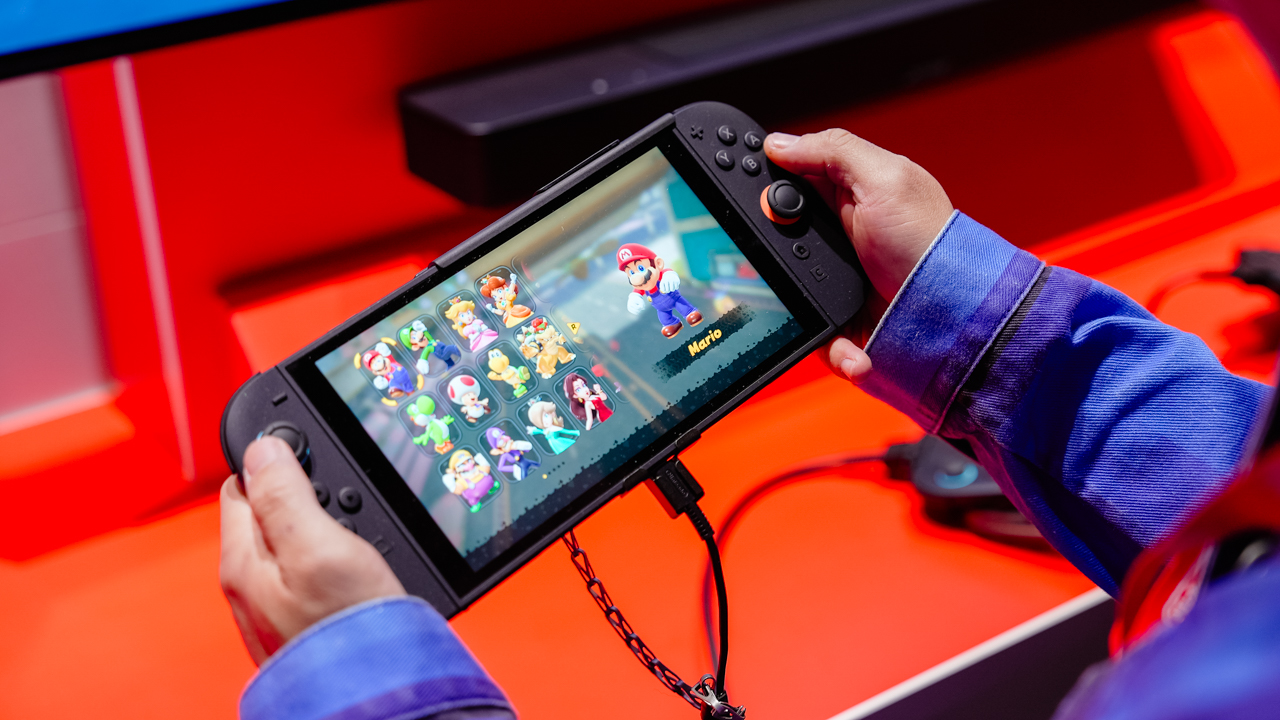
Filipino Nintendo fans, the wait is finally over! Nintendo eShop and Nintendo Switch Online are launching in the Philippines on November 10.
If you’re in the Philippines (or any other country without the service, for that matter), owning a Switch 2 comes with a modicum of difficulty. The country does not have access to Nintendo’s online services, prompting users to buy physical cartridges or switch their region to supported countries, which unfortunately leads to lopsided pricing.
Around the launch of the Switch 2, Nintendo promised that these online services will soon launch in more countries, including the Philippines. Finally, that date is nigh. On November 10, users can access the Nintendo eShop to purchase games digitally, and Nintendo Switch Online to play with friends online.
Besides that, we don’t know much else. There are still a lot of questions unanswered. For example, how will the games’ prices compare to prices in other regions? Since users in the country are forced to switch to another country’s store, they are also subservient to that particular country’s taxes and fees.
Either way, it’s a huge win for Filipino gamers, who no longer have to pretend they’re Singaporean or American just to access online games.


Apple has unveiled a redesigned iPad mini, introducing an OLED display, a faster processor, and improved durability. The update brings significant changes to Apple’s smallest tablet while retaining its compact form factor.
The new iPad mini features an 8.5-inch OLED display, up from the previous model’s 8.3-inch LCD screen. The upgrade promises deeper blacks, improved contrast, and a better viewing experience for videos, games, and other content.
Apple has also equipped the tablet with its A20 Pro chip, delivering improved performance and enhanced capabilities for artificial intelligence tasks.
Bigger OLED display, improved performance
The new iPad mini features a Super Retina XDR OLED display with a peak brightness of 1,200 nits for HDR content. It can also reduce its brightness to just 1 nit, making it more comfortable to use in darker environments.
Apple has reduced the tablet’s thickness to 5.4mm while retaining its compact design. The redesigned model also features slimmer bezels.
For video calls, the tablet features a 12-megapixel Center Stage front-facing camera positioned along its landscape edge. This makes video calls more convenient when using the tablet horizontally.
The new model also introduces IP67 water and dust resistance, offering additional protection against everyday accidents.
Improved AI capabilities
The A20 Pro chip powers the new iPad mini, bringing improvements to CPU and graphics performance.
Apple says the processor delivers up to 60 percent faster multithreaded CPU performance and up to 4.5 times faster AI performance compared with the previous generation.
These improvements support Apple’s expanding Apple Intelligence ecosystem and its latest Siri capabilities.
The upgraded hardware should also benefit users who edit photos, multitask across applications, and run demanding games on the compact tablet.
Pricing and availability
The new iPad mini starts at US$699 for the Wi-Fi model and US$849 for the Wi-Fi + Cellular variant in the United States.
In Singapore, the tablet starts at S$999 for the Wi-Fi model and S$1,229 for the Wi-Fi + Cellular version. Eligible customers can get the Wi-Fi model starting at S$929 with education pricing.
In the Philippines, the new iPad mini starts at PhP 49,990 for the Wi-Fi model and PhP 59,990 for the Wi-Fi + Cellular variant. Eligible customers can purchase it with education pricing starting at PhP 45,990.
The tablet comes in midnight and starlight finishes, with 128GB, 256GB, and 512GB storage configurations.
In the United States, preorders begin October 28, 2026, with availability starting November 6. Singapore preorders open October 29, with availability also beginning November 6.
Apple has yet to announce a specific preorder or release date for the Philippines. The company says the new iPad mini will be available soon through its Philippine online store and authorized resellers.


HP OMEN Max 16 review: Gamer-maxxing in deep black
Peripherals deemed necessary to max this out


vivo V80 review: Good phone, tough sell
A capable travel companion


Ghost of Yōtei Complete Edition review: More of a great thing
Picking up where Atsu left off

Anker soundcore AeroClip 2 brings open-ear audio to everyday life

adidas debuts ENERGYRIM carbon tech in the Adizero Adios Pro 5

Firefox ad reunites all your favorite memes from decades ago

Porsche Cayenne Electric launches in the Philippines

Nintendo eShop will finally launch in the Philippines

TECNO CAMON Slim 5G review: Slim on size, big on surprise

TECNO CAMON Slim 5G: Price, availability in the Philippines

HONOR Magic9 Pro Max launches in China with ARRI-powered imaging

BYD says that way better EV batteries are coming next year

HONOR 600S review


-

 News2 weeks ago
vivo V80 debuts with ZEISS cameras
-

 Philippines2 weeks ago
TECNO CAMON Slim 5G gets launch discounts, free MagBadge
-

 News2 weeks ago
Samsung: Galaxy Z Fold8 demand rose because of iPhone Duo
-
Reviews1 week ago
vivo V80 review: Good phone, tough sell
-

 Features2 weeks ago
I don’t want a phone that unfolds — the Galaxy Z Fold8 gets why
-

 News6 days ago
OPPO Find X10 Series: Price, availability in the Philippines
-
![KINGDOM HEARTS Collection [I-III]](https://www.gadgetmatch.com/wp-content/uploads/2026/10/kingdom-hearts-colletion-I-III-202610-400x240.png)
![KINGDOM HEARTS Collection [I-III]](https://www.gadgetmatch.com/wp-content/uploads/2026/10/kingdom-hearts-colletion-I-III-202610-80x80.png) Gaming1 week ago
Gaming1 week agoKINGDOM HEARTS Collection [I–III] now available on PS5, Switch 2
-

 Buyer's Guide1 week ago
iPhone Duo Philippines: Prices, installments, and where to buy