
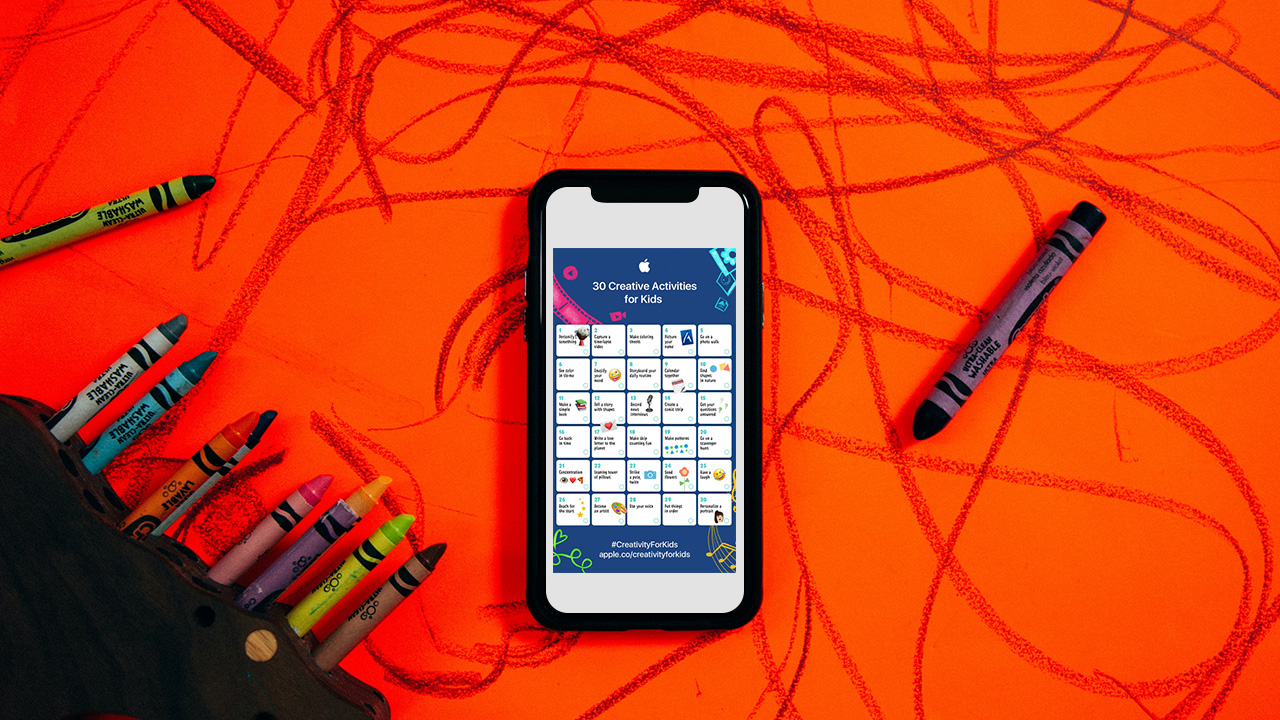

Being a parent with young kids can be tough and overwhelming, especially at a time like this when kids can’t go to school. Coming up with ideas to not only entertain them but also to keep them engaged and curious is a challenge so Apple’s team of educators wants to help.
Here is a set of 30 fun, constructive, and creative activities for younger kids (4-8+) to do with the built-in features of iPad and iPhone. These activities are age appropriate and your kiddo can work on them independently. They can also be tailored even for those who are young at heart.
1. Personify something
Take a photo of an everyday object at home or outside, and draw on it using Markup to transform it into a character.
Get started: Open your photo, tap Edit, then tap the three dots in the top-right to use Markup.
2. Capture a time-lapse video
Set up your iPad to capture a time-lapse video while you build a fort, make your favorite snack, clean up your toys, or watch an ice cube melt.
Get started: Choose Time-Lapse mode in your Camera app. Tap the Record button to start recording; tap it again when you’re done.
3. Make coloring sheets
Take a few fun photos, then change them to black and white to create your own coloring sheets. Use Markup to add color.
Get started: Open each photo, tap Edit, and apply one of the black-and-white filters. Go further by creating a book using a template in the Pages app.
4. Picture your name

Take a photo of each letter of your name by finding them in books or signs. Put them together to spell out your name in a colorful collage.
Get started: Crop the letters in the Photos app, then add each photo to a Keynote file in the right order.
5. Go on a photo walk
Pick a color or letter of the day and take photos of things that are that color or start with that letter. Then put them together in a collage or video. Try to make a rainbow or complete the alphabet!
Get started: Add the photos of each color or letter to a slide in the Keynote app. Or add each photo to Clips and record your voice saying the colors or letters.
6. See color in slo-mo
Record a video in slow-motion of drops of food coloring falling in water. Do primary colors first, then mix them together to create secondary colors.
Get started: Choose Slo-mo mode in your Camera app, then record.
7. Emojify your mood
Draw a circle, then add silly eyes, a happy face, or eyebrows that show the mood you’re in. You can also add shapes and images, then share it with your friends!
Get started: Add the images to a Keynote slide, then tap the plus sign to use the drawing tools. Or use shapes to get started, then decorate with emoji.
8. Storyboard your daily routine
Take a photo of something that represents each of your regular activities. Combine the photos and add a title, time, and checkbox for each activity. Mark it up daily!
Get started: In the Keynote app, tap the plus sign to use the drawing tools. Draw your emoji, then add shapes or images to decorate your picture.
9. Calendar together
Download this fun template to identify the days, months, seasons, weather, temperature—and even your mood!
Get started: Open the document using the Keynote app. Copy the labels and paste them to the right spot on the calendar.
10. Find shapes in nature
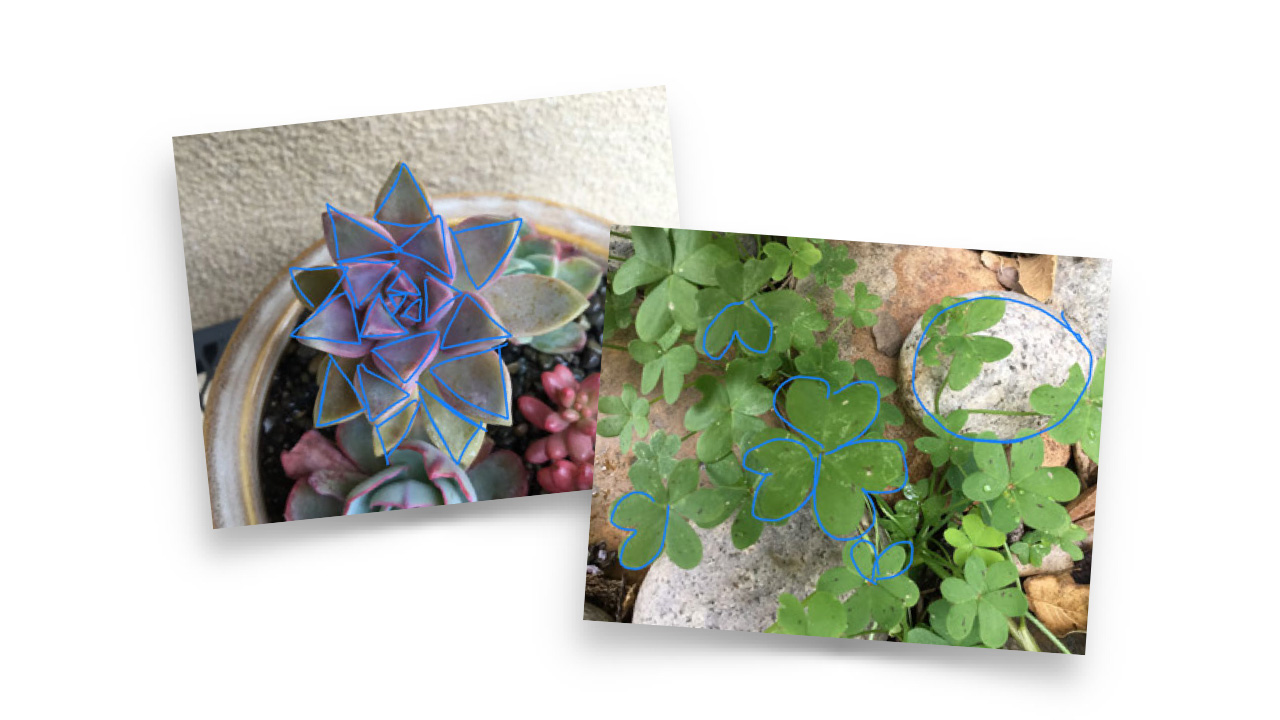
Take a photo outdoors, then use Markup to trace all the shapes you can find in the photo.
Get started: Open your photo, tap Edit, then tap the three dots in the top-right to use Markup.
11. Make a simple book
Think of an imaginary story. Take photos or videos acting out different parts. Create a book with each photo or video scene, along with story captions. Then decorate it with drawings, shapes, or emoji images.
Get started: Add your photos and videos to a book template using the Pages app.
12. Tell a story with shapes
Add a variety of shapes from the Shapes menu to a blank page, and rearrange them to create a story. Try rearranging the same shapes to create three different stories.
Get started: In the Pages app, tap the plus sign in the top-right to open the Shapes menu. Drag the shapes to rearrange them.
13. Record news interviews
Have fun recording yourself asking and answering questions. Use different sounds and voices, becoming an alien giving the weather in outer space or a squirrel covering nut collections outdoors.
Get started: Use the Audio Recorder in the GarageBand app.
14. Create a comic strip
Take a picture of yourself and each of your favorite toys
as the characters. Combine the photos in a video, transform them using the comic book filter, and record yourself telling a story.
Get started: Touch and hold the Record button in the Clips app to import each character’s photo from Photos. Tap each clip to use the comic book filter effect.
15. Concentration

Write phrases or sentences using only emoji or shapes with a friend or sibling. Share your clues with each other and take turns solving them.
Get started: Open a document in the Pages app and tap the globe in the bottom-left of the keyboard to see the emoji. Tap the person icon in the top-right to collaborate with a friend.
16. Go back in time
Find an old photo. Re-create the scene, take a picture, then use a black-and-white filter to make it look like it was from the past.
Get started: Open your photo, tap Edit, then tap the three circles at the bottom to use filters.
17. Write a love letter to the planet
Take, find, or draw a picture of your favorite place. Add text boxes or a voice recording of why you love it and how you’ll take care of it.
Get started: Add your photo to the Pages or Keynote app. Tap the plus sign to choose Record Audio, or choose Shapes and add a text box.
18. Make skip counting fun
Record yourself skip counting by 2s, 5s, or 10s. Use the fun voice effects to give yourself a monster or robot voice.
Get started: Use the Audio Recorder in the GarageBand app.
19. Make patterns
Add a series of two or three shapes to a blank page to create a pattern. Repeat the pattern with a new set of shapes, then practice identifying and tracing each shape.
Get started: In the Pages app, tap the plus sign to use the Shapes menu to add shapes. Drag the shapes to arrange them in a pattern. Tap the plus sign again to use the drawing tool to trace on top of the shapes.
20. Go on a scavenger hunt
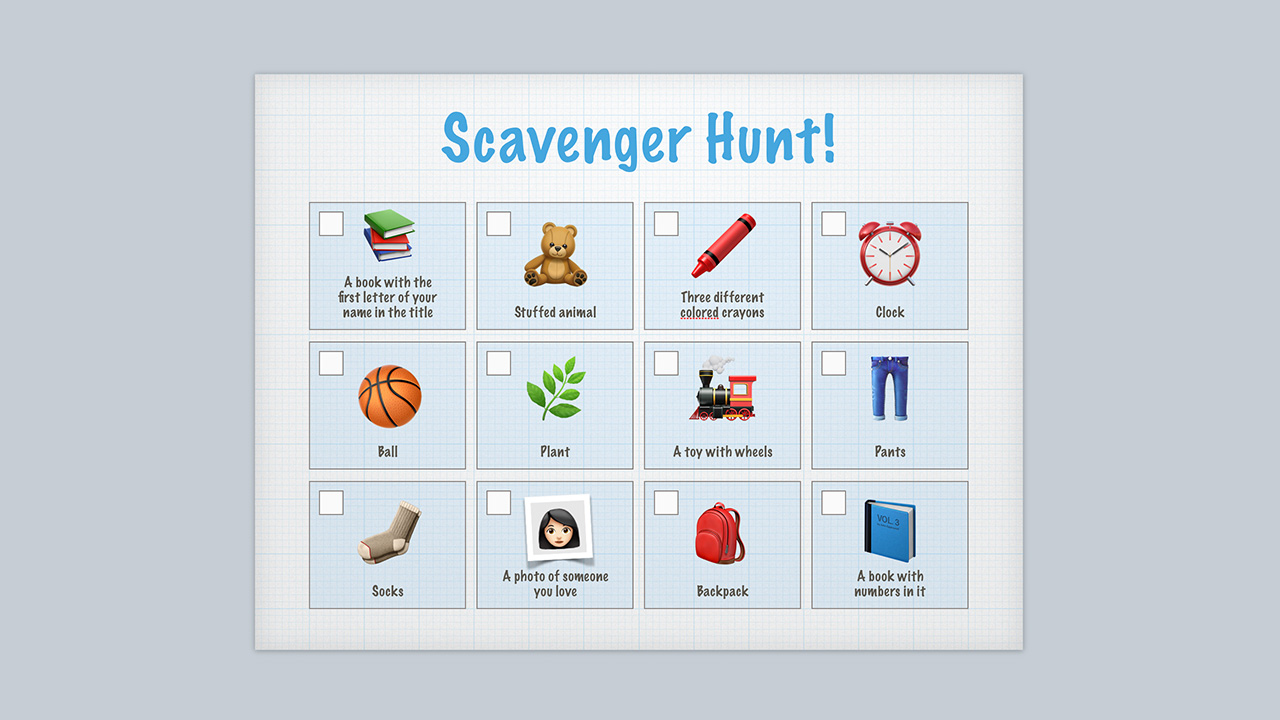
Use this template to create your own scavenger hunt by replacing the items in each square with different shapes or images.
Get started: Open the template in the Keynote app. Tap the plus sign in the top-right to open the Shapes menu, and replace the items in each box with shapes of your choice. You can also replace them with emoji.
21. Leaning tower of pillows
Build a tower of pillows, and record a slo-mo video of the tower tumbling to the ground.
Get started: Choose Slo-mo mode in your Camera app, then record.
22. Strike a pose, twice
Have a family member take a pano photo with you in the first frame. Run to the end so you appear in the photo twice.
Get started: Start on the left side of the camera frame, then run behind the photographer to pop into the frame from the right side.
23. Send flowers
Use shapes to make a bouquet of flowers. Add some text, and send it as a postcard to someone special.
Get started: Tap the plus sign in the top-right of the Keynote app to open the Shapes menu. Export as an image to share.
24. Have a laugh
Ask Siri to tell you a joke.
Get started: Say “Hey Siri, tell me a joke” into your iPad.
25. Reach for the stars
Lay on the ground, and looking up, take burst photos of a family member jumping and reaching for the stars. The upward angle will make it look like they’re touching the sky.
Get started: Touch and hold the shutter button to take a burst of multiple photos. Tap Edit to select the frame when the person jumping is highest in the air.
26. Become an artist
Take a photo of yourself or your favorite toy. Trace the lines on top of the photo, then delete the photo to reveal your work of art.
Get started: Add your photo to a blank slide in Keynote. Tap the plus sign to use the drawing tool for tracing on top of your photo. Save it as an image when you’re done.
27. Put things in order
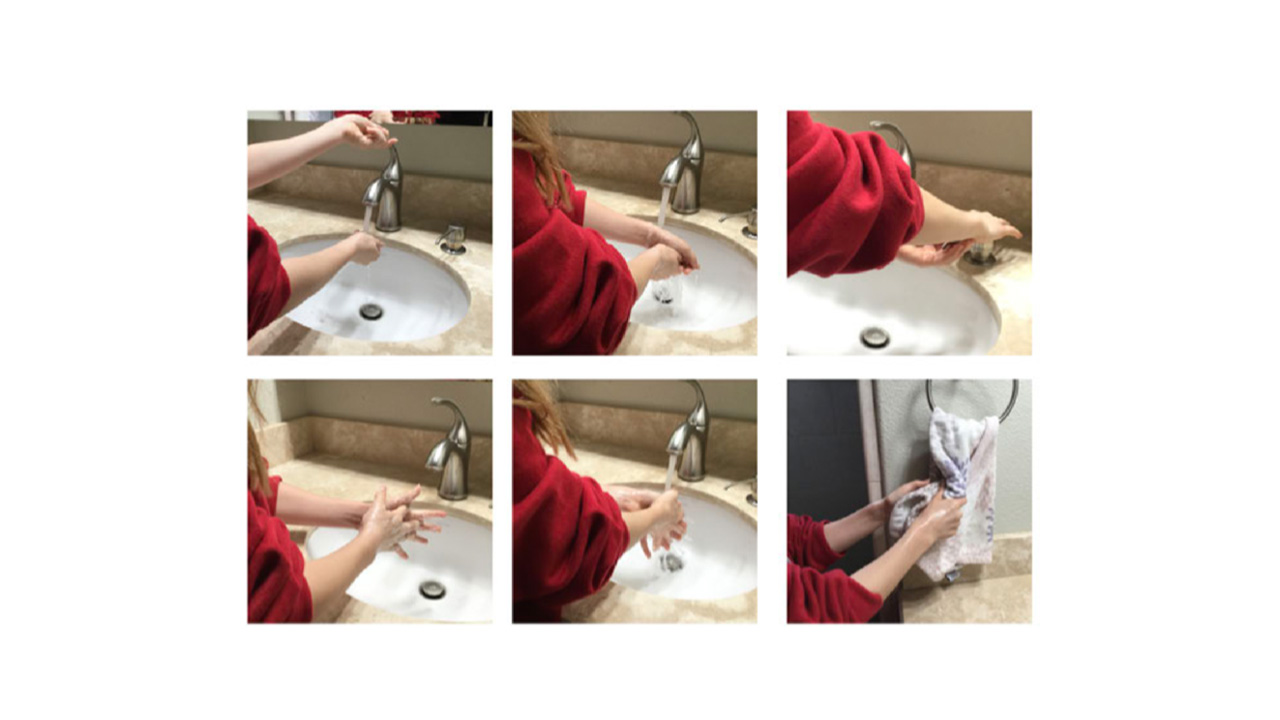
Take a picture of each step of an everyday activity, like washing your hands: turn on the water, soap your hands, scrub, rinse, and dry. Put the photos in order to create a sequence. You just learned your first coding concept!
Get started: Add your photos to the Keynote or Clips app, and sort them in the correct order. In Clips, you can make a short movie that includes music, titles, and stickers.
28. Get your questions answered
Have a question? Like, why is the sky blue? Or, how much does an elephant weigh? Let Siri find the answer.
Get started: Say “Hey Siri” into your iPad.
29. Use your voice
Use Voice Memos to create an audio message to share a funny joke with a friend, send an invitation for a virtual play date, or just say hi!
Get started: Record a message in the Voice Memos app, then share it using Messages or Mail.
30. Personalize a portrait
Take a self-portrait and use Markup to draw on it and let your personality shine. Do you have a cape or wings? Maybe a unicorn horn? Green highlights in your hair?
Get started: Open your photo, tap Edit, then tap the three dots in the top-right to use Markup.
SEE ALSO: 9 gifts to enhance your kid’s multiple intelligence






Apps
Google Photos can now censor your kid’s face better
The new Redact feature can censor sensitive information.


Censoring photos is heavy work. Either you stick on random emojis or draw an indiscriminate splotch of doodles to cover sensitive information. It’s an imperfect art but an essential one to protect privacy. Today, Google Photos is getting a Redact feature which can censor sensitive bits with pixelated blocks.
An addition to the Markup tool, Redact acts like a nifty pen that can hide information that you don’t want seen. Unlike a ghastly emoji or a splotch, the censored bar mixes better with the surrounding elements. In the example that Google used, a censored license plate blends well with the car it’s attached to, making the photo look more cohesive. Besides license plates, it’s the perfect tool for covering other information like phone numbers, addresses, and the faces of your loved ones.
Google Photos is also rolling out Moods, a set of filters that give photos a nostalgic look, including a 2000s night digicam vibe that’s popular today. There are also 15 new Remix templates to add more creation options.
Both the Redact and the Moods features will roll out to Android users starting today. The new Remix templates, however, will be limited to some countries on both Android and iOS.
SEE ALSO: Google will force Android users to use Gemini next month
Apps
Smart launches LiveSmart App for exclusive deals
Exclusive deals, cashback, and bill payments in one app.


Smart Communications, Inc. (Smart) and TNT have launched the LiveSmart App, a new platform that combines loading, bill payments, exclusive offers, and other everyday transactions in one app.
The app is available on the Google Play Store and Apple App Store. It is open to Smart, TNT, and subscribers of other mobile networks.
The LiveSmart App gives users access to exclusive deals and savings. These include cashback offers, discounted Smart and TNT data packages, and limited-time access to AI.Smart.
“Filipinos are becoming more deliberate about where they spend and how they can get more value from every peso,” said Lloyd R. Manaloto, FVP and OIC for Smart. “The LiveSmart App is designed to help make those everyday decisions a little smarter, by giving users convenient ways to load, pay bills, and access exclusive savings and offers in one place.”
Exclusive deals and perks
Smart and TNT are rolling out several offers on the LiveSmart App starting September 18.
Smart and TNT subscribers can get 5% cashback when they purchase load or pay their Smart Postpaid bill through the app.
The app also offers data packages at exclusive prices. Smart Prepaid subscribers can get Power All 109 for PHP 105, while TNT subscribers can get Saya All 109 for PHP 105.
Users who download the LiveSmart App may also receive limited-time free access to AI.Smart.
AI.Smart combines multiple AI models, including AWS Nova, ChatGPT, Claude, Google Gemini, and Thinking Machines, in one workspace. Users can use it to generate images, create presentations, draft documents and spreadsheets, and get help with schoolwork, content creation, and other projects.
To claim the free AI.Smart credits, users need to tap the AI.Smart banner in the LiveSmart App. They then need to create an AI.Smart account using their Smart or TNT number.
Smart says users can also expect more exclusive deals and perks from lifestyle partners as it expands the LiveSmart App.
Powered by Smart 5G
The LiveSmart App runs on Smart’s network. Smart 5G supports activities such as video streaming, gaming, and real-time social media sharing.
The company said Ookla recently recognized its network for the Best Mobile Video Experience in the Philippines for the first half of 2026. Smart recorded a Video Score of 72.82, which it said was the highest among mobile operators in the country.
The LiveSmart App is now available on the Google Play Store and Apple App Store. Users can learn more about the app through Smart’s website.
Apps
Apple’s best feature to cure motion sickness is finally on Android
Google copies a good page from Apple’s playbook.
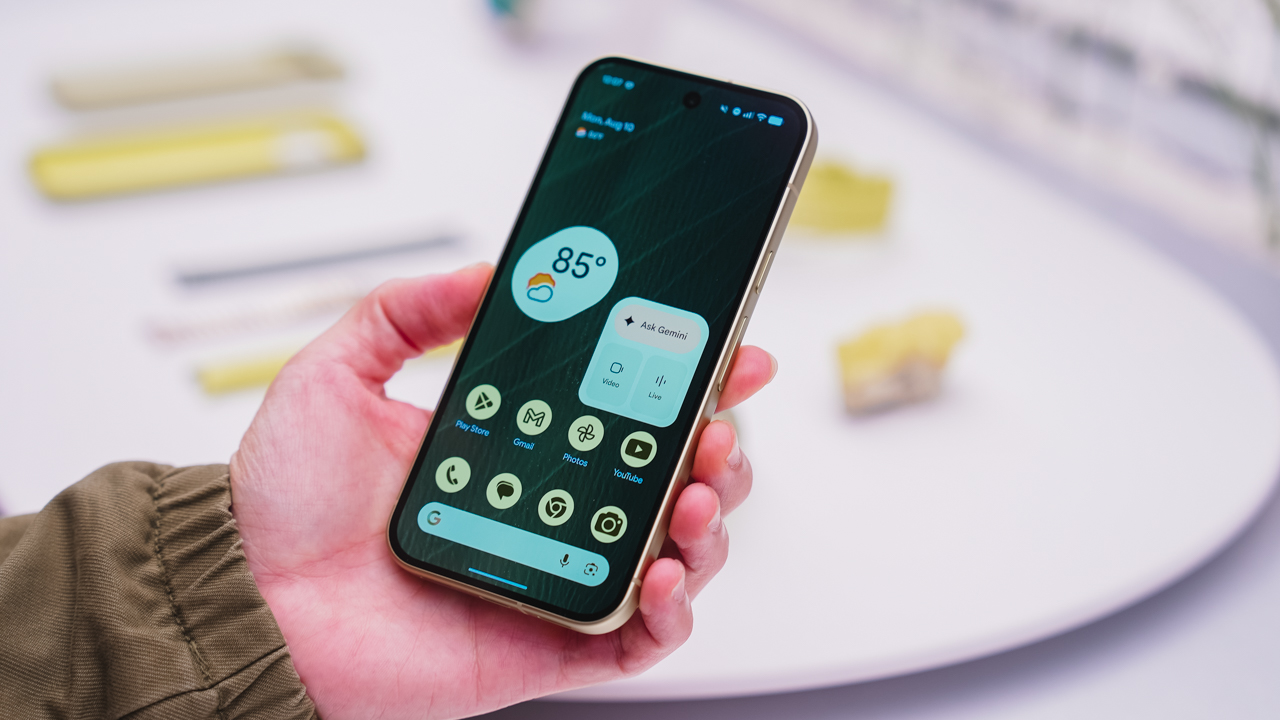
As an Android user, I’ve been jealous of iPhone users for a while now, but it’s not for the reason you might think. See, I’m ridiculously prone to motion sickness when I’m not driving. So, when I discovered that Apple has a software-based cure called Vehicle Motion Cues, I wanted it immediately. Now, Android does have third-party apps that do the same thing, but they’re not as good as a fully native version. Well, those dark, nauseating days are about to come to an end. Android 17 is finally getting a similar tool called Motion assist.
Before that, let’s rewind for a bit. What do these features do? How can they cure motion sickness?
Whenever you open Vehicle Motion Cues or Motion assist, the interface spawns a series of dots on the screen. These dots respond to movement. For example, if the vehicle turns to the left, the dots also go to the left, mimicking the movement. Without cues like this, the stationary nature of the screen clashes with our brain’s perception of movement. The disparity creates that feeling of nausea. Basically, our eyes are desperately trying to focus on the static screen, but our brains are telling us that we should be seeing motion. Having moving dots reorients our brain and places the phone inside our perception of movement.
Now, you can enable the same feature on your Android 17 device through Settings > All services > Motion assist under Personal & device safety. You can also set it so that the feature turns on automatically when the phone detects that you’re in a moving vehicle. Finally, you can also tweak the shape, color, and opacity of these dots.
Android 17’s Motion assist is rolling out now to compatible devices.
SEE ALSO: These are the best Android 17 features (if you hate AI)


TECNO POVA 8 Pro Tonino Lamborghini review
Truly a rare gem in 2026


DJI Lito X1 review: Is this the best lightweight drone for creators?
Making a strong case as a travel companion and a capable B-cam!


REDMI Note 17 Pro Max review: A new breed born from AI greed
Welcome to the new normal
TECNO POVA 8 Pro Tonino Lamborghini review

When TECNO-logy meets Tonino Lamborghini legacy

Spotlight: Amazon Kindle Scribe Colorsoft

Chimelong’s newest attraction might be the robots themselves

Xiaomi 18 Pro series is launching globally, Xiaomi confirms

realme 16T 5G with 8000mAh battery, IP69 Pro rating launches in PH

HUAWEI Pura X View is 2026’s first WIDE slab-type smartphone

The CAMON Slim 5G is TECNO’s latest ultra-slim smartphone

iPhone 18 Pro series: Price, availability in the Philippines

DJI Osmo 360 II review: Going all-in on the ecosystem


-

 News6 days ago
vivo X500 Series launches with major imaging upgrades
-

 News5 days ago
OPPO Find X10 Pro Max is the first phone with a triple 200MP camera system
-

 Gaming2 weeks ago
BlizzCon 2026 announces World of Warcraft: Forever and Diablo V
-
Reviews2 weeks ago
REDMI Note 17 Pro Max review: A new breed born from AI greed
-

 Singapore1 week ago
Epson Lifestudio Grand Plus EH-LS970B with 4K projection, more launches
-

 News6 days ago
vivo introduces OriginOS 7 with smarter multitasking and AI features
-
Drones1 week ago
DJI Lito X1 review: Is this the best lightweight drone for creators?
-

 Gaming2 weeks ago
Valve unveils price of the Steam Frame