

Enterprise
This Indian telco has raised more than $20 billion during the pandemic
Includes investors like Google, Facebook, and Qualcomm

The Coronavirus pandemic has forced countries to implement strict lockdowns and curb international travel. Economies have fallen drastically due to lower spendings and rising unemployment. Healthcare has become a priority. Meanwhile, defense, as well as infrastructure costs, have been sidelined.
Work-from-home has become the norm and companies are actively trying to reduce operational costs. Investors have burned a lot of money since startups dependent on the gig economy are the worst hit. Raising funds right now is a herculean task and most start-ups are expected to go out of business in the coming months.
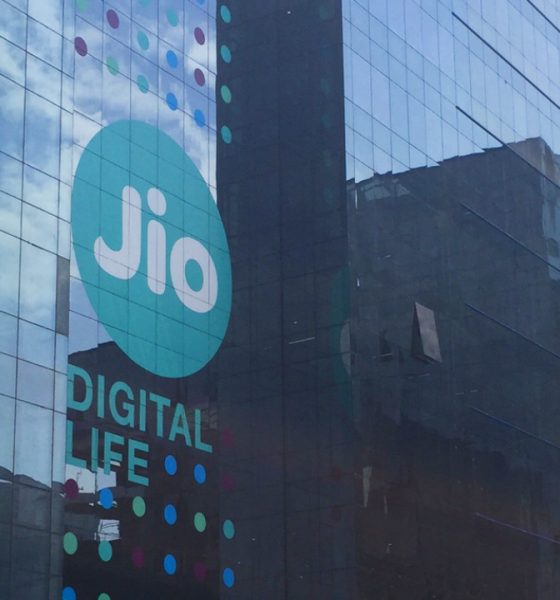
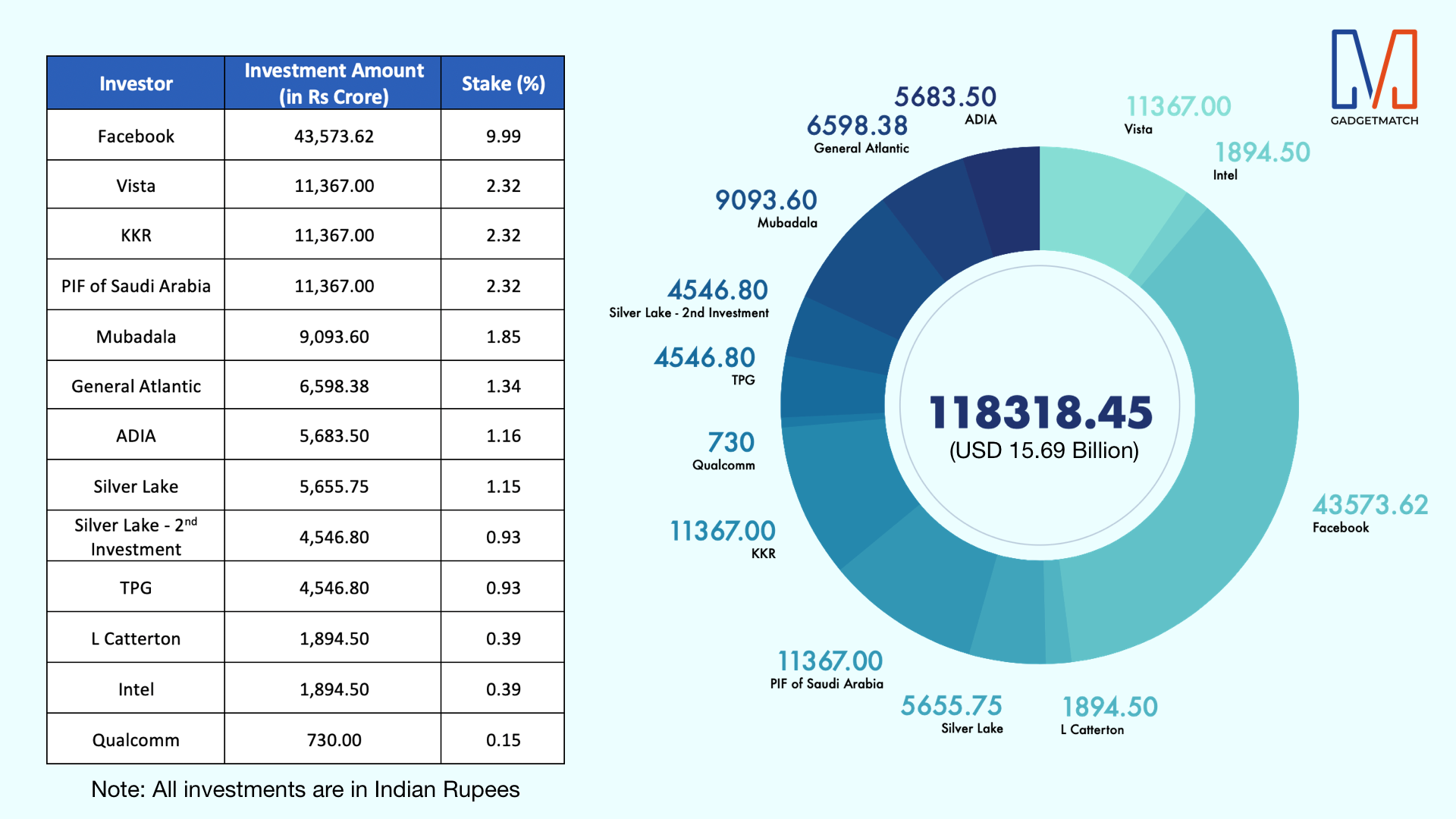
However, one company has taken full advantage of the pandemic-led lockdown. Officially called Jio Platforms, it’s an Indian telecom operator with more than 300 million active users. Dubbed Jio casually, it’s more than just a telecom operator and has managed to raise more than US$ 20 billion within a span of three months. Investors include marquee names like Google, Facebook, Qualcomm, Mubadala (sovereign fund of Abu Dhabi), Vista Equity, and more.
Google has also acquired a stake in Jio for US$ 4.5 billion. It has picked up 7.75 percent in the company, taking the total sale to 32.95 percent. The Google stake sale came to light immediately when the copy was ready for publishing and hence couldn’t be updated.
By Sanuj Bhatia
To be precise, Jio has raised US$ 20 billion from 13 companies by just selling a 25.2 percent stake. Considering the current investments, Jio is roughly valued at more than US$ 60 billion. What’s so special about this company that Facebook decided to splurge US$ 5.7 billion for just 9.99 percent?
India — the most promising market for any internet company
The US has always led the tech race in terms of research and innovation. With a developed economy, the market is self-fulfilling and companies are actively looking for new regions to expand to. The American influence is easily visible in western allies like the European Union, Japan, South Korea, as well as the Philippines.
India, on the other hand, is a developing economy that completely skipped the computer or laptop age and jumped onto the smartphone era. Today, it’s the world’s second-largest smartphone market, and 70 percent of the hardware is dominated by the Chinese. However, most phones run on Google’s Android, and American tech companies have been successful in expanding. This includes Facebook, Amazon, Netflix, Google, and more.
However, the telecom market remains hugely untapped. What will a smartphone do without wireless connectivity?
The rise of Jio and its ripple effects
At the beginning of 2016, 1GB of 3G data cost approximately INR 250 (US$ 3.3). Back then, Jio was completely owned and operated by Reliance Industries. Reliance is an Indian conglomerate that has its foothold in a plethora of segments including oil, retail, entertainment, and more. It’s one of India’s largest companies in terms of market cap and run by billionaire Mukesh Ambani. Just a few days ago, he became the seventh richest person on Earth, overtaking long-time contender Warren Buffet.
In a nutshell, Reliance pumped enough money into Jio and launched it in the middle of 2016. It was India’s first telco to offer pan-India 4G and the tariff was impossible to believe. For the first 6-9 months, unlimited 4G data was offered for free to lure customers from other networks like Airtel, Vodafone, and Idea. Considering Reliance’s backing, the company could afford to.

It also had an inherent advantage over telco’s because it directly rolled out 4G and did not support any previous standards. While other’s were figuring out inter-connection issues between 3G and 4G, Jio had already rolled out VoLTE. Jio only considered data as bandwidth and relied on internet protocol for calls, reducing its operational cost.
Within a year, 1GB of 4G data cost just US$ 0.2. India has the most affordable 4G in the world. Naturally, the competition couldn’t offer these rates without taking a hit on their profit as well as revenues. But, they had no option but to reduce tariffs. Slowly, companies like Aircel went out of business due to unsustainable rates. Vodafone merged with Indian player Idea to form Vodafone-Idea. By the end of 2019, the Indian market had only 3 players left — Jio, Airtel, and Vodafone-Idea.
Keep in mind, Jio has no debt due to its rich parent, Airtel has debt but can offload that with assets and equity, while Vodafone-Idea is on a ventilator. With more than 300 million subscribers, Jio is leading in terms of both, userbase as well as financial health.
Jio’s unique selling point — data
Reliance was planning to enter the telecom industry for a very long time and it saw it’s an opportunity with 4G. While other telcos were busy billing users for calls and SMS, Jio wanted to sell just one thing — more data. And, it came up with its own suite of services that ensured the user consumes more and more data.
India’s data consumption is expected to exceed 11GB by 2022. Although, the tariff has barely increased by 20-25 percent in the last few years. Some estimates are even more optimistic and indicate a 40 percent annual rise.
There’s no doubt that streaming services have changed the whole scenario. But, this is where Jio has an unbeatable offering. Since day one, the company has a suite of apps like Jio News, JioTV, JioCinema, JioSaavn, and even JioMeet. Today, there are 29 apps on the Google Play Store. This ecosystem ensures the user doesn’t have to look elsewhere. And, they are yet to be fully monetized. As a Jio subscriber, they’re pretty much free-to-use at the moment.
Data is the new oil
The suite of apps is mostly made for the end consumer. But, the company has grand plans for the future as well. It has already announced a partnership with WhatsApp to launch JioMart. It’ll onboard physical stores and function as a hyperlocal online shopping experience. A segment that hasn’t really taken-off yet despite investments from Amazon, BigBasket, and Grofers.
Coming to the enterprise side, Jio has acquired a plethora of startups and established companies for their know-how. This includes American telecom-technology company Radisys, Asteria Aerospace, Embibe, Haptik, and Netradyne. The company is poised to lead the 5G race due to its healthy financials and technology innovation. The company has announced it’ll carry out 5G trials based on its own technology and won’t be relying on third-party partners like Huawei.
The company is all set for the 5G future and has equivalent investments in IoT, blockchain, and digital payments. Jio may have started out as a telco, but it’s truly turning out to be a technology company.
The most lucrative technology company
All these factors make Jio a very attractive investment. Facebook tried to enter India with Freebasics and Internet.org but failed miserably. A piece of Jio gives it a chance to explore deeper than ever. For investment companies, the pandemic is a reality check. And, Jio just turned out to be a silver lining. With more and more people working from home, wireless data consumption is bound to rise.
Even companies are realizing work-from-home is a better model in many parts of the business since you can skip expensive property investments. Even if the work-from-home model fizzles out in the coming years, personal consumption will remain largely unaffected. And with India’s developing economy, smartphone penetration is expected to steadily increase. This shall also bring in more data consumption, online shopping, and other related tasks. With Jio covering all the bases, it is perfectly positioned to lead the Indian market.
Lastly, it’s essential to understand why Reliance decided to sell slightly more than 30 percent in Jio. The parent company has a debt to pay-off and its Chairman, Mukesh Ambani, had announced it’ll go debt-free by the end of FY2020. Its most valued business of refining oil has taken a hit due to the pandemic-led crude crash.
It won’t be wise to sell an undervalued asset. At the same time, Jio reached its peak. By giving away a minority stake to a range of partners, Reliance not only raised money but also established global trust and recognition of Jio Platforms.
For the global markets, the indication is clear. India is open for business and there’s huge potential.





Apps
foodpanda relaunches cult-favorite roast chicken brand after 8 years of persistent search queries
Heritage chain Andok’s returns to the platform, driven entirely by long-term user analytics.


In the world of e-commerce and food delivery, platform algorithms usually dictate what consumers see. But occasionally, consumer behavior is so relentless that it shapes the platform’s strategy.
In a move driven entirely by long-term user analytics, foodpanda has officially relaunched Andok’s, one of the Philippines’ most iconic heritage rotisserie chains, back onto its platform after an eight-year absence.
The search bar as a digital wishlist
The decision to ink the partnership wasn’t just a marketing play. It was a response to an ongoing data anomaly. Despite being offline from the foodpanda platform for eight years, Andok’s consistently ranked as one of the most-searched merchants on the app.
Year after year, users treated the empty search results page as an unofficial wishlist. This persistent search intent gave foodpanda a clear, data-backed signal of pent-up demand.
Prior to the official digital rollout, teaser campaigns on social media validated this demand, generating thousands of organic interactions from users anticipating the return.
Bridging heritage flavor with digital infrastructure
For foodpanda, onboarding a merchant with this level of built-in demand fits its broader strategy of marketplace optimization and hyper-local network expansion, turning a heritage brand into another data point for how legacy retail plugs into delivery infrastructure.
For Andok’s, the integration works as a fast track to digital scale. A legacy quick-service chain skips years of independent app development and reaches customers already using foodpanda’s existing logistics network, on a platform they already check daily.
Andok’s built its following on charcoal spit-roasted chicken, a slow-cooked technique that’s stayed largely unchanged since the brand’s early days, alongside seasoned grilled pork belly.
More recently, the Dokito line extended that following into crispy fried chicken and chicken burgers, broadening the brand’s appeal beyond its original rotisserie format and giving foodpanda a menu with both heritage pull and everyday fast-food convenience.
Enterprise
Global Connect Show Shenzhen empowers Chinese enterprises
Opportune time for new Chinese enterprises to go global

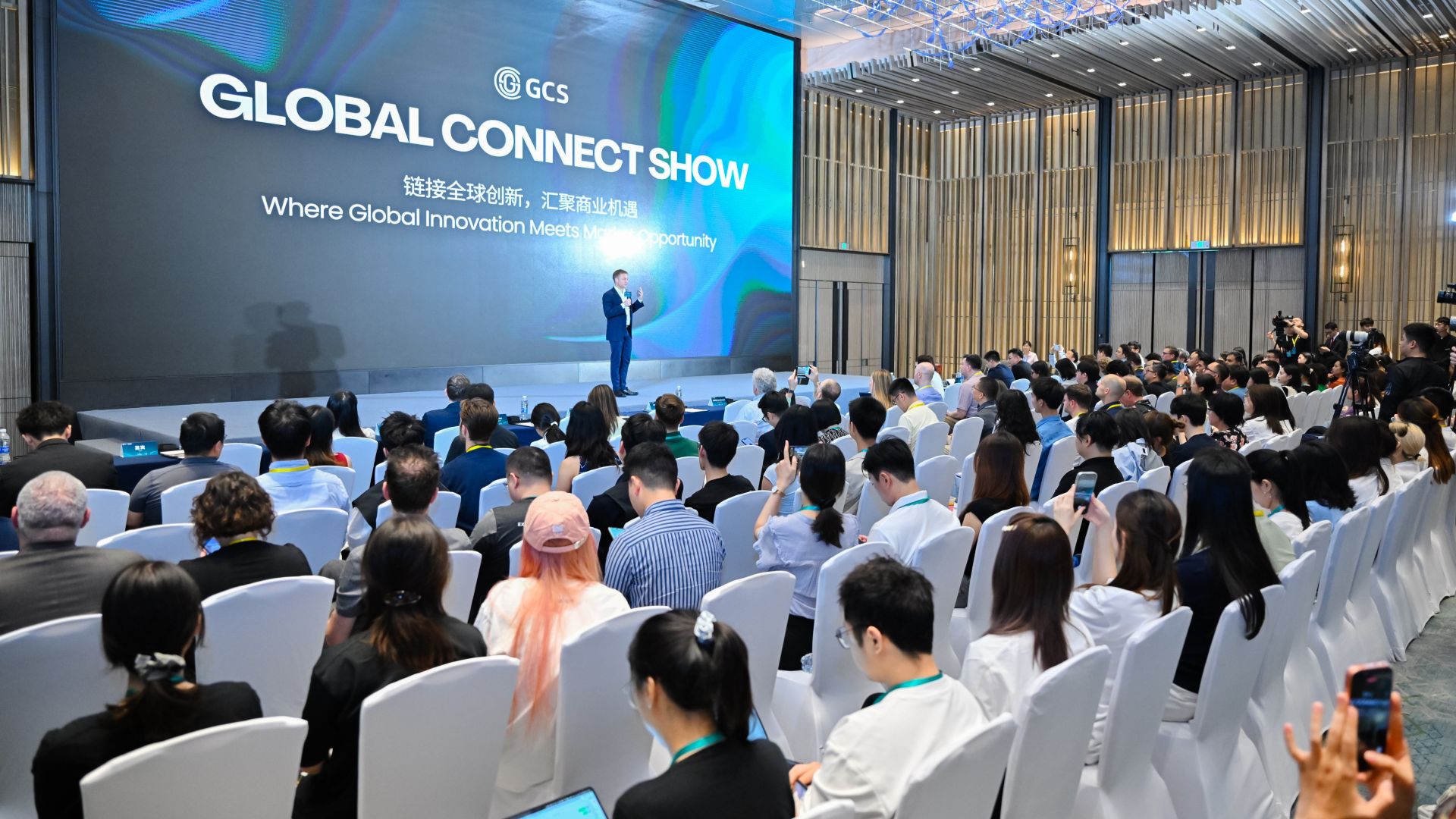
The Global Connect Show Shenzhen 2026 (GCS SZ 2026) was successfully held on June 1 at China’s innovation hub.
More than 100 Chinese enterprises joined the event, encouraged to expand into international markets.
The program focused on three core pillars:
- Chinese brand going global
- Global channel connection
- Dedicated “Into the Enterprise” series
China has developed a new generation of internationally competitive companies across various sectors, including:
- consumer electronics
- smart hardware
- artificial intelligence
- robotics
As these companies enter a new phase of going global, demand is growing for global communications, brand building, market trust, and localized business networks.
As such, the Global Connect Show is one of the platforms to be able to strengthen the relationship across enterprises, partners, business associations, and even media and influencers.
It is a significant window for innovative brands to enter global retail channels by building compelling brand narratives and developing strong localized operations.
This year’s GCS is the third staging of the show, which consistently aims to match Chinese brands with partners through a results-first approach. Such an approach includes hands-on product experiences, presentations, and one-on-one meetings.
Enterprise
New US-China ban might affect 75% of phones, laptops
Companies can no longer use Chinese labs to test their products.

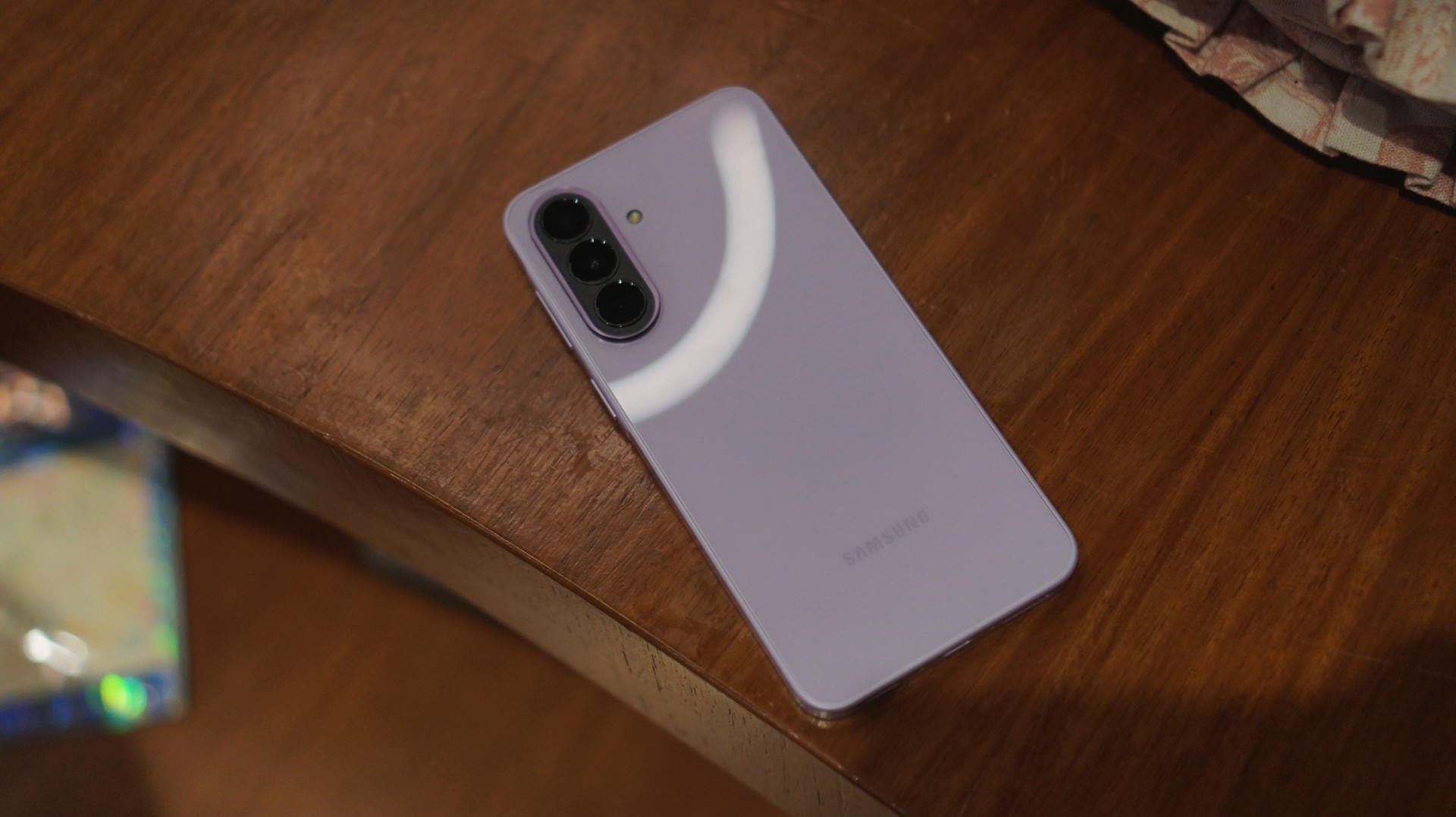
The United States is continuing its crusade against Chinese technology today. However, the target now isn’t a company from China but a method important to a lot of non-Chinese brands.
Today, via Reuters, the Federal Communications Commission (or FCC) has unanimously voted to prohibit companies from using Chinese labs to test their electronic devices if they are to be sold for use in the United States. Naturally, this includes smartphones and computers.
Notably, the prohibition doesn’t directly target Chinese brands. However, it will still affect a huge swath of the industry. The FCC estimates that around 75 percent of the entire market are devices tested in labs based in China.
This means that companies who wish to sell future products in the country must move their testing to labs in the United States or other countries that it deems secure. At its current iteration, the prohibition will not affect devices that already earned their certification prior. However, it might prevent them from getting recertified once their current one expires.
Now, the prohibition isn’t an absolute lock just yet. The FCC will allow the industry to submit comments about the proposal. But, with a unanimous vote from the FCC, companies might have to start looking for alternative testing sites if they want to stay operation in the United States.

Xiaomi opens largest Singapore store yet at VivoCity

Honor is reportedly working on a 14000mAh battery

Nothing Phone (4b) shows up online, spoils some specs

Polaroid says, enjoy the beach before AI ruins it

Xiaomi EV sets world’s 1st official autonomous driving lap at Nürburgring

TECNO’s POVA 8 5G is both futuristic and future-ready

Close without crossing: A Xiaomi 17T Pro photo essay

realme launches P4 Series 5G, including Power with 10,001mAh battery

The Xiaomi Watch S5 proves you don’t have to take it off

Buyer’s Guide: Xiaomi Pad 8 Series


-

 News1 week ago
TECNO’s SPARK 50 Pro is the latest budget smartphone battery beast
-

 Buyer's Guide1 week ago
Buyer’s Guide: TECNO SPARK 50 Pro vs SPARK 50 5G
-
 News1 week ago
Budget smartphone realme C100 Series launches
-

 Reviews1 week ago
HONOR Watch 6 Review: Less guessing, more knowing
-
 Laptops1 week ago
ROG launches 2026 Strix gaming laptop series
-

 Reviews4 days ago
vivo X300 Ultra review: A Whole Different Animal
-

 Entertainment1 week ago
Samsung brings the Galaxy Z series into Spider-Man: Brand New Day
-

 Reviews6 days ago
The realme P4 Power: realme’s midrange power play?