
News
ASUS Zenfone 8 Series now official
Featuring the Zenfone 8 and Zenfone 8 Flip


ASUS is diversifying the Zenfone line by giving people two distinct options in the Zenfone 8 series — the base Zenfone 8 and the Zenfone 8 Flip.
Both phones are powered by the Qualcomm Snapdragon 888 processor. Right off the bat, you’re promised flagship performance, 5G connectivity, some reliable gaming performance, and all that jazz.
However, the most impressive thing about these two devices may be in how targeted they are. ASUS is sticking to their thing by insisting on a Flip camera module, but they’re also offering something else for a segment that they feel is underserved with the base Zenfone 8.
Zenfone 8

The goal for the Zenfone 8 is clear — offer a compact flagship smartphone. While there are compact phones out there, it’s really only the iPhone 12 mini that can be considered flagship-level. But that phone suffered from a dismal battery life as many reviewers have pointed out.
To remedy this, ASUS put a 4,000mAh battery on the Zenfone 8. But how compact is it?
The Samsung AMOLED display on the phone measures at 5.9 inches. Only a few decimals larger than the 5.4-inch iPhone 12 mini. Also, a far cry from the at least 6.4 inches we see on most flagships today.
That display also supports HDR10+, has a 120Hz refresh rate, a 240Hz touch sampling rate, and is made of Corning Gorilla Glass 6. Neat. It has a tiny hole that houses the 12MP front-facing camera.
Speaking of cameras, no crazy flip-module here. Likely to maximize the space on the relatively tiny body. But ASUS didn’t skimp on the specs as the main camera uses the 64MP Sony IMX686 sensor here paired with an 8MP telephoto lens.
It is available in multiple configurations: 6GB + 128GB, 8GB +128GB, 8GB + 256GB, and 16GB + 256GB but there’s no way to expand the internal storage.
Zenfone 8 Flip
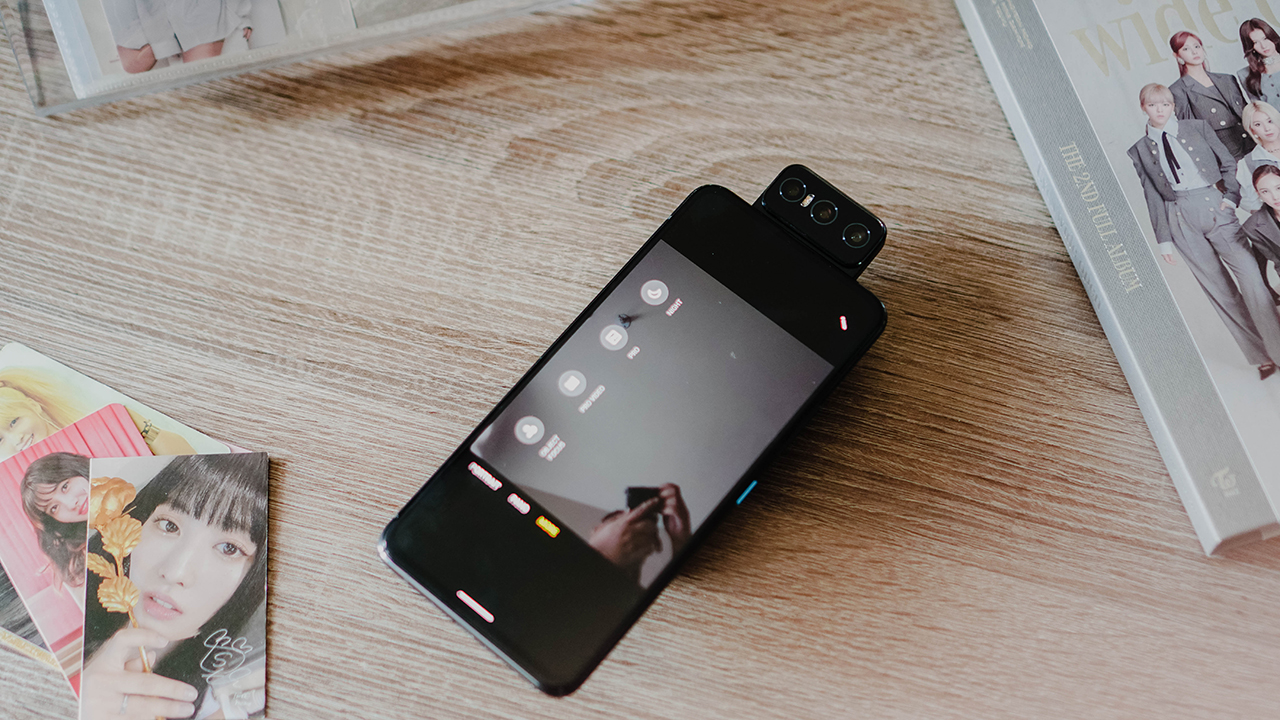
As the name suggests, this is the more party-friendly Zenfone. It features the Flip-up camera module first seen on the ZenFone 6. It has a similar set of cameras as the Zenfone 8, but are positioned alongside each other — that’s 64MP main, 12MP ultra-wide, and 8MP telephoto.
The Flip can sustain up to 300,000 flips which may not sound a lot but ASUS insists that it is. It also doesn’t just go all the way flipped up or down. You can control the angle at which the camera flips.
The display is also Samsung AMOLED but this one lands on the big screen category coming in at 6.67 inches. Instead of 120Hz though, this has a 90Hz refresh rate with a 200Hz touch sampling rate.
By virtue of having a larger body, it also has a larger battery capacity at 5,000mAh. This one comes in only one configuration — 8GB +256GB with support for up to 2TB of storage expansion via MicroSD.
Both Zenfones share the same video shooting capabilties. These are 8K and 4K video recording, Motion Tracking video, Time Lapse, Slow Mo, and more.
Here’s a quick look at the specs side by side.
|
Zenfone 8 |
Zenfone Flip 8 |
|
| Processor | Qualcomm Snapdragon 888 | Qualcomm Snapdragon 888 |
| Display | 5.9” Samsung AMOLED, 120Hz | 6.67” Samsung AMOLED, 90Hz |
| OS | Android 11, Zen UI 8 | Android 11, Zen UI 8 |
| Configuration | 6GB + 128GB
8GB +128GB 8GB + 256GB 16GB + 256GB *No storage expansion |
8GB +256GB
*Up to 2TB storage expansion via MicroSD |
| Battery | 4,000mAh | 5,000mAh |
| Cameras | 64MP Sony IMX686
12MP Ultra-wide 12MP front-facing |
64MP Sony IMX686
12MP Ultra-wide 8MP telephoto *Flip camera module |
Pricing and availability details to follow.






There are a few titles that an overwheling majority of gamers consider as an absolute must-play for other gamers. One of those titles is The Legend of Zelda: Ocarina of Time. Originally launched for the Nintendo 64, it’s not easy to play the iconic game today. But, later this year, the game is about to get much more accessible. Nintendo has officially announced a remake of Ocarina of Time.
Modern gamers might not realize the effect of the original Ocarina of Time on the RPG genre. Besides adding a third dimension to the then-fledgling Legend of Zelda series, the 1998 game also revolutionized the gaming world by popularizing targeting systems. That, and the refining of the formula in Majora’s Mask, makes Ocarina an essential in gaming history.
During today’s Nintendo Direct, the company capped off the hour-long presentations by announcing a remake of the game. Though the short, short trailer didn’t reveal any gameplay, it did confirm that the remake will retain the original’s more whimsical art style, as opposed to the realism put forth by the Breath of the Wild duology.
It’s not the first re-release for the game, though. In the past, Nintendo released remastered versions of the game for the GameCube and the 3DS. This is, however, the first official remake of the title for a much more modern system.
We didn’t know when the remake will officially launch, but it’s coming out within this year.
News
Apple has essentially confirmed the launch of the iPhone Fold
Some hidden references were not hidden enough.

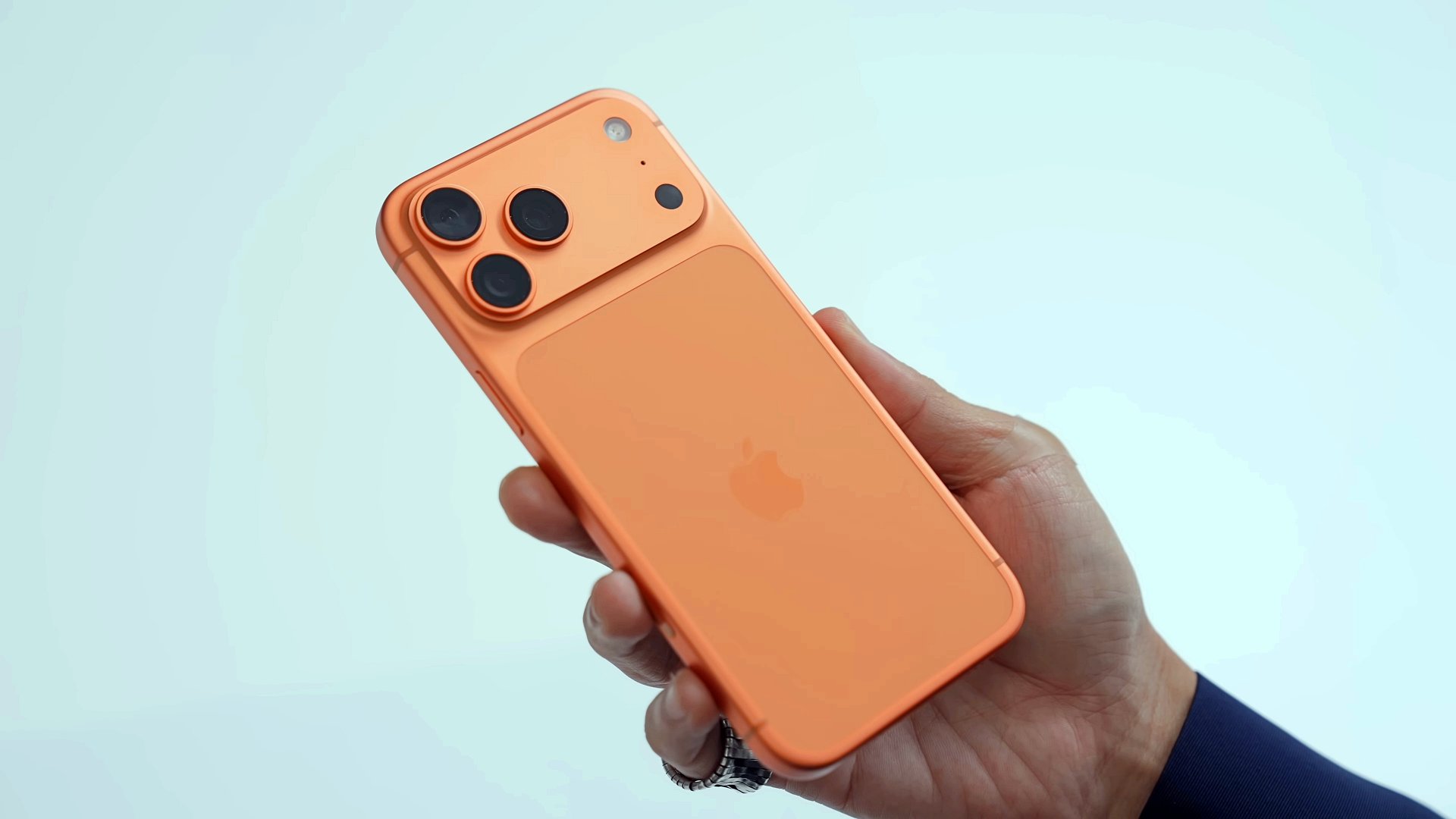
No, Apple did not officially launch the iPhone Fold yet.
However, WWDC 2026 had a few surprises for those attentive enough to go deeper into the event’s announcements. And it all revolves around iOS 27.
Of course, the main event of WWDC 2026 is the first peek into the upcoming mobile operating system. Though we already covered everything that Apple visibly announced, something hidden has essentially confirmed the band’s first foldable phone.
On X, Sam Henri Gold, an engineer, spotted a few crucial references to a foldable form factor. Hidden underneath the recently released iOS 27 beta are mentions of “foldState” and “angleDegrees.” The code also includes references to the number of displays a single device has.
Notably, iOS 26 did not include such mentions. It can’t be purely coincidental. Unless Apple is suddenly shipping iOS 27 out to foldables from other brands (highly unlikely), this is the prelude to an iPhone Fold coming later this year.
Now, rumors of an iPhone Fold have been making the rounds for a while now. But they haven’t been as strong as this year. There’s heavy speculation that the brand’s first foldable phone is coming later this fall.
There’s still a nonzero chance that it makes an appearance during WWDC 2026, but don’t put all your eggs in this basket. Apple traditionally reserves the conference for software developments. Fall is the usual playing ground for Apple’s hardware.

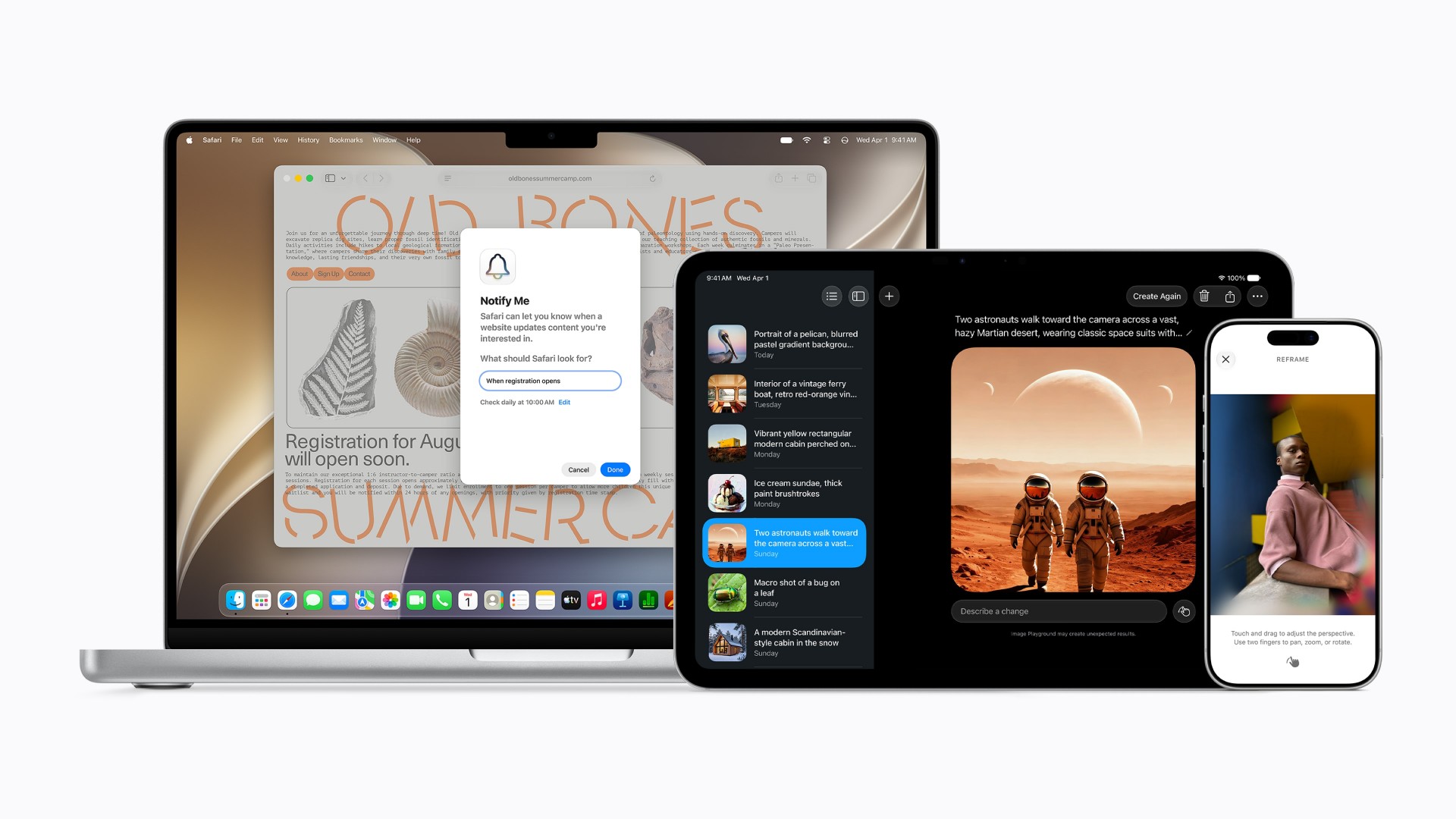
Alongside the debut of Siri AI at WWDC26, Apple also unveiled the next generation of Apple Intelligence, bringing new AI-powered features to Photos, Safari, Messages, Shortcuts, Home, and other apps across its ecosystem.
Powered by a new privacy-focused architecture, Apple Intelligence now integrates more deeply across iPhone, iPad, Mac, Apple Watch, AirPods, and Apple Vision Pro. The company says the update makes everyday tasks easier with smarter editing tools, improved web browsing, more capable communication features, and expanded automation options.
New AI editing tools come to Photos
Apple is introducing several new editing features to Photos.
Spatial Reframing lets users adjust the composition of a photo after it has been taken. The feature uses AI to generate only the parts of an image needed to accommodate the new perspective while keeping the original scene intact.
The Photos app is also gaining an upgraded Extend tool, which can expand images, straighten horizons, and adjust aspect ratios without cropping out important elements. Meanwhile, the Clean Up tool now delivers more realistic results when removing unwanted objects from photos. Apple says AI-edited images will automatically include a hidden SynthID watermark.
Safari gets smarter browsing features
Apple Intelligence is also changing how Safari works.
A new feature automatically organizes tabs into topics, making it easier to manage research, trip planning, and other projects spread across multiple pages. Safari can continue grouping new tabs into existing topics as users browse.
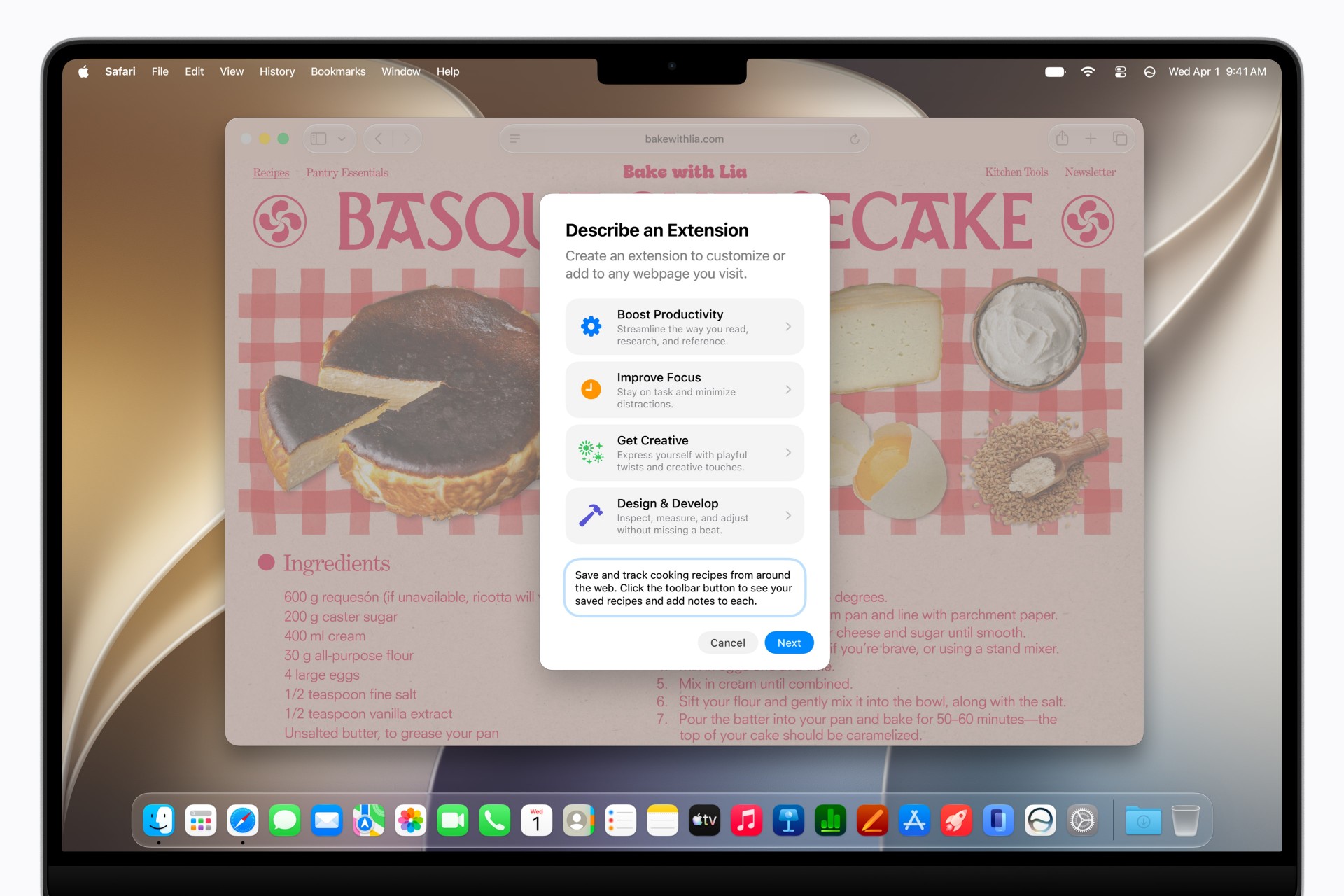
Another feature called Notify Me can monitor webpages for changes, such as product restocks or price drops, and send notifications when updates occur. Safari can also generate custom browser extensions through a new Describe an Extension tool that builds extensions based on a user’s written instructions.
Apple is also expanding the capabilities of the Passwords app. Eligible accounts can now be automatically upgraded to stronger passwords, with Apple Intelligence handling the process on a user’s behalf.
Messages, Calendar, and Shortcuts gain AI assistance
Messages and Mail are becoming more proactive with contextual suggestions.
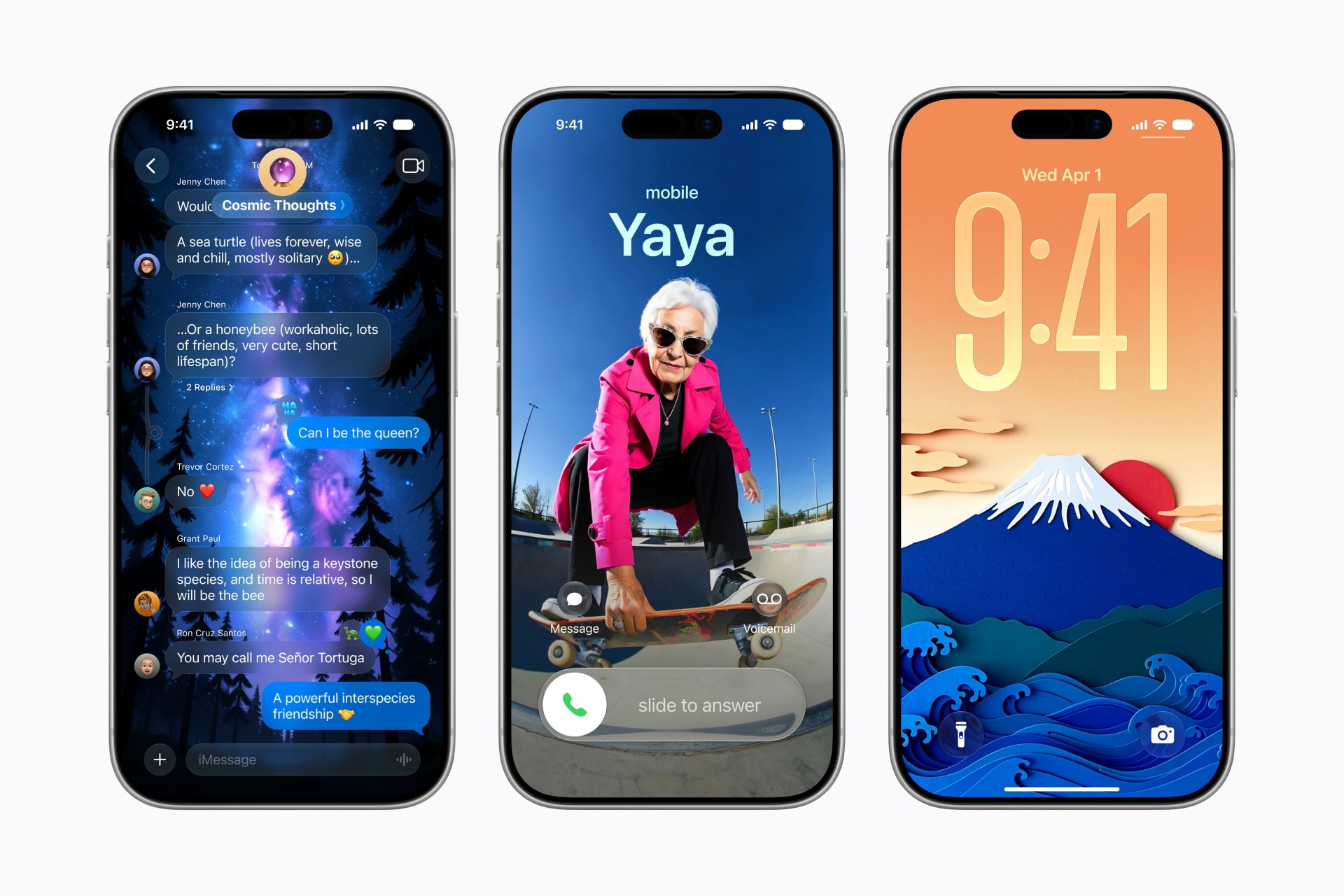
Users can receive one-tap recommendations to create reminders or notes based on conversations. Messages can also help locate specific photos by recognizing people, locations, and keywords mentioned in chats. Smart Reply can now adapt responses based on a user’s writing style.
Apple is also bringing AI assistance to Calendar and Shortcuts. Users can create calendar events simply by describing them, while a new Describe a Shortcut feature can automatically build automations based on natural language instructions.
The Phone app is gaining Call Context, which can surface information such as reservation numbers and confirmation codes when users contact a business. Apple says the feature runs entirely on-device and does not share information with the company.

New features for Home and accessibility
The Home app is becoming smarter with AI-generated video descriptions and improved search tools for HomeKit Secure Video cameras.
Users can search security camera footage using natural language and review automatically highlighted noteworthy events. Apple Intelligence can also group related notifications into a single activity to reduce clutter.
Accessibility features are also receiving upgrades. VoiceOver can provide richer image descriptions, while Voice Control allows users to describe onscreen controls instead of memorizing exact button names. Accessibility Reader now supports more complex documents and can provide summaries and translations on demand.
Availability
The new Apple Intelligence features are available for developer testing starting today through the Apple Developer Program. A public beta will launch next month through the Apple Beta Software Program.
Apple plans to release the features this fall as part of iOS 27, iPadOS 27, macOS 27, watchOS 27, and visionOS 27 for supported Apple Intelligence-compatible devices.

HONOR Magic V6 review: The best version of a book-style foldable?
Little left to sacrifice

Close without crossing: A Xiaomi 17T Pro photo essay
Distance and closeness are not always opposites.


Spring reset: Growing more at home with Auk Mini
From kitchen counter experiment to everyday habit

What HYROX Hong Kong looks like up close
HONOR Magic V6 review: The best version of a book-style foldable?

Dragon’s Dogma 2: Dark Arisen to launch on October 9

Devil May Cry 5: Devil Hunter Edition styles onto Nintendo Switch 2

Rewind: WWDC 2026

HONOR 600 Pro review

The Infinix GT 50 Pro has the most inspired design for a gaming phone

Sony Xperia 1 VIII arrives with AI Camera Assistant, bigger telephoto sensor

UGREEN MagFlow Air review: Airy Yet Mighty

The UGREEN Nexode Air 65W is the only charger I travel with now


-
Reviews2 weeks ago
Close without crossing: A Xiaomi 17T Pro photo essay
-
 Accessories2 weeks ago
UGREEN launches FineTrack Series with Apple Find My support
-
 News6 days ago
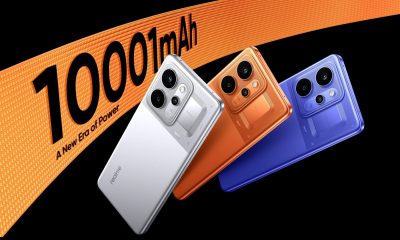
realme launches P4 Series 5G, including Power with 10,001mAh battery
-
 Philippines2 weeks ago
Xiaomi 17T series Philippines price, availability, offers
-
 Hands-On1 week ago
The Xiaomi Watch S5 proves you don’t have to take it off
-
 Gaming2 weeks ago
Acer unveils Predator Atlas 8 handheld with Intel Arc G-Series power
-
 Computex 20261 week ago
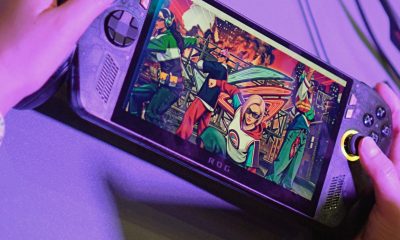
ASUS ROG XBOX Ally X20 debuts at COMPUTEX 2026
-

 Gaming2 weeks ago
Valve just announced a massive price hike for the Steam Deck