
Computers
ZTE announces 5 new G5 series servers
More power


ZTE has released its latest G5 series servers which run on the 4th-generation Intel Xeon scalable processors to deliver more powerful computing abilities.
There are a total of five new server types announced, which will all support liquid cooling heat dissipation, high-density computing power, mass storage, and better flexibility and reliability:
- 5200 G5 high-density server
- R5300 G5 full-scenario universal server
- R5500 G5 mass storage server
- R6500 G5 heterogenous computing power server
- R8500 G5 high-performance server
Extreme performance
The G5 series servers have the latest Intel Xeon 4th gen scalable processors which have up to 120 cores in 2 sockets. They will also support Intel Optane persistent memory 300 series (Crow Pass).
The R6500, in particular, has a built-in 10-to-20 computing intelligent acceleration engine which tries to achieve the best combination of computing power for various scenarios.
The servers may also be flexibly expanded. The R5300, for instance, provides many disk positions and high-speed I/O interfaces.
Additionally, the servers have a bandwidth design of 32 DDR5 memory slots. PCIe 5.0 improves bandwidth by 150% while bandwidth performance is also boosted by 50%.







At WWDC 2026, Apple unveiled Siri AI, a smarter version of Siri powered by Apple Intelligence, with personal context, onscreen awareness, deeper app integration, and a brand-new experience across iPhone, iPad, Mac, Apple Watch, and Vision Pro.
Apple also announced new Apple Intelligence features, Google Gemini-powered foundation models, smarter photo editing tools, improved parental controls, faster performance across iPhone and iPad, and the next version of macOS: Golden Gate.
In this WWDC 2026 Rewind, Michael Josh breaks down the biggest announcements, what actually matters. And, whether Apple finally delivered on the promises it made last year.
Computers
ASUS at COMPUTEX 2026
NVIDIA RTX Spark ProArt laptops, Zenbook 14, ROG XBOX Ally X20 Bundle, and more!
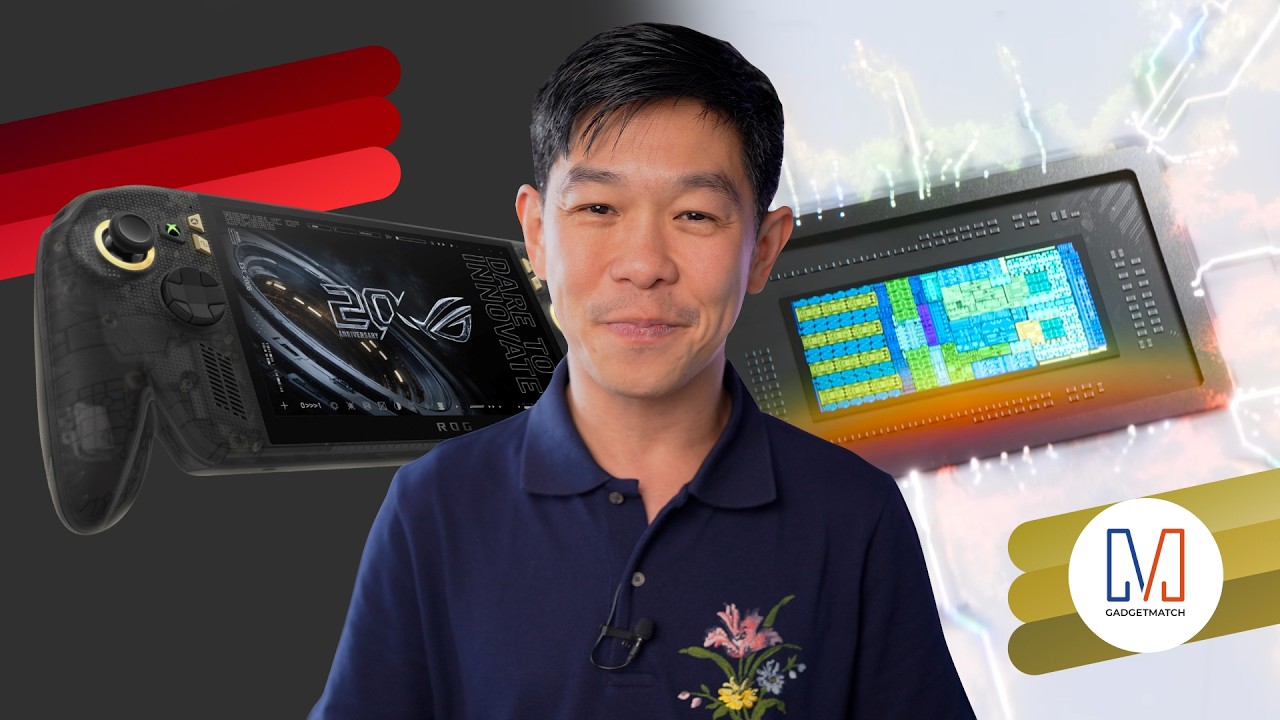
ASUS had a packed COMPUTEX 2026.
in this video we’re taking a look at our favorite announcements from the show: the ultra-portable and colorful Zenbook 14 all the way to the practical Vivobook S series.
There are also some cool new stuff including the debut of NVIDIA RTX Spark-powered ASUS ProArt laptops. PLUS, ROG’s 20th Anniversary!
To celebrate that, they announced a whole bunch of Edition 20 collection — including the nostalgic yet futuristic ROG XBOX Ally X20 with a bundled XREAL R1 Edition 20 Gaming AR Glasses.
Check them out here:
Computers
Samsung’s SECRET That Made OLED Even Better
Say hello to the new QD-OLED Penta Tandem display tech by the Korean giant

Samsung Display just unveiled QD-OLED Penta Tandem technology. This is a next-generation display structure that stacks five emission layers to improve brightness, efficiency, and overall OLED performance.
In this video, we simplify what Penta Tandem actually is, how it works, and show you two monitors that already have the technology — specifically from MSI and Dell.
For more details, check out Samsung Display here.






Crunchyroll Anime Expo announcements: Solo Leveling, Ghost of Tsushima, more

Demon Slayer: Kimetsu no Yaiba Infinity Castle I coming to Crunchyroll

PlayStation declares AI as “foundational piece” in future

Not even Nokia phones are safe from AI features

The Kia Carnival Hybrid is a gentle giant

TECNO’s POVA 8 5G is both futuristic and future-ready

Buyer’s Guide: Xiaomi Pad 8 Series

HONOR Magic V6 review: The best version of a book-style foldable?

TECNO’s SPARK 50 Pro is the latest budget smartphone battery beast

Buyer’s Guide: TECNO SPARK 50 Pro vs SPARK 50 5G


-

 Cameras1 week ago
DJI Osmo Pocket 4P launches with dual lenses and a 1-inch sensor
-

 News1 week ago
Lenovo says RAM prices are not coming back down again
-
 Camera Shootouts2 weeks ago
Camera Shootout: HONOR 600 Pro vs OPPO Reno15 Pro
-

 Singapore2 weeks ago
Xiaomi opens largest Singapore store yet at VivoCity
-

 News1 week ago
The vivo X Fold6 is the first foldable to support teleconverter lens
-

 Apps2 weeks ago
HONOR, Xiaomi are working on their own Privacy Displays
-

 Smartphones2 weeks ago
HONOR continues APAC expansion, to launch 600 series in Taiwan
-

 Laptops2 weeks ago
Apple raises the prices of iPad and MacBook lineups