





Is the all-new Sony WH-1000XM6 the newest king of headphones?
We didn’t just listen; we tested.
In this video, we’ve rigorously evaluated the Sony WH-1000XM6, comparing them head-to-head with their top competitors.
Specifically, the Apple AirPods Max, the Bose QuietComfort Ultra, and even older Sony models.
We dive deep into ANC (Active Noise Cancellation) performance, audio fidelity, comfort, and more.
But, did the XM6 come out on top?
Find out in this in-depth review as we put the Sony WH-1000XM6 in the ultimate test.
PRE-ORDER Sony WH-1000XM6 here!
Transcript
It’s no secret. These are probably the best noise-canceling headphones in the market today, and Sony just made them even better with a new processor, new drivers. And if you know, you know, they can now fold again! I’m so excited, maybe a little bit too dramatic, so let’s dive in. Michael Josh, your gadget matchmaker, and over the last decade, I’ve made it my job to show people around the world that tech can be easy, fun, and exciting. On this channel, I give you special access to the products I review, the events I attend, and all the interesting people I get to meet along the way.
So, if you’re shopping for a new pair of noise-canceling headphones, give the channel a like and subscribe, and I’ll help you find the right pair to match your needs. This is our Sony WH-1000XM6 review.
Long overdue upgrade
It’s been years since Sony updated their popular WH-1000 series of noise-canceling headphones. The arrival of the XM5 in 2022 came with a lukewarm reception. Some loved its sleek new design but were disappointed that it wasn’t as compact.
Others loved the improved audio and noise cancellation but missed the deep bass that the XM4s produced. Today, we’ll find out if we have a true winner in our hands.
Quick Unboxing
First, a quick unboxing. The XM6’s packaging is discrete, made from recycled paper, which is always a win in my book.
As you can see from the artwork, I’ve got the blue one inside. You’re greeted by the carrying case, and inside that is the XM6. There’s also some paperwork, a 1.2-meter auxiliary cable, and a rather short USB-C to C charging cable. But just like the XM5, but unlike the XM4, it does not come with this two-prong airplane adapter, so that you can ditch the cheap ones and use your high-folding ones on a plane. It’s whether I’m deep into my writing or just tuning out the noise, great audio keeps me in the zone, but my work doesn’t stop at content creation.
Subtle refinements
At first glance, the new XM6 looks very much like the XM5. To avoid any confusion in these next few clips, the XM6 is blue, the XM5 is black.
The biggest design change addresses everyone’s complaint about the XM5s. You can now fold them away, just like what we’ve been able to do on older models. Both sides fold in like this, allowing for a more compact case. Also, more on that in a minute.
The rest of the design tweaks are more subtle. The band features that modern, sleek design of the XM5s, but now is a bit wider for a more comfortable fit. The cuffs are also taller too, but with the same amount of cushioning. Stitching is only on the backside, so it looks cleaner. And notice, too, there’s a metal ring on the hinge, which adds not just an accent, but more durability to the folding mechanism.
Weight-wise, on my scale, I’m getting about 252 to 253 grams. If he says 254, whatever the case, it’s about 4 grams heavier than the XM5s and roughly the same weight as its closest rival, the Bose QC Ultra. The weight trade-off comes at the expense of more premium materials, like stainless steel and aluminum, just like on the AirPods Max, which is a heavy 386.2 grams.
The device is plastic, and the finish, unfortunately, a bit of a smudge magnet, but for a pair that I’m going to wear on a 12-hour transcontinental flight, maybe more, it’s a trade-off. I’m willing to have. Other design choices of note: I love this dot right here, almost like Braille, which tells you, okay, that’s the left side. I put it on correctly instead of two similarly shaped buttons.
Same controls
The power button is round, while the button to toggle between noise cancellation and ambient mode is like a stick. Because they’re two different shapes, it’s easy to tell between the two when you’re trying to do something.
Finally, if you’re not familiar, there are no physical buttons for volume control. Instead, the right cup has a built-in touch surface. You swipe up and down to control volume, double-tap to press and play or answer a call, swipe forward to skip to the next track, and swipe back to go to the previous one.
You can also tap and hold to bring up the Voice Assistant or rest your palm on it to temporarily switch out of noise cancellation mode. Say you want to be able to hear or talk to someone, Sony calls it Quick Attention mode.
In terms of ports, you get USB-C for charging, and in case you’re wondering, it’s for charging only. You can’t use it for audio, but you can now charge and use them at the same time.
Finally, there’s a full-size 3.5-millimeter headphone jack. Because you can now fold them again, the carrying case is smaller than its predecessor, but still not as small as the ones on the XM4s, which I still prefer, but I like its new magnetic lock mechanism.
Better case
You’ve saved so much time by not having to unzip your case every time you want to take them out. The cases, by the way, are color-matched to the headphones, which, by the way, are available in black, blue, and silver, which is a cream white color. Because portability is of utmost importance to me, I probably will still ditch the case and throw them in a drawstring pouch like this and then check them into my bag.
More than comfy
The Sony XM6s are probably the most comfortable noise-canceling headphones I have ever worn. The cushioning is soft. It crushes and embraces my ears quite well. The clamping force is strong enough to provide a light seal, but not too much where it feels like it might give you a light headache.
The ear cuffs envelop my ear as well, and there’s enough depth, so your ears don’t feel squished. In the week that I’ve been reviewing them, there have been days where I’ve had them on for several hours, and I didn’t feel a sense of relief from suffocation after taking them off.
Lastly, when you have them hanging around your neck, the good news is that you can now have the cups facing inward again, the way I think it should be.
Satisfying ANC
While incredibly popular and consistently on top of many reviewers’ lists, fun fact, both Sony XM3, XM4, and XM5, all use the same QN1 processor. Why change it if it ain’t broke, right? Well, I guess not until you can come up with something better, and it looks like the time is right for that this time around.
In an effort to improve noise cancellation, Sony is getting the XM6 a new QN3 chip, which they say is seven times faster, which is a must for all their real-time analysis and AI optimizations that these guys do.
The chip powers a new adaptive noise-canceling optimizer, which consistently monitors air pressure, among other environmental factors, so it can provide the best kind of noise cancellation, given your current surroundings.
So, whether you’re 30,000 feet in the air or walking down a windy street, it’s constantly adjusting the noise cancellation based on air pressure, and get noise, and even movement. That’s a big leap from the older Auto NC, which basically just changed modes based on location.
Better mics
And they’ve also added four additional microphones, from eight to twelve. And in my tests across both airplane and street noise sounds, the XM6 consistently offered the most satisfying ANC experience compared to the AirPods Max, Bose QC Ultra, and the older XM5.
Versus AirPods Max
For me, the XM6 and the AirPods Max are probably the best in terms of noise cancellation, particularly that’s removing hum, fan noise, and high-frequency beats with ease. The only difference is that it does it with a sort of softness that makes the whole world feel like it’s turned down, but not erased in contrast, the airpods macs create a sharper kind of silence.
Versus Bose QC Ultra
It’s clean, it’s surgical, sometimes surreal, it’s very impressive. Don’t get me wrong, but sometimes almost emotionally detached. The XM5 and the QC Ultra, while competitive, had more inconsistencies. Both canceled low and rumble effectively, but let through more mid and high-frequency noise, sometimes even accentuating certain sounds. Overall, I actually prefer the XM6 as it struck the perfect balance: effective noise cancellation without making me feel disconnected from the world around me.
Transparency mode
Transparency mode was good too. I love how I could just rest my palms on the red cup to have a conversation with someone, or when I’m out and about, I just rely on adaptive sound control, which will switch modes based on what I do. Sony says they’ve added two additional beamforming mics for a total of six. Beamforming is a technique in which a mic’s sensitivity is focused like a beam in a straight line towards a specific direction. In this case, it’s towards your mouth, so while the XM6 blocks out surrounding noise, it can also make sure that your voice pickup is clear.
Mic test
Let’s test it out. Okay, so we have everything set up to test out the beamforming microphones on all of these three headphones. I have my iPhone shooting the video, and then I have partial speakers in the background that are playing a restaurant ambiance from YouTube. Let’s see who does the best job at canceling and acquiring quality.
Okay, so this first clip, as you can see, is using the new XM6, and hopefully those two additional beamforming microphones really zone in on my mouth under what I’m saying, and hopefully it cancels out a lot of that cafe background. Okay, clip number two is switched over to the Bose QC Ultra, and this recording again is using the built-in microphones on these headphones.
The restaurant ambiance is still playing. Let me know if you hear a difference in which microphones sound and last, but not least, Apple’s AirPods Max. The audio that you’re hearing is from the microphones on these headphones, so the ambiance is still playing in the background. And now, after we’ve done three different noise-canceling headphones, I would love to know which one sounds the best.
Your preference?
Okay. So, we’ve listened to the clips a couple of times, and I have to say, when it comes to removing all of that background noise, the person on the other end won’t hear what’s actually going on.
It’s these guys. It was pretty much a clean, quiet room from the sounds of it. However, I will say those additional beamforming microphones on the XM6s also did their job. I think in terms of my audio, I sounded the best on these ones but let me know which of the three clips you appreciated, or you liked the most.
Even better sound
Of course, what good is a pair of noise-canceling headphones if they don’t also sound great? And I know from the point of view of a casual user, most headphones will sound good, but for those who really want to get into the weeds, I spent a full day on a test comparing the XM4 versus the XM5 versus the XM6, the last three generations of Sony’s WH-1000s, as well as against their closest rivals, the Bose QC Ultra and Apple’s AirPods Max.
First, let’s talk about what has changed. Sony is promising a better, more balanced sound overall, but with richer details and clearer vocals, thanks to a new 30mm driver that has a more rigid dome and a perforated voice coil bobbin, as well as tuning by mastering engineers. I know some fans did not like the step down from that 40mm driver on the XM4 to the 30mm driver.
On the XM5, because it came at the cost of bass reproduction, I personally still prefer the XM5s over the XM4s because that clarity really had an improvement, but I did feel missing that warmth that bass, or good bass, provided.
Six categories
In lieu of an audio professional, I had ChatGPT moderate this for me. We chose six categories: vocals and clarity, soundstage and imaging, bass presence and punch, the treble smoothness in air, instrument separation, and genre versatility.
We also picked six tracks, which are some of my personal favorites, as well as some songs that are used by some audio professionals to be able to put headphones to the extreme test, but these tracks were Adele’s “Easy on Me,” Tom Zimmers’ “Time,” Billie Eilish’s “Bad Guy,” Daft Punk’s “Contact,” Radiohead’s “Weird Fishes/Arpeggi,” and The Weeknd’s “Blinding Lights.”
If you’d like to conduct your own test, I’ll add a link to my full article on gadgetmatch.com, where I include my methodology, the track names, time stamps, and as well as what to look for in each track, as well as my whole findings. Let’s just summarize my findings from a full day of listening.
The XM4
I now understand why people love the XM4s. They deliver the most bass out of all the headphones I tested, and that’s partly thanks to their large 40mm drivers, but bass isn’t just about thumps and oof; you also want to be able to hear the nuance of the instruments that create these lower-range sounds.
That’s where the XM4 starts to fall short. It lacks detail and separation. I gave the XM4 an average of 3 out of 5, or 3.
The XM5
Sony improved on that with the XM5, while reducing the driver’s size to 30mm did take away from some of that warmth and bass presence. I found the tuning to be more refined. If you’re someone who likes to listen to different genres and prefers a more valid sound, then you’ll definitely prefer the XM5s, thanks to its cleaner, more versatile sound, but it still feels like a more transitional step. The XM5 scored an average of 3.66.
The XM6
Then came the XM6, and right off the bat, I gotta say I was thoroughly impressed. Even with the same 30mm driver size, the new driver design and tuning changes made a huge difference across the board.
You’ll get a more balanced frequency range, strong separation, and excellent clarity. Vocals and instruments, they both stand out on their own. At the highest, it feels airy.
The bass has warmth, and more importantly, nothing gets muddy. And with more complex tracks like Radiohead’s “Weird Fishes,” the XM6 didn’t just hold its ground; it let each instrument breathe. That kind of layering is something you’d usually associate with wired, more open headphones. The XM6 earned my highest score overall: 4.25 out of 5.
Versus other brands
Okay, now that we’ve done the all-Sony comparison, how does it then compare to the Bose QC Ultra and the Apple AirPods Max?
Bose QC Ultra
The Bose QC Ultra lives up to its reputation for clean, neutral sound, but what surprised me the most about these is something I thought of as an intangible, a visceral reaction to the music that I was listening to while wearing these. But, for example, listening to “Blinding Lights,” this was the headphone that made me want to close my eyes and dance.
It wasn’t always the most detailed. Separation wasn’t as sharp, and sometimes, compared to the XM6, it was a little bit too polite, but it was often the most musical. The energy I felt listening to these was unmatched. Still, it was incredibly strong, overall scoring 4.16 out of 5.
AirPods Max
Finally, the AirPods Max were also a standout.
Apple’s tuning is excellent, and the fact that these headphones haven’t been updated in many years makes it even more impressive. Everything sounds great out of the box, with studio-like balance and clarity, but what truly sets them apart is Apple’s Spatial Audio on Dolby Atmos, and even when you’re listening to regular stereo content, Apple uses AI to create spatialized stereo and personalized Spatial Audio. With these enabled, it genuinely feels like you’re in the same room as the artist. The experience is immersive.
It’s dimensional and unlike anything else in this lineup. On the XM6, Sony actually does something similar. They call it Spatial Up-Mixing, and it’s available in Cinema Mode, regardless of what kind of content you’re listening to, but in my tests, it doesn’t seem to reach the same level as the AirPods Max, and it often comes at the expense of clarity. My only real critique of the AirPods Max is at times they lacked a bit of energy.
But despite that, they were my second-highest score at 4.21 out of 5, just a hair behind the XM6. And just to reiterate, all of these scores just refer to audio.
Battery endurance
Sony is promising the same 30 hours of noise-canceling on the XM6s, and on the XM5s, about 40 hours with NC turned off. In my test, that’s almost about a week of listening. I had these fully charged last Friday, and I’ve been using them all weekend.
It’s now Tuesday, and I believe I have about 80% still left in the tank. Like I mentioned earlier, new is the ability to continue listening to music while plugged in, so basically you can charge and listen at the same time. The XM6 supports fast charging, and a 3-minute charge will give you about 3 hours of listening.
Sound Connected
To dive into all the features and settings of the XM6, you’ll need Sony’s Sound Connect app, available for both iOS and Android. From here, you’ll be able to switch between ambient and noise-canceling modes, listening modes, dive into custom equalizer controls, among other device settings.
And this is where you’ll be able to find adaptive sound control, which can automatically handle switching between modes for you based on what it senses. While you compare the XM6 to multiple devices, it can keep track of two devices so that you don’t have to manually connect and disconnect from them at the same time. Say you’re listening to music on your iPhone? You can also have them connected to your MacBook Pro at the same time.
Pricing and availability
The Sony XM6 is available for pre-order starting today, May 15th, and will retail for just under $450 in the US and $600 in Canada. And for the best deals, make sure to check our links down below. $450 is a $50 increase from its predecessor, but Sony says they intend on keeping both the XM4 and XM5 around. And I was just at Best Buy the other day and have confirmed both are still on shelves. They currently retail for $650 respectively.
Is the Sony WH-1000XM6 your GadgetMatch?
So is the Sony WH-1000XM6 your GadgetMatch? Whether you’re looking for solid noise cancellation or headphones that can produce dynamic, well-balanced audio, you currently can’t get any better than the Sony XM6. They’re comfortable to use, take up less space in a bag, and do everything we expect them to do, right, and do it better.
It deserves a kind of ‘magic seat’ of approval. I guess the only consideration would be price. It is a little bit pricier compared to its competitors, but seeing how the Bose QC Ultras came down in price for a little bit, these might go down in a little bit, so you might want to wait. But if you’re looking for the best of the best, I definitely believe it’s worth it.
And that was our review of the Sony WH-1000XM6—still a mouthful, still a great vibe






Accessories
70mai launches the A900 series with 4K front, rear recording
Two new 4K dual-channel dash cams, both with 4G

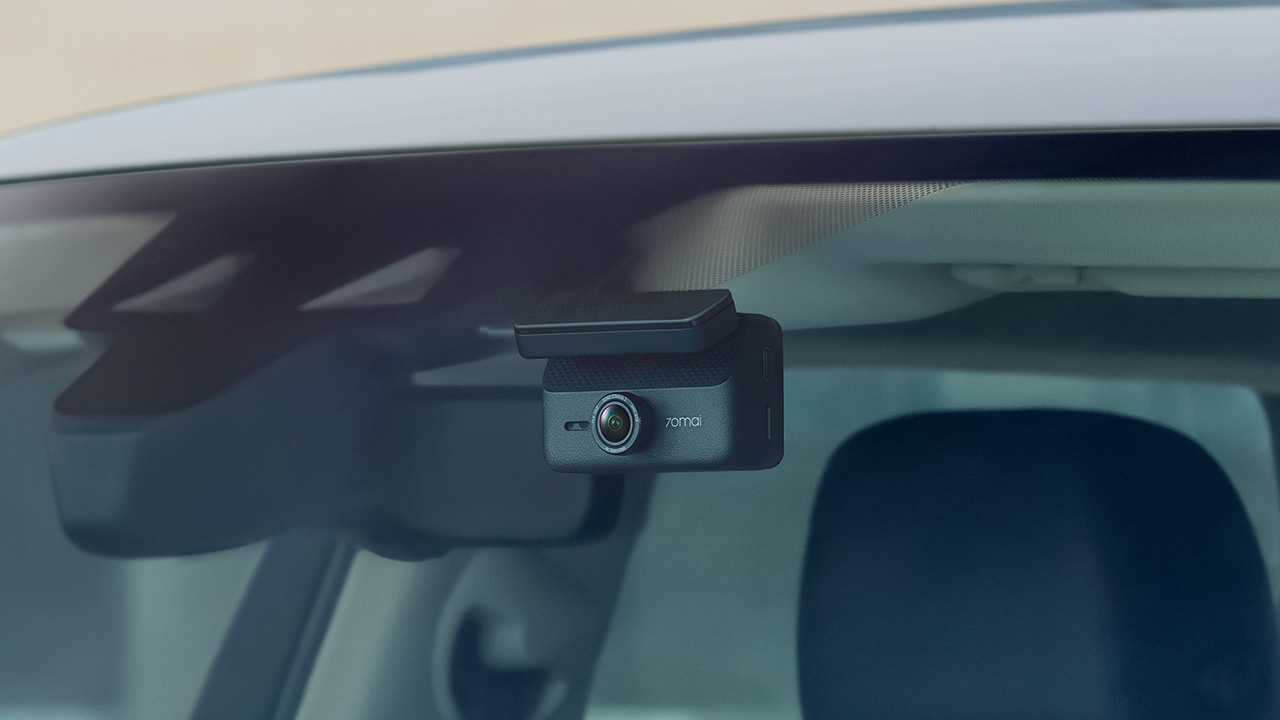
70mai has launched the A900 Series, led by the flagship 70mai Dash Cam 4K A900 Ultra, with the 70mai Dash Cam 4K A900 joining it in the lineup.
Both models record in 4K from the front and rear cameras, and both support 4G, so your footage stays reachable from your phone even when you’re away from the car.
4K recording from both cameras
The A900 Ultra uses dual Sony STARVIS 2 IMX678 sensors to capture clear 4K footage from both directions. As a result, details like license plates and road signs remain sharp.
Smart HDR balances bright and dark areas under shifting light. Users can also adjust color tones and contrast. To keep feeds synced, the rear camera uses LVDS digital transmission. This tech sends a lossless 4K feed with just 20ms of latency.
Handling changing light
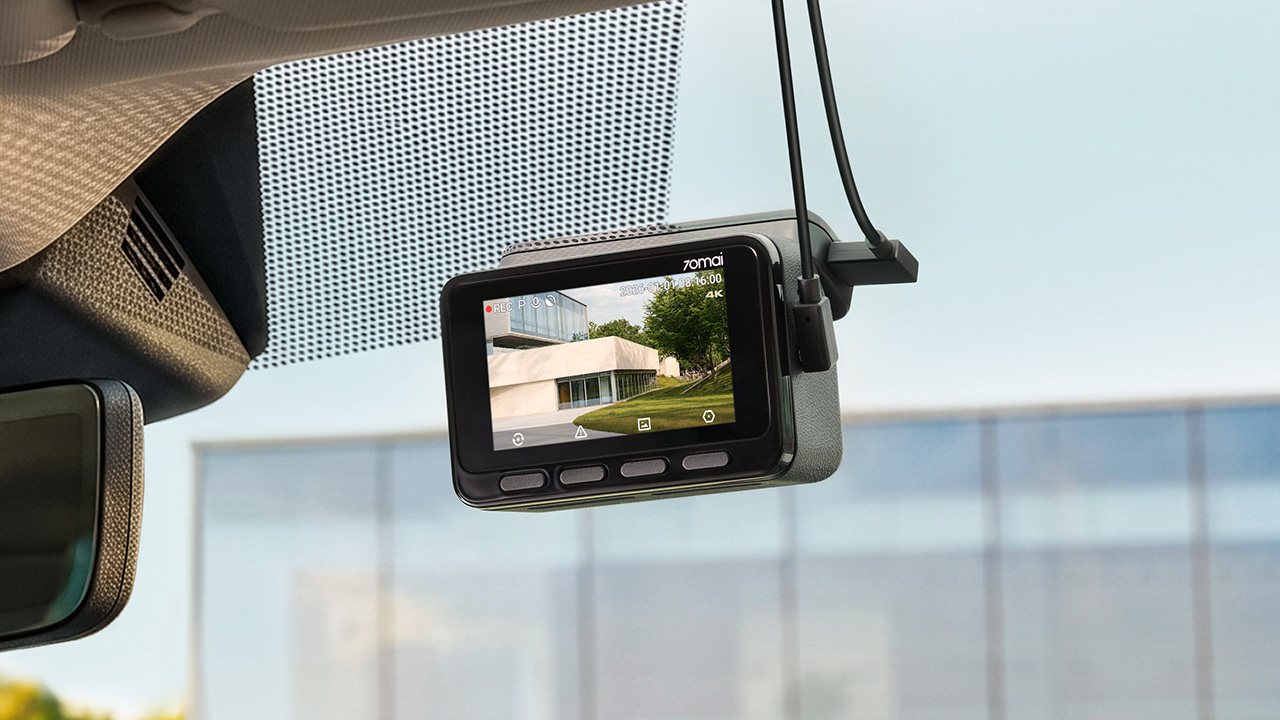
Driving into a tunnel or under the shadow of a tall building changes the lighting quickly, and 70mai built three imaging technologies into the A900 Ultra to deal with it.
MaiColor Vivid+ Solution 2.0 is meant to give more natural colors and finer detail, along with smarter scene adaptation. Night Owl Vision 2.0 reduces noise and glare to help with nighttime clarity.
Lumi Vision is made for parking surveillance in near-total darkness, where it automatically adjusts exposure and gain and applies noise reduction. 70mai says this produces clear, full-color footage in extremely low light.
Parking mode and remote access
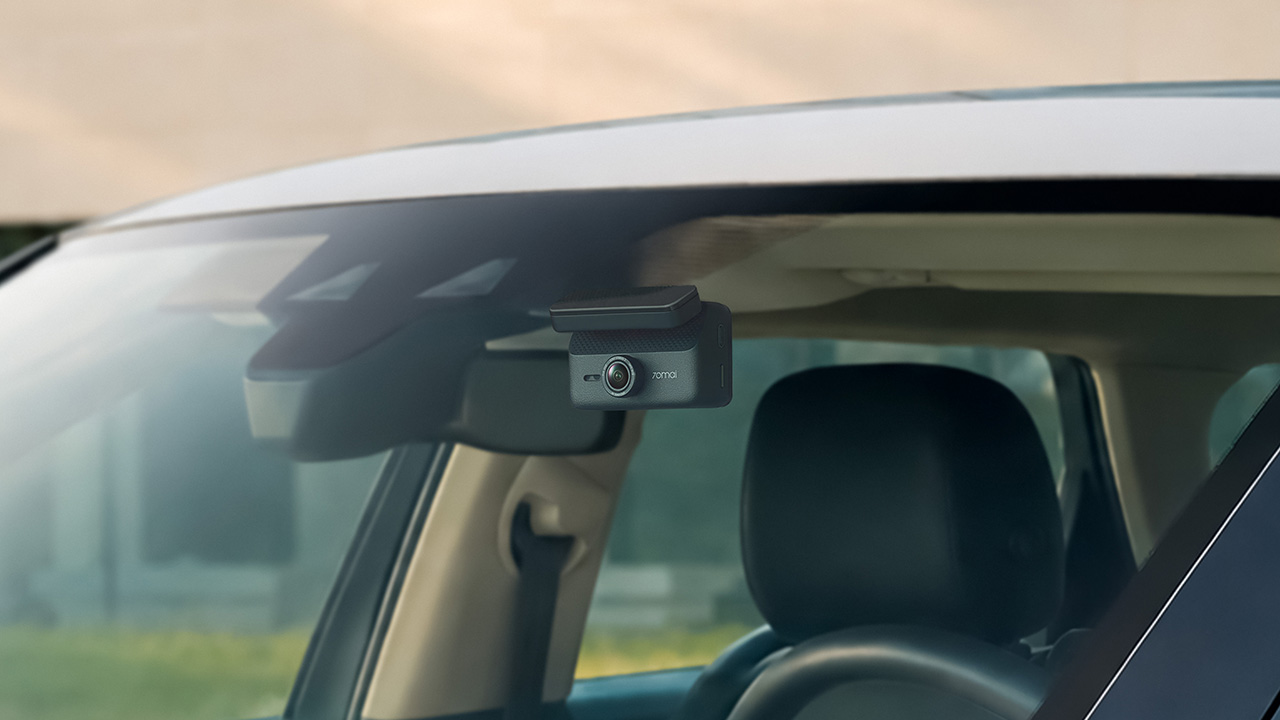
Smart Parking Guardian Mode 2.0 protects your vehicle while parked. It combines AI motion detection, dual-channel collision detection with pre-recording, and time-lapse options.
The system draws just 5mA on standby to prevent battery drain. For extended coverage, the optional 70mai Battery Pack Mini powers surveillance for up to 30 days.
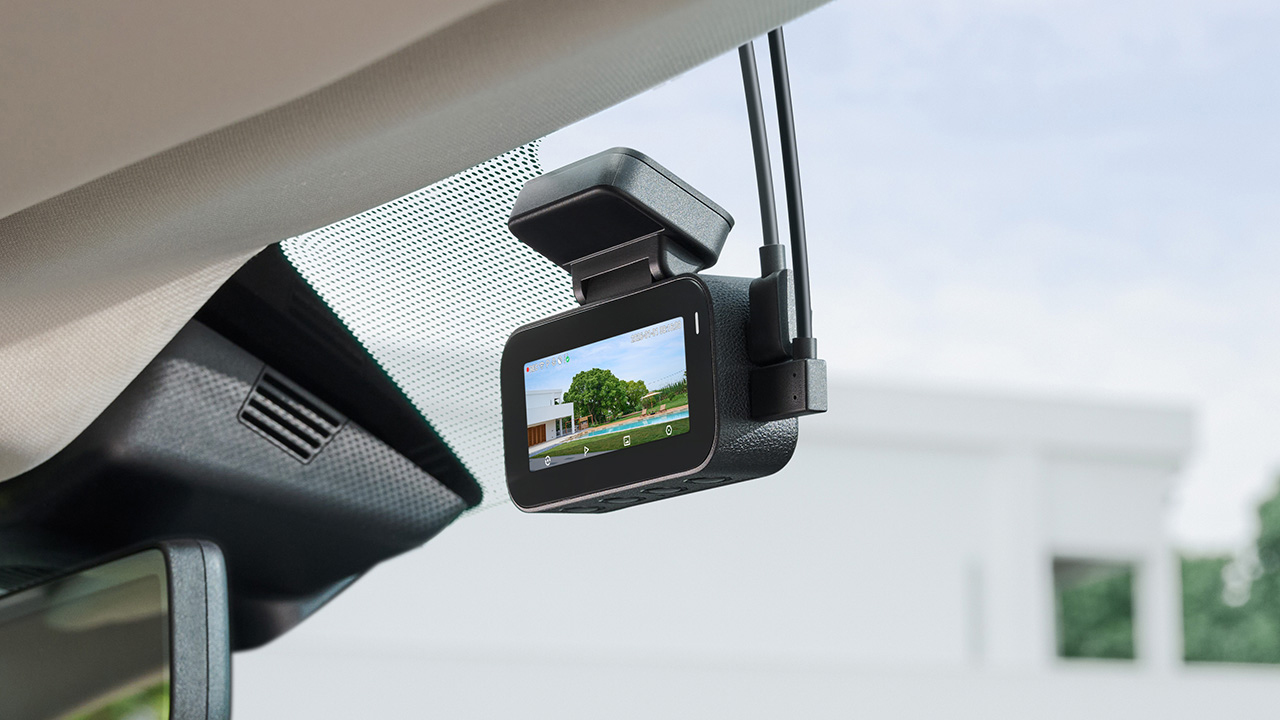
In photo: A900
Pairing the camera with the 4G Hardwire Kit unlocks 70mai 4G Cloud+ 2.0 features on the app. Enhanced Buffered Emergency Recording saves up to 190 seconds before an incident and 30 seconds after.
It automatically uploads this footage to the cloud for immediate remote viewing.
The 70mai Dash Cam 4K A900
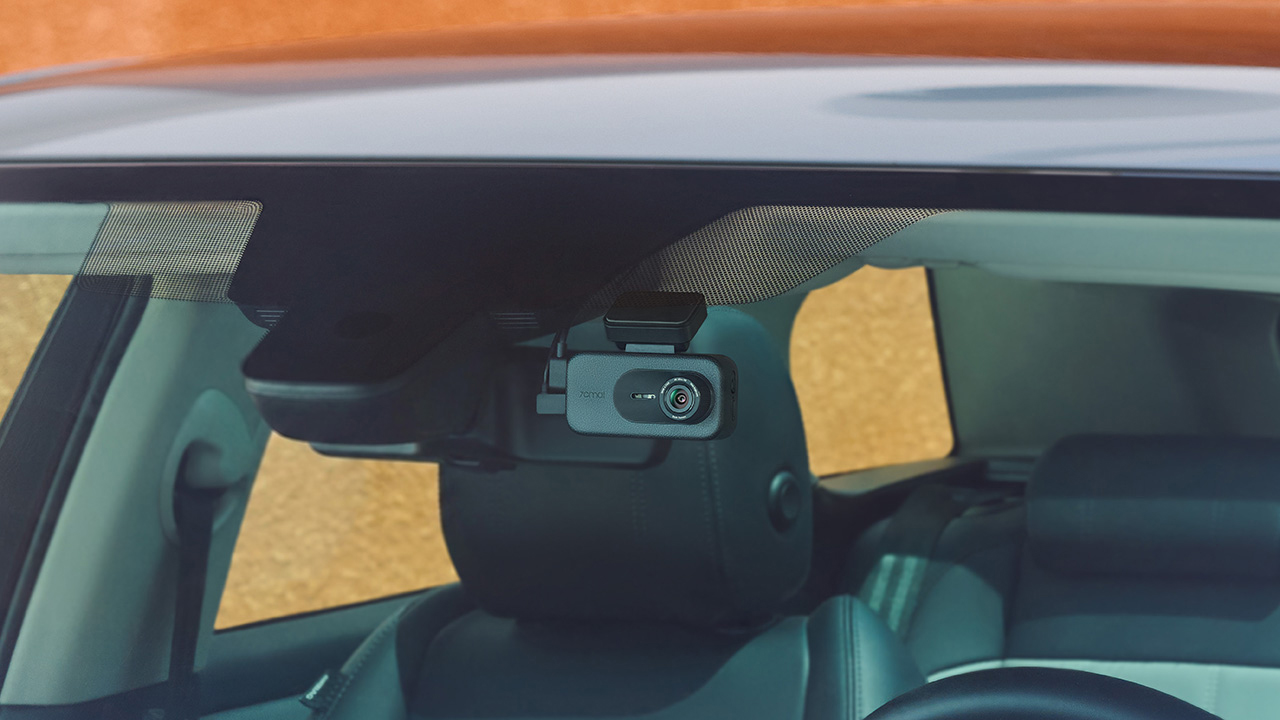
In photo: A900
The A900 sits alongside the Ultra as the more accessible option. It records True 4K HDR at 30FPS from both the front and rear cameras, and Smart HDR can be scheduled to turn on at set times.
Its f/1.55 aperture is meant to help in low light, and 4G Cloud+ 2.0 keeps the dash cam connected to the 70mai App. It’s the model for drivers who want dual-channel recording and 4G connectivity at a lower price.
The 70mai Dash Cam 4K A900 Ultra retails for US$ 300, available for pre-order at US$ 240. Meanwhile, the A900 is priced at US$ 200, currently 20% off at US$ 170.
Accessories
Manila turns up the volume at COVE
Sony Philippines launched its ULT TOWER lineup at Beyond the Beat, with SB19 joining the ULT Squad.

Sound and style shared the floor at COVE Manila in Okada Manila. Sony Philippines opened its doors for Beyond the Beat: The Next-Level ULT POWER SOUND Experience.
The event marked the company’s biggest ULT POWER SOUND launch in the country, and Sony paced the program like an exclusive night out.
Stacked ULT Towers filled the space. Guests styled themselves with designer pieces from Alser Lumawag, and SB19 closed the evening as the newest Sony ULT Squad members.
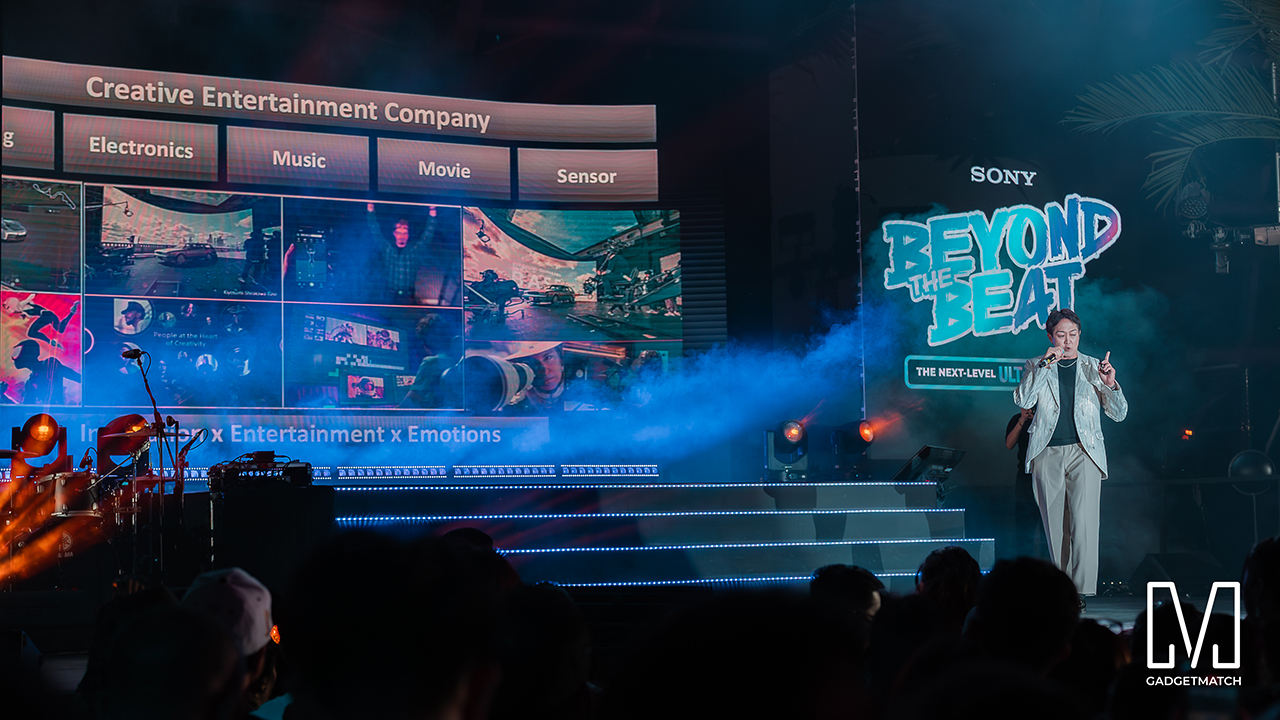
MySony members from every tier joined industry guests while the new ULT TOWER lineup set the tempo.
The towers take center stage
Shuhei Sugihara, Sony Philippines’ President and Managing Director, opened the program.

Product Marketing Specialist Keira Ambubuyog then introduced the newest additions to the lineup.

Arbie Bandiling of Personal Audio Systems unveiled the latest ULT Squad video. The clip introduced the artists and personalities fronting the campaign.
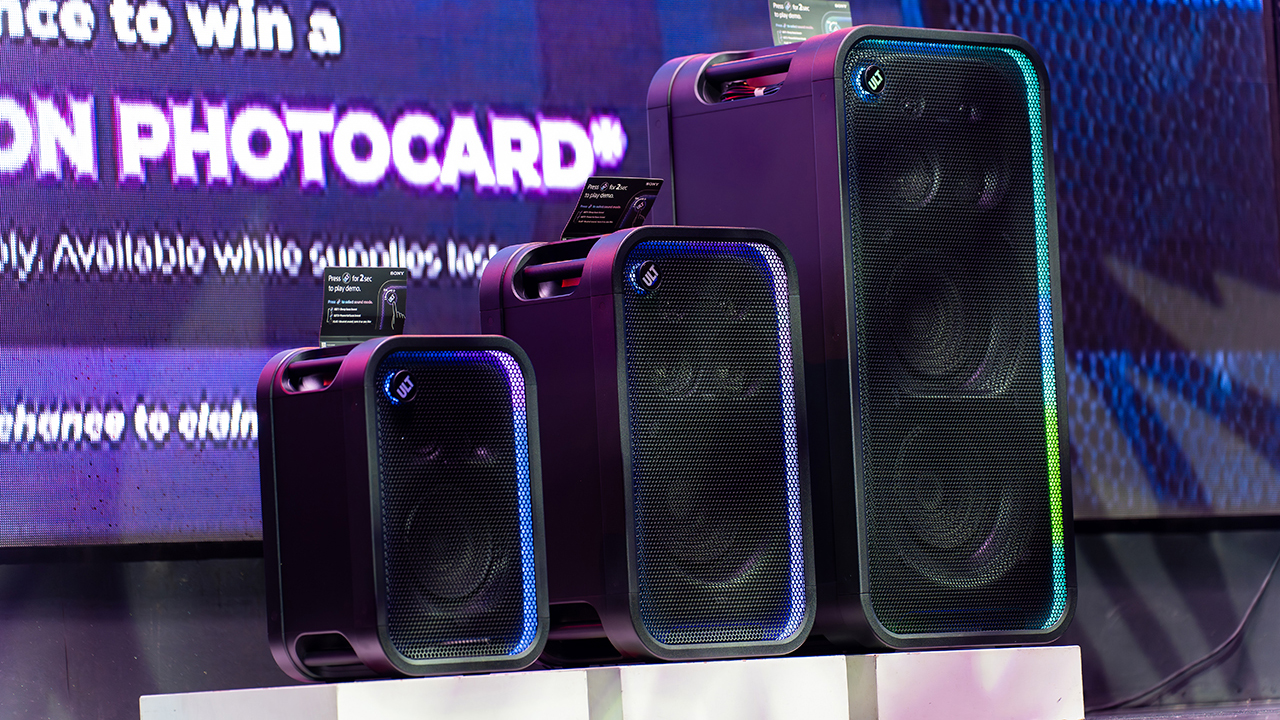
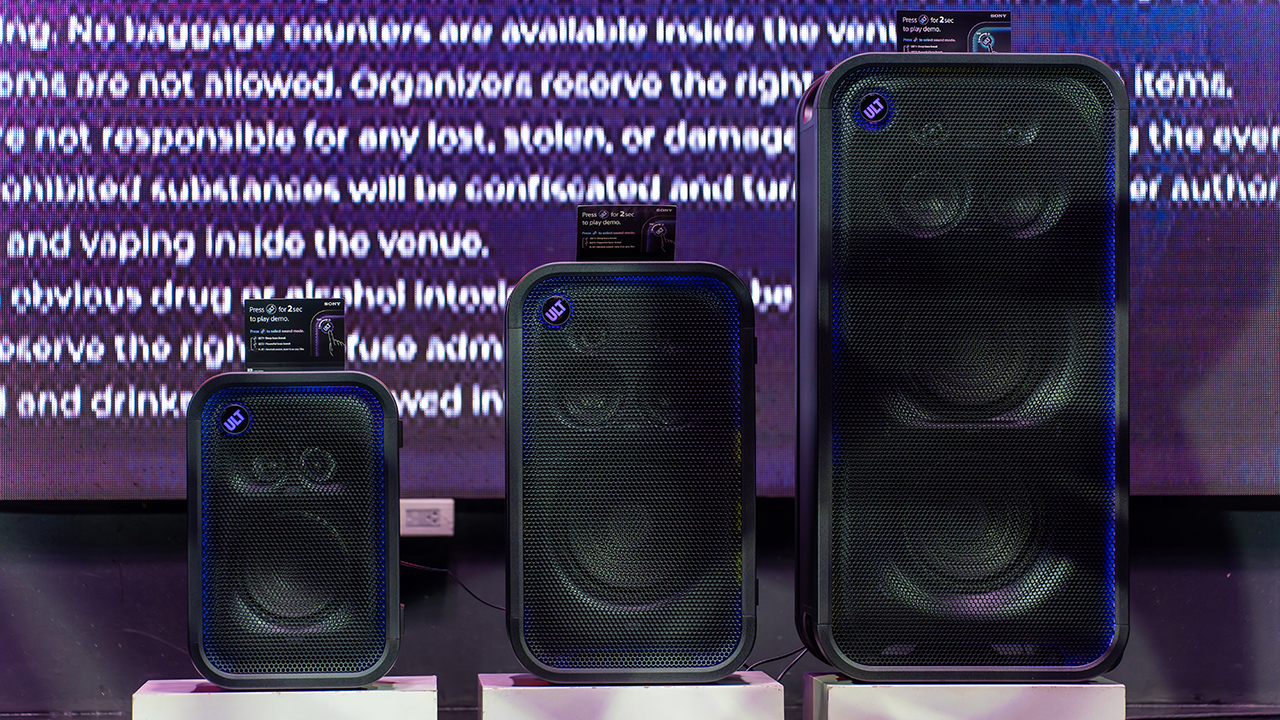
The lineup features the ULT TOWER 5, ULT TOWER 7, and ULT TOWER MAX. The new series pairs large circular woofers and high-capacity cabinets with ULT DUCT technology.
This design delivers stronger low-frequency bass than earlier models. The ULT TOWER MAX leads the series, described as Sony’s most powerful bass speaker yet.
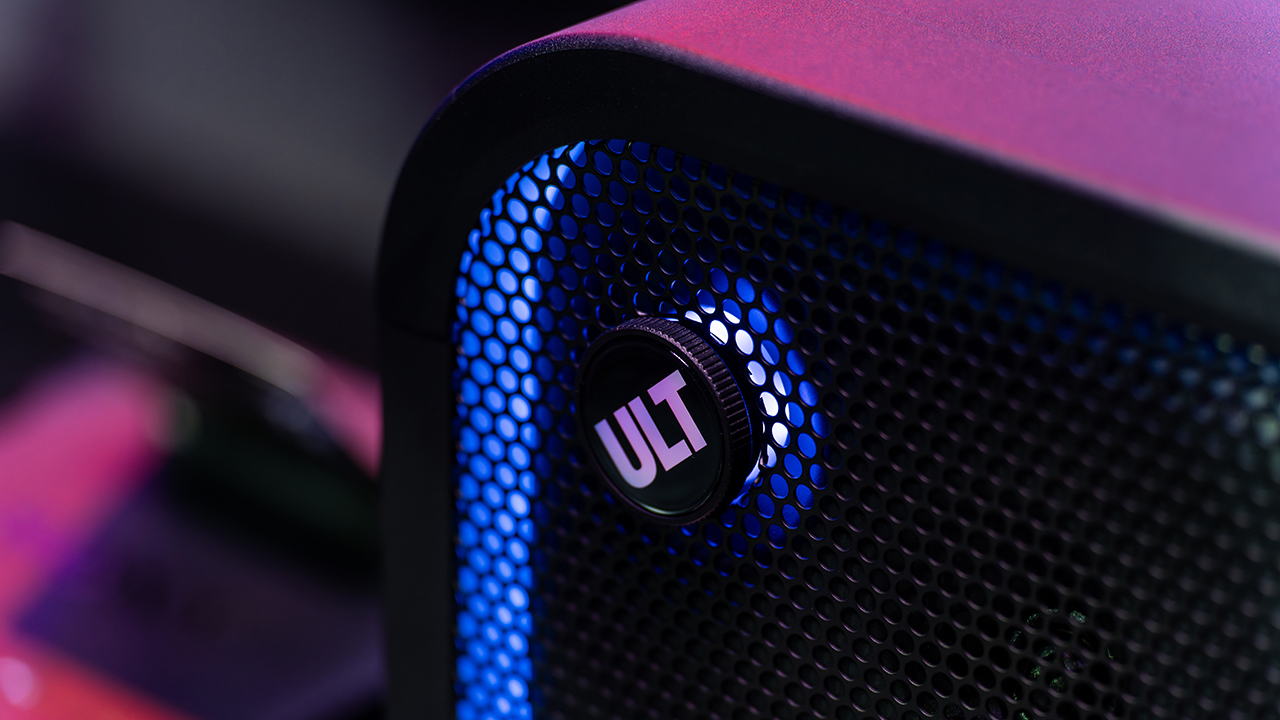
On another note, Sony pitches the ULT TOWER 7 as stage-worthy sound in a portable frame. Meanwhile, the compact ULT TOWER 5 targets smaller gatherings and features karaoke and DJ capabilities.
Experiential zones bring the sound to life
Guests explored the lineup across several interactive event zones. Step into the Beat paired an arcade-inspired setup with stacked ULT Towers and a dance pad. ULT Selfie Club handled photo ops.
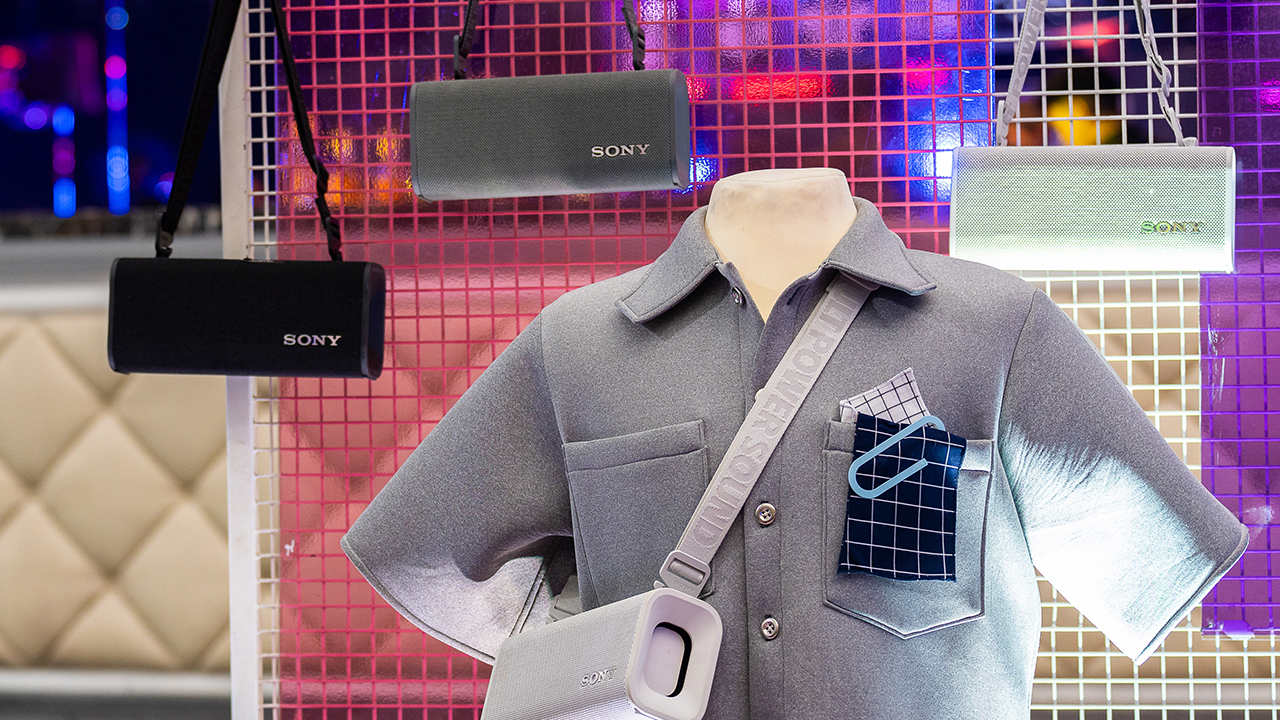
Nearby, ULT Cover Star let guests style ULT Field speakers alongside designer pieces from Alser Lumawag. Here, the speakers served as chic fashion accessories.

The Bass District gave VIPs and influencers a private, nightlife-inspired lounge. Karaoke Lounges invited everyone else to grab a mic and test the party-ready towers firsthand.
The ULT Squad shows up


Fashion influencer and ULT Squad member Angelique Manto-Guison hosted the night.
A-Team opened the show with a high-energy routine before Carlos Serrano III took the stage. David Guison and Jacqueline Jala walked the stage with ULT Models in elevated fashion, and Jeremy G followed with a dynamic musical performance.



KAIA brought a youthful pop sound, while Maki delivered a set in his signature style.
SB19 closed the night, making their debut as the newest Sony ULT Squad members. Sony pairs its sound technology with the group’s influence in Filipino music. This collaboration positions the Squad as a platform for artists shaping contemporary music culture.
The ULT TOWER MAX, ULT TOWER 7, and ULT TOWER 5 are now available at Sony Centres and authorized dealers nationwide.
Accessories
Jackery Explorer 300D: Power and portability in one
Uninterrupted workflows for digital nomads, freelance creatives, more

For digital nomads, freelance creatives, and even work-from-home professionals, staying productive on the move means carrying around multiple gadgets, cords, adapters, and power banks to survive the day.
Having to carry such weight, quite literally, is vital for maintaining workflow continuity.
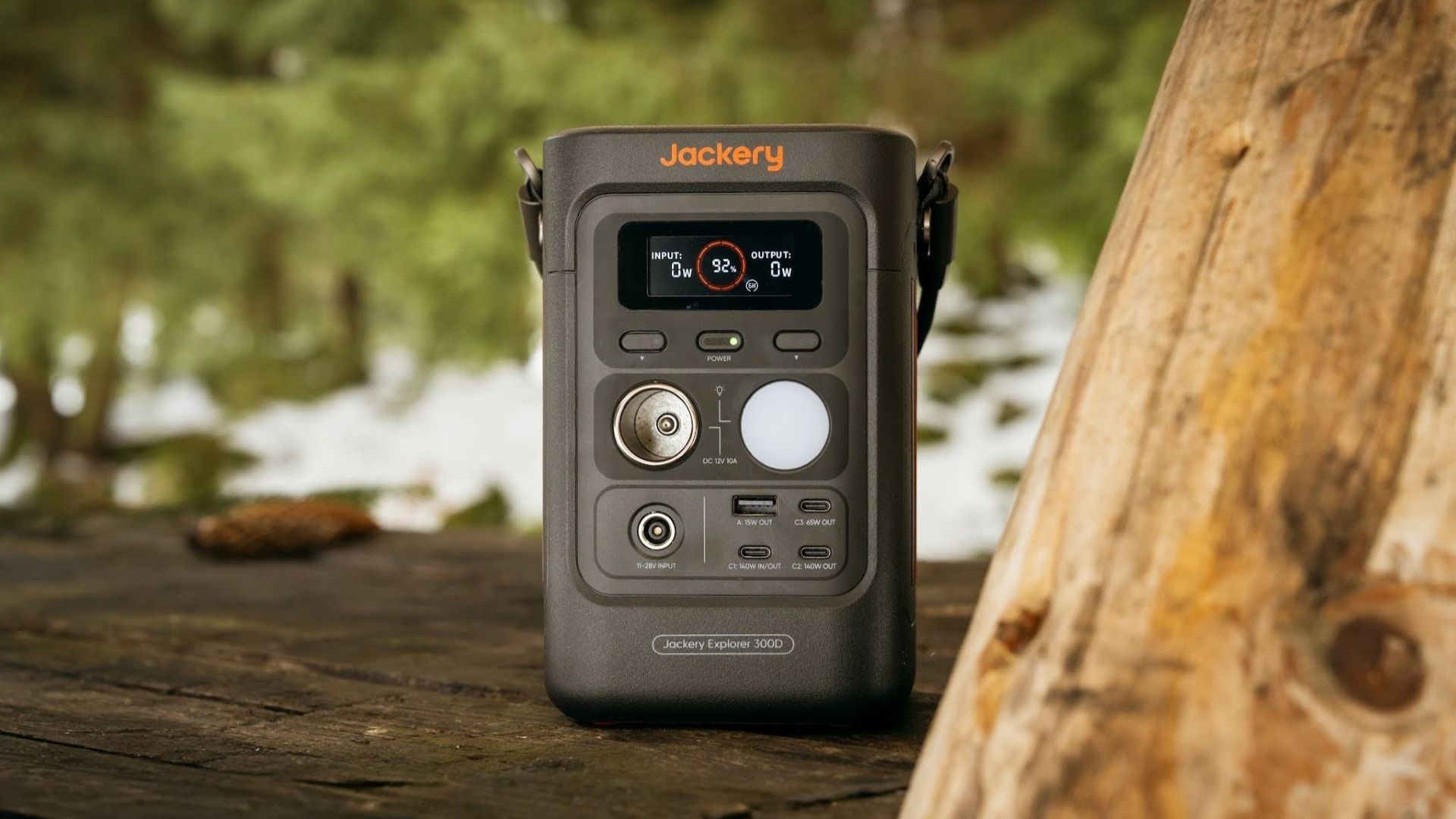
For a more seamless experience and to have just one extra portable device to power all working parts, there’s the Jackery Explorer 300D.
Launched just last month, this grab-and-go offering from Jackery is designed for the modern lifestyle.
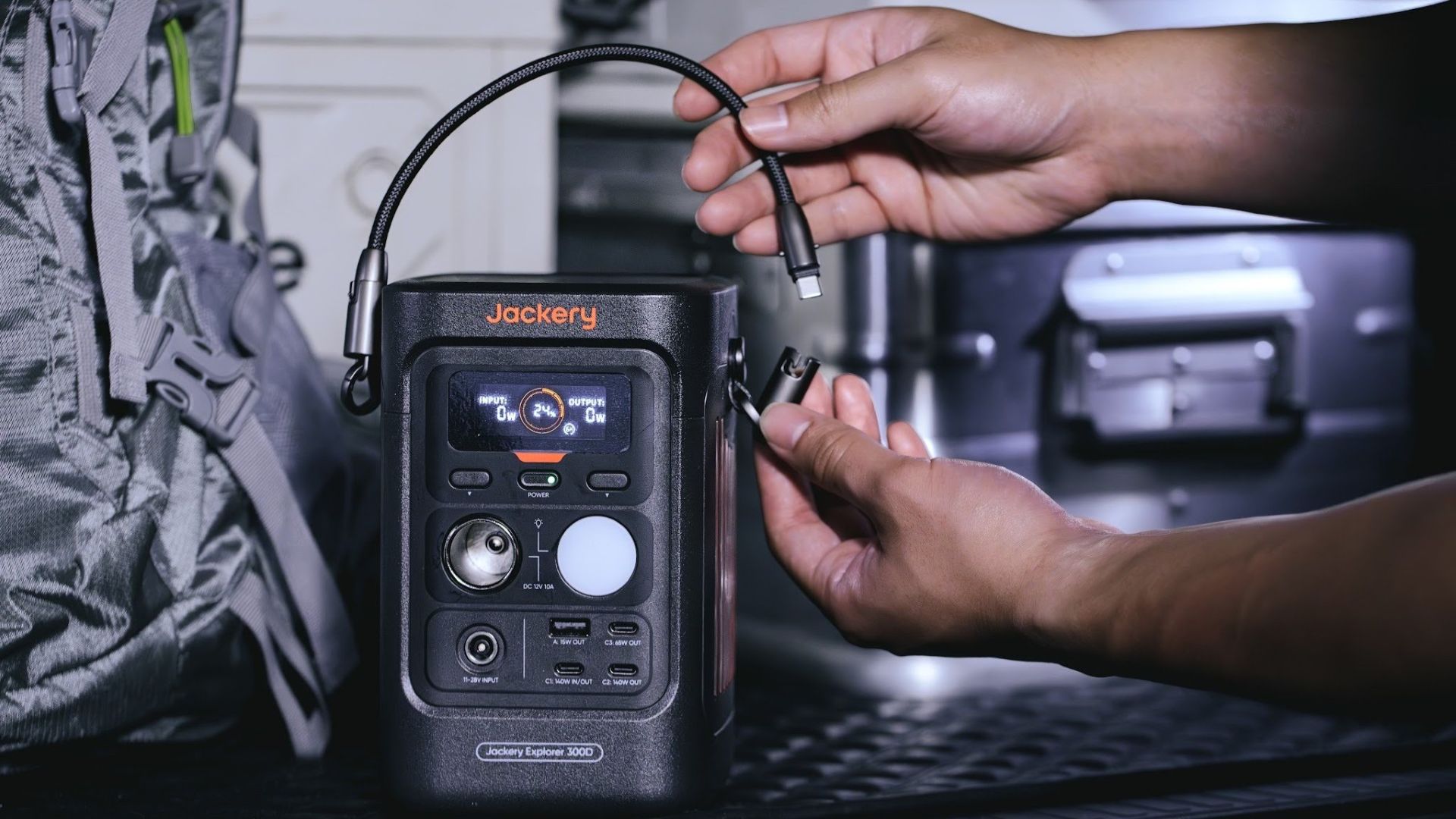
It moves away from Jackery’s traditional aesthetic with a sleek, speaker-like form factor. It weighs just 2.5 kilograms and is 64% smaller than standard 300W units in the market.
This ultra-compact size was made possible by a smart engineering choice of swapping bulky traditional AC wall outlets for highly efficient DC-only and USB-C ports — which also helps eliminate idle power loss.
With a 288Wh capacity, the Jackery Explorer 300D holds enough juice for up to nine power banks.
It can keep a Type-C fast-charging laptop for up to three to four full cycles, a Wi-Fi router alive for hours, and recharge cameras or drone batteries up to five times for a lengthy production day.
For smaller gadgets like smartphones and portable fans, the power station can juice them up for up to 22 times.

It can even charge five devices simultaneously with a total of three USB-C ports, a USB-A port, and a DC 12V car charger port.
All these ensure users are never disconnected, wherever they may set up their mobile office.
Another brilliant touch is the two-in-one shoulder strap that easily unclips to double as a heavy-duty 140W USB-C charging cable.
The everyday carry is available via Lazada and Shopee, and at the official Jackery kiosk in SM Fairview, as well as other partner stores.


DJI Lito X1 review: Is this the best lightweight drone for creators?
Making a strong case as a travel companion and a capable B-cam!


REDMI Note 17 Pro Max review: A new breed born from AI greed
Welcome to the new normal


Marvel’s Wolverine review: When the claws come out
A brutal, cinematic superhero adventure

OPPO Find X10 Pro Max is the first phone with a triple 200MP camera system

70mai launches the A900 series with 4K front, rear recording

Dune: Awakening makes it way to the PS5 and Xbox Series X

The Kia EV3 brings gallery-worthy design in a compact electric form

vivo introduces OriginOS 7 with smarter multitasking and AI features

realme 16T 5G with 8000mAh battery, IP69 Pro rating launches in PH

HUAWEI Pura X View is 2026’s first WIDE slab-type smartphone

REDMI reveals the refreshed Note 17 and Note 17 Pro series

REDMI Note 17 Series: Price, availability in Singapore

The CAMON Slim 5G is TECNO’s latest ultra-slim smartphone

-

 News2 weeks ago
iPhone 18 Pro series: Price, availability in the Philippines
-
 Singapore2 weeks ago
iPhone 18 Pro series: Price, availability in Singapore
-

 News2 weeks ago
iPhone Duo: Price, availability in the Philippines
-

 News2 weeks ago
iPhone Duo: Price, availability in Singapore
-
 News2 weeks ago
vivo introduces refurbished versions of X300 FE, X300 Ultra for less
-

 Accessories2 weeks ago
CASETiFY upgrades iPhone 18 cases, teases iPhone Duo lineup
-

 News2 weeks ago
HONOR teases Magic9 Pro Max at Venice
-

 Editors' Choice2 weeks ago
GadgetMatch Awards: Best of IFA 2026