


Laptops
The Lenovo Yoga 7i Aura Edition gets it right after ten generations
All ten generations lead up to this.

To me, the original foldable is the Lenovo Yoga. Sure, a laptop technically folds, but a true foldable can shift between different form factors. That’s what the Yoga series can do. Now, ten generations later, the Yoga 7i Aura Edition is back, guns blazing and ready to take on the world again.
How many ways can you use the Yoga?
As always, the biggest draw of the Yoga 7i is its flexibility. This isn’t just any normal laptop. With its flexible hinge, you can fold it into a tent or into a tablet. All three modes are usable in their own way, of course.
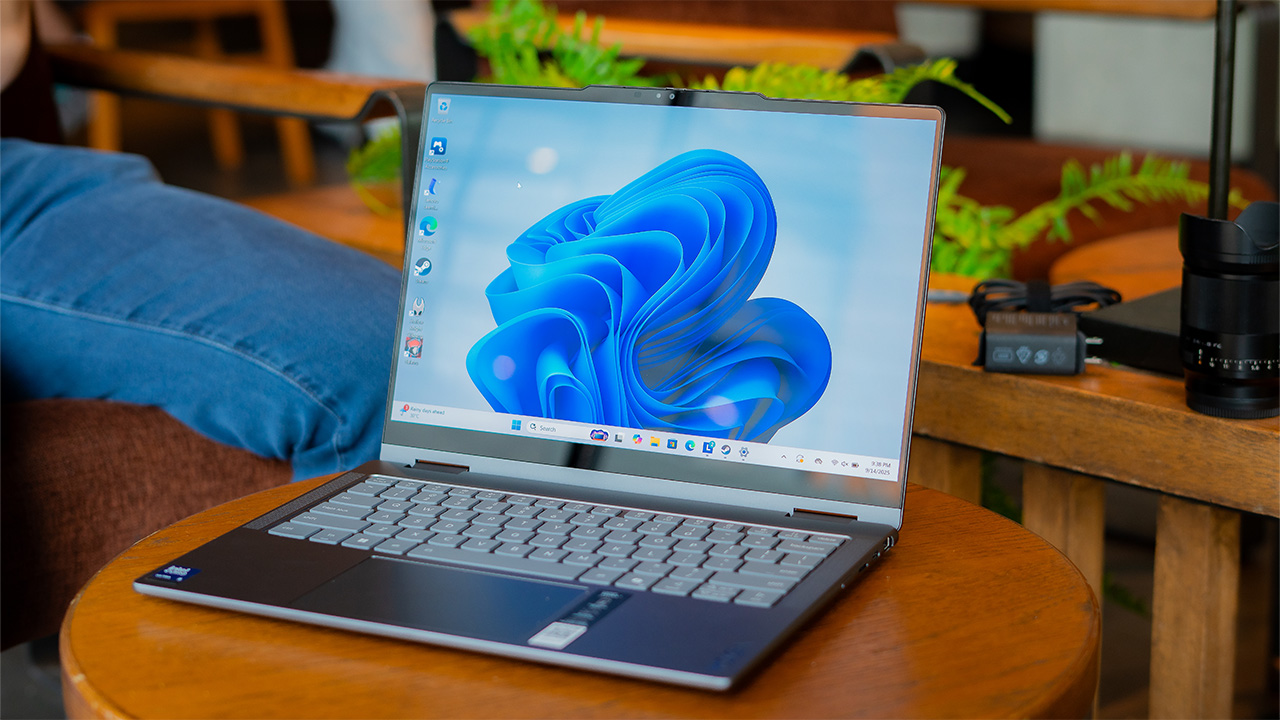
Ten years ago, I never found a genuine way to use the other modes. I always asked myself, “Why would I ever use the other modes if the laptop mode is good enough?” Now, using all three modes just feels natural. It might be that I’m at an age that appreciates clearer division of tasks, but it could also be Lenovo’s better designs. And I’m leaning towards the latter.
Each mode feels like there’s a reason why it should exist. Instead of just a quirky design choice, both tent and tablet modes have worthy uses.
More power underneath
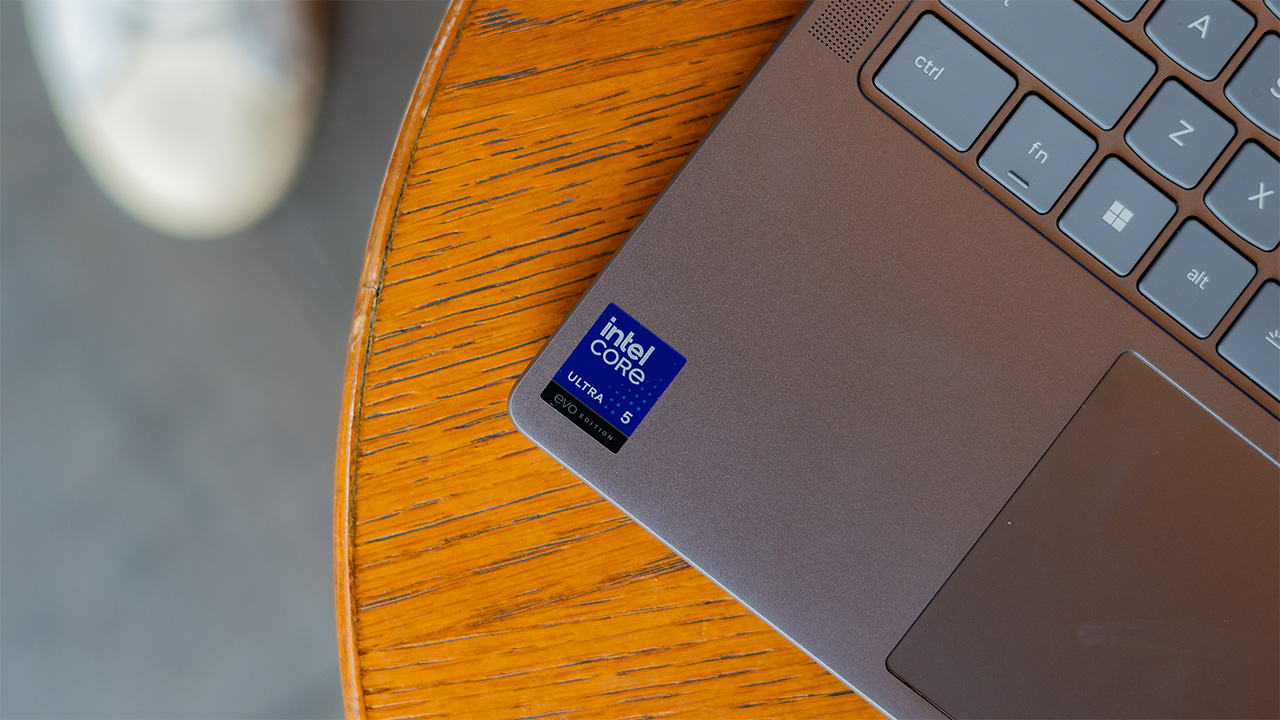
Despite how light the Yoga 7i is, it’s packing much more power underneath its chassis. It has an Intel Core Ultra 5 processor, paired with 16GB of RAM and 1TB of internal storage.
This looks like overkill. If you’re using this notebook purely for work, this is definitely too much. But for the package that it’s coming with, it feels like a bonus. Yes, it can handle all your daily work needs but also so much more.
Midway through testing, I was invited to showcase more of what the processor can do. At the time, my approach to the Yoga 7i was as an all-arounder, rather than as a premium or a gaming notebook. It felt pointless to force the notebook into a gaming-sized cubbyhole. Boy, was I wrong.

This thing can handle games. Obviously, it won’t be enough to play modern titles that need beefy graphics. The integrated graphics chip is impressive, though. Silksong was a no-brainer; the hardware worked even only on battery power. Overwatch 2 also worked, but I had to tone down some settings to get a smoother frame rate. Finally, if I forced it with lower settings, the notebook could even play a bit of Forza Horizon 5.
This performance was more than I expected from this lithe notebook. Going back to our quandary in the previous section, this is where the Yoga 7i’s tent mode shines: as an entertainment hub after a long day’s work.
OLED is finally here
Speaking of being an entertainment hub, the Yoga 7i just sparkles with its 14-inch WUXGA OLED screen. Once again, the notebook’s unassuming looks doesn’t betray the beasts lurking underneath.
Recently, I’ve gotten so enamored with displays that support True Black 500. The Yoga 7i is brilliant at showcasing deep blacks and vibrant colors. Playing the dark levels of Silksong, the contrast melds almost seamlessly with the black bezels. It’s easy to forget that you’re staring at a screen. Besides gaming, the notebook feels perfect for watching movies.
Similarly, the touchscreen was smooth and responsive. However, if you’re particular about smudges, fiddling around with the touchscreen display can leave fingerprints. The package does come with a stylus, though. The Lenovo Pen works well enough for using the device without fingers.
It’s a confusing layout
Anyone who’s used a laptop and a tablet before will know that the both of them have different layouts. The former, of course, has a keyboard and a power button right above it. Meanwhile, the latter has its power button on the side.
The Yoga 7i has a unique layout. Rather than the traditional placement for a notebook, Lenovo’s latest convertible laptop has its power button on the side, much like a tablet. This throws me off so much. Normally, when you carry a laptop while it’s in use, you grasp it by its sides. If that’s also where the power button is, there will be times when you’ll accidentally press the button by mistake. This was a big point of frustration because it felt like I had to relearn the simple act of picking up a laptop.
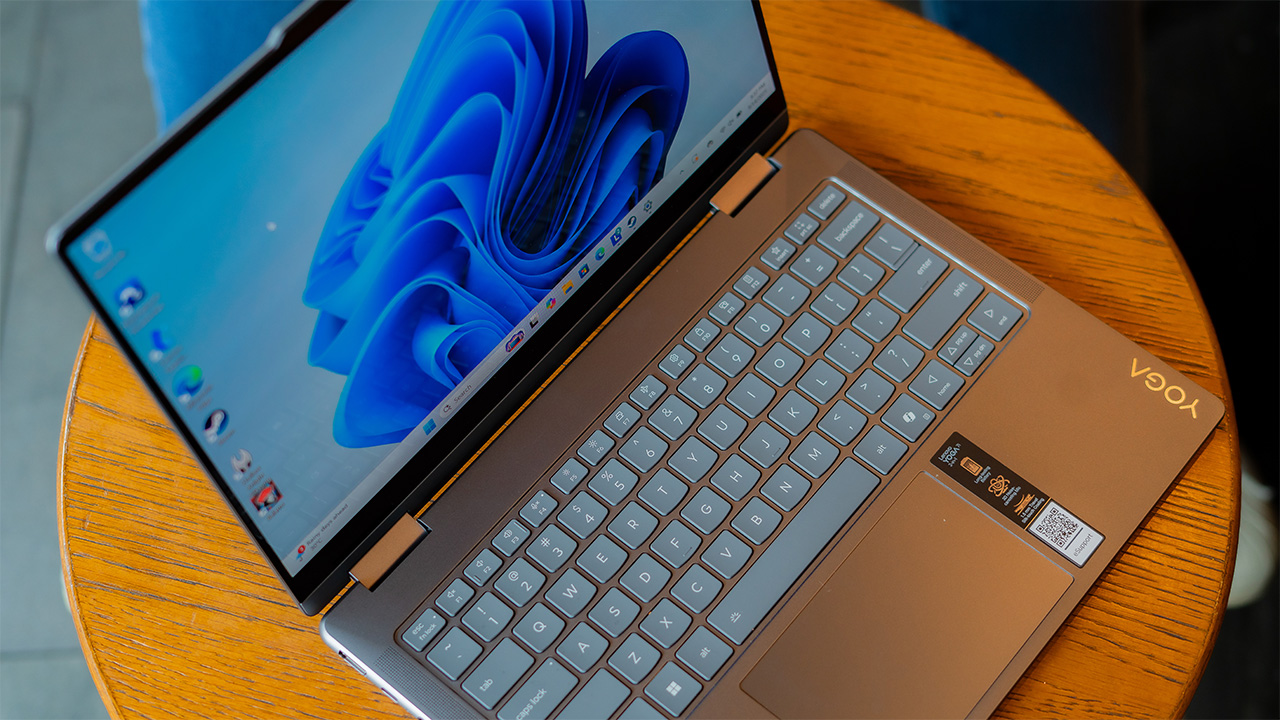
Additionally, it’s still unnatural for me to have a full keyboard behind a tablet. The Yoga 7i features novel ways to use a convertible notebook. But the price is coping with tiny irregularities foreign to how you normally use a notebook or a tablet.
A powerful enough battery
The Yoga 7i has a 70Whr battery. This seems pretty standard for a notebook. However, because it’s not a beefy machine, you can squeeze out more hours than with a normal laptop.
In my experience, it can handle a full 8-hour workday with ease. If I had to force it, the battery can last even longer. It wasn’t until the 12-hour mark before I felt too anxious to keep going on pure battery power.
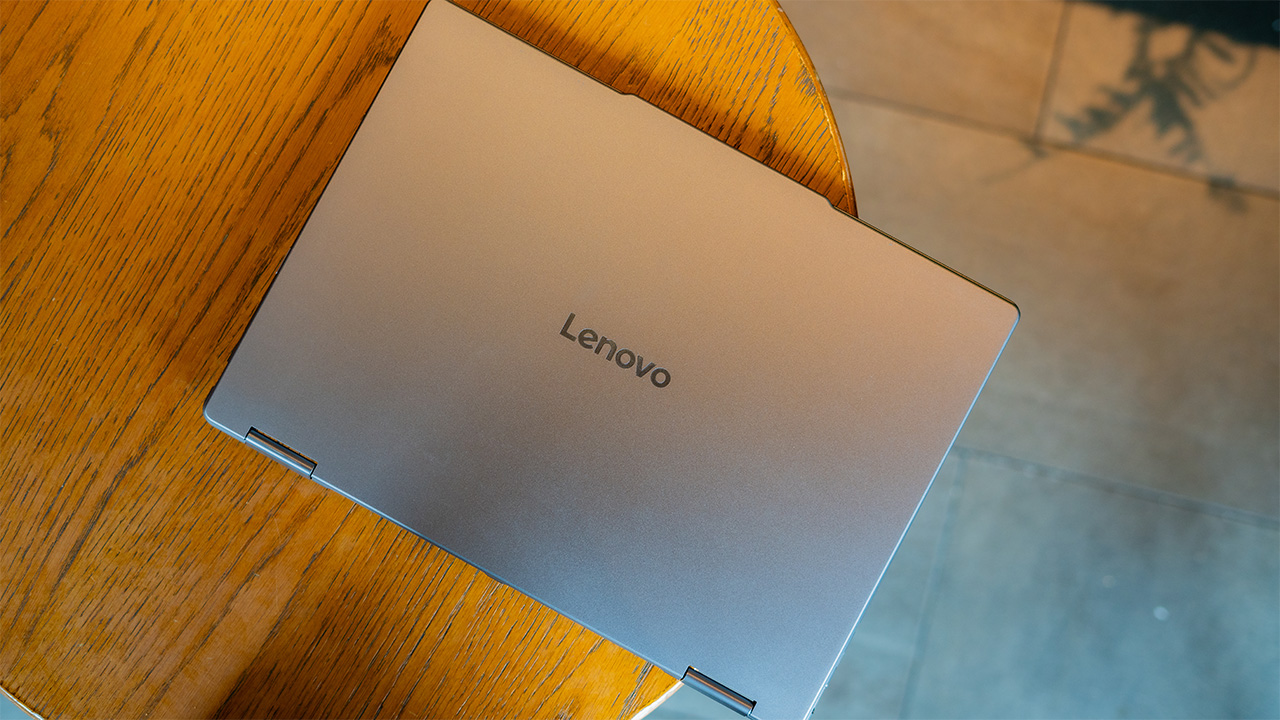
It’s easy to charge, though. The notebook uses a USB-C port for power delivery. The charging brick is also conveniently small. If you’re familiar with it, it’s the same brick you’ll find with the Legion Go. It’s as small as a smartphone brick. Coupled with how light the notebook already is, it’s a breeze to carry the entire package for working outside.
Is the Lenovo Yoga 7i Aura Edition your GadgetMatch?
Ten generations in, I’m still constantly impressed with the Yoga series. At first, I thought that it was a quirky addition to the laptop market. Now, because of all the improvements that can pack powerful hardware in a small package, I’m even more impressed.
The Lenovo Yoga 7i Aura Edition is a distillation of the past ten generations of the series. On its own, it is already a capable notebook for everyday tasks. Coupled with its flexibility, the 2-in-1 convertible is a head turner and a unique piece for your digital ecosystem.
Plus, it’s affordable! It costs only PhP 81,995.

With all of that said, the Yoga 7i Aura Edition gets a Super Swipe. Though my tastes lean more toward premium and gaming devices, the notebook impresses with great hardware and an affordable price.







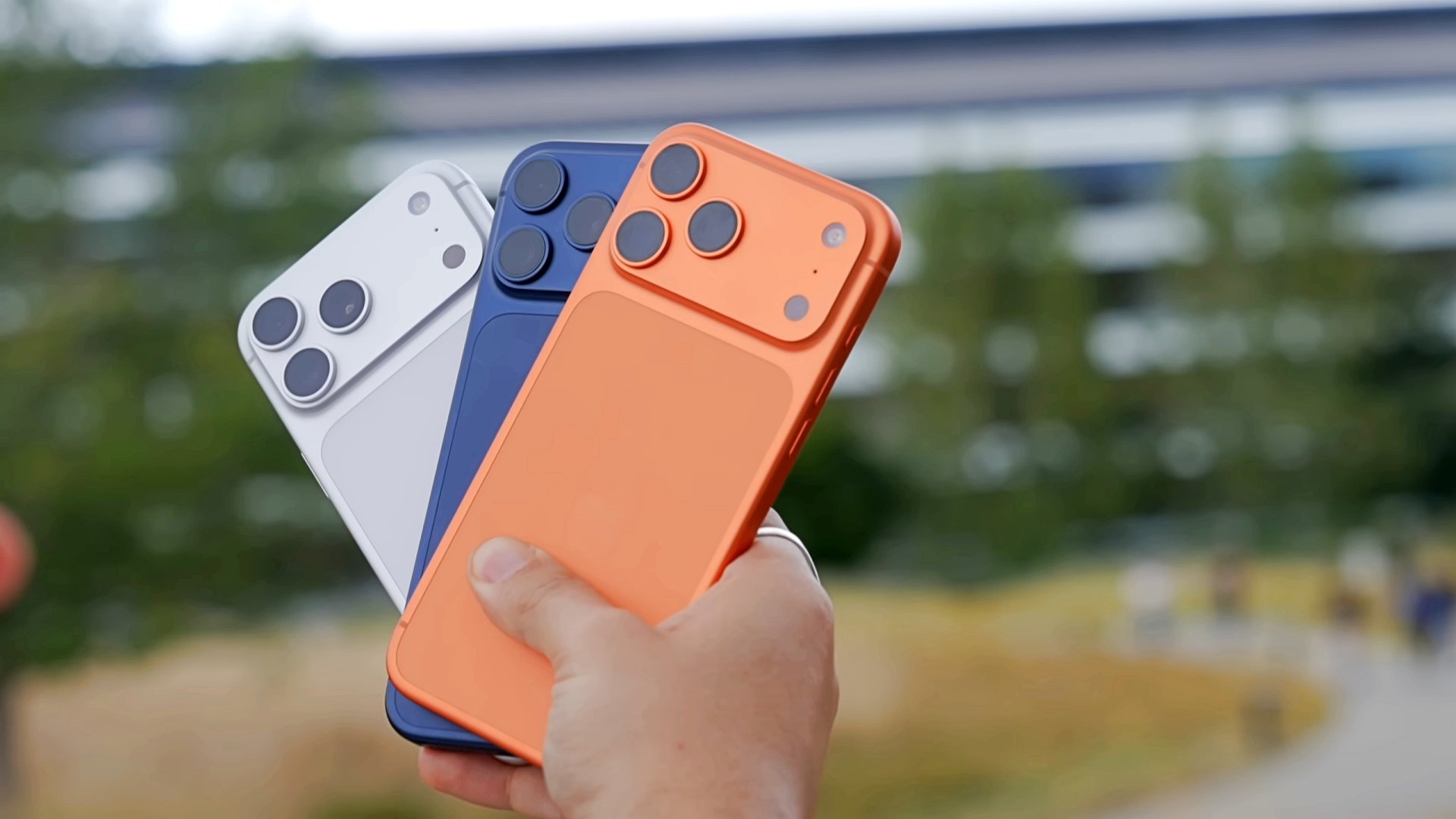
Apple has introduced Apple Upgrade, a new leasing program that makes it easier to get an iPhone, Mac, iPad, or Apple Watch through monthly payments. The program also gives customers more flexibility to upgrade to newer devices over time.
Apple Upgrade replaces new enrollments for the iPhone Upgrade Program with a single offering that covers four product categories. Apple partnered with Klarna to power the service.
Customers can lease an iPhone or Apple Watch for one or two years. Mac and iPad leases are available for two or three years.
At the end of the lease, customers have three options. They can upgrade to a newer device, purchase the leased device by paying the remaining balance, or return it with no further obligation.
Monthly payments start at US$17.99 for iPhone and US$24.99 for Mac, depending on the selected model and configuration. Customers must also qualify through Klarna before enrolling.
More than iPhones
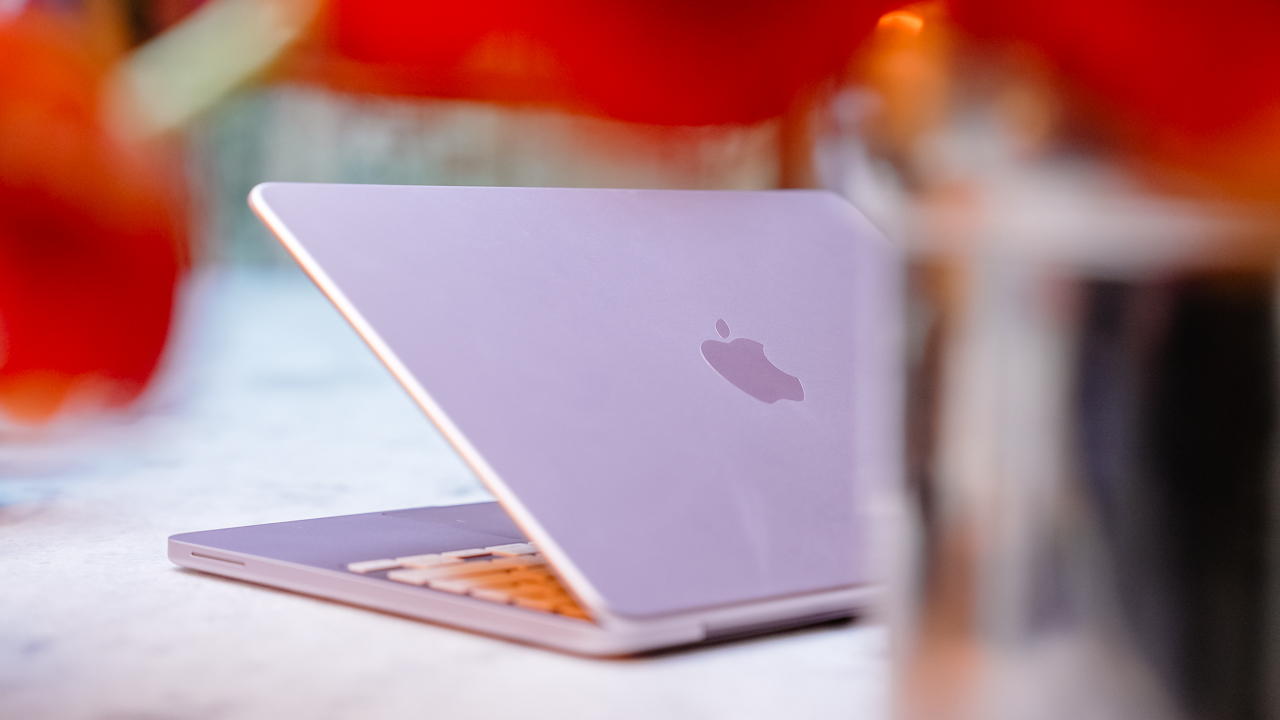
Apple Upgrade expands beyond the company’s previous iPhone-only financing program. It brings iPhone, Mac, iPad, and Apple Watch under one leasing service, making upgrades more consistent across Apple’s hardware lineup.
Customers can manage their lease through Apple, while Klarna handles financing and lease administration. They can also pay off their device early, although additional terms and fees may apply depending on the agreement.
Apple Upgrade is currently available only in the United States. Apple has not announced plans to expand the program to other regions.
Accessories
OBSBOT’s Meet Flip is your next best pocketable 4K webcam
Fold the Flip for further protection

Several months ago, you might remember that OBSBOT revealed the Tiny 3 series of web cameras.
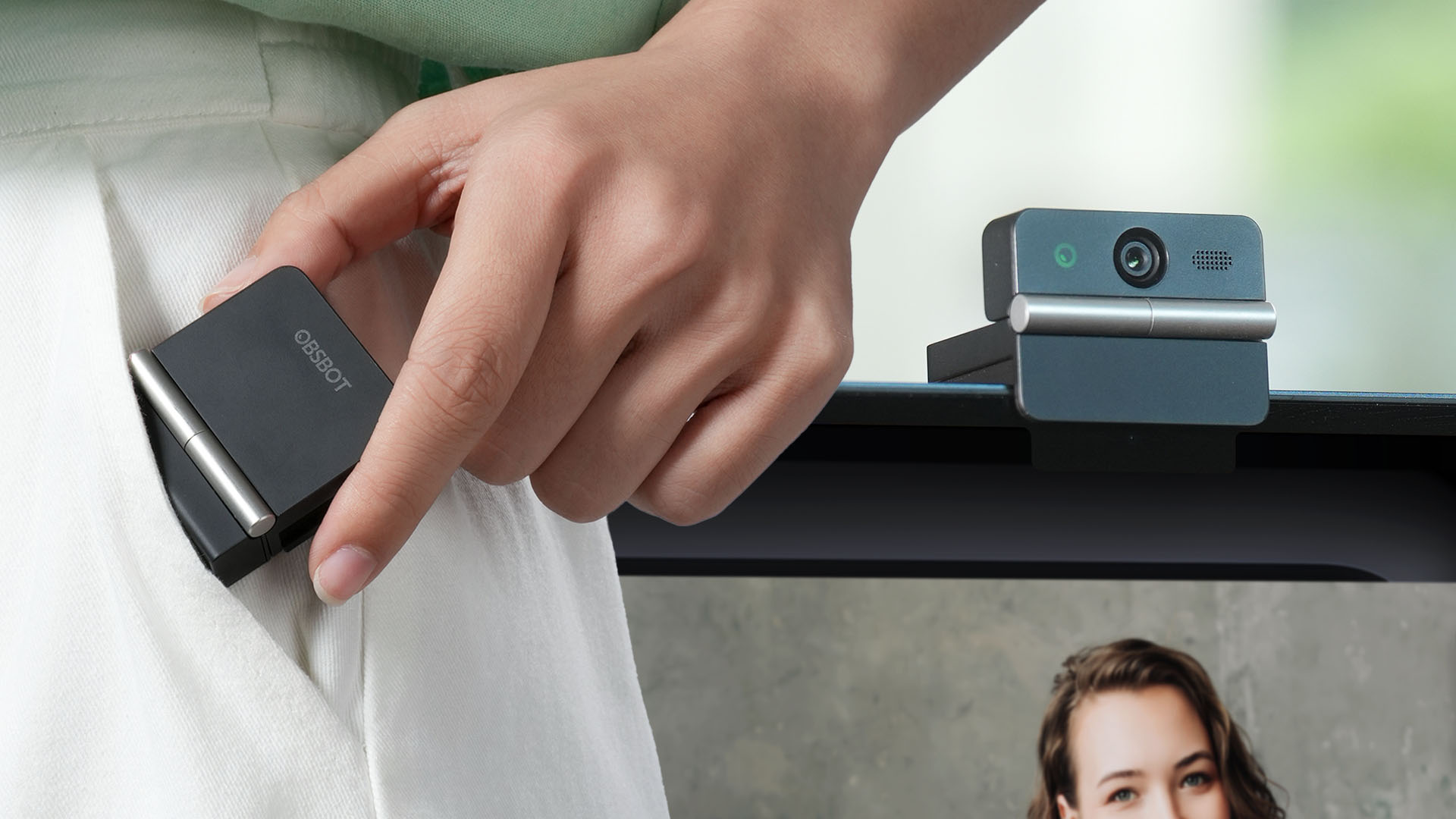
Six months after, they also unveil the all-new Meet Flip. From the name itself, it’s the company’s latest foldable 4K webcam that puts hardware privacy front and center.
Foldable and pocketable
Despite weighing just 37.7 grams, the Meet Flip aims to deliver premium webcam features for all types of users. Be it remote workers, professionals, or content creators.
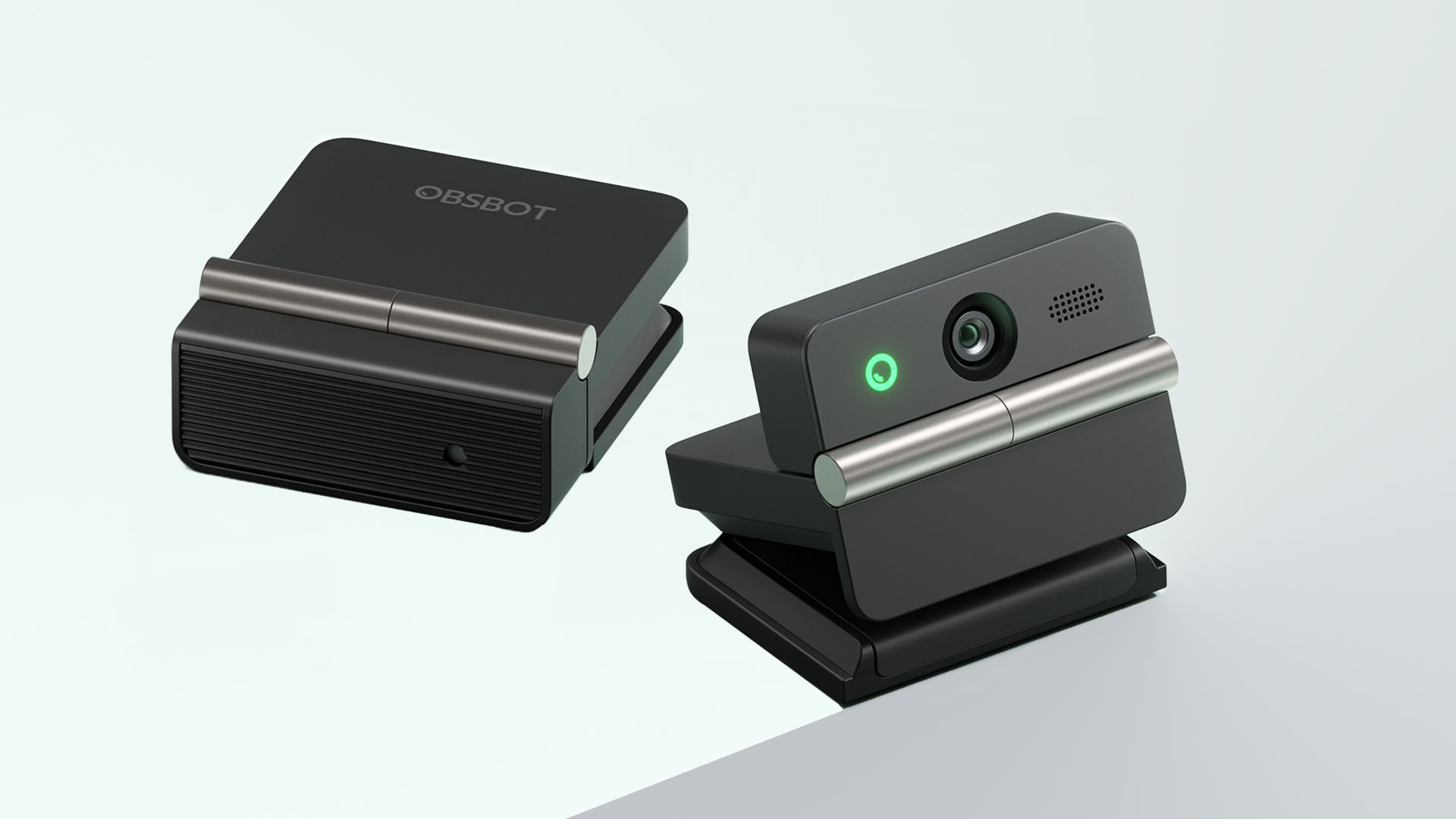
Graphics by Vincenz Lee | GadgetMatch
Undoubtedly, the biggest highlight has got to be the webcam’s folding design. Not only it’s portable, it protects your privacy too.
Closing the device physically blocks the lens, giving users a visual confirmation that the camera is no longer active. When it’s time for a meeting, simply unfold it and it’s ready to go.
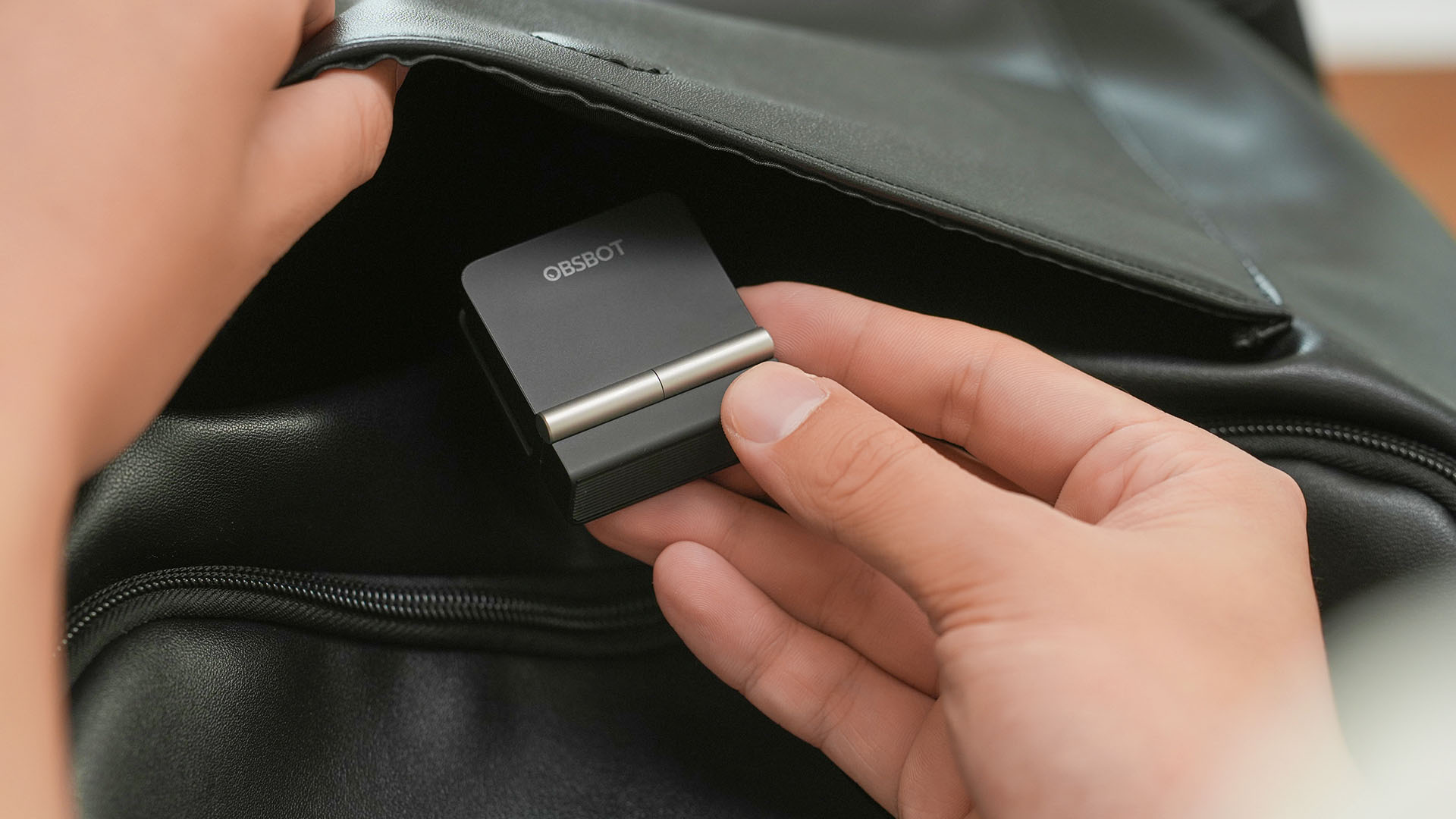
That lightweight body also features a built-in mounting clip that works with laptops, monitors, and tripods. Users can mount it in landscape, portrait, or even upside-down orientations depending on their setup.
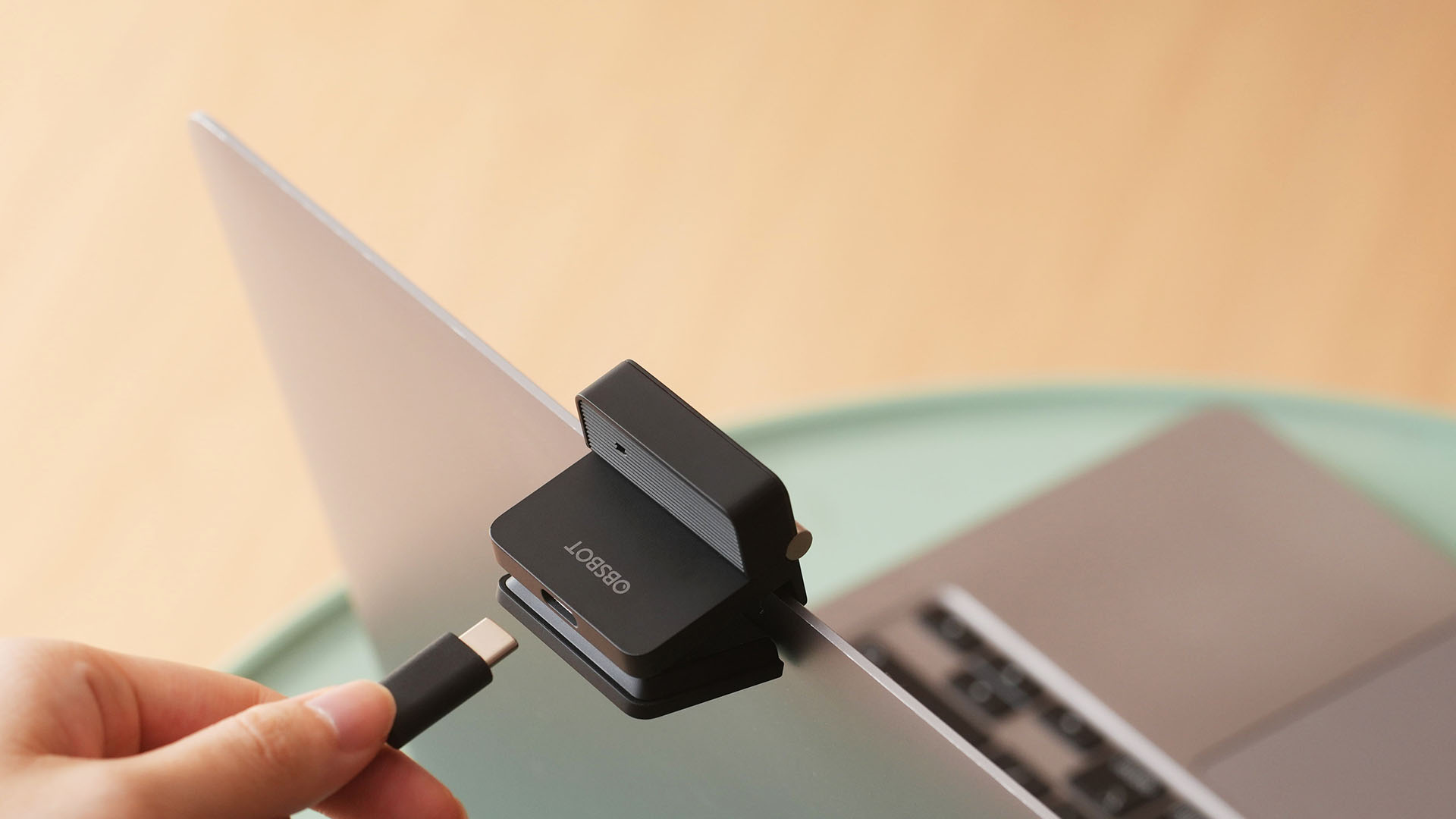
Despite that absurd amount of lightweightness, the OBSBOT Meet Flip is still able to house a 1/2-inch Exmor RS stacked CMOS sensor with Quad Bayer technology. That’s something more commonly found among bigger and higher-end web cameras.
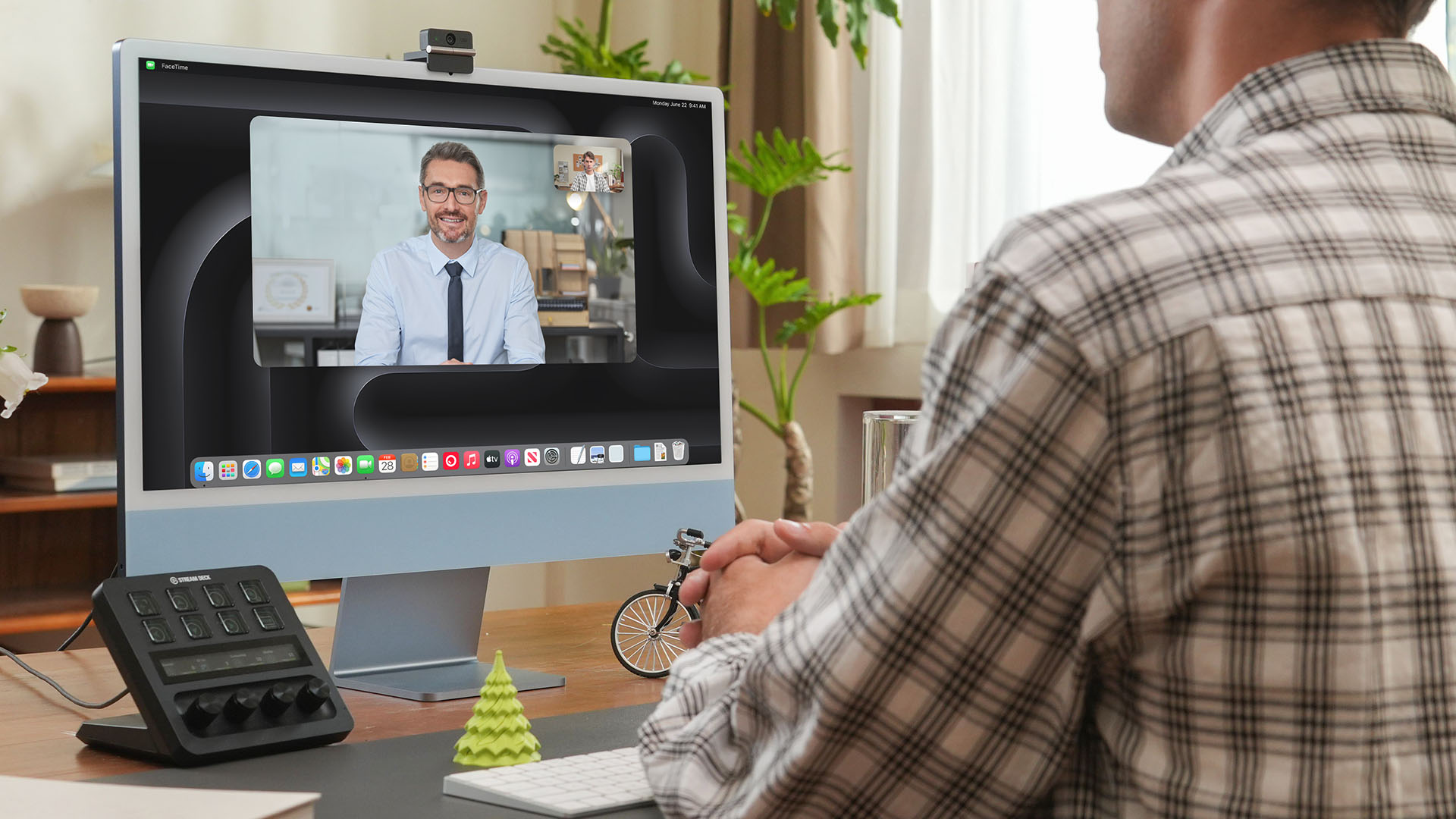
Other camera features include:
- 4K video recording / 30fps
- 1080p recording / up to 60fps
- HDR support for challenging lighting
- Phase Detection Autofocus (PDAF)
- 4x digital zoom
- f/1.8 aperture with ISO 100-6400 support for low-light environments
Beyond just video calls
The OBSBOT Meet Flip isn’t just packed with serious camera hardware, it’s seriously intelligent as well.
The Meet Flip supports AI Auto Framing. This automatically keeps users centered during meetings — regardless if they are presenting alone or with a group. Gesture controls also let users activate framing or adjust zoom without touching the keyboard or mouse.
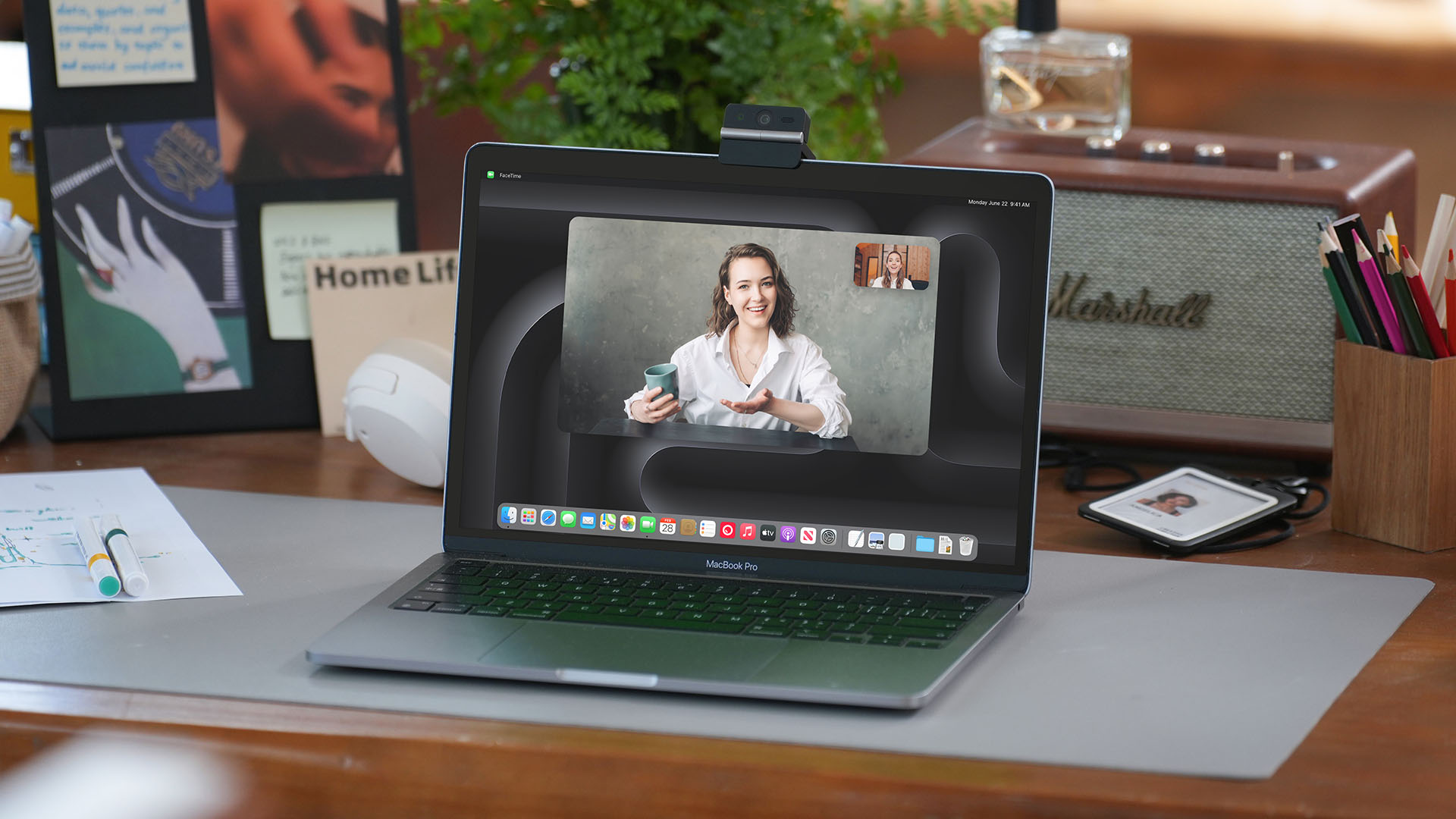
Another standout feature is AI Magic Notes which provides real-time meeting transcription and automatically generates summaries, action items, and key discussion points.
The feature works with Google Meet, Zoom, and Microsoft Teams through OBSBOT Center. Every webcam includes complimentary transcription of 120 minutes.

With that being mentioned, OBSBOT Center also makes users gain access to software features such as background blur, virtual backgrounds, beauty mode, and picture-in-picture overlays for presentations.
Those who want more advanced controls can enable Smart Eye Tracking, teleprompter support, and manual image adjustments.
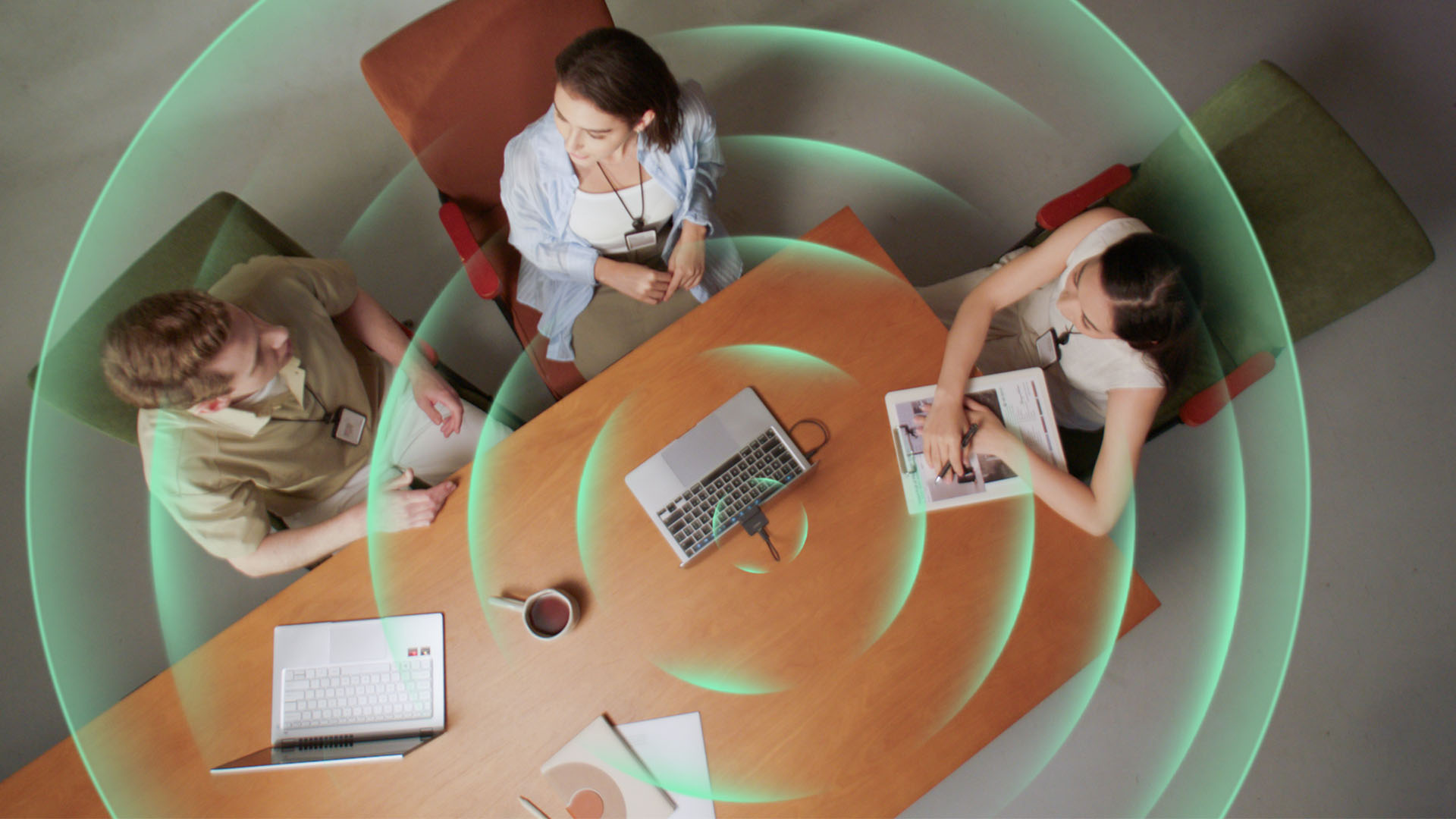
Audio also gets an upgrade through an intelligent dual-microphone system that offers four recording modes:
- Directional Mode / solo calls
- Dual-Directional Mode / interviews
- Smart Omni Mode / group meetings
- Pure Audio Mode / unprocessed stereo recording
AI Noise Reduction and Automatic Gain Control are also available across most modes to help improve voice clarity.
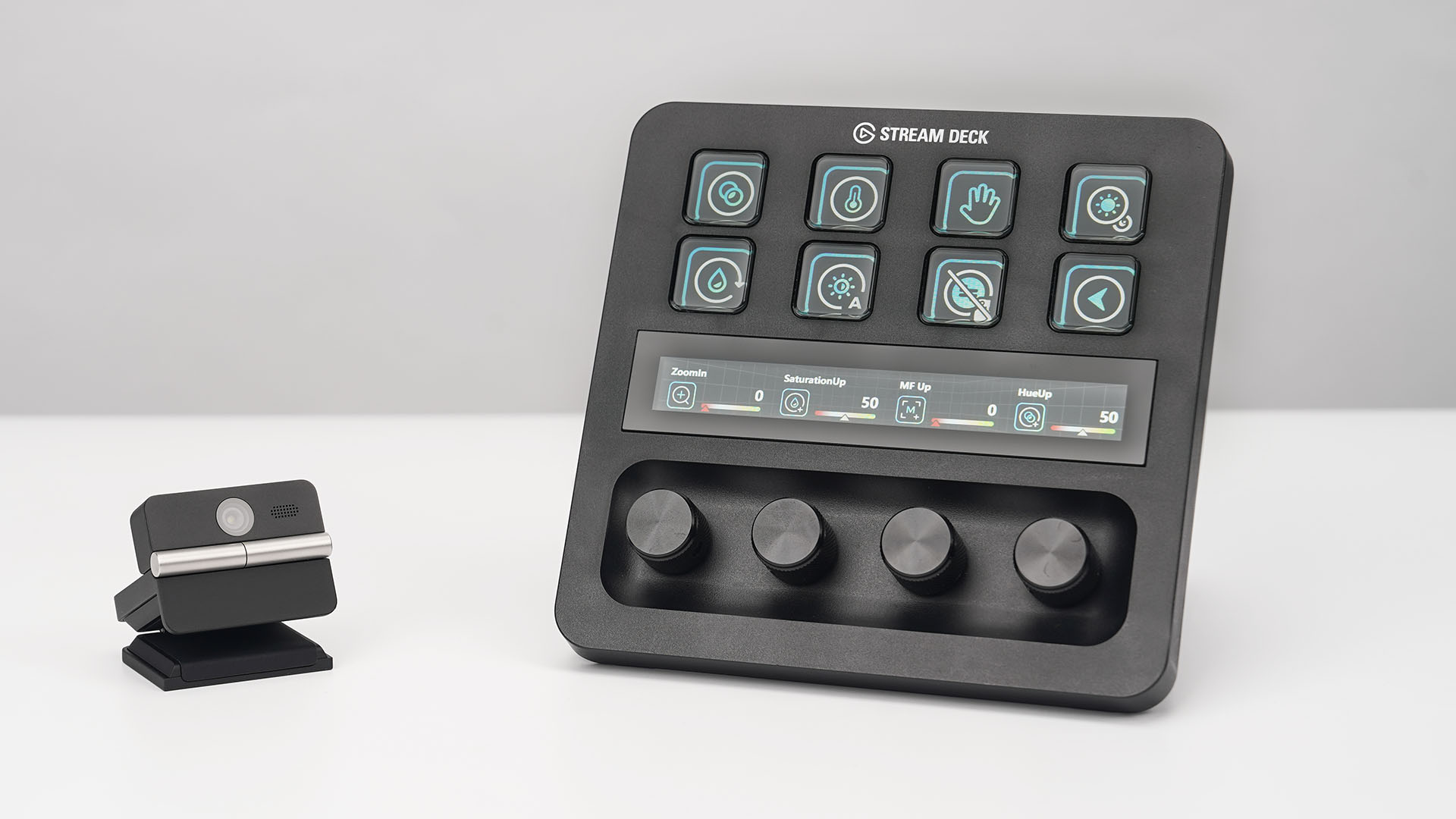
OBSBOT’s Meet Flip is also compatible with mobile devices through the OBSBOT Live app and supports integrations with accessories including Elgato Stream Deck, Nintendo Switch 2, and UVC-to-NDI/HDMI adapters.
Pricing and Availability
The OBSBOT Meet Flip is available starting today for US$119 through OBSBOT’s online store, Amazon US, and select retailers worldwide. Regional pricing may vary.
This is coming from someone who has done countless unboxings and has touched a wide variety of devices — the ASUS ExpertBook Ultra was… alright.
My first impression was that it certainly didn’t wow me as much as I expected it to after having read the brief, nor even after attending the tech seminar where ASUS laid out its vision for the laptop.
That’s probably the strangest thing about the ExpertBook Ultra. Because after having spent more time with it, the laptop grew on me.
Put cheekily, the ASUS ExpertBook Ultra wasn’t the laptop that made my head turn. Instead, it was the laptop that kept showing up consistently. Before I realized it, it’s become the one I wanted to keep coming back to.
And I think that’s the best way to describe my experience with ASUS’ flagship business notebook.
The laptop sneaks up on you.
Built to be carried

I got the laptop right after Computex 2026 coverage. That meant my days were closer to how they normally are. That also meant I had to be more intentional about going out and bringing it with me as I tackled my day-to-day duties.
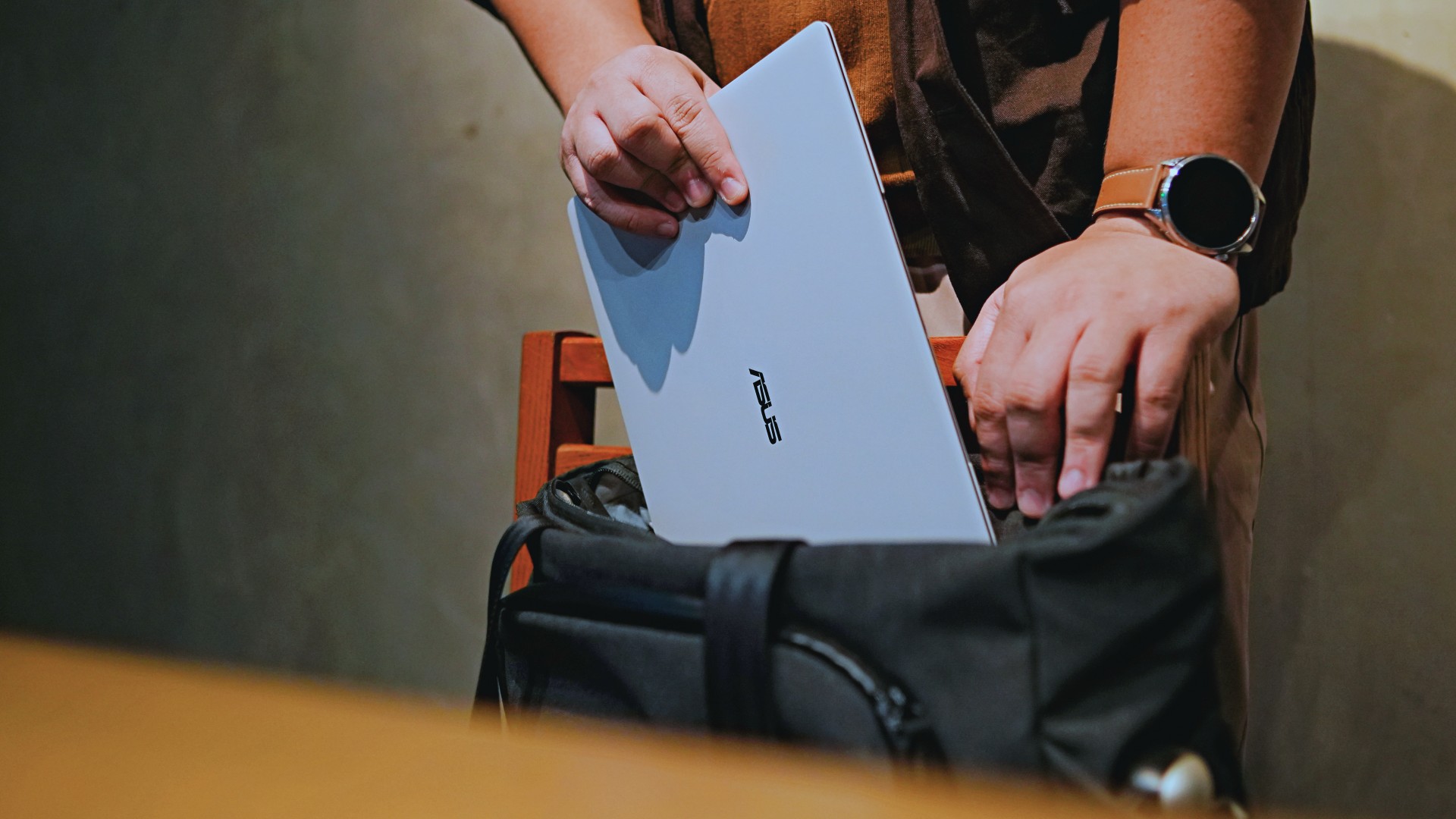
I normally carried it using my trusted EDC — the Alpaka Bravo Tote — and I have to say it definitely felt lighter than my usual laptop, which is the MacBook Pro M4.
The Apple laptop I regularly carry is, I have to admit, chunkier than I would prefer. So having the ExpertBook Ultra for about a week or so literally felt like some load was taken off my shoulders.
Did I ever forget it was there? I wouldn’t go that far.
But if you’re asking me which one I’d rather carry based on build and weight alone, I would, with no hesitation, reach for the ExpertBook Ultra.
That says a lot considering how attached I am to my usual setup.
ASUS likes talking about how light the ExpertBook Ultra is. Normally, that’s the sort of marketing line I acknowledge and quickly move past.
This time, I actually felt it.
The Nano Ceramic effect

One of the first things ASUS will tell you about the ExpertBook Ultra is its Nano Ceramic finish. I’ll admit, it felt like one of those things that sounds good on a slide presentation.
It’s one of those things that look gimmicky at first but actually feels incredible once you come across it on a daily basis.
It’s still early, so you can consider this very much part of the honeymoon phase with the laptop. Even so, the Nano Ceramic finish continues to inspire a bit of awe every time I pick it up.
I do feel like a little weirdo caressing the laptop ever so gently before I begin the day’s work wherever I may be. But that’s just a testament to how good it feels to touch.

And yes, it does reinforce the feeling that, “Hey, I’m working on a pretty fancy piece of machinery.”
It’s easy to underrate the effects of that feeling, but it’s those little intangible things that can sometimes help unlock perspectives and possibilities.
That’s not something you’ll find on a spec sheet. But it’s absolutely part of the experience.
A display that’s difficult to stop staring at

It also helps if STAYC Isa is on screen.
The display is magnificent.
As Captain America would say, “I can look at this all day.” Not the exact phrase, but you’re smart. You get it.
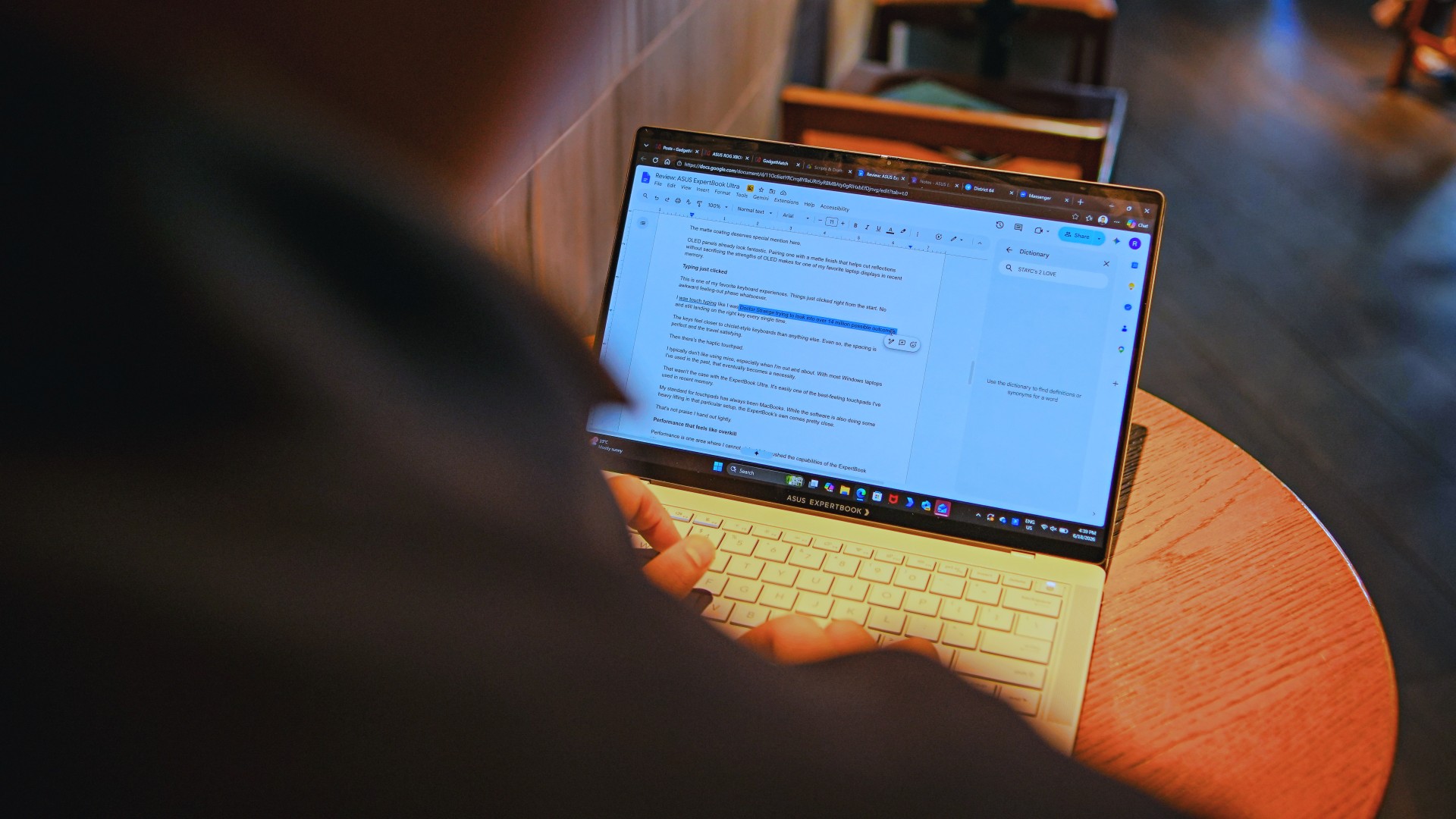
The OLED and matte coating is just a killer combo. Kind of like the Chaewon and Yeji “That’s a No No” challenge collab. Pardon the months-old K-pop reference. I’ve been so busy I haven’t really kept up with what’s new.
Anyway, the combination just comes at you unapologetically and you have no recourse but to bask in it. Maintaining the deep blacks and crisp colors is such a gift to your eyes.
I often sit right next to big windows when I’m out in cafés and the light did nothing to dull the effect of the display.

Two love, two love. I’m falling.
It was so good I often found myself fully diving into STAYC’s 2 LOVE music video in between writing this very review and coordinating with my team.
The matte coating deserves special mention here.
OLED panels already look fantastic. Pairing one with a matte finish that helps cut reflections without sacrificing the strengths of OLED makes for one of my favorite laptop displays in recent memory.
Typing just clicked

This is one of my favorite keyboard experiences. Things just clicked right from the start. No awkward feeling-out phase whatsoever.
I was touch typing like I was Doctor Strange trying to look into over 14 million possible outcomes and still landing on the right key every single time.
The keys feel closer to chiclet-style keyboards than anything else. Even so, the spacing is perfect and the travel satisfying.
Then there’s the haptic touchpad.

I typically don’t like using mice, especially when I’m out and about. With most Windows laptops I’ve used in the past, that eventually becomes a necessity.
That wasn’t the case with the ExpertBook Ultra. It’s easily one of the best-feeling touchpads I’ve used in recent memory.
My standard for touchpads has always been MacBooks. While the software is also doing some heavy lifting in that particular setup, the ExpertBook’s own comes pretty close.
That’s not praise I hand out lightly.
Performance that feels like overkill
Performance is one area where I cannot claim I fully pushed the capabilities of the ExpertBook Ultra.
Most of my tasks are browser-based. Plenty of tabs open, sure, but I don’t think I ever came close to really testing the capabilities of this business notebook. I imagine that would be the case for most of ASUS’ target audience.
Upon seeing the specs, I already knew this was going to be a bit of an overkill for my own use case. My time with it only proved that assessment.
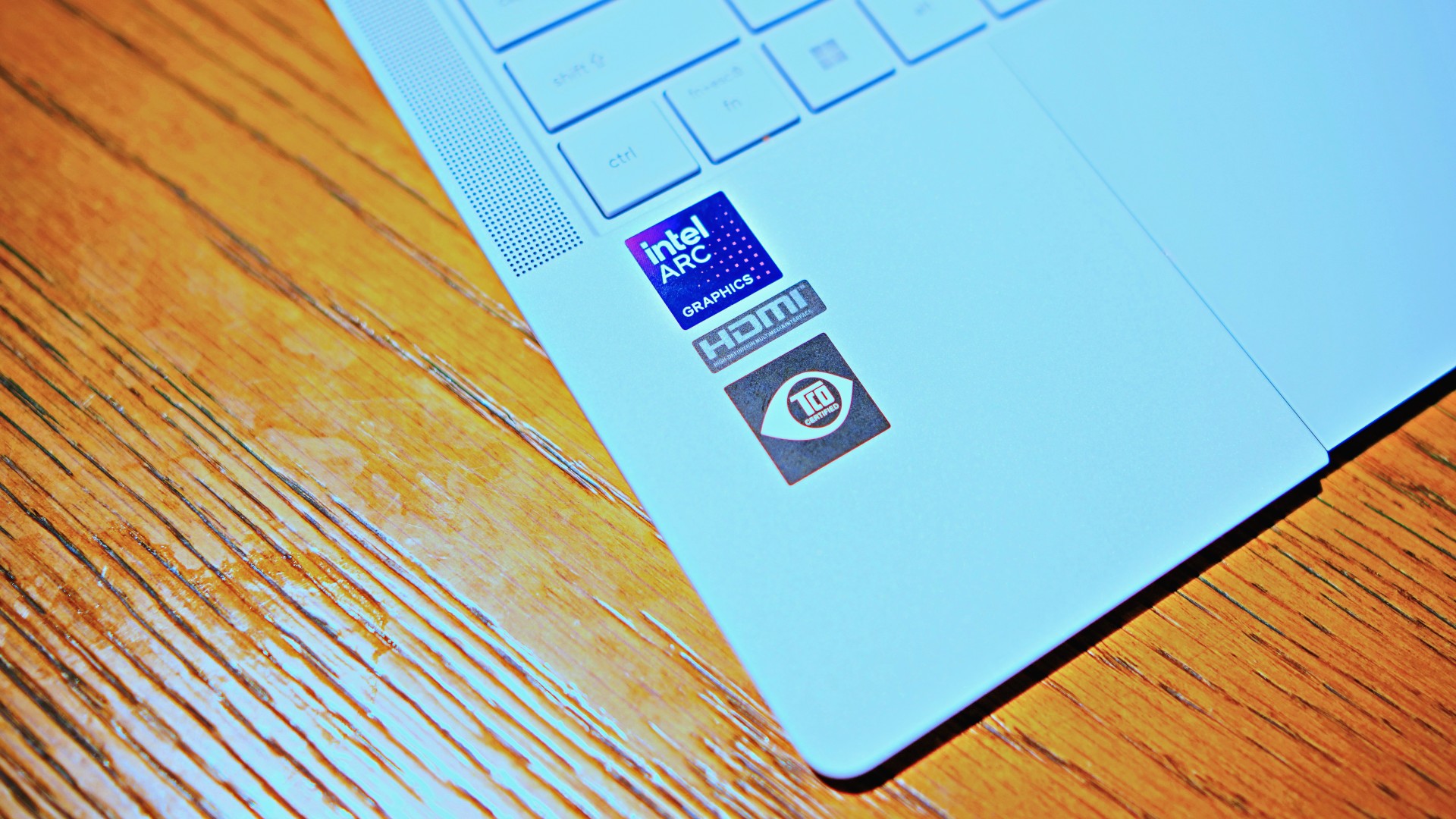
The most I did with it was jump between browser tabs and chat apps, letting ChatGPT help me process unresolved feelings and questionable timing while I dealt with coordinating shoots, writing scripts and reviews, and dealing with external forces that leave me feeling drained.
Never once did the laptop feel slow. Never once did I find myself waiting.
What noise?
Speaking of things I didn’t notice, let’s talk about fan noise.
Again, since I didn’t really push this thing to its absolute limits, the fan never really kicked into high gear at any point during my time with it.
The same goes for thermals.
No task I did ever raised the temperature to uncomfortable levels. The laptop simply went about its business. Which, come to think of it, is probably the most business-laptop thing I can say about it.

Battery life that simply works
I was very impressed with its overall efficiency.
When I go out to work, I typically don’t stay out longer than five to six hours. Most of the time that’s five to six hours of really focused work—with some K-pop loving in between.
Being generally risk-averse, I still always brought my usual charger with me. Not once during my time with the device did I feel the need to plug in while working outside.
I would typically end my café work days somewhere between 30 to 40 percent and only juice the thing up once I got home while it was closed and not in use.
That’s exactly the kind of battery experience I want from a business laptop.
The AI question
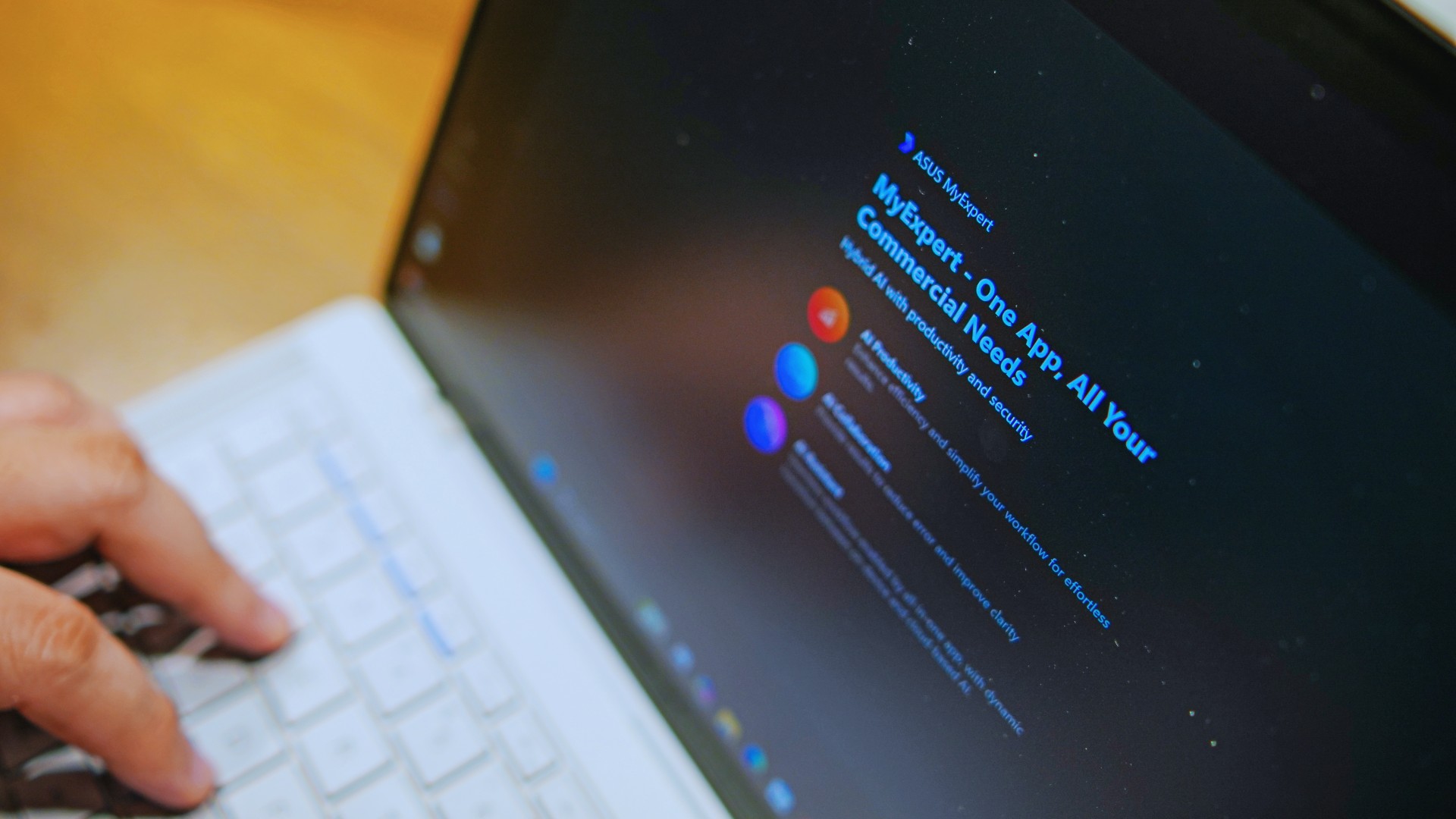
The thing I struggle with when it comes to AI features on this machine is that a lot of them are Windows-based and that’s just not the AI I find reliable.
Right now, many of these features are nice-to-have.
I’m sure one of ASUS’ target users will likely find a use case for them.
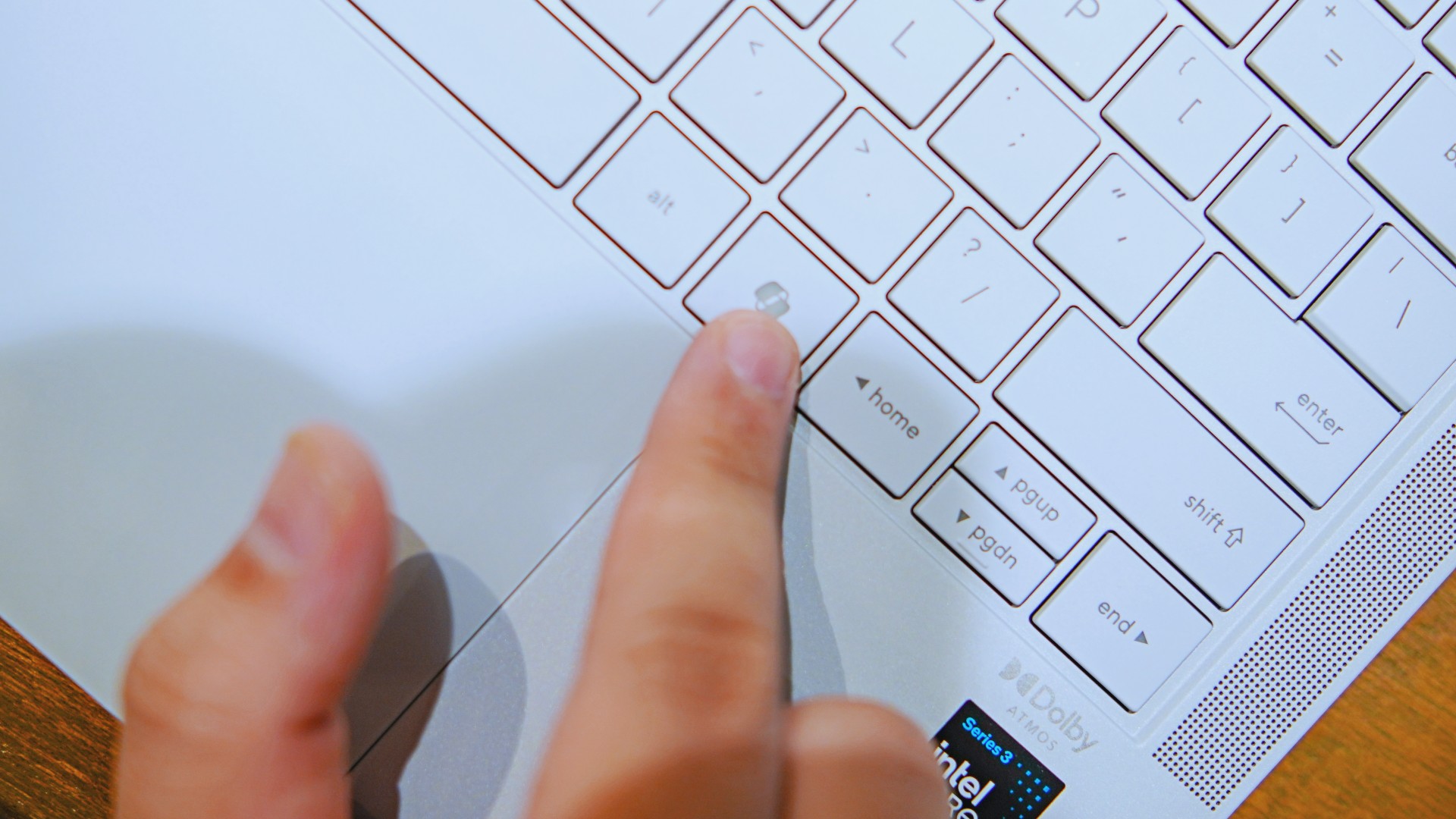
As for me personally, this is one area I’d have to dig deeper into to actually find ways to integrate them into my workflow and general usage.
And honestly, that’s okay. The AI features weren’t the reason I kept reaching for the laptop.
Who is this actually for?

That’s a loaded question. Really, it’s built for anyone who can afford it.
With a starting price of PhP 129,995, this device comfortably sits in aspirational territory.
What I know for sure is that this is a machine for someone who’s already built some momentum in their chosen field and would like to level up.
The ASUS ExpertBook Ultra gives you a machine that can handle your business now and inspire you to dream bigger about your future.
Is the ASUS ExpertBook Ultra your GadgetMatch?
The thing I kept coming back to with the ExpertBook Ultra is that there is no one thing that made me turn to it.
Instead, it’s the combination of everything that it brings to the table. The premium-feeling build, lightweight design, wonderful display, excellent keyboard and touchpad. efficient performance, and the thoughtful extras. Together, they make it a laptop that’s easy to recommend to anyone who’s ready for it.
But what does ready for it actually mean?

It means it’s for people who have leveled up quite a bit in their grind and want a machine that matches their current status and future aspirations.
That’s what the ASUS ExpertBook Ultra represents. A modern classic that’s ready for now and whatever comes next.
That’s why it didn’t wow me. But it certainly won me over.

realme C100: Enduring and durable in spite of entry-level realities
Enough power but needs more agility


The ASUS ExpertBook Ultra wins you over
The laptop sneaks up on you


Nexal Watch Sport review: A rugged watch for small budgets
I couldn't believe that watches this good could come for this cheap.

nubia expands gaming lineup with Neo 5 Max, Neo 5 GT Special Edition

Sony launches FE 100-400mm F5.6-8 OSS telephoto zoom lens

Google will force Android users to use Gemini next month

Tides of Annihilation opens first public demo at Gamescom 2026

Street Fighter 6 adds first Filipino fighter Yasmine to its roster

New York becomes first state to ban smart glasses

Sony launches IER-M500 in-ear monitors

Microsoft dictates that a new Fallout game is coming

HoYo FEST 2026 details announced; tickets on sale from July 16
realme C100: Enduring and durable in spite of entry-level realities


-

 Automotive4 days ago
VinFast debuts two-wheeler models, opens 21 e-motorcycle showrooms
-

 Gaming2 weeks ago
FINAL FANTASY X | X-2 HD Remaster launches on Nintendo Switch 2
-

 Accessories2 weeks ago
CASETiFY revives Spider-Man collection for Brand New Day
-

 Computers2 weeks ago
AORUS MASTER 16 Gen 2 2026 AI gaming laptop launches
-
 Computers1 week ago
AMD launches Radeon RX 9050 graphics card
-

 Gaming2 weeks ago
God of War Laufey finally confirms its highly anticipated launch date
-

 Automotive6 days ago
Xiaomi debuts SkyNomad Series featuring new Kunlun platform
-

 Philippines2 weeks ago
OPPO Reno16 Series 5G is coming soon to the Philippines