
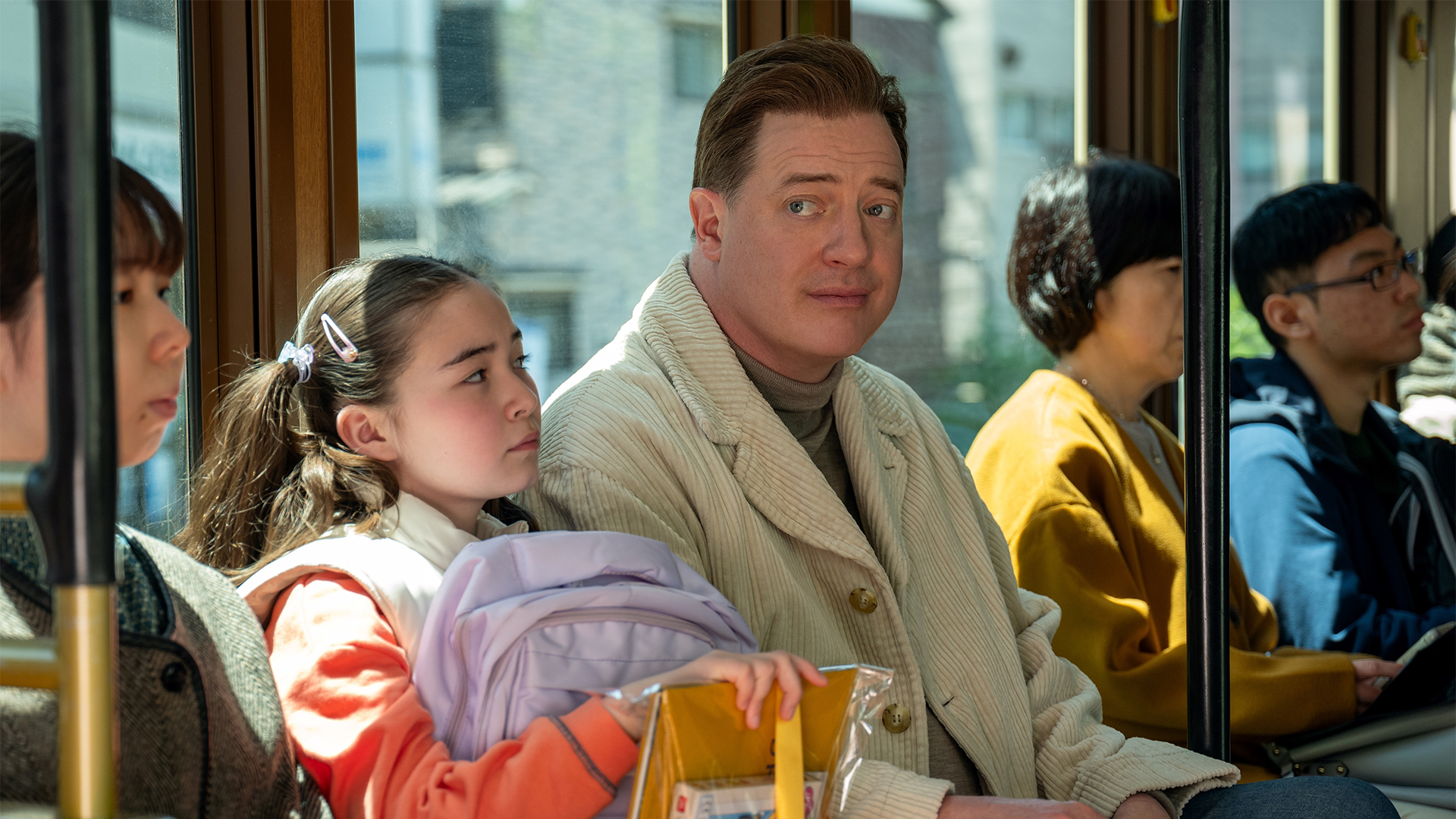
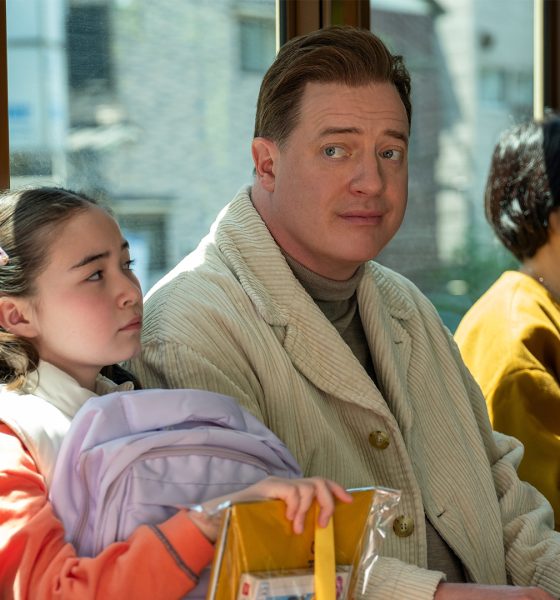

In Eat Pray Love, recent divorcee Liz Gilbert goes on a journey of self-discovery by travelling to Italy, India, and Bali. Someone should tell Gilbert that Japan is everyone’s preferred Eat Pray Love destination these days. Today, tourists from all over the world like going to Japan because of its different, almost perfect serene, culture.
However, the truth of Japan is less romantic than what’s shown in travelogues: absurd working hours, not enough time for personal life, and societal pressures to do only what’s expected. It’s this Japan that Rental Family wants you to see.
Truths
In Rental Family, Brendan Fraser plays Phillip Vanderploeg, a struggling American actor living in Japan. After failing to land a gig outside of the odd commercial here and there, an unconventional opportunity suddenly lands on his lap: to work for a rental family agency, which provides stand-ins for social situations. In one case, Philip pretends to be a young woman’s groom, so her family doesn’t ask questions when she moves and starts a life of her own in Canada.

It’s no surprise that Philip exclaims a loud “the f*ck?” when he first realizes what the firm does. Aiko (Mari Yamamoto), one of his colleagues, explains that this is how Japan works. Instead of paying for therapy, the Japanese people would rather pay for someone to pretend for them. For an outsider looking in, the practice seems strange, but it’s real. Rental family agencies have been around for a while.
Despite Aiko’s insistence that this is a Japanese phenomenon, Philip eventually understands that these agencies provide something more than just a country-exclusive need: the desire to be seen and to be heard.
Rental Family is a film that speaks to everyone. Often, we need someone to fill those gaps in our lives: a missing father, a missing lover, a missing friend. It’s a truth that should feel self-evident, but the film remains a poignant reminder of whatever, whoever is missing in our lives. We see ourselves in Kikuo Hasegawa (Akira Emoto), a retired actor who just wants a friend before his memory withers away. We see ourselves in Mia Kawasaki (Shannon Mahina Gorman), a young girl whose father left her.
And lies
Philip plays a multitude of roles: a father, a journalist, a cheerleader, a groom, a friend. It’s his job to play a role so credible that his client believes in the illusion. Essentially, he’s a professional liar.

However, Philip finds himself also believing in the same lies he’s crafted. He gets attached to a few of his clients, especially Mia whom he quickly becomes close to, as if as her real father. Even when his boss Shinji (Takehiro Hira) tells him not to get too personal with his clients, he cares for them beyond his initial assignment.
It’s the lie that makes the movie so believable. Who among us has never felt inadequate to play a certain role? Too incompetent to be a father, a lover, and a friend?
Ironically, the one who plays the part most authentically is the one person willing to build the lie, Philip. He becomes a better companion to their clients than the people closest to them. As the saying goes, “fake it ‘till you make it.”
Sometimes, the mask slips. Sometimes, Philip’s boss warns him that he’s too close, or a client ends the relationship themselves. When this happens, Philip has to confront the lie, which can mean that he tells his client that he was lying.

And yet, he doesn’t leave as if it’s just the conclusion of a deal. He opens up and makes himself vulnerable. He confronts what he did and promises to do better. Lying is easier, and we lie all the time. We tell ourselves that we’re the best at what we do. If we do it enough, we start to believe.
But Rental Family is about the truth behind the lie. An untruth can be the foundation, but a relationship only truly prospers with being vulnerable. It’s about realizing that, just as the other person needs us, we also need them. We’re all rental families in our own way.

Entertainment
YouTube remains top PH video platform; advertisers urged to continue investing
Advertisers urged to continue investing in TV programs


As YouTube remains the top streaming platform in the Philippines, advertisers are urged to continue investing in TV programs and content available on the platform, as these generate effective returns.
According to a 2025 Kantar Study, YouTube is the No. 1 video streaming platform in the Philippines in terms of reach.
The same study mentions that 97% of Filipinos in rural Visayas and Mindanao, two major island groups in the country, have watched online TV programs on YouTube in the past month.
Another significant finding is that the streaming platform is providing a 60% incremental reach beyond traditional linear TV.
This proves that YouTube is an essential bridge to Filipino TV viewers, specially in this era. The platform has transformed from just being a video hosting site to an all-in-one entertainment hub that spans traditional TV programs and both longform vlogs and shortform trending clips.
Given this massive gravitational pull, YouTube has partnered with media giants ABS-CBN, GMA, and TV5. This is to ensure the best content, from news to live sports, is available to every YouTube subscriber.
Furthermore, during the “Unstoppable: YouTube in the Next Era of Growth” event, the networks also urged advertisers to keep supporting such TV programs and related content.
They mentioned conversion numbers that say ads through such content remain effective. This is a dynamic that sponsors can continue to explore for marketing, given that YouTube has also integrated Unskippable Ads onto their platform.
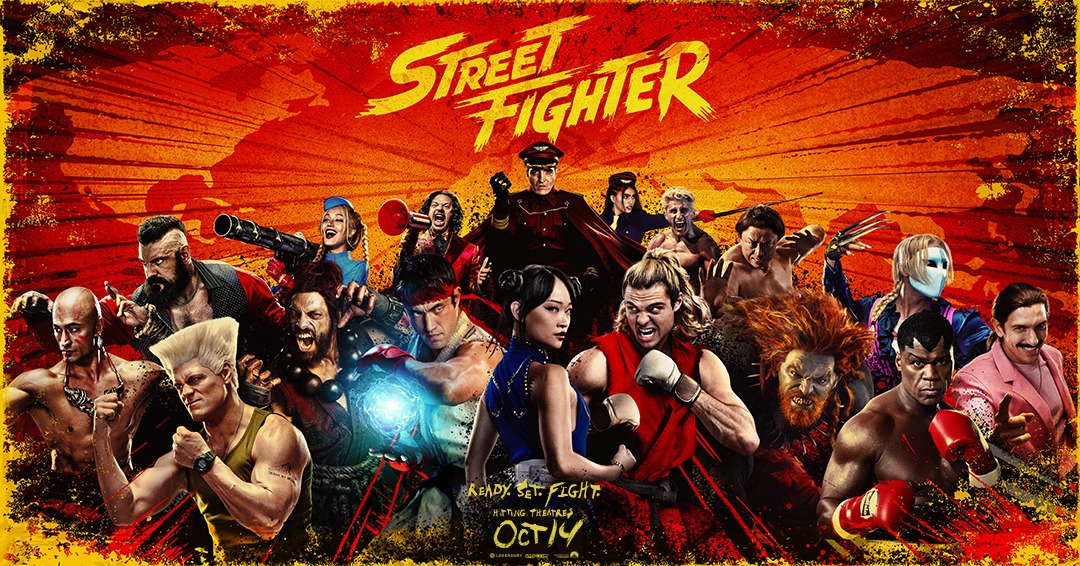
The official trailer for the Street Fighter movie has been released, along with new posters. The film hits cinemas starting October 14.
An unreleased version of Tupac Shakur’s “Ambitionz Az A Ridah” is among the trailer’s highlights. This song was created for Mike Tyson in the 1990s.
The 2-minute, 46-second clip opens with Noah Centineo’s Ken Masters and his dynamic with Callina Liang’s Chun-Li.
It also highlights more of the human side of Ken Masters, as well has his vulnerabilities before the lead up to the tournament.
The clip’s tone then changes to a more action-packed sequence featuring the film’s other cast members in their battle forms.
The trailer concludes climactically with fireballs from both Ken and Andrew Koji’s Ryu. As previously mentioned, the Street Fighter movie is set in 1993, when Ken and Ryu are recruited by Chun-Li and thrown into combat.
This World Warrior Tournament is a brutal clash of fists, fate, and fury, with a deadly conspiracy lying beneath.
Directed by Kitao Sakurai and based on the Capcom video game franchise, the movie also stars:
- Joe “Roman Reigns” Anoai as Akuma
- David Dastmalchian as M. Bison
- Cody Rhodes as Guile
- Andrew Schulz as Dan Hibiki
- Eric André as Don Sauvage
- Vidyut Jammwal as Dhalsim
- Orville Peck as Vega
- Olivier Richters as Zangief
- Hirooki Goto as E. Honda
- Rayna Vallandingham as Juli
- Alexander Volkanovski as Joe
They are joined by Curtis ‘50 Cent’ Jackson as Balrog, who also go a lot of screen time in the official trailer. Rounding out the cast is Jason Momoa as Blanka.
Watch the official trailer here:
Entertainment
Now Playing: Lee Cronin’s The Mummy
A demonic possession film re-skinned. Or should I say Mummy-skinned?

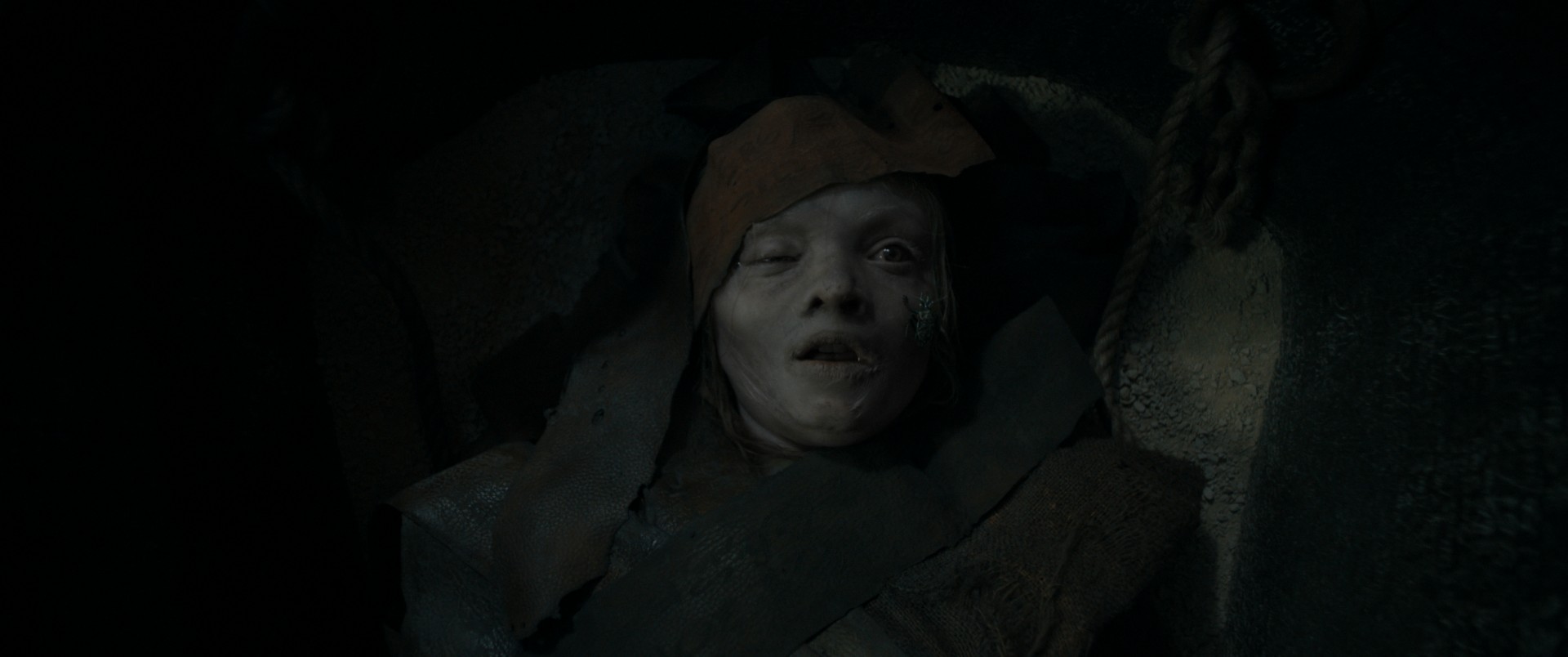
I had fun with Lee Cronin’s The Mummy. It’s a visceral, unadulterated, gory thrill ride. But is it a good film?
A missing child, Katie, is found after being away for years. Her disappearance has left visible cracks within the family. With unresolved grief and tensions lingering just beneath the surface, Katie returns home. It forces them to confront everything they have long been avoiding – grief, guilt, loss, and a sense of identity. The film unfolds like a haunted house horror. It’s centered on a family fighting to restore normalcy as something darker begins to threaten them.
A hollow myth dressed as horrorFamiliar story, borrowed mythology
Cronin adopts a family-centered narrative to ground its horror. This approach lends the story a sense of universal familiarity and understanding. It anchors the supernatural elements and visceral horror with real and intense emotions. With its overly simplistic – and often overused – storyline, however, it just feels flat.
The characters’ emotional turmoil never fully takes off – much like possessed-Katie levitating in her wheelchair, hovering only a few feet off the ground. It never moves beyond the superficial depth established within the first 30 minutes.
It leans closer in spirit to The Awakening (1980). There, possession and reincarnation rituals functioned as surface-level devices rather than being deeply rooted in a meaningful exploration of Egyptian mythology.
At its core, Lee Cronin’s The Mummy plays less of a mythology-driven monster and more like a possession story dressed in Egyptian iconography.
Mythology without meaning
The filmmakers admit that “the history was reshaped and reality was twisted to accommodate the plot.” It was evident in the film’s scattered use of Egyptian references. This choice of hand-grabbing random Egyptian influences – symbols, language, incantations, and ritualistic imagery – and piecing them together to fit the storyline, rather than allowing them to coalesce into a fully realized mythological system, feels weak at best and a cultural disservice at worst.
As a result, the narrative falls back onto the familiar Western possession logic, rather than anything distinctly Egyptian or genuinely original.
Visually rich, emotionally thin
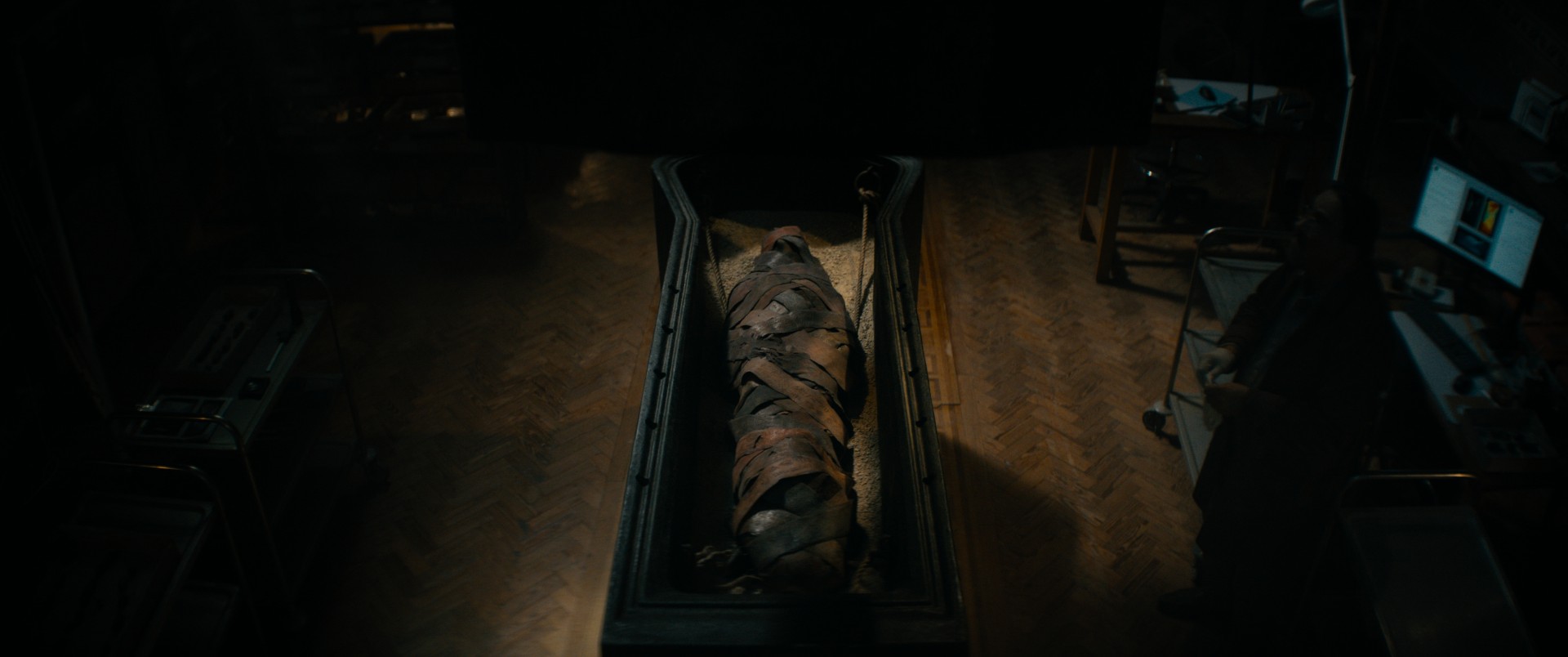
Cronin’s style is immediately evident even just from the opening scene. The strong domestic-centered storyline, textured and visually striking environment, and composition, as well as detailed set pieces. If anything, the film itself resembles the 3,000-year-old sarcophagus Katie got trapped in. Intricate and aesthetically compelling, yet ultimately hollow inside.
It closely follows the Evil Dead Rise (2023) formula, but Evil Dead has an already established system and identity. Its lore is clear and carries its own magic, appeal, and nostalgia hit. It leaves little need for expansion beyond creating strong, compelling characters. That’s something Cronin’s The Mummy still struggled to deliver.
Between terror and unintentional comedy
Lee Cronin’s The Mummy is visceral and gory – which is “fun” to some, myself included. I had fun when Katie’s possession escalates to her digging through the ceiling, crawling upside-down. There’s also mauling whatever and whoever she comes across, while her infected sister was also escalating in her own way, smiling dementedly at their parents with a set of teeth that wasn’t hers. THAT was FUN.
Some moments felt like deliberate dark humor. Like when a scarab beetle attack forces the detective to pinch her vocal cords back together so she can recite a ritual. Her later return, still speaking in a permanently hoarse voice and her snarky demeanor intact after recovering, was both ridiculous and hilarious.
The movie, however, doesn’t fully commit to that tone. At times, I found myself wondering whether these moments were unintentionally funny due to the typical horror logic. Where everyone has to be inexplicably, well, stupid – rather than a deliberate choice.
While certain lines, such as the famous scene with possessed-Katie saying, “Don’t worry, grandma, it’s fun being dead!” suggest an intent to lean into a self-aware campy route. The film’s inconsistent tone renders the execution awkward and forced. Theatre experience reflects this tonal inconsistency; rather than laughter, the audience mostly responded with collective screams during meaningless jump scares.
Fun for some, frustrating for others
Casual viewers and those easily horrified will find the film effective and entertaining. Particularly in a group viewing experience with friends. Its easy-to-understand story has proven to be a widely effective formula. As seen with the widespread success of co-producer James Wan’s The Conjuring and Insidious franchises.
Dedicated horror fans, particularly those who enjoy visceral gore, will find much to appreciate. The film distinguishes itself through a sustained sense of dread. It creates tension as a perpetual baseline, keeping viewers constantly on the edge of their seats. Director Lee Cronin, with his signature brutality, punctures this baseline by masterfully interspersing intense violence, delivering a visceral, almost tactile horror experience. These bursts, along with the escalating violence, reinforce the film’s relentless intensity, creating a physically overwhelming atmosphere. While the first half occasionally leans toward shock value for its own sake, the later escalations serve a crucial narrative function: cathartic release.
The more critical viewers, however, are more likely to find the improperly explored mythology and mish-mashed lore, paired with a lack of narrative depth, ultimately not worth their time.
As for me, I fall somewhere between the critical viewer and the horror fan. While I am filled with disdain for the formulaic narrative and the reskinned possession approach, my love for the genre and for Cronin’s brand of violence keeps me from fully writing this movie off.
Entertaining, but forgettable
Ultimately, Lee Cronin’s The Mummy is a visually striking, visceral thrill ride that struggles to justify its own existence beyond surface-level scares.
Its strongest moments stem from Cronin’s command of tension and brutality. While it succeeds in delivering a physically overwhelming experience – turning gore into a form of cathartic release. It falters when asked to sustain emotional depth or offer a coherent mythology.
Yet, despite its tonal inconsistencies and formulaic narrative, the raw energy of its horror moments makes it a flawed but undeniably entertaining ride. One that satisfies on an immediate, sensory level, while offering little that endures beyond. It may not be a masterpiece of the genre, but for those willing to overlook the lack of substance, it offers enough “gory-fun” to satisfy the itch for a good physical scare and visceral release.
This outcome is particularly poignant given Cronin’s own philosophy on the project. Having turned down a sequel to his successful Evil Dead Rise to work on The Mummy and reclaim the horror of the IP, he famously noted, “When you make a movie, you have to take risks because it might be your last chance to do it.” In the end, however, I find that Cronin did not take enough risks with this one.


DJI Osmo Pocket 4 review: A solo creator’s production crew
Now, you can be the director and editor of your own story.


HONOR MagicPad4: A tablet that found its place
Better as a second screen


TECNO POVA Curve 2 review: Munch That Power Crunch!
Unbelievably the slimmest 8000mAh phone you can buy right now

TCL enters RGB-Mini LED race with RM9L series

TCL expands SQD-Mini LED lineup with QM8L, QM7L

Forget the Pro+ and Ultra! HUAWEI unveils the Pura 90 Pro Max

HUAWEI Pura X Max overtakes the iPhone Fold as the first wide foldable

GadgetMatch earns 2 nominations at 25th Henry Ford Awards

The Changan Eado Plus officially lands in the Philippines

nubia Neo 5 series launches in the PH, starts below PhP 12K

How the Ford Ranger is powering community resilience

Nothing Phone (4a) + (4a) Pro review

Razer Blade 16 (2026) packs more cores, faster memory


-
Cameras4 days ago
DJI Osmo Pocket 4 review: A solo creator’s production crew
-

 Reviews2 weeks ago
Apple iPhone 17e review
-
Reviews6 days ago
HONOR MagicPad4: A tablet that found its place
-
Reviews6 days ago
TECNO POVA Curve 2 review: Munch That Power Crunch!
-

 News5 days ago
vivo X300 FE launches with ZEISS telephoto system
-

 Entertainment2 weeks ago
BINI, KATSEYE among top worldwide Google Searches ahead of Coachella
-

 Hands-On7 days ago
Match Pulse: HONOR Pad X8b
-

 Automotive4 days ago
Luxury you can ride: The Vespa 180cc Collection