Entertainment

BLACKPINK unboxes their own edition of the Samsung Galaxy A80

Spoiler alert: It has a different content inside

Published

on

In case you missed it, BLACKPINK members were chosen as Samsung’s A-series ambassadors, thus the reason for the spectacular performance at the Galaxy A event last April.

After a few months, Samsung also launched a special BLACKPINK edition of the Galaxy A80. It was first available in Thailand, then it also made its way to other Southeast Asian markets.

Samsung and TikTok then partnered up and made the Galaxy A80’s slide and swiveling camera movement a dance challenge, giving BLINKs the chance to win the phone with the BLACKPINK branding.

The serious endorsement makes sense especially because Samsung and BLACKPINK are both considered icons of Hallyu (한류) or K-Wave.

Meet the BLACKPINK members: Lisa, Jennie, Jisoo and Rosé (L-R)

All BLACKPINK members were excited to unbox their special edition phone.
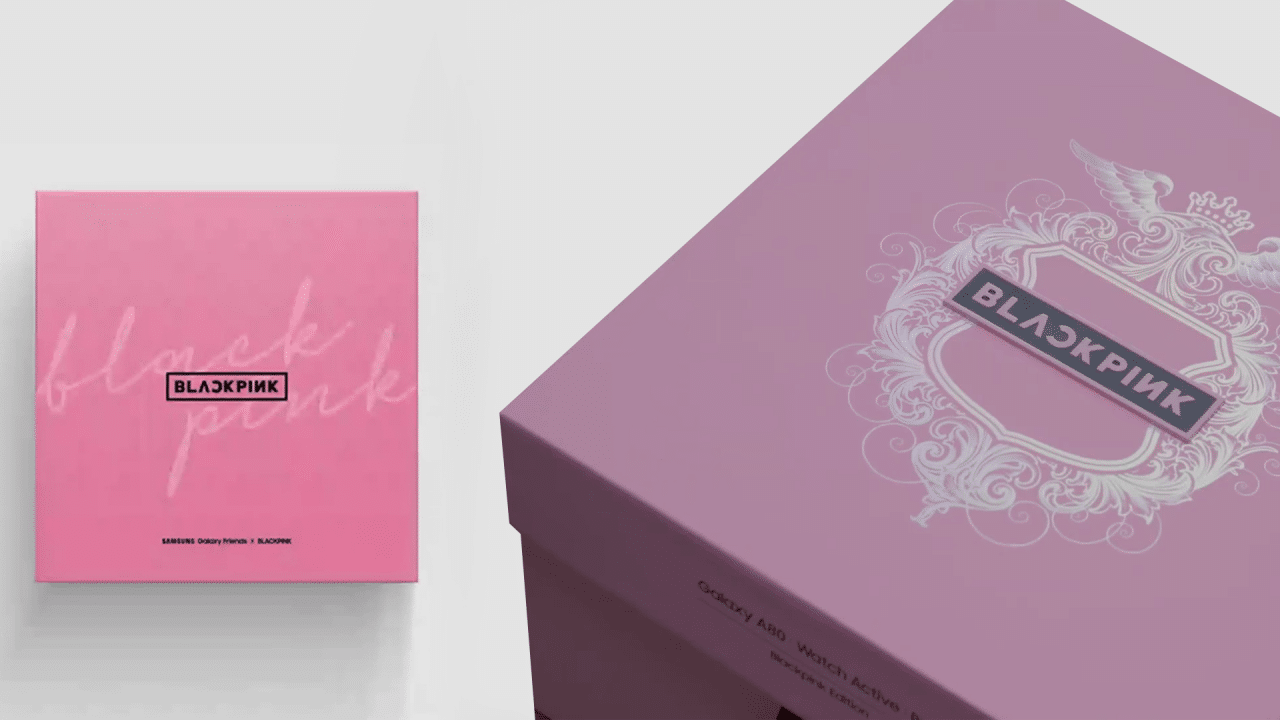
As you can see, the boxes are different. BLACKPINK has their own special pink box with a fancier design.


For clarification, the usual pink box consists of the BLACKPINK charging stand, case, and a random photo card.

Meanwhile, BLACKPINK’s Special Edition Box includes not just the Galaxy A80, but also the BLACKPINK-branded Galaxy Watch Active and Galaxy Buds.

The BLACKPINK logo can be found at the phone’s back and during its initial boot up.

The members were astounded when they saw themselves on the phone’s lock and home screens. The BLACKPINK theme was already set upon turning on the phone.

The BLACKPINK Galaxy Buds is something you can’t get from the other package. It stands out with its black and pink-colored buds (BLINKs would definitely flex this!). The AirPods could never. 👀

Aside from Jisoo wearing the watch, it’s more special because the strap is in BLACKPINK’s official pink color.

Whether that may just be the case or the special Galaxy Buds, BLINKs (including me) would still spoil ourselves with goodies related to BLACKPINK.


 

Entertainment

Now Playing: 28 Years Later: The Bone Temple

The Bone Temple picks up where the previous film left off.

Published

on

When 28 Years Later came out last year, it disrupted the traditional flow of zombie films. Contrary to expectations, the third film in an ongoing series did not see the sudden breakdown of an uninfected group of survivors. Rather, it’s a coming-of-age story wrapped a zombie-flavored coating. It’s a revolutionary reimagining of Danny Boyle’s classic zombie series. Now, 28 Years Later: The Bone Temple completes the franchise’s transition into something else entirely different.

The Bone Temple starts off almost immediately after the events of the previous film. Spike (Alfie Williams) joins an eccentric group of survivors called “the Jimmys,” who all dress up like Jimmy Saville. It quickly takes a turn for the worse when Jimmy Crystal (Jack O’Connell), the gang’s leader, shows off a sadistic streak towards the gang’s members and other survivors.

In the meantime, Dr. Ian Kelson (Ralph Fiennes) continues his peaceful mission to memorialize the dead. However, after taking care of Spike’s mom in the previous film, Kelson decides to embark on a tougher mission: curing Samson, an Alpha zombie who resides near Kelson’s camp.

Zombies, begone

28 Years Later confirmed that the zombie pandemic was successfully isolated to the British Isles. Since it’s literally 28 years after the first outbreak, the Isles aren’t as inundated with zombies anymore. In the previous film, zombies were a present threat, but they didn’t always lead to an entire horde stampeding over survivors.

In The Bone Temple, zombies are even less of a danger, especially when compared to the more brutal Jimmy gang. Except for an occasional attack, none of the human characters were really scared of zombies. In fact, the traditional rules of fighting zombies have seemingly gone out the window. Characters shout and make noise with no regard for zombies, for example.

Strangely, the franchise’s transition away from the chaos of zombies works. After all, how many times can movies rehash the tired trope of a society collapsing because of an infection? The Bone Temple isn’t about zombies anymore; it’s about what happens after, when society devolves into absurd factions and personalities.

A compelling cast of characters

The previous film had some reactions complaining about the shift away from zombies. If you came into The Bone Temple looking for a straight-up zombie story, you will also leave disappointed.

However, if you stick around, The Bone Temple features a superbly interesting suite of characters for a post-apocalyptic setting. Both Jimmy Crystal and Dr. Kelson aren’t run-of-the-mill survivors grumbling about the difficulties of a postapocalyptic world. Both know what to do and know what they must become. It’s compelling to see how they reach their goals or, in some cases, their comeuppance.

Jimmy Crystal sees himself as the son of Old Nick, an old euphemism for Satan. He wants to sow discord and terrorize other survivors. To him, the zombie outbreak is a religious one, a result of Satan bringing forth demons to the world. He treats death as his duty, especially when done through violent means.

In contrast, Dr. Kelson believes in science. He bathes in iodine to stave off infection. In fact, he believes that the zombie virus is curable or, at the very least, manageable. For him, death is a fact of life but one that needs to be respected. His monument, or the titular Bone Temple, is a testimony that everyone who died was a human being, not a mindless zombie.

It’s these drives that make The Bone Temple so engaging. You will want one to succeed, and the other to get his just desserts.

A bombastic finish

When you watch Jimmy and Dr. Kelson work their way through the film, one thing becomes apparent: Both ideologies are set for a collision course against each other. A meeting between the two feels inevitable, but you just won’t know how yet.

Now, some things are better off being experienced. Though, like the previous film, The Bone Temple starts more methodically and more deliberately, it will all lead to one of the craziest endings I’ve seen in modern cinema. Even if you’ve watched the film’s trailers, you’re bound to still gape in awe of what it has in store. All I’ll say is, even in this messed up future, Iron Maiden is still an icon of heavy metal.

In its insanity, which shall not be named in this review, The Bone Temple proves that the franchise wants to be something more than just another zombie flick. And, after all’s been said and done in this clash of ideologies, the promise of hope remains, along with the expectation of an even grander conclusion in the upcoming third movie in the 28 Years Later trilogy.

Continue Reading

Camera Walkthrough

HONOR Magic8 Pro Stage Mode at a TWICE concert

Good… with room to grow

Published

on

HONOR Magic8 Pro | TWICE
Graphics by Vincenz Lee | GadgetMatch

Concerts are unfair camera tests — wild lighting, fast movement, and zero second chances. So when I brought the HONOR Magic8 Pro to TWICE’s THIS IS FOR concert in Bangkok, I wanted to see if HONOR’s Stage Mode could actually handle it.

Everything here was shot using Stage Mode at 4K 30fps.

This wasn’t lab testing. This was real-world, heart-racing, shaky-hands shooting.

Where I was seated and why zoom mattered


View this post on Instagram


A post shared by Rodneil Quiteles (@rodneil)

The concert used a 360-degree stage. I was lucky enough to sit close to one of the extended stages, which meant I was often shooting between 3.7x to 10x zoom.

For the main stage, I mostly relied on 15x zoom.

That’s where a phone either wins your trust… or completely falls apart.

Surprisingly stable, even with shaky hands and excitement

Let’s start with what impressed me most — stability.

I’m naturally shaky, and TWICE being right in front of me did not help. I was vibrating out of excitement most of the night. Even then, Stage Mode stabilization held things together beautifully.


View this post on Instagram


A post shared by Rodneil Quiteles (@rodneil)

Shots stayed usable. Footage stayed watchable.
Even when I wasn’t being my most careful self.

This gave me confidence to keep shooting instead of worrying about every tiny hand movement.

Image quality: sometimes magical, sometimes uncertain

Now the honest part.

Stage Mode still needs to mature.

There were moments when footage looked crisp, clean, and genuinely impressive for a smartphone in that environment.


View this post on Instagram


A post shared by Rodneil Quiteles (@rodneil)

But there were also times where it clearly struggled — particularly with lighting transitions and focus.


View this post on Instagram


A post shared by Rodneil Quiteles (@rodneil)

Some clips handled spotlights well. Others felt like the processing panicked a little.

It wasn’t bad. It just wasn’t consistent yet.

How it compares to other concert kings


View this post on Instagram


A post shared by Rodneil Quiteles (@rodneil)

If I were purely relying on zoom to watch the concert through my phone, I’d still recommend the Samsung Galaxy S25 Ultra. It remains the phone I trust most when zoom is mission-critical.

vivo also still leads in Stage Mode execution. The vivo X300 Ultra’s Stage Mode feels more refined and reliable at this point.

HONOR isn’t there yet.

But it’s also much closer than I expected.

So… would I bring the Magic8 Pro to concerts again?

Yes.

Even with the inconsistencies.
Even knowing there are better Stage Mode implementations out there.


View this post on Instagram


A post shared by Rodneil Quiteles (@rodneil)

Because the Magic8 Pro still gave me plenty of shots and clips I was genuinely happy with. Stability is excellent. Quality can be great. And for most users, it delivers results worth keeping and sharing.

If I didn’t have a Galaxy S25 Ultra or vivo X300 Ultra with me, I’d still confidently bring the HONOR Magic8 Pro.

Stage Mode isn’t perfect yet.
But it’s promising — and when it works, it really does feel like magic.


View this post on Instagram


A post shared by Rodneil Quiteles (@rodneil)

SEE ALSO: 

Continue Reading

Entertainment

Now Playing: Avatar: Fire and Ash

Imperfect finale leaves room for more

Published

on

Photos: 20th Century Studios

If this truly marks James Cameron’s farewell to the franchise, then Avatar: Fire and Ash does deliver a gripping finale that caps the saga’s first arc.

Moviegoers are assured of a visual masterpiece that is even better in 3D, to say the least. Story wise, the film ties up loose ends from Way of Water and culminates in a ginormous battle Pandora’s fate. That’s all while leaving the door open for future chapters.

Execution could have been more polished, but the box office blockbuster franchise’s third entry still remains worth the trip.

As a standalone movie, viewers will find it enjoyable without much knowledge of the first two installments.

Decisions, consequences

Avatar: Fire and Ash is set just weeks after the events of Way of Water. And just like the second installment, the conflict begins with a seemingly harmless decision.

Amid their grief, Jake, Neytiri, and the Sullys decide Miles “Spider” Socorro — son of Col. Miles Quaritch — can no longer stay with them.

This leads to them accompanying him aboard a passing flying merchant ship. Along their trip supposedly back to the human scientist camp, the film introduces the Mangkwan.

This isolated Na’vi tribe who reject Eywa is spearheaded by their tsahik, Varang. From the initial look, they seek domination over Pandora. They also happen to reject Eywa, as bared later on, with Varang showcasing control of fire.

Chaos erupts as the Mangkwan attacks the flying merchants, leaving almost everyone dead. The encounter also causes the Sullys to be separated.

While the tribe ravages the hapless merchants, Col. Quaritch and his team remain hellbent on exacting revenge on Jake, as was his central goal from the past film.

In his pursuit of Jake, a three-way conflict pushes the movie to be tense from the get-go. All parties have their goals they need to accomplish. And a radical new threat stands in the way too.

Enemy of the enemy

Quaritch and his right-hand, Cpl. Lyle Wainfleet, only find Jake tied up in the aftermath of the Mangkwan’s attack.

Persuaded by Jake who knows where to find Jake, Quaritch decides to spare his nemesis temporarily.

They set out on a search for the Mangkwan, while the film highlights the tribe’s radical, if not extremist nature. There’s unsettling rituals and Varang’s thirst for power.

This starts to deepen the narrative as now, it’s a matter of ironically joining forces with your foe. And in spite of the vengefulness inside Quaritch, his side as a father to Spider lets him postpone his payback plans.

Jake and Quaritch team up momentarily to save the former’s children. But Quaritch also realizes the potential in forming an unlikely alliance with Varang, which he does.

A incomprehensible power within

After the first hour or so, Avatar: Fire and Ash gradually builds up on Kiri’s mysterious abilities. She was key to the children escaping from the Mangkwan when she commanded the fauna to kill some fighters.

This was also highlighted more when she bonded with the ground to help Spider survive and turn him sort of into half-Na’vi, being able to breath without an oxygen mask.

But her powers are incomprehensible even to herself. She even tries to commune with Eywa, but to no avail. It was clear at this point that the movie intended to set her up as an integral warrior to what was brewing.

Expanding conflict

Back in the RDA lab, corporate greed takes over anew as scientists find out hundreds of Tulkun whales will be gathering for their mating season.

This would bring them billions in profit if they could harvest large volumes of the amrita substance, threatening Pandora’s ecosystem in the process.

The subplot adds to an already complex web of conflicts. Although, Quaritch’s vendetta against Jake still remains the enduring, central thread, sustaining tension throughout the runtime.

Each chapter just provided constant cliffhangers, somehow keeping viewers glued in spite being three hours long. About two hours in, Quaritch and Varang’s alliance (and relationship) and Jake’s surrender evoked trouble across Pandora.

Humanity amidst the struggle

Adding to that long runtime was exploring the Sullys’ human side. Standing out was Neytiri’s extended grief over the loss of Neteyam.

Her anger toward Spider and general hatred for humans from the first film created an ethical dilemma when she wanted Quaritch’s son dead. Ultimately, the couple decided not to kill Spider, showing how humanity prevailed amidst the struggle.

Neytiri’s sorrow was an aspect the filmmakers arguably could have utilized better. Early on, her grieving lingered over and over. It didn’t help that she was injured from the initial Mangkwan attack too.

While it was already heartbreaking to see Neytiri in such a state, it could have been shown better how she channels this into anger and showing the sky people what they’ve done.

Make no mistake, her clever disguise as a Mangkwan member that helped free Jake and Spider was a great touch.

Yes, the was emotional balance from Zoe Saldana’s character to complement action sequences, but a different direction could have pushed it further.

Climactic finish

Eventually and expectedly, Avatar: Fire and Ash finale sprawls into a dramatic battle that involves all parties. Jake assumes the mantle of Toruk Makto once more, and rallies all known Na’vi tribes, knowing what’s at stake.

This was setup aptly given all conflicts were unveiled at different parts of the movie. I’ll give them the cohesion. But still, it should have been presented with more chaos.

For a film that was titled “Fire and Ash”, you would have expected ruins and lots and lots of burning. Perhaps even some volcanic explosions to set up the end of Pandora.

Anyway, the Tulkuns and Na’vi take care of business initially against the profit-blinded RDA ambush. But combined forces of the now heavily-armed Mangkwan and Quaritch turn the odds to the antagonists’ favor.

Casualties were aplenty; the sudden deaths of key allies felt apt with how straightforward they cut through viewers’ chests. Instantly dead if that’s how their fates should be sealed.

By now, most loose ends have been addressed. Kiri has likewise finally connected with Eywa, whom she asks for help.

Similar to Way of Water, family members were once again held hostage inside an RDA ship. Thankfully, Neytiri overpowers Varang, who decides to flee.

Everything boiled down to Quaritch and Jake confronting each other amid the chaos. Spider aids Jake, but his conflicting loyalty culminates in him saving his biological father.

Repetitive?

Visually, the entire final sequence dazzles, with the sheer volume of moving parts making up for an epic scene at part with those in other trilogies. But the length might have caused fatigue too.

At the same time, if you are going with such an exhaustive screen time, might as well incorporate newer elements related to the Mangkwan.

Or Neytiri and Varang could have had their own distinct one-on-one combat to add to what’s going on.

Even better, Neytiri should have led from the get-go for a refreshed take while the Jake-Quaritch conflict remained a lasting subplot.

There were missed opportunities especially in a final battle that once again took place ocean-bound.

Room for more?

In what was the film’s final cliffhanger for more potential installments, Quaritch decides to jump off the floating rock shortly after getting cornered by the Sullys.

It appeared Jake still wanted to say something, or perhaps convince him to redeem himself before it’s too late.

Instead, we can only assume Quaritch has fallen to his death… not unless the suddenly disappeared Varang saved him on a Banshee. Such ambiguity leaves space for possibly more.

The epilogue was poignant; the underwater spirit trees were a nice touch with cameos from past characters welcoming Spider for his full transition to a Na’vi. The same could be said for Neytiri and Ronal warming up to each other after being reluctant towards each other.

Overall, Avatar: Fire and Ash is a visual spectacle that weaves several dilemmas throughout. It’s not that it wasn’t coherent nor cohesive, but missed opportunities held it back.

Though it’s a worthy, if imperfect, finale to Cameron’s first saga.

Continue Reading

Trending