
Computers
Cooler Master is selling a PC shaped like a sneaker
Packing heavy specs too


Are you a sneakerhead and a gamer? If you’re both of these things, we have the perfect PC setup for you. Cooler Master has released a new prebuilt PC designed after a sneaker.
If you take a peek at the PC building market these days, you’ll notice how it’s now possible to create PCs out of a variety of form factors. Now, a shoe certainly pushes the envelope of what a PC should look like, but Cooler Master made it work.
Initially showcased during the Case Mod World Series 2020 (at which the design won an award for best art direction), the Sneaker X packs all the fixings of a PC in the form of a shoe. And it’s not just a looker.
Inside, the PC offers four different options for its processor: Intel i7-13700K, i9-13900K, AMD Ryzen 7800X3D, and Ryzen 7950X3D. Additionally, it offers a selection of GPUs consisting of the RTX 4070, RTX 4070 Ti, and RTX 4080.
Besides these two, the CPU will also have up to 64GB of DDR5 RAM and 2TB of PCIe 4.0 Gen4 NVMe storage. Though the sneaker looks packed, it will have the Master Liquid PL360 Flux Sneaker Edition cooling to keep temperatures at a reasonable level.
In the United States, the Sneaker X is already available in Enthusiast (with an RTX 4070) and in Professional (with an RTX 4070 Ti) models. The Enthusiast retails for US$ 3,499. The Professional sells for US$ 3,799.
The higher trims, armed with AMD processors and the RTX 4080, are exclusive to Europe for now. Prices for these trims can go up to US$ 4,964.
SEE ALSO: MSI, Capcom partner for limited-edition Monster Hunter products

Computers
AORUS MASTER 16 Gen 2 2026 AI gaming laptop launches
For AI-powered performance, immersive gameplay

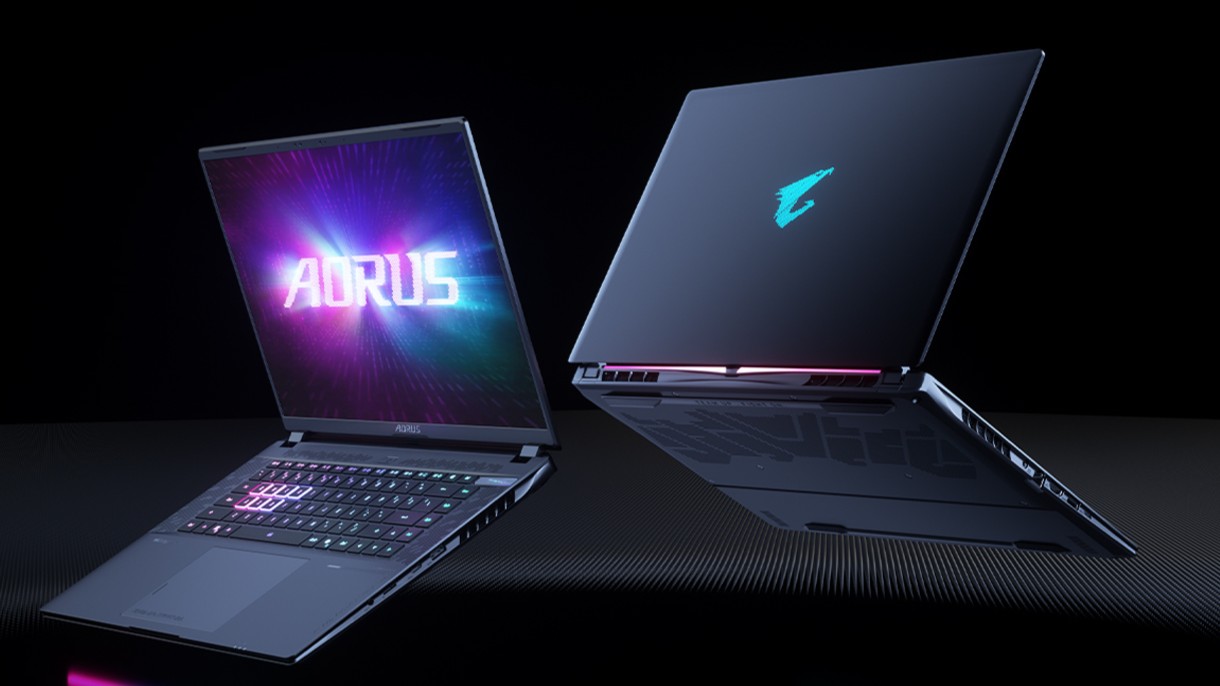
GIGABYTE has announced the availability of the AORUS MASTER 16 Gen 2 2026 flagship AI gaming laptop.
This machine combines desktop-class performance, advanced cooling, and an exclusive AI agent in an ultra-thin 19mm portable design.
It is configurable up to an AMD Ryzen 9 9955HX3D processor and up to an NVIDIA GeForce RTX 5090 laptop GPU. Together, these work to provide close to desktop-level power.
The model also supports MUX Switch to simplify integrated GPU or discrete GPU selection with fast mode.
Beyond gaming, with an advanced GPU AI capability of up to 1824 AI TOPS, the AORUS MASTER 16 Gen 2 2026 is built for next-gen AI-assisted creation and accelerated workflow.
The entire system also leverages the flagship WINDFORCE INFINITY EX thermal solution, featuring a vapor chamber design and the integrated Frost Fan 2.0.
In front is a 16-inch 16:10 2.5K 240Hz OLED display with creator-grade color accuracy. It has up to a 0.2ms response time, 100% DCI-P3, and a 1,000,000:1 contrast ratio.
Furthermore, it is Pantone Validated, TÜV Rheinland Certified, and VESA DisplayHDR 1000. Complementing this is Dolby Atmos and four dual-force speakers with Smart Amplifier.
At the center of the experience is the GiMATE exclusive AI agent. It is designed for more flexible and intelligent system control, streamlining performance management and introducing tools for modern workflow.
For instance, GiMATE Creator integrates generative image models into a manageable local workflow.
Meanwhile, GiMATE Coder supports natural-language code generation, correction, and optimization with Visual Studio Code auto-completion.
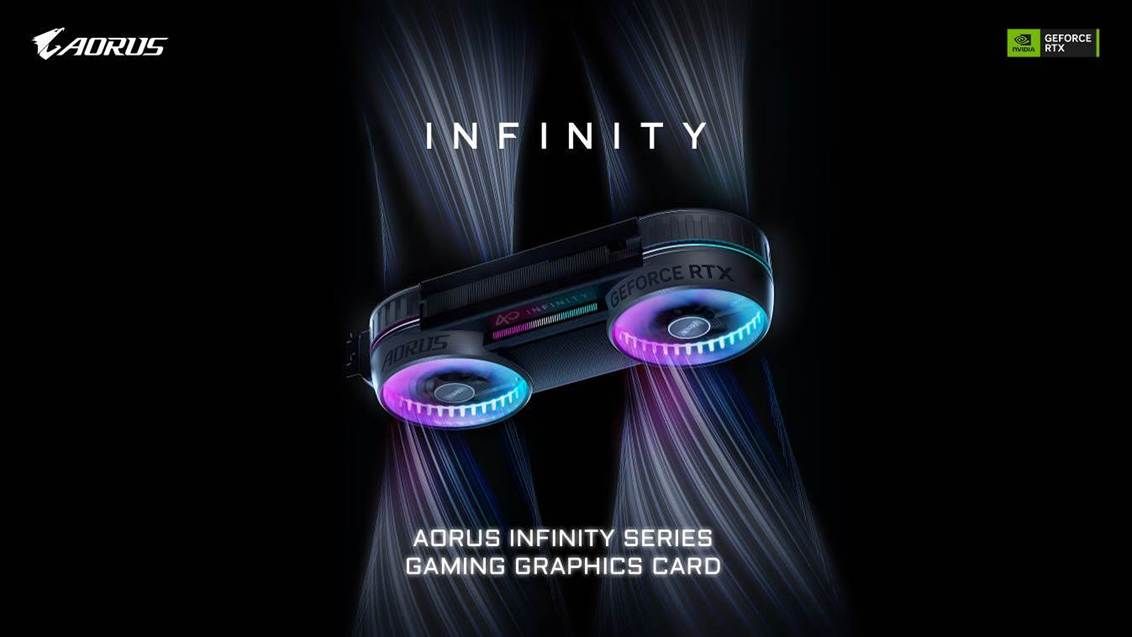
GIGABYTE has launched two new AORUS INFINITY graphics cards in celebration of its 40th anniversary, giving PC builders more options for their custom builds.
These are the AORUS GeForce RTX 5080 INFINITY 16G and the unique, nature-inspired AORUS GeForce RTX 5080 INFINITY WOOD 16G.
These high-end components are genuine design objects meant to elevate the look of one’s entire setup, while also providing topnotch GPU performance.
The new models build on the design language of the AORUS GeForce RTX 5090 INFINITY and further evolve the signature aerospace turbine-inspired aesthetic with integrated RGB lighting elements.
Particularly, the WOOD edition integrates wood-grain elements as its core design language, blending the warmth of natural textures with high-performance hardware.
As such, it is a crown jewel for lifestyle-focused users and interior design lovers, bringing a sense of warmth and emotional resonance.
At the same time, both are absolute powerhouses inside. GIGABYTE packed the new AORUS INFINITY models with the WINDFORCE Hyperburst cooling system.
The patented Hawk fan design minimizes airflow turbulence and noise while achieving higher air pressure and greater air volume.
In the thermal design is a large vapor chamber making direct contact with the GPU. This is paired with composite copper heat pipes to effectively accelerate heat transfer efficiently.
Both new AORUS INFINITY graphics cards support the Project Stealth series for a streamlined building experience.
The concealed power connector design neatly hides cables within the graphics card structure for a cleaner, less cluttery look.

At WWDC 2026, Apple unveiled Siri AI, a smarter version of Siri powered by Apple Intelligence, with personal context, onscreen awareness, deeper app integration, and a brand-new experience across iPhone, iPad, Mac, Apple Watch, and Vision Pro.
Apple also announced new Apple Intelligence features, Google Gemini-powered foundation models, smarter photo editing tools, improved parental controls, faster performance across iPhone and iPad, and the next version of macOS: Golden Gate.
In this WWDC 2026 Rewind, Michael Josh breaks down the biggest announcements, what actually matters. And, whether Apple finally delivered on the promises it made last year.


realme C100: Enduring and durable in spite of entry-level realities
Enough power but needs more agility


The ASUS ExpertBook Ultra wins you over
The laptop sneaks up on you


Nexal Watch Sport review: A rugged watch for small budgets
I couldn't believe that watches this good could come for this cheap.

CASETiFY drops Samsung Galaxy Z8 series collection

Hamilton Beach brings Air Grill to this tropical market

UNDERTALE: The Determination Symphony hits Makati in October

Inside London’s biggest Samsung experience space

Qualcomm is raising its prices this year


-

 News2 weeks ago
Samsung releases teaser with Spider-Man: Brand New Day Easter eggs
-

 Wearables6 days ago
Garmin launches its first screenless fitness band
-

 Gaming2 weeks ago
Most of the world’s PlayStations will be officially useless by 2028
-

 Automotive2 weeks ago
Mercedes-Benz celebrates 140th anniversary at the Presidential Car Museum
-

 Apps2 weeks ago
Plot twist: Starbucks PH is letting you actually pick your reward now
-

 Hands-On5 days ago
Hands-on: Samsung Galaxy Z Fold8, Flip8, Ultra
-

 Apps2 weeks ago
iOS 27 public beta gives us our first taste of Siri AI
-

 Accessories5 days ago
CASETiFY revives Spider-Man collection for Brand New Day