
Smartphones
Huawei cutting smartphone supply by 60 percent this year
P50 series likely delayed, too


Despite ongoing issues in the geopolitical realm, Huawei is still pushing through with its plans for the year. Recently, the company confirmed that it is not selling its smartphone business away. Reportedly, it is still planning a launch for the P50 series in March. However, the company’s long climb back to the top is only just beginning. First, it has to get through a multitude of hurdles. According to a new report, Huawei is cutting its smartphone supply by 60 percent this year.
According to Nikkei, the Chinese company has already alerted its component suppliers that it is dialing down its smartphone supply this year. From its 240 million smartphones shipped in 2019 and 189 smartphones shipped last year, Huawei is ordering only 70 to 80 million smartphones this year. The company’s supplies are drastically dropping amid the ongoing American bans.
If that wasn’t enough, another report, this time from a Chinese source, confirms that the Huawei P50 series is undergoing major supply problems right now. Once announced, the P50 series might not come out as scheduled.
Given the Nikkei report above, the smartphone series might not even reach its projected sales targets. Since Huawei is tweaking its production numbers, who knows how many smartphones series that the company is launching this year? After the P50 series, the company is likely keeping the Mate series as well. Recently, Huawei teased its upcoming foldable sequel, too.
SEE ALSO: Huawei P50 series still coming in March







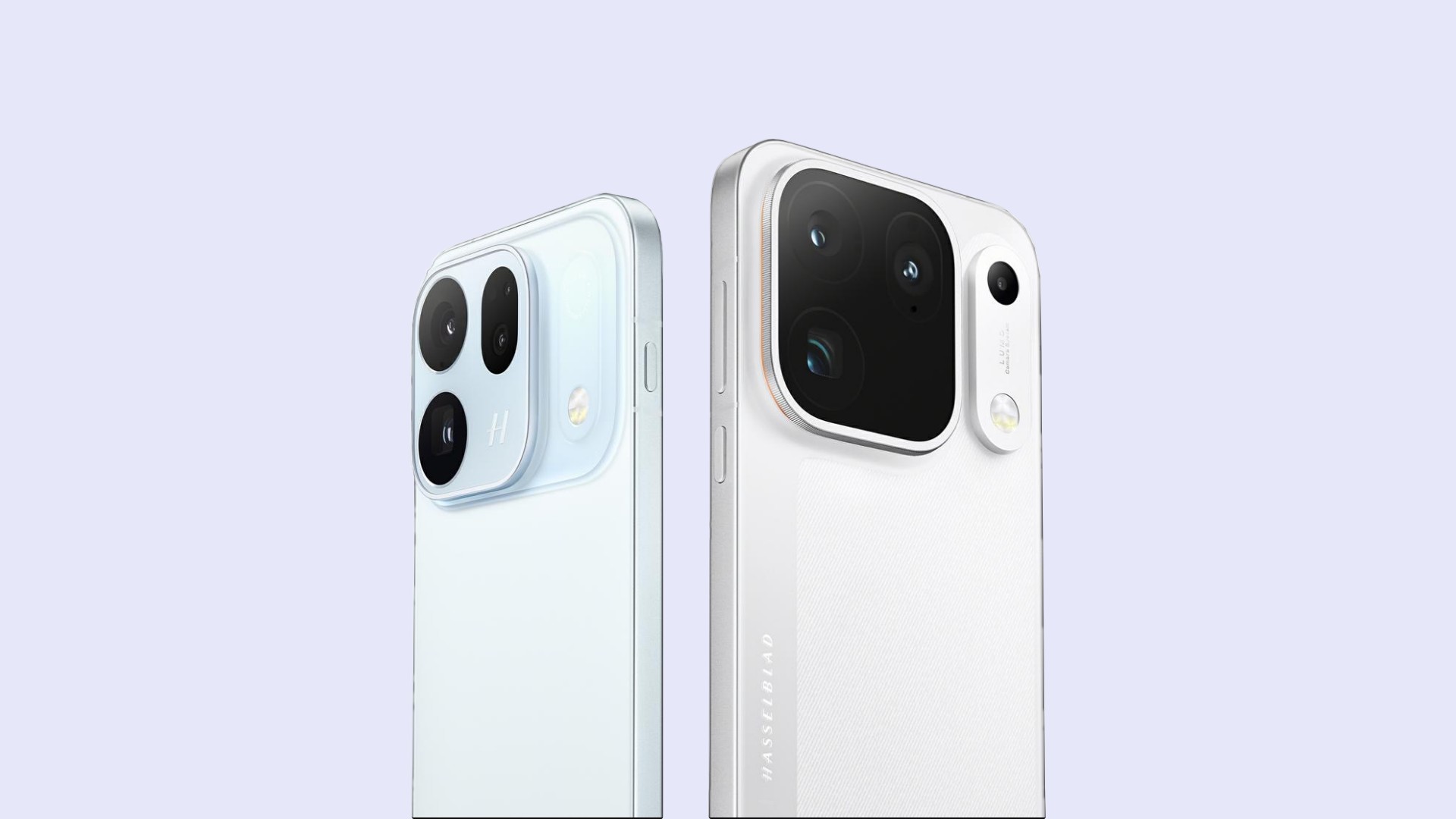
OPPOOPPOOPPO has announced that the Find X10 Series will launch globally on October 21 in Mallorca, Spain.
The latest flagship lineup focuses heavily on mobile photography, with OPPO positioning the series as a “Hasselblad True-to-Life Camera.” It combines new camera hardware with OPPO’s next-generation LUMO True Image Engine for more natural detail, color, and tones.
Two phones, up to three 200MP cameras
The Find X10 features a Dual 200MP Camera System co-developed with Hasselblad. Meanwhile, the Find X10 Pro Max takes things further with a Triple 200MP Camera System.
The Pro Max is equipped with 200MP sensors for its ultra-wide, main, and telephoto cameras.
OPPO’s LUMO True Image Engine is designed to make the most of the new hardware. It combines computational photography with Master Mode and color information from the True Color Camera to produce more natural-looking images.
The company says the system is designed to preserve details such as skin tones and fine textures while maintaining natural contrast.
4K 120fps and 8K video
The OPPO Find X10 Series also gets upgraded video capabilities.
The Find X10 Pro Max supports 4K video recording at 120fps and 8K at 30fps across all three rear cameras. The Find X10 offers the same capabilities on its two 200MP cameras.
Both models also introduce Open Gate Capture. The feature uses the sensor’s full imaging area, allowing creators to capture more of a scene and later crop or reframe footage for different formats.
Flagship MediaTek chips and 8,000mAh batteries
The Find X10 is powered by the MediaTek Dimensity 9600M, while the Find X10 Pro Max is among the first smartphones to use the 2nm MediaTek Dimensity 9600 Pro.
Both phones pack an 8,000mAh OPPO Silicon-Carbon Battery. OPPO claims the battery can provide up to two days of typical use and retain more than 80 percent of its original capacity after five years of typical use.
The series will also ship with ColorOS 17, which introduces a new Living Flow Design and AI Mind Pilot with Agent Mode. The latter connects agentic AI with files and photos on the phone to help users complete more complex tasks through a single prompt.
Find X10 Series design
OPPO is giving the Find X10 Series a minimalist design with its new Borderless Design. One-Piece Sculpted Glass flows into the camera module, creating a more seamless look around the camera bump.
The Find X10 will be available in Glacier Blue, Glow Coral, and Mist Grey. The Find X10 Pro Max comes in Titanium Grey and Luna White.
OPPO will reveal the Find X10 Series’ full specifications, pricing, and availability during its global launch event in Mallorca on October 21.
News
vivo X Fold6 makes global debut with 200MP camera and 6900mAh battery
With 200MP camera and 6900mAh battery

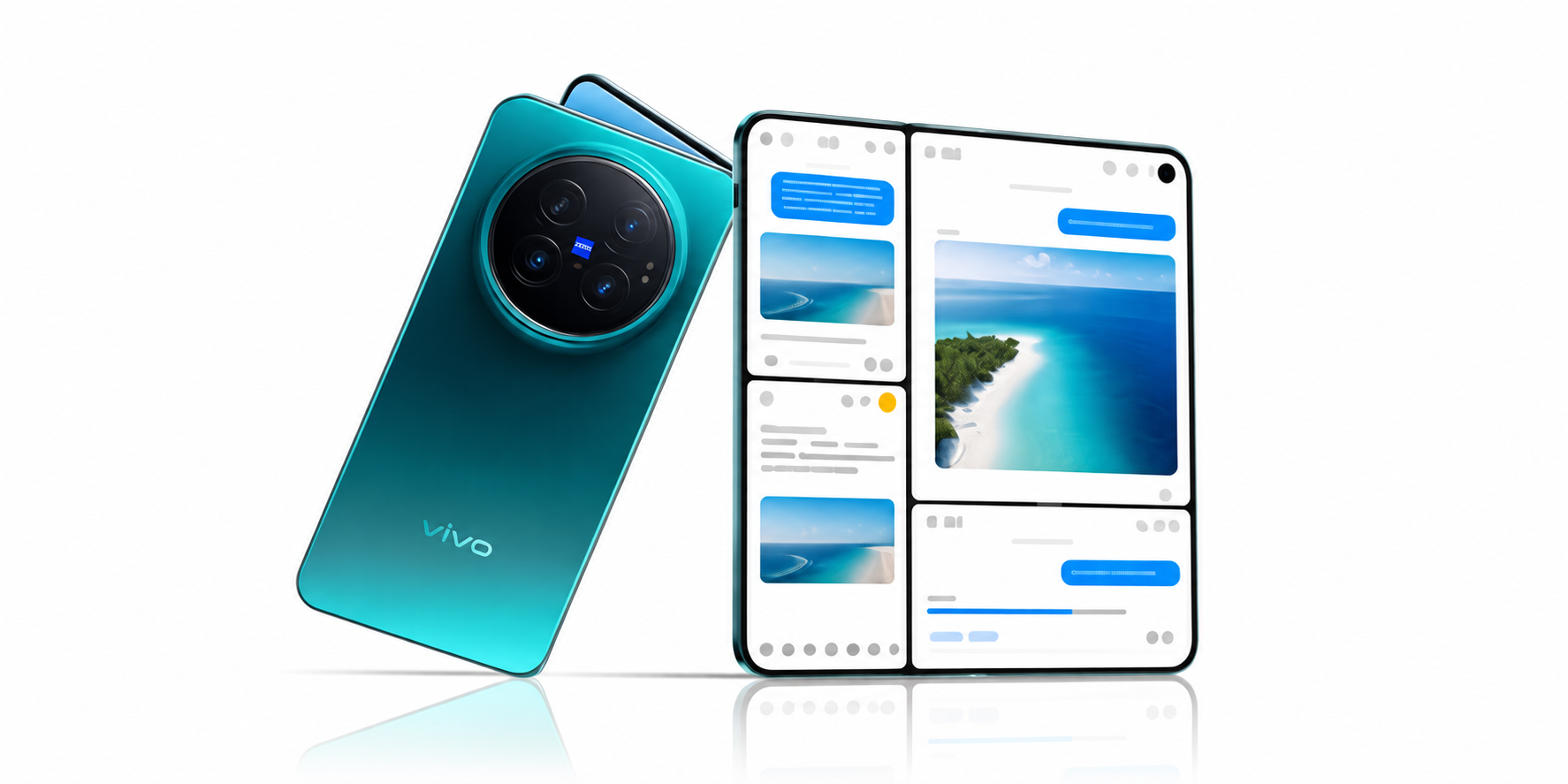
vivo has officially launched the X Fold6 globally. It combines a slim foldable design with productivity features, flagship imaging, and a large 6900mAh battery.
The X Fold6 runs OriginOS 7 Fold, which introduces Multi-Task Workbench with Origin Workbench and Multi-Split Screen. Users can display and resize up to four windows simultaneously, while AI Cross-App Drag allows content to move directly between apps.
Productivity with AI
The foldable also includes AI-powered productivity tools. AI Meeting Assistant provides speaker transcription and summaries through AI Recorder, while AI Captions adds real-time subtitles during online meetings. AI File Manager organizes files with features such as Topics, Smart Naming, AI Summary, and Column View. There’s also AI Reader Mode that reformats PDFs into an eBook-style layout.
vivo also equips the X Fold6 with Jovi, an AI agent designed to handle tasks across smartphones and PCs. It can search and understand materials, generate content, and complete office workflows through voice commands. It also supports scheduled and recurring tasks.
For users who want to replace a computer for lighter workloads, vivo Office Kit enables cross-device collaboration. Desktop Mode turns the foldable into a desktop-like workspace when connected to a compatible monitor or TV.
6900mAh large battery
The X Fold6 packs a 6900mAh BlueVolt Battery with 80W FlashCharge, 40W Wireless FlashCharge, and wireless reverse charging. Its 5th-Gen Silicon Anode Technology allows vivo to fit the large battery into a slim foldable body, while its 3rd-Gen Semi-Solid-State Battery is designed to maintain performance in temperatures as low as -20°C.
Despite its battery capacity, the X Fold6 measures as little as 4.4mm when unfolded and weighs 228g in Prism Black. The Horizon Blue version measures 4.8mm and weighs 235g. Both variants feature a 2.5D flat-edge metal frame and ultra-narrow bezels.
For photography, the foldable features a 200MP ZEISS main camera with a Samsung HPB large sensor, ZEISS T* coating, and optical image stabilization. It is paired with a ZEISS APO telephoto camera with a Sony LYTIA 602 sensor, 3x periscope design, telephoto macro capability, and up to 100x ZEISS HyperZoom.
The camera system also introduces Stage Mode for telephoto concert and live performance photography. It supports 4K 60fps Dolby Vision video, while Motion Portrait 2.0 uses subject tracking and portrait processing to capture moving subjects.
Powered by MediaTek
The X Fold6 uses the Dimensity 9500 Super Edition flagship platform and features an 8.02-inch inner display alongside a 6.51-inch cover display. Both screens use 8T-LTPO technology with a 1–120Hz adaptive refresh rate, adaptive dimming, up to 5,000 nits local peak brightness, and a minimum brightness of 1 nit.
The foldable also carries IPX8 and IPX9 water resistance and IP5X dust resistance. Its 1+4 Communication Chipset is designed to improve cellular and Wi-Fi connectivity, while Data Store allows users in select markets to purchase local data plans directly on the device across 129 countries and regions.
Philippines
Smart opens iPhone 18 Series pre-orders in the Philippines
iPhone 18 Pro starts at P3,713 monthly
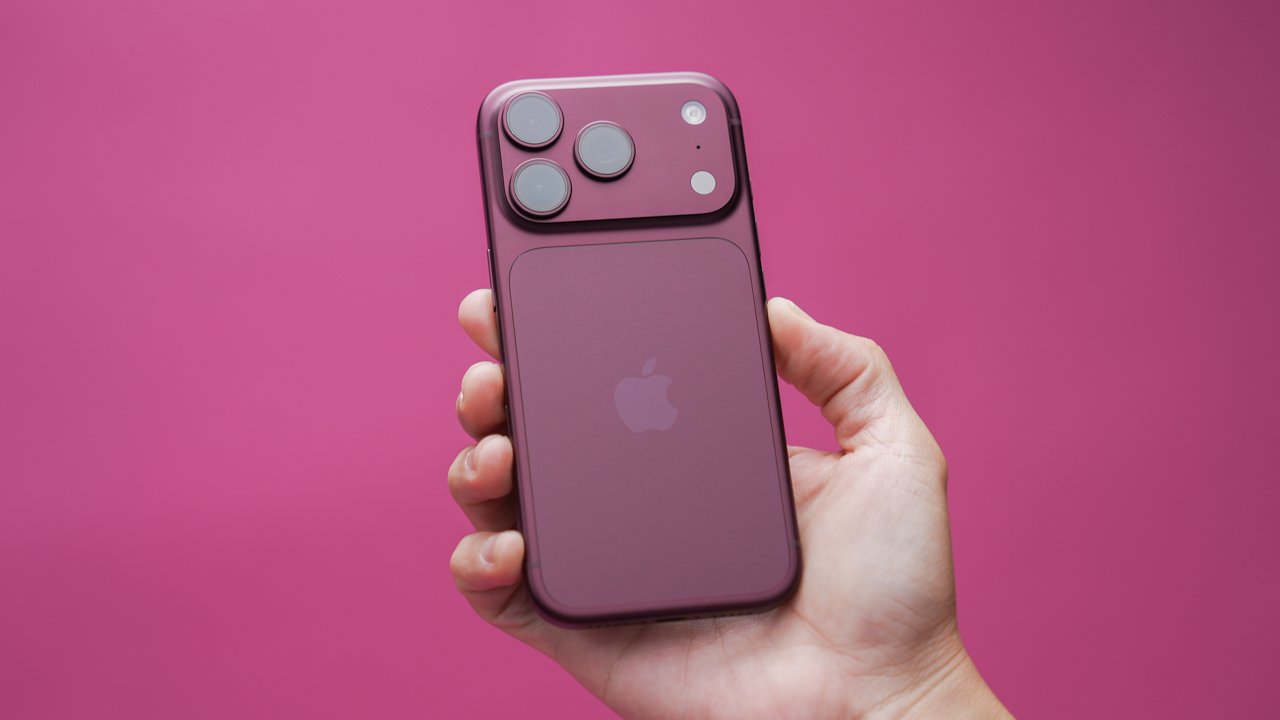
Starting October 2, subscribers can pre-order the iPhone 18 Pro with Smart Postpaid Plans+ 1499. It starts at PhP 3,713 per month. Meanwhile, the iPhone 18 Pro Max starts at PhP4,050 per month.
Customers can also pay for their devices through zero-interest credit card installments of up to 24 months with select banks. Smart Postpaid subscribers renewing their plans can choose payment terms of up to 36 months, charged directly to their Postpaid bill.
Both iPhone models come with an open-line device, a preferred Unli App bundle, UNLI 5G for 12 months, Open Access Data, and high priority on the Smart network.
Customers who successfully pre-order an iPhone 18 Series device will also receive 18GB of free Open Access Data valid for three months, a PhP5,000 discount voucher for select Smart Accessories, and 18% off select third-party Digimap accessories.
Those who pre-order through the Smart Online Store will also receive a free AirTag.
Smart Postpaid customers can pre-order at Smart Stores nationwide or through the Smart Online Store.
Smart Infinity gets additional perks
Members of Smart Infinity can get the iPhone 18 Series starting with the Infinity Plan 5000, which now includes Infinity Roam+ Plans for connectivity while traveling abroad.
Members can also opt for the Infinity Plus Plan 9500, which includes one Primary Line and two Supplementary Lines.
Infinity members who pre-order the iPhone 18 Series will receive a PhP5,000 discount voucher for select Smart Accessories and a complimentary PowerMac e-voucher.
Apple Watch Series 12 and Ultra 4 arrive October 9
Smart will begin offering the Apple Watch Series 12 and Apple Watch Ultra 4 on October 9.
The Apple Watch Series 12 starts at PhP1,521 per month with zero-interest installment as a Device Add-On, or PhP28,900with a Smart Postpaid Plans+ 999 plan.
The Apple Watch Ultra 4 starts at PhP2,467 per month with zero-interest installment as a Device Add-On, or PhP49,200 with Smart Postpaid Plans+ 999.
Smart Postpaid subscribers can also connect multiple Apple devices to one account through Smart Device Link, which costs PhP199 per month and is charged to the subscriber’s Postpaid bill.
Smart says subscribers can use the latest iPhones and Apple Watches on its 5G network. The company was recently recognized by Ookla for the Best Mobile Video Experience in the Philippines for the first half of 2026, recording a Video Score of 72.82.





OPPO Find X10 Series launches globally October 21

Amazon launches new Alexa+ tablets with full Google Play access

Psst! You can test drive BYD and DENZA EVs for free this week, but not for long

FFVII Revelation: 11 things you missed

Sony teams up with Hello Kitty for exclusive limited-edition collection

iPhone 18 Pro series: Price, availability in the Philippines

vivo X500 Series launches with major imaging upgrades

iPhone 18 Pro series: Price, availability in Singapore

OPPO Find X10 Pro Max is the first phone with a triple 200MP camera system

BYD says that way better EV batteries are coming next year


-
 Automotive2 weeks ago
BYD says that way better EV batteries are coming next year
-

 Philippines1 week ago
TECNO CAMON Slim 5G: Price, availability in the Philippines
-

 News1 week ago
HONOR Magic9 Pro Max launches in China with ARRI-powered imaging
-
 Reviews1 week ago
TECNO CAMON Slim 5G review: Slim on size, big on surprise
-

 Smartphones2 weeks ago
TECNO CAMON Slim 5G teases an ultra-slim design ahead of launch
-

 Reviews2 weeks ago
TECNO POVA 8 Pro Tonino Lamborghini review
-
 Smartphones2 weeks ago
When TECNO-logy meets Tonino Lamborghini legacy
-

 News1 week ago
Apple wants to release new iPhones more regularly