
Wearables
itel has its own smart ring, and it’s out now
The itel Ring

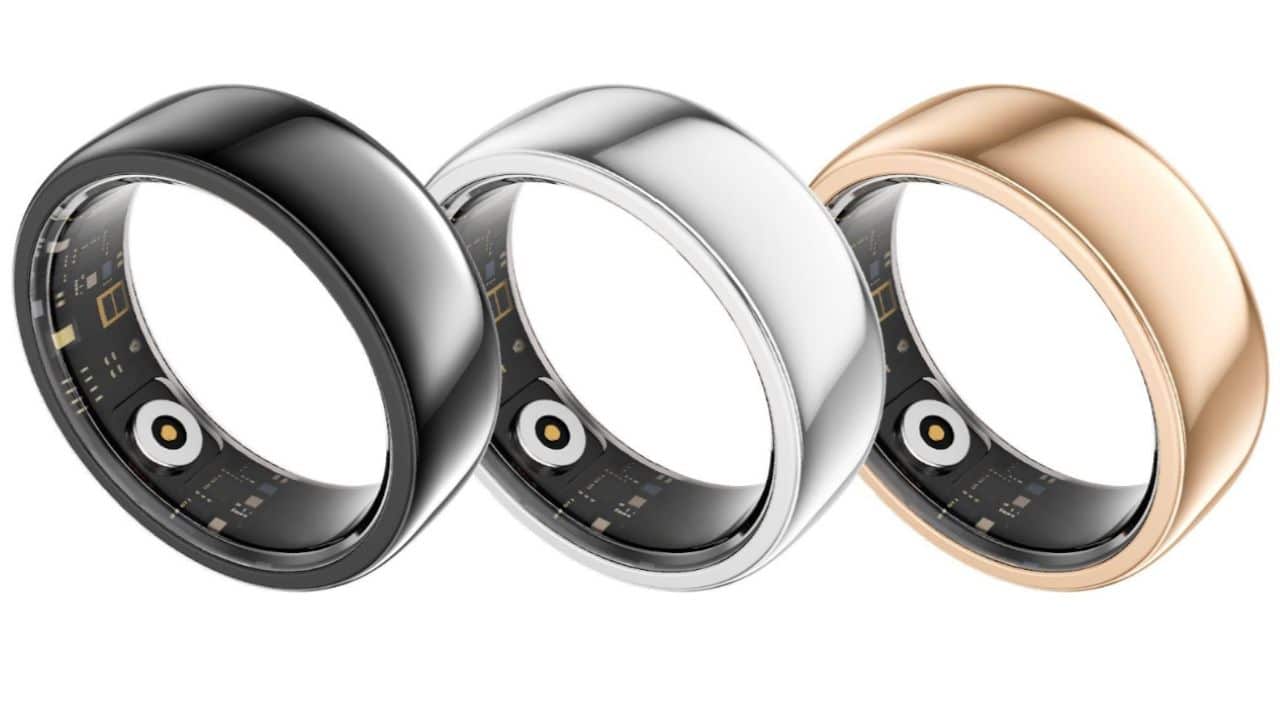
itel has just launched its first-ever smart ring, the itel Ring, in the Philippines. Yes, the budget smartphone brand under the Transsion umbrella has its own smart ring.
The itel Ring has an incredibly attractive price of just PhP 1,199 and is currently available via itel’s Shopee official store. It comes in three colorways: black, silver, and gold. Moreover, customers can choose from four sizes: 7, 9, 11, and 12.
Like other smart wearables, the smart ring is able to monitor health insights. The two most common of which are heart rate and blood oxygen levels. It also serves as a sleep and activity tracker.
What’s great about the itel Ring compared to smartwatches is its up to 60-day battery life on a single full charge. Users can utilize the ring’s features for up to seven days, then recharge it quickly with its charging case.
Of course, the ring also records the amount of steps a user has taken daily. Plus, with 10 ATM water resistance, users don’t have to worry about taking the accessory to swimming. The same goes for just working out or washing hands.
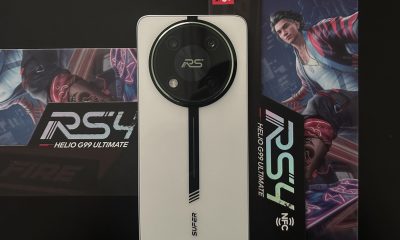
With such a compelling price point, itel users should definitely consider getting this ecosystem add-on. itel is known for their very affordable products, including the VistaTab 30 tablet and its first-ever gaming phone, the RS4.





Lifestyle
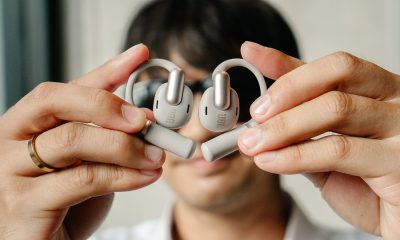
JBL Sense Pro review
My daily driver met a loud and capable rival in this quest for a superior training companion.

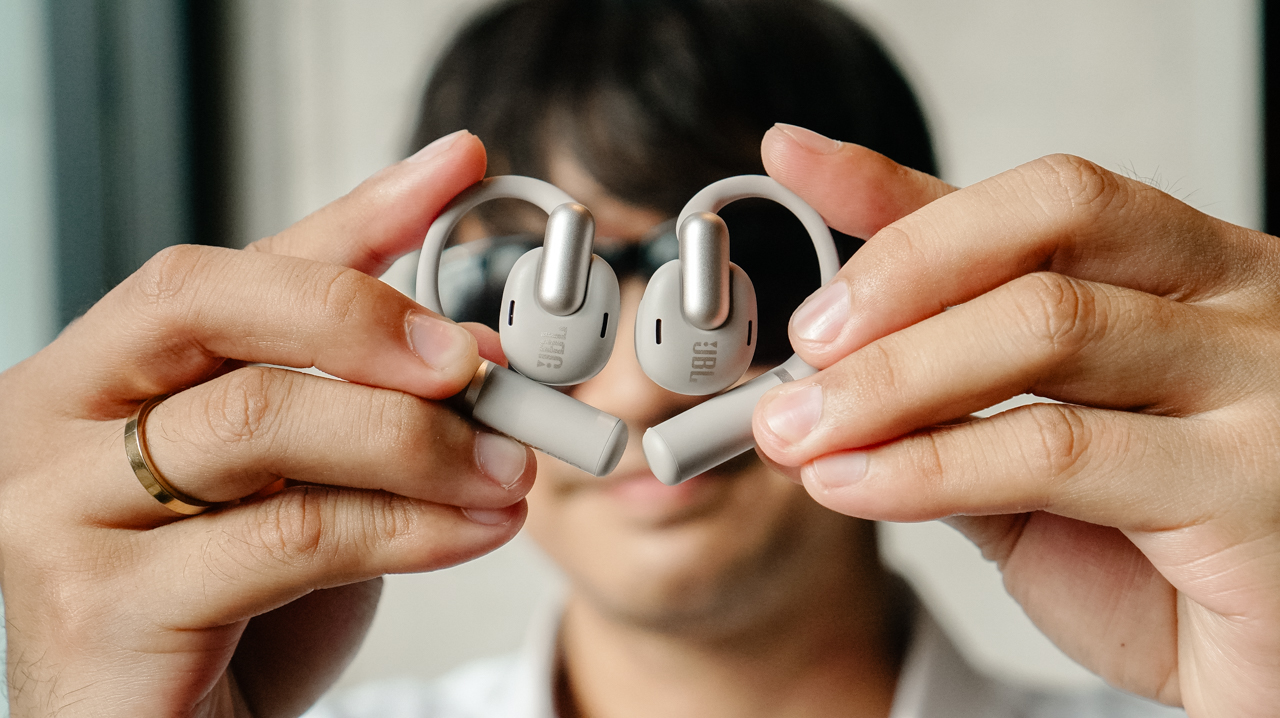
I consider my relationship with my workout gear to be a very serious, long-term commitment.
I’m a creature of habit when a product truly understands my everyday life. For the past year, I have depended on my Shokz OpenFit 2+ as if it were a physical extension of my morning.
When I lost my original pair, I didn’t even browse for alternatives before I secured a replacement. I knew exactly what worked for my ears and my life.
When the JBL Sense Pro arrived, it didn’t feel like a necessity so much as a very expensive curiosity.
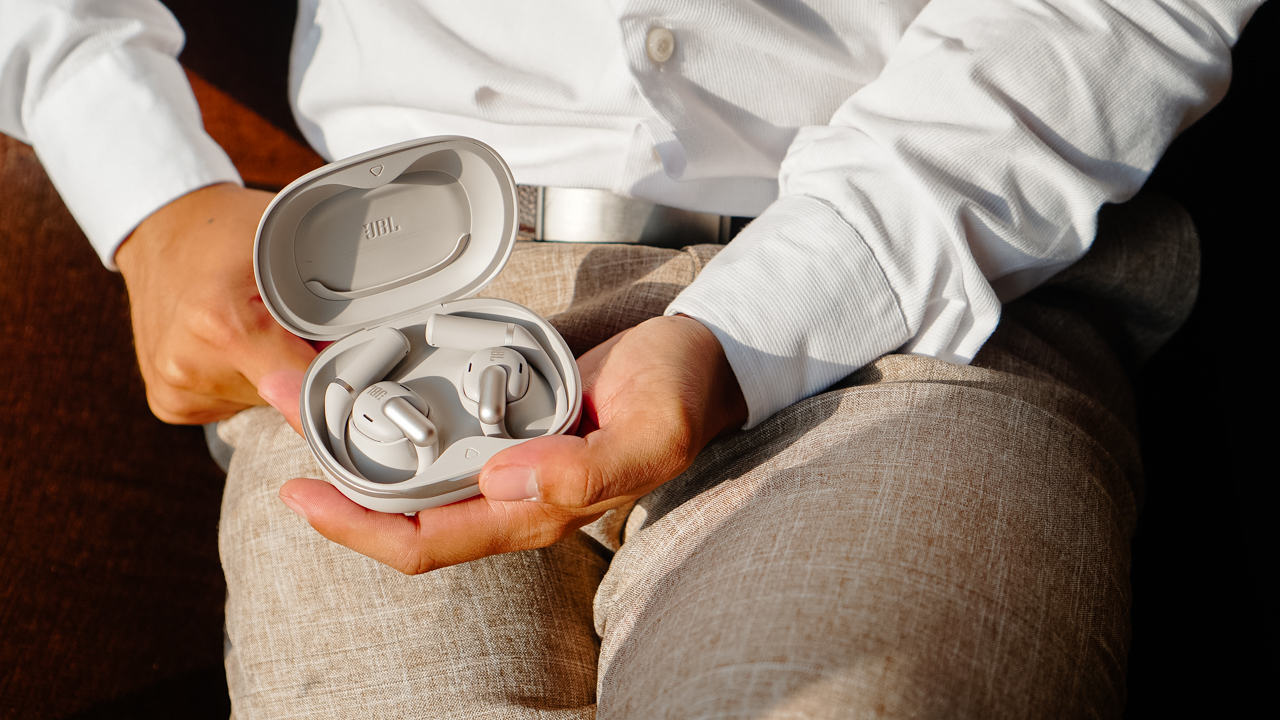
I wanted to see whether the “Pro” label could actually offer more than the weightless comfort I already loved. I decided to treat this as an essential research project into whether my standards could actually be raised.
Weight of a secure fit
I find that gear often reveals its true character at the exact moment I am negotiating with my willpower to finish a final rep.
This is the time when I realize if my earbuds are truly supporting my ambitions or if they are simply getting in the way of my progress.
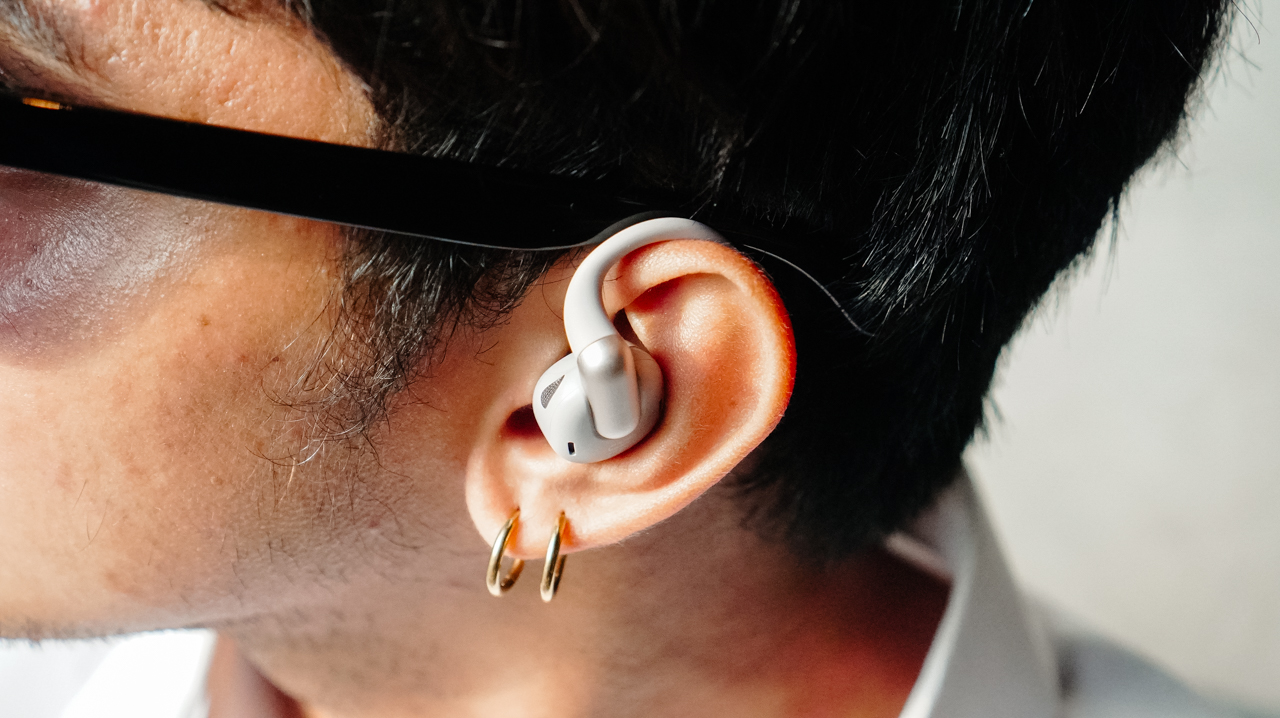
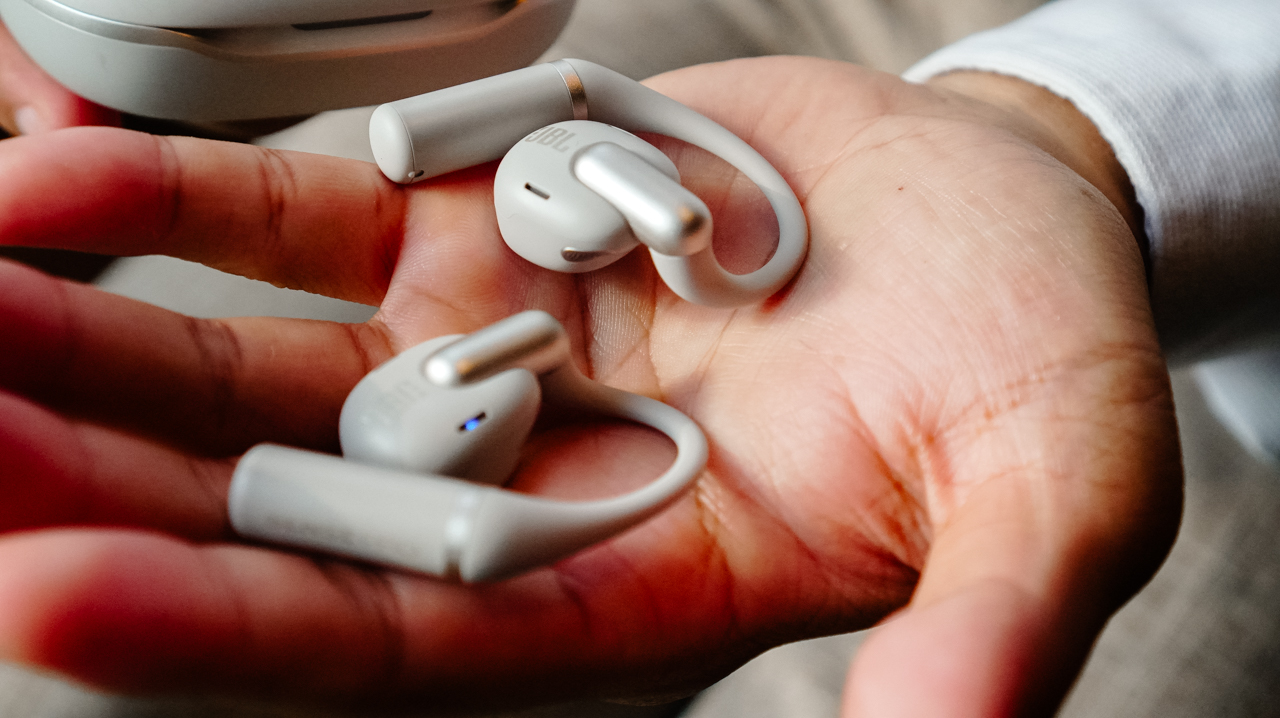
The JBL Sense Pro surprised me with its 20-degree adjustable hinge. During a light warm-up, the fit sits relaxed on my ear and feels remarkably airy.
However, when I transition into high-intensity movements like box jumps or plyometric exercises, I instinctively click the buds closer to my ears to ensure a tight grip.
The titanium memory wire wraps around the ear with a firm security that avoids the suffocating pressure I often feel with standard in-ear buds.
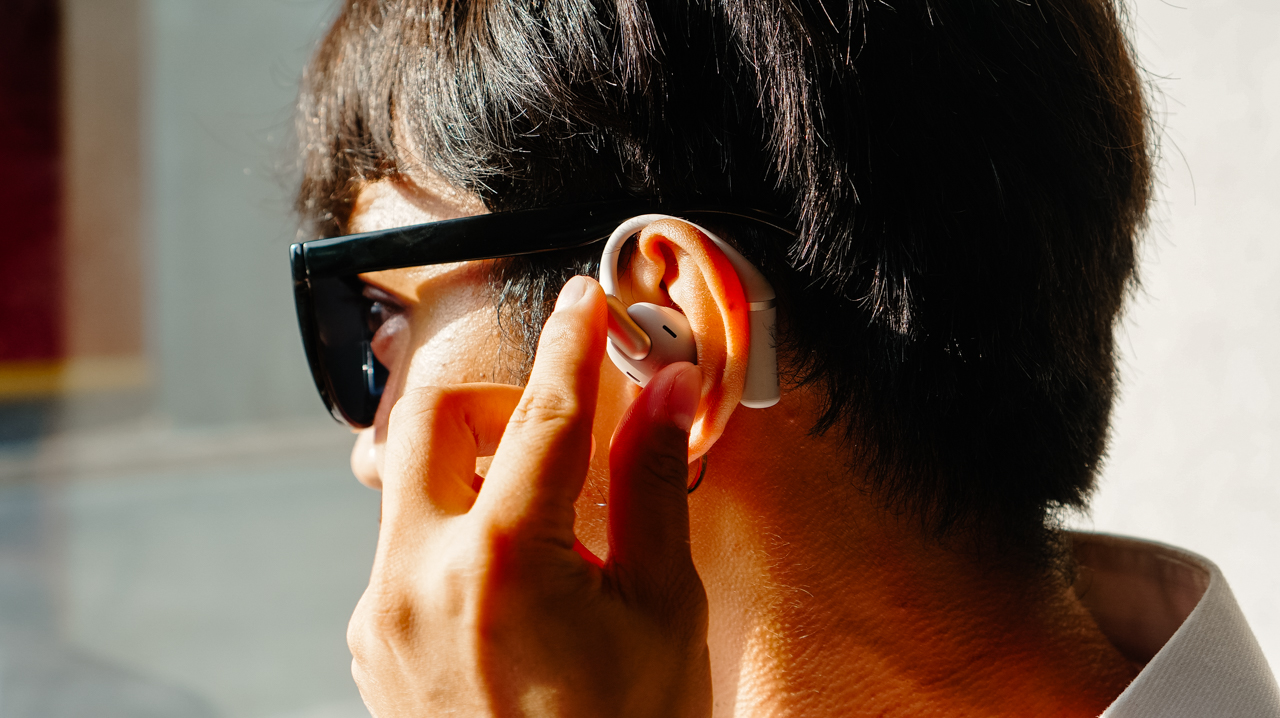
Even with that clever hinge, the presence of the device remains noticeable to me. After an hour of movement, I begin to feel the weight of the buds sitting against my skin.
Unlike my Shokz OpenFit 2+, which disappears even during long sessions, the JBL Sense Pro reminds me that it’s there.
I find myself adjusting the buds in between my sets to keep it snug, which is a small interruption I never experienced with my Shokz or even my previous Xiaomi OpenWear Stereo.
Soundstage for my private performance
Open-ear audio is usually a lesson in compromise where I expect to trade deep bass for environmental awareness.
Most music sounds thin and distant in these designs, which is why I was skeptical of the performance claims.
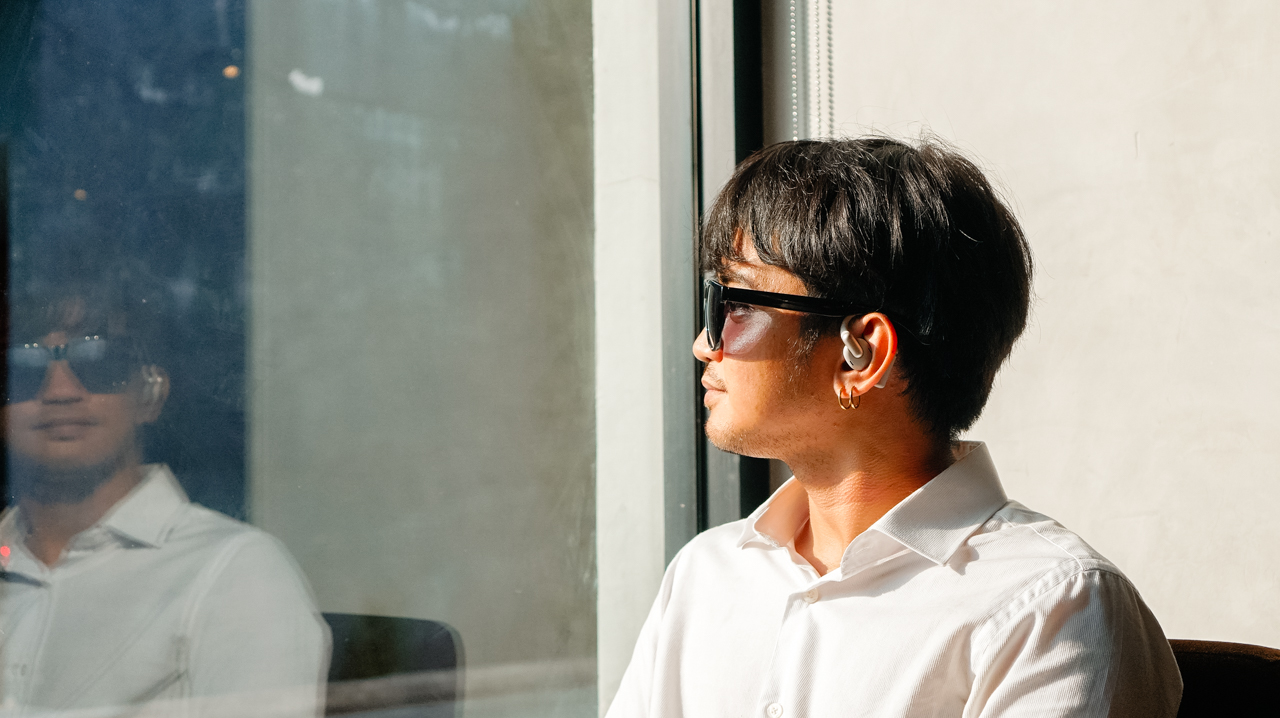
JBL is known for bass, and the 16.2mm drivers combined with LDAC support ensure the sound carries a level of authority I did not expect. The audio feels full and lush even when I am running on a busy street with heavy traffic.
The adaptive bass boost compensates for the wind and noise in real time so my power songs, specifically “Breaking Dishes” by Rihanna, never lose their emotional impact.
I appreciate hearing the full range of a track while remaining completely aware of the world around me.
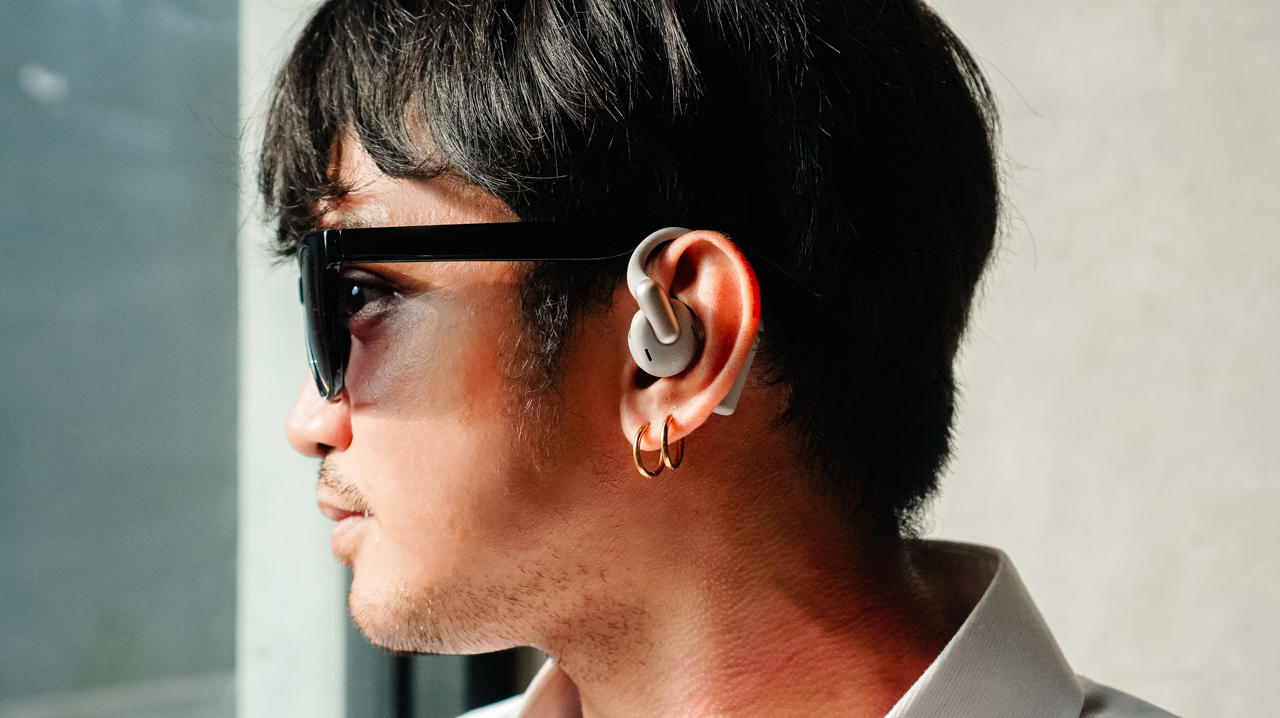
The spatial audio feature turns a standard gym session into something that feels like a professional sports film shooting.
It creates an atmosphere where the music feels like it’s following me from one weight station to the next rather than just playing in my ears.
One thing I did notice is the occasional static during my tests, which served as a tiny reminder that I was dealing with a complex piece of technology rather than a seamless part of my body.
Technology that understands my hustle
The real value of a professional device lives in the features I don’t see… until I actually need them.
For the Sense Pro, the bone vibration sensor is that essential investment. It sounds quite technical until I have to take an urgent client call while I’m huffing and puffing on the treadmill.
Instead of relying on microphones that catch every gust of wind, the sensor reads vibrations from my jaw to ensure my voice remains clear.
My Accounts Team was actually surprised to learn that I was running during our last meeting. They didn’t notice the gym environment at all when I told them I would send the presentation deck after my workout.
The sensor understands my voice even when I am in the middle of a busy setting. That said, its battery life supports my busy schedule without requiring constant attention.
The 38-hour total capacity means I can go an entire week without looking for a charging cable. Meanwhile, the quick-charge feature provides four hours of playback from just ten minutes of charging, which is my ideal safety net for those mornings when I’m rushing out the door.
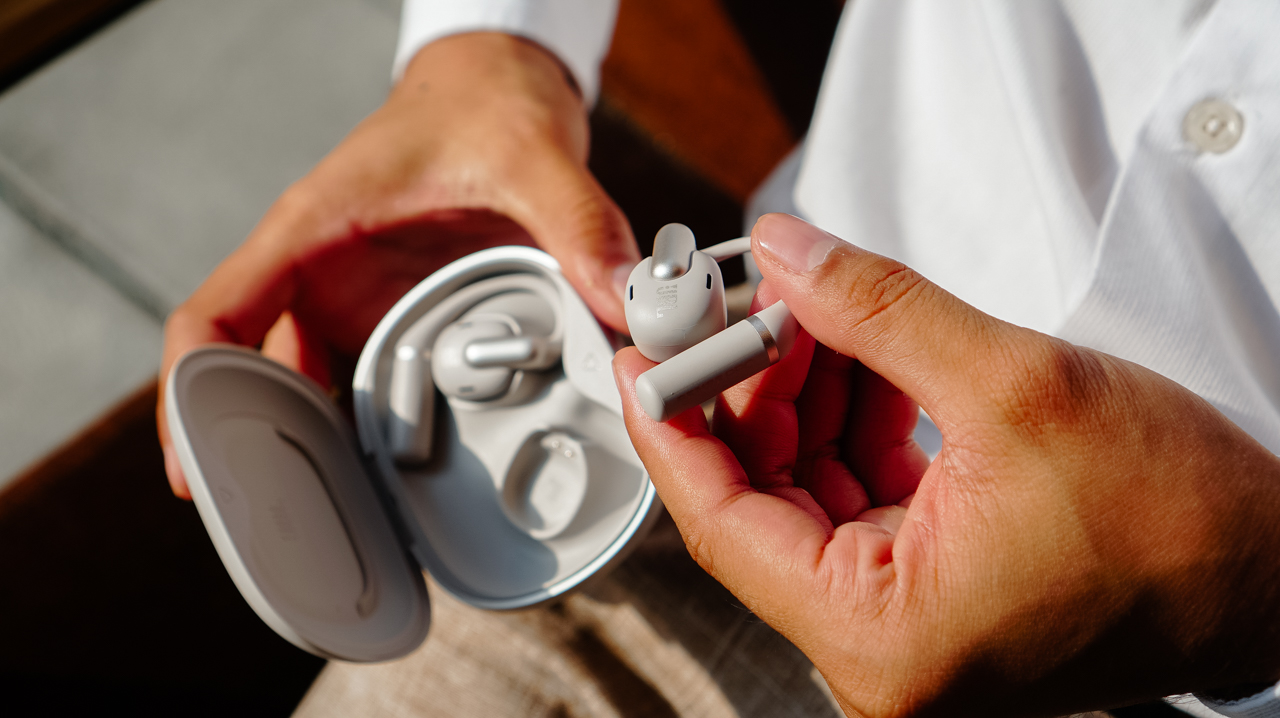
On top of that, I can easily monitor my juice through the JBL Headphones app along with the various settings I like to tweak.
Is this your GadgetMatch?
The JBL Sense Pro is a serious piece of equipment for those who need their audio to perform in loud, chaotic environments.
It offers a richer sound and better call quality than almost anything else I have tried in the open-ear category.
However, it cannot quite match the weightless comfort that makes the Shokz OpenFit 2+ (or the cheaper Xiaomi OpenWear Stereo) so easy to live with day after day.
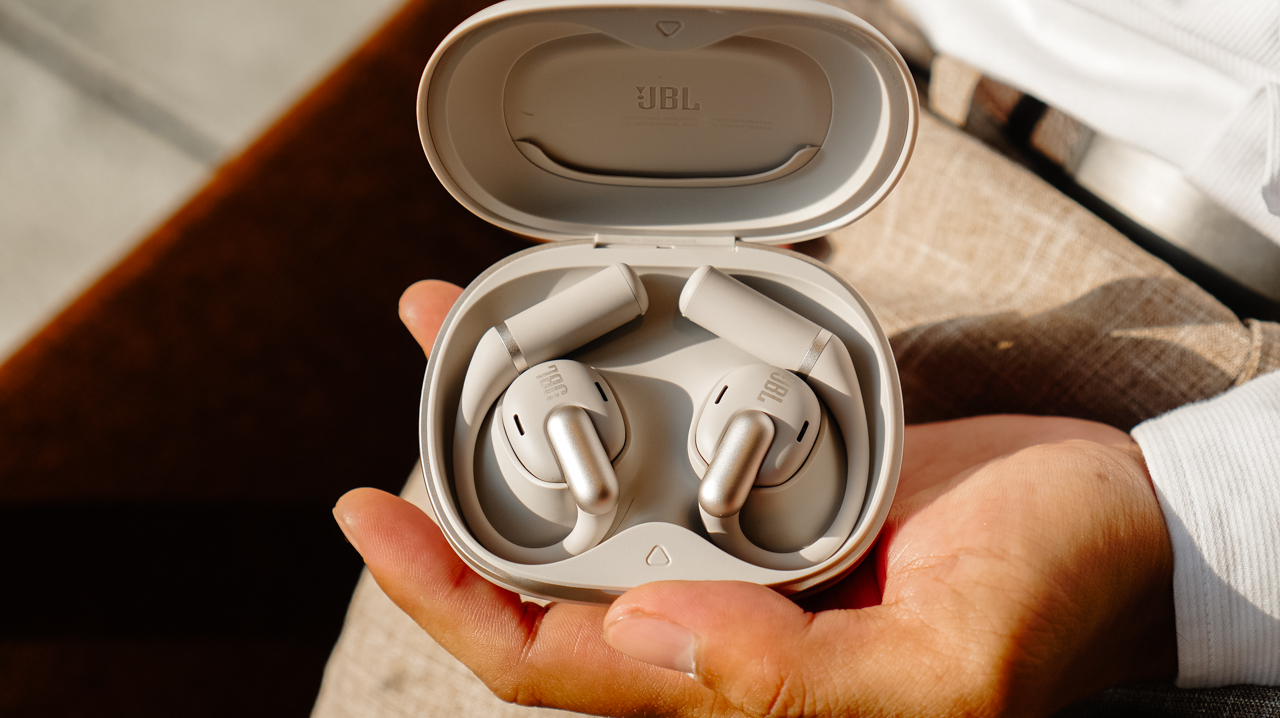
Swipe Right if you prioritize deep, immersive audio and need a secure, adjustable fit for explosive workouts. It’s a good choice if you take frequent professional calls outdoors and want a battery that can keep up with a high-performance lifestyle.
Swipe Left if you have sensitive ears and want a weightless, invisible feel for long hours of wear. If you already own Shokz or Xiaomi’s Open-ear wearables, you might find the JBL feels a bit too present for a routine that you might have already perfected.
The JBL Sense Pro retails for PhP 9,599 and is available in official JBL stores and authorized retailers.

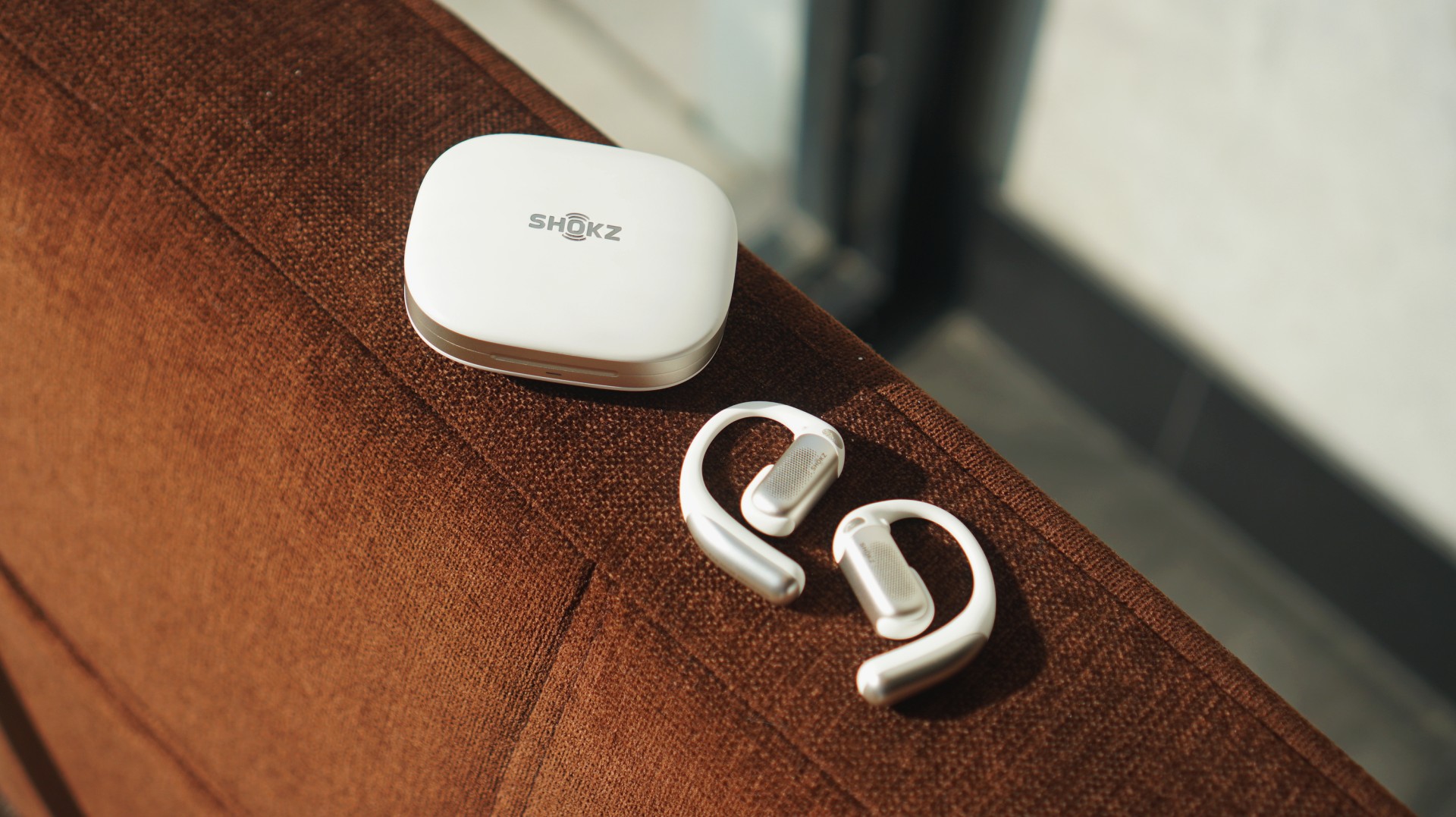
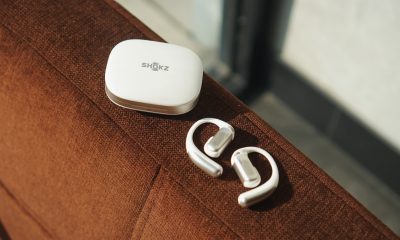
Somewhere between “stay aware” and “tune things out.” That’s exactly where the Shokz OpenFit Pro lands. It didn’t fully make sense to me at first. But after about a week of using it almost everywhere, it started to click.
First impressions: familiar, but better
For context, I’ve only used a couple of open-ear options before — the HONOR Earbuds Open and the Shokz OpenDots One. I also heard from a colleague that “Pro” versions tend to feel heavier.
That wasn’t my experience here.
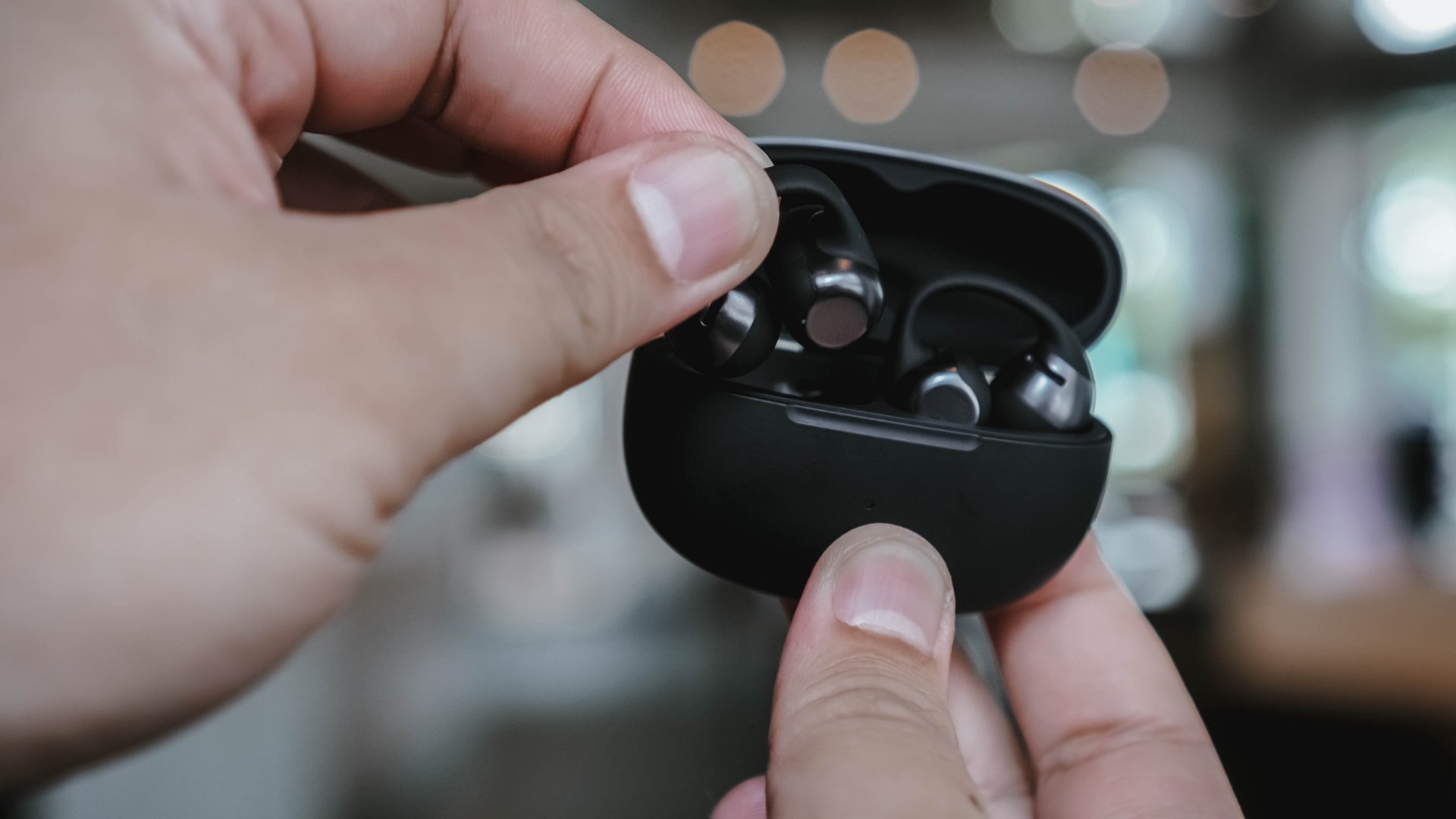
The first few minutes with the OpenFit Pro felt just right. Not too heavy, not awkward. Just… there. In a good way.
What stood out more immediately was how visible they are. These aren’t the kind of earbuds that blend in or pass off as accessories. If someone looks at you, they’ll know you’re wearing earphones.
And then there’s the sound.
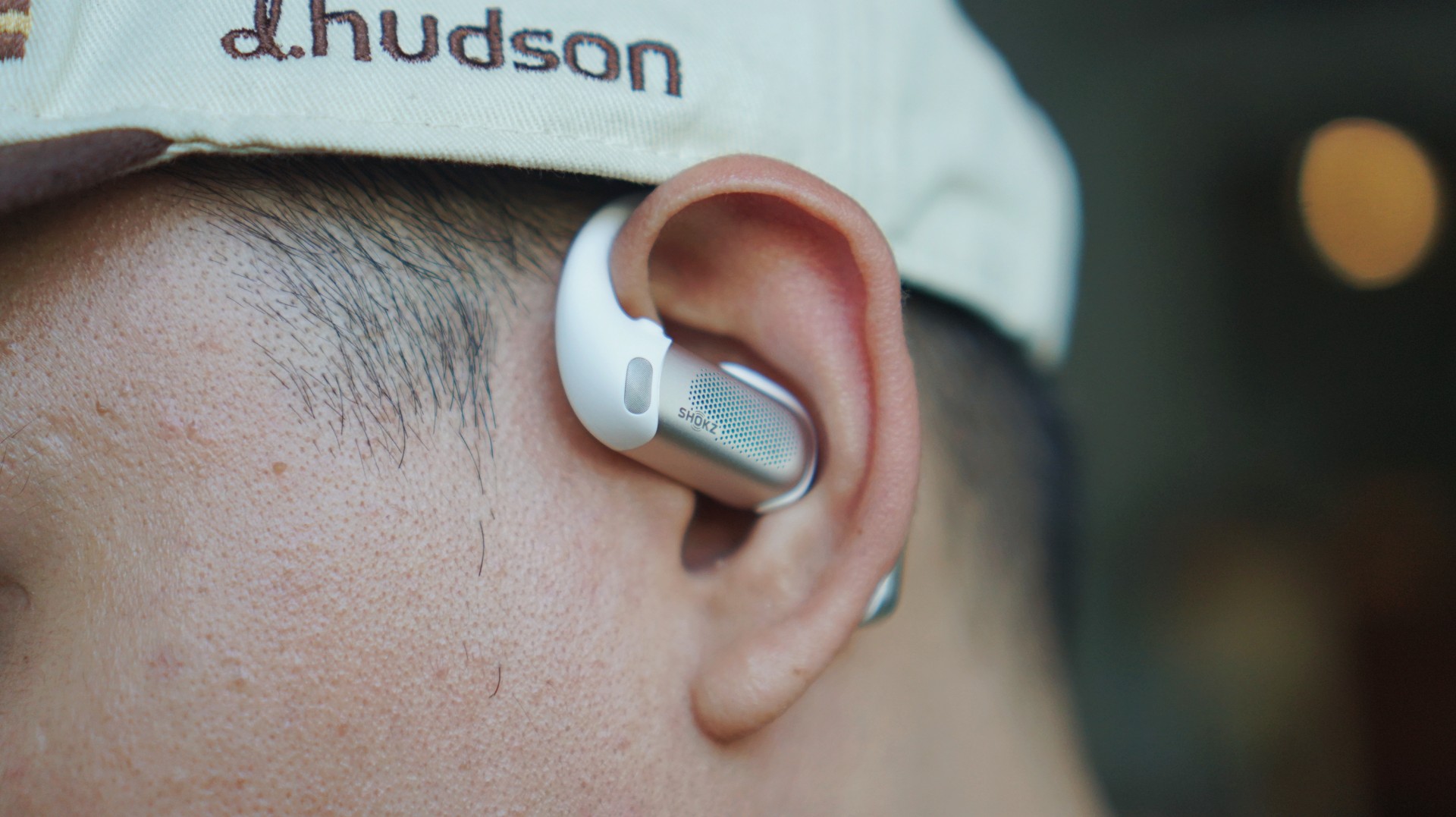
I could immediately tell they were better than both the Earbuds Open and OpenDots One. That was the first real “okay” moment.
It just fit into my day
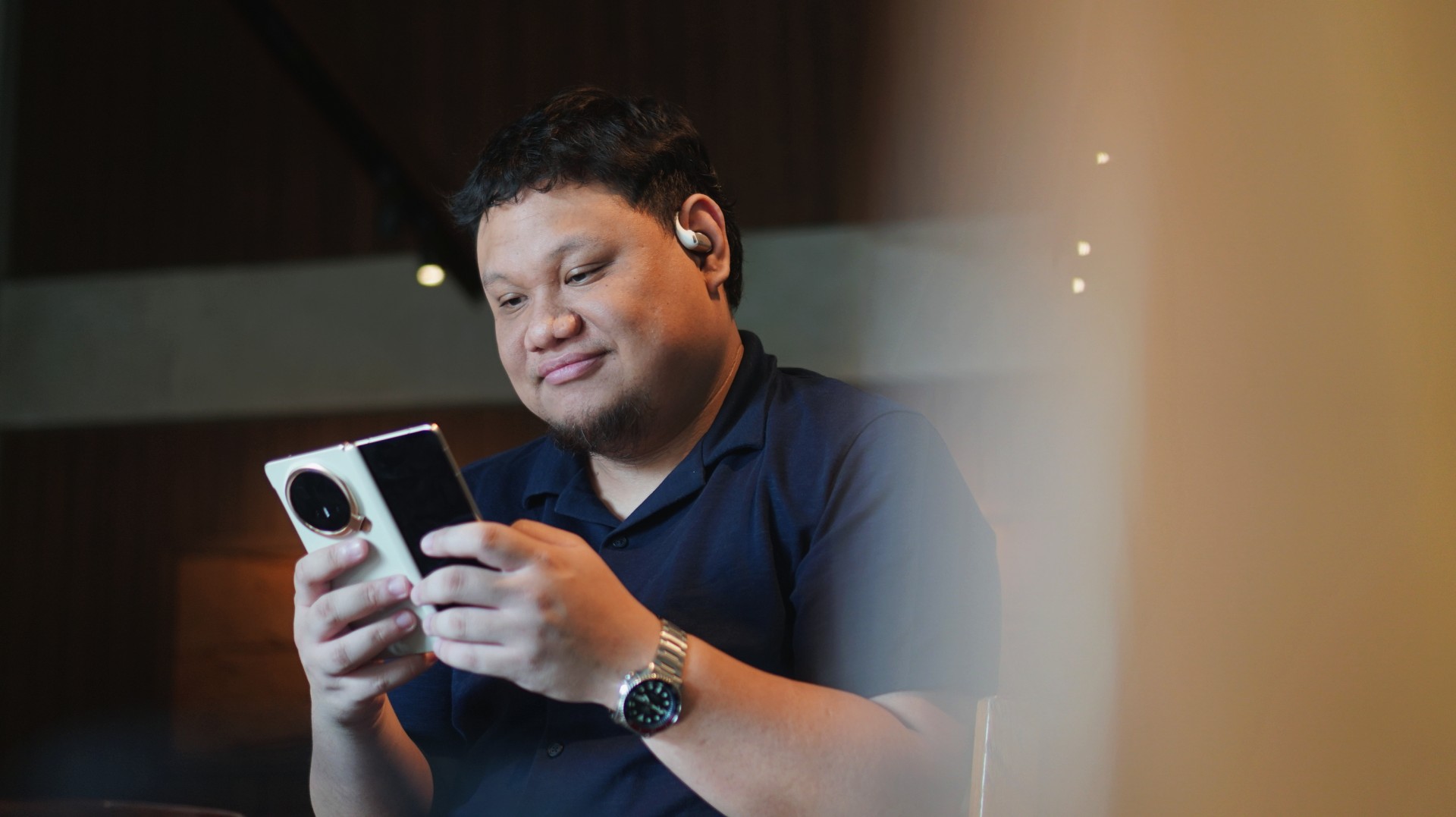
Since unboxing, I’ve kind of just been using the OpenFit Pro everywhere.
I worked at a café for about four hours with it on. Took calls — both work and casual. Wore it while walking around.
In the week or so that I’ve used it, it felt appropriate in pretty much every scenario I found myself in. Mostly casual ones, but still.
There are moments where I’d still reach for something like the OpenDots One — especially when I want something more subtle, like at events or even on a date.
But lately, I’ve been picking up the OpenFit Pro more. Mostly because of the sound quality and the flexibility you get with the noise reduction options.
The kind of sound that lets you sit in it
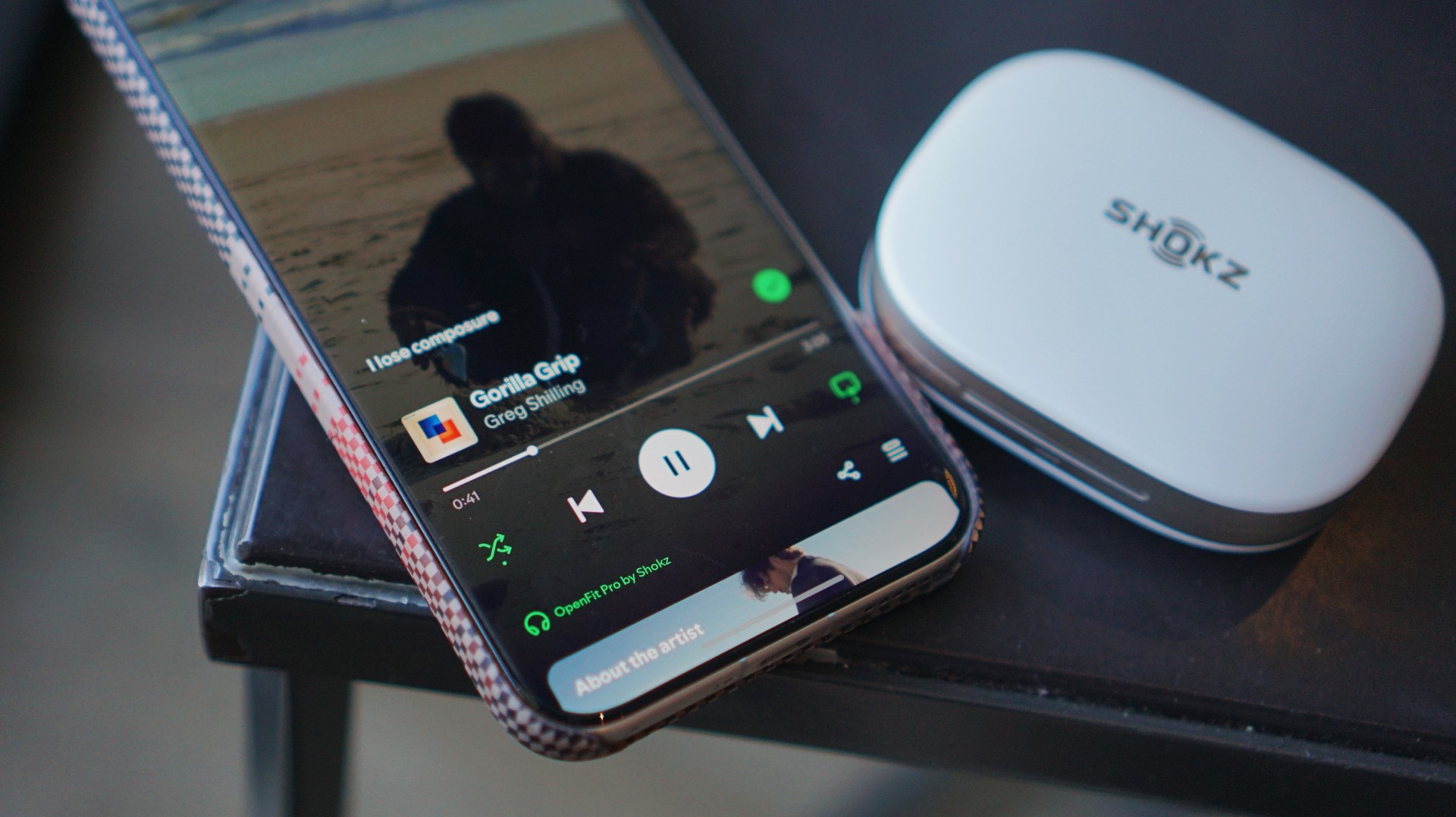
I’ve been stuck on a single playlist lately — a mix of chill neo soul and indie pop. Tracks like “Gorilla Grip” by Greg Shilling and “Psychosomatic” by Azkal. That’s been my vibe and the OpenFit Pro fits right into that.
At this price point (PhP 14,990 / USD 249.95), I expected it to sound good. Thankfully, it does.
The sound is clean, clear, and crisp. That’s really the best way to describe it.
Bass doesn’t hit you in a physical, “thumpin’” way, but it’s present. It rings. It sits where it should.
I usually test with “Turn It Up” by TWICE and “Summer Romance (Anti-Gravity Love Song)” by Incubus, and both come through nicely.
What I appreciated most is how easy it is to isolate sounds in your head. If you’re the type to mentally pick apart layers in a track, this makes that easy.
Dolby Atmos adds another layer to that experience. Tracks like “Sobakasu” by Judy and Mary and “⅓ No Junjo Na Kanjo” by Siam Shade feel like they move around you.
It’s the kind of sound that makes you want to move a little. Nothing dramatic. Just enough to groove.
Noise reduction, but still open

The main feature here is open-ear noise reduction. I turned it on right away during a café work session. It works best for tuning down general noise — conversations, ambient chatter, the usual café sounds. It doesn’t eliminate them, and that’s the point.
Vehicle noise gets reduced too, but to a lesser extent. It doesn’t fight your music. It just sits behind it. I wouldn’t say it feels weird or unnatural. It just does what it says it does.
You still hear the world. Just… less of it when you want to.
Awareness that feels intentional

This is probably the core of the experience. It never really felt like I was “half-present.” It felt intentional.
If I’m semi-engaged in conversation, I can turn noise reduction off and just let everything in. If I want a bit more focus, I turn it on.
Walking was where I appreciated it most.
I walked quite a bit with these on, and it helped me stay aware of my surroundings. I moved pretty much the same way I normally would — just with a bit more awareness in the background.
And if I’m locked into work, the outside noise fades anyway.
Comfortable, with a presence
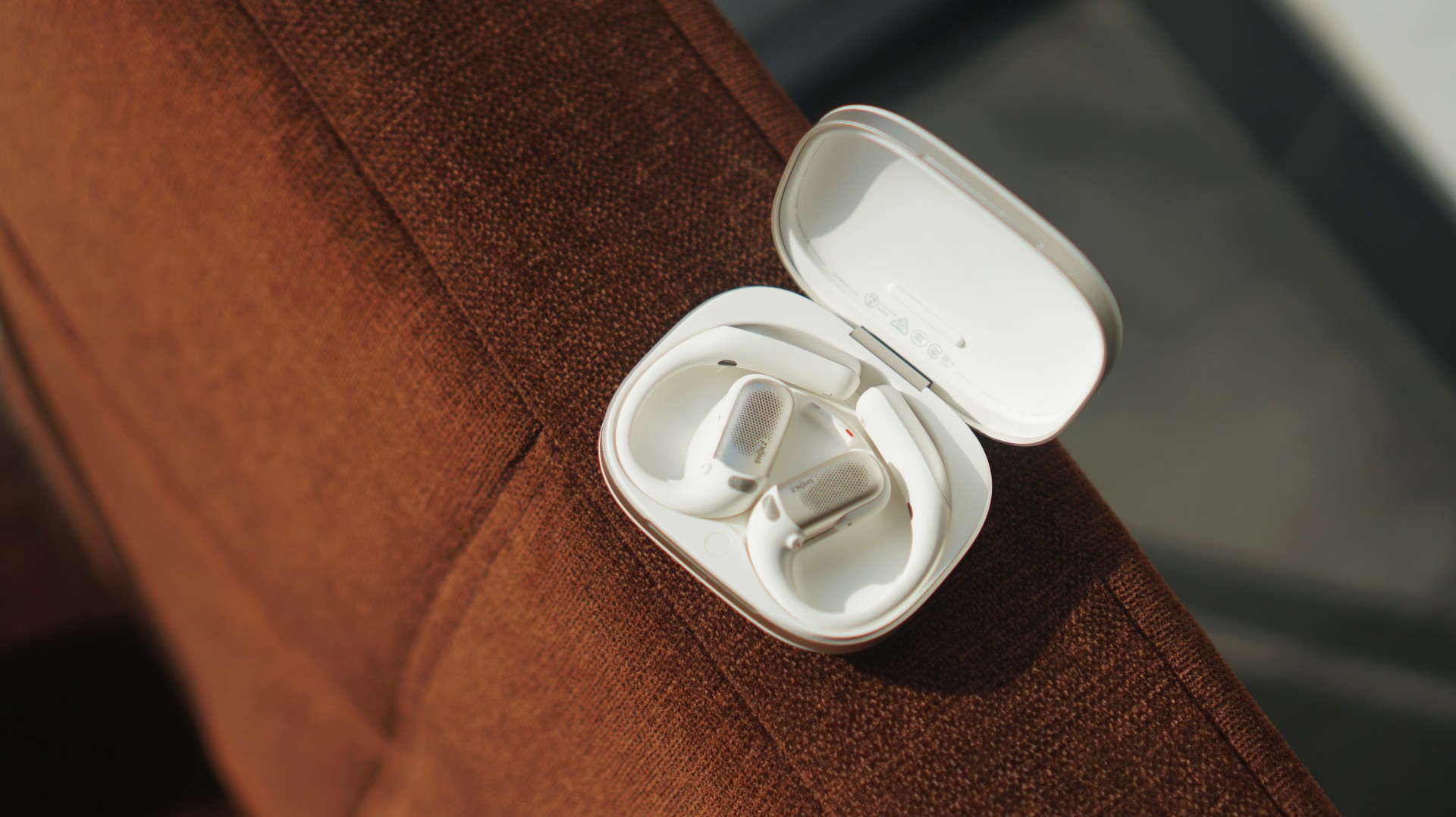
On my first day, I wore it for four straight hours and honestly forgot about it.
After that, I started to feel it around the two-hour mark — not in a bad way. More like a reminder that it’s there.
But it never got to the point where it felt tiring or uncomfortable.
It only fell off once, and that was after taking off a helmet from a moto taxi. Outside of that, it stayed put no matter how I moved.
And I didn’t exactly take it easy either — there was some random dancing in the elevator and a bit of headbanging in my room.
It held up.
Calls that just work

I took several calls using the OpenFit Pro — all indoors, mostly with minimal background noise.
Here’s the feedback I got:
“It was pretty clear. There wasn’t much noise except for during the start of the call. It’s like there’s just one layer. Then noise cancellation was good because there was no background noise. I wouldn’t know if phone or earbuds in that sense.”
That last part stands out. If the person on the other end can’t tell whether you’re using earbuds or just your phone, that’s usually a good sign.
I’d trust this for important calls.
Battery that just exists
Battery life is one of those things I didn’t really have to think about.
I used it throughout the day and charged it when I got home. That’s it.
There was even a day I forgot to charge it, and it still had enough battery for my usual usage the next day.
No stress. No adjustments needed.
The trade-offs are mostly visual
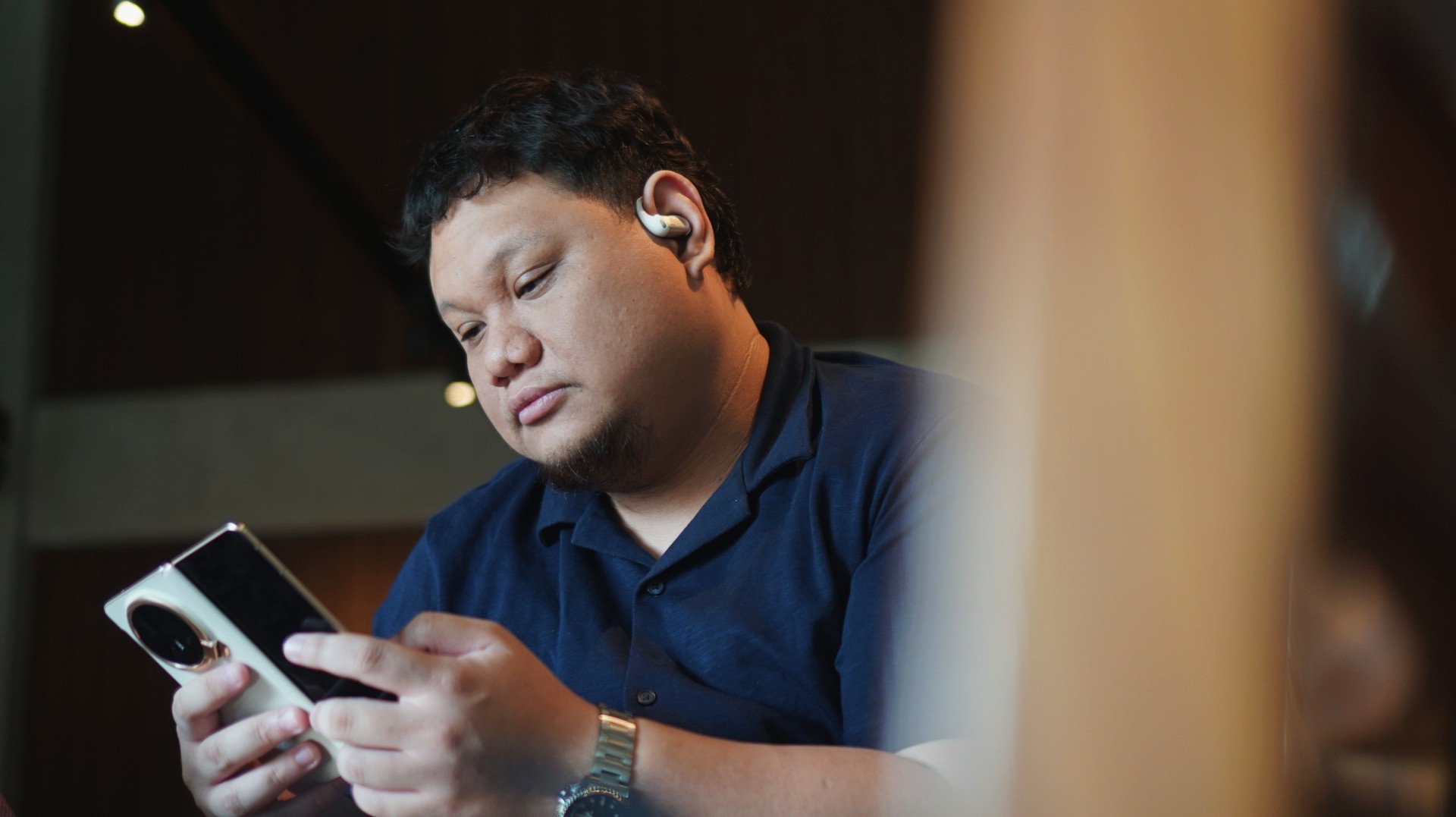
If there’s one thing you’re giving up here, it’s subtlety. These are not discreet. People will notice you’re wearing them. If that matters to you, this might be a dealbreaker.
The black version helps if you want something more low-key. The white one stands out more — which I personally like.
Beyond that, there weren’t any real frustrations. Maybe the price, but given the tech and overall experience, it makes sense.
A lifestyle fit that makes sense
This feels like it’s made for people who move around a lot and don’t mind being seen.
Active, unbothered, always in motion.
It’s so easy to use and comfortable enough that I found myself listening to more music during short walks. I didn’t have to worry about it falling off the way I sometimes do with in-ear options.
It just fits into that kind of lifestyle naturally.
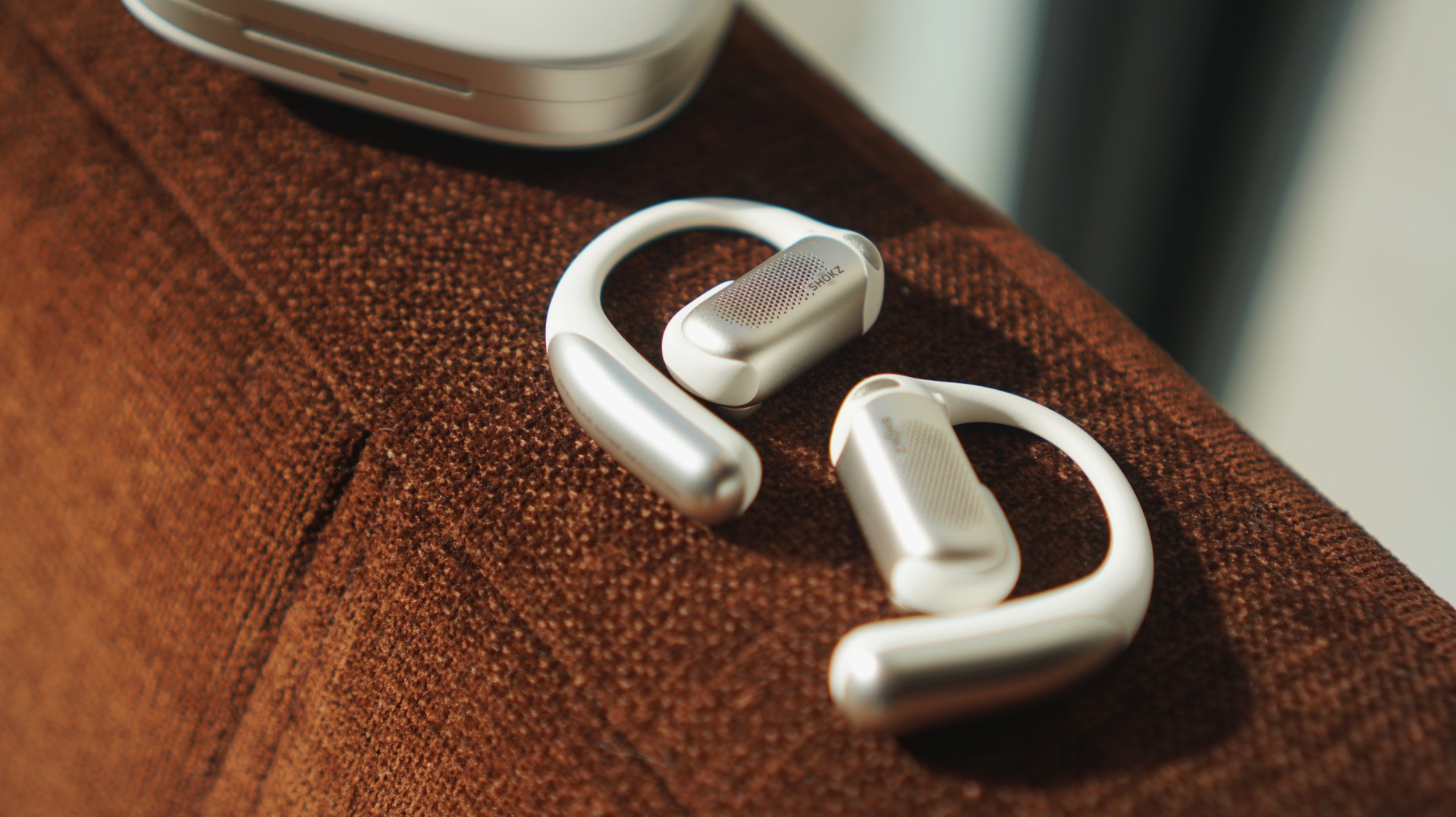
The moment it clicked
For me, it clicked right after setup. I connected it to the app, tried the head tracking, toggled noise cancellation on and off, even tested it without anything playing. Shook my head like a crazy person. The works.
From there, everything just lined up.
I liked the sound immediately. The comfort made sense. The controls were simple and easy to learn.
It felt like something I’d actually want to keep using.
Is the Shokz OpenFit Pro your GadgetMatch?

At this price, the OpenFit Pro positions itself as a main pair of earbuds — and it can absolutely be that.
It fits into most situations where you’d want to wear headphones.
Especially if you’re someone who likes music as a constant companion — whether you’re working out, walking around, or just moving through your day like you’re in your own little movie.
For people like that, this is a Swipe Right.
If the open-ear look isn’t your thing, though, that’s an easy Swipe Left.
Bonus: choosing this over traditional earbuds
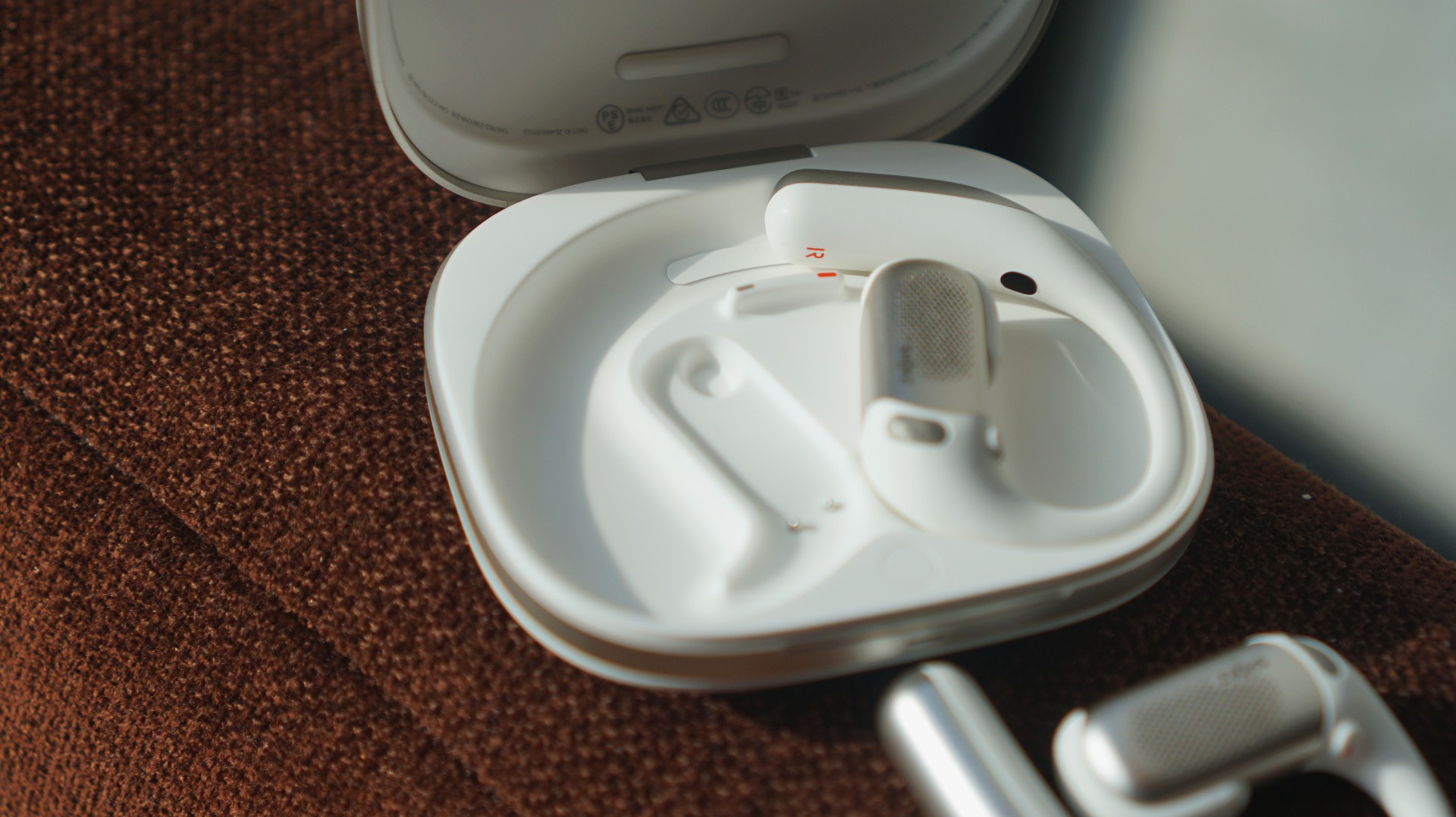
This is funny, but I haven’t picked up my Galaxy Buds4 Pro at all since I started using the OpenFit Pro. The Buds4 Pro are still better in terms of overall sound and features. But I just find open-ear headphones more comfortable to wear.
At the end of the day, it comes down to comfort and how you want to show up. And right now, this is the one I keep reaching for.
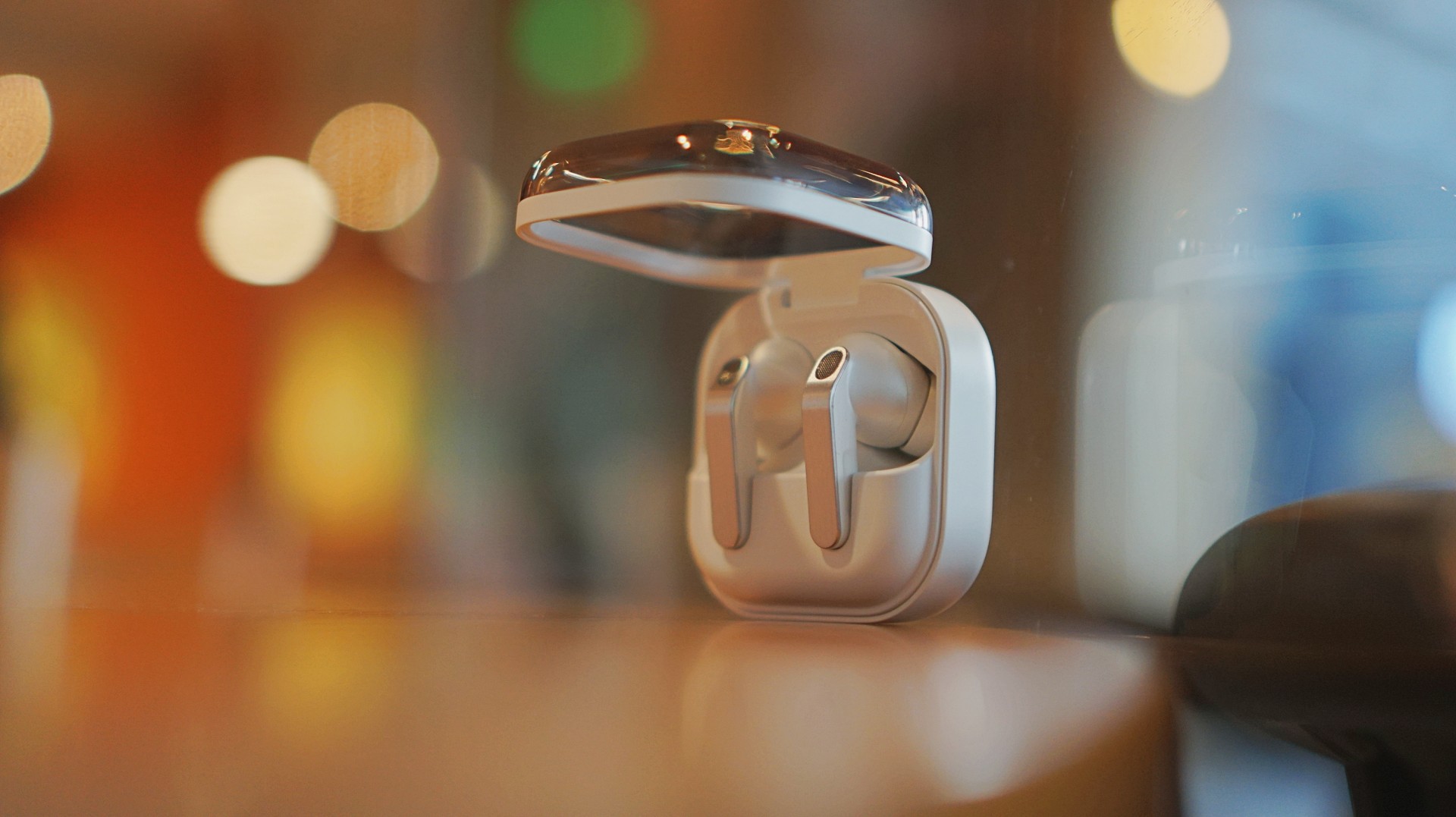
I thought I was done with in-ear headphones. Then the Galaxy Buds4 Pro entered my atmosphere.
I was never truly comfortable with in-ear headphones. That’s why I leaned toward over-ear pairs. But I still wanted something compact for days when I wanted a lighter loadout.
Then came the Shokz OpenDots One. A clip-type, open-ear pair that felt like a game changer. It sounded good enough. It kept me aware of my surroundings. I used it to preview reels while out on coverage, while walking around the neighborhood, and even on quick trips to the barber.
I was ready to write off in-ears completely.
Good thing I didn’t.
A surprise I didn’t expect
I went into the Galaxy Buds4 Pro a little skeptical. I already liked the Galaxy Buds3 Pro, but comfort was never its strongest suit for me.
Then I wore the Buds4 Pro.
Right away, it felt different. More comfortable. More natural. I thought it was just new gadget novelty. But even after a week, that feeling didn’t fade.
That’s when it clicked. These are different. They don’t just sound good. They fit into your day better.
Finally looks like its own thing
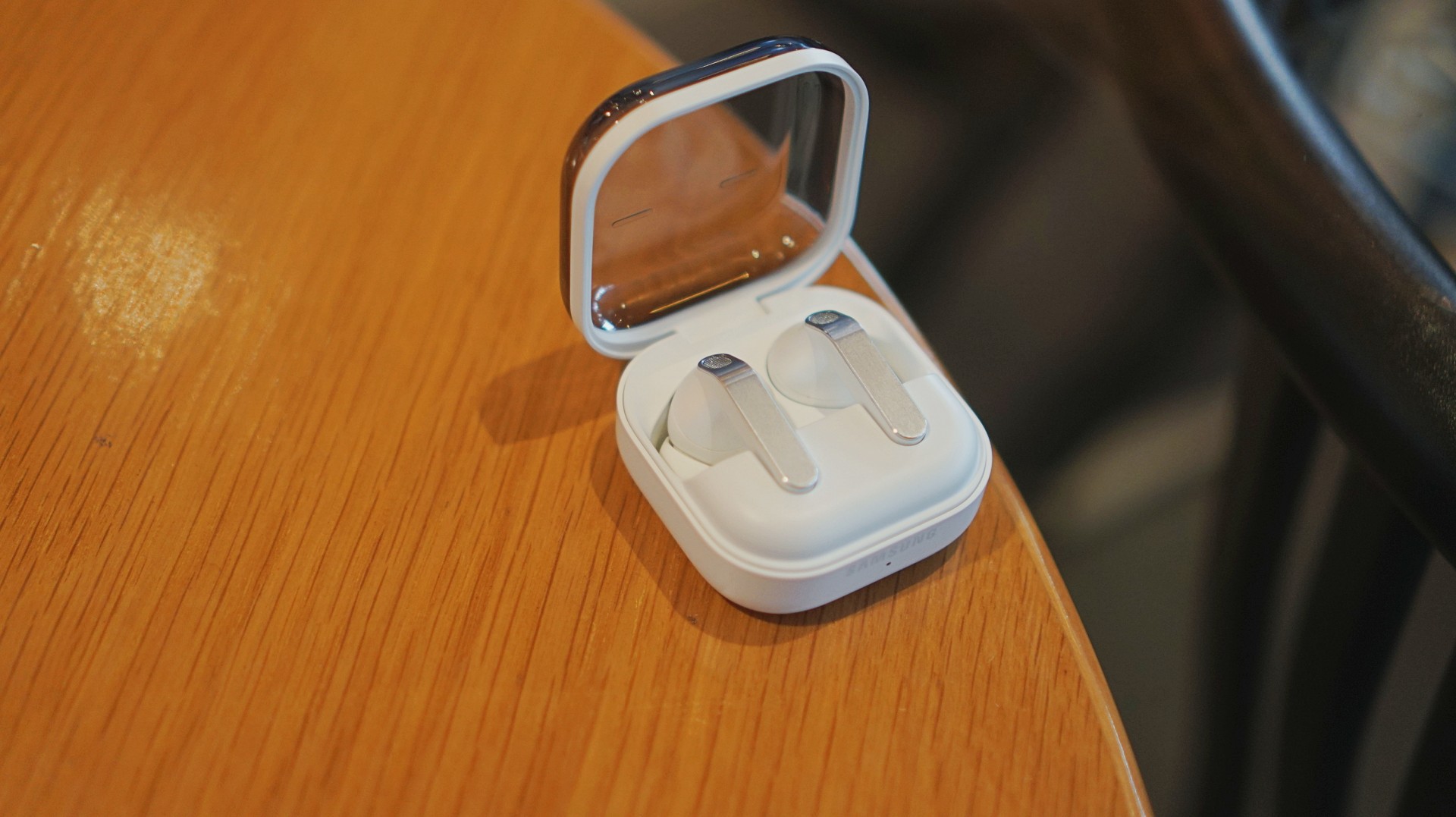
The first thing I loved? It doesn’t look like AirPods anymore.
The Galaxy Buds3 Pro looked a little too familiar. I didn’t hate it, but it didn’t feel like me. I like using tech that reflects a bit of individuality, and that design always felt a little tacky.
The blade design on the Galaxy Buds4 Pro fixes that.
It looks cool. Straight up.
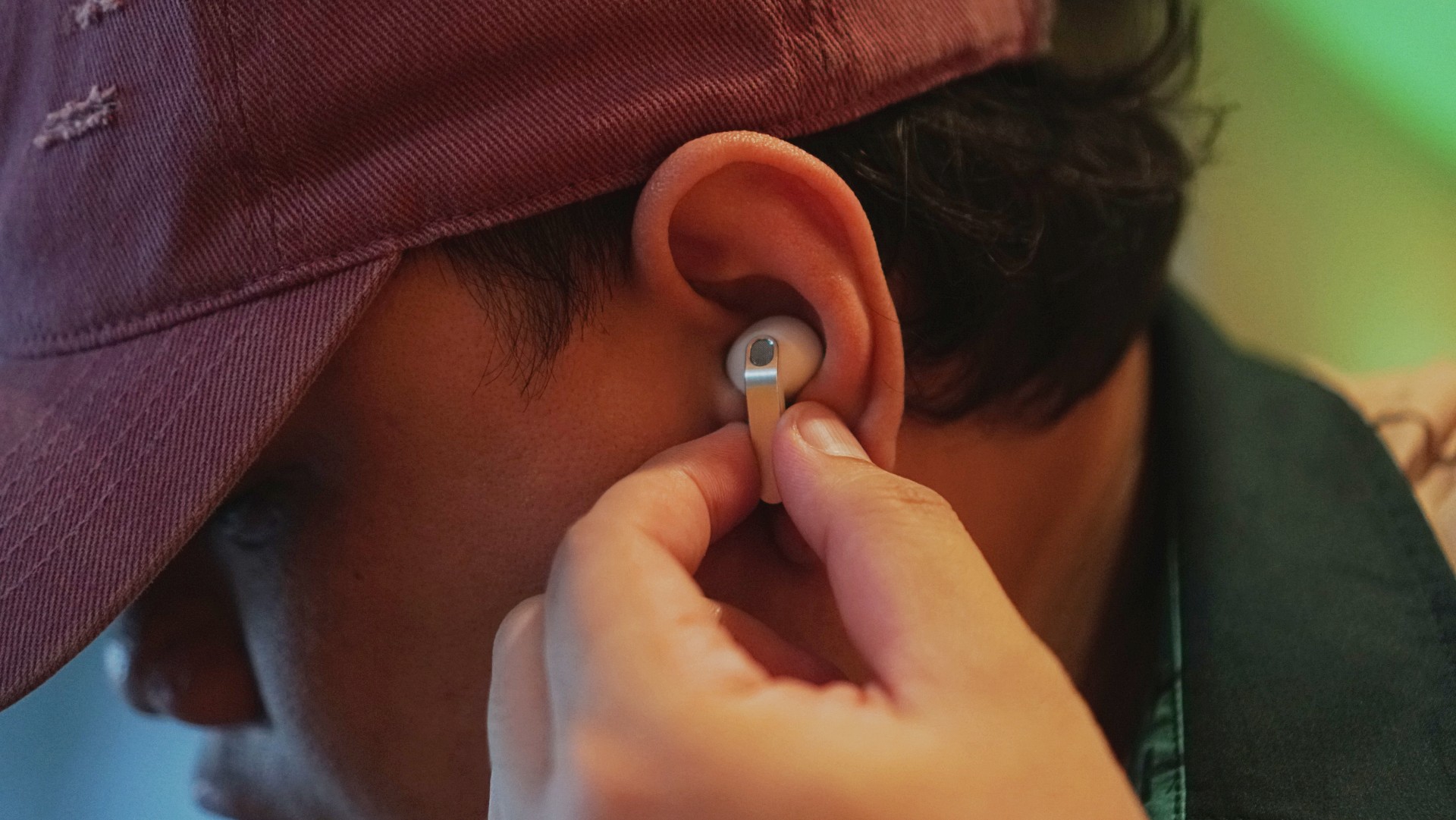
More importantly, it feels more like Samsung finally finding its design language again instead of borrowing from someone else. It’s not just aesthetic either. The shape makes controls easier to find and use.
It’s a small thing on paper. In practice, it changes how you feel about using it every day.
Controls feel easier too. Pinch to pause/play, slide up/down in the same pinching position if you want to adjust volume. It just works.
Comfort changes everything
This is the biggest upgrade for me.
With the Buds3 Pro, I loved the features but didn’t always enjoy having them in my ears. With the Buds4 Pro, that problem is gone.
It’s not that you don’t feel them at all. You do. But not in a way that makes you want to take them out.

I’ve worn them for four straight hours while working in a café. Writing, replying to emails, just sitting there with music on. No urge to remove them. No fatigue that breaks your flow.
They stay in place, too. Even during brisk walks.
For someone who almost gave up on in-ears entirely, that alone is a massive win.
Rich, full, and now more layered
If you’ve used the Galaxy Buds3 Pro, you already know the sound is good. The Buds4 Pro takes that and pushes it one step higher. Rich, warm, full, and surprisingly layered. The difference hit me immediately.
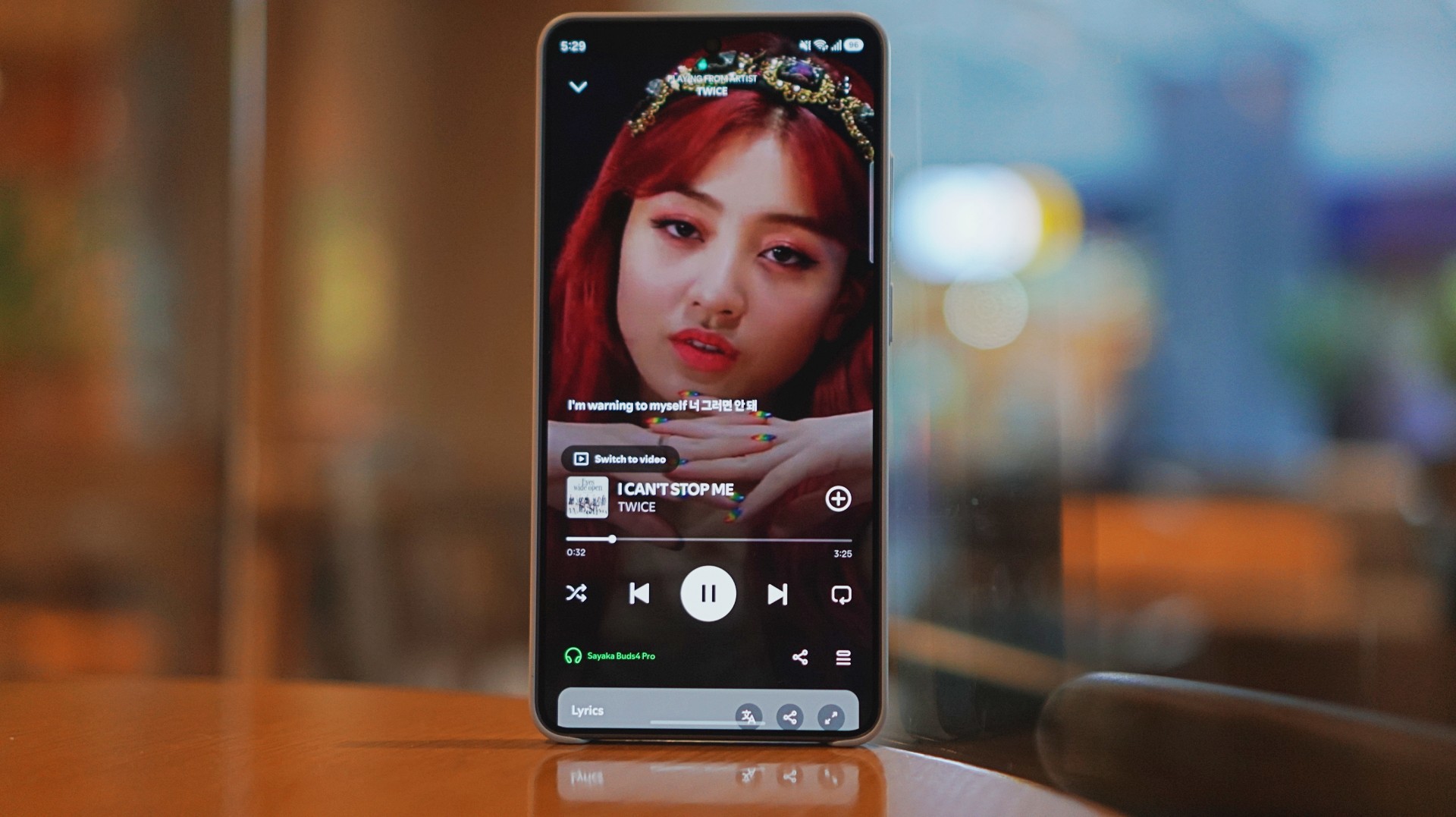
I was listening to Spotify on the Galaxy S26 Ultra and started hearing details I don’t usually notice. It reminded me of the first time I heard lossless tracks on Apple Music with a really good pair of headphones.
And this is just on Spotify. Hell yeah, it makes Spotify feel good enough.
Hearing the little things
I listen to a mix of K-pop, KRNB, OPM, pop rock, and alternative rock. Across all of it, one thing stood out: separation. It’s easier to isolate sounds if you’re into that.
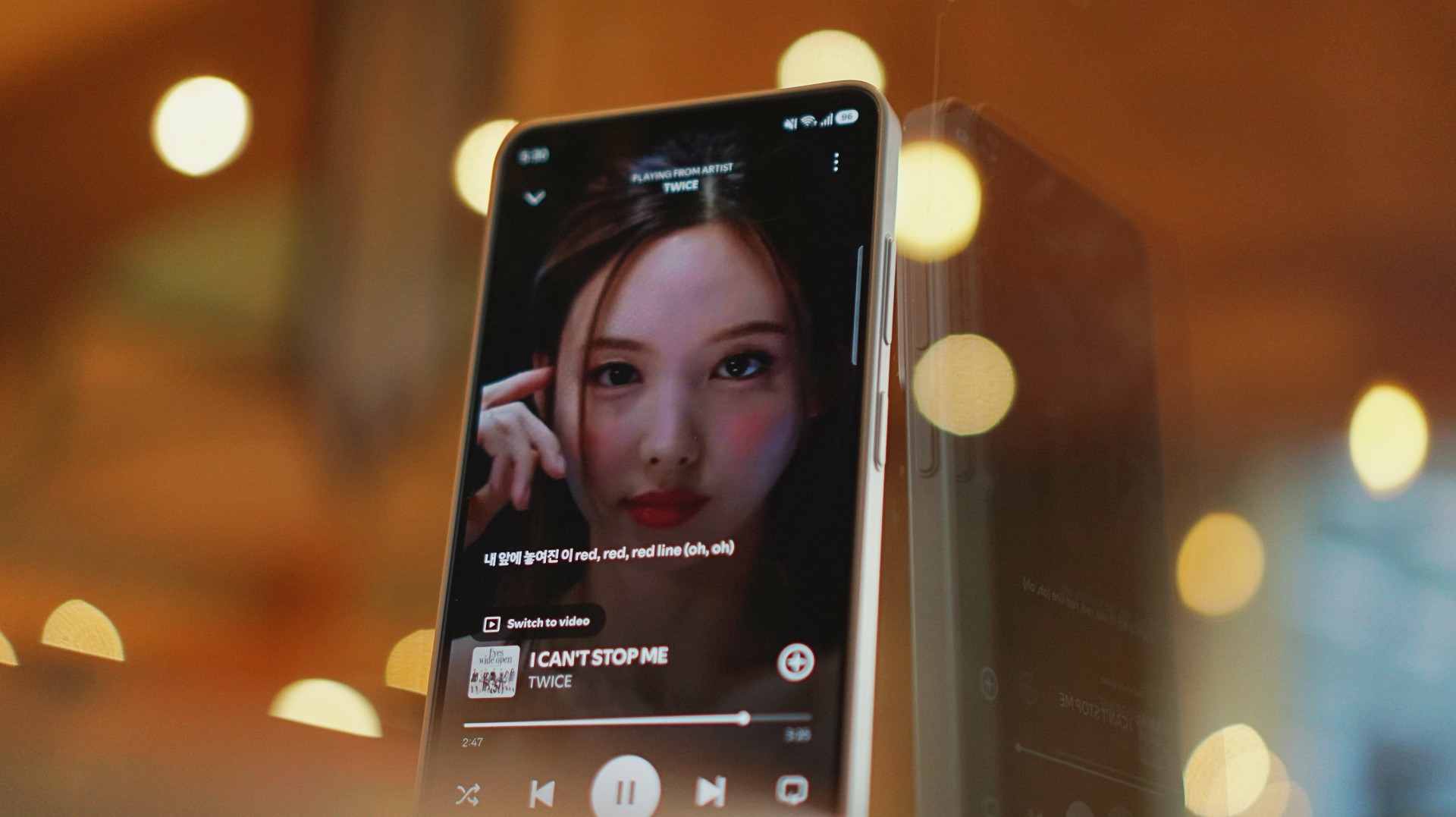
With TWICE tracks, I started picking up vocal riffs and runs from Jihyo and Nayeon that don’t always stand out on other setups. They’re not overpowering. Not distracting. They just sit there, completing the track.
It feels… intentional. Like everything has its place. It doesn’t just sound better. It makes music you already love feel new again.
A quick reality check
At one point, I forgot to charge the Buds4 Pro and switched to the HONOR Earbuds 4. Same track. Same app. Night and day difference.
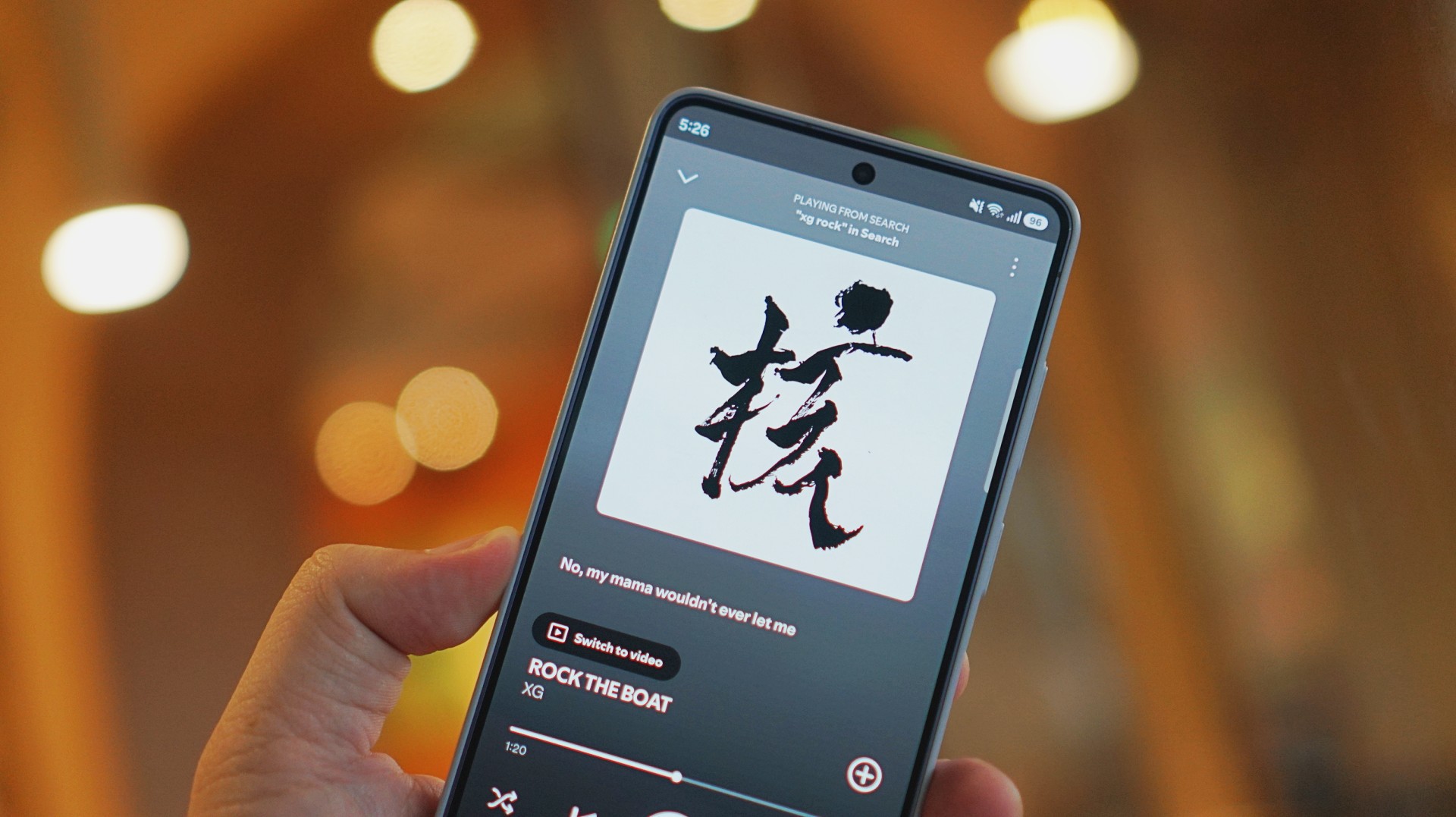
I was listening to “Rock the Boat” by XG when I made this switch.
The Galaxy Buds4 Pro sounded rich, warm, and full. The HONOR Earbuds 4 felt a few steps behind across the board. To be fair, they’re in different price brackets. But that moment still validated everything I was feeling about the Buds4 Pro.
ANC that gets the job done
Let’s set expectations.
The ANC is not Sony WH-1000XM6 level. But nothing is.
If Sony is an 11/10, this sits comfortably at around an 8.5.
And honestly? That’s more than enough.
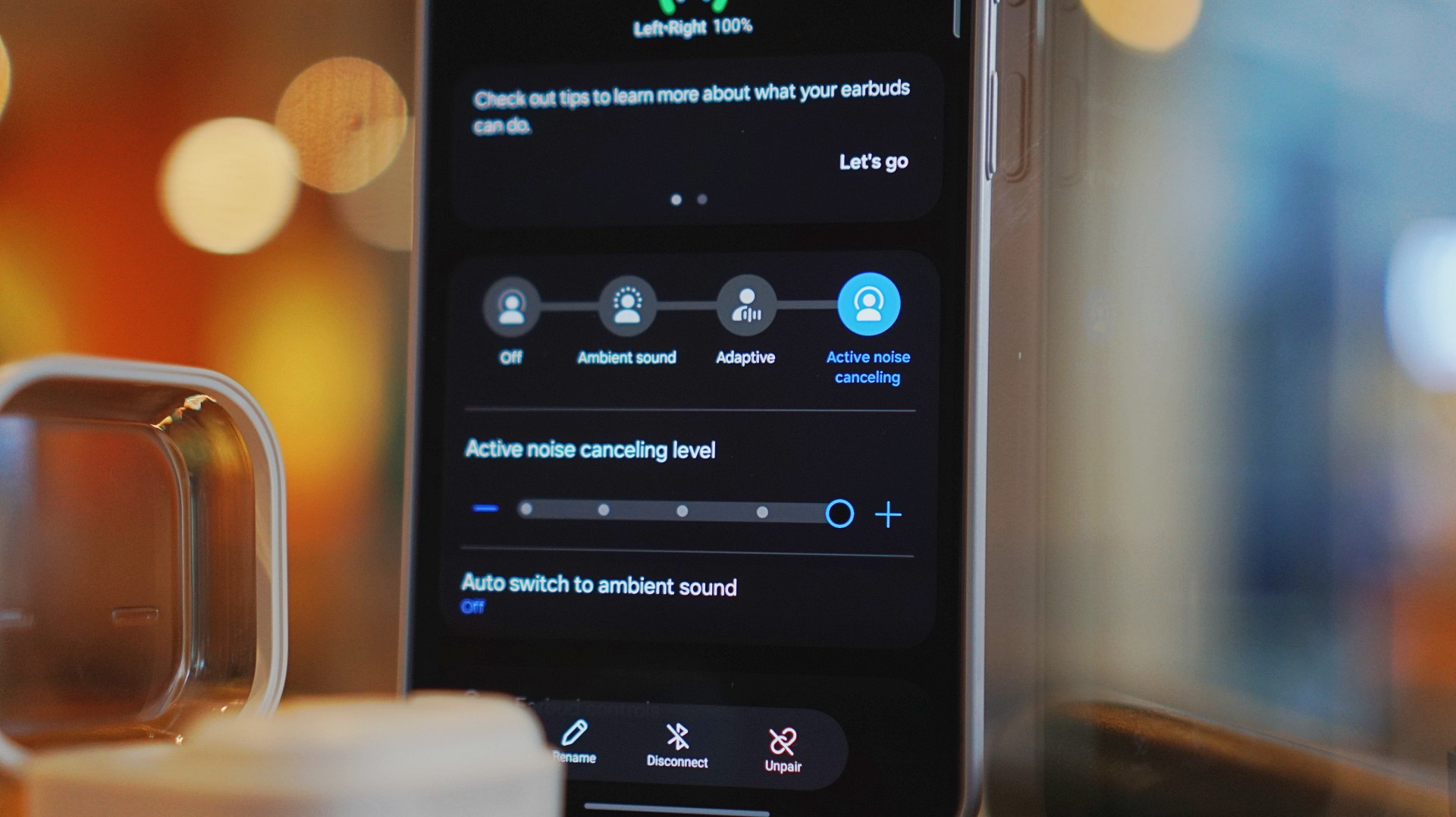
On a 12-hour flight from San Francisco back to the Philippines, I had these on almost the entire time. Engine noise was significantly reduced. There’s still a faint hum if you really listen for it, but it never got distracting.
In cafés, even when seated right next to the speaker, it blocks out enough noise for you to stay locked in.
It locks you in. You feel like the music is inside your head while still giving you elite sound, some spatial awareness, and surprising comfort.
That balance matters more than chasing perfection.
Adaptive ANC still needs patience
I default to turning ANC on manually. Adaptive ANC and EQ are there, but in my experience, they take a bit of time to kick in. Sometimes a minute or two.
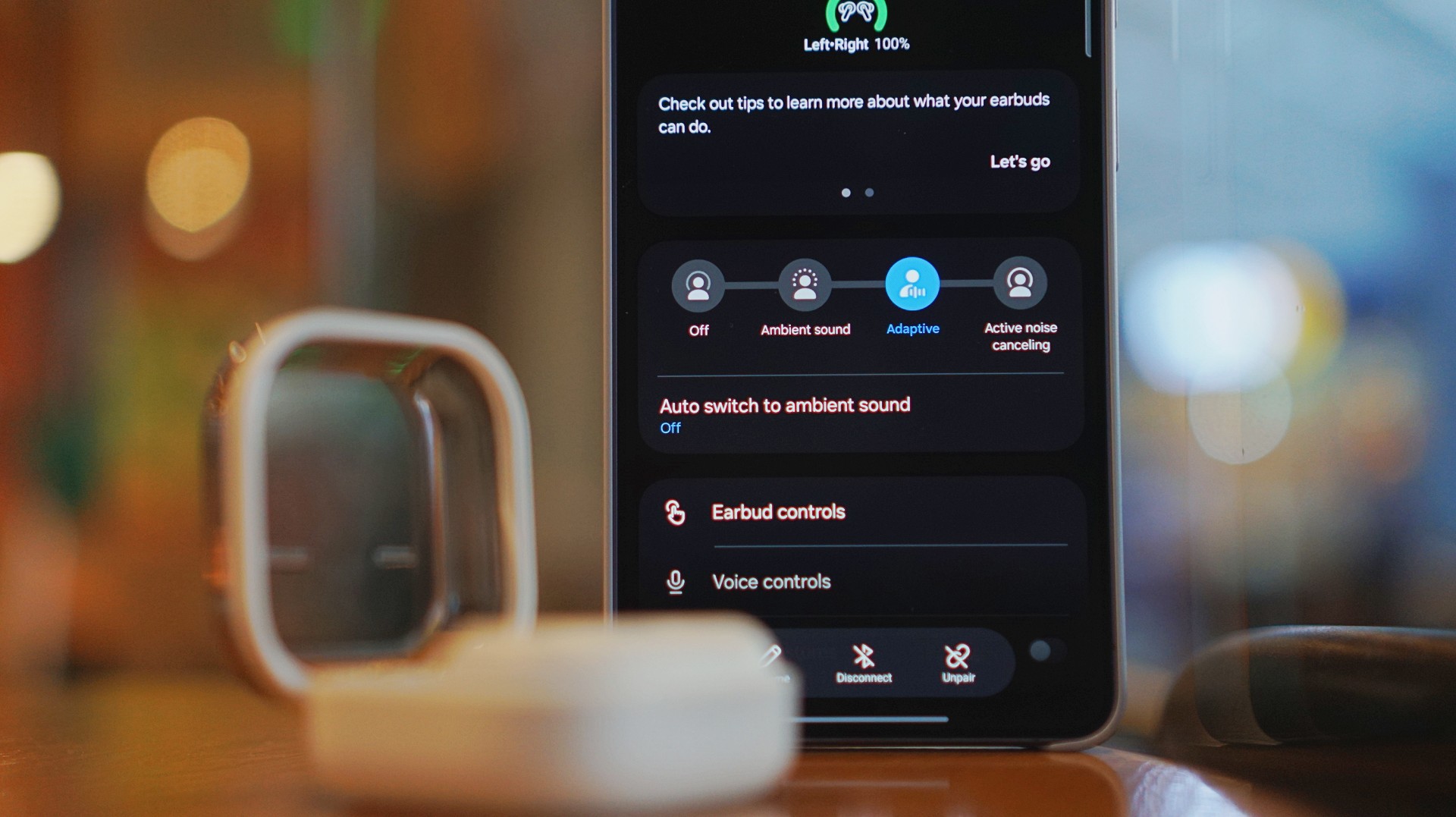
Because of that, I’ve built the habit of switching modes myself depending on where I am.
It works. It’s reliable. But I’d like to see this feel faster and more seamless over time.
Just fits into your day
This is the kind of device you don’t think about. I reach for it every time I step out. Walks, errands, quick food runs.

It’s perfect when you’re waiting in line and scrolling through reels. No accidental loud audio. No awkward moments. It just fits. That’s probably the best compliment I can give it.
Galaxy ecosystem still wins
Pairing is seamless. Controls are responsive. Everything works the way you expect it to. If you’re using a Galaxy device, this is a no-brainer.
Even outside the ecosystem, it still holds up. But you definitely get the best experience when you stay within it.
What still doesn’t matter (yet)
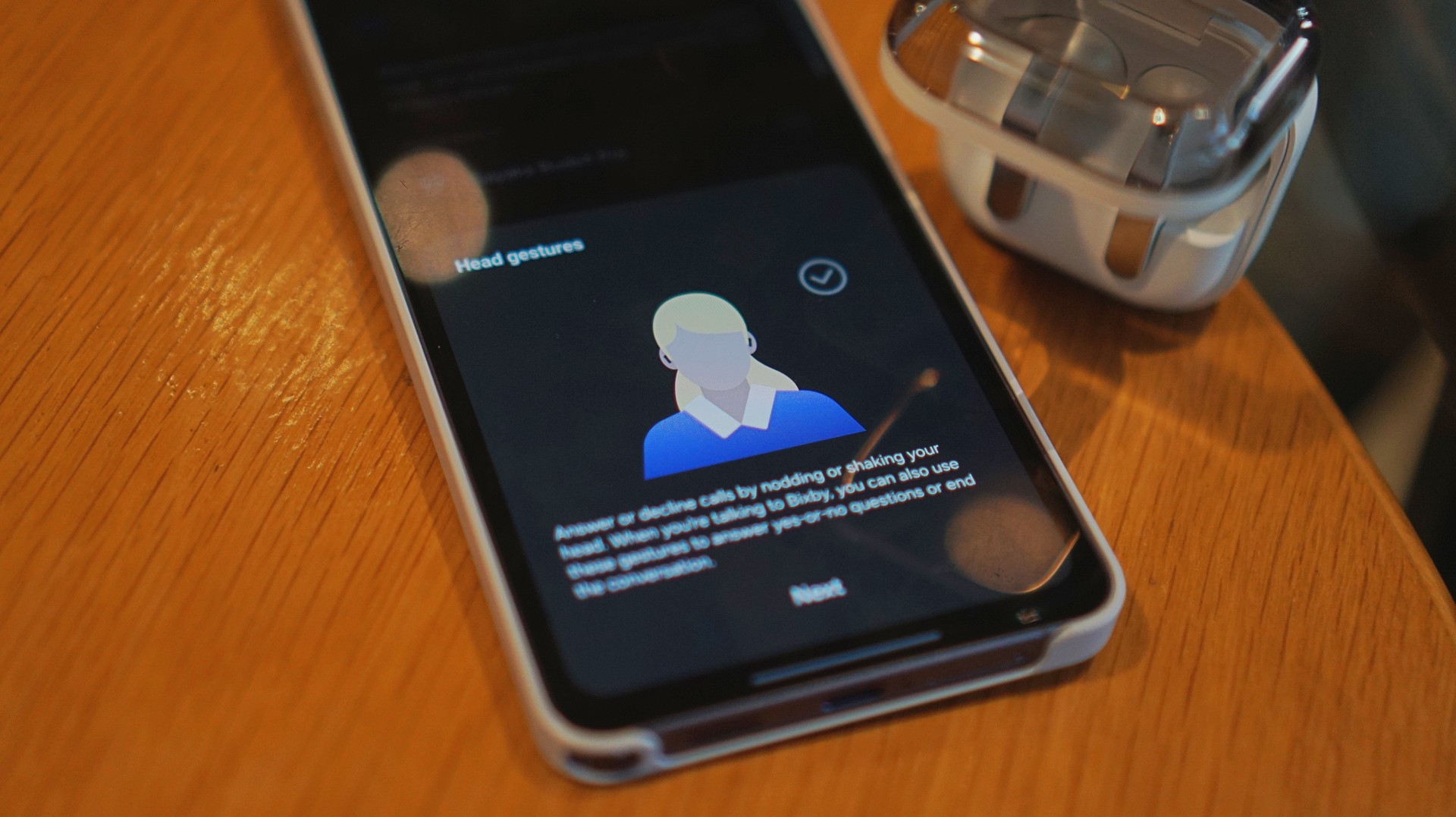
Features like AI Translate are still in that “nice to have” category for me. They’re promising. They’ll probably get better. But they’re not why you buy this.
You buy this for the sound, the comfort, and the everyday usability. And those are already excellent.
Is the Galaxy Buds4 Pro your GadgetMatch?
If the Galaxy Buds3 Pro was Samsung’s best so far, the Galaxy Buds4 Pro is that — made better. A meaningful refinement.
This is my default recommendation now.
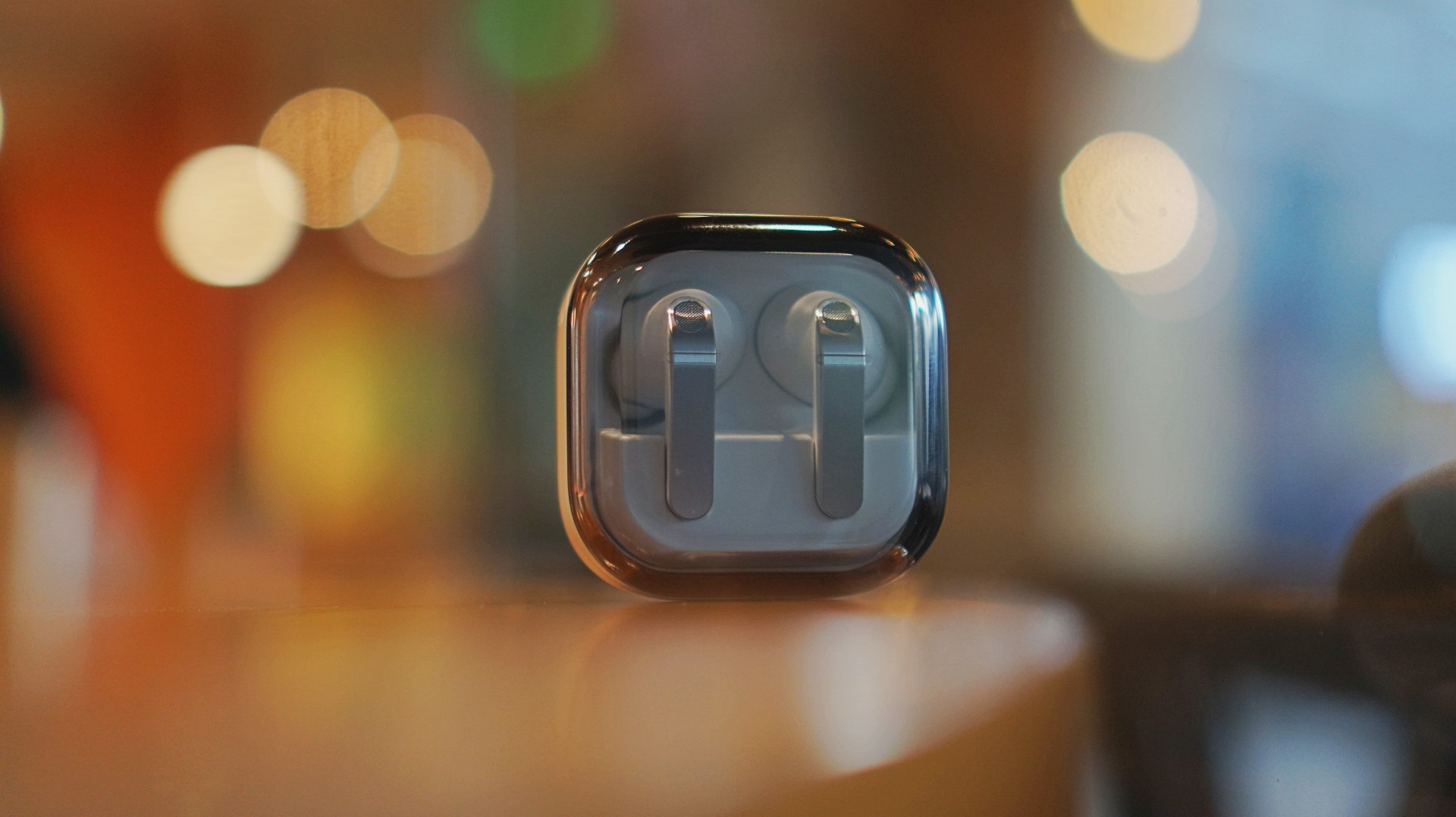
The Galaxy Buds4 Pro is for people who want to get the best sound in a compact, easy-to-carry audio buddy to their smartphones.
If you’re coming from older earbuds, this is an easy upgrade.
If you’re coming from the Buds3 Pro, you can probably hold off — unless comfort and design matter a lot to you.
And if you’re deep in the Galaxy ecosystem?
This Buds4 you. Swipe up. No questions asked.

Infinix NOTE 60 Ultra: Not bad for a flagship push
It's definitely got the looks, though.

JBL Sense Pro review
My daily driver met a loud and capable rival in this quest for a superior training companion.

Shokz OpenFit Pro: Somewhere between awareness and focus
Find your balance

Dunk City Dynasty update adds new NBA stars, cosmetics

Acerpure Chill: Air conditioners for the summer

Match Pulse: TECNO SPARK 50 5G
Infinix NOTE 60 Ultra: Not bad for a flagship push
JBL Sense Pro review


-

 Gaming2 weeks ago
WWE 2K26 lets you live out all the fantasy matches you could want
-
 Smartphones2 weeks ago
Spotlight: OPPO Find N6
-

 Reviews1 week ago
Galaxy Buds4 Pro review: I thought I was done with in-ears
-

 Automotive2 weeks ago
How the Ford Ranger is powering community resilience
-
 News6 days ago
nubia Neo 5 series launches in the PH, starts below PhP 12K
-

 Gaming1 week ago
Razer Blade 16 (2026) packs more cores, faster memory
-

 News2 weeks ago
nubia to launch new Neo 5 series gaming phones on March 28
-
 Accessories1 week ago
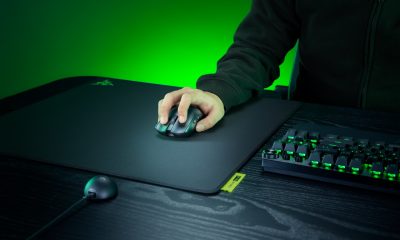
Razer sharpens its competitive edge with Viper V4 Pro and Gigantus V2 Pro