
News
Nothing Phone (3) teased as Nothing’s first true flagship
With upgraded specs and a higher price tag

When Google announced an exclusive event for Android 16 ahead of the annual Google I/O event, we didn’t know what to expect. Naturally, we’re going to see our first official look at the operating system, but what else? One thing we didn’t see coming at all was a new announcement for the Nothing Phone (3).
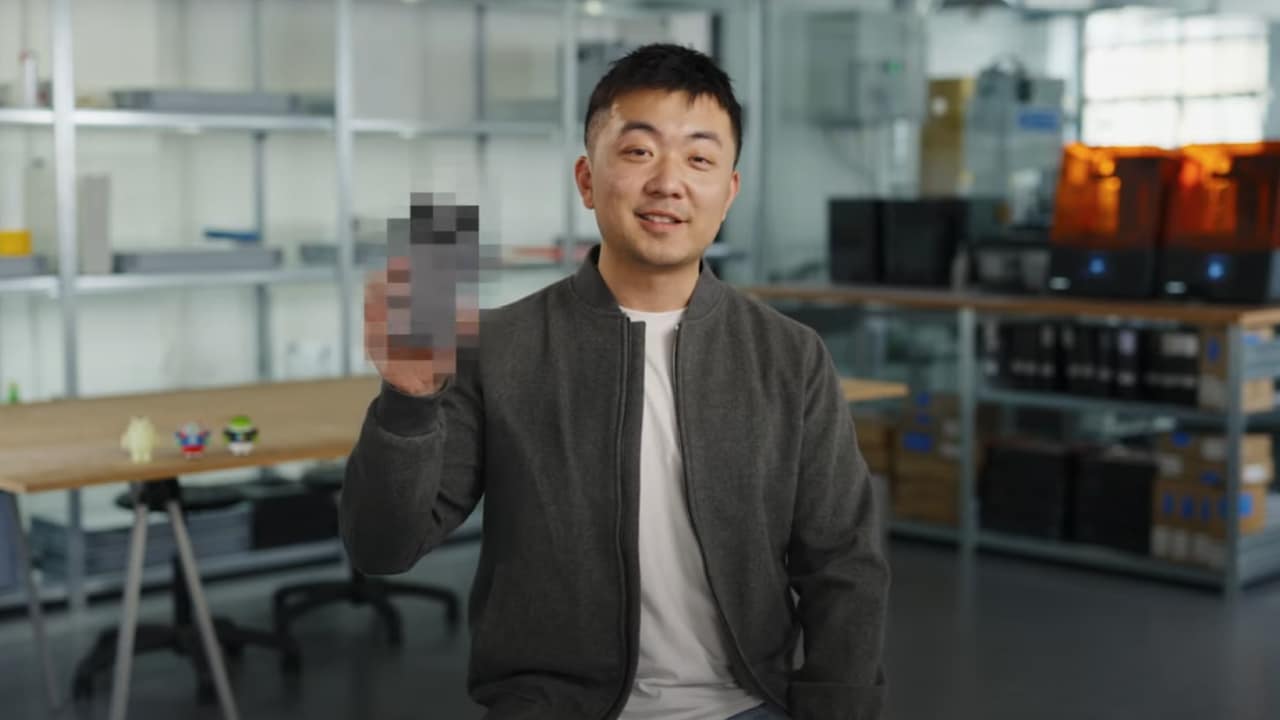
During the event, Nothing’s CEO Carl Pei went on camera to tease the Nothing Phone (3) coming later this summer. The short video revealed a better reason why Nothing chose to launch the Phone (3a) series before the main variants. It’s because the Phone (3) is apparently Nothing’s first true flagship smartphone.

Over the past few years, Nothing focused on design and user experience, rather than raw power, to deliver a smartphone experience that’s well within everyone’s budget. Now, the company is entering the flagship segment for real. Pei says that the upcoming smartphone will have “premium materials, major performance upgrades, and software that really levels things up.”
Unfortunately for fans who love Nothing’s budget-conscious approach to pricing, the Nothing Phone (3) will have a higher price tag, hovering around GBP 800 (or approximately US$ 1,064). At least, the price will come with an equivalent exchange of hardware upgrades.
Capping off the teaser, Pei previewed a heavily pixelated version of the phone in his hand. We’ll have to wait a bit longer to actually see the phone for real. Either way, the promise of a flagship-caliber phone is tantalizing.
SEE ALSO: Nothing Phone (3a) series is here!






News
Samsung will reportedly delay Galaxy S26 launch to late February
The delay might be because of Galaxy AI.
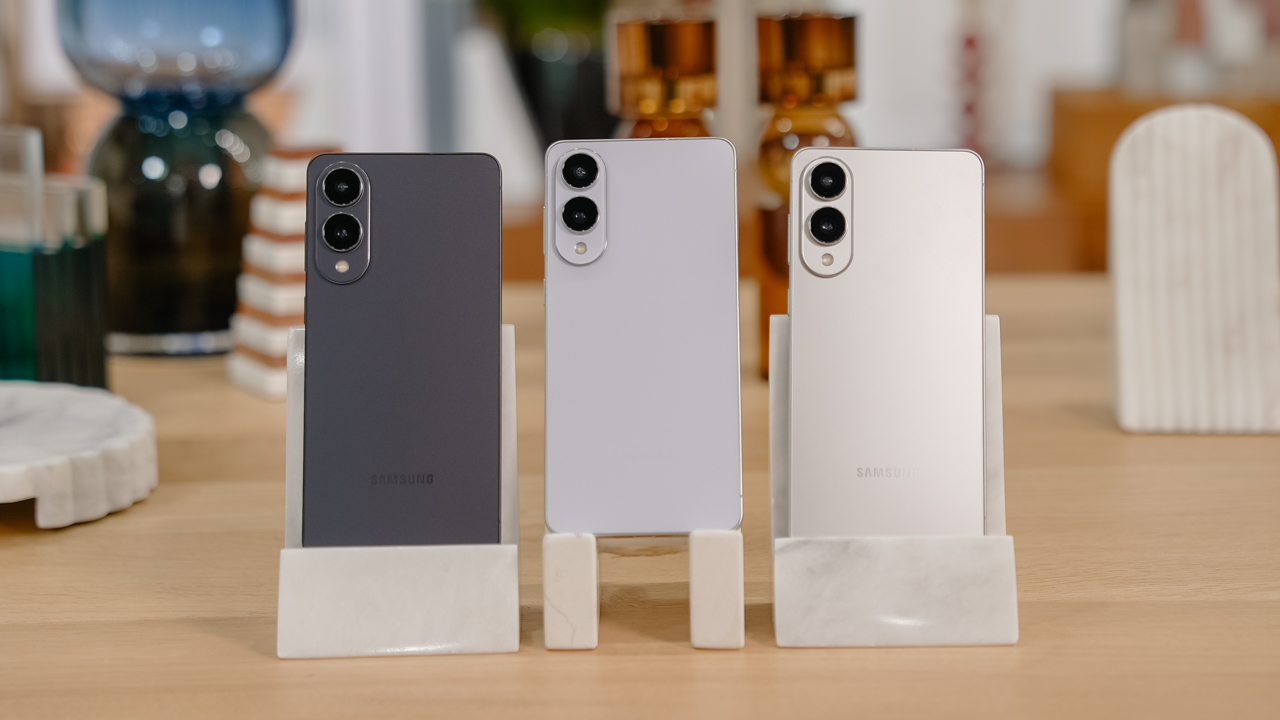
January is always a month to remember because of Samsung. The smartphone brand usually launches the year’s Galaxy lineup. For example, the current Galaxy S25 series launched on January 22 this year. However, next year might be a different story. According to a new report, Samsung will hold its first Galaxy Unpacked event in late February.
Based on a report from the Korean outlet Money Today, Samsung is letting the Galaxy 26 series marinate a tiny bit more because of Galaxy AI. The brand is even hosting the event in San Francisco, the supposed center for AI technology.
The report also states that Samsung is evaluating its current lineup. This year, the brand launched the Galaxy S25 Edge. However, the new model’s sales have been reportedly lackluster, potentially prompting a return to the old model next year. The Galaxy S26 series might have the more traditional three-piece lineup consisting of the basic, the plus, and the ultra models.
Now, ahead of the new lineup’s launch, a lot of rumors are already going around about the Galaxy S26’s chipset. The brand is supposedly going all-in once again on Exynos. The upcoming Exynos 2600 can go up against Apple’s A19 Pro, if the reports are to be believed.
SEE ALSO: Samsung might bring a stronger Exynos to the Galaxy S26 series
News
From OS to AI OS: HONOR announces MagicOS 10
World’s 1st AI agent operating system with self-evolving capabilities

HONOR has officially announced MagicOS 10 at its inaugural Global Developer Conference in Shenzhen, China.
MagicOS 10 is the world’s first AI agent operating system with self-evolving capabilities, signaling the industry’s shift from the OS era to the AI OS era.
In addition, HONOR also unveiled its 1×3×N ecosystem strategy alongside an upgraded HONOR AI Connect platform.
The framework opens HONOR’s AI stack to partners worldwide (the “1”), supports them with three enablement tracks — ecosystem, channel, and technology & brand (the “3”) — and scales across multiple industry clusters (the “N”).
These industries include education and office, smart home, audio and wearables, and even toys and pets.
From OS to AI OS
MagicOS 10 makes a multi‑dimensional leap from a conventional OS to a true AI OS. It pivots from basic device‑cloud coordination to an agent‑centric model, unlocking greater intelligence.
At the core of MagicOS 10 is a new and improved YOYO, now equipped with agentic capabilities to see, remember and execute, powered by HONOR’s proprietary MagicLM 3.0.
With one tap, users can ask YOYO to handle everyday tasks and creative workflows, such as AI‑powered color grading with Magic Color, complex command‑based image editing, and actions like food ordering, shopping, and ride‑hailing.
As multi‑device usage grows, MagicOS 10 is the first OS in the industry to fully break down platform boundaries. It enables seamless transfer of images, videos, and documents across HONOR, iOS, Android and Windows devices.
Moreover, OS also debuts the new Zero‑Gravity Transparency Design. This brings system‑wide transparent visual effects, from lock screen to desktop to in‑app views, with no increase in power consumption.
Additionally, the enhanced AI Deepfake Detection intelligently identifies fake voices, deepfake filters, and scam scripts to safeguard users.

HONOR AI Connect and 1×3×N Ecosystem Strategy
Launched in 2022, the HONOR Connect platform has already linked more than 30 million devices. At the conference, HONOR bared that t its upgrading tot he HONOR AI Connect platform, marking another leap.
HONOR AI Connect is built to lower partner onboarding barriers and reduce development costs. Developers can tap mature multimodal interaction capabilities (voice, vision, and more) without rebuilding complex base platforms, and access cross‑scenario AI collaborative services.
By systematically opening intelligent connectivity capabilities, the platform enables intelligence sharing, entry sharing, and ecosystem sharing.
HONOR has already partnered with more than 200 ecosystem partners and introduced a program that offers free IoT connectivity to deliver best‑in‑class value.
Through initiatives such as the HONOR Alpha Flagship Store and broader store access programs, HONOR provides more substantial resources and growth support to partners.
Looking ahead, HONOR remains committed to open collaboration. As part of its broad, long-term plan, the devices manufacturer is inviting global partners to co‑build the AI device ecosystem so intelligent technology benefits everyone.
Enterprise
AgiBot robots can now learn skills on the factory floor
Robotics company deploys real-world reinforcement learning system
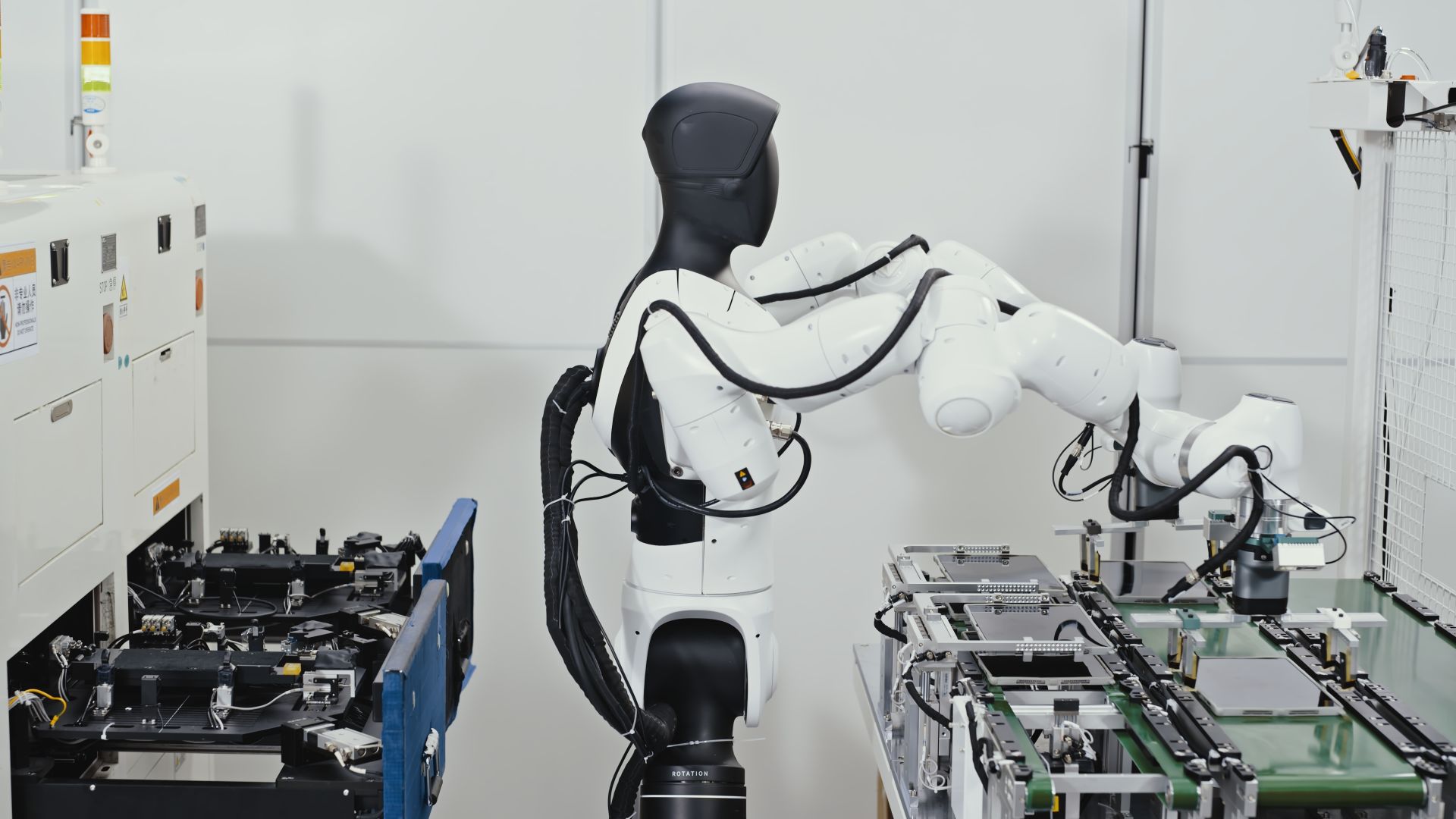
Robotics company AgiBot has successfully deployed its Real-World Reinforcement Learning (RW-RL) system on a pilot production line with Longcheer Technology.
The company specializes in embodied intelligence, and the project marks the first application of RW-RL in real industrial robotics.
It connects advanced AI innovation with large-scale production, signaling a new phase in the evolution of intelligent automation for precision manufacturing.
Precision manufacturing lines have long relied on rigid automation systems that demand complex fixture design, extensive tuning, and costly reconfiguration.
Where AgiBot’s RW-RL system comes in is addressing such pain points. It enables robots to learn and adapt directly on the factory floor.
Within just minutes, robots can acquire new skills, achieve stable deployment, and maintain long-term performance without degradation.
The system also autonomously compensates for common variations, such as part position and tolerance shifts
Meanwhile, during line changes or model transitions, only minimal adjustments and standardized deployment steps are required. This dramatically improves flexibility while cutting time and cost.
Moreover, AgiBot’s system allows for flexible reconfiguration. Task or product changes can be accommodated through fast retraining; such solution exhibits generality across workplace layouts and production lines.
This milestone signifies a deep integration between perception-decision intelligence and motion control. And it represents a critical step forward unifying algorithmic intelligence and physical execution.
Unlike many laboratory demonstrations, AgiBot’s system also achieved validation under near-production conditions. It has completed a full loop from cutting-edge research to industrial-grade verification.
Moving forward, AgiBot and Longcheer plan to extend real-world reinforcement learning to a broader range of scenarios. These include consumer electronics and automotive components, with focus on developing modular and rapidly deployable robot solutions.


This gaming mouse made me fall in love with working from home again
The Razer Basilisk Mobile may be built for play, but it excels at work!
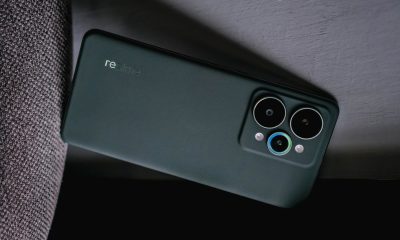

realme 15 Pro review: A step forward or a step back?
Banks on battery and video chops, but stumbles on value and reliability


Infinix GT 30: Champion value budget gamer
Most accessible gaming phone without compromise

Samsung will reportedly delay Galaxy S26 launch to late February

From OS to AI OS: HONOR announces MagicOS 10
This gaming mouse made me fall in love with working from home again

AgiBot robots can now learn skills on the factory floor

What happens when the car you once loved returns as a Hybrid?

DJI Osmo Nano review

The HONOR MagicPad 3 is an almost perfect premium pad partner

The Redmi K90 Pro Max is the first smartphone with Bose-powered speakers

Samsung Galaxy S25 FE review: Closer to flagship than ever

vivo X300 Pro headlines Dimensity 9500 and Sony’s LYT-828 image sensor


-
 News1 week ago
The Redmi K90 Pro Max is the first smartphone with Bose-powered speakers
-
 Reviews2 weeks ago
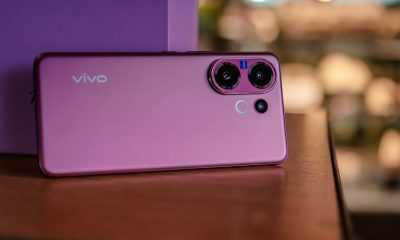
60 days with the vivo V60: 6 upgrades in 6 months
-

 Laptops1 week ago
M5 MacBook Pro review
-

 Reviews2 weeks ago
M5 iPad Pro review: The Most Powerful iPad Ever!
-

 Automotive2 weeks ago
BYD eMAX 9 DM-i leads the future of luxury family travel
-

 News2 weeks ago
realme GT 8 Pro has Ricoh GR cameras plus swappable camera shapes
-

 Automotive2 weeks ago
Inside the BYD Di-Space Museum
-

 Accessories1 week ago
QCY H3S review: Clean sounding, lean pricing