
News
OPPO patents its own rotating camera phone
Is OPPO copying the ASUS ZenFone 6?


Yesterday, ASUS unveiled one of the more innovative solutions for bezel-less beauty. In the latest ZenFone 6, the brand is cashing in on a rotating Flip Camera. The unique solution uses a 180-degree hinge, transforming the dual rear camera into a front-facing workhorse.
Of course, innovation will always breed imitation. Filed only yesterday, OPPO is working on an almost-identical rotating camera themselves. Spotted by the Dutch LetsGoDigital, the Chinese smartphone maker filed the patent at the World Intellectual Property Office.
Notably, OPPO’s variant is more complex, using more hinges than ASUS’ original. The patent images depict a pop-up mechanism along with the rotating camera. Additionally, the patent also includes a single camera setup, besides the more advanced dual camera installation. OPPO is likely considering the form factor for both flagship and budget offerings.
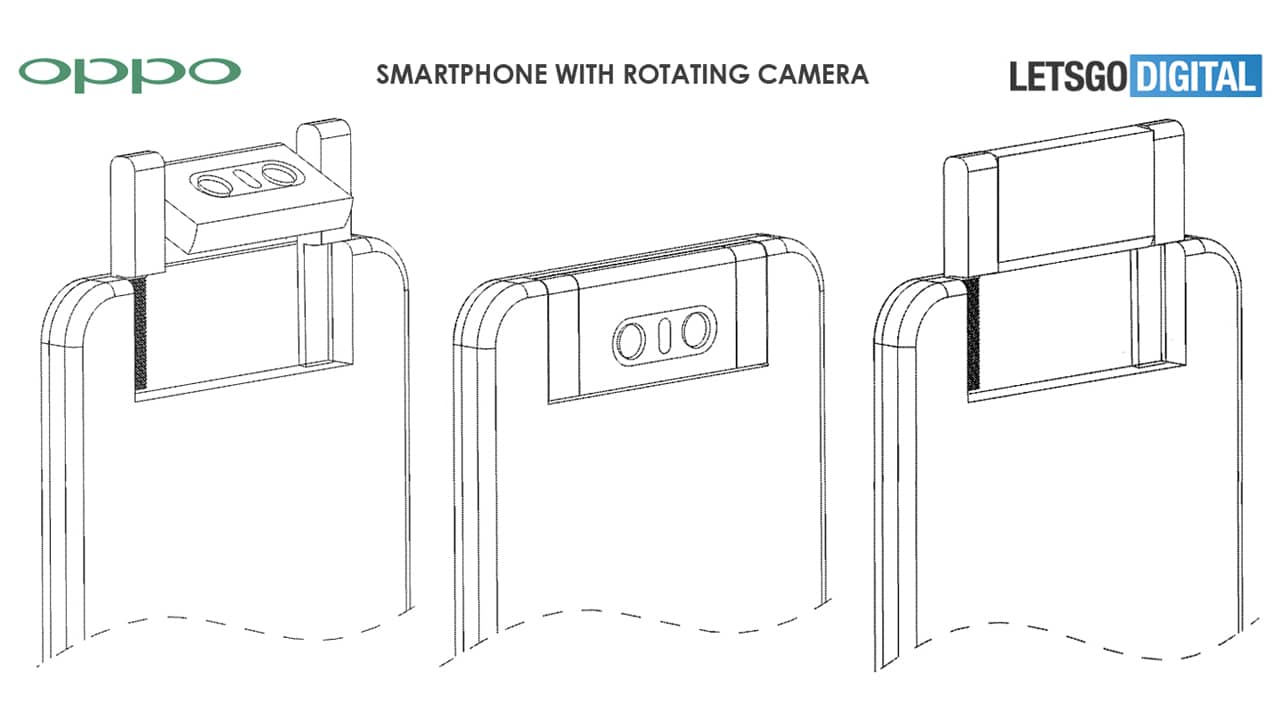
Image source: LetsGoDigital
Regardless, OPPO filed the patent only yesterday. The patent’s coincidence with ASUS’ launch is stark. However, OPPO will take a lot more time to develop the phone. Even then, the company might not decide on development altogether.
Is this blatant imitation? The coincidence argues in the affirmative. However, OPPO’s history paints a more accurate picture. Back in the company’s infancy days, OPPO released the world’s first rotating camera phones. The OPPO N1 — and its successor, the N3 — featured a similar rotating hinge. Back then, smartphone manufacturers didn’t have bezel-less screens as a goal. The rotating camera was just a quirky feature, improving selfie capabilities. Technically, the OPPO N1 is the brand’s first “selfie expert.”
That said, ASUS’ newer flagship is still a tremendous innovation on the old form factor. Regardless of who copied whom, the rotating camera creatively takes on the ever-present problem of bezels and notches.
SEE ALSO: OPPO releases a new F11 model that’s cheaper and exclusive online


Annually, The Game Awards have become a sort of second Christmas for gamers. Besides a celebration of the past year in the world of videogames, the event hosts trailers for games of the upcoming year and beyond. Though it’s already free on several platforms, viewers can now tune in to Disney+ to watch this year’s Game Awards.
Hosted as always by Geoff Keighley, 2026’s The Game Awards will happen on December 10 at 7:30pm ET. Most of the event will award the best titles of various categories for the year. Several publishers and developers also use the event to announce their upcoming titles. It’s for these reasons that a lot of gamers catch the event every year.
This year, The Game Awards is streaming live on Disney+. This is in addition to its usual platforms including Twitch and YouTube. The Disney+ stream will be available in the United States and select territories internationally.
For now, gamers can also vote on their picks for various categories via the event’s website.
On the other hand, Disney+ has been pushing live events more adamantly. In the Philippines, for example, the platform is the home for live NBA coverage. Though it’s not as strong as Netflix’s gaming push with its assortment of free games, Disney+’s addition of the annual awards show is a worthy go for gamers.
SEE ALSO: Here are all the big trailers from The Game Awards 2025

NVIDIA’s week is finally and mercifully coming to an end. After being implicated in two extramarital affairs, now-former NVIDIA CEO Jensen Huang has resigned from his position.
It’s been a terrible week for Huang’s personal life. Last weekend, a bombshell report revealed that Huang engaged in an affair with Alice Huang, who is reportedly involved with Chinese intelligence. Quickly realizing the heaviness of the allegations, the CEO admitted quickly to the affair.
However, barely 24 hours ago, another report revealed that Huang had a second extramarital affair. Though he was clear of any more espionage allegations, his romantic affair of choice was another executive within the company. NVIDIA’s board of directors quickly debated whether Huang should be fired for his actions.
Now, Huang has voluntarily resigned from his position. The former CEO leaves behind his spot at the head of the table since cofounding NVIDIA in 1993.
In his stead, the board of directors have named incumbent CFO Colette Kress as the company’s interim CEO while the board searches for a permanent replacement. Despite her interim role, Kress will continue her duties as CFO.
Additionally, the board has named Harvey C. Jones, a member of board since its founding, as its first chair of the board.
Though the company will leave most of the controversy behind with Huang’s departure, its next chapter is about to begin. Will its new direction maintain the company’s tenuous balance between AI and gaming, or tip the scales towards one segment?
SEE ALSO: NVIDIA CEO admits to having an affair with alleged Chinese spy
News
St. Peter reunited people with their deceased loved ones through tech
The new “If Heaven Could Write” campaign generates letters from the imagined perspectives of loved ones.

Grieving can take many forms. Sometimes, it manifests through a desire to hear a loved one again. We look at their old clothing, a gust of wind, or a butterfly, and imagine them talking to us one more time. This year, St. Peter, through the power of technology, gave 11,000 people that chance through its new “If Heaven Could Write” campaign.
During St. Peter Deathcare Week, which ran from October 27 through November 2, the deathcare provider started the “If Heaven Could Write” campaign, an interactive digital experience that offered participants a chance to reunite with their deceased loved ones. It was available in 37 St. Peter Chapels and 76 cemeteries nationwide.
Upon scanning a QR code which took them to a portal, participants answered questions about their loved ones. Then, the portal generates a personal letter from the imagined perspective of the participant’s loved one, giving them one more chance to converse.
Of course, an imagined letter can’t replace someone who passed away. Still, the experience affords us a way to grieve and process the loss. No, the letter isn’t really from your loved one, but you can imagine what they would have said while reading through it. And sometimes, that’s all we need.
Though St. Peter Deathcare Week has already come and gone for the year, those interested can still participate in the campaign through its link.


Apple iPad mini OLED review
Has the mini gone PRO?!


ROG G700 review: The best prebuilt PC you can get off the shelf
This PC will make you stop worrying about specs.


HP OMEN Max 16 review: Gamer-maxxing in deep black
Peripherals deemed necessary to max this out

Inside Xiaomi’s world of possibilities

DRAGON QUEST MONSTERS: The Withered World launches December 3

Infinix XPAD 30 launches, comes with AI features and expansive display

AMD, Meta deepen partnership for AI infrastructure

2026’s The Game Awards will stream live on Disney+

Your coffee nook is getting a makeover with Starbucks’ holiday collections

vivo V80 review: Good phone, tough sell

OPPO Find X10 Series: Price, availability in the Philippines

iPhone Duo Philippines: Prices, installments, and where to buy

DJI Osmo Pocket 4P Pearl White now available globally


-

 Gaming2 weeks ago
Wild Rift Patch 7.3, celebrates K/DA comeback
-

 News1 week ago
Sony revives classic Walkman headphones with USB-C MDR-3R
-
Reviews2 weeks ago
Apple iPad mini OLED review
-

 Philippines2 weeks ago
Lazada kicks off 11.11 Biggest Sale of the Year ahead of holiday rush
-

 Features2 weeks ago
Inside Infinix’s first global concept store in Bali
-

 Accessories3 days ago
Secretlab brings Pikachu, Gengar, and Eevee to its Pokémon gaming chair collection
-

 Gaming6 days ago
Nintendo eShop launches in the Philippines
-

 Gaming1 week ago
IKEA, Xbox launch nine-piece YXSTABY gaming collection