
News
Samsung erases ads mocking Apple for not having a headphone jack
Just right after Galaxy Note 10 launches

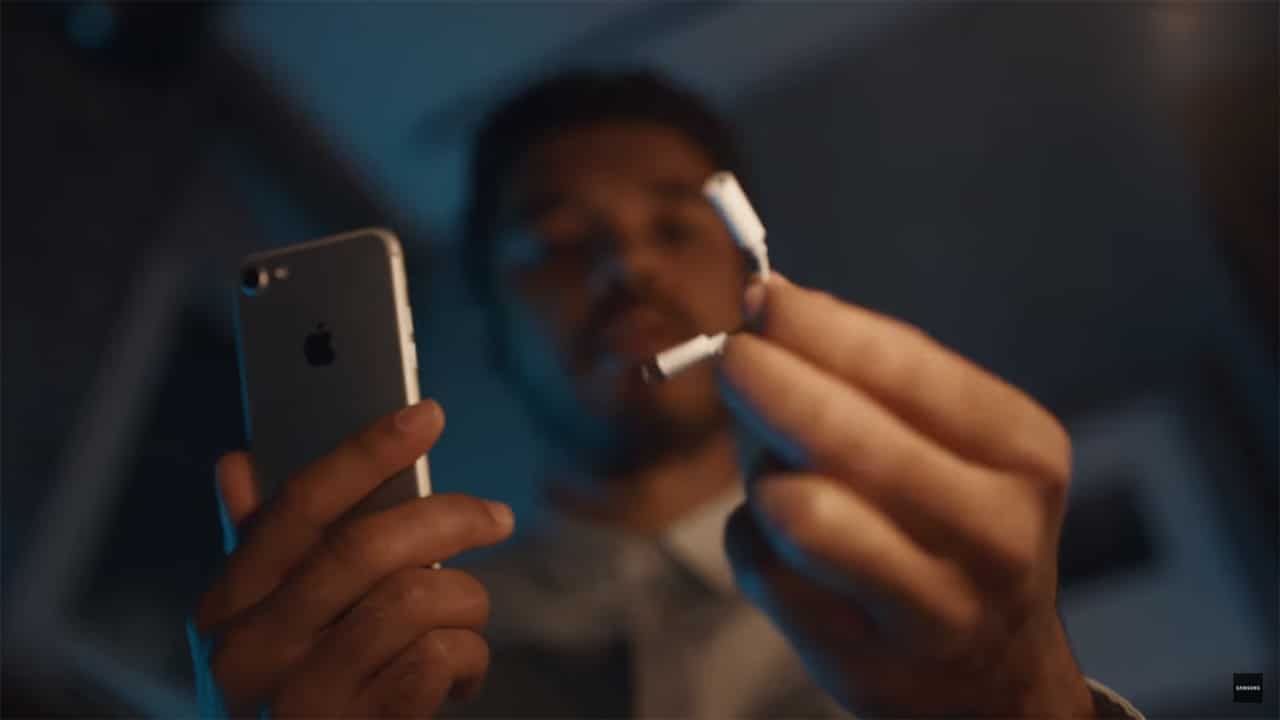
Normally, rivaling corporations often engage in competitive banter against one another. Tech makers have notably gone on petty crusades against rivals. Remember when Huawei gave away powerbanks to Apple customers in line for the next iPhone? How about when Qualcomm spent a billion dollars just to torment Apple? Actually, everyone loves to throw shade at Apple.
Naturally, Samsung — Apple’s arch-rival — has already jumped on the anti-Apple crusade. In the past, the Galaxy maker launched Ingenius, a series of creative ads bashing the iPhone for having (and lacking) certain features. The series mocked the Apple Pencil, the notch, and the lack of a headphone jack.
Now, if you’ve been following Samsung’s latest releases, you might have noticed a few outdated pieces of this series. Particularly, the new Galaxy Note 10 already eliminated the headphone jack. By now, Ingenius is starting to look ironic. Samsung has become the very thing it mocked in the past. Like every phone without a headphone jack, Samsung requires a dongle to use wired earphones. Additionally, the new Galaxy has a notch — albeit, a punch-hole one.
Quick on the uptake, Samsung has already noticed this glaring error. The company has noticeable deleted the incriminating ads from its YouTube channels. Samsung’s humiliating irony is nowhere to be found on official channels.
Of course, things on the internet don’t r eally go away. Some of Samsung’s regional channels — like Samsung Malaysia — have retained the ironic ads on their respective channels. Likewise, Samsung US still has Ingenius promotional material on their website.
Regardless, the company is already doubling down against its wicked ways from the past. Unfortunately, the deletion does not bode well for Samsung’s future phones. Is this really the end of the headphone jack? We hope not.





Gaming
Pokémon FireRed and LeafGreen are coming to the Switch
Both games will be available starting February 27.

Millennials, prepare to have your nostalgia get hit right in the feels. Nintendo has officially announced that Pokémon FireRed and LeafGreen are coming to the Switch.
This year, the Pokémon franchise is celebrating its 30th anniversary. Naturally, with Pokémon Day coming up, it’s only right to celebrate the event with something huge. Finally, two of the most prolific titles in the series are coming to a modern console.
Originally released in 2004, Pokémon FireRed and Pokémon LeafGreen were remakes of the original Pokémon Red and Pokémon Blue. At the time, the two titles reimagined the older games for the Game Boy Advance. Additionally, they introduced new post-game content set in the Sevii Islands, where Ho-Oh, Lugia, and Deoxys reside in the Kanto region.
Based on the short teaser trailer, the upcoming Switch versions will feature all of both games’ content. It will likely be remastered for the Switch’s larger screen.
To showcase more of the Switch version, Nintendo is hosting a Pokémon Presents on February 27. The brand has not mentioned anything about a potential physical version yet. However, they do promise that both games will be available on the Nintendo eShop as soon as next week’s Pokémon Presents concludes. Each game will cost US$ 19.99.
SEE ALSO: A Pokémon leak reveals an MMO-style remake of Hoenn, Sinnoh
News
HUAWEI launches Mate X7, MatePad 11.5 S 2026, FreeClip 2
Price, availability, preorder freebies in the Philippines


HUAWEI has officially launched its latest flagship foldable offering, the HUAWEI Mate X7, in the Philippines.
The powerful device was introduced alongside the HUAWEI MatePad 11.5 S 2026 tablet and HUAWEI FreeClip 2 earbuds.
The Mate X7 is dubbed as the “King of Foldables”, with top-tier photography features. It has a 50MP Ultra Lighting HDR main camera with 17.5 EV dynamic range.
This is complemented by a 50MP camera that serves as both a telephoto and macro shooter.
Unfolded, the Mate X7 has a large 8-inch display, with features like Live Multitask. Users can also explore Google apps on the X7.
The foldable also comes with 360-degree protection, as well as IP58 dust and water resistance.
MatePad 11.5 S 2026: PC-like efficiency

Meanwhile, the MatePad 11.5 S 2026 offers 4-in-1 productivity for modern users. It has WPS Office 3.0, which supports advanced math functions and inserting documents or links.
The bundle includes the HUAWEI M-Pencil Pro, Smart Magnetic Keyboard, and HUAWEI Bluetooth Mouse, all powered by NearLink Tehnology.
The slate’s panel features 2.8K resolution and 144Hz refresh rate, ensuring smooth and comfortable viewing. HUAWEI’s Notes and GoPaint apps have also been upgraded.
Inside is an 8,800mAh battery for extended usage. This battery has support or 40W SuperCharge.
FreeClip 2: Immersive listening

Completing the flagship triumvirate is the HUAWEI FreeClip 2, which comes with a unique Airy C-Bridge design.
The lightweight, open-ear wearable serves as both a reliable audio device and fashionable piece. It is powered by an NPU AI Processor and Dual-Diaphragm Driver for better bass performance and a fuller, more dynamic audio.
Meanwhile, its 3-mic noise cancellation system keeps calls crystal-clear on both ends. The FreeClip 2 also comes with IP57 protection and can last up to 38 hours with its charging case.
Price, availability
The three devices are now available for preorder online via HUAWEI, Lazada, Shopee, and TikTok, as well as HUAWEI Experience Stores.
HUAWEI Mate X7: PhP 119,999
Comes with preorder freebies worth up to Ph 45,998:
- HUAWEI WATCH GT 5
- Trade-in tokens worth PhP 12,000
- 1-Time Accidental Damage Screen Protection
- Up to PhP 10,000 off with select banks until February 26
HUAWEI MatePad 11.5 S 2026: PhP 29,999 (from PhP 31,999 until March 22)
- Up to PhP 2,000 Early Bird vouchers
- Free HUAWEI Smart Magnetic Keyboard
- WPS Office
- HUAWEI M-Pencil
- Bluetooth Mouse
HUAWEI FreeClip 2: PhP 9,999
- Up to PhP 1,000 Early Bird vouchers
News
iPhone 17 Pro Max is somehow the most traded-in phone today
All of the recent Pro Max models are sitting at the top, too.
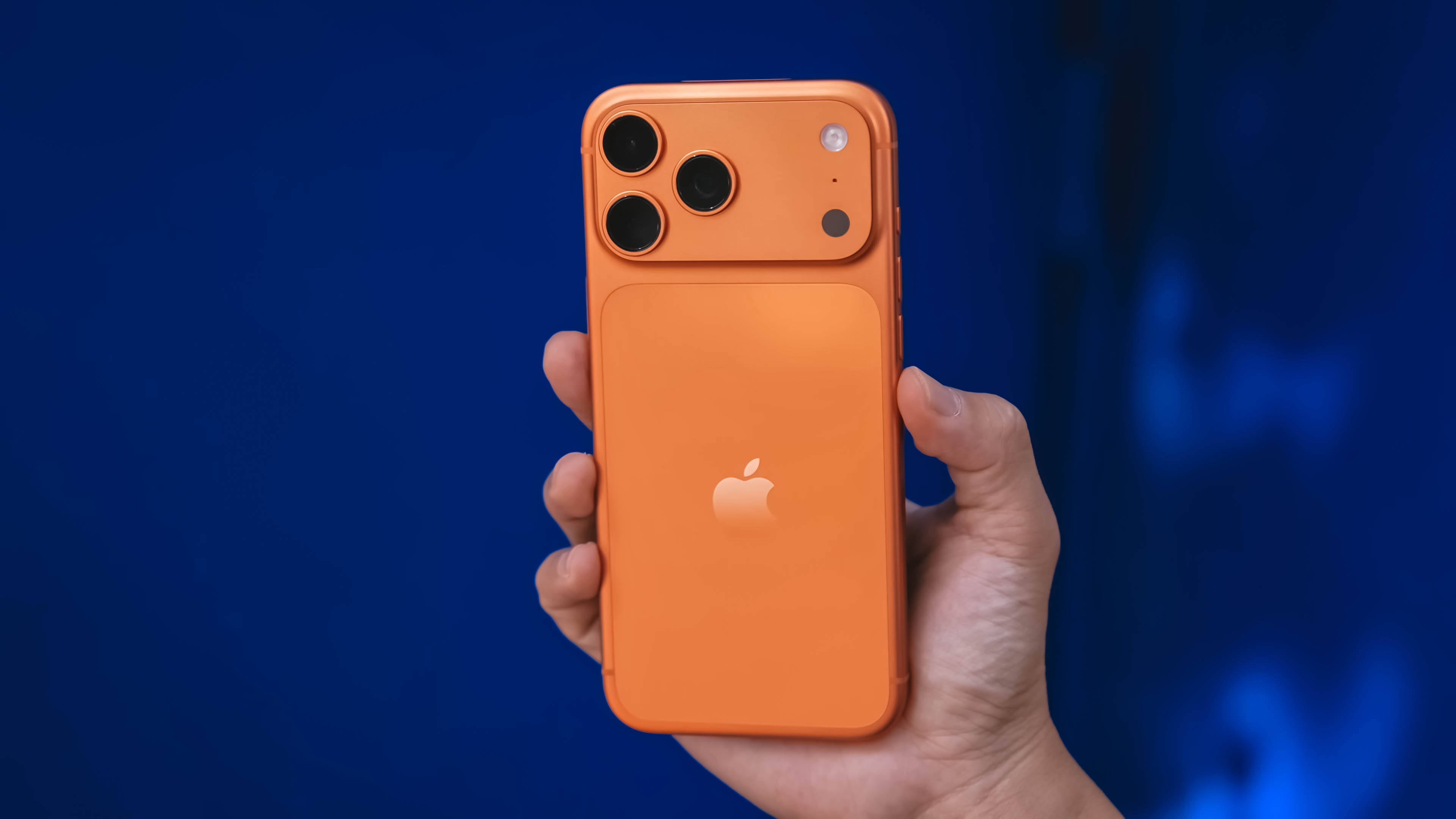
For a lot of people, reselling or trading-in is the natural end of their time with an iPhone. After all, an iPhone is too expensive to leave lying stagnant in a drawer. Now, this usually happens years after a phone fully lives out its usefulness. However, the new iPhone 17 Pro Max has somehow claimed the top spot as the most traded-in phone today.
According to reports organized by SellCell, a surprising number of people are reselling their iPhone 17 Pro Max. Today, 11.5 percent of trade-ins are of the current generation’s most premium model. The next models, the iPhone 14 Pro Max to the iPhone 16 Pro Max, all sit between 7.2 percent and 7.3 percent apiece. This is a staggering growth, as the iPhone 17 Pro Max was sitting at only 5.1 percent of trade-ins in late November.
There’s no confirmed reason as to why people are trading their premium models so early into the model’s lifecycle. However, if it’s any indication, the iPhone 17 Pro Max has the lowest depreciation for a premium iPhone model, when compared to its predecessors in the same time frame.
Given that the resale value of a new iPhone 17 Pro Max is still pretty high today, it’s possible that users aren’t completely satisfied with the model and opted to trade in their new phones for something more manageable. After all, the new phone is as premium as they come. It’s also as large as they come.
That said, it’s certainly an odd tidbit that the most premium iPhone is the one that people are dumping the most.
SEE ALSO: Xiaomi 17 Pro Max takes a jab at Apple’s iPhone 17 Pro Max



OPPO Reno15 Pro: Camera Review

Capcom to hold Resident Evil Requiem launch event in Jakarta
Pokémon FireRed and LeafGreen are coming to the Switch

HUAWEI launches Mate X7, MatePad 11.5 S 2026, FreeClip 2

iPhone 17 Pro Max is somehow the most traded-in phone today


-

 News2 weeks ago
TECNO will showcase the CAMON 50 and POVA 8 series at MWC 2026
-

 Laptops2 weeks ago
TECNO MEGABOOK K16s 13th review: No-frills beneath those grills
-

 Features2 weeks ago
HUAWEI MatePad 11.5 S 2026: The better-than-ever 4-in-1 productivity tablet
-

 Reviews1 week ago
The art of being in and behind the frame
-

 Gaming2 weeks ago
Now Playing: Yakuza Kiwami 3 & Dark Ties
-

 First Look2 weeks ago
Match Pulse: OPPO Reno15 Pro
-
 India1 week ago
TECNO POVA Curve 2 5G packs an 8000mAh battery
-

 Accessories1 week ago
Sony WF-1000XM6 is out now: Price, availability