


The digital age ushered in an era where cybersecurity issues pose a threat to our personal safety and big risks in businesses and the economy. As if the world isn’t cruel, violent, and scary enough, we’re all forced to stay on our toes and double up our guard.
Several data breaches and news about tech companies spying on us have been alarming, to say the least. “Is our data still safe?” is the common question among concerned individuals.
Recently, the CxO Innovation Summit 2019 — a data and security conference held by VST-ECS Philippines — was mounted in Boracay. GadgetMatch had an exclusive interview with executives from Samsung Global and Samsung Philippines.
Samsung’s series of unfortunate events
In a press conference, Samsung discussed its attempts to protect its consumers’ data. Samsung recently faced a series of unfortunate mishaps concerning security and privacy, causing concerns among its loyal customers.
Samsung Mobile B2B Asia’s Corporate VP and Chief Revenue Officer David Kim stated how Samsung isn’t the only one that suffered from malicious attacks. He reiterated how the company uses Knox as a security measure along with its authentication factor. Kim explained, “You can only control the hardware, software, and who access the phones.”
The executive added, “There are also Wi-Fi and networks. If someone can sneak in your network, they can sneak in your email.”
Samsung believes they’re more secure than any other brand. Kim confidently claimed to GadgetMatch, “We don’t have a perfect security rating, but we are well received. That’s why the White House is comfortable with us.”
Amidst the issues surrounding the company, Samsung also took pride in how they’re one of the few companies that organically make their hardware components and develop their software.
Knox makes the difference
Samsung’s Product Manager Anton Andres supported the claims, stating how Samsung’s Knox sets them apart. “The main difference is the Knox platform. It has two components: Platform security and the solutions we offer in the market like Knox Manage and Knox Configure.”
The young executive demonstrated, “Knox Platform is embedded on a smartphone. At first, it was just a security platform that automatically encrypts and decrypts information every time you boot up the device.”
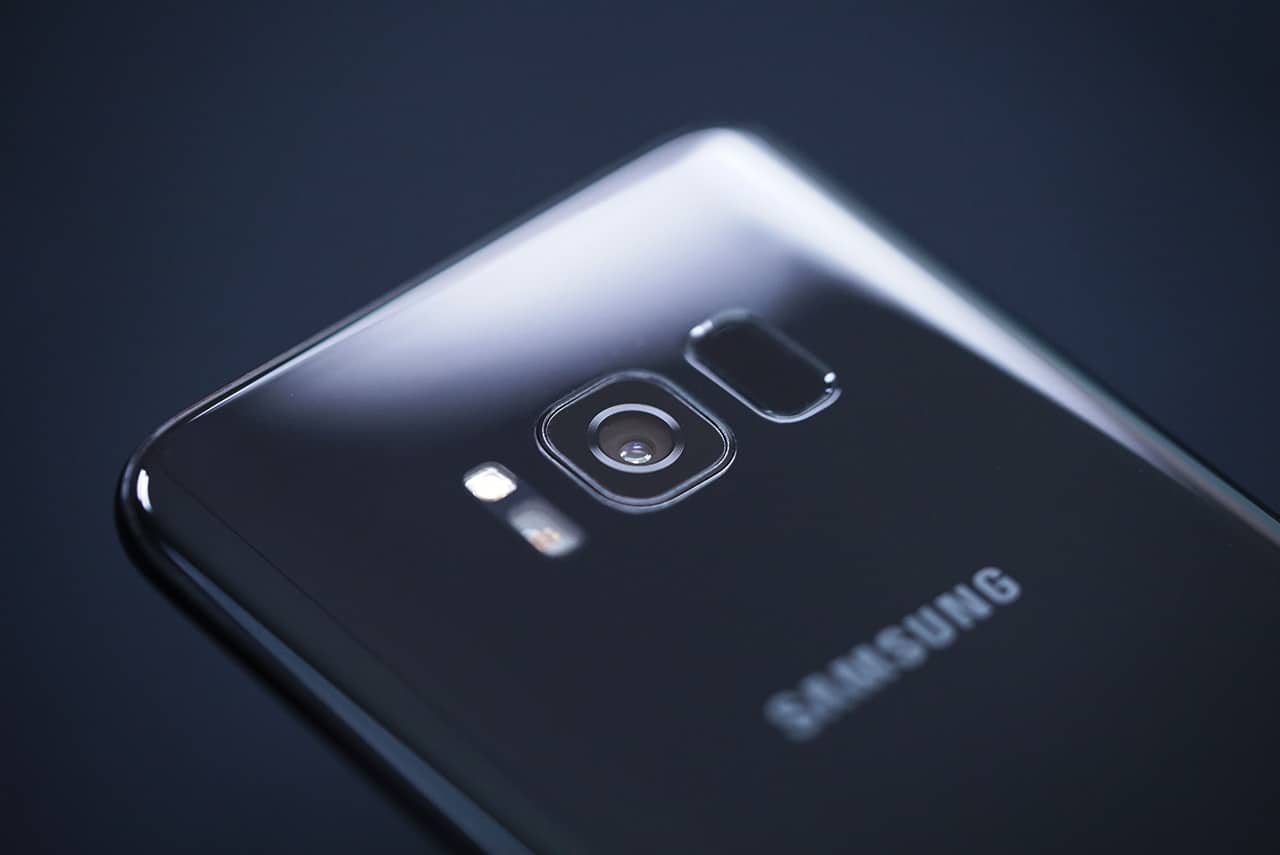
Andres further explained how the Knox Platform has multi-layers of security. “First is the hardware chip. If a device — like a Samsung Galaxy S8 — was compromised and reset, Knox automatically blows the fuse.”
“If you have corporate or personal info, your data is automatically wiped, preventing any data leakage and security risks.”
Be careful of what you download
Similar to Huawei’s warnings, Andres warned about downloading third-party apps and keyboards. Though it may customize your keyboard to your liking, it can compromise your security. Andres believes the challenge is the keyboard loggers, which sends your credentials to third-party servers every time you put your credentials.
“If you access your mobile banking credentials on a third-party keyboard, they can phish your information,” Andres said. “With Samsung Knox, we identify specific applications and URLs. Once identified, Knox automatically hides your information to prevent potential threats.”
Currently, Samsung is constantly updating the Knox Platform and its security solutions. Recently, the Samsung Galaxy A50s highlighted Knox. The Korean company is also looking for more ways to make Knox easily understandable for everyday consumers. Presently, the Knox Platform is limited to Samsung devices while Knox Solutions are compatible with Android, Windows, and iOS.
SEE ALSO: Huawei: ‘We do not touch data’





Enterprise
ACMobility Launches ChargeFleet: Seamless solution for businesses
B2B solution for corporate fleets and transport groups


Ayala Group’s ACMobility has launched ChargeFleet, a new B2B digital solution for corporate fleets and transport groups.
The new service introduces a shareable digital wallet that streamlines charging expenses, reduces manual tracking, and improves cost control.
As more organizations explore electrifying their mobility operations, many continue to face operational challenges — including fragmented payment systems, reimbursement delays, and limited visibility over charging usage.
ChargeFleet addresses these gaps by introducing a centralized, shareable digital wallet. Here, fleet managers can allocate and monitor charging credits across multiple drivers across a single platform.
The system is a seamless process designed for long-term usage and easy deployment across any organization.
Once integrated, ACMobility assigns charging credits to the client’s fleet manager. The manager then can distribute these to multiple drivers. Meanwhile, the latter will be able to see and use their assigned credits via the Evro app.
ChargeFleet is available as a prepaid product through the ChargeFleet Store. Users can buy offers via GCash or credit card. No application process is required.
Looking ahead, ACMobility will continue to enhance the ChargeFleet experience with exclusive value-added perks integrated through Evro and Power on Wheels.
The upcoming features highlight ACMobility’s ongoing push to provide a future-proof support system for the evolving needs of their customers’ businesses.
Enterprise
Sony teams up with 13 companies for sustainable global supply chain
Sustainability through introduction of renewable plastics

Sony, along with several companies, have established the world’s first global supply chain for the production of renewable plastics that can be used in Sony’s high-performance audiovisual products.
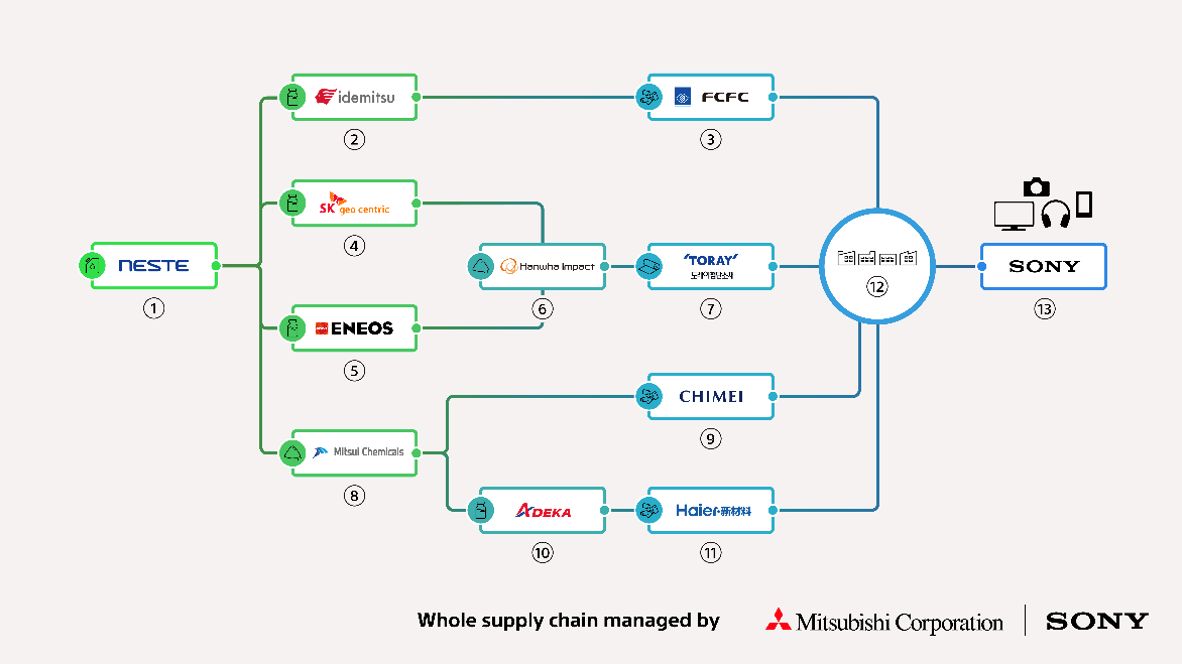
The supply chain consists of 14 companies across five countries and regions. The various plastic materials manufacture through this supply are slated for use in Sony’s products that will launch worldwide.
High-performance products such as audiovisual equipment involve a wide variety of plastics. The result is a complex supply chain that makes it difficult to visualize and manage the entire flow.
Additionally, plastic components that require high performance in terms of flame resistance and optical properties cannot be fully replaced with plastics from material recycling.
To address these challenges, these 14 companies have collaborated to visualize the existing supply chain for Sony’s products:
- Sony Corporation
- Mitsubishi Corporation
- ADEKA CORPORATION
- CHIMEI Corporation
- ENEOS Corporation
- Formosa Chemicals & Fibre Corporation
- Hanwha Impact Corporation
- Idemitsu Kosan Co., Ltd.
- Mitsui Chemicals, Inc.
- Neste Corporation
- Qingdao Haier New Material Development Co.
- Ltd., SK Geo Centric Co., Ltd.
- Toray Industries, Inc.
- Toray Advanced Materials Korea Inc.
Sustainability through renewable plastics
The new supply chain created will enable the production of multiple types of renewable plastics from biomass resources with a mass balance approach.
This allows Sony to proactively source raw materials for its products with quality, as well as properties equivalent to virgin fossil-based plastics.
Defining the supply chain also helps the companies track and document GHG (Greenhouse Gas) emissions data in a verifiable way.
This allows participating companies to leverage the data to advance efforts to reduce their carbon footprint going forward.
Sony’s initiative with a wide range of global partners is part of the “Creating NEW from reNEWable materials” jointly launched by the electronics giant and Mitsubishi.
It aims to achieve zero usage of virgin fossil-based plastics through the introduction of renewable plastics.
Enterprise
realme is reportedly going back to being an OPPO sub-brand
All scheduled phones will still launch on time, though.

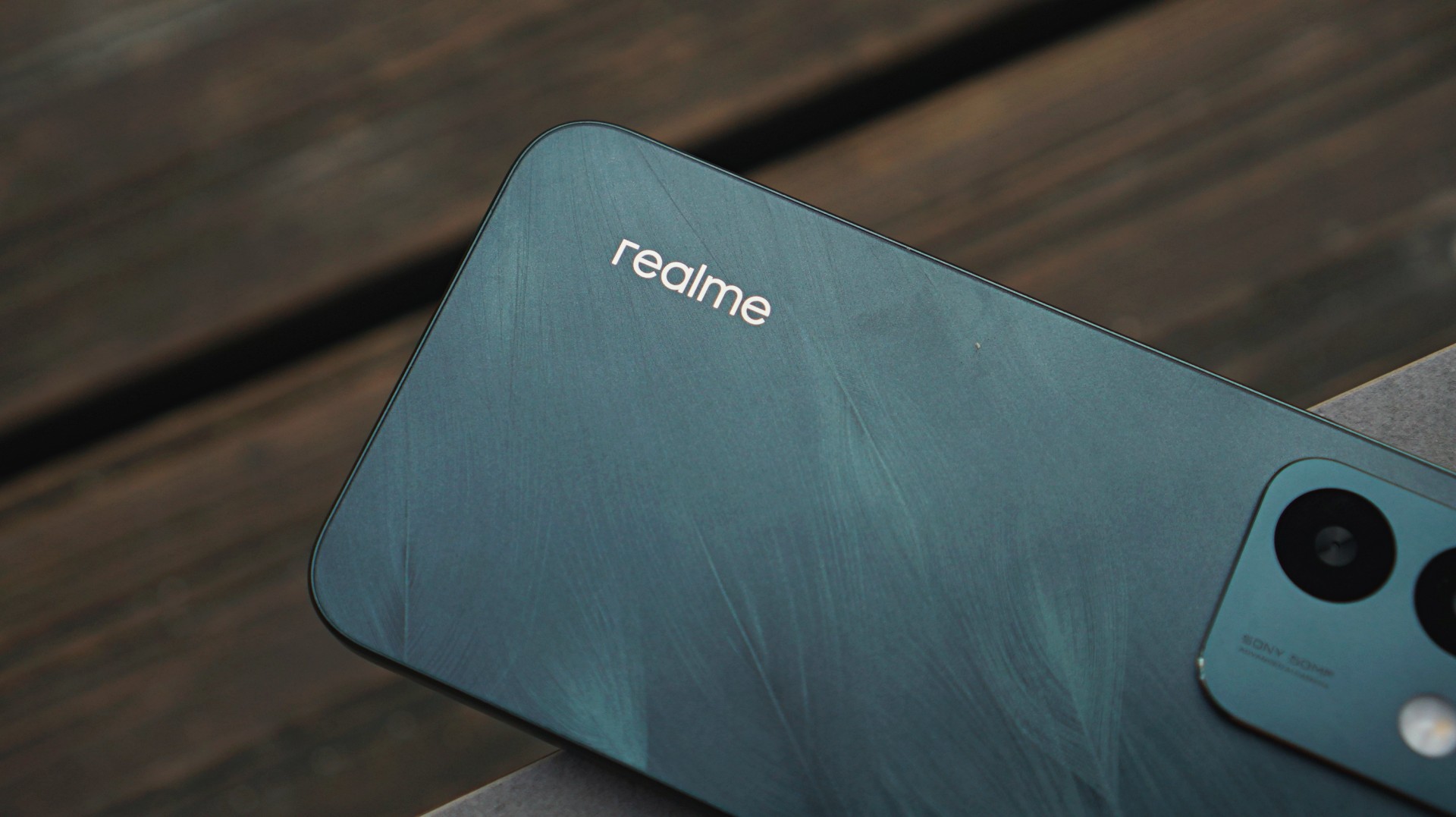
A popular story among Chinese smartphone brands is whenever a sub-brand spinning off into its own independent entity. A less common one is when an independent entity suddenly merges back into the main entity. And yet, that’s the story we have today. realme is reportedly going back to being a sub-brand of OPPO.
If you don’t remember realme’s time as a sub-brand, then it’s hardly your fault. It’s been a long while since realme was considered a sub-brand. In 2018, the brand spun off on its own to form one of the most popular names in the Chinese smartphone space.
Today, via Leiphone, realme will return to OPPO as a sub-brand. Current realme CEO Sky Li will still retain his responsibilities heading the brand. Plus, all products on the current release schedule will still come out as planned.
However, starting this year, realme will start reintegrating back into OPPO, particularly through the latter’s after-sales programs. OnePlus will also follow the same structure going forward.
Currently, realme has not officially announced the move. That said, we also don’t know how the brand will address the reported change. It’s possible that the shift is just internal and has no effect on how the brand faces the public. For now, only time will tell.
SEE ALSO: realme C85 with 7000mAh battery, 5G connectivity officially launches





HONOR X5c Plus launches exclusively on Shopee, gets 3.3 offers

Forget the Phone: Xiaomi 17 Ultra Is A CAMERA!

Xiaomi Pad 8 review: Slab that slaps!

Xiaomi 17 Ultra is now available outside China

The Xiaomi Pad 8 series is now official


-
 News22 hours ago
Xiaomi 17 Ultra is now available outside China
-

 Camera Walkthrough1 week ago
OPPO Reno15 Pro: Camera Review
-
 First Look2 weeks ago
Match Pulse: Infinix NOTE 60 Pro
-

 Cameras1 week ago
Osmo Pocket 4 makes a surprising appearance in public
-

 Gaming2 weeks ago
LG unveils UltraGear evo, redefines 5K gaming with AI Upscaling
-
 News1 week ago
iPhone 17 Pro Max is somehow the most traded-in phone today
-

 News1 week ago
HUAWEI launches Mate X7, MatePad 11.5 S 2026, FreeClip 2
-

 Gaming2 weeks ago
PlayStation 6 reportedly delayed to 2029 because of RAM shortage