


With the steady popularity of e-commerce sites especially this pandemic, more and more people prefer shopping online rather than risking themselves to go out. Shopee is one of those platforms that provides plethora of items ranging from clothing to home supplies to gadgets, dry food even. Now, they also have Shopee Pay (or SPay).
Due to the continuous rise of coronavirus cases, physical contact should be avoided at all times. ShopeePay is the company’s solution for an easier way of paying the items you buy from their site. It might just be your ultimate contacless payment method!
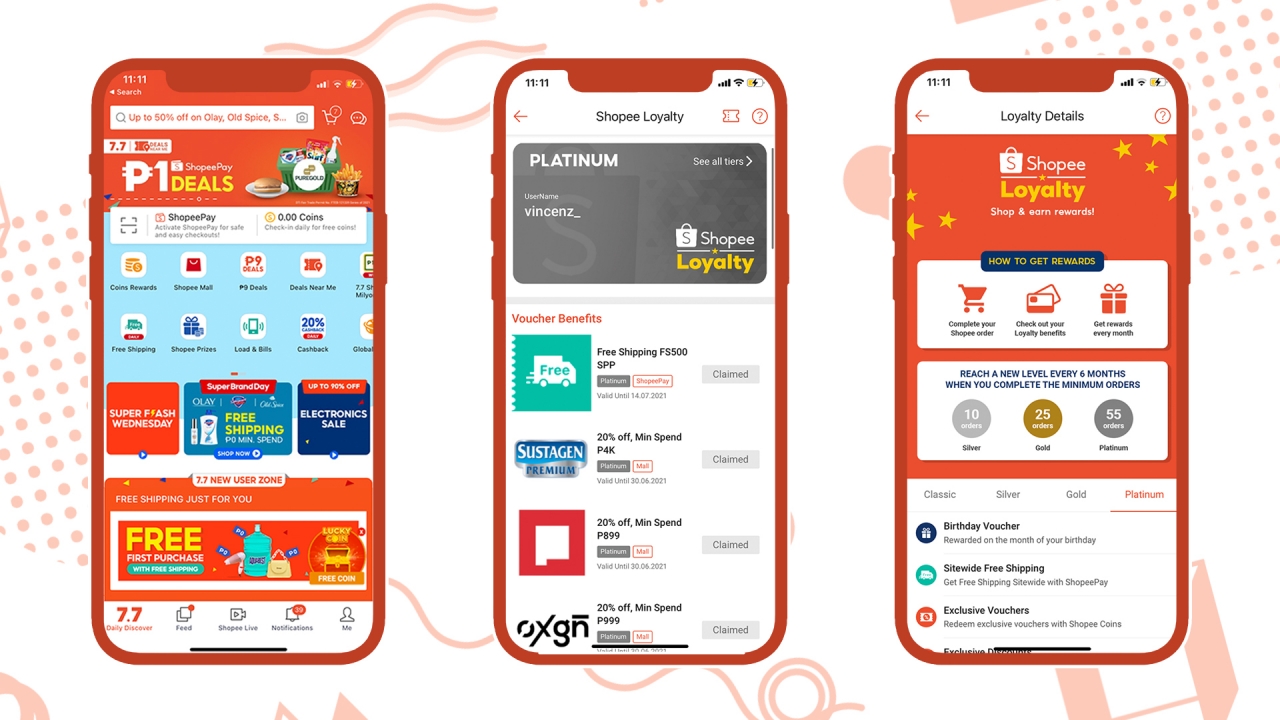
Image by GadgetMatch
I admit that I’m an avid Shopee buyer and user. Adding so many products in the cart and buying from their app even made me a “Platinum” member — well at least for the first six months of 2021. In all of my Shopee transactions, 100 percent were paid through ShopeePay. And with that, I present you six (6) reasons why you should ditch Cash on Delivery and switch your payment method to ShopeePay right away.
1. PhP 1 deals

Image by GadgetMatch
Reason number one is specially reserved for one-peso deals. Through much exploration, you’ll enjoy lots of deals (especially fast food vouchers) as low as one peso. Other deals in the roster have major slashed prices for you to enjoy. This is an exclusive feature for ShopeePay and you can’t use other means of payment for this.
2. Worry-free item checking
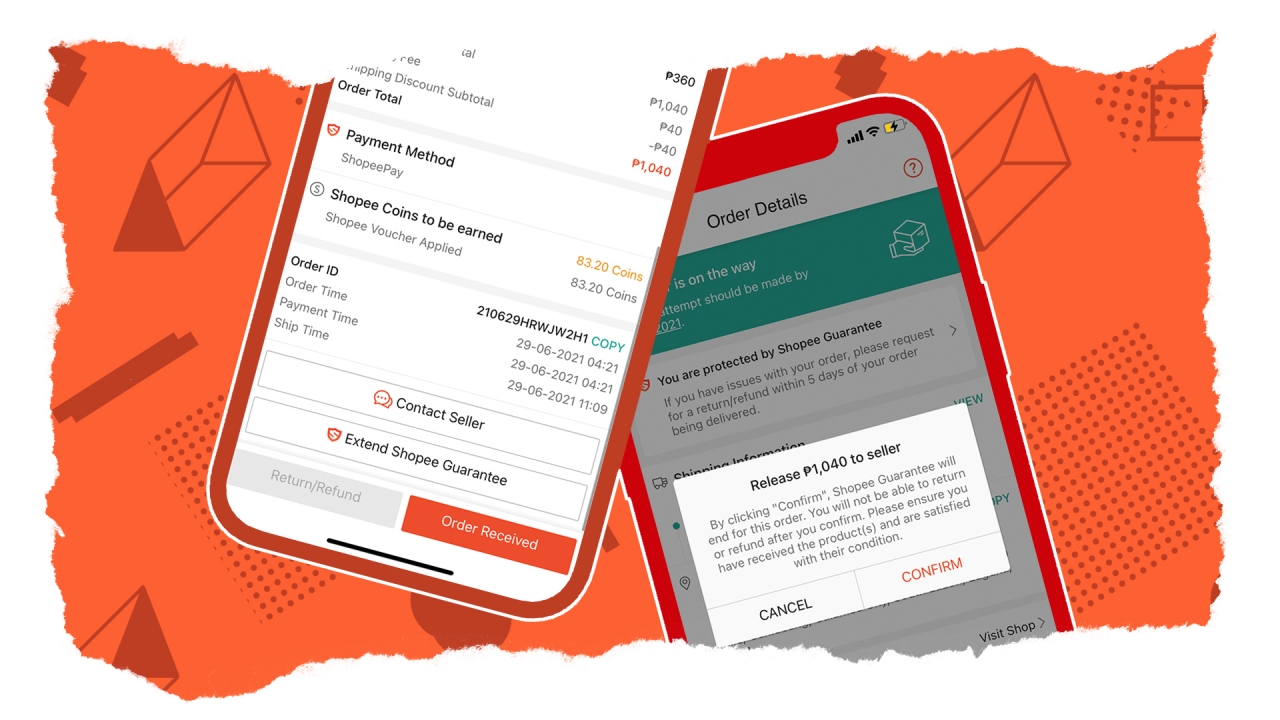
Image by GadgetMatch
The amount of users using Cash on Delivery (CoD) (not to be confused with the game Call of Duty) are still rampant over those who pay cashless. While giving and receiving parcels aren’t exempt from being risky, money is still an immediate medium for the virus to spread from one person to another.
By activating and using ShopeePay in your future purchases, not only did you prevent the spread of infection, it’s also a better way for you to release your payment without the rider waiting for you to check if the items you’ve received are in good condition. Worry-free, indeed.
3. Almost instantaneous refund process
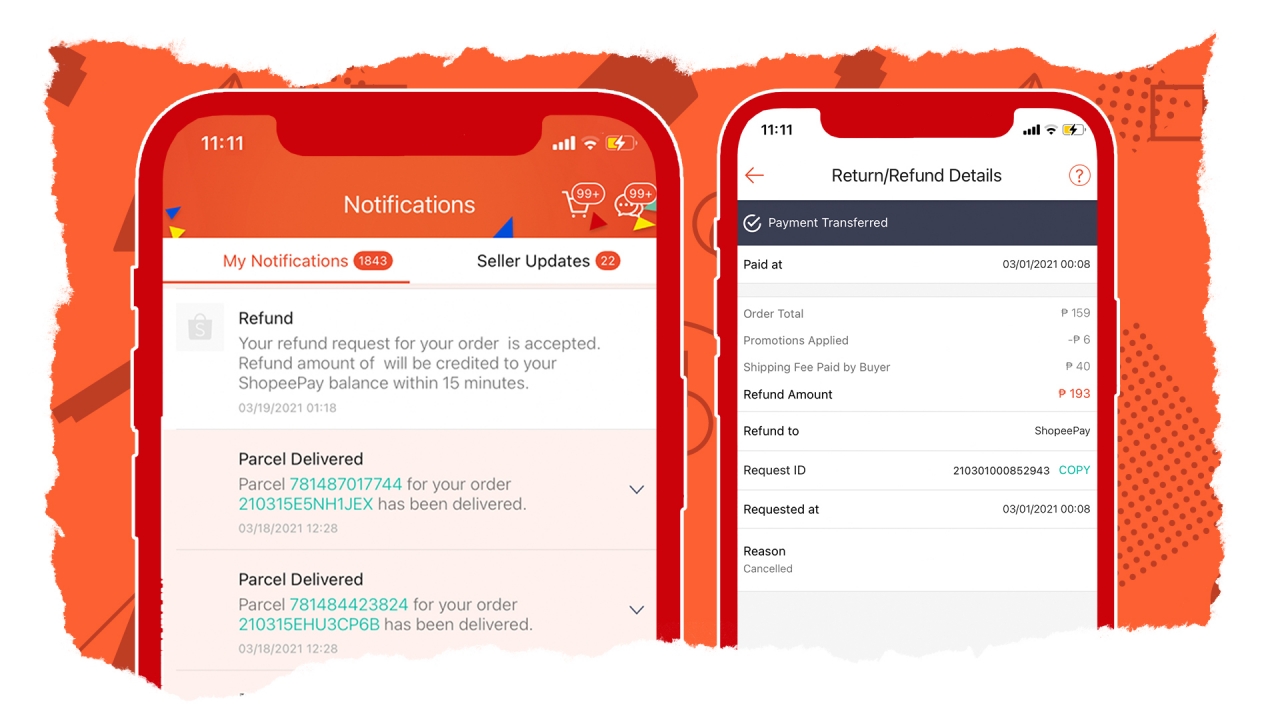
Image by GadgetMatch
In instances where the item delivered to you either looks bad, broken, or faulty at worse, you can request for a replacement of the item or a refund right away. If you chose refund, Shopee will bring back your money within 15 minutes to an hour utmost. This is something you can’t have right away if you paid through other payment channels — especially if it’s CoD.
Other than that, you’ll also have the huge peace of mind just in case a seller suddenly cancels an existing order you’ve purchased. Shopee automatically processes the refund and returns the value of the item you paid back to your ShopeePay wallet.
4. More access to free shipping and cashback vouchers
Some items have shipping fees that cost more than the product itself. One of the biggest reasons why most users keep buying from Shopee (including me) are the Free Shipping Fee vouchers. These help lower the total amount of goods or items we buy inside the platform.
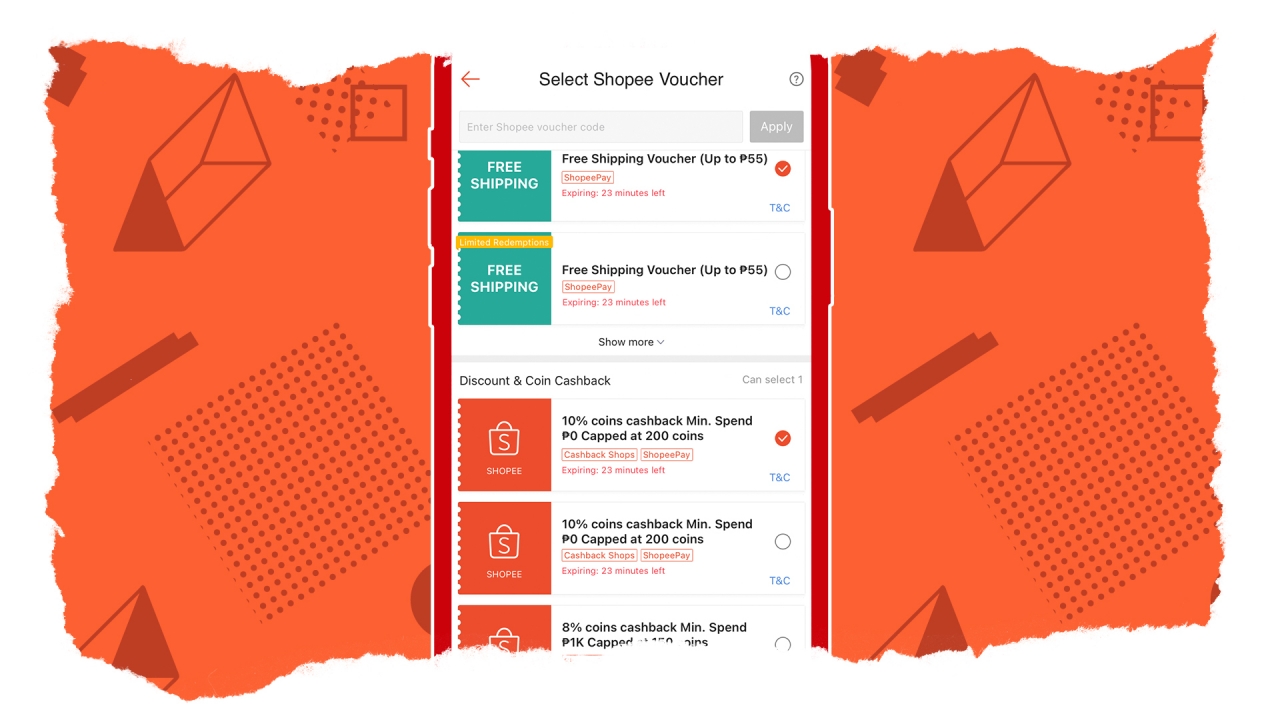
Image by GadgetMatch
Non-ShopeePay accounts still enjoy this but if you’re a ShopeePay user, you’ll get more than just the maximum PhP 55-vouchers. In my case, I was able to obtain 100 pesos less voucher in shipping.
Other than that, there are also cashback vouchers that are helpful in deducting the cost of the item/s you want to buy. Non-ShopeePay users also get this but ShopeePay users get up cashbacks with no minimum capping more often. Citing my experience, I recently ordered a PhP 10,000-worth action camera. Shopee gave me a 10% cashback voucher with no coins capping just because I’m a ShopeePay user. In return, I was able to get 1000 coins straight to my Shopee coin chest!
5. Pay bills and other services within minutes
Other than having the ability to pay cashless for your Shopee orders, you can also pay electricity, water, and internet bills as well as other services through Shopee. This is possible if you activate your ShopeePay right away.

Image by GadgetMatch
Not only will you avoid long queue lines in payment centers, you’ll also be at peace as this method can be done within minutes — whether you’re still in bed, sitting on the sofa, or even dropping the deuce inside the bathroom.
As mentioned earlier, the cashback vouchers are still helpful here. You can lower the amount of your bills by using the existing coins you got from your orders through those cashback vouchers. In return, Shopee will also give you a cashback voucher for paying your bills in the app; a win-win situation.
6. Secure AF
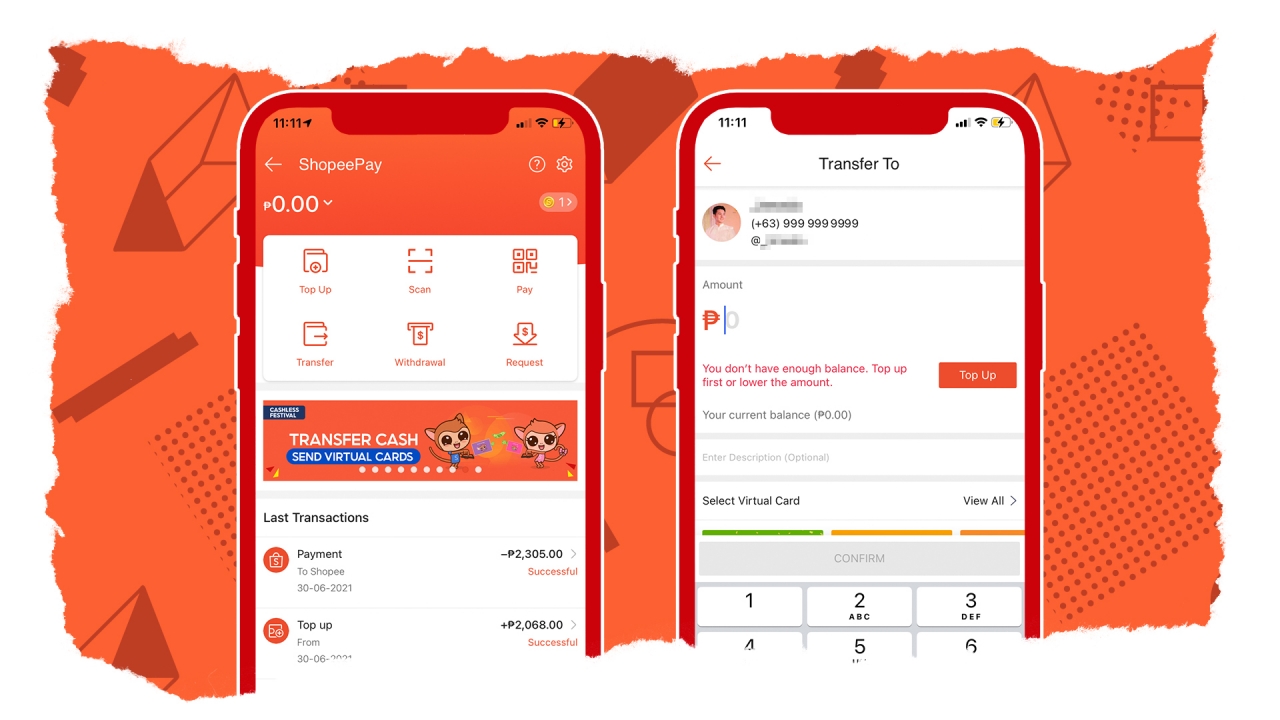
Image by GadgetMatch
Using ShopeePay isn’t only limited to top-up (cash-in). Using Shopee’s e-wallet service* also gives sellers the ability to securely withdraw (cash-out) the money they’ve earned from the items that are sold through the platform. Other than that, it also offers secure and hassle-free transfers to and from Shopee users in just a matter of taps.
ShopeePay has also gotten more secure with the use of PIN or biometric authentication (via fingerprint or face recognition). If you think about it, it’s more secure than lending out money to someone if ever you’re too busy to pay your Shopee orders that need to be paid via CoD. More so, other cashless payment methods don’t offer the same amount of authentication just in case processing of online payment through online bank transfers failed halfway.
Bonus: Buy now, SPayLater

Image by GadgetMatch
Shopee Philippines launched this new feature called “SPayLater”. Qualified buyers have options between buy now and pay later or through installment loans. As of the moment, this is only available to certain users (like me).
While this isn’t a ShopeePay-exclusive, it will be more convenient to use Shopee’s own payment method if ever you’ve decided to buy any item through SPayLater payment method. This means fast and seamless payments on the long run without worrying about additional interest charges if you suddenly forgot to pay through other payment methods.
To know more, just visit What is SPayLater.
Is it easy to activate ShopeePay?
Yes! It’s super quick and easy. All you have to do is input your phone number and a code will be sent right away. After you enter the verification code, you just have to fill-in necessary details before ShopeePay gets activated.
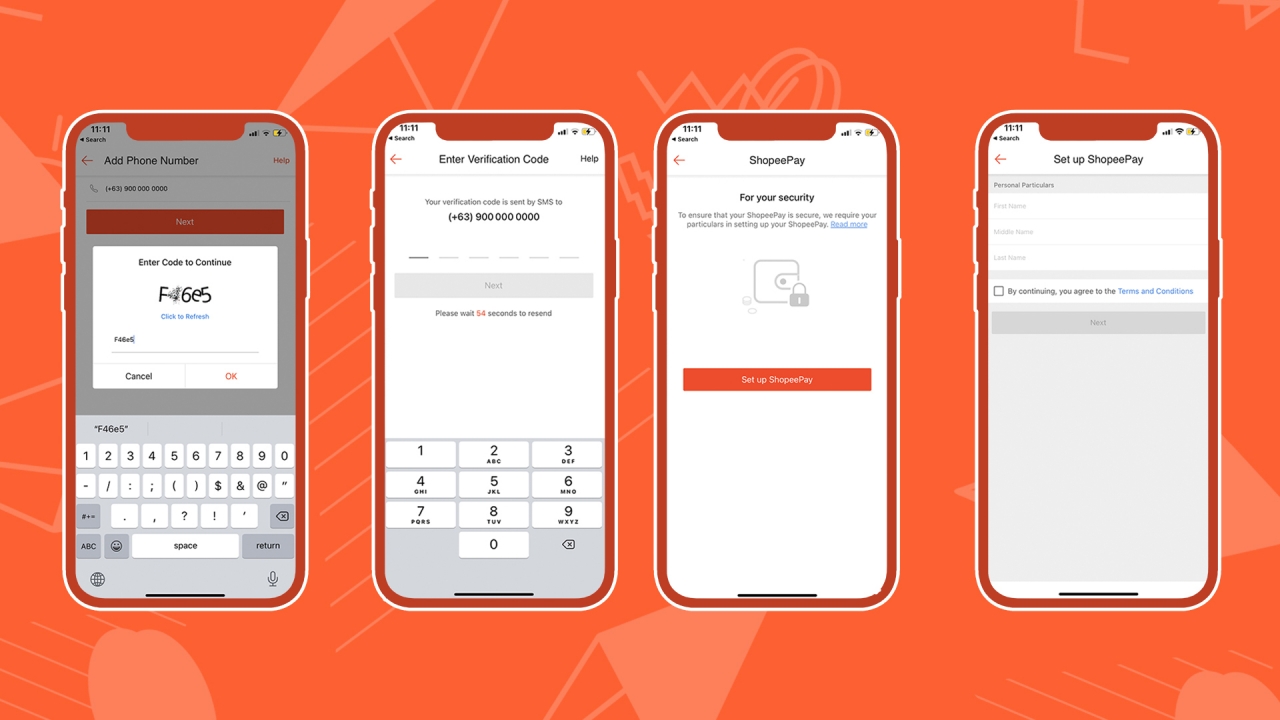
Image by GadgetMatch
In order to be verified, you need to submit a photo of you with a government-issued ID. Verified ShopeePay accounts have the advantage of sending money that non-verified users can’t do. Sellers will mostly benefit the verified badge more as they can withdraw (cash-out) the money they’ve earned from selling to their assigned bank account/s.
For more information, you can visit Shopee’s official microsites here:
How to Activate ShopeePay | How do I verify my ShopeePay account
How can I add money to ShopeePay then?
Once you’ve activated your ShopeePay, there are numerous ways on how to add money to your account (also referred as “top-up”).
The most common cash-in method is through e-wallet services such as GCash, and Coins.ph (unfortunately, Paymaya isn’t included in the list). You can also link your debit card from any bank with a minimum top-up balance of PhP 250.
Over-the-counter bank transactions from BPI, BDO, UnionBank, Metrobank, RCBC, Landbank, PNB, Robinsons Bank, China Bank, and UCPB are all supported as well. If you specifically have a BPI bank account, you can connect it through BPI online by signing-in your account inside the Shopee app.
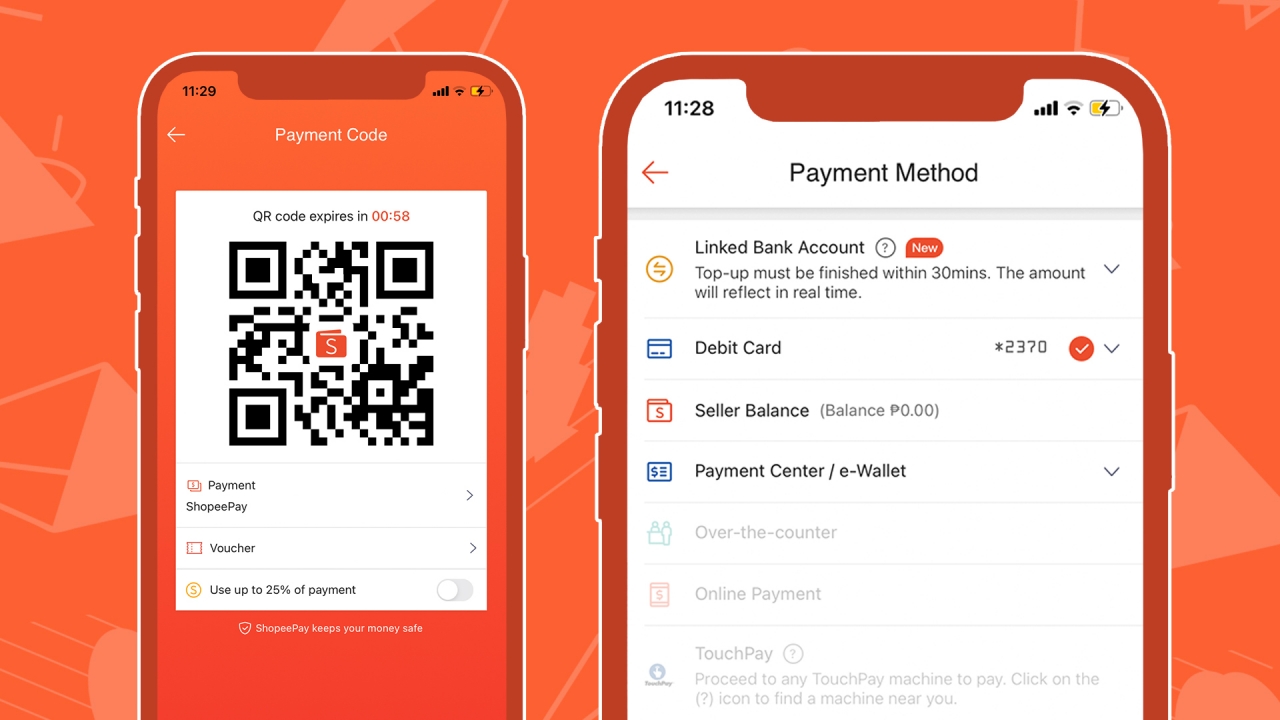
Image by GadgetMatch
For non-bank/e-wallet users, payment centers are also supported:
- 7-Eleven’s CLiQQ kiosks
- ECpay (Shopwise, Petron, All Day, Ministop)
- Bayad Center
- SM Bills
- LBC Bills Payment
- M Lhuillier
- Cebuana Lhuillier
- Palawan Pawnshop
- RD Pawnshop
You should take into consideration that there’s a minimum ShopeePay balance of PhP 50.00 before you can proceed with one of these payments. Meanwhile, cash-in via TouchPay machines (found in Alfamart, Mercury Drug, Shell, Ayala Malls) require an existing PhP 20.00 ShopeePay balance before you can use such top-up method.
If you have CoD orders but wishes to pay through ShopeePay, it’s also possible by generating or scanning a QR Payment Code. However, please do note that this feature is only applicable to orders delivered via Shopee Xpress (Standard Delivery), not orders shipped via J&T Express, Ninjavan, or GoGo Xpress.
*Disclaimer per ShopeePay Terms of Service: “The ShopeePay E-Wallet is not a deposit account and therefore, it is not covered by the Philippine Deposit Insurance Corporation (“PDIC”) and it does not earn interest. However, it is subject to the rules and regulations of the BSP and the Anti-Money Laundering Act (“AMLA”), as amended.”






Apps
Smart launches LiveSmart App for exclusive deals
Exclusive deals, cashback, and bill payments in one app.

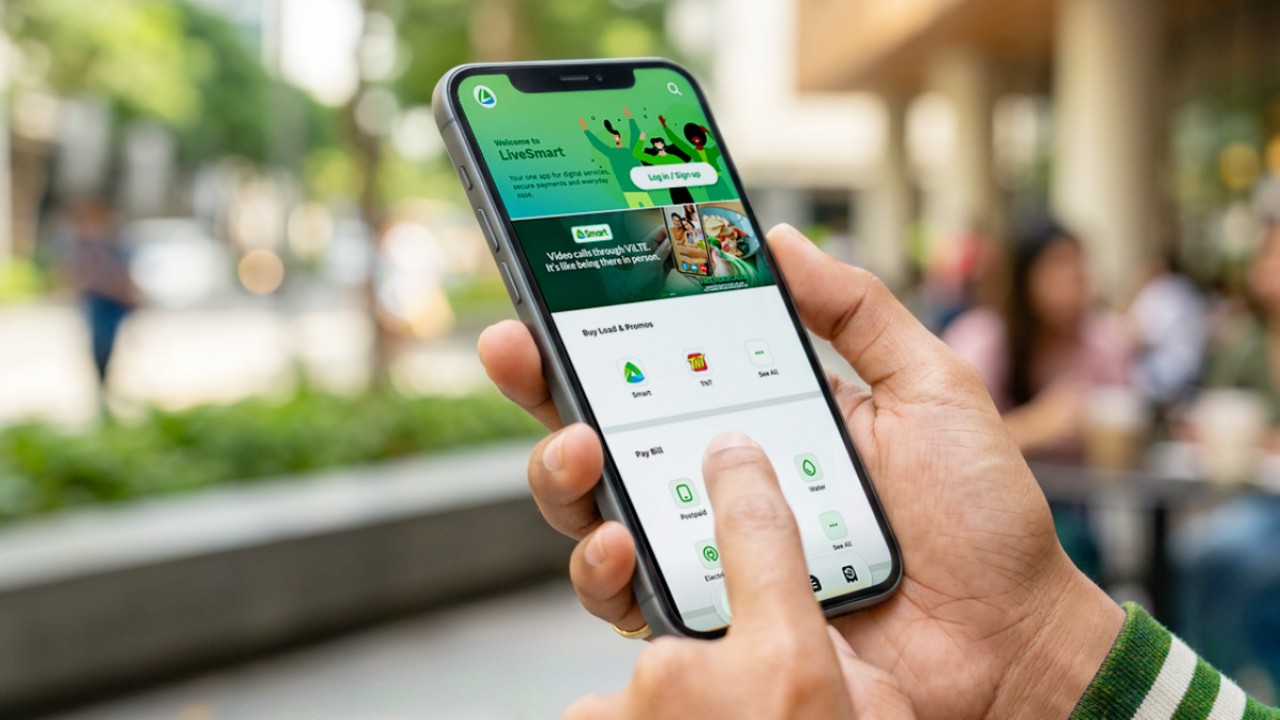
Smart Communications, Inc. (Smart) and TNT have launched the LiveSmart App, a new platform that combines loading, bill payments, exclusive offers, and other everyday transactions in one app.
The app is available on the Google Play Store and Apple App Store. It is open to Smart, TNT, and subscribers of other mobile networks.
The LiveSmart App gives users access to exclusive deals and savings. These include cashback offers, discounted Smart and TNT data packages, and limited-time access to AI.Smart.
“Filipinos are becoming more deliberate about where they spend and how they can get more value from every peso,” said Lloyd R. Manaloto, FVP and OIC for Smart. “The LiveSmart App is designed to help make those everyday decisions a little smarter, by giving users convenient ways to load, pay bills, and access exclusive savings and offers in one place.”
Exclusive deals and perks
Smart and TNT are rolling out several offers on the LiveSmart App starting September 18.
Smart and TNT subscribers can get 5% cashback when they purchase load or pay their Smart Postpaid bill through the app.
The app also offers data packages at exclusive prices. Smart Prepaid subscribers can get Power All 109 for PHP 105, while TNT subscribers can get Saya All 109 for PHP 105.
Users who download the LiveSmart App may also receive limited-time free access to AI.Smart.
AI.Smart combines multiple AI models, including AWS Nova, ChatGPT, Claude, Google Gemini, and Thinking Machines, in one workspace. Users can use it to generate images, create presentations, draft documents and spreadsheets, and get help with schoolwork, content creation, and other projects.
To claim the free AI.Smart credits, users need to tap the AI.Smart banner in the LiveSmart App. They then need to create an AI.Smart account using their Smart or TNT number.
Smart says users can also expect more exclusive deals and perks from lifestyle partners as it expands the LiveSmart App.
Powered by Smart 5G
The LiveSmart App runs on Smart’s network. Smart 5G supports activities such as video streaming, gaming, and real-time social media sharing.
The company said Ookla recently recognized its network for the Best Mobile Video Experience in the Philippines for the first half of 2026. Smart recorded a Video Score of 72.82, which it said was the highest among mobile operators in the country.
The LiveSmart App is now available on the Google Play Store and Apple App Store. Users can learn more about the app through Smart’s website.
Apps
Apple’s best feature to cure motion sickness is finally on Android
Google copies a good page from Apple’s playbook.

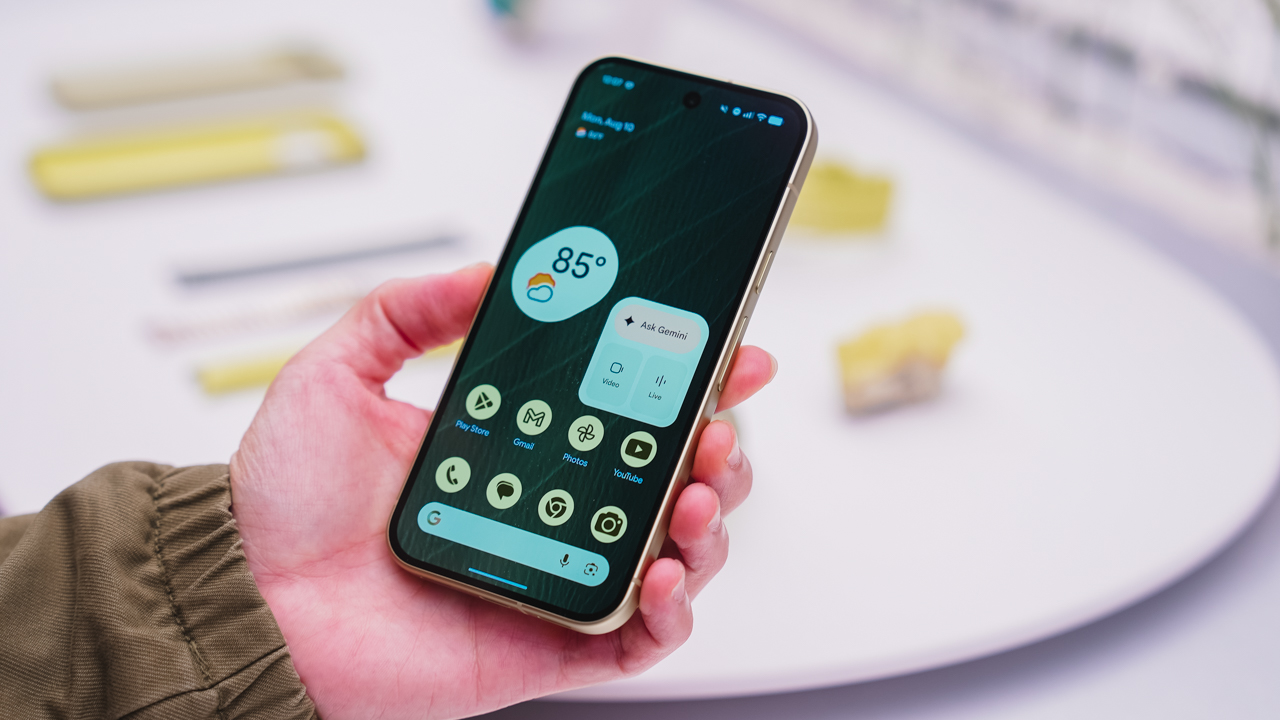
As an Android user, I’ve been jealous of iPhone users for a while now, but it’s not for the reason you might think. See, I’m ridiculously prone to motion sickness when I’m not driving. So, when I discovered that Apple has a software-based cure called Vehicle Motion Cues, I wanted it immediately. Now, Android does have third-party apps that do the same thing, but they’re not as good as a fully native version. Well, those dark, nauseating days are about to come to an end. Android 17 is finally getting a similar tool called Motion assist.
Before that, let’s rewind for a bit. What do these features do? How can they cure motion sickness?
Whenever you open Vehicle Motion Cues or Motion assist, the interface spawns a series of dots on the screen. These dots respond to movement. For example, if the vehicle turns to the left, the dots also go to the left, mimicking the movement. Without cues like this, the stationary nature of the screen clashes with our brain’s perception of movement. The disparity creates that feeling of nausea. Basically, our eyes are desperately trying to focus on the static screen, but our brains are telling us that we should be seeing motion. Having moving dots reorients our brain and places the phone inside our perception of movement.
Now, you can enable the same feature on your Android 17 device through Settings > All services > Motion assist under Personal & device safety. You can also set it so that the feature turns on automatically when the phone detects that you’re in a moving vehicle. Finally, you can also tweak the shape, color, and opacity of these dots.
Android 17’s Motion assist is rolling out now to compatible devices.
SEE ALSO: These are the best Android 17 features (if you hate AI)

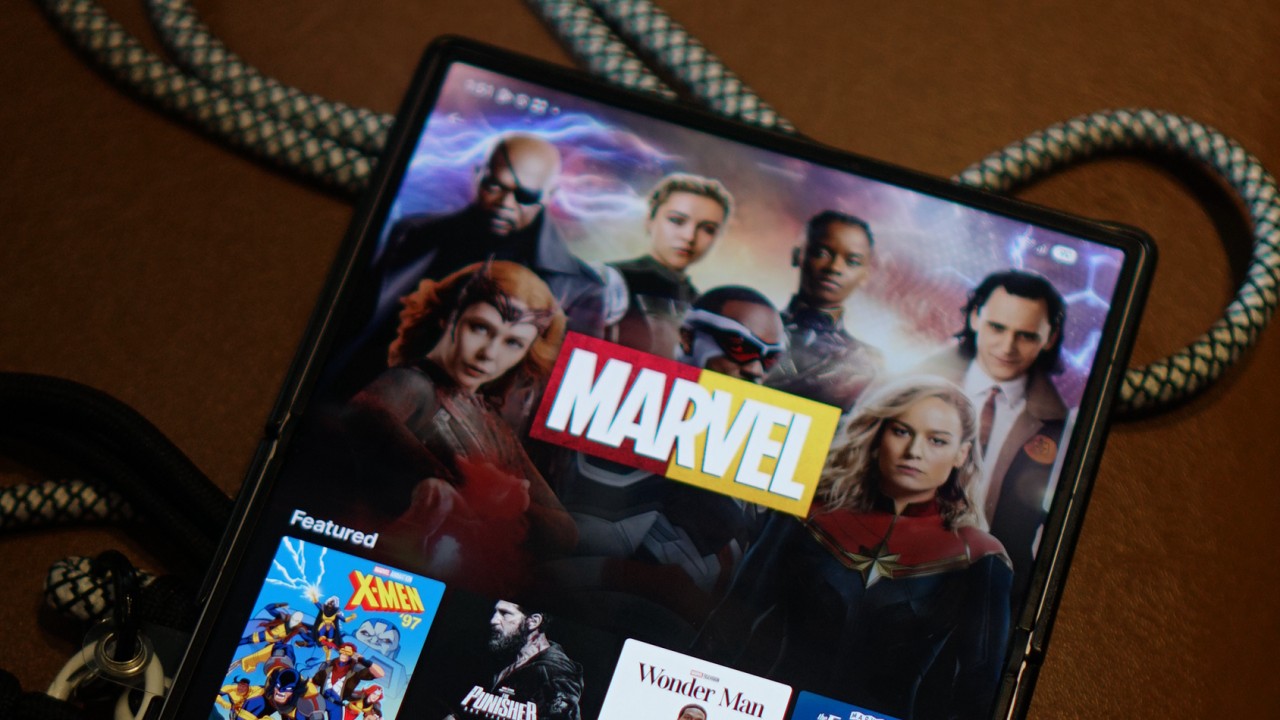
Disney is rolling out its new Disney+ app to markets that have been using a separate, Hotstar-derived version of the service.
The change is already happening across several regions, with Southeast Asia among the markets affected. Disney+ subscribers in the Philippines, Malaysia, Thailand, Indonesia, and other countries will transition to the newer app experience as Disney works toward a more unified global platform.
For Philippine subscribers, Disney+ has confirmed that the migration will happen on October 7, 2026.
The company notified subscribers this week that the existing app will eventually be replaced by a new Disney+ app. No action is required yet, and subscribers can continue using the current app until Disney provides further instructions.
The migration is part of a broader effort to bring Disney+ users onto the same core platform.
From Hotstar to a global Disney+ app
The distinction between the old and new experiences goes back to Disney’s international expansion.
Disney used a Hotstar-derived version of its streaming platform in several markets, including the Philippines, Malaysia, Thailand, Indonesia, South Africa, and markets across the Middle East and North Africa.
That version provided a localized Disney+ experience, but it operated separately from the main Disney+ platform used across many other international markets.
Disney began simplifying its streaming brands in 2025. In Southeast Asia, Disney+ Hotstar was rebranded simply as Disney+, while the Star general-entertainment brand was replaced by Hulu. At the time, Disney said the rebrand would bring a more consistent Disney+ experience, although the available content would remain tailored to each market.
The next step is now happening at the app level.
Egypt began moving to the new Disney+ app on September 2, followed by Indonesia on September 3. South Africa is scheduled for September 9, while Thailand is set to follow on September 16. Malaysia and the Philippines are scheduled for October 7.
This makes the Philippine migration part of a much larger transition rather than an isolated local update.

A more familiar Disney+ experience
The new app brings affected markets closer to the current Disney+ experience elsewhere.
Disney redesigned the global app earlier this year with a new For You homepage, improved personalization, redesigned navigation, more prominent profiles, and additional content hubs. Depending on the market and subscription, the interface can also surface Disney+, Hulu, and ESPN sections.
Disney has also been expanding the platform’s international language support. In July, the company added 17 languages, bringing Disney+ to 58 audio languages, with the user interface available in more than 30 languages and subtitles or closed captions available in as many as 42. The expansion included Thai, Indonesian, Malay, Arabic, Hindi, Tamil, and Telugu.
The company has described these updates as part of its effort to make Disney+ a more accessible and localized service for audiences around the world.
The migration also brings practical changes for subscribers.
In the Philippines, Disney says existing subscribers can continue using their current account and subscription. However, profiles, watchlists, and viewing history will not transfer to the new platform. Philippine subscribers will therefore need to set up their profiles and watchlists again after moving to the new app.
The subscription itself does not require an additional charge because of the migration. Existing billing cycles will also remain in place.

The catalog will still depend on where you are
Moving to the global Disney+ app does not mean every country will suddenly receive the same library.
Disney continues to operate its streaming service according to regional content rights. Its own Help Center notes that content availability can differ by country or region, and that some titles may not be available in a subscriber’s current location.
That means a subscriber in the Philippines, for example, will still see a catalog determined by the rights Disney has for the Philippine market. The same applies to subscribers in Thailand, Indonesia, Malaysia, South Africa, or any other market making the transition.
What is becoming more global is the platform itself.
That brings Disney+ closer to the model used by other major streaming services, where subscribers can use a common app experience across markets while the actual catalog changes depending on where they are.
The distinction is particularly relevant for people who travel. Disney’s global Help Center says subscribers abroad can stream content available in the country or region they are visiting, meaning the service’s location-based availability rules still apply even on the unified platform.
Disney has been signaling this direction for some time. In 2025, the company said its redesigns were leading toward a “fully integrated unified app experience” in 2026. The latest migrations appear to be the next major step toward that goal.
For subscribers in the remaining Hotstar-derived markets, then, the biggest change isn’t necessarily what’s available to watch.
It’s where and how they access Disney+.


DJI Lito X1 review: Is this the best lightweight drone for creators?
Making a strong case as a travel companion and a capable B-cam!


REDMI Note 17 Pro Max review: A new breed born from AI greed
Welcome to the new normal


Marvel’s Wolverine review: When the claws come out
A brutal, cinematic superhero adventure

Epson Lifestudio Grand Plus EH-LS970B with 4K projection, more launches

Jackery Explorer 300D: Power and portability in one

Nike’s Alphafly 4 is built for the part of the marathon ~that actually hurts~

SEGA, Netflix announce Crazy Taxi film adaptation

Smart launches LiveSmart App for exclusive deals

TECNO MEGAPAD 2 review: Eyes on the size

realme 16T 5G with 8000mAh battery, IP69 Pro rating launches in PH

HUAWEI Pura X View is 2026’s first WIDE slab-type smartphone

REDMI reveals the refreshed Note 17 and Note 17 Pro series

REDMI Note 17 Series: Price, availability in Singapore


-
 News2 weeks ago
HUAWEI Pura X View is 2026’s first WIDE slab-type smartphone
-

 News2 weeks ago
The CAMON Slim 5G is TECNO’s latest ultra-slim smartphone
-

 News2 weeks ago
iPhone 18 Pro series: Price, availability in the Philippines
-

 Singapore2 weeks ago
iPhone 18 Pro series: Price, availability in Singapore
-
 News2 weeks ago
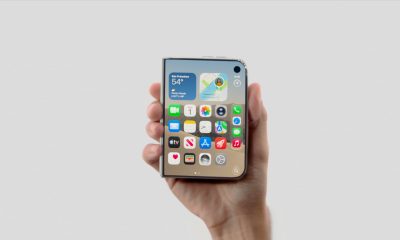
iPhone Duo: Price, availability in the Philippines
-

 News2 weeks ago
HUAWEI Mate XT 2 tri-fold launches with Kirin 9050 Pro
-

 News2 weeks ago
vivo introduces refurbished versions of X300 FE, X300 Ultra for less
-
 News2 weeks ago
iPhone Duo: Price, availability in Singapore