
Enterprise
Telstra, SMC call it quits on telco joint venture in PH


Talks of a wireless joint venture between beer giant San Miguel Corporation and Australia’s biggest phone and Internet company Telstra have broken down, as the two parties have conceded that they are no longer forming a third telecom operator in the Philippines, where Internet connectivity is notoriously slow and expensive, not to mention controlled by two large conglomerates, PLDT and Globe Telecom.
SMC president and COO Ramon Ang yesterday told the Philippine Daily Inquirer that SMC and Telstra have “agreed that we can no longer continue with the talks” despite working around the clock to “resolve some issues.” Ang said the local conglomerate would continue to push through with its plans to launch an affordable and high-speed Internet service, regardless of whether it finds a new investor to take Telstra’s place.
In a separate report by The Australian, Telstra chief Andrew Penn confirmed the latest development to what has been one of the biggest tech stories in the Philippines of last year.
“While this opportunity is strategically attractive, and we have great respect for San Miguel Corporation and its president Mr. [Ramon] Ang, it was obviously crucial that the commercial arrangements achieved the right risk-reward balance for all involved,” Penn said. It was previously reported that Telstra was looking to spend up to $US1 billion for proposed mobile plans in the country.
Telstra, for its part, has offered to provide infrastructure-related assistance and consultancy support to SMC and will continue to pursue growth opportunities in Asia. The latter has gained considerable momentum since the Australian carrier acquired submarine communications network Pacnet in 2015 for $US697 million.
The latest State of the Internet report by U.S.-based online content and network firm Akamai reveals that the Philippines has the second-worst average download speed (2.8Mbps) in the Asia-Pacific region, besting only India. By comparison, top-ranked South Korea averaged a speed of 20.5Mbps.
We can’t say we’re surprised to hear that negotiations have sputtered and came to a halt Sunday, leaving a trail of disappointment and unmet expectations. Anyone who has been following this story since it broke could see the writing on the wall, and Telstra must not have liked what it saw.
The skyrocketing estimates of offering affordable, reliable, and high-speed Internet service in an archipelago; the increasingly louder call to reallocate the much-sought-after 700MHz wireless frequency, which is currently mostly held by Liberty Telecom, a subsidiary of San Miguel Corporation; SMC’s failed attempt at making a dent in the local telecoms industry with Wi-Tribe — you can take your pick between these red flags, but there are other concerns.
But the bottomline is the arrival of a third force in the Philippines’ telecom market has been pushed back indefinitely, which means the long-suffering customers of existing telcos will continue to have little to no choice for quality mobile and broadband service.
Below is a copy of Telstra’s press release regarding the failed joint venture.
Negotiations ended on Philippines wireless joint venture
Telstra and San Miguel Corporation have been unable to reach commercial arrangements on a possible equity investment in a wireless joint venture in the Philippines and negotiations have therefore ceased.
Telstra Chief Executive Officer Andrew Penn today said the organisations had agreed at the weekend to bring negotiations to an end.
“Despite an enormous amount of effort and goodwill on all sides, we were simply unable to come to commercial arrangements that would have enabled us all to proceed,” Mr Penn said.
“While this opportunity is strategically attractive, and we have great respect for San Miguel Corporation and its President Mr Ang, it was obviously crucial that the commercial arrangements achieved the right risk-reward balance for all involved.”
Telstra has offered to continue technical network design and construction consultancy support to San Miguel Corporation, should those services be required.
“We continue to pursue growth opportunities in Asia consistent with our strategy. Following our April 2015 acquisition of Pacnet, Telstra is now one of the largest connectivity providers in Asia,” Mr Penn said.
“Our investment decisions will be guided by our capital management framework. Investments remain an important part of our future to ensure sustainable growth in earnings and shareholder returns over time.”
Telstra last year confirmed it had been negotiating a possible joint venture with San Miguel Corporation and envisaged investing up to USD$1 billion should the joint venture proceed.
[irp posts=”7566″ name=”Singapore, S. Korea dominate 4G LTE rankings, Philippines struggles”]
Sources: Philippine Daily Inquirer l The Australian


Enterprise
ACMobility Launches ChargeFleet: Seamless solution for businesses
B2B solution for corporate fleets and transport groups


Ayala Group’s ACMobility has launched ChargeFleet, a new B2B digital solution for corporate fleets and transport groups.
The new service introduces a shareable digital wallet that streamlines charging expenses, reduces manual tracking, and improves cost control.
As more organizations explore electrifying their mobility operations, many continue to face operational challenges — including fragmented payment systems, reimbursement delays, and limited visibility over charging usage.
ChargeFleet addresses these gaps by introducing a centralized, shareable digital wallet. Here, fleet managers can allocate and monitor charging credits across multiple drivers across a single platform.
The system is a seamless process designed for long-term usage and easy deployment across any organization.
Once integrated, ACMobility assigns charging credits to the client’s fleet manager. The manager then can distribute these to multiple drivers. Meanwhile, the latter will be able to see and use their assigned credits via the Evro app.
ChargeFleet is available as a prepaid product through the ChargeFleet Store. Users can buy offers via GCash or credit card. No application process is required.
Looking ahead, ACMobility will continue to enhance the ChargeFleet experience with exclusive value-added perks integrated through Evro and Power on Wheels.
The upcoming features highlight ACMobility’s ongoing push to provide a future-proof support system for the evolving needs of their customers’ businesses.
Enterprise
Sony teams up with 13 companies for sustainable global supply chain
Sustainability through introduction of renewable plastics

Sony, along with several companies, have established the world’s first global supply chain for the production of renewable plastics that can be used in Sony’s high-performance audiovisual products.
The supply chain consists of 14 companies across five countries and regions. The various plastic materials manufacture through this supply are slated for use in Sony’s products that will launch worldwide.
High-performance products such as audiovisual equipment involve a wide variety of plastics. The result is a complex supply chain that makes it difficult to visualize and manage the entire flow.
Additionally, plastic components that require high performance in terms of flame resistance and optical properties cannot be fully replaced with plastics from material recycling.
To address these challenges, these 14 companies have collaborated to visualize the existing supply chain for Sony’s products:
- Sony Corporation
- Mitsubishi Corporation
- ADEKA CORPORATION
- CHIMEI Corporation
- ENEOS Corporation
- Formosa Chemicals & Fibre Corporation
- Hanwha Impact Corporation
- Idemitsu Kosan Co., Ltd.
- Mitsui Chemicals, Inc.
- Neste Corporation
- Qingdao Haier New Material Development Co.
- Ltd., SK Geo Centric Co., Ltd.
- Toray Industries, Inc.
- Toray Advanced Materials Korea Inc.
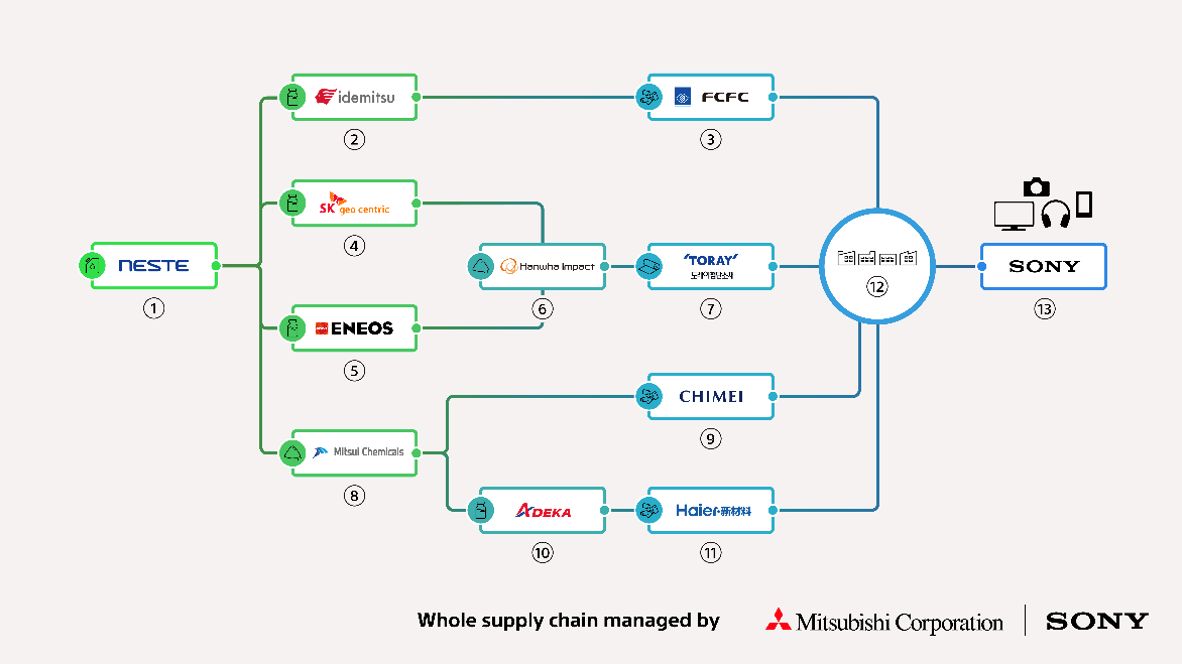
Sustainability through renewable plastics
The new supply chain created will enable the production of multiple types of renewable plastics from biomass resources with a mass balance approach.
This allows Sony to proactively source raw materials for its products with quality, as well as properties equivalent to virgin fossil-based plastics.
Defining the supply chain also helps the companies track and document GHG (Greenhouse Gas) emissions data in a verifiable way.
This allows participating companies to leverage the data to advance efforts to reduce their carbon footprint going forward.
Sony’s initiative with a wide range of global partners is part of the “Creating NEW from reNEWable materials” jointly launched by the electronics giant and Mitsubishi.
It aims to achieve zero usage of virgin fossil-based plastics through the introduction of renewable plastics.
Enterprise
realme is reportedly going back to being an OPPO sub-brand
All scheduled phones will still launch on time, though.

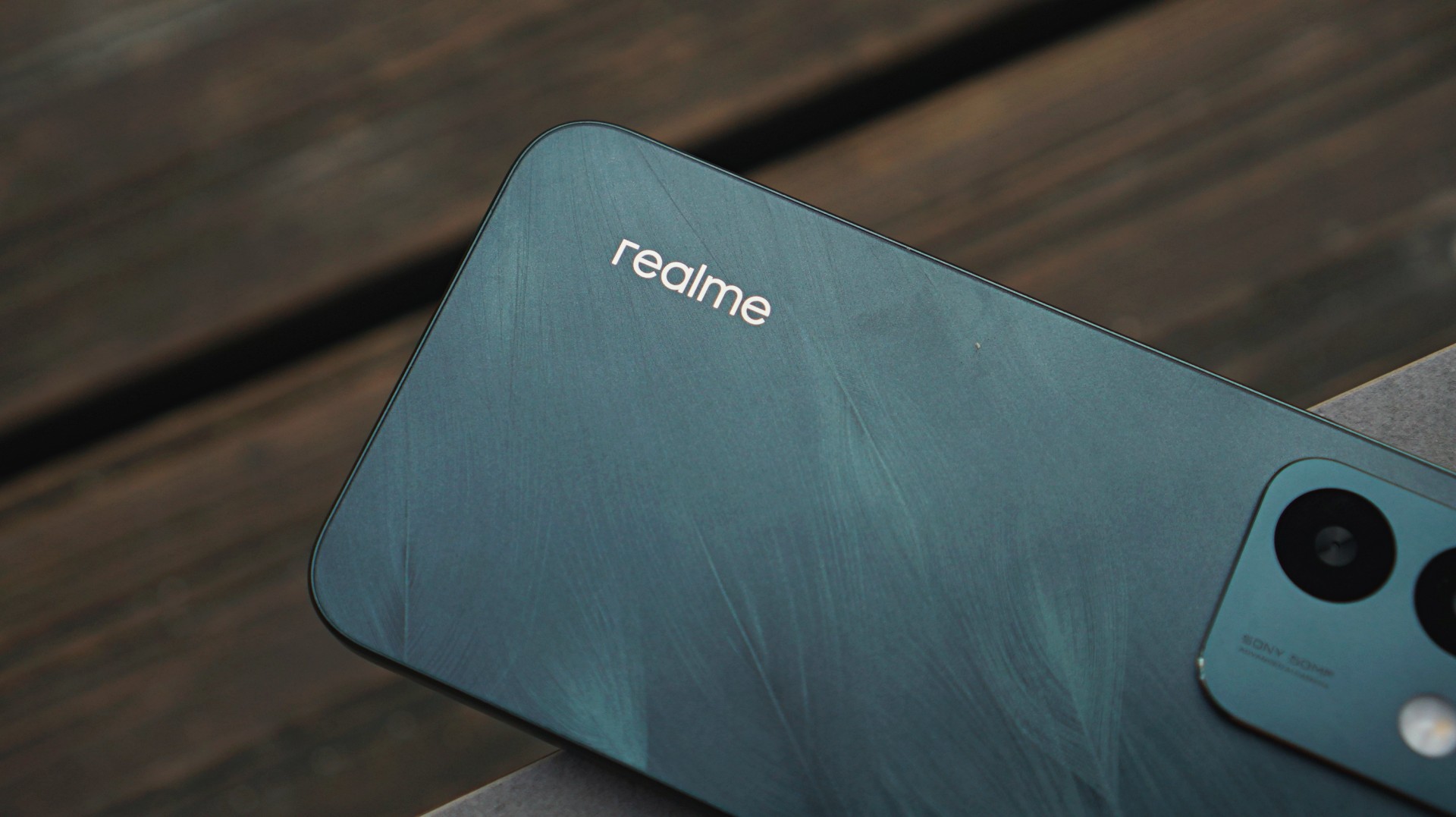
A popular story among Chinese smartphone brands is whenever a sub-brand spinning off into its own independent entity. A less common one is when an independent entity suddenly merges back into the main entity. And yet, that’s the story we have today. realme is reportedly going back to being a sub-brand of OPPO.
If you don’t remember realme’s time as a sub-brand, then it’s hardly your fault. It’s been a long while since realme was considered a sub-brand. In 2018, the brand spun off on its own to form one of the most popular names in the Chinese smartphone space.
Today, via Leiphone, realme will return to OPPO as a sub-brand. Current realme CEO Sky Li will still retain his responsibilities heading the brand. Plus, all products on the current release schedule will still come out as planned.
However, starting this year, realme will start reintegrating back into OPPO, particularly through the latter’s after-sales programs. OnePlus will also follow the same structure going forward.
Currently, realme has not officially announced the move. That said, we also don’t know how the brand will address the reported change. It’s possible that the shift is just internal and has no effect on how the brand faces the public. For now, only time will tell.
SEE ALSO: realme C85 with 7000mAh battery, 5G connectivity officially launches



IQOS x Isabel Santos turns heated tech into a cool, design statement

Neon Genesis Evangelion is getting another anime series

Nothing releases first look at Phone (4a)

Dyson PencilWash makes wet cleaning feel effortless

Jackery portable power solutions makes appearance at Doraemon Run

Breaking up with Adobe Photoshop after 20 years

TECNO will showcase the CAMON 50 and POVA 8 series at MWC 2026

PlayStation, LE SSERAFIM Chaewon team for the ‘Love of Play’ campaign

New DRAGON BALL game project “AGE 1000” for 2027 announced

VinFast updates battery subscription policy for large upfront savings


-

 Reviews2 weeks ago
The art of being in and behind the frame
-

 Gaming2 weeks ago
God of War Greek trilogy remake in development, Sons of Sparta out now
-

 India2 weeks ago
TECNO POVA Curve 2 5G packs an 8000mAh battery
-

 First Look2 weeks ago
Match Pulse: OPPO Reno15 Pro
-

 Accessories2 weeks ago
Sony WF-1000XM6 is out now: Price, availability
-

 Gaming2 weeks ago
New Resident Evil Requiem trailer teases a return to the RPD
-

 Accessories1 week ago
Apple AirTag 2 Review
-

 Gaming2 weeks ago
John Wick, Kena sequel, more new games showcased at State of Play