
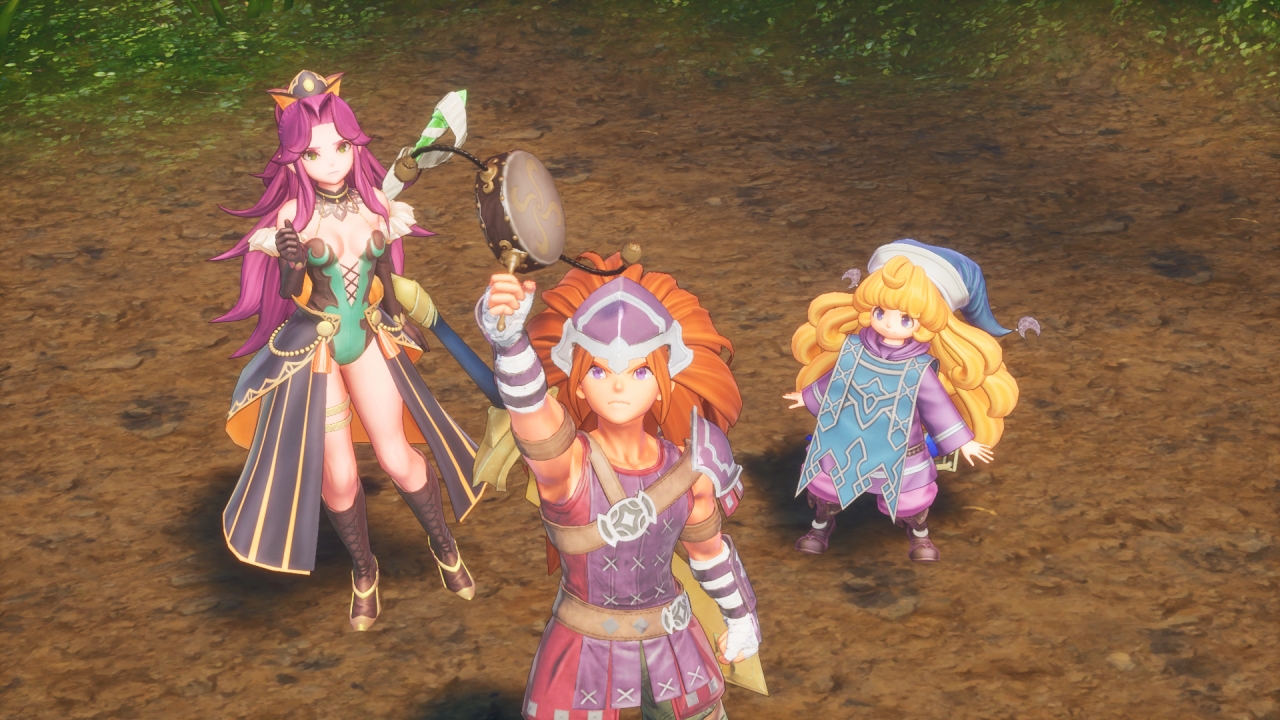

It’s the year of fantastic remakes and this game is no exception. Trials of Mana gets a glow up that should make it enticing to both old timers and newcomers.
For the unfamiliar, Trials of Mana was originally a 16-bit game first released in 1995. In Japan, it’s known as Seiken Densetsu (聖剣伝説, lit. The Legend of the Sacred Sword).


The game series revolves around the “mana tree” or the world tree. It’s a source of power containing nine elements: water, wind, fire, wood, stone, dark, light, metal, and moon. As with any valuable resource, it attracts forces of evil that want to use the power of the mana tree for darkness.
Having played other gamers in the Mana series, this certainly is an amazing job by Square Enix to modernize a classic. The colors are gorgeous and striking. You can easily tell this modernization was treated with utmost love and dedication.
Choose your party
At the beginning of the game, you are asked to choose your main character and the supporting cast. The game gives you six classes to choose from: Warrior, Priest, Thief, Beastman, Mage and Lancer.
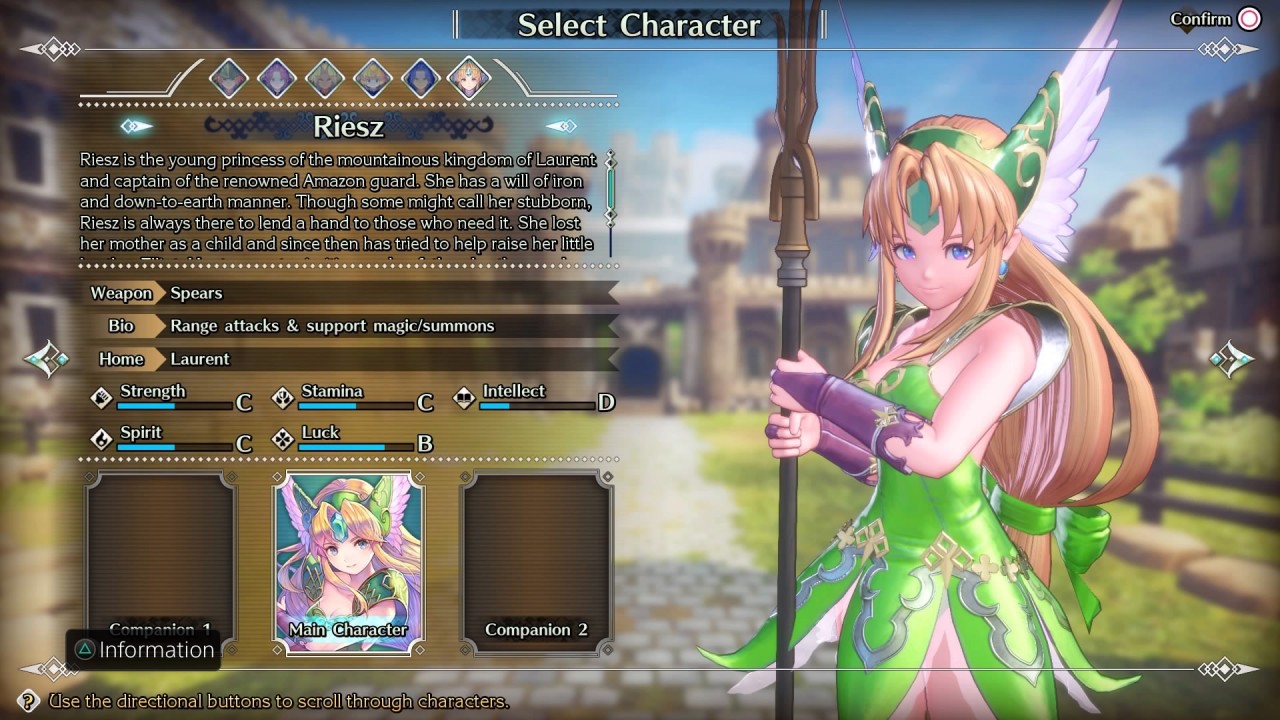
Each character you pick will have her/his own unique story. My first run through in the game was about 25 hours which I think is excellent. It’s enough time to feel like a complete adventure, but not too much that the player can do multiple playthroughs to learn about the story of the other five characters.
As the game progresses, the character can change classes. This can happen after reaching levels 18 and 38 (with class items) using the mana stones or the mana statues that are spread across the map. Naturally, you’ll be able to unlock more powerful spells and skills that can help take on the harder bosses as you go through the game.
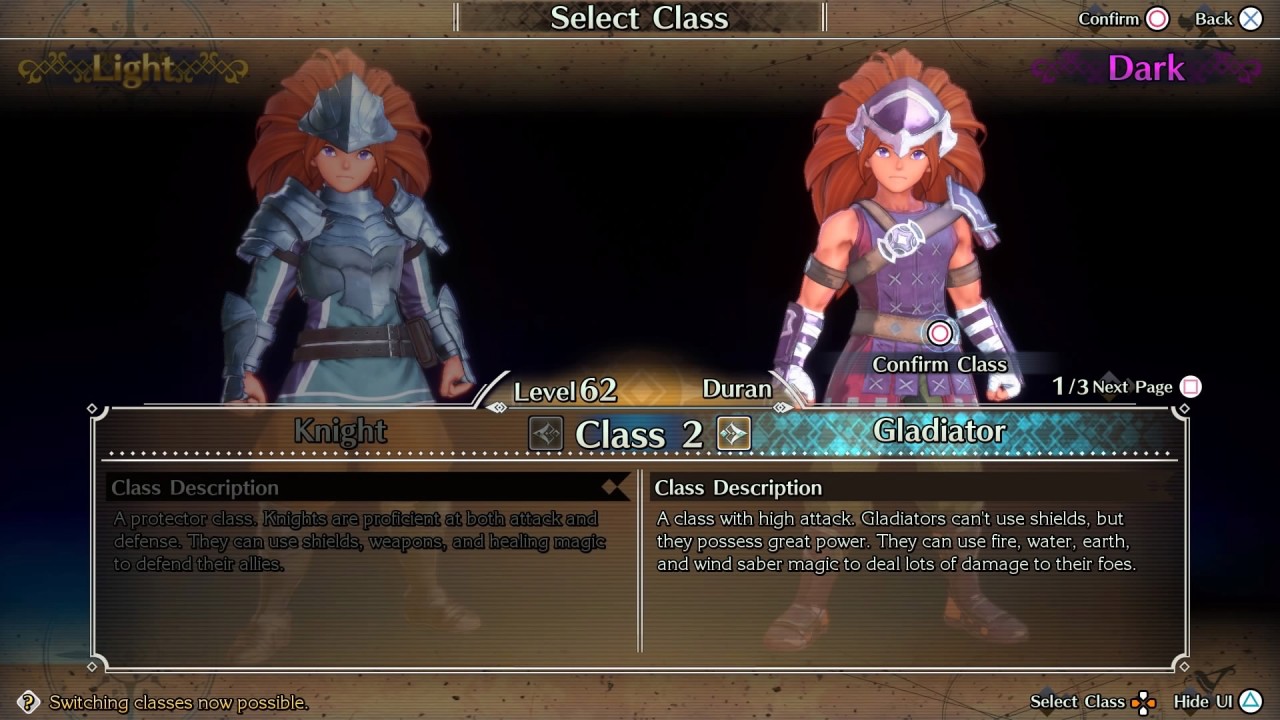
If you’ve played other JRPG titles under Square’s umbrella like the Final Fantasy series and Kingdom Hearts, you’ll know that your party needs to have all the essentials. That means striking a balance among defense, attack, support, and offensive magic that fits your play style.
The characters have their own strengths and weaknesses depending on their class. The combos and spells depend on the skills you unlock as the story and the level progresses. The higher the level, the higher the rates of combos and skill chains that can be unlocked to make grinding and boss battles lean more in your favor.
Get ready for a lot of button mashing, quick triggers
The gameplay adopts the chaotic feel of the Mana series. Every move is in real time. The way the player moves, dodges, hits, casts a spell or uses an item makes every step crucial in every facet and situation in your battles.
During battles you get a ring menu that almost feels like you’re pausing the game. This gives you ample time to strategize and plan your attack or how you want to approach each battle.
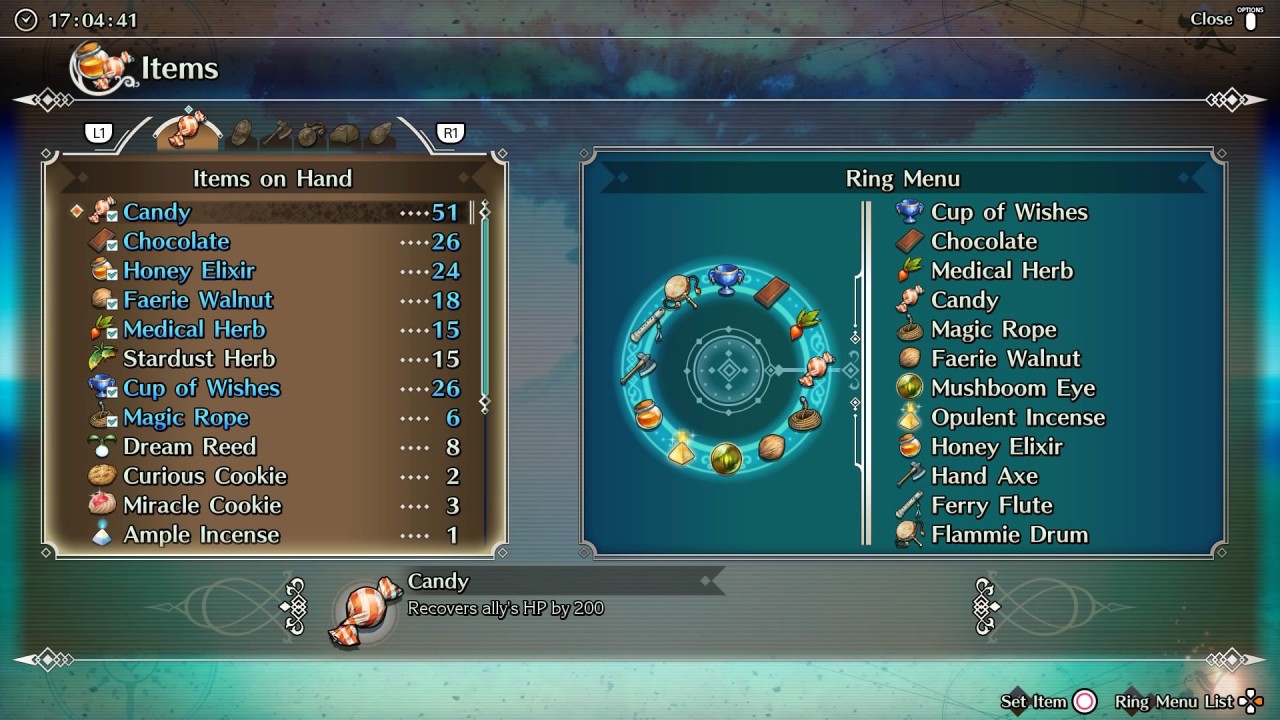
Here you can select what items you want to use as well as the skills that are available to your class of character. You also have a quick trigger that you can customize to fit your play style depending on the kinds of characters your party has.
You can switch with your support characters at any point during battle. This lets you maximize the potential of your party, most especially through the tough fights of the game. AI for your party members is also pretty good when you’re not controlling them. They act based on their skillets instead of mindlessly launching melee attacks.

Special techniques can be triggered by filling up a “CS GAUGE”. There are two ways to fill it. First, you smash all the enemies lurking around every dungeon on the map. Second, find some vases that will fill the gauge for you.
Personally, I prefer the first method because I like to do some ass kicking especially during this pandemic. A really good way to blow off some steam is to kick those rabites (hopping yellow and pink-tailed leporine monsters) in the beginning of the game.
A lot of traveling and being shot out of a canon
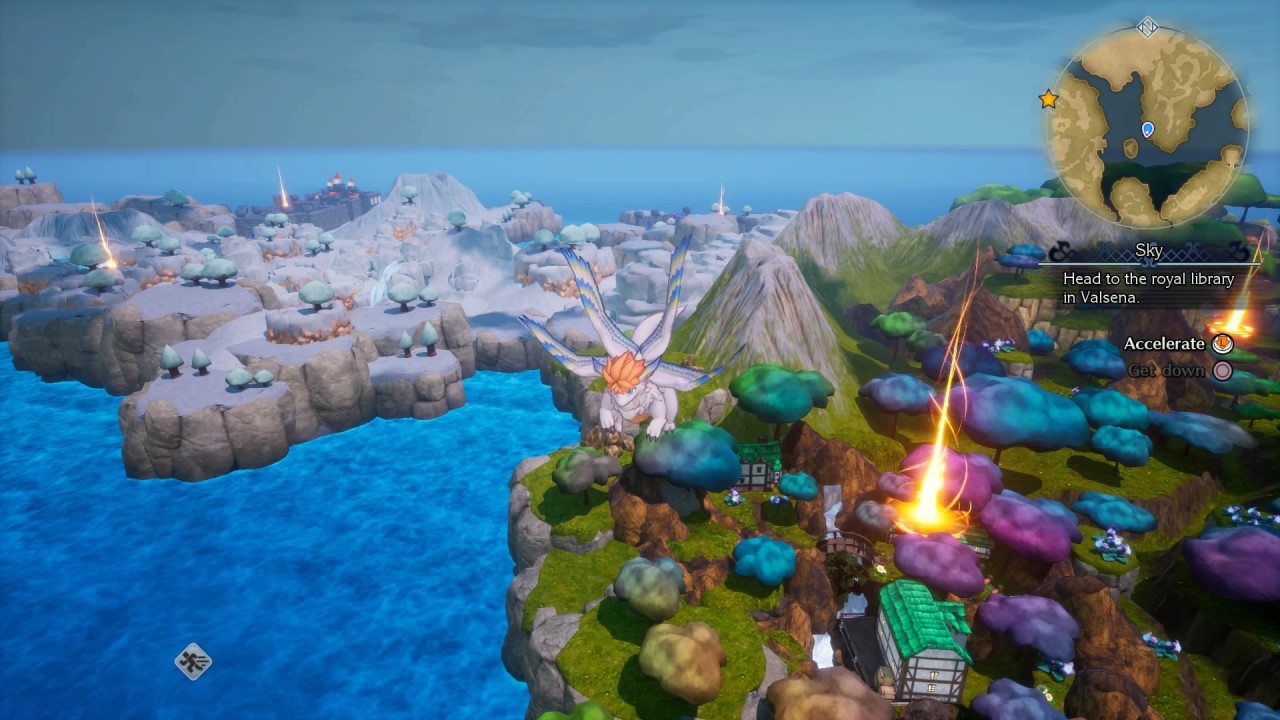
During your travels, you will encounter different stages across the Trials of Mana world. Each stage is unique and offers different kinds of NPCs that make you feel like you’re in another world.
20200509132309
As you proceed in the game, you will find different ways of traveling: with ships, riding a water monster, flying and being shot out of a canon???
Verdict
Trials of Mana is a beautiful game based on the Old Mana Series. The game is straightforward and offers an easy learning curve. It’s simple and anyone should be able to catch the play style even after just an hour of going through the game.
It does run the risk of sometimes feeling too simple due to the lack of side quest. Harder side bosses and secret items or ultimate weapons could have made this beautiful game even better.
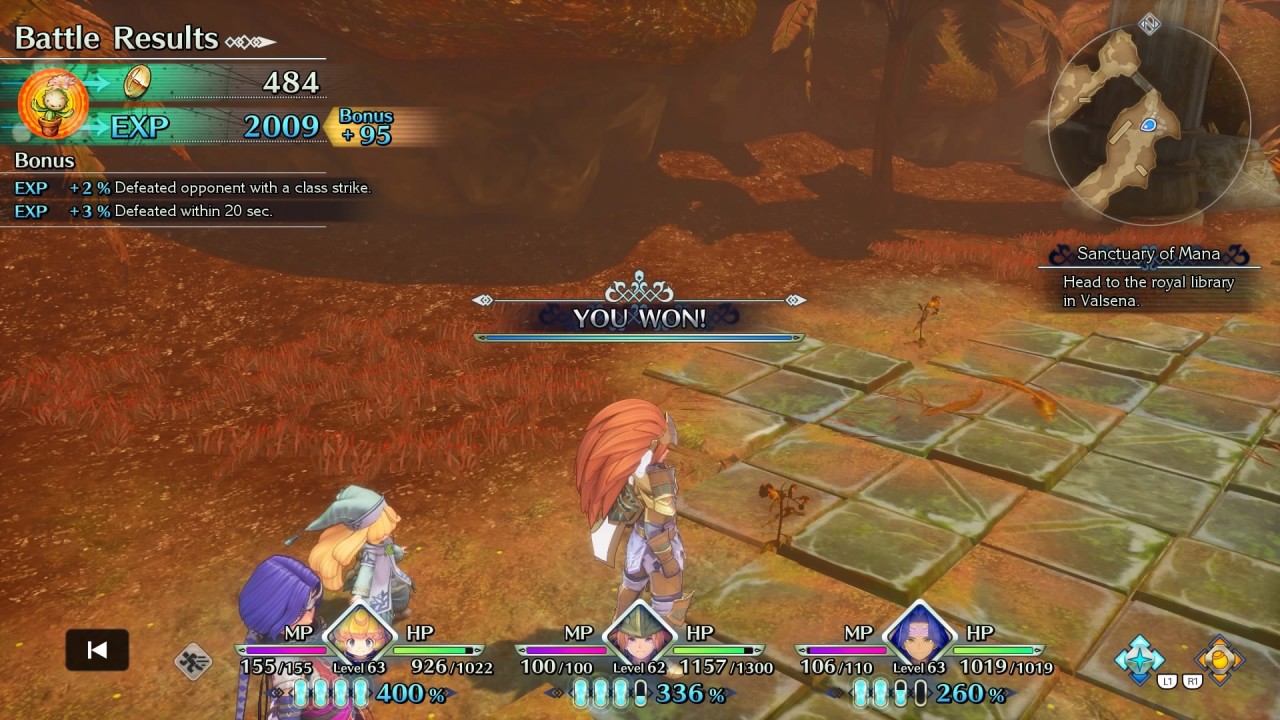
One thing I didn’t particularly enjoy were camera views and angles. Battles can be chaotic especially during boss encounters. It makes it difficult to properly plan your attack especially during stages that have plenty of obstacles.
I also encountered a lot of issues in focusing on targets that can either delay or break the momentum of your attacks. You can control the camera view with your shoulder buttons but it takes some getting used to especially in high pressure situations.
That aside, Trials of Mana is an excellent game overall. It has all the makings of an awesome game thanks to its storyline and gameplay. There’s enough here that Square Enix can build on to make another Mana game that will appeal to both old and new players.
This game was reviewed on a PS4 by Ron Erik Rivero. Ron is an ESL teacher, chef, and businessman who is passionate about gaming. When not playing, he spends most of his time teaching Japanese students business English. He is also a foodie, a loving husband and a doting father to his five-year-old son. You can contact him at [email protected].



Gaming
Nintendo’s latest toy is Super Mario Wonder’s Talking Flower
It tells the time and jokes around randomly throughout the day.


Late in 2024, Nintendo announced the Alarmo, the quirkiest alarm clock we would’ve grabbed immediately if alarm clocks were still a big thing. Today, the company has announced its next clock-like toy: the Talking Flower from Super Mario Wonder.
To me, the Talking Flower was a welcome addition to the franchise’s burgeoning cast of characters. The occasionally appearing character delivered timely quips that broke the monotony of the level’s music or provided meaningful tips.
However, there is a good number of players who find the flower irritating and mute the character altogether. If you’re part of this group, then Nintendo’s latest clock isn’t for you.
The new Talking Flower doesn’t have its own clock display. It only has a speaker, but it can announce the hour “mostly accurately,” according to Nintendo.
It’s an odd product. The brand wants the flower to be glitchy. Besides being “mostly accurate” with the time, it can also randomly blurt out alerts in one of its handful of available languages, outside of what the user set.
Further, it can comment on the weather and play music. It can also say “words of encouragement and silly quips” randomly throughout the day. The Talking Flower certainly has the spirit of the character it’s modeled after.
As for input buttons, it only has a single button. One press makes it say something outside of its scheduled prompts. Holding the button for two seconds silences the thing.
The Talking Flower will ship out on March 12. It will sell for US$ 34.99.
SEE ALSO: This Nintendo Alarmo clock looks absolutely adorable
Gaming
You can now race as teams in Mario Kart World’s Knockout Tour
The free update is rolling out now.
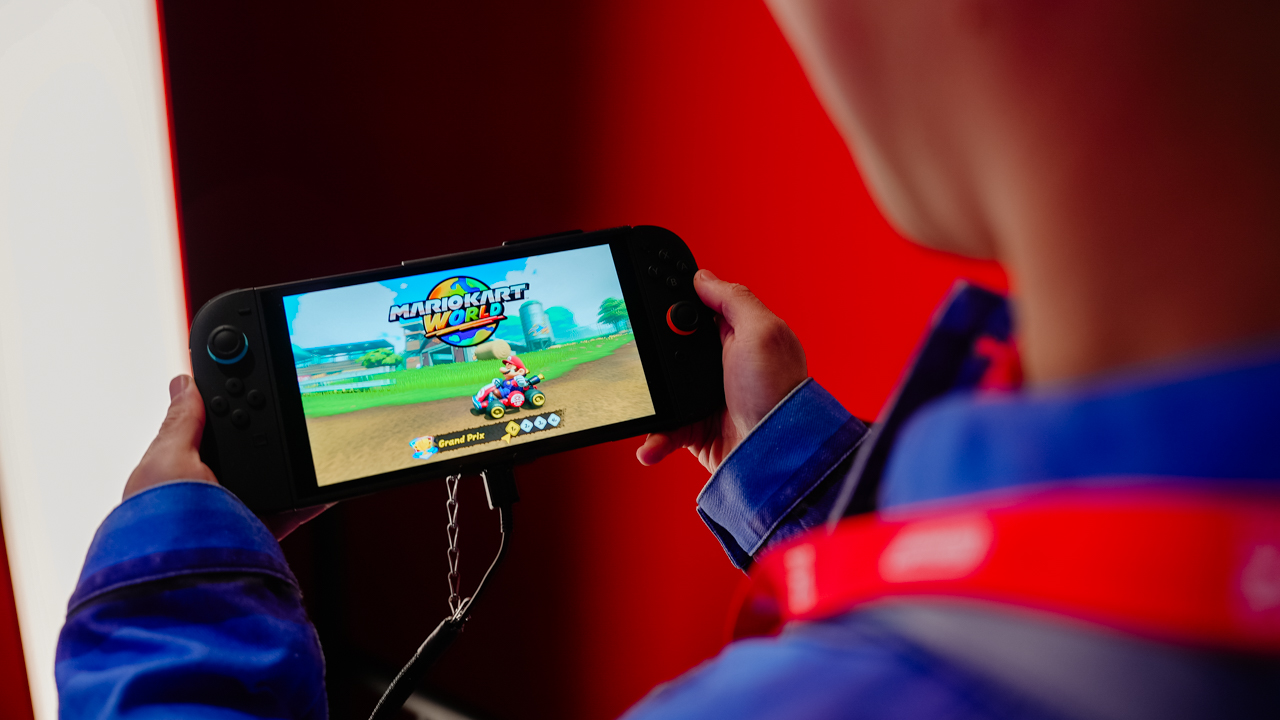
Mario Kart World needs little to no improvements. The latest entry in the legendary racing franchise introduced players to the open-world format. Taking advantage of that new format, the game also has a unique new mode called the Knockout Tour. Today, Mario Kart World is getting a surprising-but-welcome update which adds a team option to the survival mode.
In stark contrast to Mario Kart’s usual gameplay, Knockout Tour introduces a battle royale element to the game. The mode strings together a series of races seamlessly leading from on to the next via the open-world format. Players are eliminated for placing at or near the bottom after every leg, eventually leading to a three-way race to finish first.
Prior to today’s announcement, players race for themselves. But now, via a free update, players can now compete in two teams of twelve, three teams of eight, or four teams of six. They must still survive individually, but points are now collated based on teams.
The number of points derives from finishing position. Finishing in P1, for example, will bag the player a total of 50 points for that leg. Meanwhile, eliminated players get only a single point. At the end of the entire tour, everyone’s points are tallied up, and the win is awarded to the team with the most points.
The new mode can be raced locally or online. If the pool lacks players to round out the teams, the game will provide AI opponents.
The update is rolling out now and is for free.
SEE ALSO: I played Mario Kart World and it was a full-throttle race to the finish
Gaming
Now playing: Final Fantasy VII Remake INTERGRADE on Switch 2
Final Fantasy VII Remake, handheld again

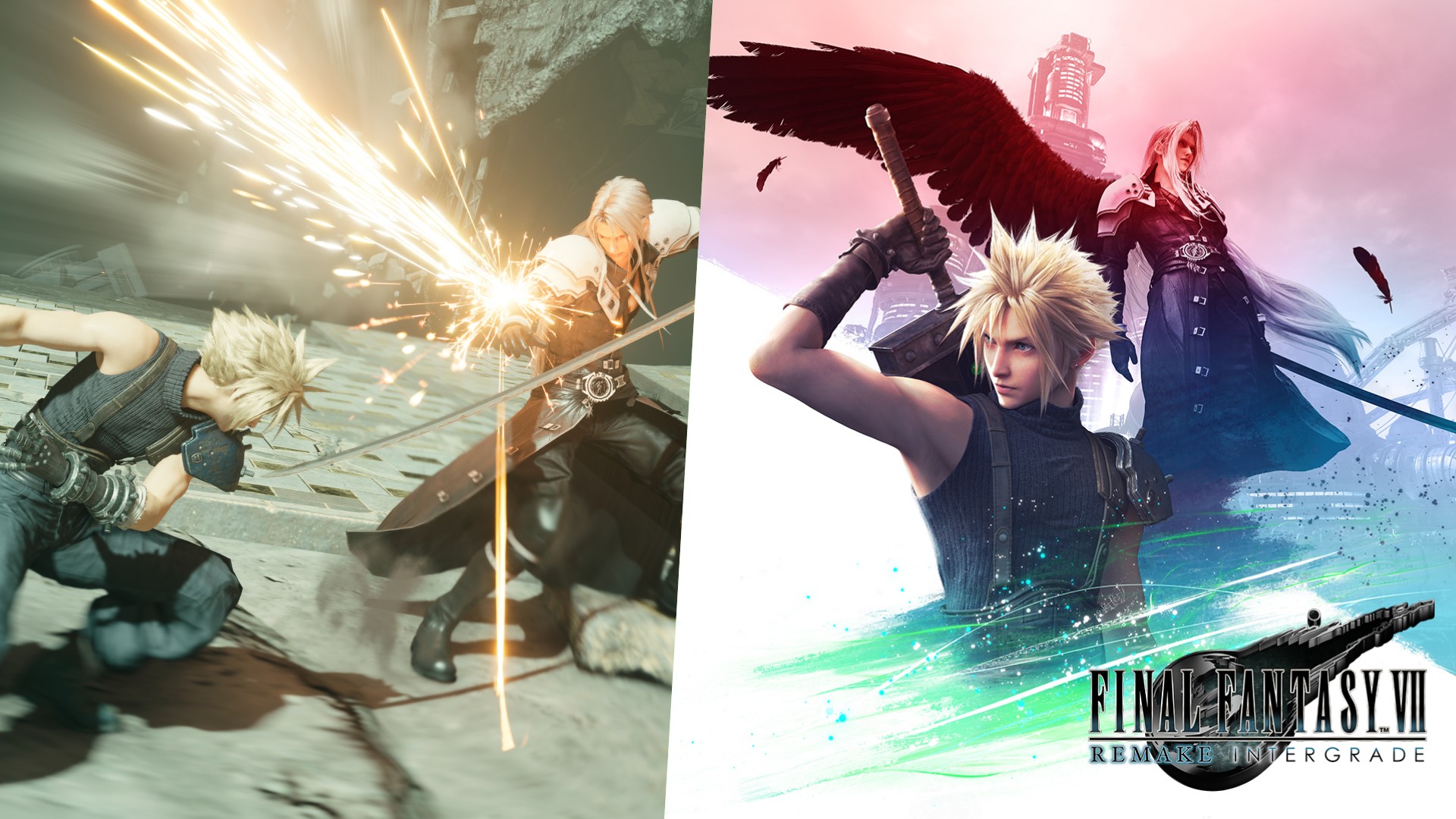
There are two ways I ended up playing Final Fantasy VII Remake Intergrade on the Switch 2: handheld, and docked. And in many ways, that split mirrors what this release is really about—flexibility, familiarity, and a little bit of re-learning.
Relearning muscle memory
Let’s get the small friction point out of the way first. Button prompts. Even after all this time, my brain still defaults to PlayStation glyphs. Triangle means something very specific to me in Final Fantasy VII Remake, and retraining that muscle memory on a Nintendo layout took a bit longer than expected. That’s not the game’s fault—it’s just the reality of revisiting something you’ve deeply internalized on another platform. And honestly, it’s something I’ll just have to get used to as more of these previously PlayStation-first titles land elsewhere.
Once that adjustment period passed, the bigger surprise came quickly—especially in handheld.
Midgar in the palm of your hand
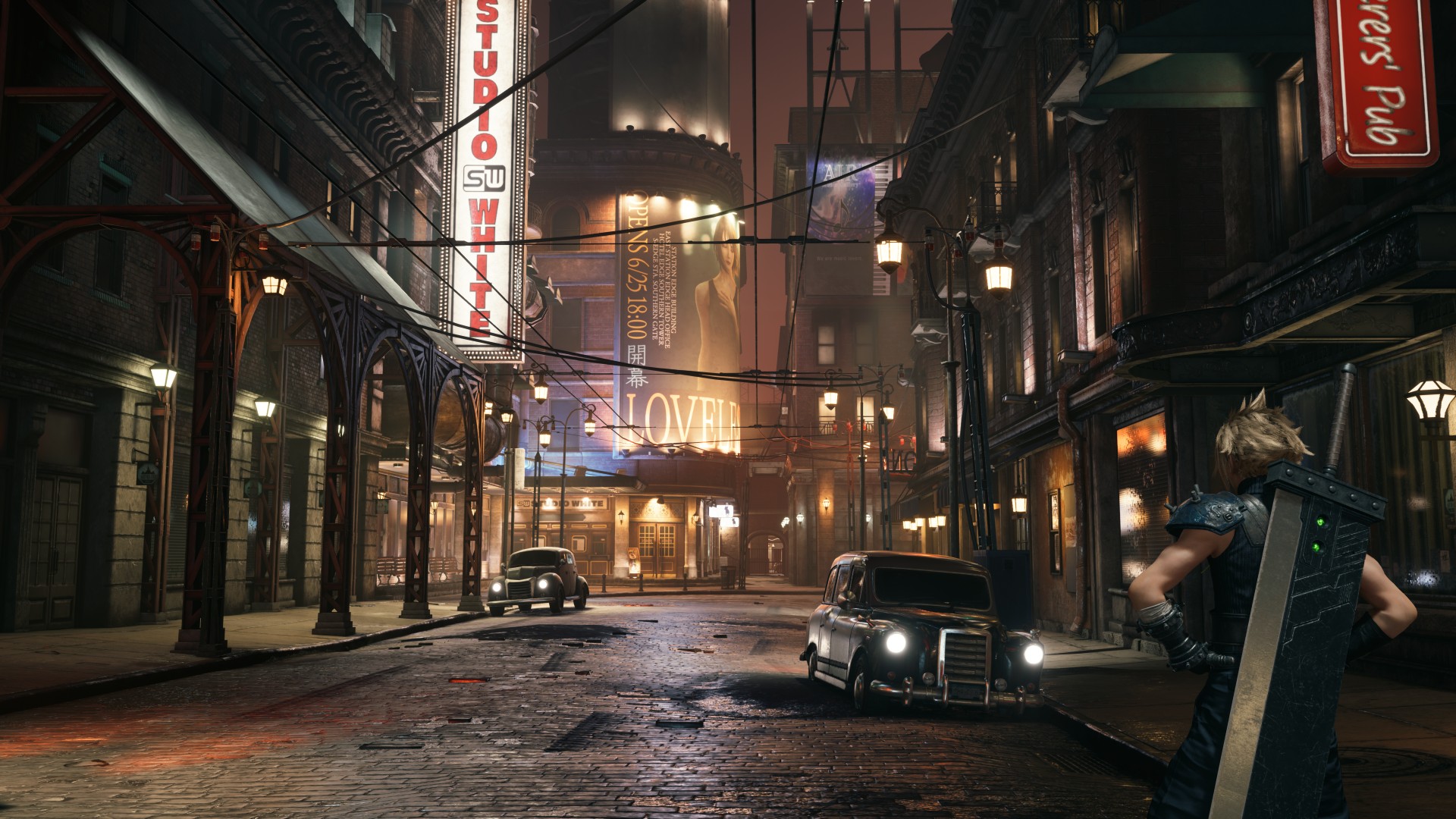
Without even stacking it up against the PS4 or PS5 versions, the Switch 2 version already looks impressive on its own. In fact, it looks really good. There’s a moment of quiet disbelief when you realize you’re holding Midgar in your hands, running locally, and still retaining that sense of scale and atmosphere the remake is known for.
I’ve played Final Fantasy VII Rebirth on devices like the ROG Ally and Legion Go, and the feeling here is similar. Not in raw power comparisons, but in that same sense of admiration—Square Enix managing to package something this dense, cinematic, and emotionally loaded into a handheld experience without it feeling compromised at first glance. That same awe of seeing this classic reimagined is still intact, even on a smaller screen.
Living with 30fps
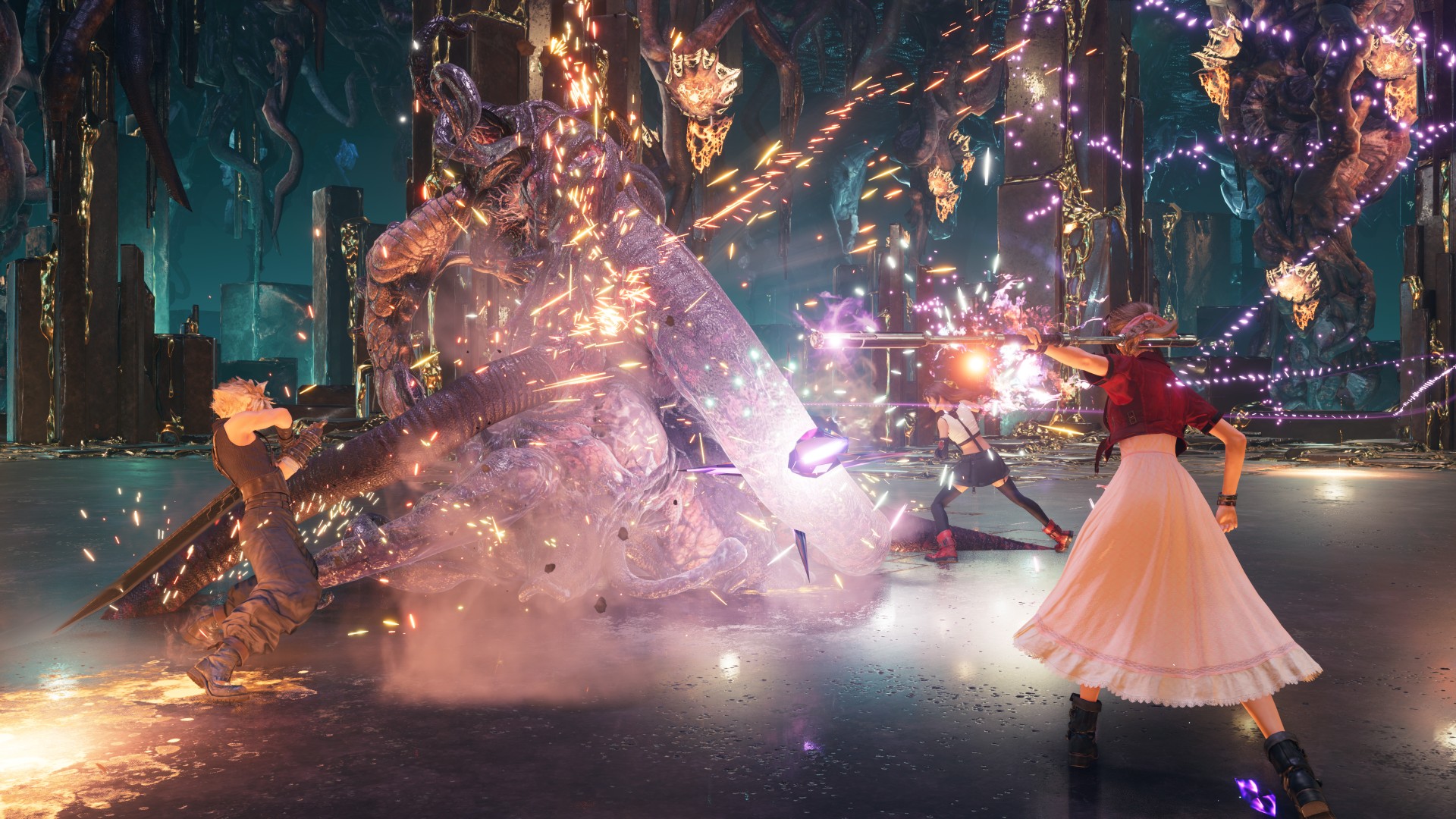
Performance-wise, the most noticeable limitation is the 30fps cap. It’s there, and anyone coming from a 60fps playthrough will notice it immediately. That said, it never felt like a dealbreaker to me.
Command inputs still land cleanly, combat remains responsive, and nothing about the experience felt sluggish. If you’re sensitive to frame rate shifts, this might take some adjustment. But in motion, and especially in handheld, it rarely pulls focus away from the game itself.
Streamlined progression, real relief
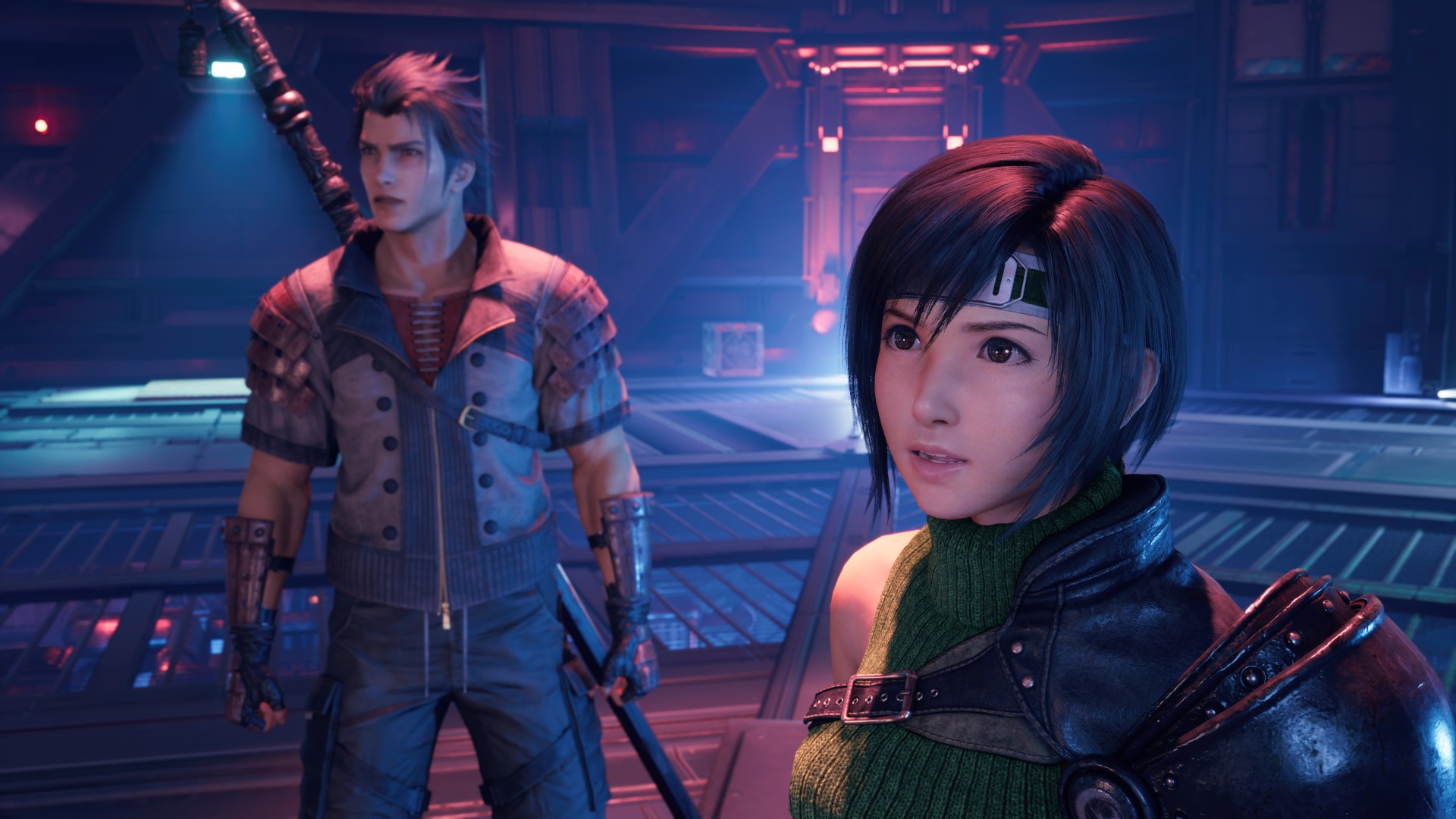
One feature that quietly made a big difference for me is the new Streamlined Progression option. Being able to start with maxed-out stats, unlimited resources, and reduced friction is a genuine quality-of-life win—especially for players who’ve already finished the game once and don’t necessarily want to grind their way through Midgar again.
It turns Intergrade into a smoother re-experience, letting you focus on the story beats and combat flow rather than progression systems you already know by heart.
The storage reality check
The less glamorous reality check comes with storage. At roughly 90GB, this is a heavy install, particularly if—like me—you lean heavily toward digital purchases. I had to delete three games just to make room.
If you have the option to go physical on Switch 2, that might be the more practical route, especially as more large-scale ports make their way onto the platform.
A familiar journey, made portable
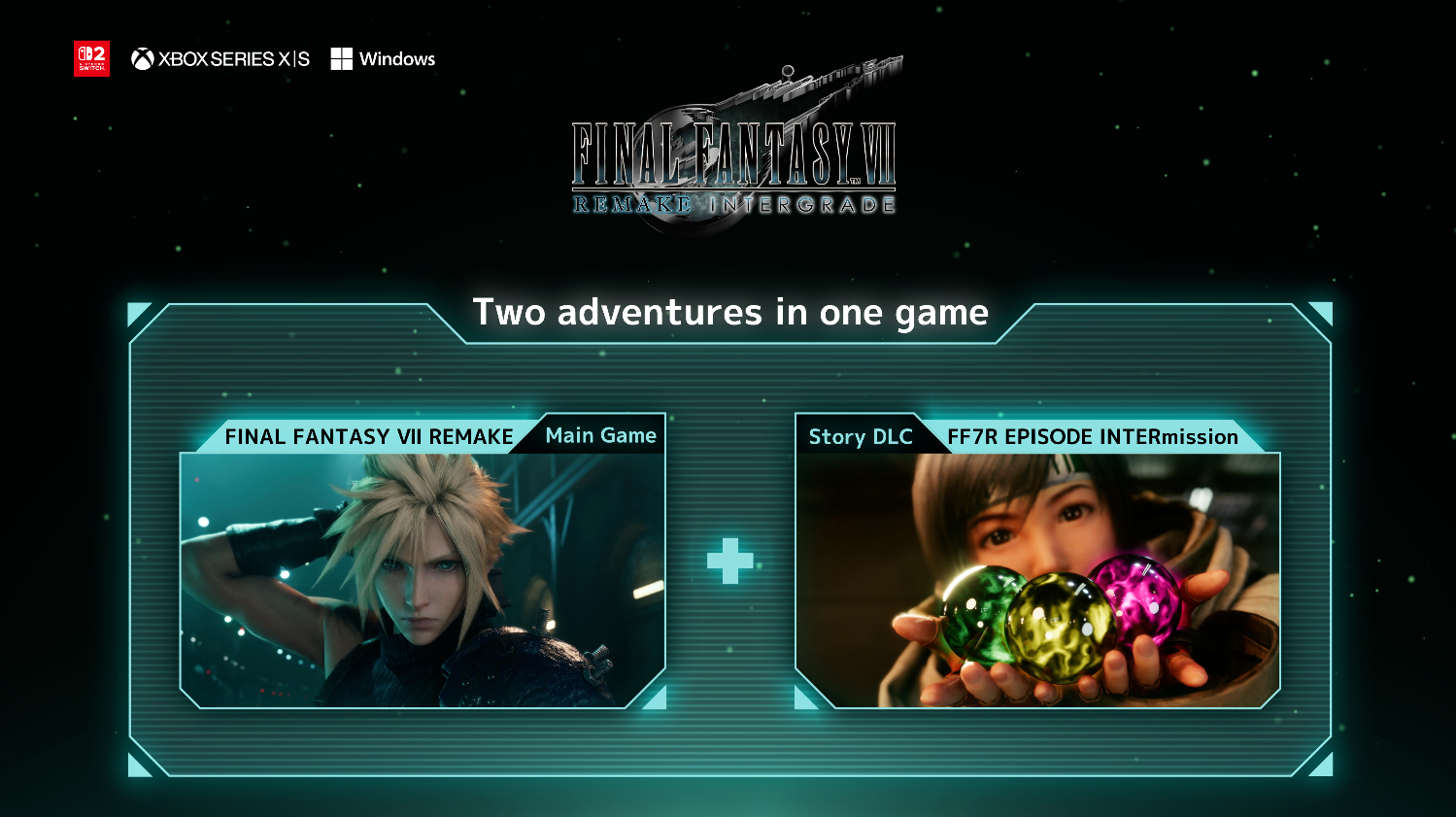
Contextually, this release matters beyond just another port. Final Fantasy VII Remake Intergrade arriving on Switch 2 is part of Square Enix’s broader push to bring the entire remake trilogy to more platforms, with the final entry already in development.
It also reinforces Intergrade as the most accessible entry point into the series—bundling the main campaign with the Yuffie-led EPISODE INTERmission, and now offering features that lower the barrier for newcomers while respecting returning players’ time.
At US$39.99, it lands at a price that feels fair. Whether you’re completely new to Final Fantasy VII Remake or just want a portable version of a game you already love, this is an easy recommendation—storage caveats aside.

Overall, this is an impressive Switch 2 port. Not perfect, not trying to outmuscle the PS5 version, but confident in what it is. Seeing Final Fantasy VII Remake Intergrade run this well, this comfortably, on a handheld still feels a little surreal—and that alone makes it worth playing again.
If you’re looking for deeper technical breakdowns and direct comparisons with the PS4 and PS5 versions, Digital Foundry continues to do excellent work on that front. But as a lived-in experience, this one already earns its place on the Switch 2.


Now playing: Final Fantasy VII Remake INTERGRADE on Switch 2
Final Fantasy VII Remake, handheld again


HONOR X9d 5G review: Tougher, more long-lasting and optimized
Beyond all the marketing, it's a compelling all-around smartphone that actually works well


Redmi Note 15 Pro+ 5G review: The midrange fashion piece
Work-ready and style-friendly!

Nintendo’s latest toy is Super Mario Wonder’s Talking Flower

You can now race as teams in Mario Kart World’s Knockout Tour
Now playing: Final Fantasy VII Remake INTERGRADE on Switch 2

Forza Horizon 6 launches on May 19

He-Man returns in live-action Masters of the Universe

Razer teams up with BLACKPINK for limited-edition gear

HONOR WIN headlines the first 10,000mAh smartphone with built-in fan

HONOR X9d 5G launches in the Philippines: Price, preorder, availability

Xiaomi 17 Ultra debuts as 2025’s last full-fledged flagship

OPPO A6 Pro: Adequate tool, no definitive punch


-
 News2 weeks ago
HONOR X9d 5G launches in the Philippines: Price, preorder, availability
-

 Reviews1 week ago
POCO M8 Pro review: Goin’ loco over this POCO
-
Reviews1 week ago
Redmi Note 15 Pro+ 5G review: The midrange fashion piece
-
 News4 days ago
Infinix NOTE Edge debuts: High-end features for accessible pricing
-

 Reviews1 week ago
Mijia Smart Audio Glasses review: Immerse yourself in the music
-

 CES 20262 weeks ago
Anker, eufy, soundcore unveil next-gen products at CES 2026
-

 CES 20261 week ago
Best of CES 2026: AI Everything!
-

 Features7 days ago
Can the REDMI Note 15 Pro+ 5G Survive?