
Apps
10 offline free-to-play mobile games
Lockdown games to play!


It’s the perfect time to disconnect. Maybe it isn’t because you want to; maybe it’s having an unreliable connection, hiding from work-from-home tasks, or you’re just about done with the internet for a while. Whatever it is, we all need a little dissociation from the hell the world has recently let loose.
Here are 10 free-to-play mobile games to hopefully help you get through this rough patch.
Cover Fire
In Cover Fire, you lead a squad through sieged cities, deserts, and fields. You get prompted missions and encounter (surprise, surprise) enemies. Fundamental mechanics are to cover and fire which earns this game a slow clap for making it the name of the game. See what I did there. The game manages to maintain simple mechanics and controls while keeping some of the fun from playing an online FPS (first-person shooter). For people who like playing Call of Duty Mobile but don’t have a stable connection, fear not! This is a really good game that scratches the itch.
Adorable Home
Adorable Home is a cute passive simulation mobile game developed by HyperBeard. The game seems to be a tip of the hat to Neko Atsume by Hit-Point Co., Ltd. with cats being the surrounding theme. Adorable Home lives up to its name quite literally with cute creatures visiting your lovely home at random hours of the day; bento boxes for your partner prepped and ready, and of course, your lovely cats! You can decorate your home, prep bento boxes, and play with your cats. Enjoy the calm and passive play.
Dadish
Dadish is a dad and a radish. His kids have gone missing from his vegetable patch and he’s off to rescue them. You’ll be exploring a quirky world while facing off fast-food foes on your way. This mobile platformer is heavy on the nostalgia with it’s charming pixel design and snarky humor. But out of everything, you’ll be humming away with arguably one of the best soundtracks I’ve heard from a mobile game. Don’t let that fool you though. Stages can get tough to go through which makes this a potentially good mobile game to add for speed runs.
Tsuki Adventure
Ever dreamed of settling down to the countryside? Well, you’re in luck. Tsuki Adventure is a relaxing, story-based game filled with charming and adorable animals. You can check in on Tsuki throughout the day, collect and harvest items, and visit locations around the country. This game has stunning design and you’ll need to see it to believe it. The game is charming in how laid back it is while maintaining a good amount of interaction. The one thing that makes this game strikingly good is its storytelling. Every moment in this game is beautiful: from the stunning view, to the stories behind each new friend.
Hungry Hearts Diner
This game will steal your heart away. If you’re looking for another Diner Dash game on mobile, you’ll like this one — but not for the reasons you’ll expect. Hungry Hearts Diner: A Tale of Star-Crossed Souls is such a wonderfully gentle game of a grandmother who keeps cooking for the people who come to her restaurant. You can talk to your customers and have a deeper connection with each customer as they drop by. The soundtrack against the stunning graphics makes this game lovely. You should really give it a go.
Kingdom Rush
Kingdom Rush is a tower defense game developed by Ironhide Game Studio and published by Armor Games. I know this is me being obscenely late to the party, this was first released as a free flash browser game in 2011. The game has since been adapted for both mobile and Steam and has various iterations available. I’ll be straight with you, I’m not a fan of tower defesce games. But there’s something extremely compelling about Kingdom Rush, whether it’s cute art, the Candy Crush style story mode or just the mass of enemies that want to murder you. Either way, I almost didn’t finish this article from playing this game too much.
My Home — Design Dreams
My Home — Design Dreams is a design simulation game with a twist of a match-three puzzle game. From a flat to a mansion, you can design and decorate everything the way you want. Since staying indoors and needing to reduce all human contact, I was weirdly in the mood for some interior designing. Since that’s impossible to currently achieve. I gave this one a go. It’s a really good game that incentivizes the its match-three puzzle mechanics. If you’re into designing your own home, you’ll have fun playing this one.
Cat Bird
If you want a game that’s adorably challenging, I might have the game for you: Cat Bird. It’s a title developed by Rayumi Adventure, an independent studio headed by Ryan Carag. If you like pixel art, you might want to check other titles from the same studio because they’ve developed similarly designed games. This game is fun, adorable, and strangely unsettling when you find out in my review what I sat through.
Fallout Shelter
It’s been out for years and, it’s here for a reason. We can’t just drop the classics on this list. Fallout Shelter is a free-to-play game that let’s you control and build your very own underground vault. It let’s you oversee a thriving community, building it one room at a time. You can explore the wasteland beyond your vault, and protect your inhabitants from incoming dangers from both outside and in. This is the kind of game that you’ll keep coming back to, probably because you’ve just remembered your starving inhabitants. Good for fans of the Fallout series, or if you’re yearning to build your own colony of vault dwellers.
Magic Tiles 3
It wouldn’t be fair to drop the classics on this list. If you were playing Tap Tap Revenge when it was released around the early 2000s, Magic Tiles 3 isn’t a far cry. Magic Tiles 3 is a popular piano game that has you tap on black tiles before they reach the bottom of the screen. The game will seem simple at first but, once you get into the groove, it’ll get addictively difficult. Magic Tiles 3 has various quests that let you unlock more songs to try out and play. It even has a battle mode to compete against your friends and other players when you’re online. If you can, download as many songs as you can when you can.
I tried to add as many offline free-to-play mobile games under different genres as I could. Hopefully, you get to find the game to fill your time with something fun on this list. Not everyone has access to stable and reliable connection. Even then, not everyone wants to stay taped to the internet day in and out. So, if you have a good offline free-to-play mobile game to add, let us know!






Apps
Smart launches LiveSmart App for exclusive deals
Exclusive deals, cashback, and bill payments in one app.

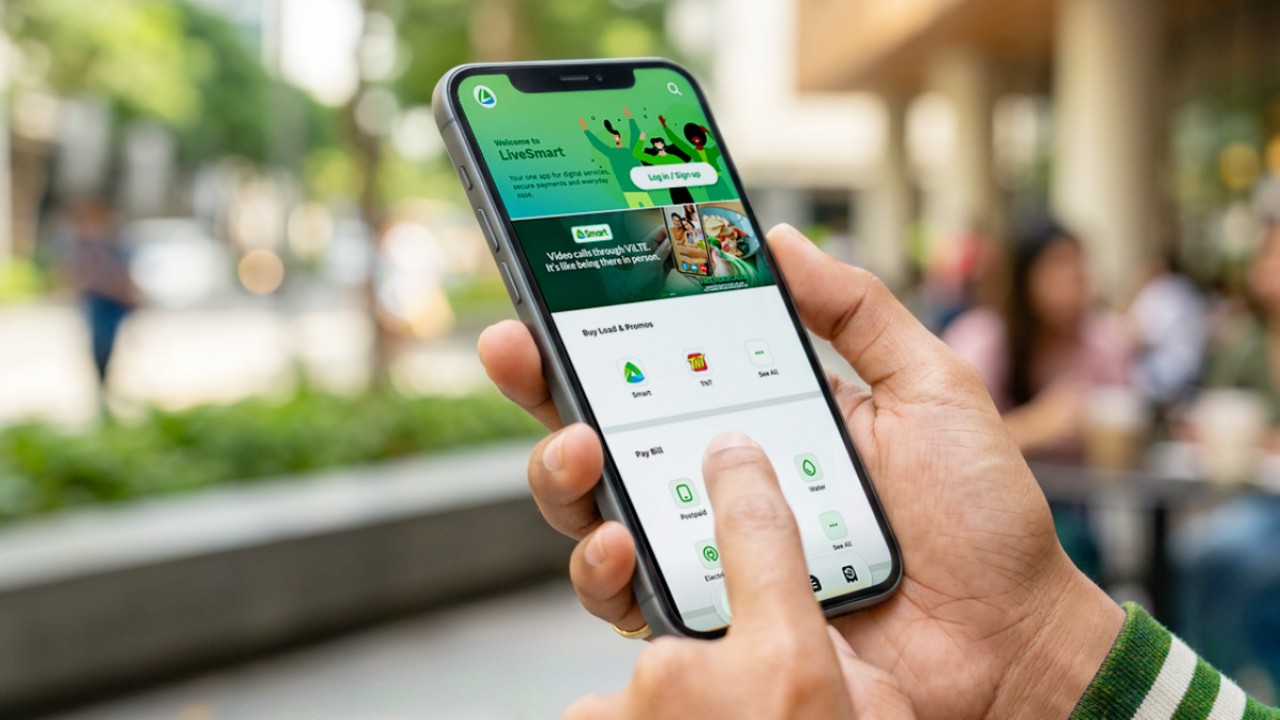
Smart Communications, Inc. (Smart) and TNT have launched the LiveSmart App, a new platform that combines loading, bill payments, exclusive offers, and other everyday transactions in one app.
The app is available on the Google Play Store and Apple App Store. It is open to Smart, TNT, and subscribers of other mobile networks.
The LiveSmart App gives users access to exclusive deals and savings. These include cashback offers, discounted Smart and TNT data packages, and limited-time access to AI.Smart.
“Filipinos are becoming more deliberate about where they spend and how they can get more value from every peso,” said Lloyd R. Manaloto, FVP and OIC for Smart. “The LiveSmart App is designed to help make those everyday decisions a little smarter, by giving users convenient ways to load, pay bills, and access exclusive savings and offers in one place.”
Exclusive deals and perks
Smart and TNT are rolling out several offers on the LiveSmart App starting September 18.
Smart and TNT subscribers can get 5% cashback when they purchase load or pay their Smart Postpaid bill through the app.
The app also offers data packages at exclusive prices. Smart Prepaid subscribers can get Power All 109 for PHP 105, while TNT subscribers can get Saya All 109 for PHP 105.
Users who download the LiveSmart App may also receive limited-time free access to AI.Smart.
AI.Smart combines multiple AI models, including AWS Nova, ChatGPT, Claude, Google Gemini, and Thinking Machines, in one workspace. Users can use it to generate images, create presentations, draft documents and spreadsheets, and get help with schoolwork, content creation, and other projects.
To claim the free AI.Smart credits, users need to tap the AI.Smart banner in the LiveSmart App. They then need to create an AI.Smart account using their Smart or TNT number.
Smart says users can also expect more exclusive deals and perks from lifestyle partners as it expands the LiveSmart App.
Powered by Smart 5G
The LiveSmart App runs on Smart’s network. Smart 5G supports activities such as video streaming, gaming, and real-time social media sharing.
The company said Ookla recently recognized its network for the Best Mobile Video Experience in the Philippines for the first half of 2026. Smart recorded a Video Score of 72.82, which it said was the highest among mobile operators in the country.
The LiveSmart App is now available on the Google Play Store and Apple App Store. Users can learn more about the app through Smart’s website.
Apps
Apple’s best feature to cure motion sickness is finally on Android
Google copies a good page from Apple’s playbook.

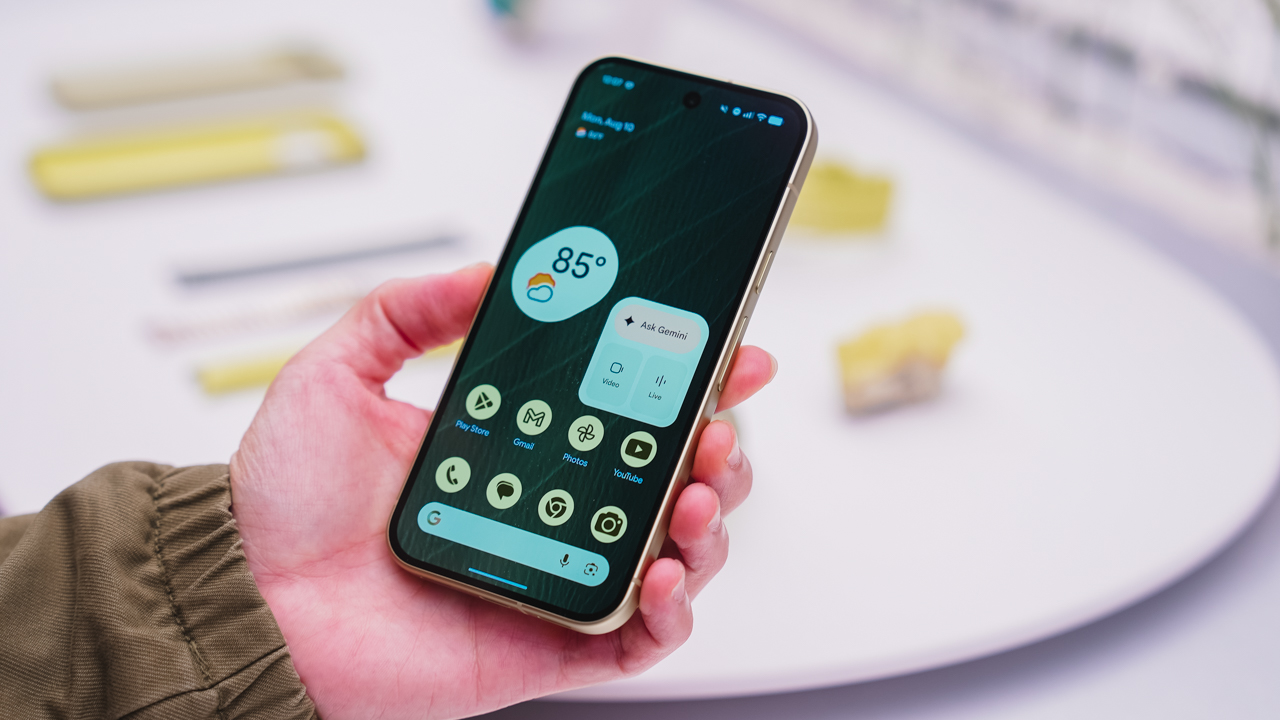
As an Android user, I’ve been jealous of iPhone users for a while now, but it’s not for the reason you might think. See, I’m ridiculously prone to motion sickness when I’m not driving. So, when I discovered that Apple has a software-based cure called Vehicle Motion Cues, I wanted it immediately. Now, Android does have third-party apps that do the same thing, but they’re not as good as a fully native version. Well, those dark, nauseating days are about to come to an end. Android 17 is finally getting a similar tool called Motion assist.
Before that, let’s rewind for a bit. What do these features do? How can they cure motion sickness?
Whenever you open Vehicle Motion Cues or Motion assist, the interface spawns a series of dots on the screen. These dots respond to movement. For example, if the vehicle turns to the left, the dots also go to the left, mimicking the movement. Without cues like this, the stationary nature of the screen clashes with our brain’s perception of movement. The disparity creates that feeling of nausea. Basically, our eyes are desperately trying to focus on the static screen, but our brains are telling us that we should be seeing motion. Having moving dots reorients our brain and places the phone inside our perception of movement.
Now, you can enable the same feature on your Android 17 device through Settings > All services > Motion assist under Personal & device safety. You can also set it so that the feature turns on automatically when the phone detects that you’re in a moving vehicle. Finally, you can also tweak the shape, color, and opacity of these dots.
Android 17’s Motion assist is rolling out now to compatible devices.
SEE ALSO: These are the best Android 17 features (if you hate AI)

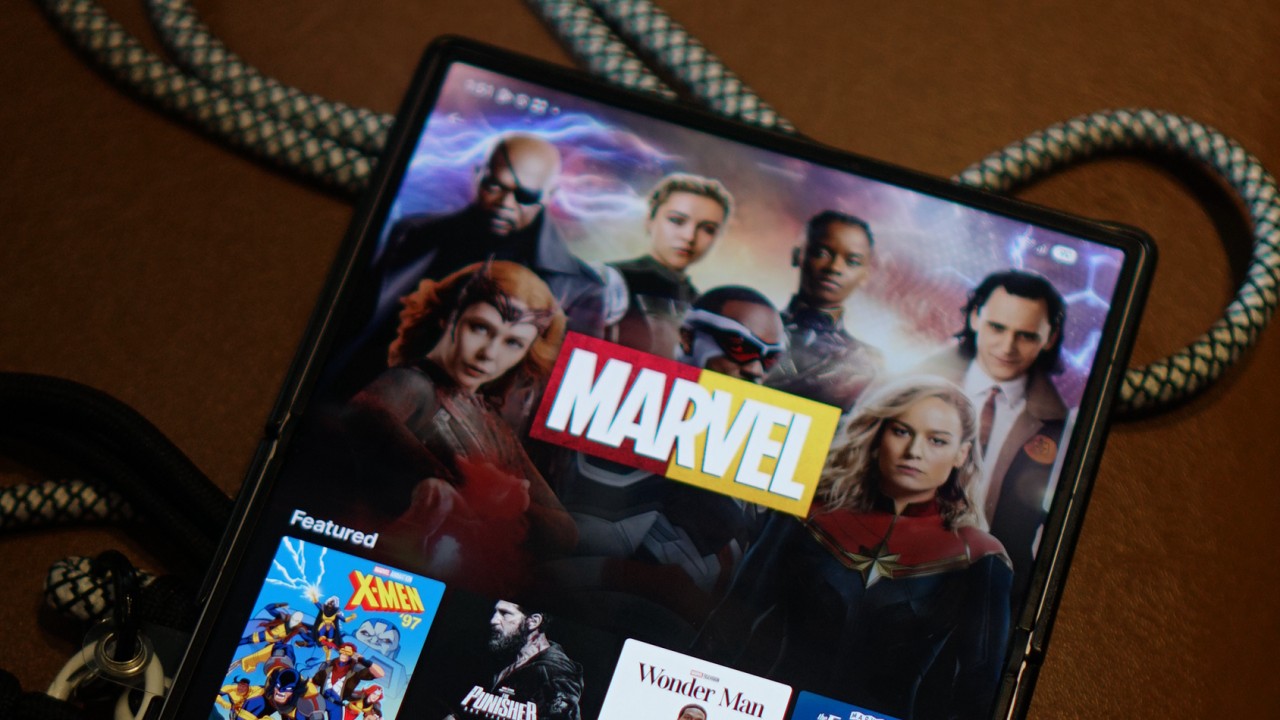
Disney is rolling out its new Disney+ app to markets that have been using a separate, Hotstar-derived version of the service.
The change is already happening across several regions, with Southeast Asia among the markets affected. Disney+ subscribers in the Philippines, Malaysia, Thailand, Indonesia, and other countries will transition to the newer app experience as Disney works toward a more unified global platform.
For Philippine subscribers, Disney+ has confirmed that the migration will happen on October 7, 2026.
The company notified subscribers this week that the existing app will eventually be replaced by a new Disney+ app. No action is required yet, and subscribers can continue using the current app until Disney provides further instructions.
The migration is part of a broader effort to bring Disney+ users onto the same core platform.
From Hotstar to a global Disney+ app
The distinction between the old and new experiences goes back to Disney’s international expansion.
Disney used a Hotstar-derived version of its streaming platform in several markets, including the Philippines, Malaysia, Thailand, Indonesia, South Africa, and markets across the Middle East and North Africa.
That version provided a localized Disney+ experience, but it operated separately from the main Disney+ platform used across many other international markets.
Disney began simplifying its streaming brands in 2025. In Southeast Asia, Disney+ Hotstar was rebranded simply as Disney+, while the Star general-entertainment brand was replaced by Hulu. At the time, Disney said the rebrand would bring a more consistent Disney+ experience, although the available content would remain tailored to each market.
The next step is now happening at the app level.
Egypt began moving to the new Disney+ app on September 2, followed by Indonesia on September 3. South Africa is scheduled for September 9, while Thailand is set to follow on September 16. Malaysia and the Philippines are scheduled for October 7.
This makes the Philippine migration part of a much larger transition rather than an isolated local update.

A more familiar Disney+ experience
The new app brings affected markets closer to the current Disney+ experience elsewhere.
Disney redesigned the global app earlier this year with a new For You homepage, improved personalization, redesigned navigation, more prominent profiles, and additional content hubs. Depending on the market and subscription, the interface can also surface Disney+, Hulu, and ESPN sections.
Disney has also been expanding the platform’s international language support. In July, the company added 17 languages, bringing Disney+ to 58 audio languages, with the user interface available in more than 30 languages and subtitles or closed captions available in as many as 42. The expansion included Thai, Indonesian, Malay, Arabic, Hindi, Tamil, and Telugu.
The company has described these updates as part of its effort to make Disney+ a more accessible and localized service for audiences around the world.
The migration also brings practical changes for subscribers.
In the Philippines, Disney says existing subscribers can continue using their current account and subscription. However, profiles, watchlists, and viewing history will not transfer to the new platform. Philippine subscribers will therefore need to set up their profiles and watchlists again after moving to the new app.
The subscription itself does not require an additional charge because of the migration. Existing billing cycles will also remain in place.

The catalog will still depend on where you are
Moving to the global Disney+ app does not mean every country will suddenly receive the same library.
Disney continues to operate its streaming service according to regional content rights. Its own Help Center notes that content availability can differ by country or region, and that some titles may not be available in a subscriber’s current location.
That means a subscriber in the Philippines, for example, will still see a catalog determined by the rights Disney has for the Philippine market. The same applies to subscribers in Thailand, Indonesia, Malaysia, South Africa, or any other market making the transition.
What is becoming more global is the platform itself.
That brings Disney+ closer to the model used by other major streaming services, where subscribers can use a common app experience across markets while the actual catalog changes depending on where they are.
The distinction is particularly relevant for people who travel. Disney’s global Help Center says subscribers abroad can stream content available in the country or region they are visiting, meaning the service’s location-based availability rules still apply even on the unified platform.
Disney has been signaling this direction for some time. In 2025, the company said its redesigns were leading toward a “fully integrated unified app experience” in 2026. The latest migrations appear to be the next major step toward that goal.
For subscribers in the remaining Hotstar-derived markets, then, the biggest change isn’t necessarily what’s available to watch.
It’s where and how they access Disney+.


DJI Lito X1 review: Is this the best lightweight drone for creators?
Making a strong case as a travel companion and a capable B-cam!


REDMI Note 17 Pro Max review: A new breed born from AI greed
Welcome to the new normal


Marvel’s Wolverine review: When the claws come out
A brutal, cinematic superhero adventure

Jackery Explorer 300D: Power and portability in one

Nike’s Alphafly 4 is built for the part of the marathon ~that actually hurts~

SEGA, Netflix announce Crazy Taxi film adaptation

Smart launches LiveSmart App for exclusive deals
DJI Lito X1 review: Is this the best lightweight drone for creators?

TECNO MEGAPAD 2 review: Eyes on the size

realme 16T 5G with 8000mAh battery, IP69 Pro rating launches in PH

HUAWEI Pura X View is 2026’s first WIDE slab-type smartphone

REDMI reveals the refreshed Note 17 and Note 17 Pro series

REDMI Note 17 Series: Price, availability in Singapore


-
 News2 weeks ago
HUAWEI Pura X View is 2026’s first WIDE slab-type smartphone
-

 News2 weeks ago
The CAMON Slim 5G is TECNO’s latest ultra-slim smartphone
-

 News1 week ago
iPhone 18 Pro series: Price, availability in the Philippines
-

 Automotive2 weeks ago
Ford’s new Everest lineup brings V6 engine to the top, tech down the line
-

 Singapore1 week ago
iPhone 18 Pro series: Price, availability in Singapore
-

 IFA 20262 weeks ago
XGIMI announces AURA 3 Series 4K 120Hz UST projectors
-
 News1 week ago
iPhone Duo: Price, availability in the Philippines
-

 Philippines2 weeks ago
Smart cuts 5G Home WiFi price