
News
Apple’s iPhone 13 series won’t get a USB-C port
Lightning connector is still the king

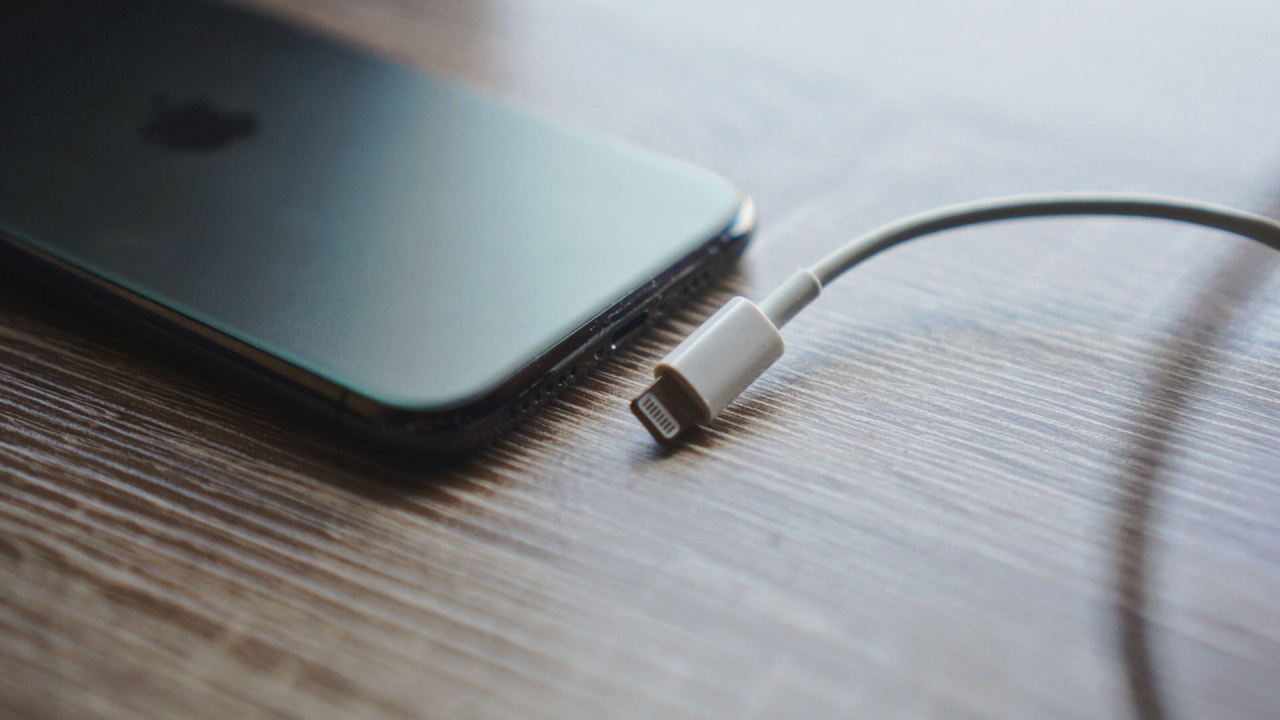
Apple’s iPhones have shipped with a Lightning port for the longest time, and the trend won’t be changing anytime soon. While USB-C continues to rule the industry today, Apple shall stick with the conventional port for an indefinite period of time.
The latest research note by TFI Securities analyst Ming-Chi Kuo, Apple will not ditch the Lightning connector in favor of a USB Type-C standard on iPhones anytime soon. And the decision to do so apparently has a lot to do with two key reasons — profits and longevity.
“We believe that USB-C is detrimental to the MFi business’s profitability, and its waterproof specification is lower than Lightning and MagSafe,” he said in the note, as quoted by AppleInsider. MFi stands for Apple’s Made for iPhone (MFi) program, allowing Apple to license the proprietary technology to other brands for making compatible accessories.
Kuo also predicts that the Pro iPhone model might lose the notch, favoring a hole-punch camera that’s popular on Android phones. However, he also adds that a shift to Touch ID is unlikely.
The note also says that we can expect an iPhone SE option with 5G compatibility. This is actually a no-brainer since every phone maker is gearing up for the boom, and the developing markets are yet to deploy full-scale 5G, giving some time to Apple.
Lastly, he speculates that the iPhone 13 Pro successor will be Apple’s main iPhone release to abandon the notch and “adopt” the hole-punch display design. Android phone makers have taken a similar approach, and it has worked well so far for everyone.
Users have long asked for a USB-C port on the iPhone because it eliminates the need to carry a Lightning cable wherever you go. Thanks to standardization, a USB-C wire is capable of charging a MacBook, Android phone, third-party accessories, as well as power banks. Having one universal port helps massively in enabling easy portability. In fact, even the iPad Pro has a USB-C port available now.







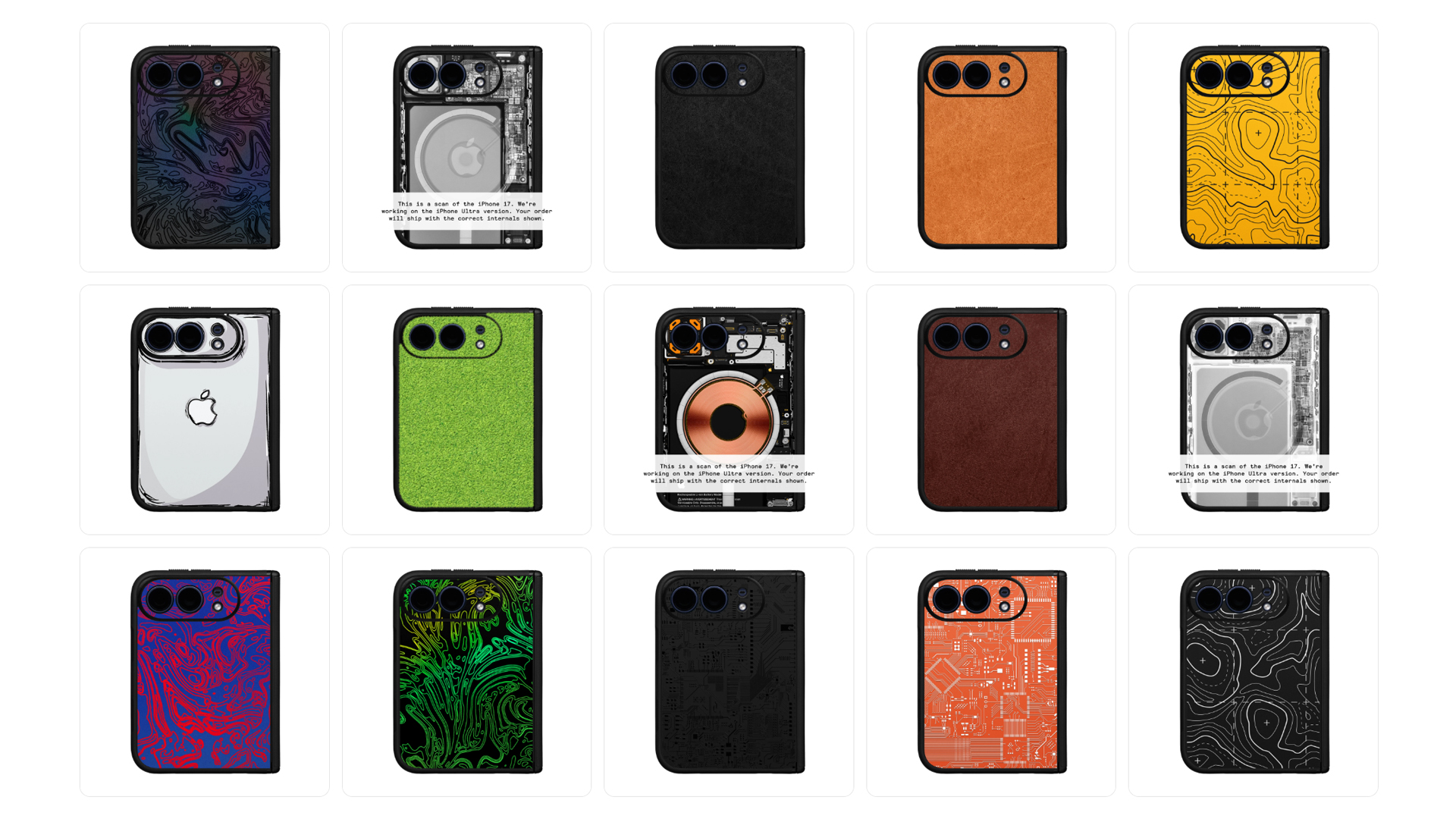
As of now, we’re still around 12 hours ahead of the most anticipated event of the month, the launch of the iPhone 18 series. Besides the ubiquitous flagship lineup, the event is also heavily rumored to reveal the upcoming foldable iPhone Ultra. Well, while Apple has been secretive about the device itself, Dbrand has just spoiled the surprise for fans.
The often-sarcastic casemaker has just released a series of phone cases for the iPhone Ultra. The series doesn’t stray at all from Dbrand’s usual slew of designs. You’ll still get the traditional Teardown skins (which offers a peek into the iPhone’s internals) and the Leather skins (with real leather).
The main point here, of course, is that it’s already available ahead of the scheduled launch. As for looks, the cases confirm that the foldable will have the passport-style format popularized by the Galaxy Z Fold8. The device will also have a slightly elevated camera bump and two buttons on top of the bump.
Other than that, there’s still a lot to be revealed in the upcoming event. There are high hopes that the iPhone Ultra will fix the persistent pain points of the foldable segment. Unfortunately, it will likely come with a pretty exorbitant price tag, making it a much harder buy for regular iPhone users.
For a lot of people (me included), the Sony WH-1000XM4 was the first taste of what Bluetooth headphones could be. It was the first time I desperately wanted a new pair of headphones. It took me until the current XM6 to get a pair, but I can’t forget what came before. And, apparently, neither can Sony.
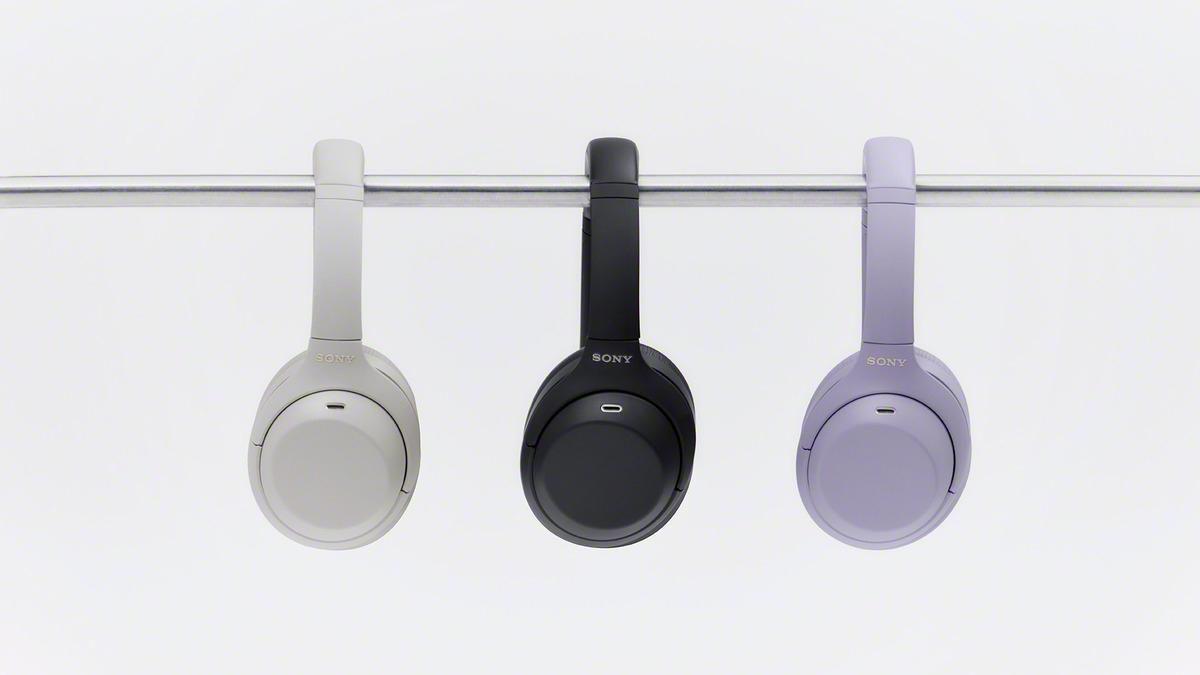
Today, Sony is resurrecting the WH-1000XM4 with the refreshed WH-1000XM4C. Straying from the lineup’s usual releases, the WH-1000XM4C is the second generation of the universally acclaimed headphones, while the XM6 is still the current flagship model.
It’s not just a simple rerelease, too. Though it still rocks the QN1-based active noise cancellation, the new pair tweaks the sound profile to more closely match the modern standard. It also comes with 10-band and gaming-specific equalizer presets. It will have a slightly smaller battery but with better fast charging to juice up quickly.
The new WH-1000XM4C will be available in Lavender, Black, and Platinum Silver. It will also cost US$ 299.99 — 50 bucks cheaper than the first generation.
Besides the refreshed flagship, Sony is also launching the WH-CH730N, a midrange pair built for commuters, and the WH-CH530, an entry-level pair with more colorful colorway options.
The WH-CH730N will come in White, Pink, Blue, Black, and Oat. It sells for US$ 179.99.
Meanwhile, the WH-CH530 come in Black, Cobalt, Coral, Mint, White, and Pink. It sells for US$ 69.99.

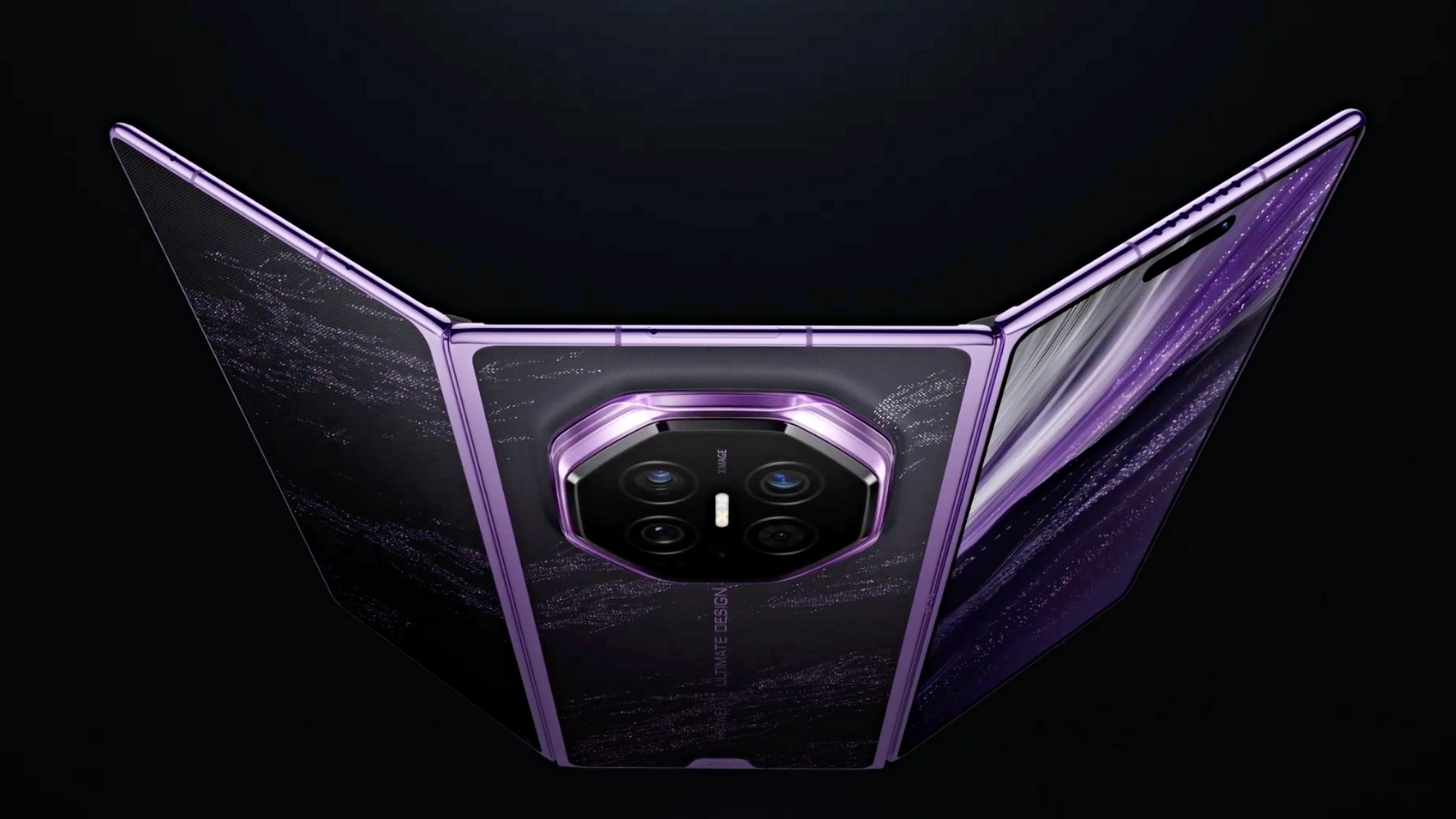
Huawei has officially unveiled the HUAWEI Mate XT 2 | ULTIMATE DESIGN, its latest tri-fold smartphone. The new device is the first smartphone to feature the LogicFolding Tau (τ) Chip and marks the technology’s entry into mass commercialization.
The Mate XT 2 introduces a wing-like tri-fold design that opens from both sides. It also brings the Kirin 9050 Pro chipset, Xuanwu Ultra-Durable Tri-Fold Architecture, Smart Shield Privacy Screen, True-to-Color Camera 3.0, and HarmonyOS 7.
A wing-like tri-fold design
The HUAWEI Mate XT 2 | ULTIMATE DESIGN uses a wing-like form that folds from both sides for what Huawei describes as a more intuitive unfolding experience.
The design draws from Chinese aesthetics. Its back panel features a cloud pattern created using Brocade Cloud craftsmanship. The phone comes in Purple, White, and Black.
Its camera ring continues Huawei’s Star Diamond Glow design. It uses Yttrium Crystal fired at 1,800°C and undergoes eight polishing steps to create 33 star diamond facets.
Huawei also redesigned the phone’s durability system. The Xuanwu Ultra-Durable Tri-Fold Architecture reworks the hinges and display structure to provide protection across multiple layers.
The Mate XT 2 is the first tri-fold phone to support IP58 and IP59 dust and water resistance. Its cover display uses Xuanwu Kunlun Glass with scratch and impact resistance, along with anti-glare technology.
The main display uses a multi-layer composite structure with a large UTG glass layer, aerospace-grade ultra-thin high-strength steel, and a carbon fiber support layer.
The Advanced Precision Hinge System 2.0 uses a five-curved-arm structure and synchronized linkage mechanism to distribute force more evenly.
Kirin 9050 Pro powers the tri-fold
The Mate XT 2 is the first smartphone to use Huawei’s Kirin 9050 Pro chip. Huawei claims overall device performance improves by 42 percent over the previous generation through closer integration between its hardware, software, chipset, and cloud technologies.
The LinxiCore CPU works with the HUAWEI Ark Engine to improve large-file loading and multitasking. The Maleoon GPU doubles its computing units and cache, while gaming supports up to 50 MRPS hardware-level real-time ray tracing.
The HUAWEI Da Vinci Architecture NPU also boosts on-device AI performance. Huawei says the phone natively supports its Pangu 30B-A2B MoE large language model, enabling features such as on-device AI album management through Celia.
Huawei has also spread the Mate XT 2’s heat sources across its three frames. Large vapor chambers and thermally conductive graphene help move heat across the device.
The phone uses 32 distributed antennas and multiple communication systems for 5A connectivity. It also supports Tiantong satellite communication and Beidou satellite messaging.
For security, the Mate XT 2 combines a Mobile Security Processor with an independent security chip. Huawei says the system supports post-quantum cryptography algorithm detection and has passed EAL5+ CCRC security certification.
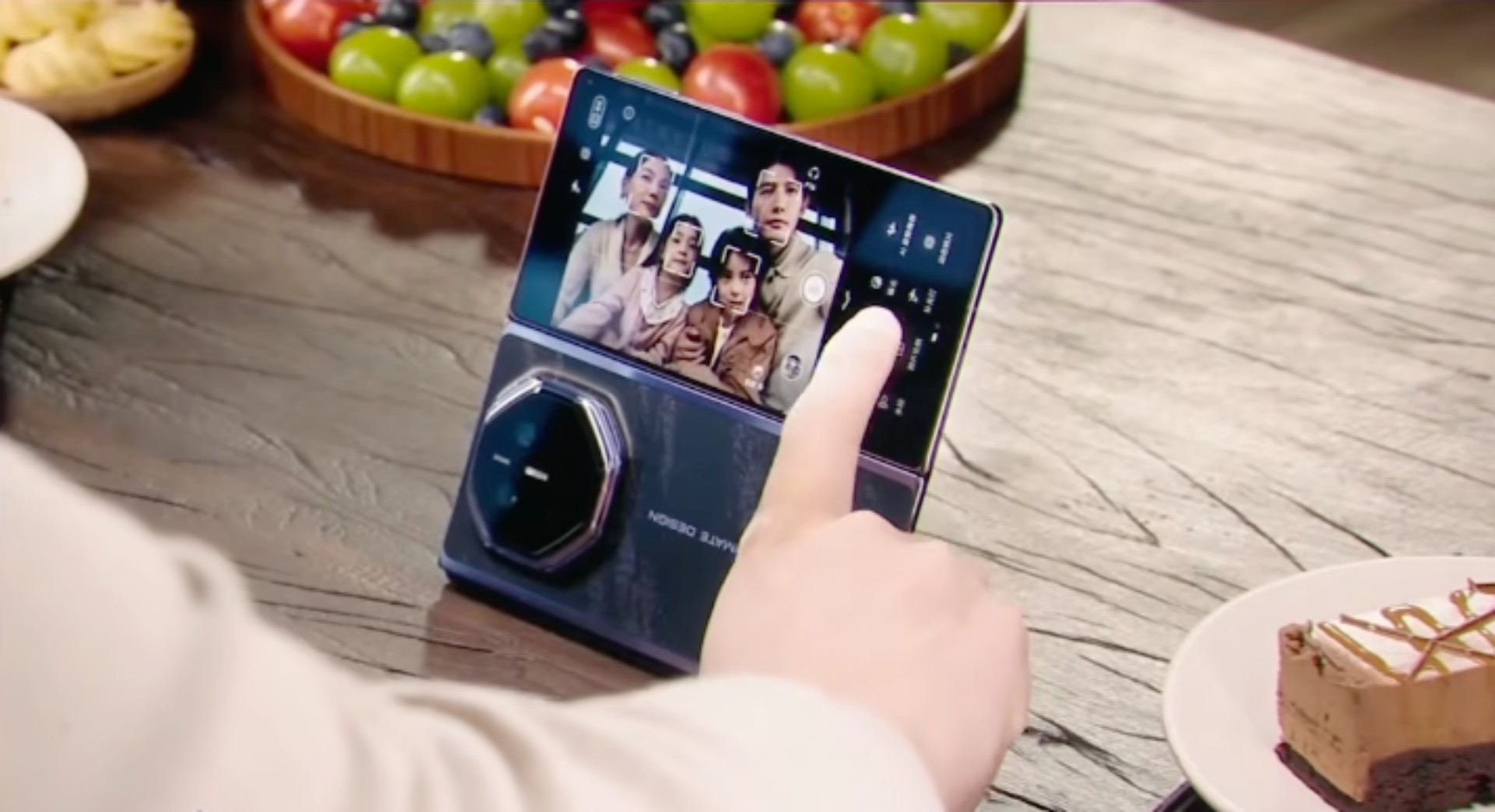
Privacy comes to the foldable display
The Mate XT 2 introduces Huawei’s Smart Shield Privacy Screen, which the company calls the industry’s first foldable privacy screen with hardware-level protection.
The system uses an independent dual-pixel design to maintain the same screen resolution before and after Privacy mode is activated. It can also detect situations such as entering airports or train stations and provide privacy reminders.
Users can activate the mode by double-tapping the cover screen or using the Smart controls button.
The phone also includes ECG analysis software and has received an NMPA Class II Medical Device Registration Certificate. Users can perform an ECG measurement by holding the unfolded display with both hands, after which Celia can interpret and analyze the results.
True-to-Color Camera 3.0
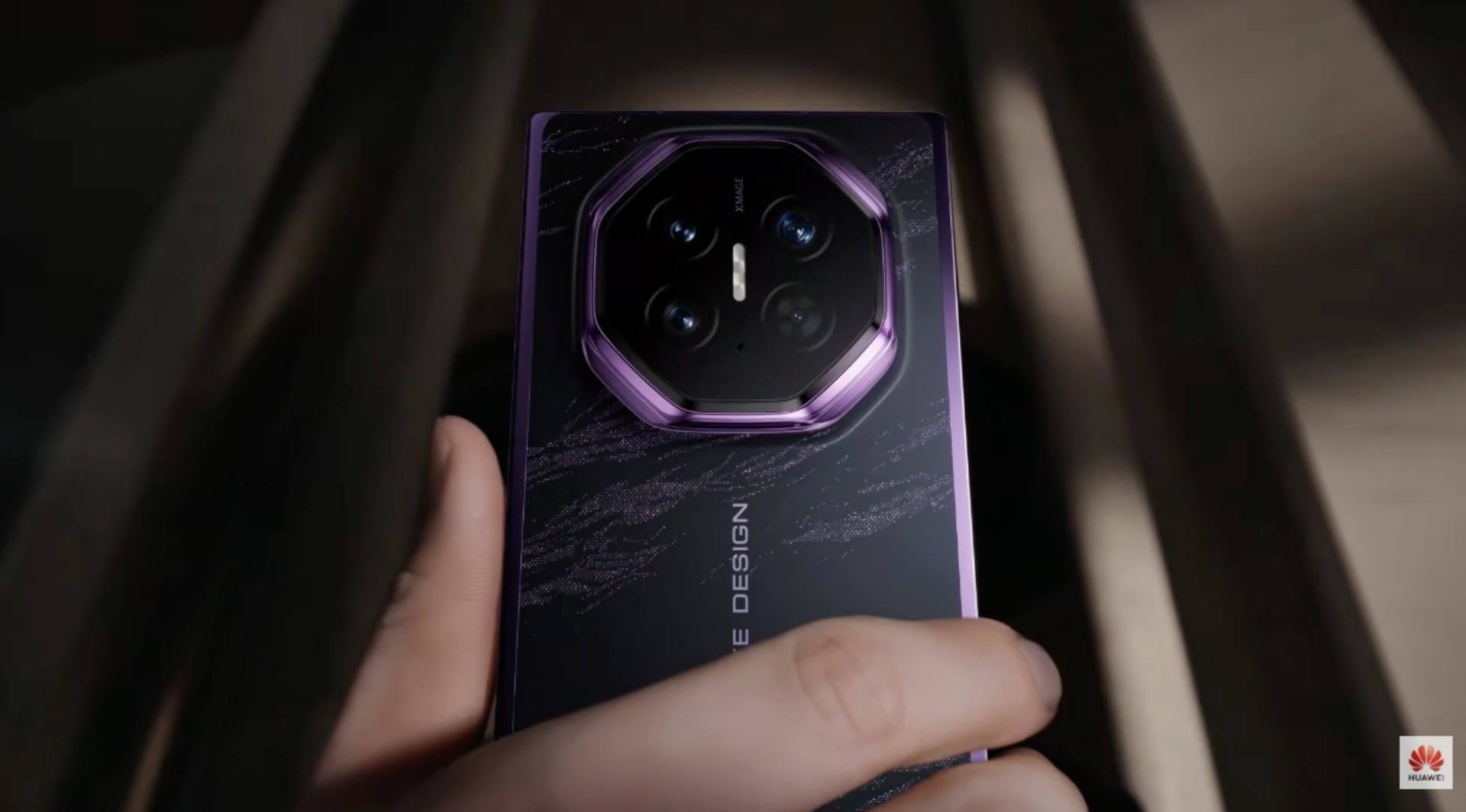
Huawei has also upgraded the Mate XT 2’s camera system with True-to-Color Camera 3.0.
The system is designed to filter infrared light interference and improve color reproduction by 95 percent compared with the previous generation, according to Huawei.
The camera setup includes an ultra-HDR main camera, an ultra-wide-aperture periscope telephoto camera, and an ultra-wide-angle camera. Huawei says the system is designed to deliver more accurate colors, realistic portraits, and clearer night shots.
Video recording supports an ultra-high dynamic range of 18 EV.
XMAGE SmartCapture can recognize people, scenery, and food, while AIGC-powered real-time previews provide composition and lighting recommendations.
The tri-fold design also enables a Desk-calendar mode for taking selfies and group photos.
HarmonyOS 7 for the large screen
The HUAWEI Mate XT 2 runs on HarmonyOS 7, which adds new large-screen features to take advantage of its tri-fold display.
Its Live-Multitask feature supports three windows displayed in parallel. Users can adjust the size of each window and control their volume independently.
Huawei says the experience has been optimized for scenarios including financial management, social entertainment, office work, shopping comparisons, and travel planning. The company has also adapted the device for major apps as it continues expanding its tri-fold ecosystem.
The HUAWEI Mate XT 2 | ULTIMATE DESIGN starts at RMB 19,999. It will also be available with a stylus set, with sales beginning at 10:08AM on September 12.

Setting your bedsheets ablaze with the Lovense Solace Pro
The closest proxy I could find where I'm guilty as sin


Now Playing: Elden Ring Tarnished Edition
Is the Switch 2 port worth the price?


NBA 2K27 review: A two-way All-Star
Better ball game, same 2K?

CODE VEIN II launches Mask of Idris DLC with free Version 2.0 update

A casemaker just revealed the foldable iPhone Ultra ahead of time

The Legend of Zelda: Ocarina of Time remake launches November 5

adidas’ hybrid training shoe gets a Solar Turbo makeover

How to spot scam emails and messages before they get you

TECNO MEGAPAD 2 review: Eyes on the size

realme 16T 5G with 8000mAh battery, IP69 Pro rating launches in PH

REDMI Note 17 Series focuses on long-term reliability

HUAWEI Pura X View is 2026’s first WIDE slab-type smartphone

realme 16T to come with 8,000mAh battery, 7-year battery health guarantee


-
 News2 weeks ago
realme 16T 5G with 8000mAh battery, IP69 Pro rating launches in PH
-
 News2 days ago
HUAWEI Pura X View is 2026’s first WIDE slab-type smartphone
-
 News2 weeks ago
REDMI reveals the refreshed Note 17 and Note 17 Pro series
-
 Singapore2 weeks ago
REDMI Note 17 Series: Price, availability in Singapore
-
 Cameras2 weeks ago
Insta360 Luna Ultra review: My new solo coverage camera
-
 Reviews2 weeks ago
REDMI Note 17 Pro review: What a rollercoaster ride!
-

 Features1 week ago
The designated photographer’s new favorite phone: OPPO Reno16 Series 5G
-
 Cameras7 days ago
DJI Osmo 360 II review: Going all-in on the ecosystem