
Enterprise
Globe senior advisor Dan Horan talks data cap, fiber, Netflix deal, and content creation and distribution


Globe Telecom, one half of the Philippines’ telco duopoly, held its first Wonderful Wold with Globe event last June 24. And on the sidelines of the evening’s program that saw Netflix, Sports Illustrated, and Turner Broadcasting, among others, joining Globe’s growing list of content partners, we spoke with Globe chief advisor Dan Horan about data capping, expanding fiber-internet service in the Philippines, what the Netflix partnership will look like and mean for customers, and his company’s evolution into a content provider.
Spoiler alert: Data capping — two words you should never ever say to an avid internet user — is here to stay for the foreseeable future. Or at least as far as Globe’s mobile and broadband services are concerned. On a more positive note, Horan hinted at the likelihood that data rates would drop over time.
This interview has been edited and shortened for clarity.
GadgetMatch: You introduced several new content partners this evening. How will your expanded list of streaming services affect your data-capping scheme?
Dan Horan: Obviously, over time content changes. Now, we’re seeing lots of on-demand videos. As you know, we just launched a partnership with Netflix.
One of the things that’s really important is that we’re continuously building our networks to allow services to truly operate well. Earlier, you saw speeds of up to 100Mbps, which is more than enough for video services. We’re also building our WiFi networks. In many shopping malls, you see our up-to-100Mbps WiFi connections. We offer those connections for free, and not just to Globe customers. We’re also building our broadband network, which is physically the hardest because you have to go from house to house.
All of those have different cost structures and different capabilities, and they cost a lot of money. The investment in San Miguel Corporation alone cost us three quarters of a billion U.S. dollars. As much as I would love to offer our carrier services for free, we do need to recover some money. So it’s a delicate balancing act between making our shareholders happy and getting content in the hands of consumers affordably and fast.
You’ll see over the next few months that we will start to introduce more and more data options. And in the coming years, we will be adjusting our packages and prices to allow the Filipino community to get as much content as we can give them.
Fiber expansion is a topic of interest among internet users in the country. What are your plans for the future?
We have so many new things coming. One of the things we’re working on right now is that we’re putting future builds on our website to give you an idea when fiber will be available in your area. We also have $60 million in terms of upgrades happening on a lot of existing infrastructure as we speak.
Binondo is a good example, where we installed fiber everywhere. So if you want gigabyte speeds in that area, we can give it to you finally. I can also tell you that we have a big investment right now, and within the next three or four months, you’re gonna be seeing a lot of new locations that we’ll be upgrading with fiber. In Quezon City, there will be a lot of locations.
Netflix mentioned earlier that Globe is its first partner in the Philippines. How will the deal impact consumers?
So we signed an exclusive agreement with Netflix. And what that means is that customers will soon start to see services from Globe and Netflix that won’t be available anywhere else. It will be a mixture of both content and streaming packages. I can’t be more specific, but you’ll start to see things that are currently not available in the Philippines.
Let’s talk about Globe’s transformation into an entertainment company. Is this the next crucial step for your company?
Absolutely. We don’t treat ourselves as a telco anymore. I don’t think anybody mentioned megabytes or gigabytes or things of that nature tonight. You saw stories, you saw emotions, you saw brands that bring content to life. For us, those brands go hand-in-hand with our networks. The two have to work together.
With Globe Studios (which will produce original films and shows for the company), for example, we have the ability to make our own content, which we couldn’t have done before, and deliver it to anyone, anytime, anywhere. For me, that’s where we start to think of things from a lifestyle perspective.
A big question is where Globe Studios will put the content it creates. Will it only be available on Globe portals?
No, not at all. What’s great is that we can put the content in different platforms. We can put it in the cinema, and take it from cinema to subscription and so forth. The others we can upload to YouTube; some we can put in services like Astro, HOOQ, and Netflix. What Globe Studios gives the Filipino community is a platform to create content and monetize it internationally. If we have something that’s marketable worldwide, then why not?
[irp posts=”9513″ name=”Globe Prepaid Home WiFi review”]




Enterprise
Cebu Pacific becomes 1st SEA low-cost carrier with Starlink Wi-Fi
Rollout expected to begin in 2027

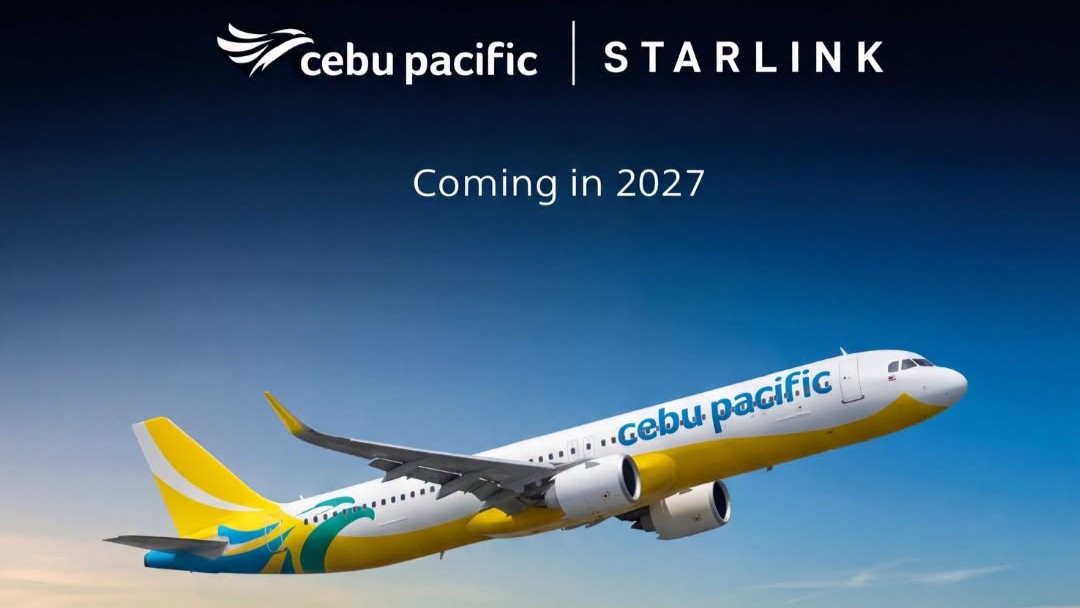
Cebu Pacific has introduced Starlink, making it the first low-cost airline in Southeast Asia to bring Wi-Fi in the sky for passengers.
The rollout is expected to begin in 2027. Starlink delivers an unparalleled broadband experience inflight, with high-speed, low-latency Wi-Fi capable of HD streaming, online gaming, productivity and more.
Beyond enhancing the passenger experience, Starlink will also support improved operational connectivity for Cebu Pacific’s flight crews and operational teams. This enables better operational efficiency.
The collaboration is a significant milestone for Philippine aviation. The rollout forms part of Cebu Pacific’s continued investment in customer experience and digital innovation.
As part of the partnership, Cebu Pacific and Indigo Partners portfolio airlines, Wizz Air, and JetSMART expect to install Starlink on over 1,000 aircraft.
Enterprise
Google ordered to pay EUR 4.1 billion in fines
The EU alleges that Google uses its apps to establish an unfair dominance.

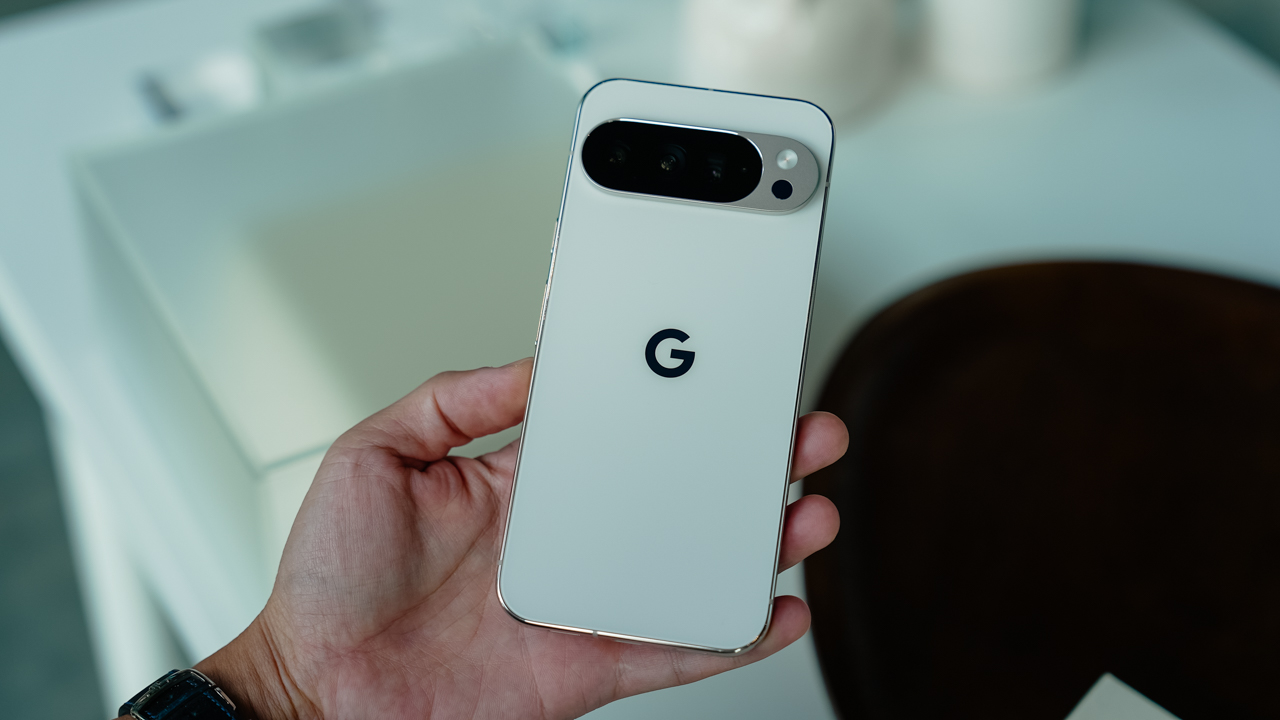
European fines have unintentionally become a normal part of doing business in the American technology space. For too long have American companies paid paltry fines to prevent harsher regulation in the European Union. Now, for the first time, Google is about to pay a record-breaking fine that goes beyond “paltry.”
Today, via CNBC, Google has been ordered to pay an astonishing EUR 4.1 billion (or approximately US$ 4.67 billion) in fines. The fine is in response to an anti-competition case.
This has been a long time coming for Google. The original case started in 2018. At the time, the European Union accused the brand of using anti-competitive practices to ensure its dominance in the smartphone market. According to the courts, the company’s bundling of first-party apps for every Android smartphone gives them an unfair advantage in the market and lessens the user’s choice in selecting apps.
For years, Google has fought the fine to seemingly no avail. Now, the company has lost its final attempt, which means that the fine still stands. On the bright side, they did get it reduced from the original EUR 4.34 billion fine.
The European Union is the scourge of every American tech company (and a godsend to consumers). Most notably, the continent’s government forced Apple to adopt USB-C, leading to a more universal experience across brands.
Google’s hefty fine aims to do the same. And it is quite hefty. Whereas previous fines were in the millions (and hence, negligible for most companies), a fine in the billions is more tangible.
Apps
foodpanda relaunches cult-favorite roast chicken brand after 8 years of persistent search queries
Heritage chain Andok’s returns to the platform, driven entirely by long-term user analytics.


In the world of e-commerce and food delivery, platform algorithms usually dictate what consumers see. But occasionally, consumer behavior is so relentless that it shapes the platform’s strategy.
In a move driven entirely by long-term user analytics, foodpanda has officially relaunched Andok’s, one of the Philippines’ most iconic heritage rotisserie chains, back onto its platform after an eight-year absence.
The search bar as a digital wishlist
The decision to ink the partnership wasn’t just a marketing play. It was a response to an ongoing data anomaly. Despite being offline from the foodpanda platform for eight years, Andok’s consistently ranked as one of the most-searched merchants on the app.
Year after year, users treated the empty search results page as an unofficial wishlist. This persistent search intent gave foodpanda a clear, data-backed signal of pent-up demand.
Prior to the official digital rollout, teaser campaigns on social media validated this demand, generating thousands of organic interactions from users anticipating the return.
Bridging heritage flavor with digital infrastructure
For foodpanda, onboarding a merchant with this level of built-in demand fits its broader strategy of marketplace optimization and hyper-local network expansion, turning a heritage brand into another data point for how legacy retail plugs into delivery infrastructure.
For Andok’s, the integration works as a fast track to digital scale. A legacy quick-service chain skips years of independent app development and reaches customers already using foodpanda’s existing logistics network, on a platform they already check daily.
Andok’s built its following on charcoal spit-roasted chicken, a slow-cooked technique that’s stayed largely unchanged since the brand’s early days, alongside seasoned grilled pork belly.
More recently, the Dokito line extended that following into crispy fried chicken and chicken burgers, broadening the brand’s appeal beyond its original rotisserie format and giving foodpanda a menu with both heritage pull and everyday fast-food convenience.

TECNO MEGAPAD 2 review: Eyes on the size
The MEGA pad for two base users

30 days with the DJI Osmo Pocket 4P
This is the camera that made solo travel filmmaking finally feel possible.

MARVEL Tōkon: Fighting Souls review: Easy to pick up, hard to put down
Welcomes casual and experienced fighting game players

HONOR Magic V6: Price, availability in the Philippines

Shokz launches lighter OpenRun Air 2 and OpenFit Air 2

Smart wins best mobile video experience again

Match Pulse: Boya Notra Neo

Tesla involved in recalling over 4 million electric cars

VinFast debuts two-wheeler models, opens 21 e-motorcycle showrooms

OnePlus officially leaves the United States and Canada

REDMI Note 17 Series focuses on long-term reliability
TECNO MEGAPAD 2 review: Eyes on the size

Xiaomi debuts SkyNomad Series featuring new Kunlun platform


-
 Singapore1 week ago
REDMI Note 17 Series focuses on long-term reliability
-
Reviews4 days ago
TECNO MEGAPAD 2 review: Eyes on the size
-

 News1 week ago
realme 16T to come with 8,000mAh battery, 7-year battery health guarantee
-
 Gaming2 weeks ago
Marvel Wolverine Limited Edition PS5 bundle SEA pricing
-
 Reviews2 weeks ago
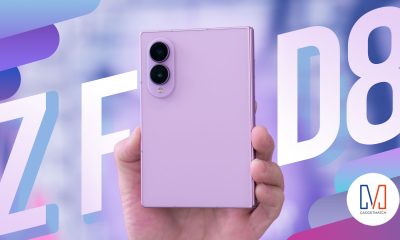
Samsung Galaxy Z Fold8 Review
-
 Accessories7 days ago
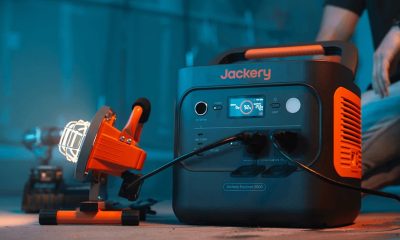
Jackery expands Explorer Series portable power stations
-

 Entertainment2 weeks ago
Box office: Brand New Day set to surpass US$ 2 billion, drives Marvel’s Spider-Man 2 resurgence
-
 News2 weeks ago
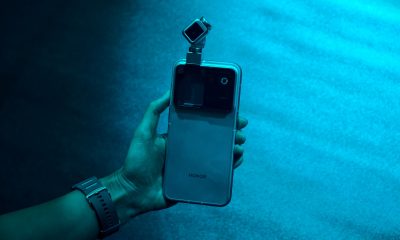
HONOR Robot Phone officially launches after its MWC debut